




University : Palestine Polytechnic University
Tutor(s) : Dr.Bader Atawneh
Project Description
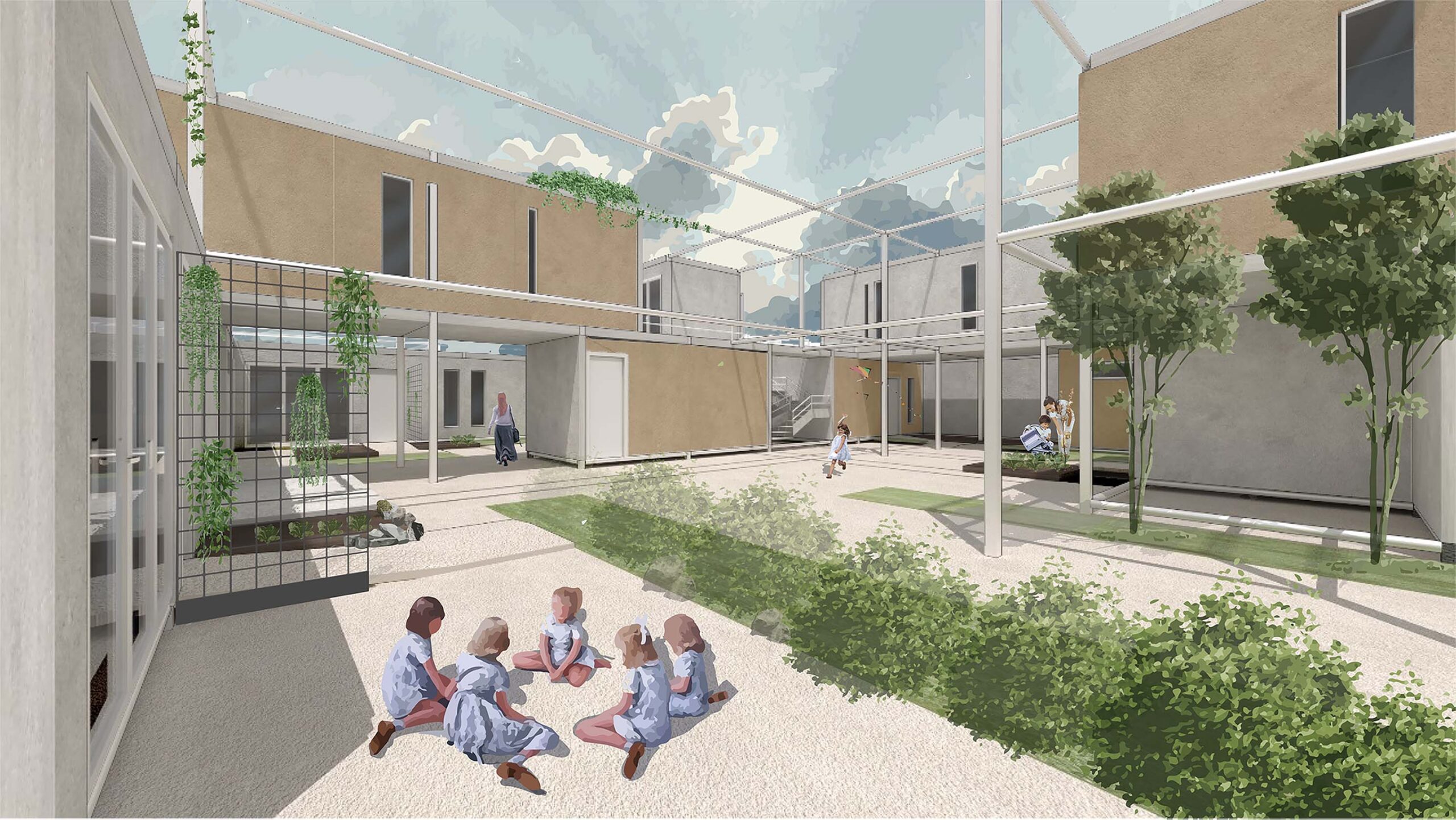
The recent Israeli aggression on Gaza, which began on October 7, 2023, resulted in the widespread destruction of homes and displaced 1.7 million people. This design proposal offers a forward-thinking solution for temporary housing, which is crucial during the post-disaster recovery phase.
This design project develops six temporary housing complexes, each providing adaptable and immediate living solutions. The layout includes multiple housing units and two smaller facilities for future functions, such as a market, clinic, and school, to meet the community’s essential needs and enhance overall functionality.
The complex design balances shared social spaces with private, semi-private, and public areas. It fosters community interaction through common areas while maintaining individual privacy and personal space. Each complex is oriented based on solar and wind patterns, optimizing thermal comfort and energy efficiency. This orientation ensures that residential units benefit from natural light and ventilation, promoting a healthier living environment. Each home features a private entrance, a private garden, and green walls, which enhance privacy, provide outdoor relaxation space, and improve air quality.
A bike path made from recycled plastic connects the various plazas and complexes, promoting sustainable transportation and facilitating movement within the site. This design supports community cohesion and encourages environmentally friendly practices.
Overall, the project aims to create a functional, comfortable, and cohesive living environment that addresses both immediate needs and long-term goals. By integrating environmental considerations, community support, and practical functionality, the design provides a comprehensive solution to temporary housing challenges.
Established in 2012, Tamayouz Excellence Award is an unaffiliated, independent initiative that aims to advance the profession of architecture academically and professionally. Tamayouz is dedicated to supporting aspirational and transformative projects that tackle local and global challenges and that are informed by a holistic understanding of context.