
University : Cairo University
Tutor(s) : Dr Mohamed Noeman
Project Description
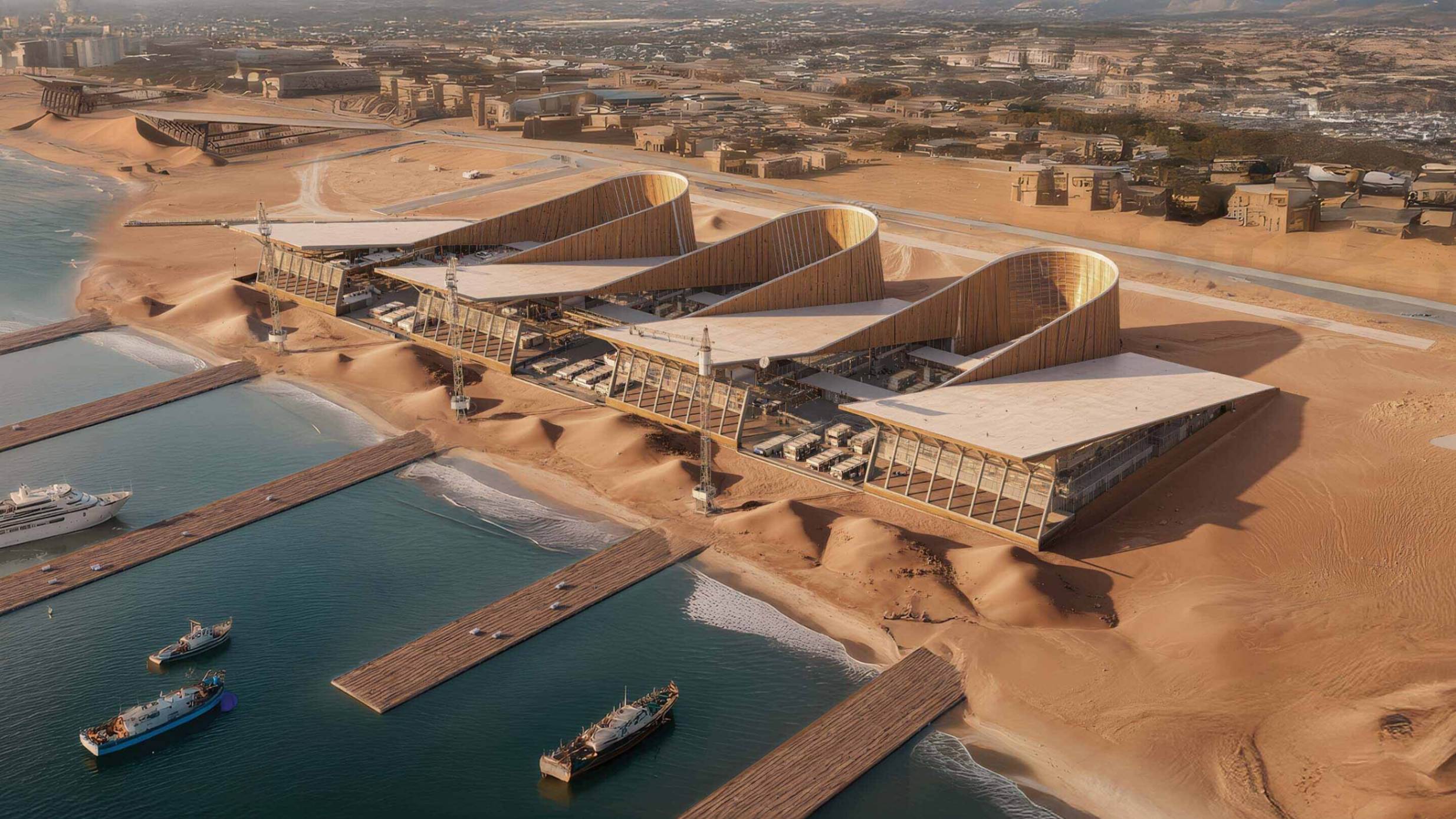
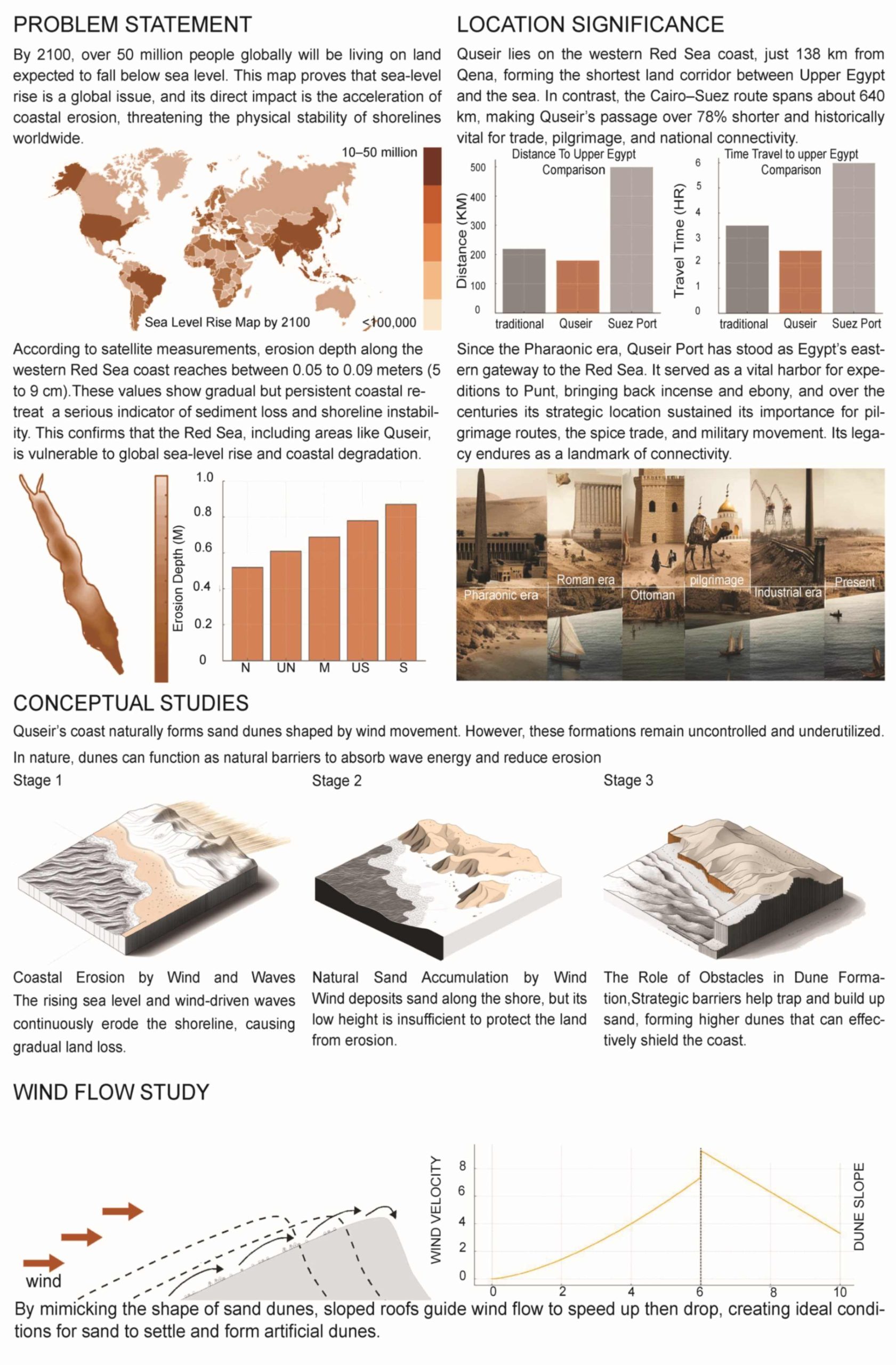
The Quseir Port project proposes the revival of a historic Red Sea harbor through a model where architecture itself becomes an environmental solution. Once a hub of trade and pilgrimage, Quseir’s port now faces ecological decline, economic stagnation, and disconnection from its maritime identity.
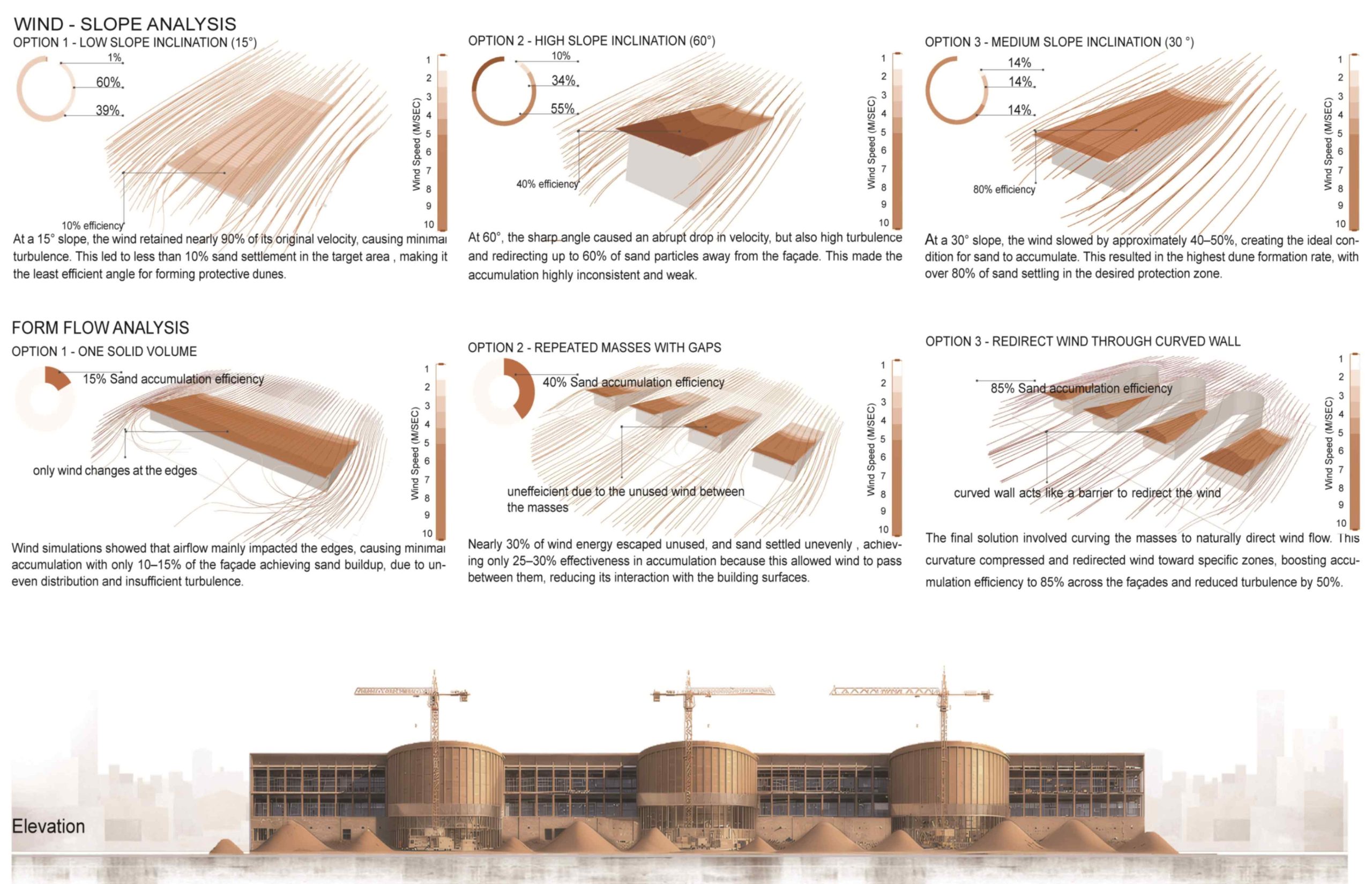
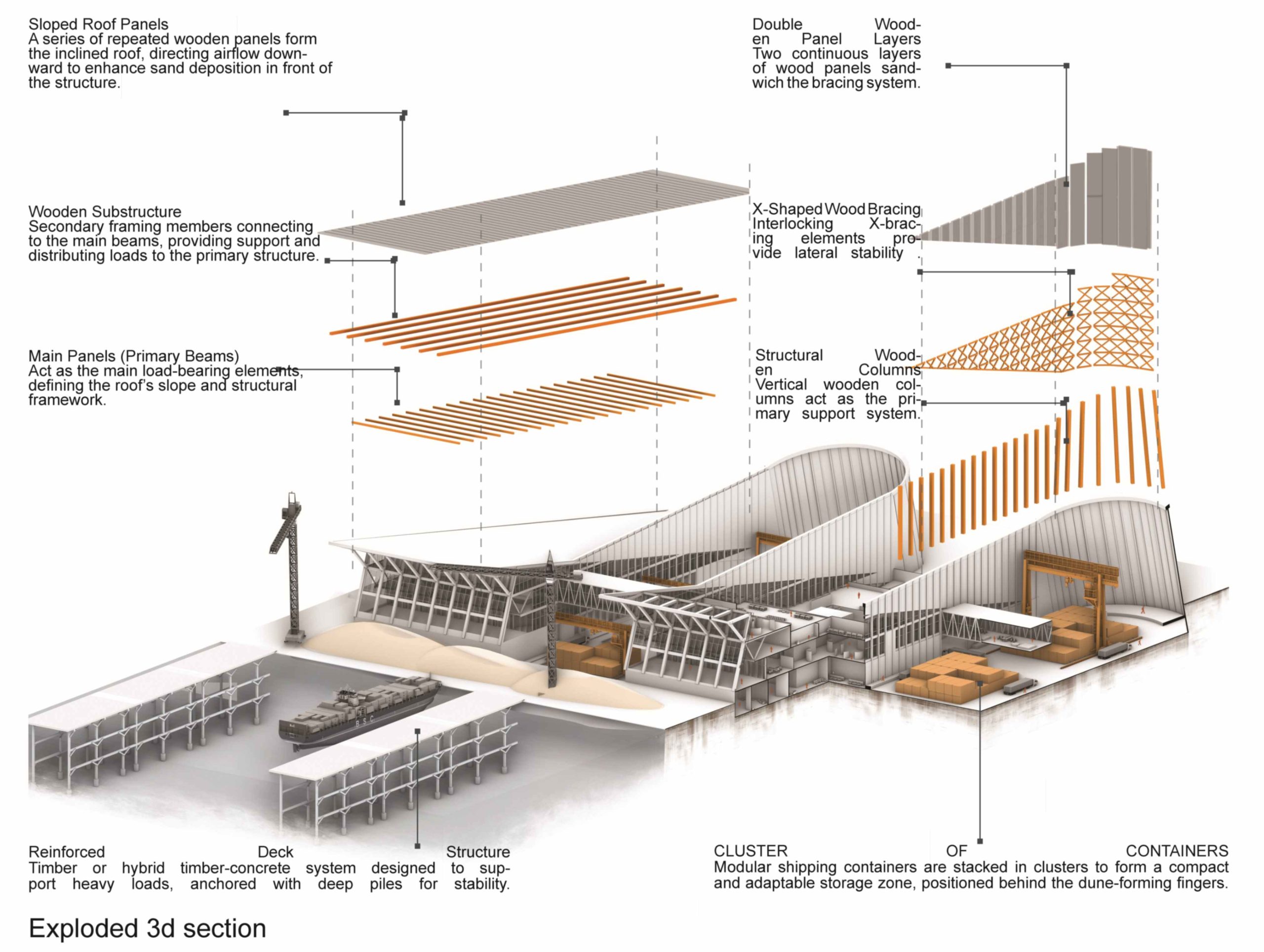
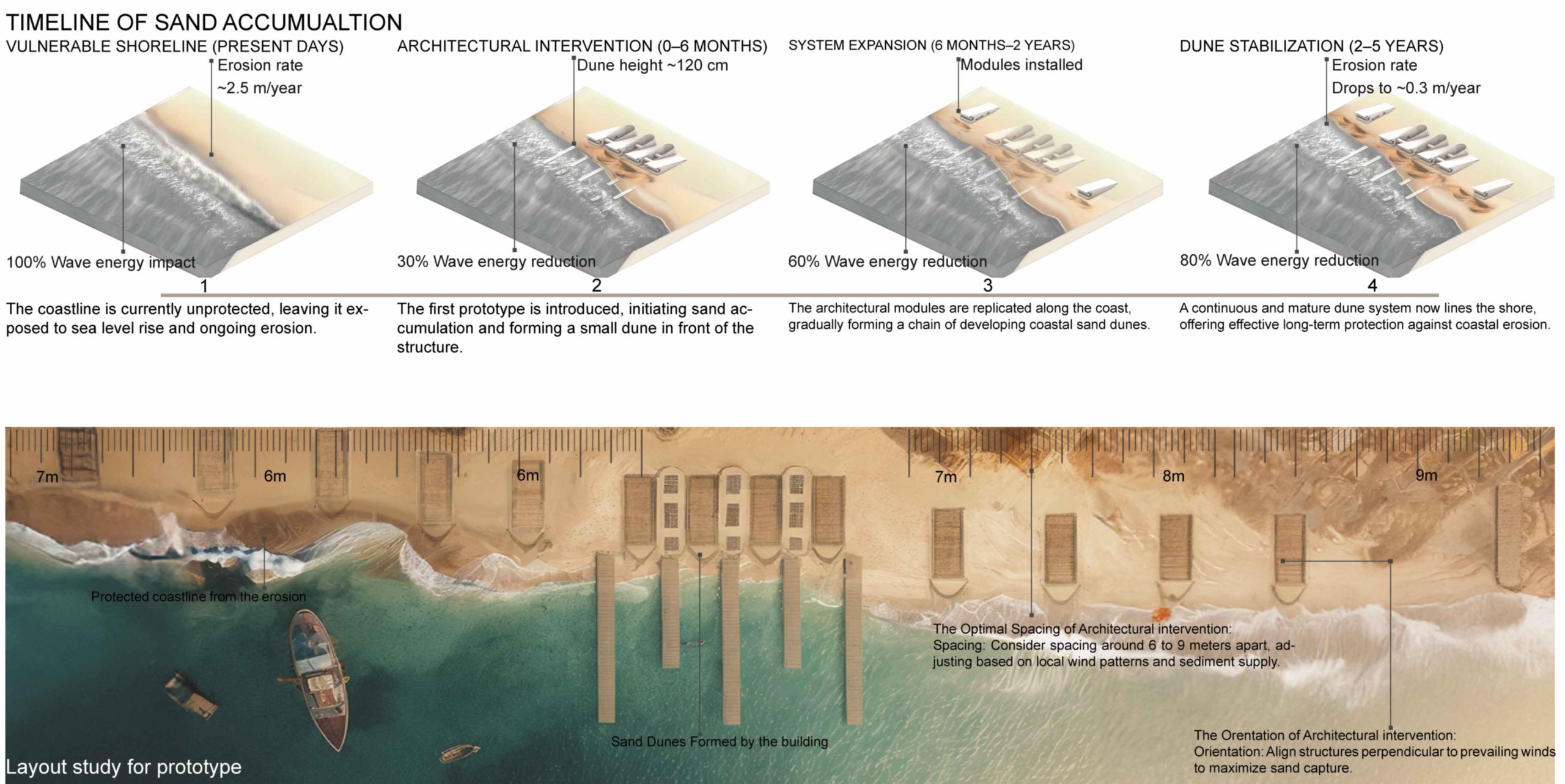
The design responds by harnessing natural forces, transforming them into tools for resilience. Through the Venturi effect, wind is accelerated and redirected across sloped roofs and curved walls, guiding sand into controlled zones to form protective dunes. This architectural form doubles as coastal defense, mitigating erosion while shaping a new civic landmark.
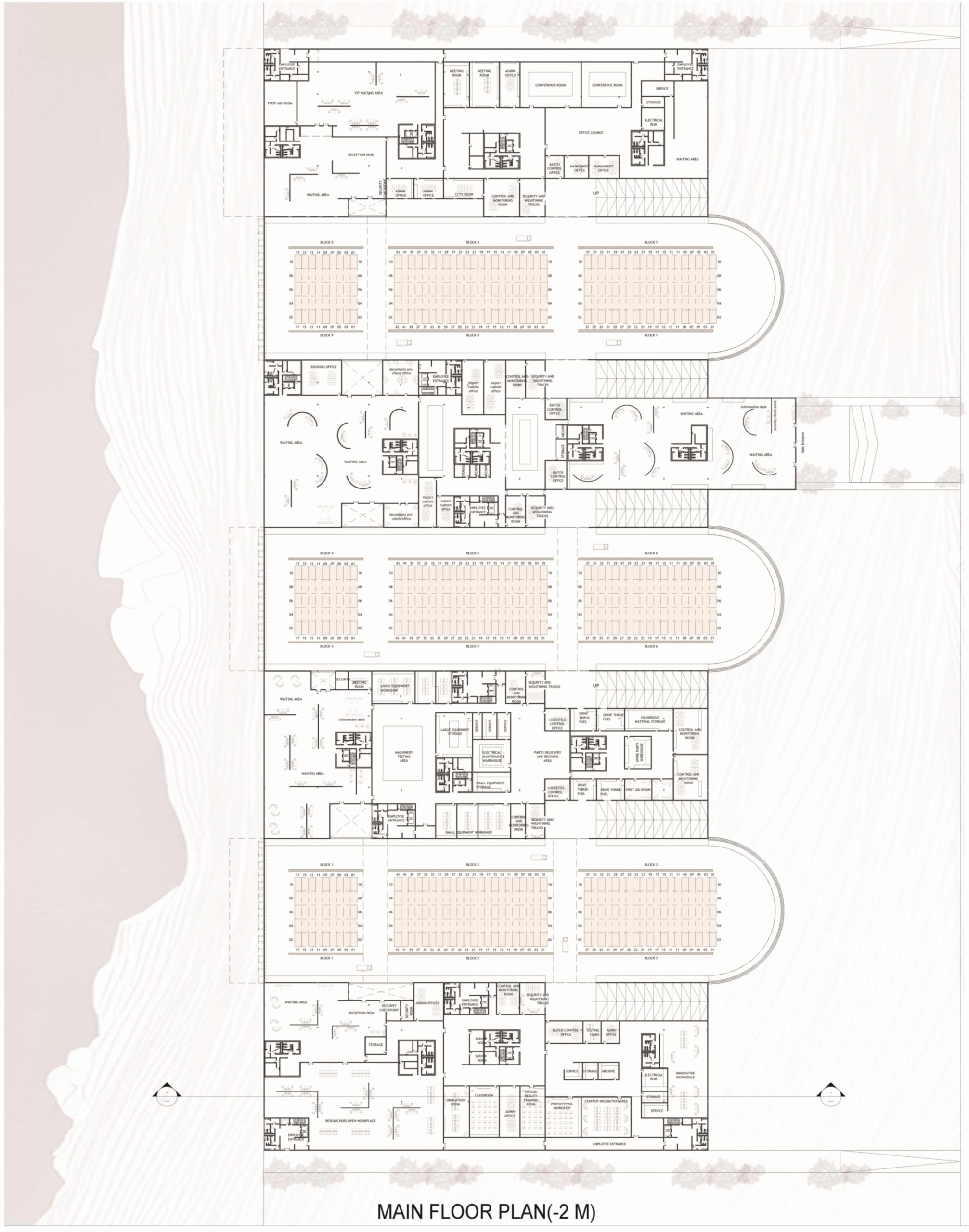
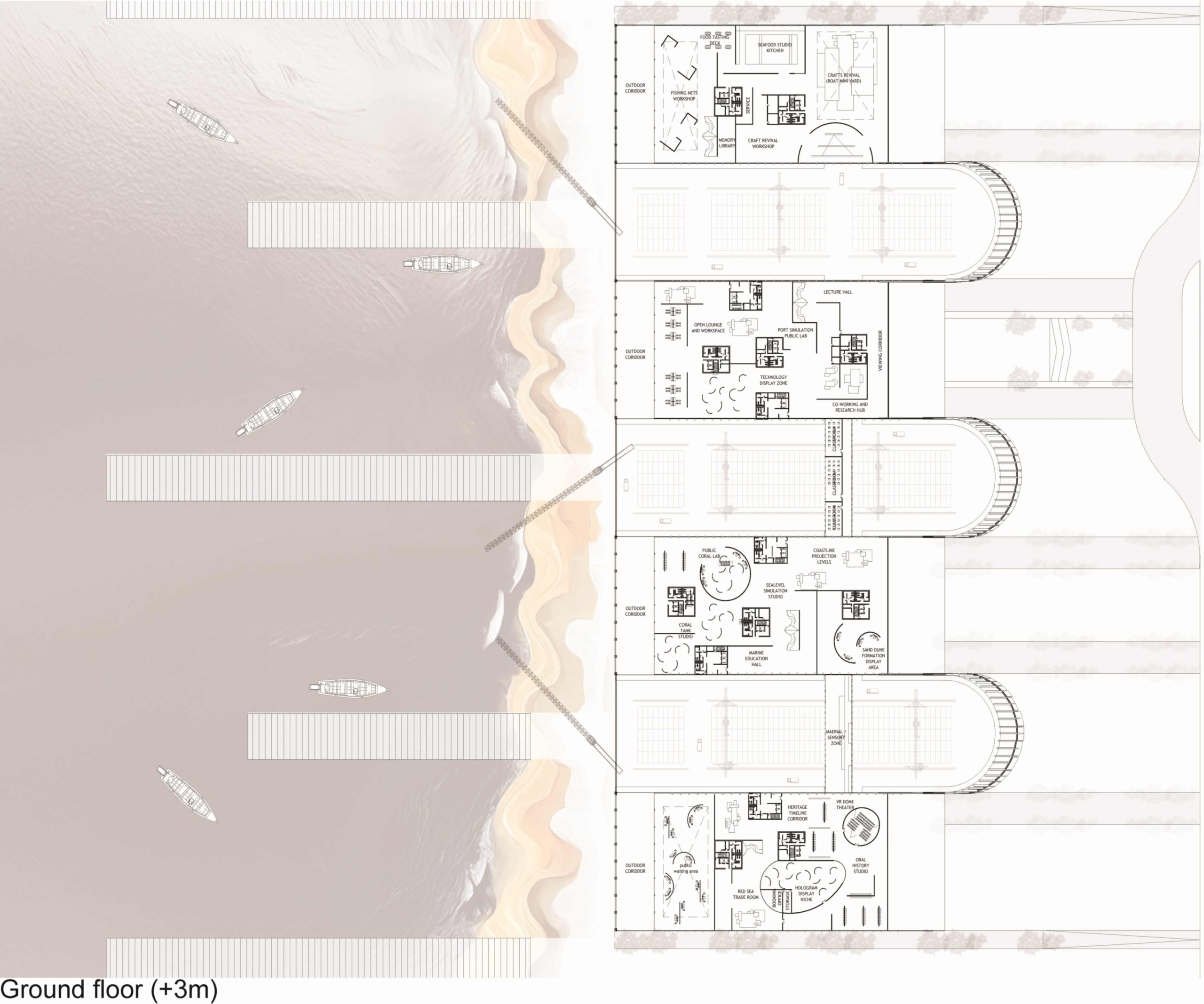
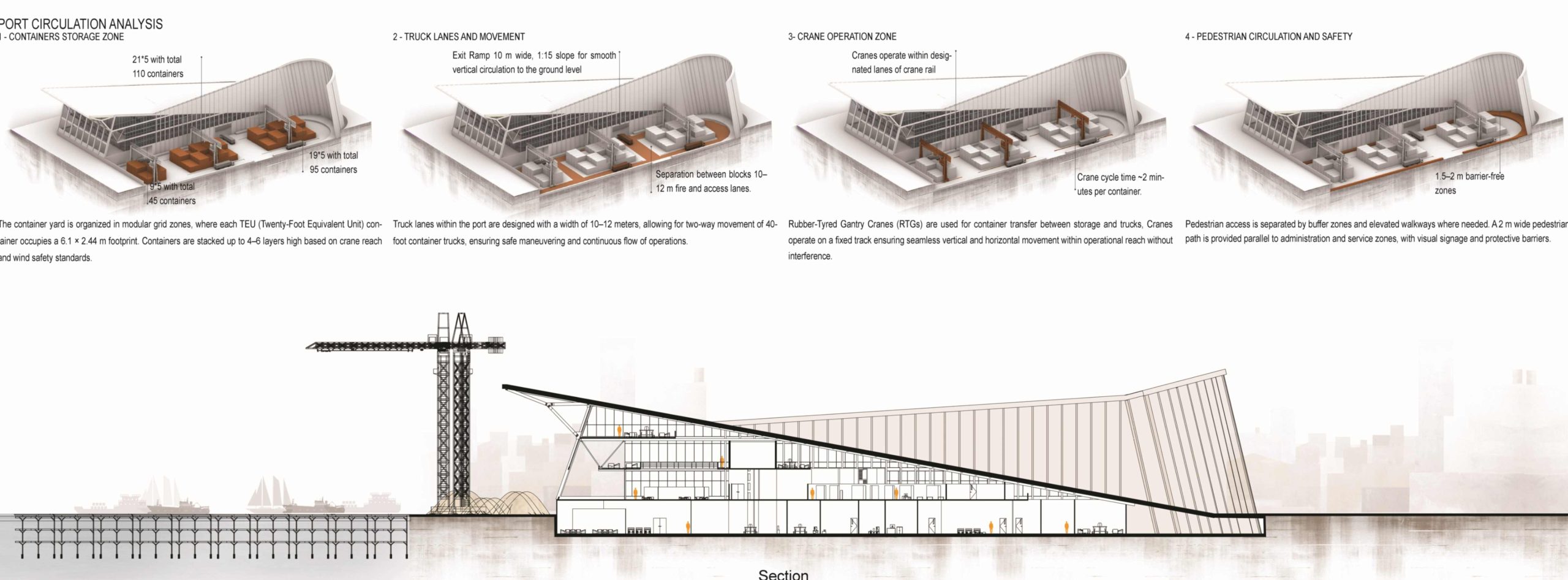
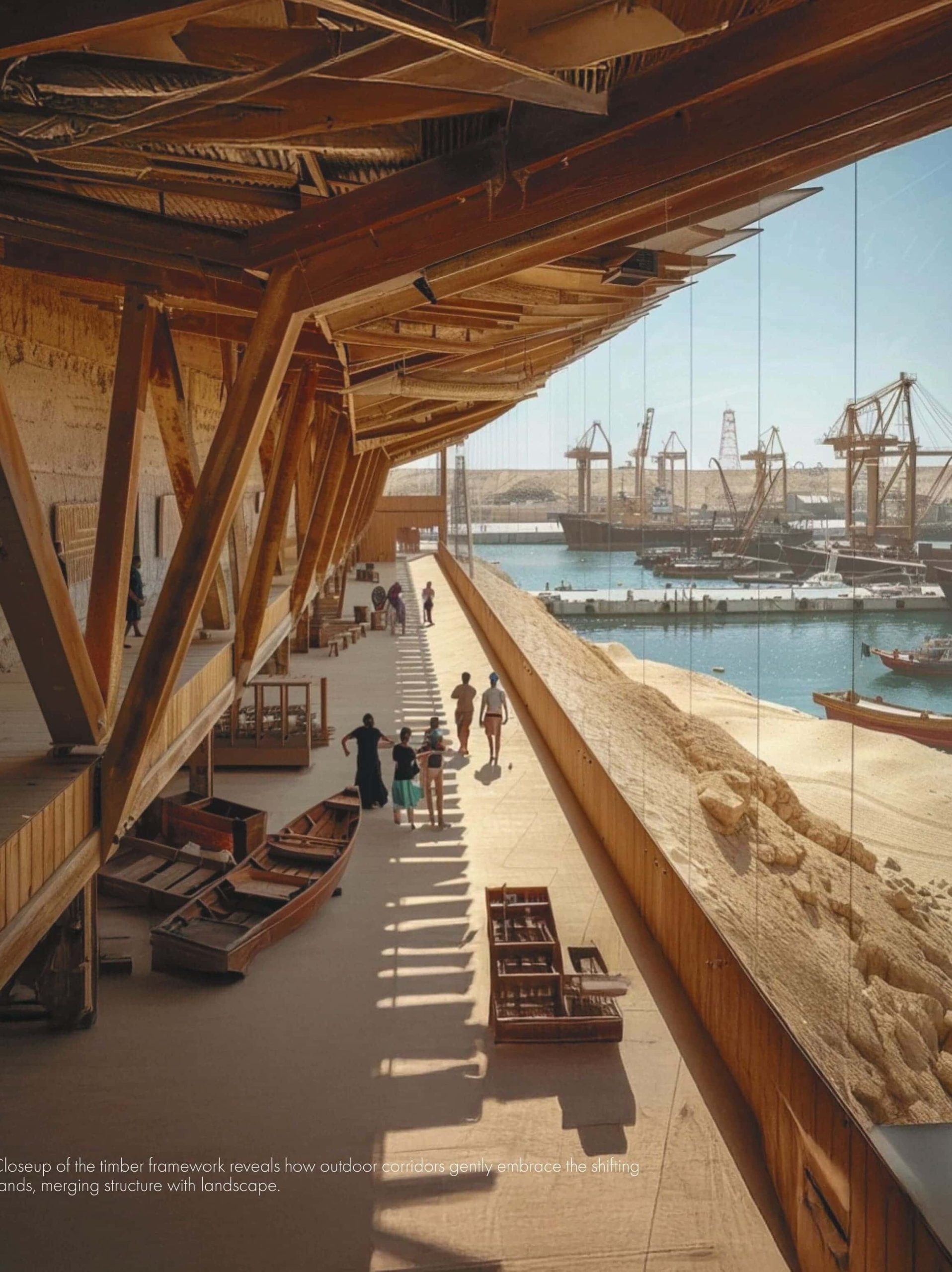
The spatial system follows a modular “finger” configuration. At the basement level, container storage, truck lanes, and gantry crane rails ensure port efficiency. Above, elevated public platforms host cultural programs, exhibitions, and educational spaces, reconnecting citizens with maritime heritage while maintaining a direct view of port operations and dune formation.
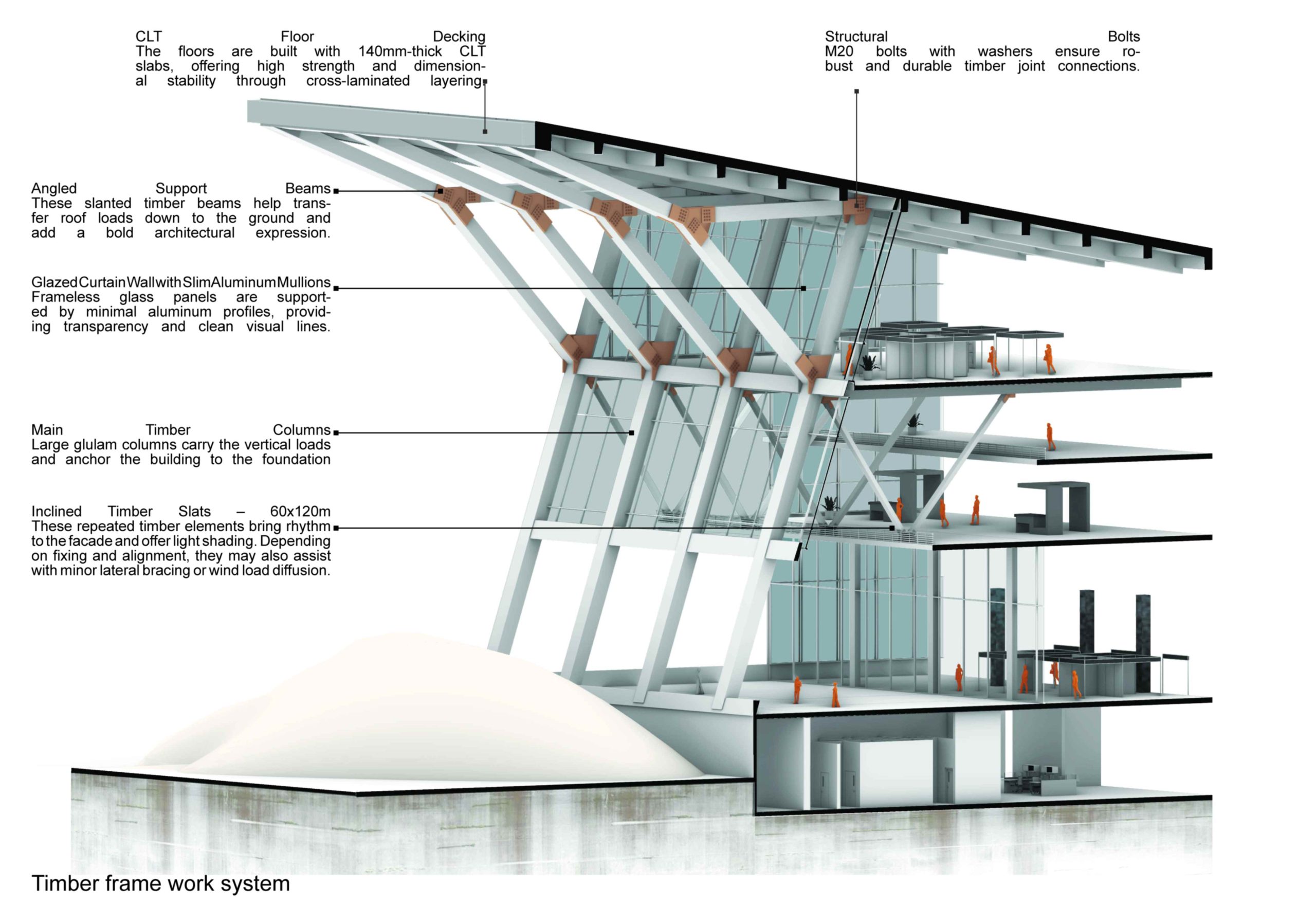
Materiality blends tradition and innovation: glulam timber frames recall the craft of wooden boat building, while reinforced concrete withstands heavy logistics. This balance grounds the project in its local identity while projecting a vision of ecological modernity. Ultimately, the project redefines the port as both an infrastructural and cultural landscape, offering a prototype for resilient coastal cities.
Established in 2012, Tamayouz Excellence Award is an unaffiliated, independent initiative that aims to advance the profession of architecture academically and professionally. Tamayouz is dedicated to supporting aspirational and transformative projects that tackle local and global challenges and that are informed by a holistic understanding of context.