
University : Helwan University
Tutor(s) : Dr Mahmoud Taha, Dr Sarah Ismail and Dr Muhammed Alaa
Project Description
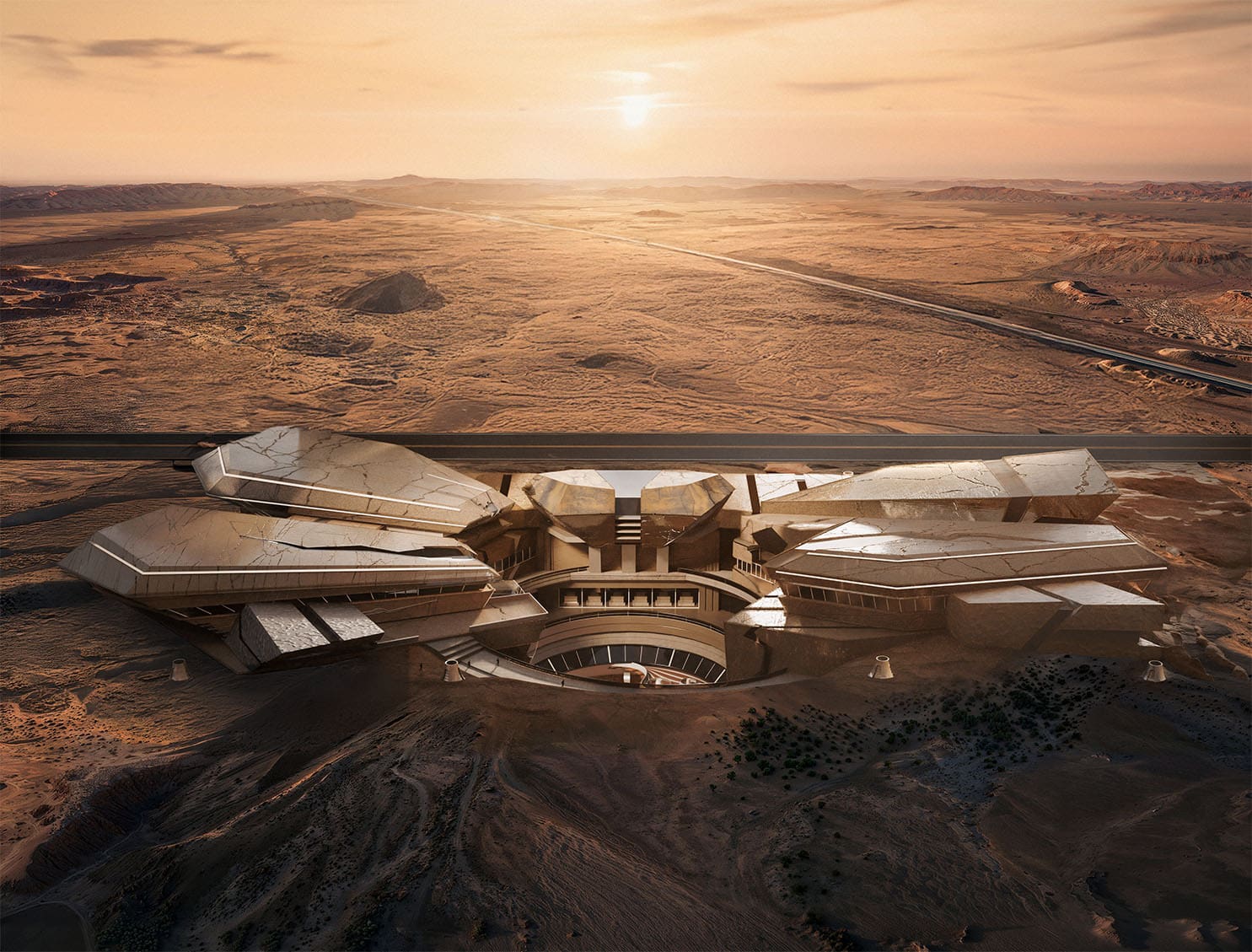
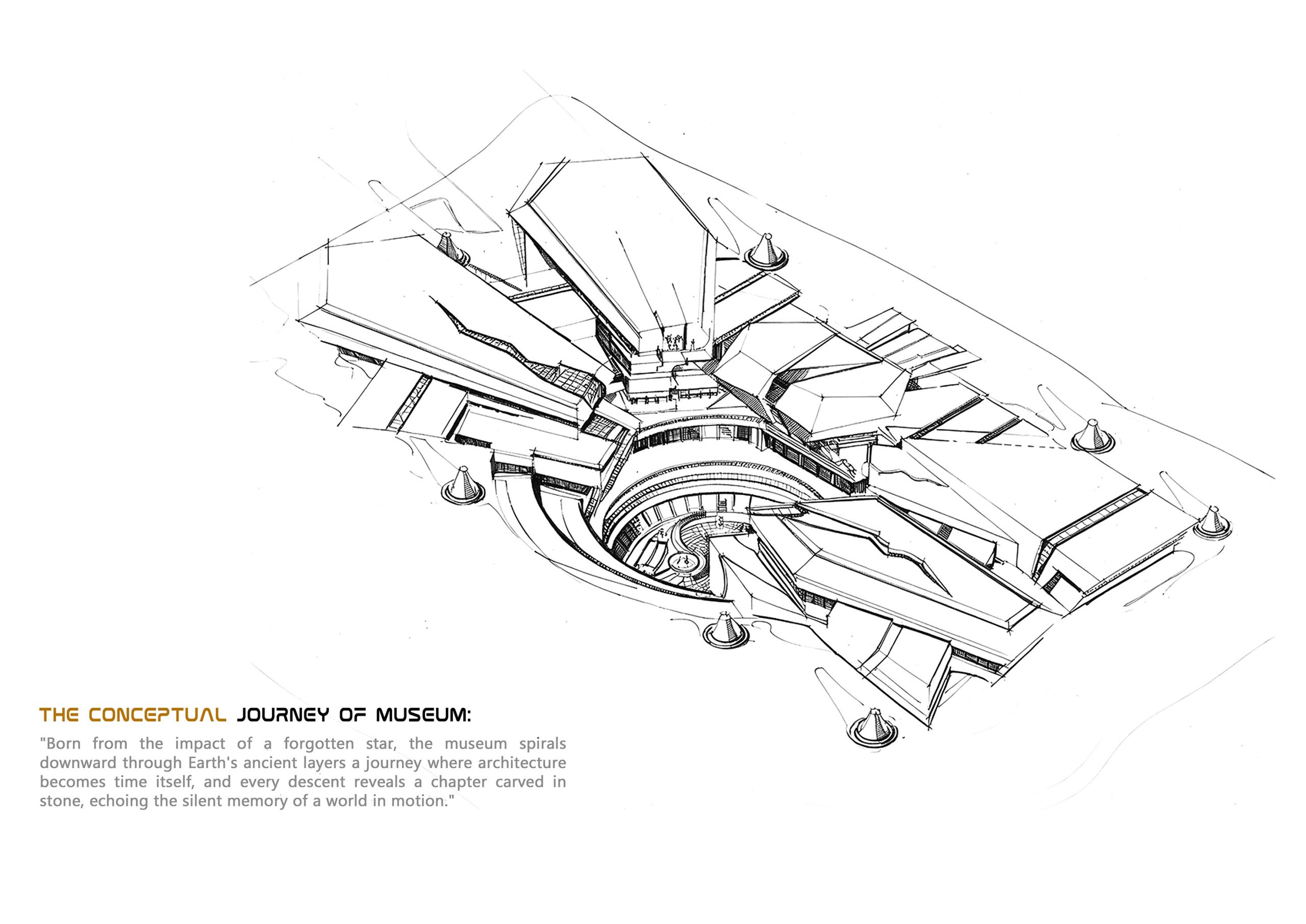
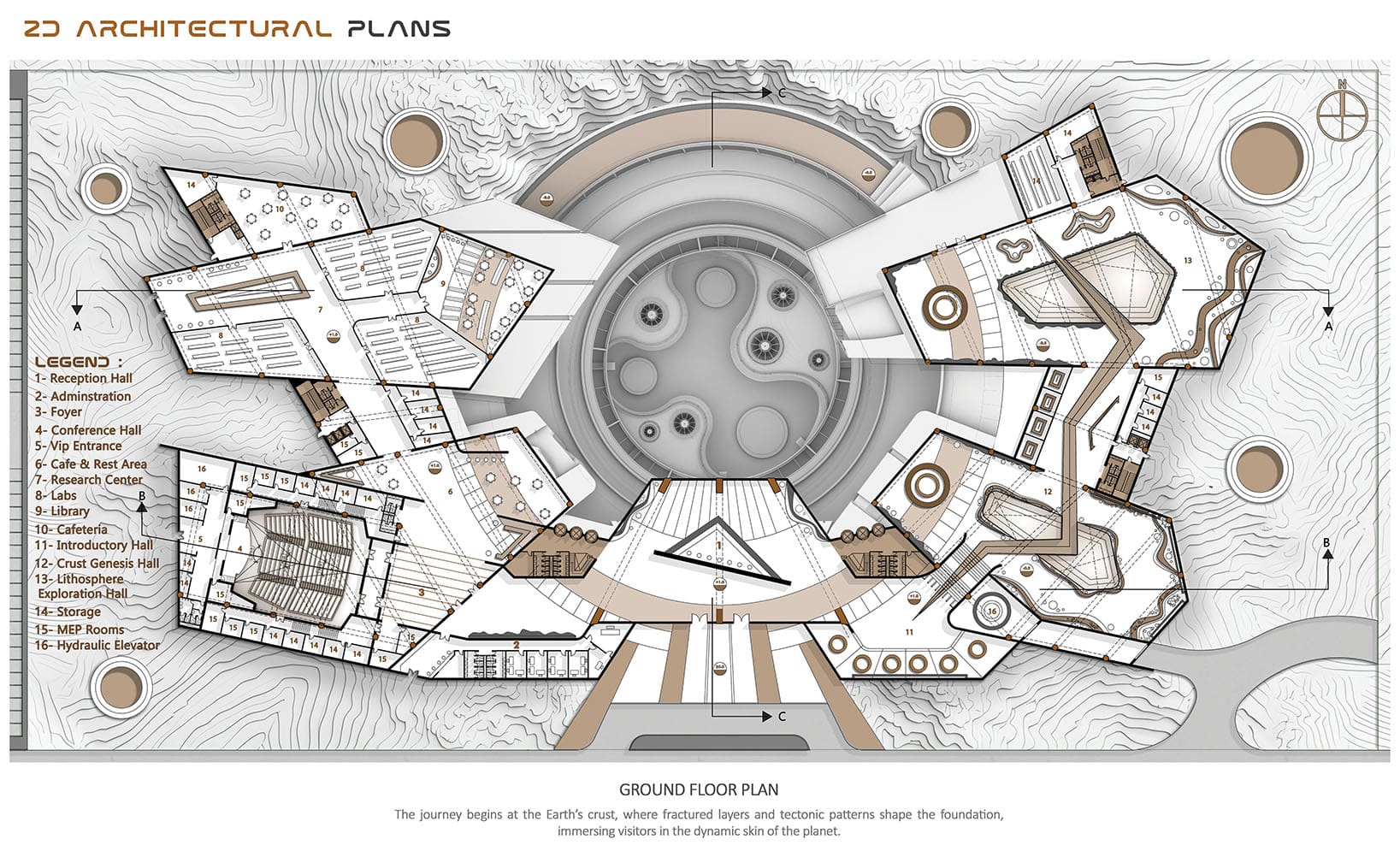
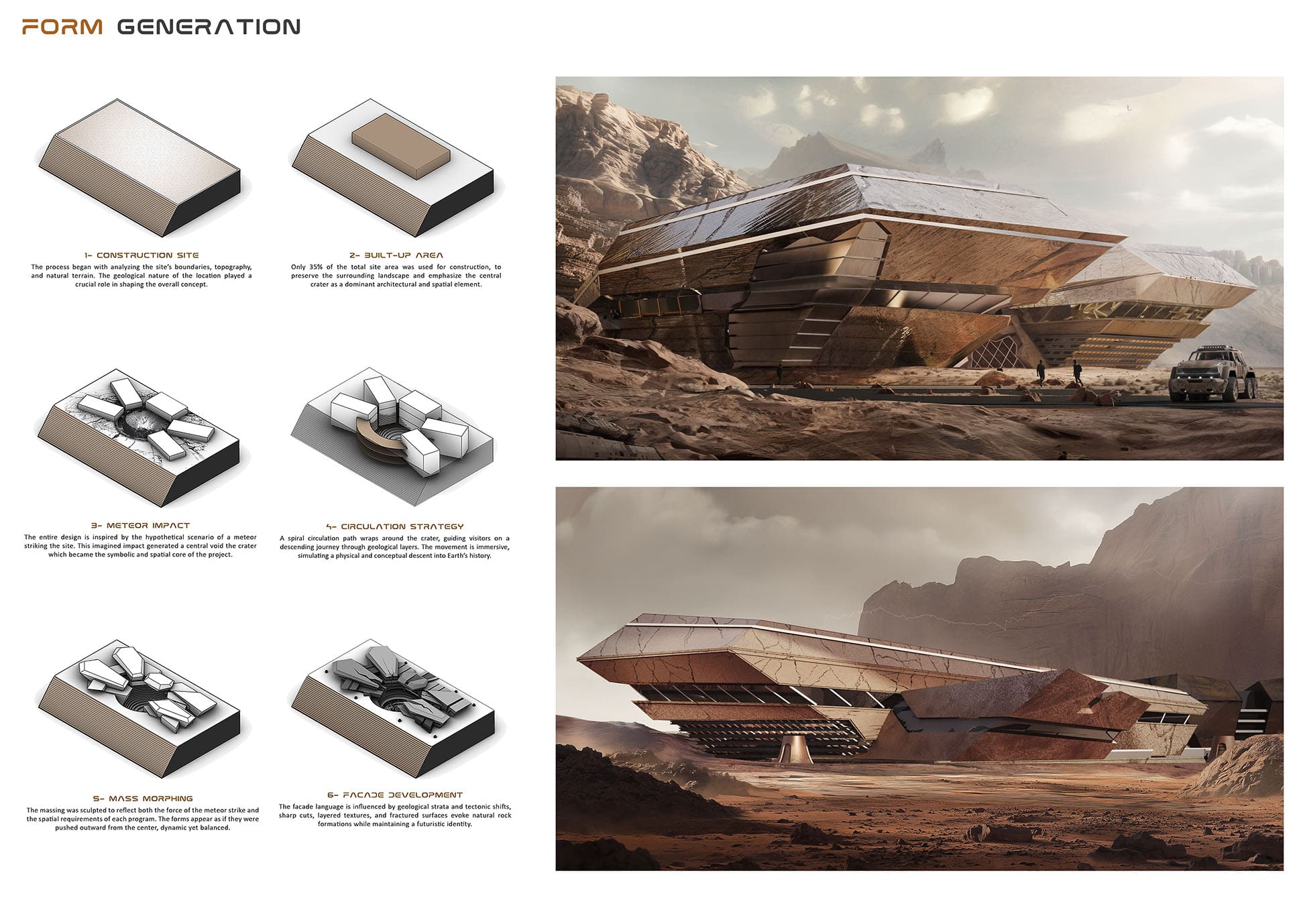
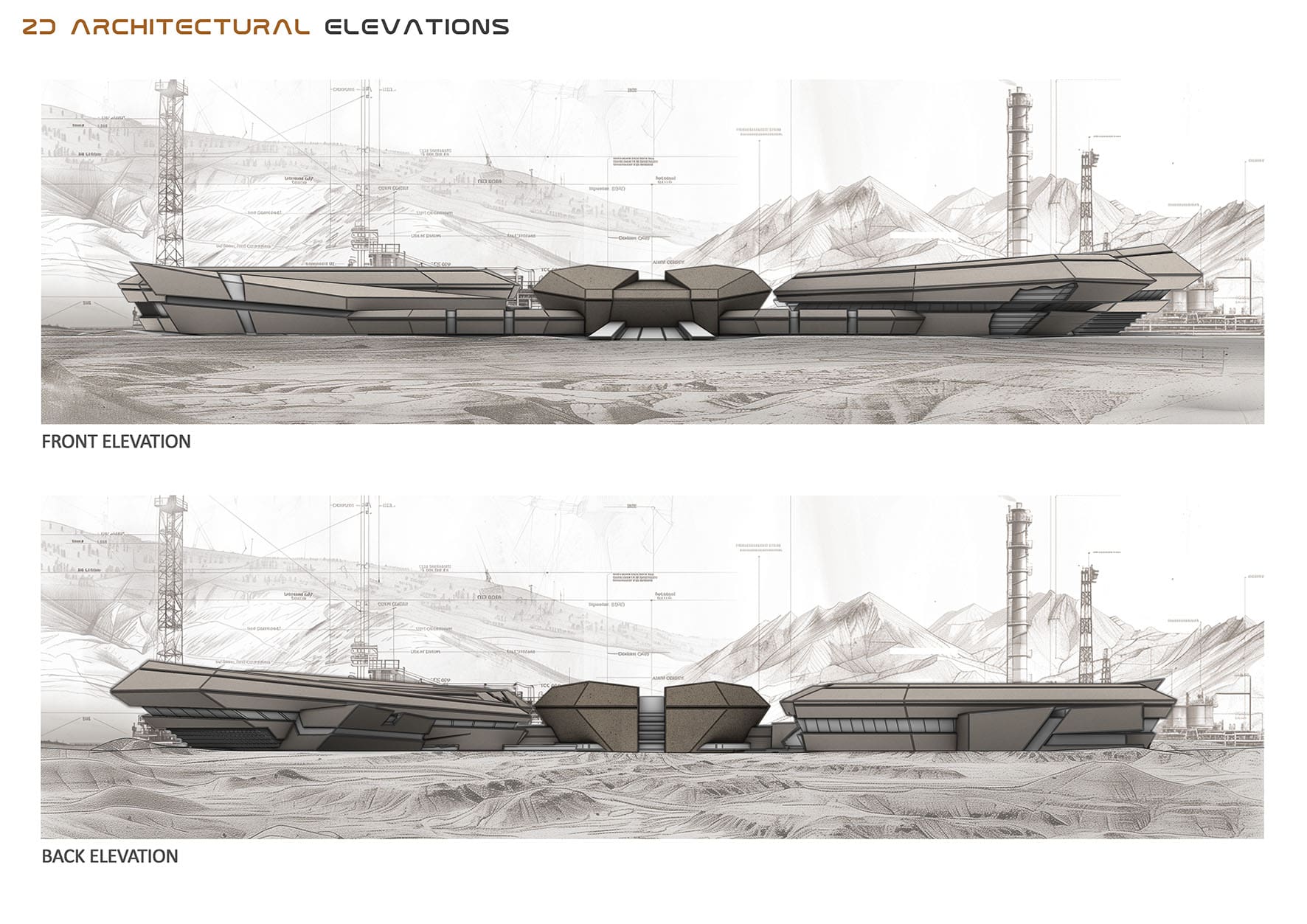
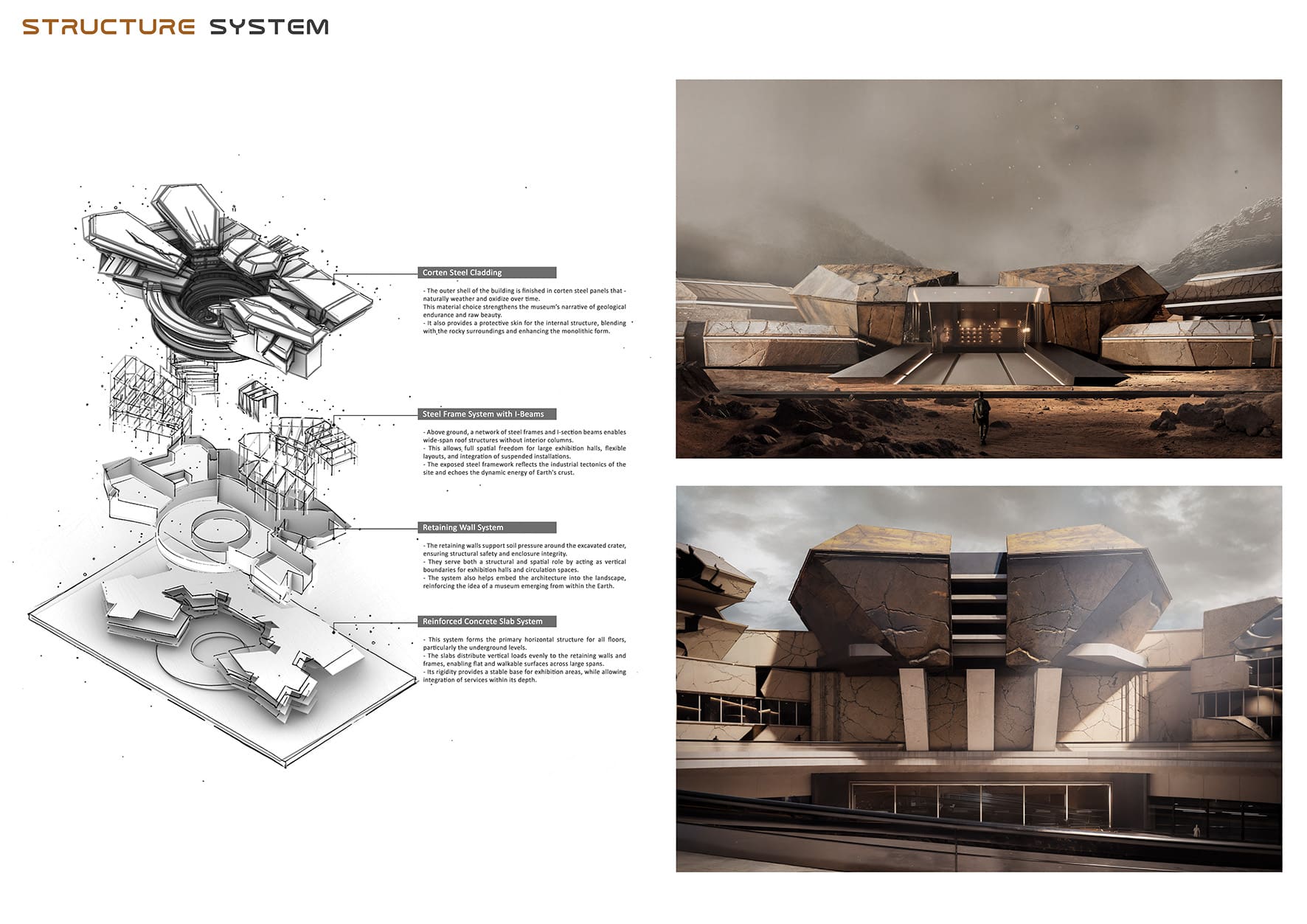
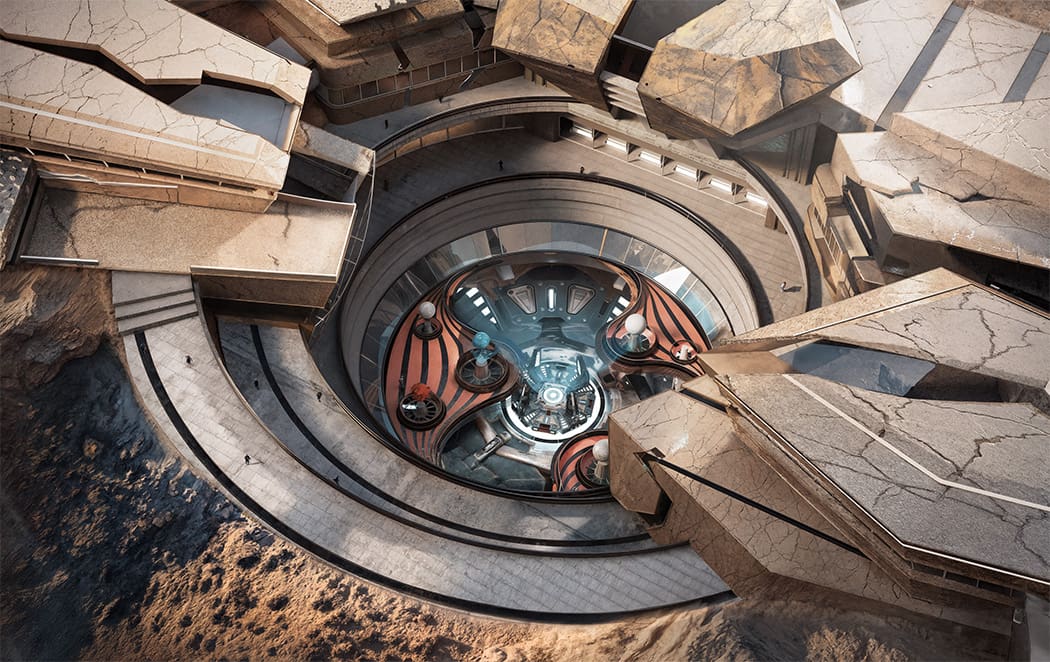
Jawf is a geological museum and research center developed as my graduation project. The idea started with the image of a crater. A crater shows the effect of impact on the earth’s surface, but it also leads to what is hidden below. This image became the base for the design.
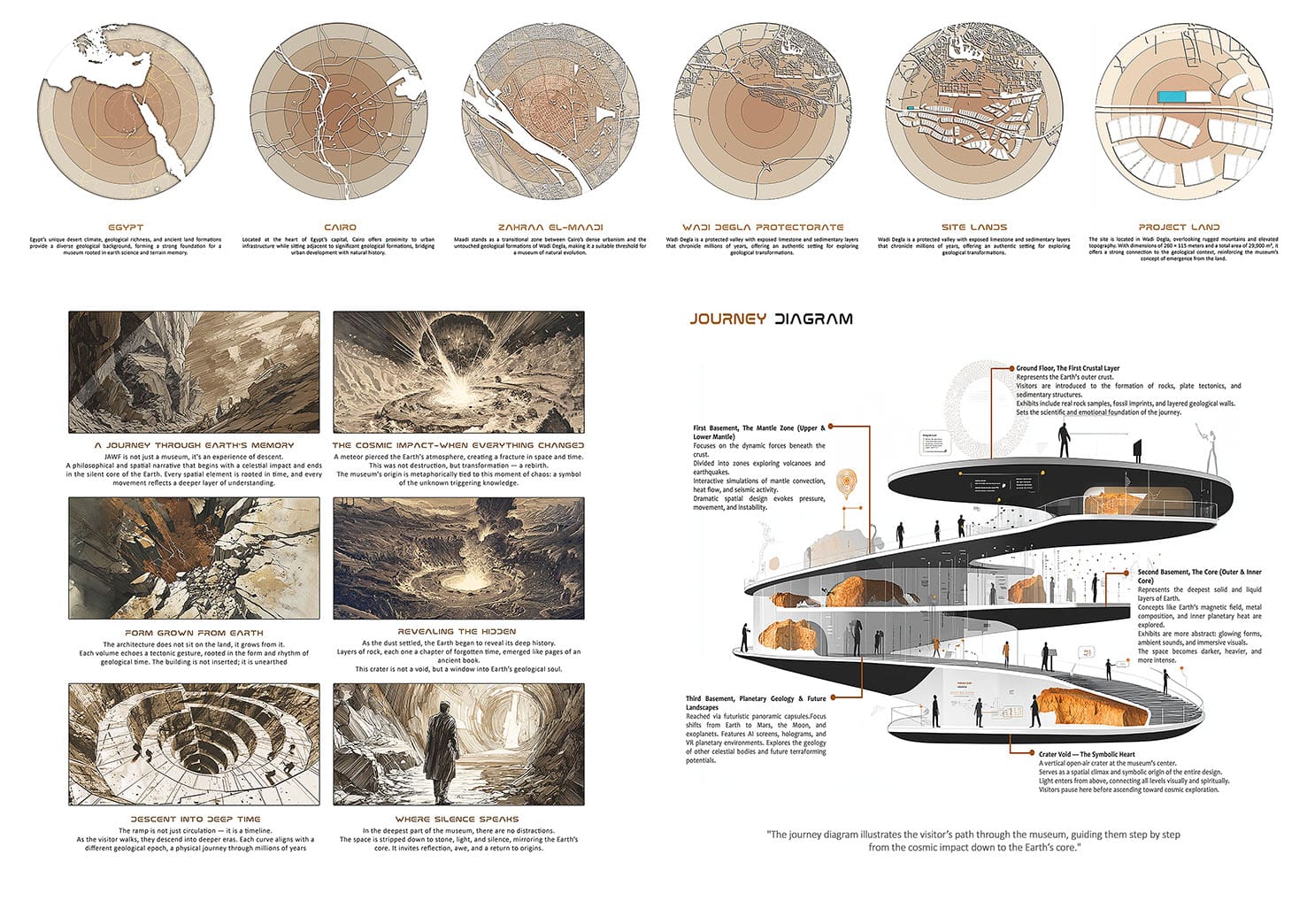
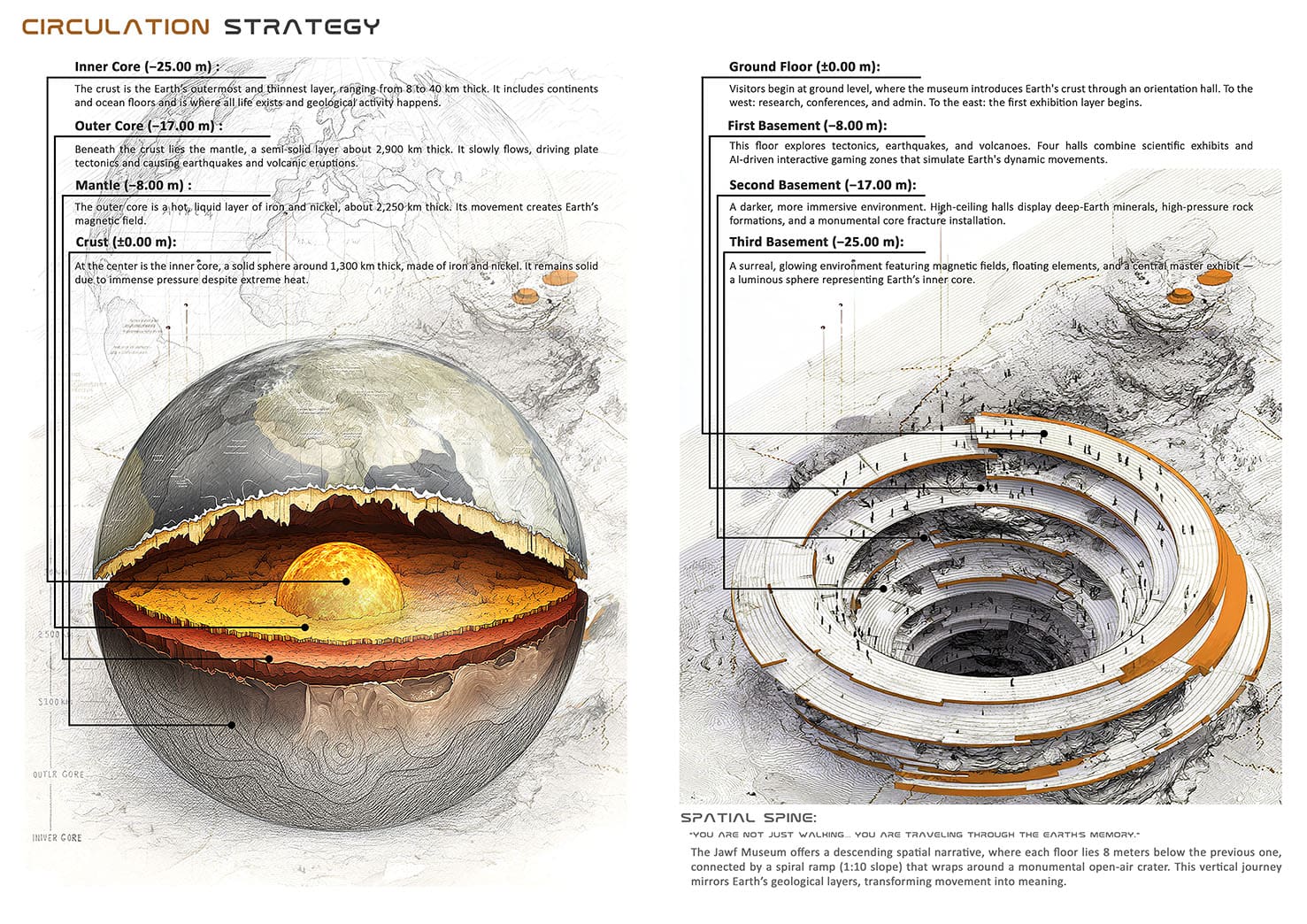
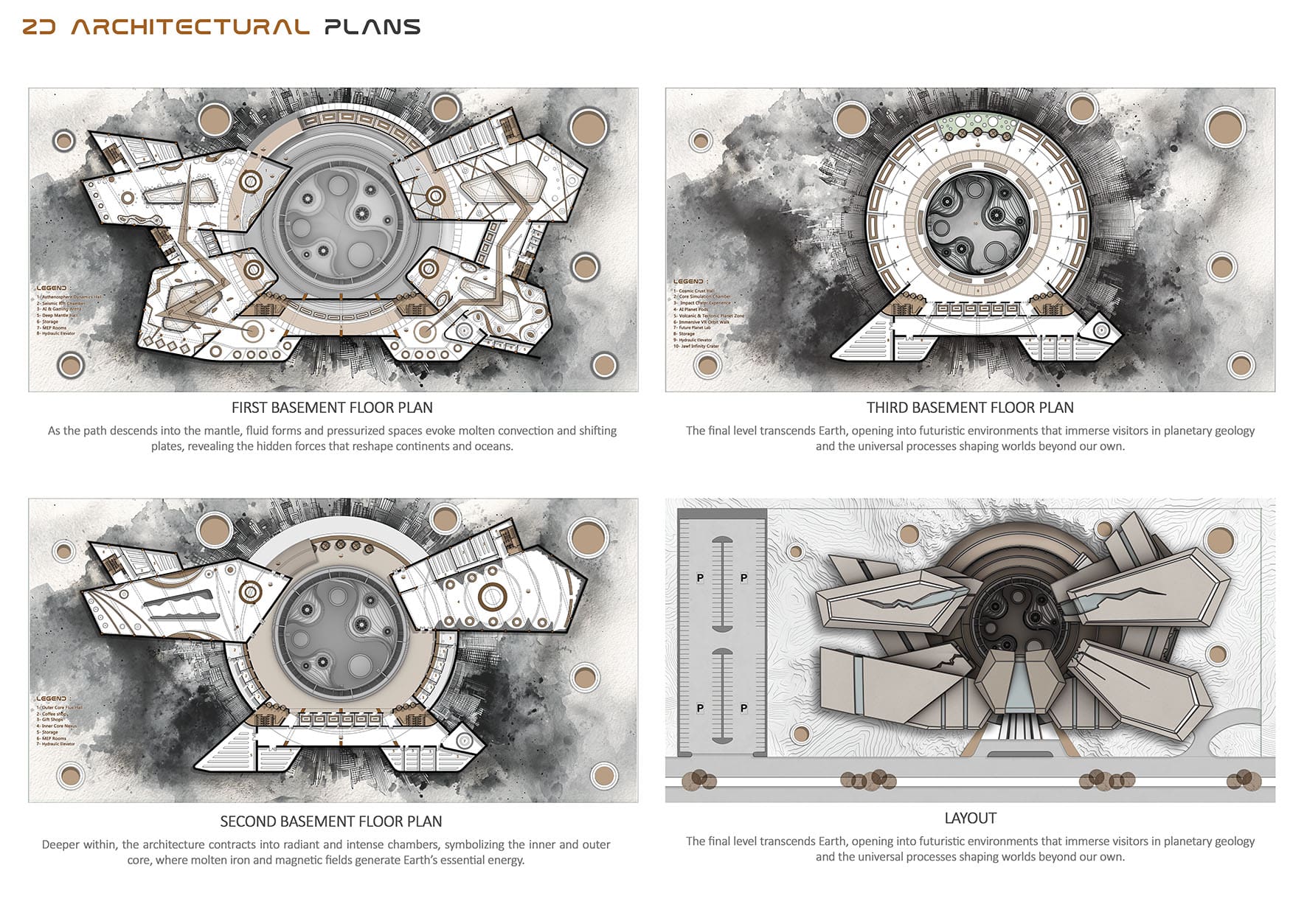
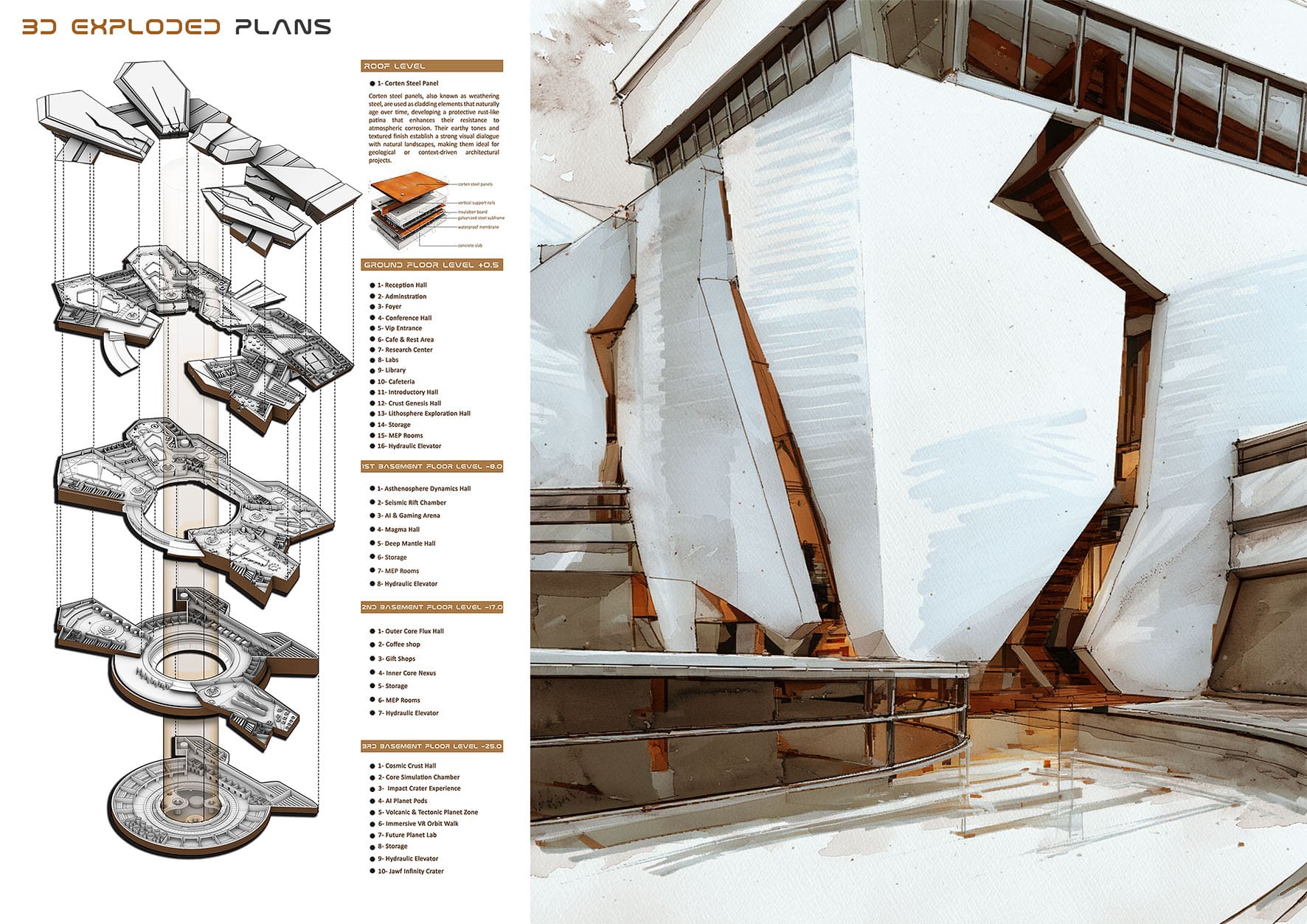
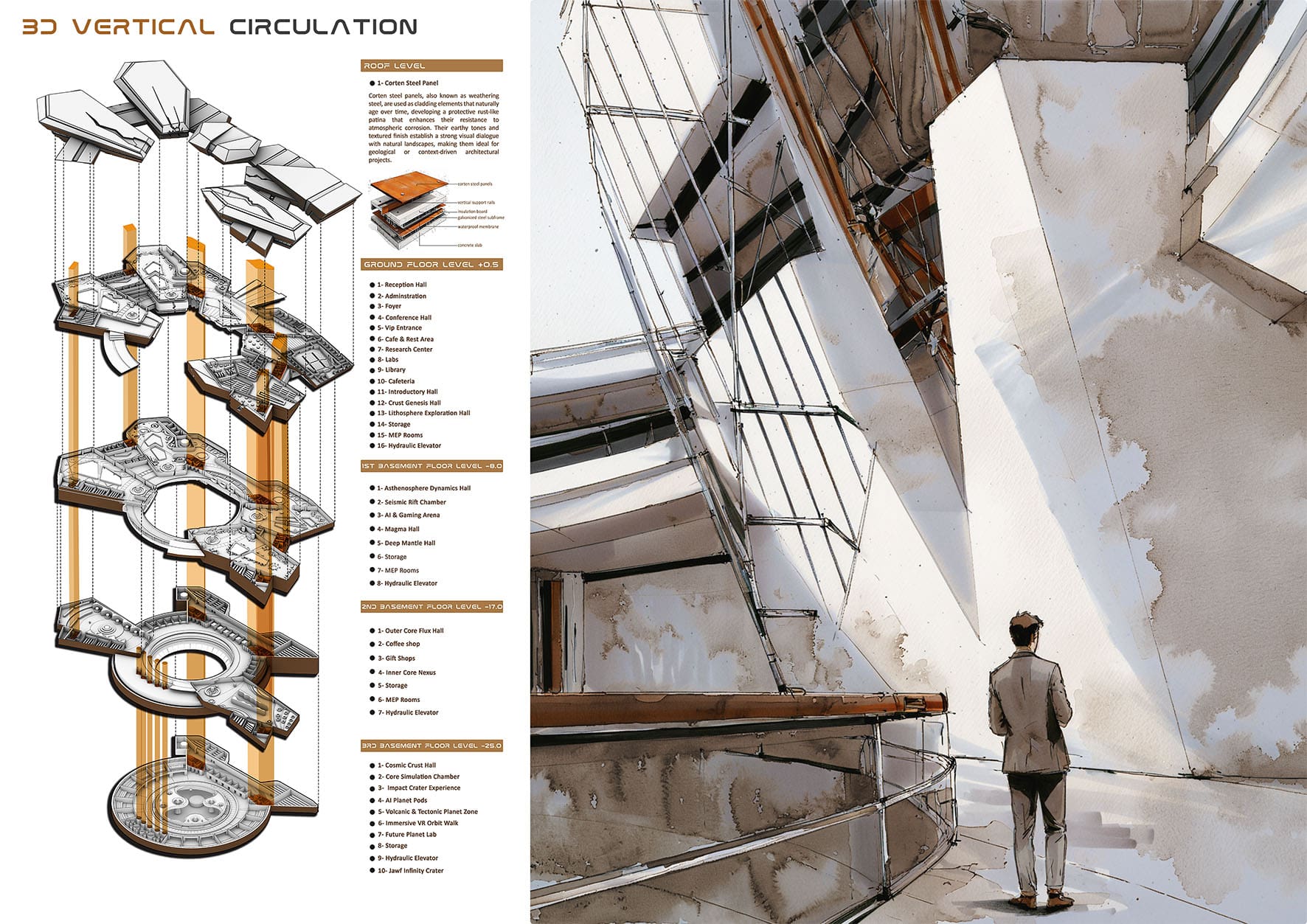
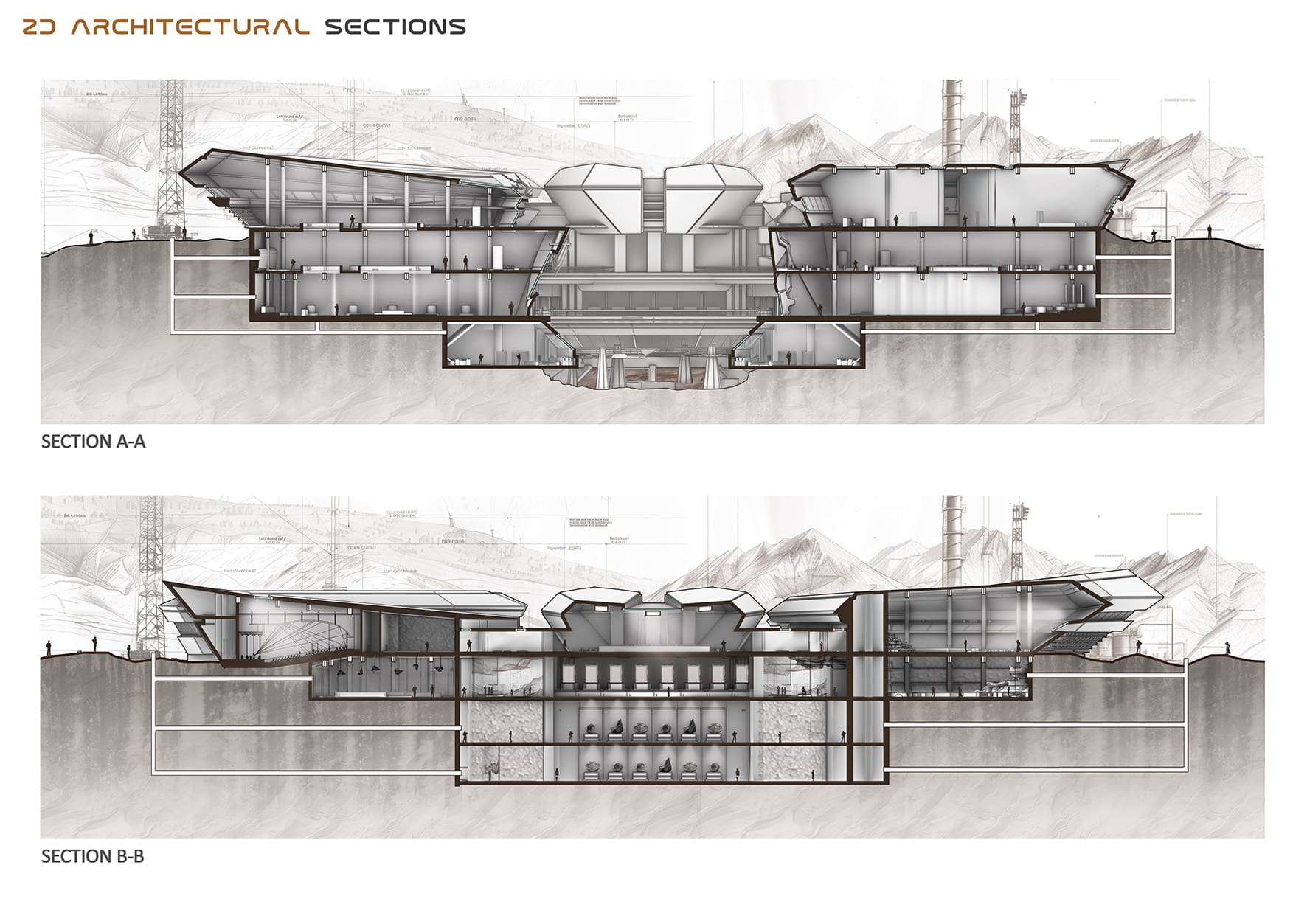
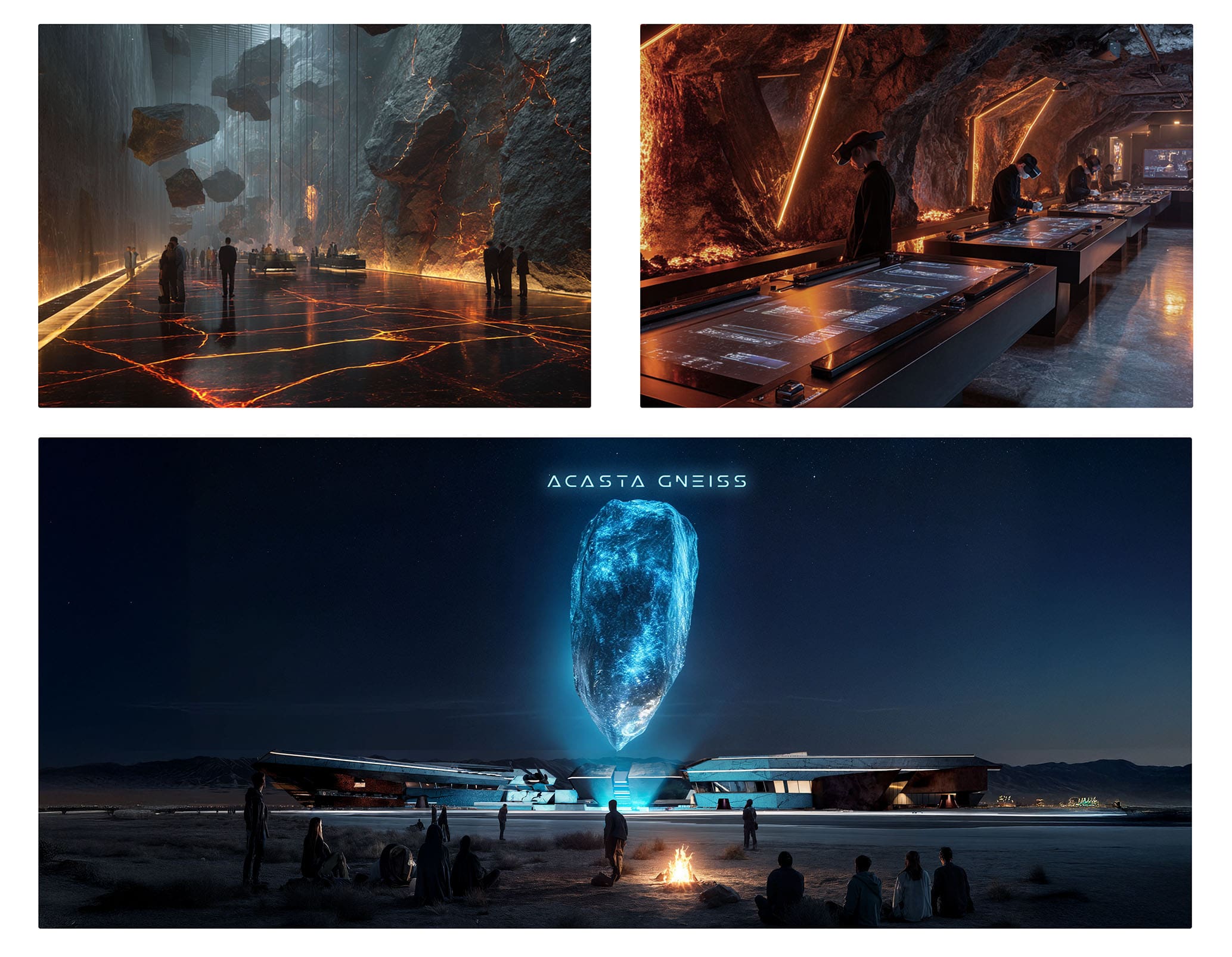
The building works as a downward journey. Visitors enter at the ground level and move step by step to lower floors. Each floor explains one of the main geological layers. The crust is shown through surface rocks and formations. The mantle is explained with models and digital simulations. The core is presented with interactive media that make the unseen processes easier to understand. The last part of the museum looks at planetary geology and possible futures.
The project also has labs, teaching rooms, and a hall for conferences. These functions keep the building useful every day, not only for visitors but also for researchers and students.
Its area comes to about 30,000 m², spread across the museum halls and the other functions. The design keeps the layout direct, with clear movement between spaces. Sustainable measures are considered to reduce energy use. The goal is simple: to explain geology in a way that people can understand and to let them feel the experience of moving through the Earth’s layers.
I think that my project, JAWF Museum, deserves an award because it expands on a simple but great idea and turns it into an experience for people. The original concept came from how a crater has the power to change the landscape and reveal what is beneath. I worked off of that and it helped shape the museum design.
The building does not merely show information on walls. Instead, the building takes one step by step downward, as if one is traveling into the Earth itself. Each floor of the museum corresponds to a layer of geology, and the rooms are designed to cause visitors to feel the character of the layer. Thus, the museum is not merely an exhibit hall in a building, it becomes part of the narrative.
I also believe the project should be recognized because it’s not only for visitors. It has spaces for research, learning, and events, which means scientists, students, and locals can use it too. This keeps the museum alive throughout the year, not just as a one-time visit.
Finally, the project shows how architecture can make science accessible and memorable. It connects knowledge with experience, and I believe that this should be awarded.
Established in 2012, Tamayouz Excellence Award is an unaffiliated, independent initiative that aims to advance the profession of architecture academically and professionally. Tamayouz is dedicated to supporting aspirational and transformative projects that tackle local and global challenges and that are informed by a holistic understanding of context.