

University : Cairo University
Tutor(s) : Dr Mohamed Noeman
Project Description
Problem
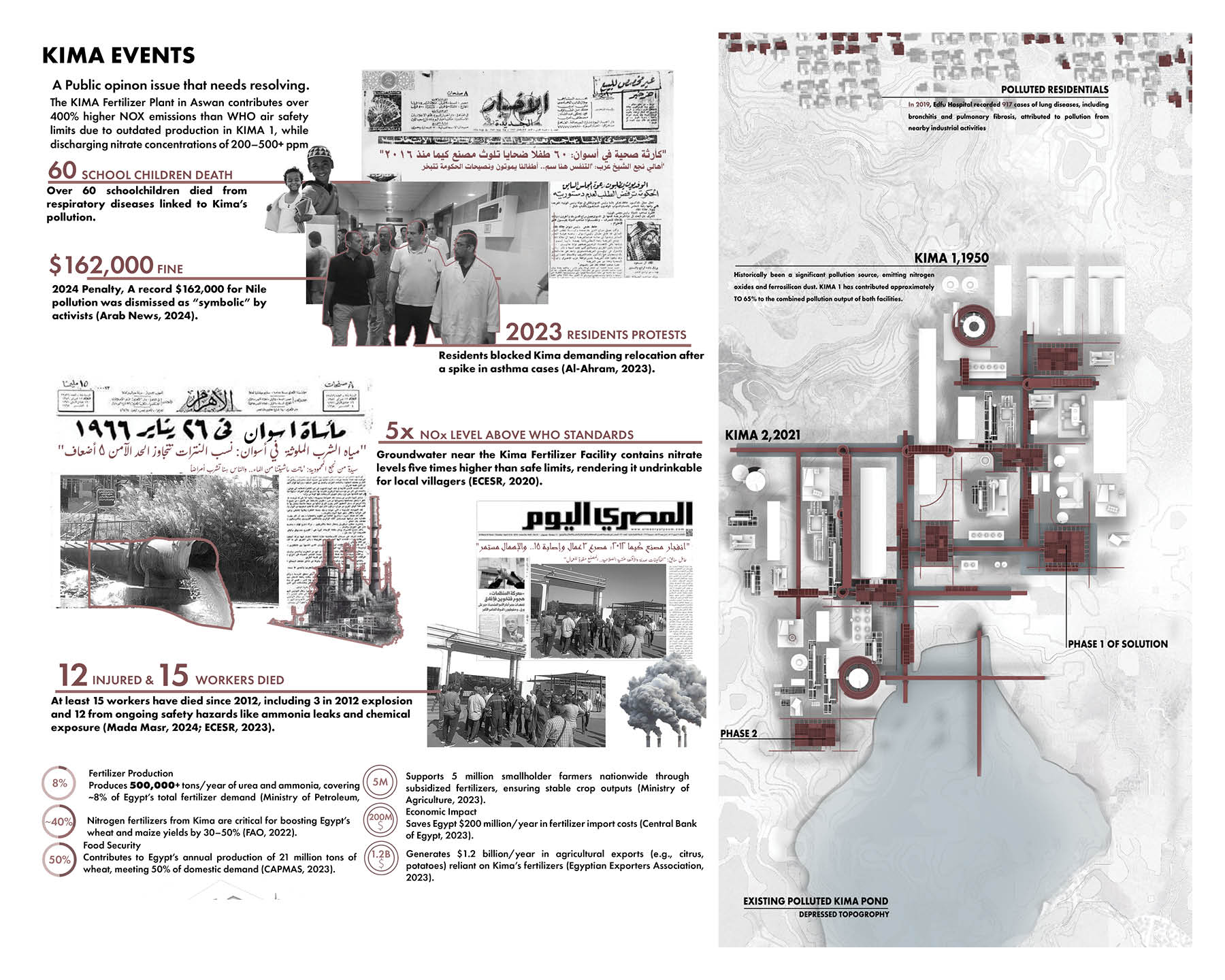
The KIMA Fertilizer Plant in Aswan has become a critical environmental and public health concern due to outdated production systems. Emissions from KIMA 1 exceed safe NOx limits by over 400%, while wastewater discharges contain nitrate concentrations above 500 ppm and ammonia levels of 10–50 ppm—far beyond safe thresholds of 10 ppm for nitrates and 1 ppm for ammonia. Pollution trends show a sharp rise in nitrate levels since the 1980s, causing severe contamination of the Nile, Kima pond, and surrounding water systems. These discharges threaten aquatic ecosystems, accelerate eutrophication, and expose more than 1,150 residents and workers to toxic risks. Without intervention, human health and biodiversity in Aswan will continue to deteriorate, highlighting the urgent need for sustainable remediation and facility modernization.
Concept
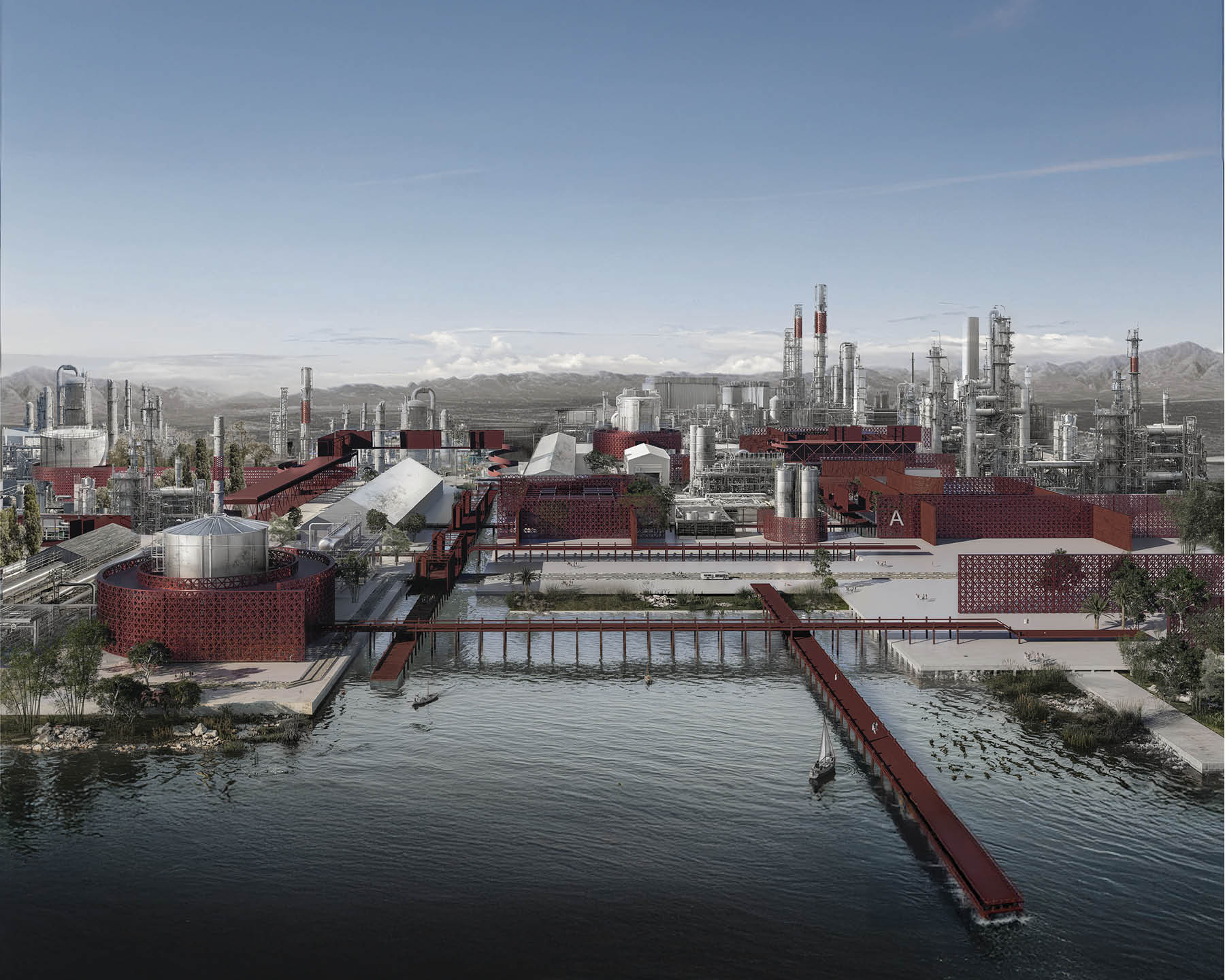
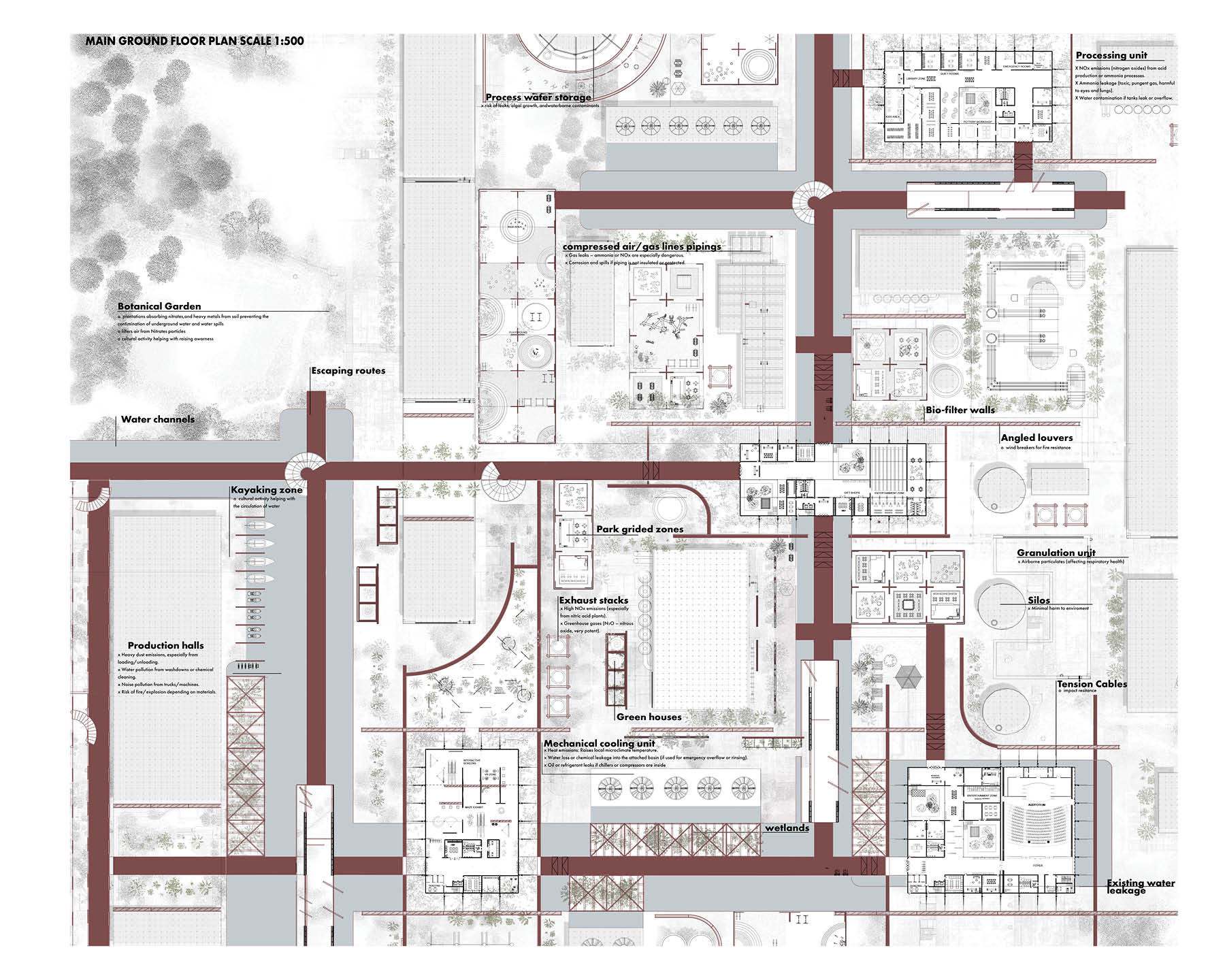
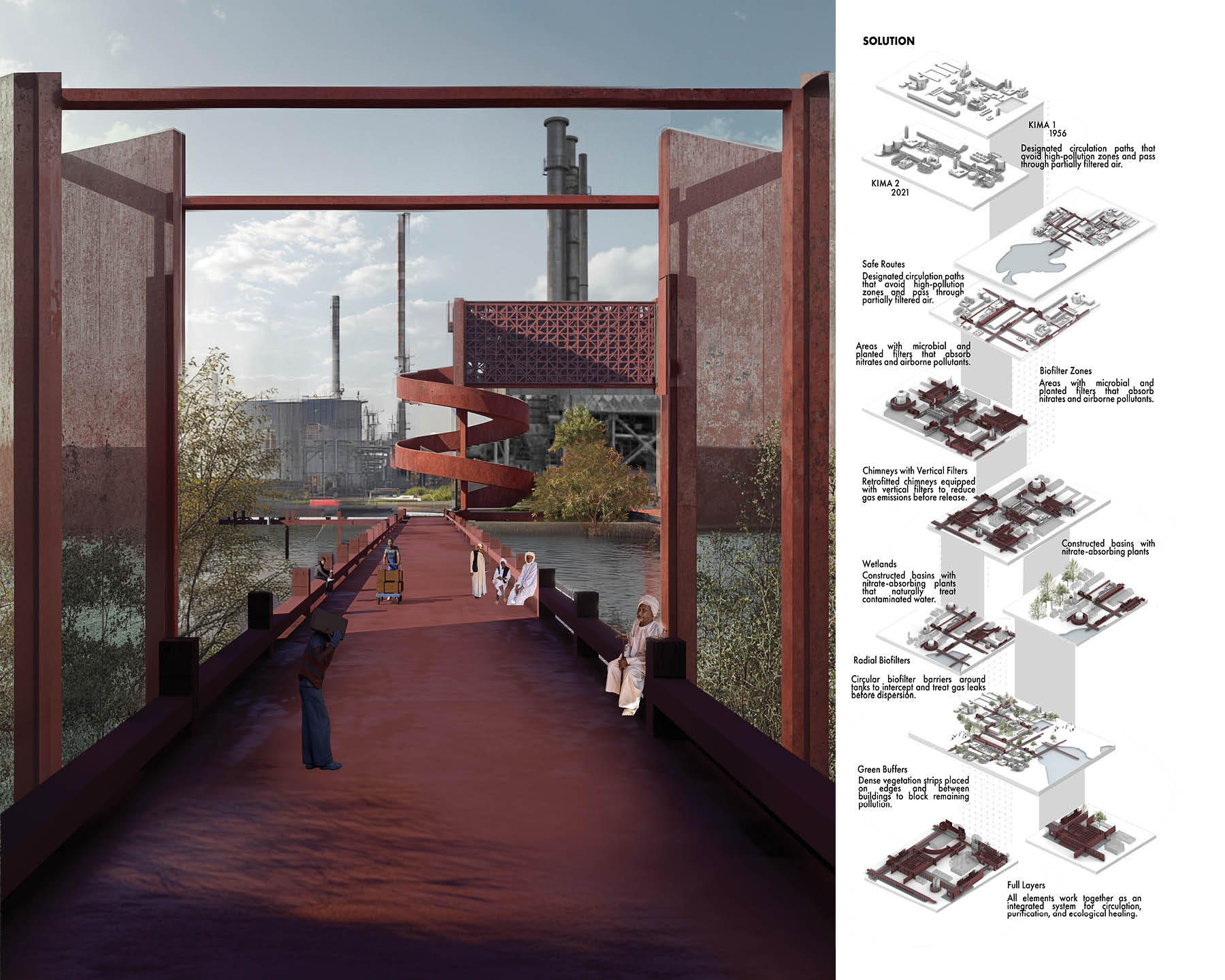
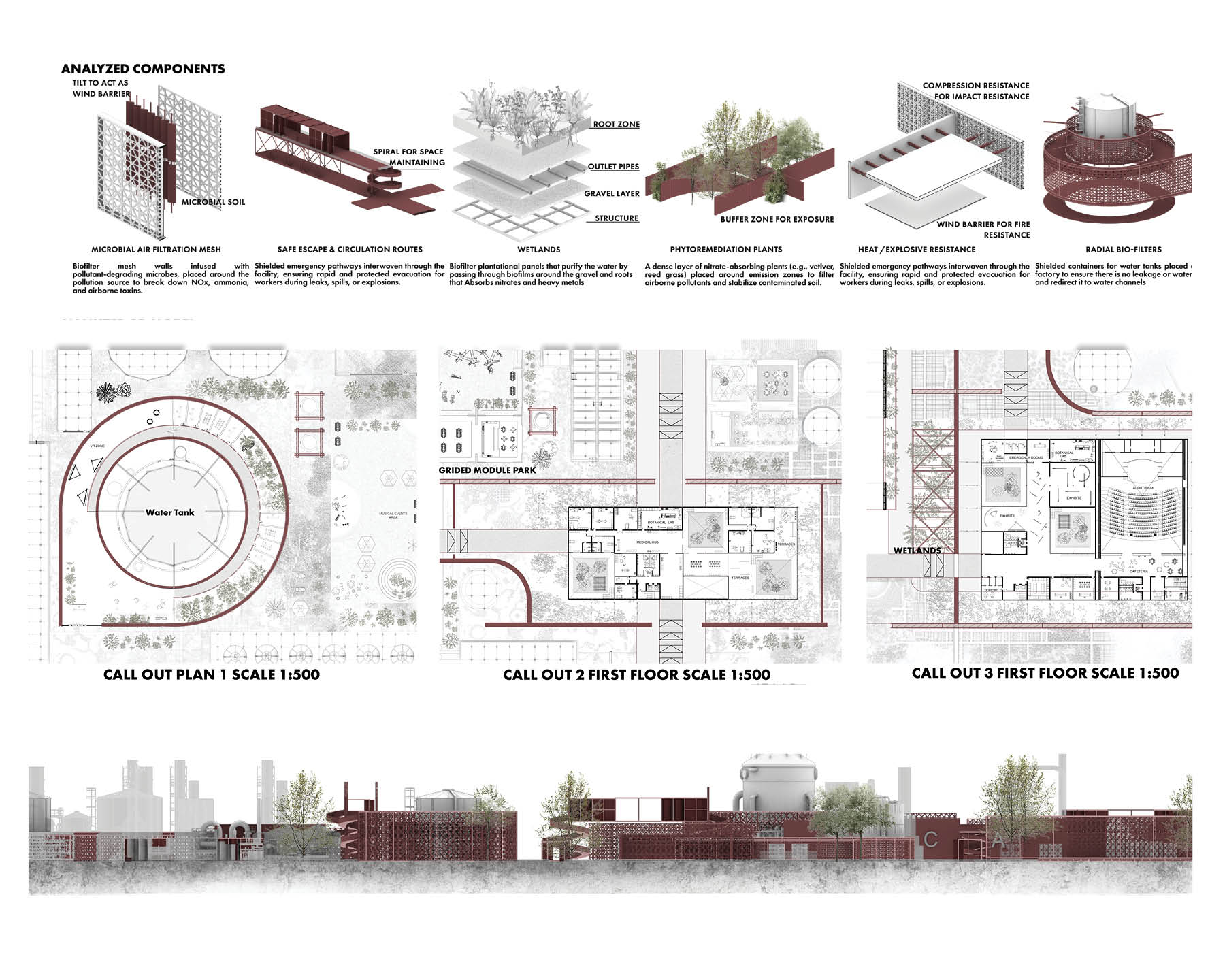
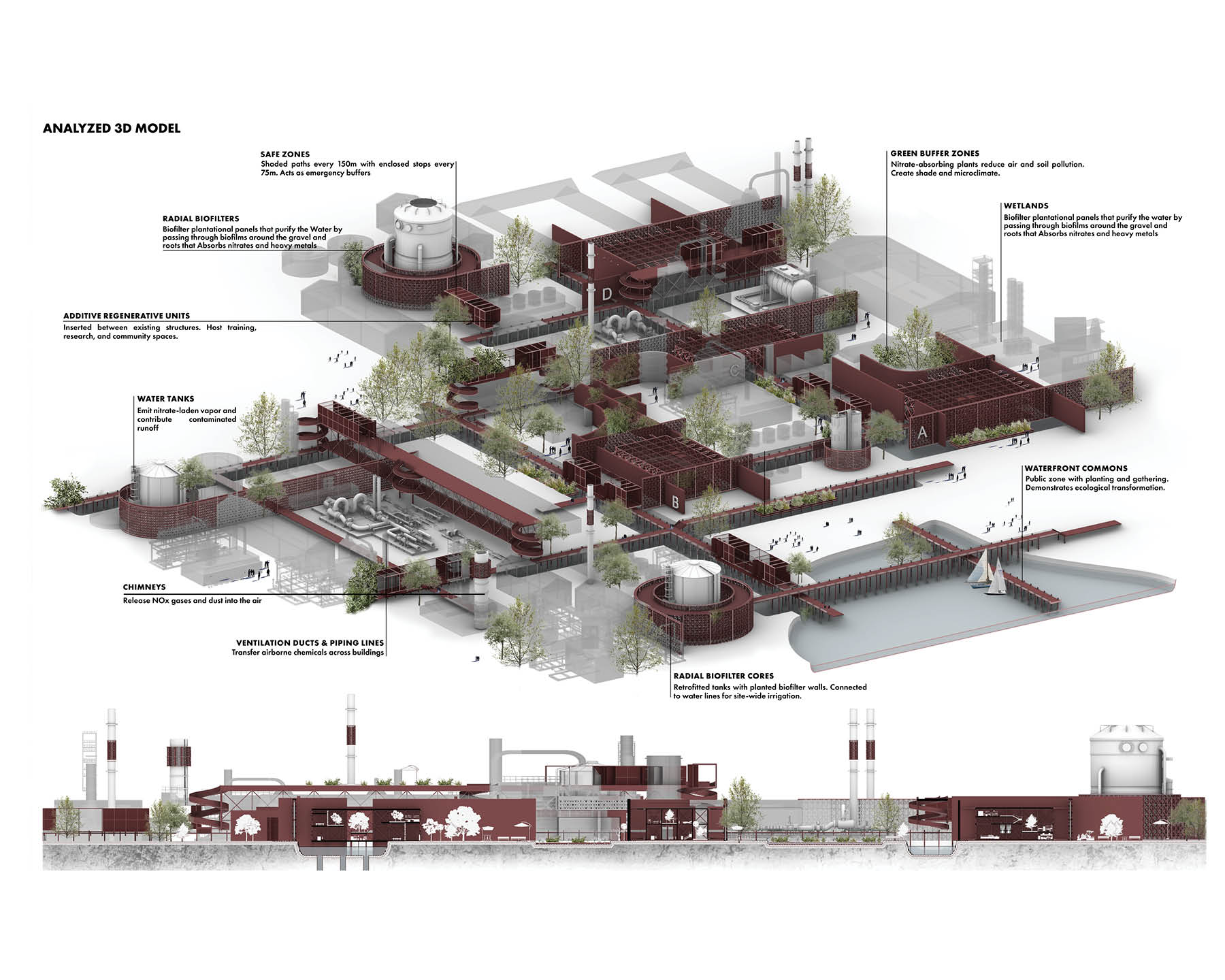
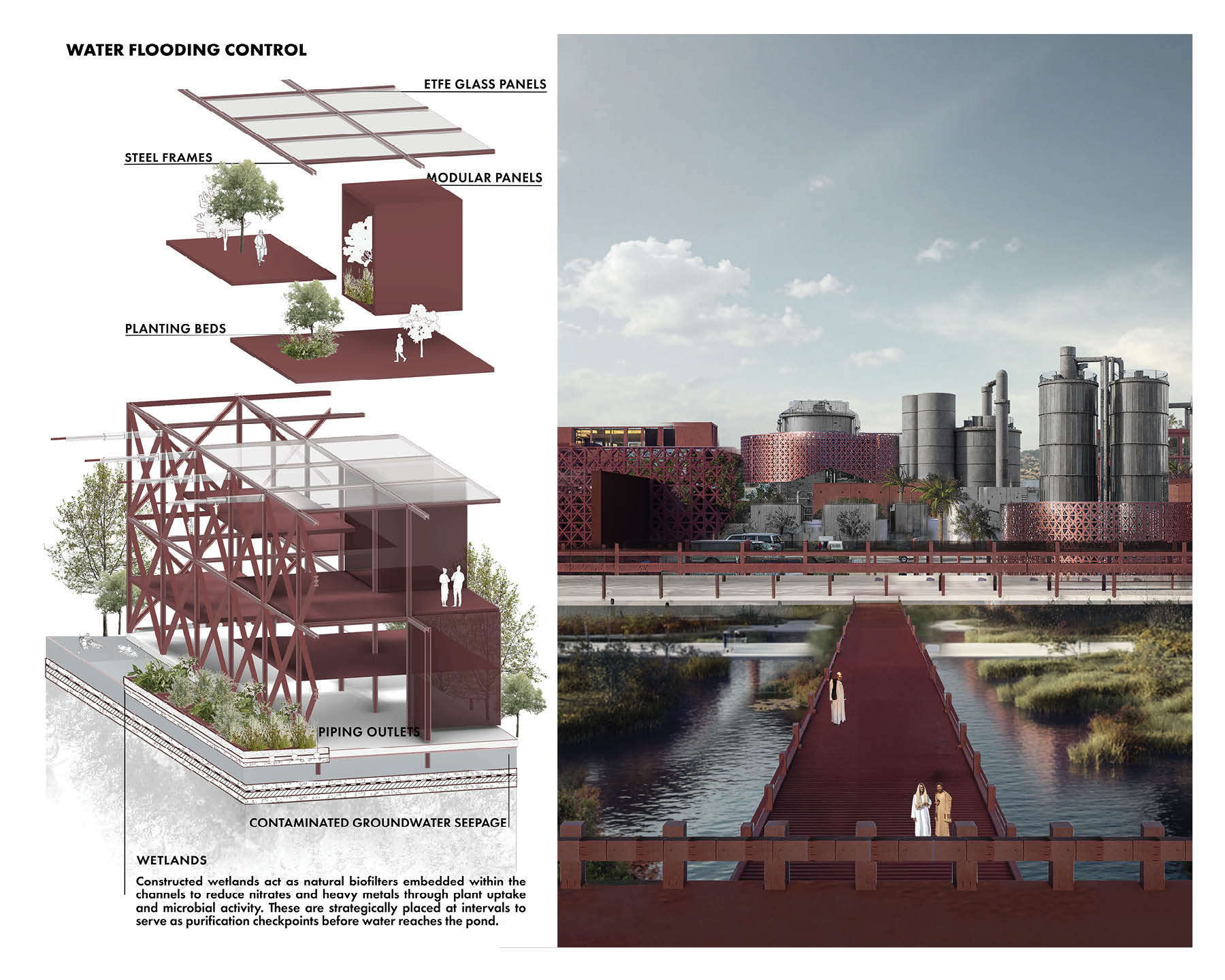
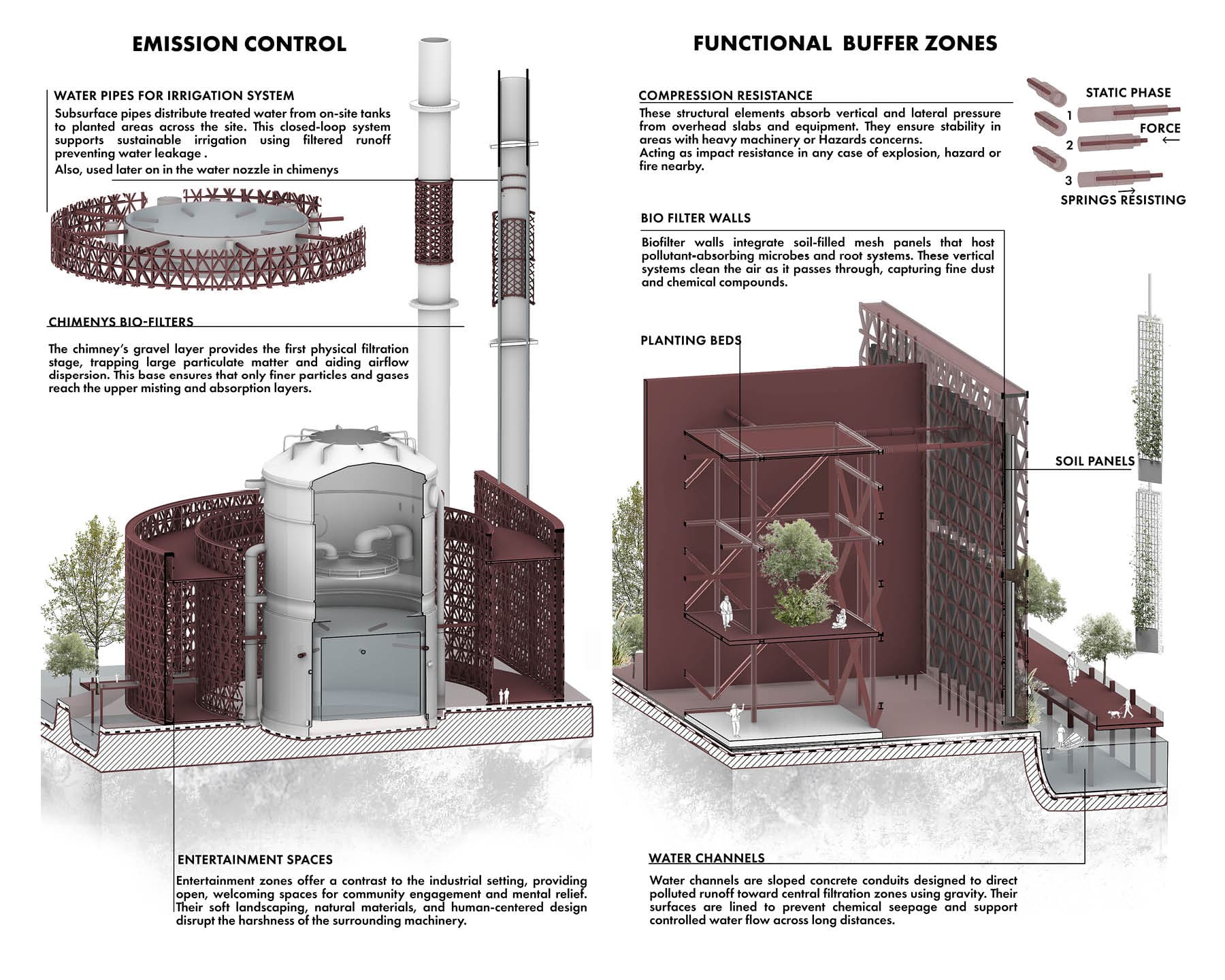
The proposed solution integrates ecological engineering with resilient infrastructure to mitigate pollution from the KIMA Fertilizer Plant. Pollution source mapping identifies and isolates discharge hotspots from KIMA 1 and KIMA 2, enabling targeted remediation. Emergency circulation routes ensure safe evacuation while redirecting wastewater through underground filtration systems. Water is then channeled through constructed streams and floating wetland slabs, where aquatic plants remove 20–45% of pollutants. Biofilter mesh walls provide modular, adaptive remediation, achieving up to 65% nitrate and 60% ammonia reduction. Phytoremediation fields further absorb contaminants using resilient native vegetation, reaching 55–90% removal efficiency. Together, these interventions transform polluted ponds and channels into regenerative landscapes that protect ecosystems, safeguard communities, and restore natural filtration cycles within Aswan’s industrial fabric.
Established in 2012, Tamayouz Excellence Award is an unaffiliated, independent initiative that aims to advance the profession of architecture academically and professionally. Tamayouz is dedicated to supporting aspirational and transformative projects that tackle local and global challenges and that are informed by a holistic understanding of context.