






University : University of Architecture Ho Chi Minh City
Tutor(s) : Nguyen Bich Hoan
Project Description
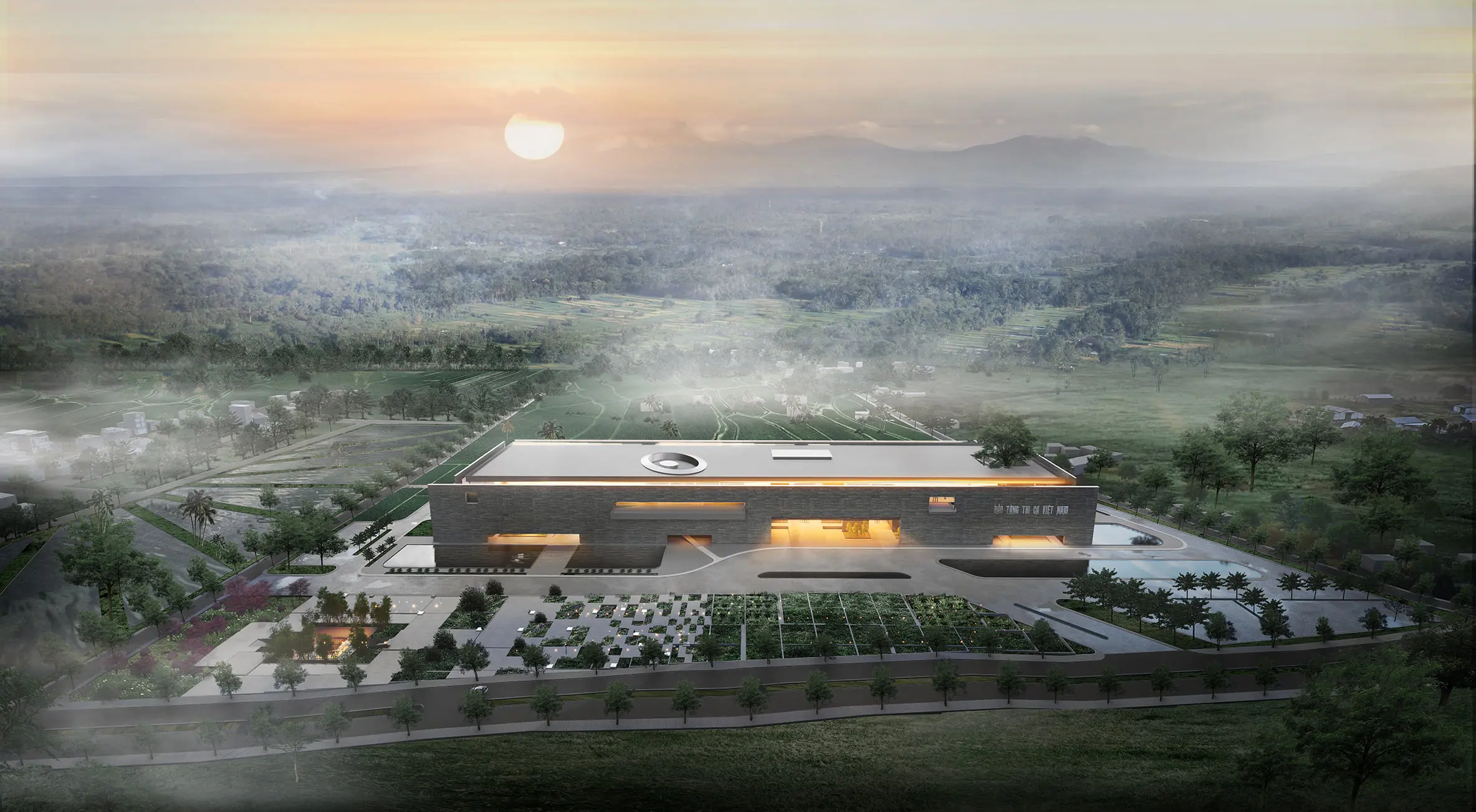
The project originates from a profound appreciation of Hanoi’s cultural context-a land with a rich poetic history and humble, architecture that harmonizes with nature. The building is designed to minimize environmental impact, reflecting the Vietnamese spirit of respect for nature. The solid-and-void principles of traditional communal houses are reinterpreted internally through functional spaces and façades.
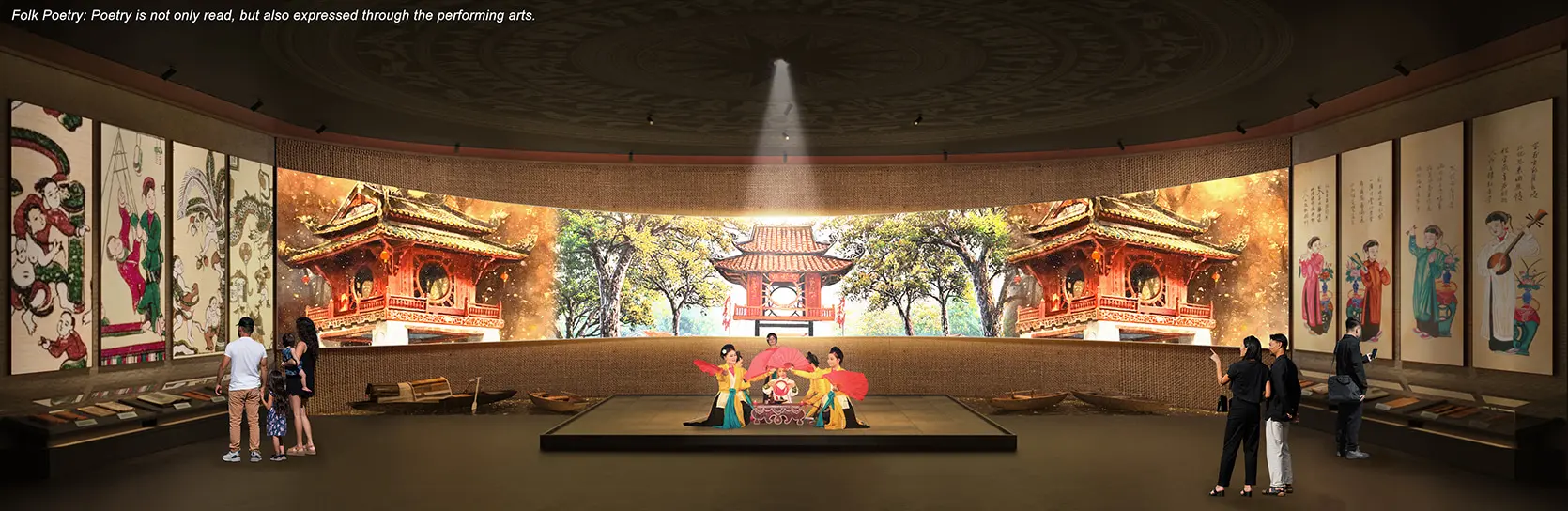
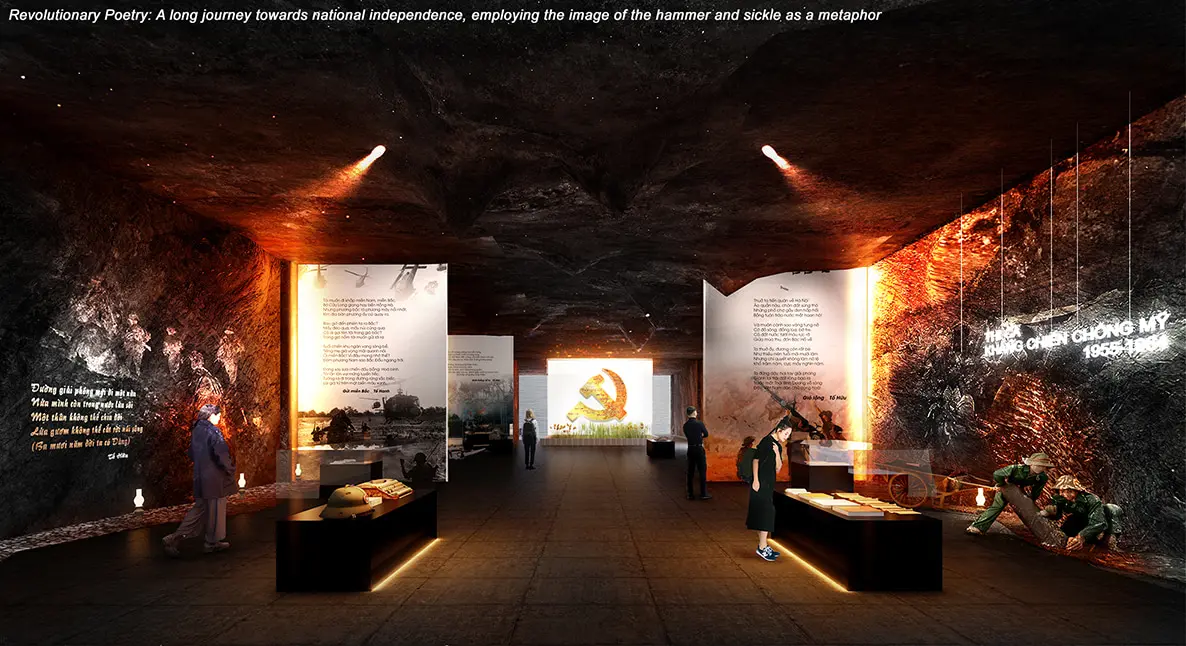
The project is conceived as a poetry book, with rough, local-material walls as its “cover,” symbolizing ordinary life-simple, robust, and unassuming. Inside, the world of poetry and beauty gradually unfolds. Visitors are guided through layered experiences: the passage of time expressed in the main lobby, the exploration of Vietnam’s poetic streams-folk, lyric, revolutionary, religious-philosophical, and ethnic minority voices-all revolving around the soft core of the ceremonial lobby. This core, a blurred boundary between reality and dream, immerses visitors in light, sound, materiality, elliptical structures, and atrium spaces, revealing emotional depth and poetic understanding.
The landscape is organized in layers-from exterior to semi-enclosed to interior gardens. The journey culminates at a vantage point overlooking the entire context and the “Poetry Hill,” where visitors pause to reflect and experience the poetic beauty embedded in life.
The project is unique in translating poetry into architecture, as these seemingly distinct art forms share rhythm, metaphor, narrative, and structure, and their fusion transforms the building into a poetic, multisensory experience that preserves and celebrates Vietnam’s poetic heritage in the modern era.
Established in 2012, Tamayouz Excellence Award is an unaffiliated, independent initiative that aims to advance the profession of architecture academically and professionally. Tamayouz is dedicated to supporting aspirational and transformative projects that tackle local and global challenges and that are informed by a holistic understanding of context.