




University : University of Baghdad
Tutor(s) : ANAS HAMID
Project Description
Al-Hurriya, a densely populated neighborhood in northwest Baghdad, has evolved from a former military camp into an informal settlement characterized by slum housing, weak infrastructure, and limited public services. Over time, green spaces were overtaken by unregulated construction, creating environmental, social, and structural challenges. Many residents, largely displaced and working-class families, rely on recycling plastics, metals, and packaging materials for their livelihoods, developing expertise in this field despite poor living conditions. However, risks of building collapse, flooding, and repeated demolition threats highlight the urgent need for organized redevelopment.
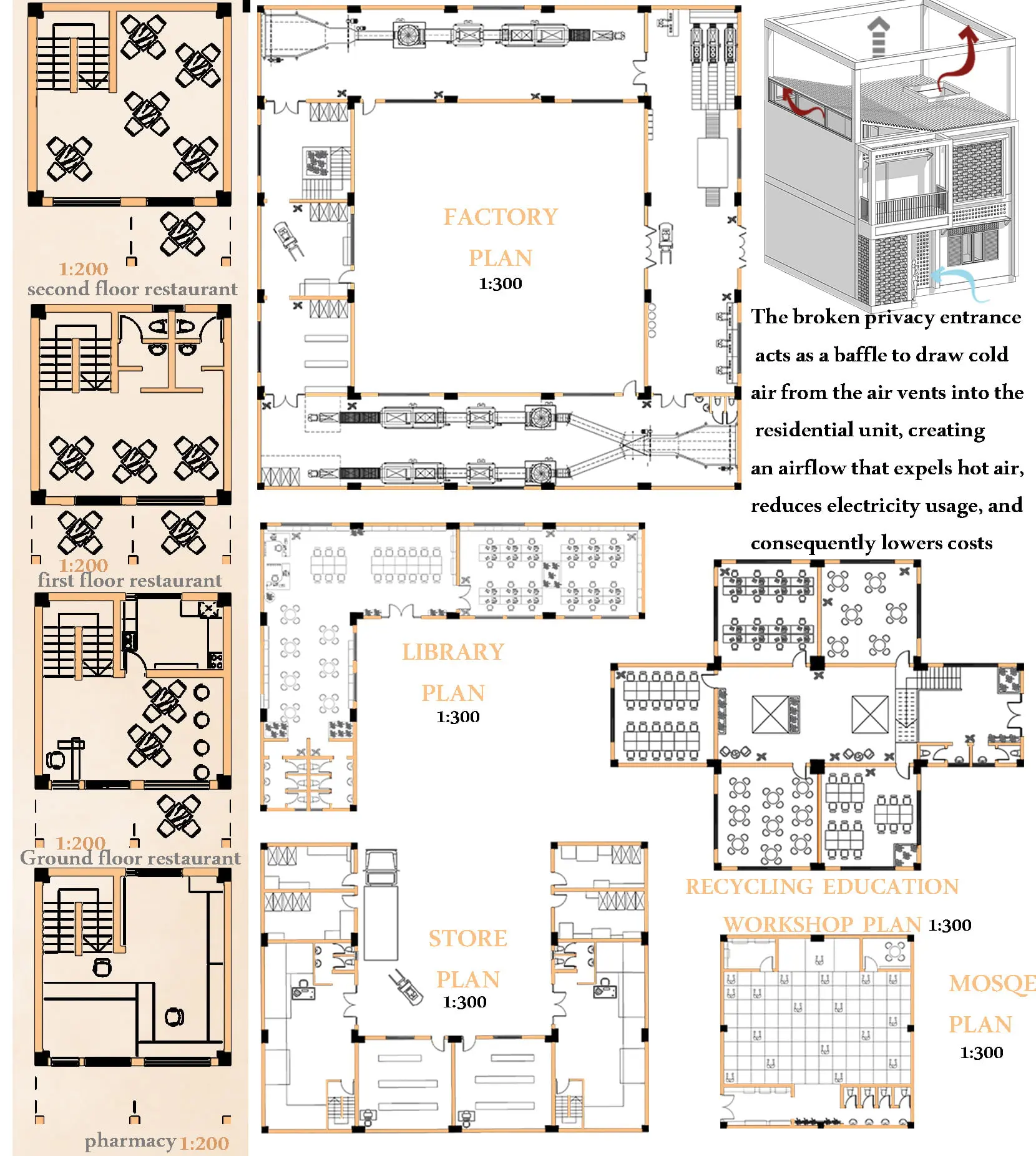
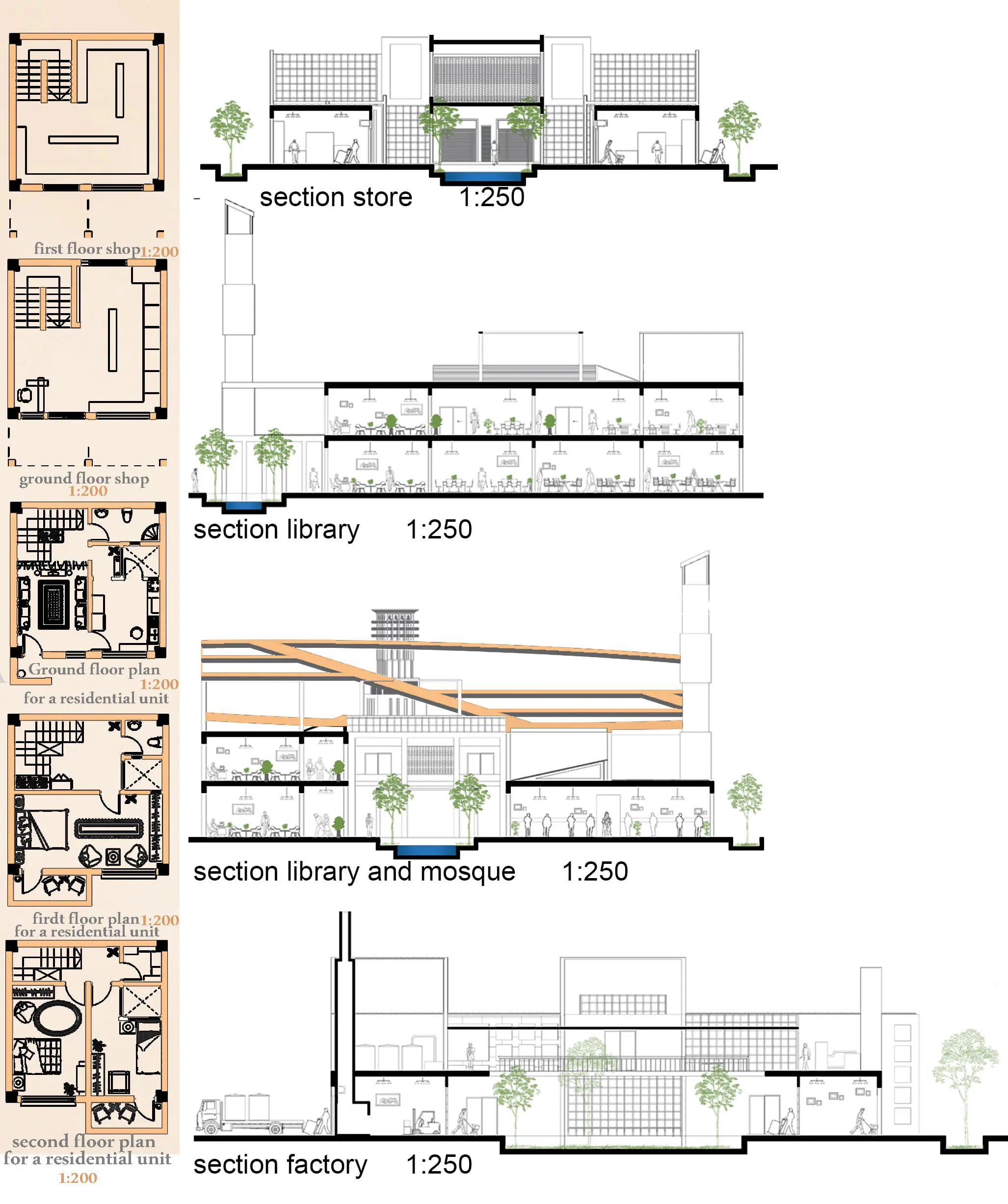
This project proposes transforming Al-Hurriya into a sustainable urban complex that integrates residential, commercial, and community functions. The design restructures irregular blocks into a geometric network of organized squares, improving spatial order while fostering economic and social participation. Residential units are 49 square meters, expandable vertically, and constructed with local and recycled materials such as bricks, blocks, and metal cladding, allowing residents to personalize their homes. Privacy and natural ventilation are enhanced through Baghdad-inspired design elements, including shanshool facades and badkeer wind channels, which reduce electricity use while maintaining comfort.
The commercial section includes restaurants, markets, workshops, and a library, with flexible expansion for future needs. A central circular hub functions as the project’s social core, hosting recycling competitions, cultural events, and bazaars to generate income and strengthen community identity. Workshops and laboratories provide training in recycling technologies and product innovation, directly creating employment and educational opportunities.
By integrating sustainability, cultural heritage, and community participation, the project seeks to upgrade Al-Hurriya into a vibrant, low-cost, and resilient environment. It balances tradition with innovation, leveraging recycled materials while reinforcing social cohesion, enhancing residents’ livelihoods, and aligning urban development with Baghdad’s local identity.
Established in 2012, Tamayouz Excellence Award is an unaffiliated, independent initiative that aims to advance the profession of architecture academically and professionally. Tamayouz is dedicated to supporting aspirational and transformative projects that tackle local and global challenges and that are informed by a holistic understanding of context.