


University : Cairo University
Tutor(s) : Dr Mohamed Noeman
Project Description
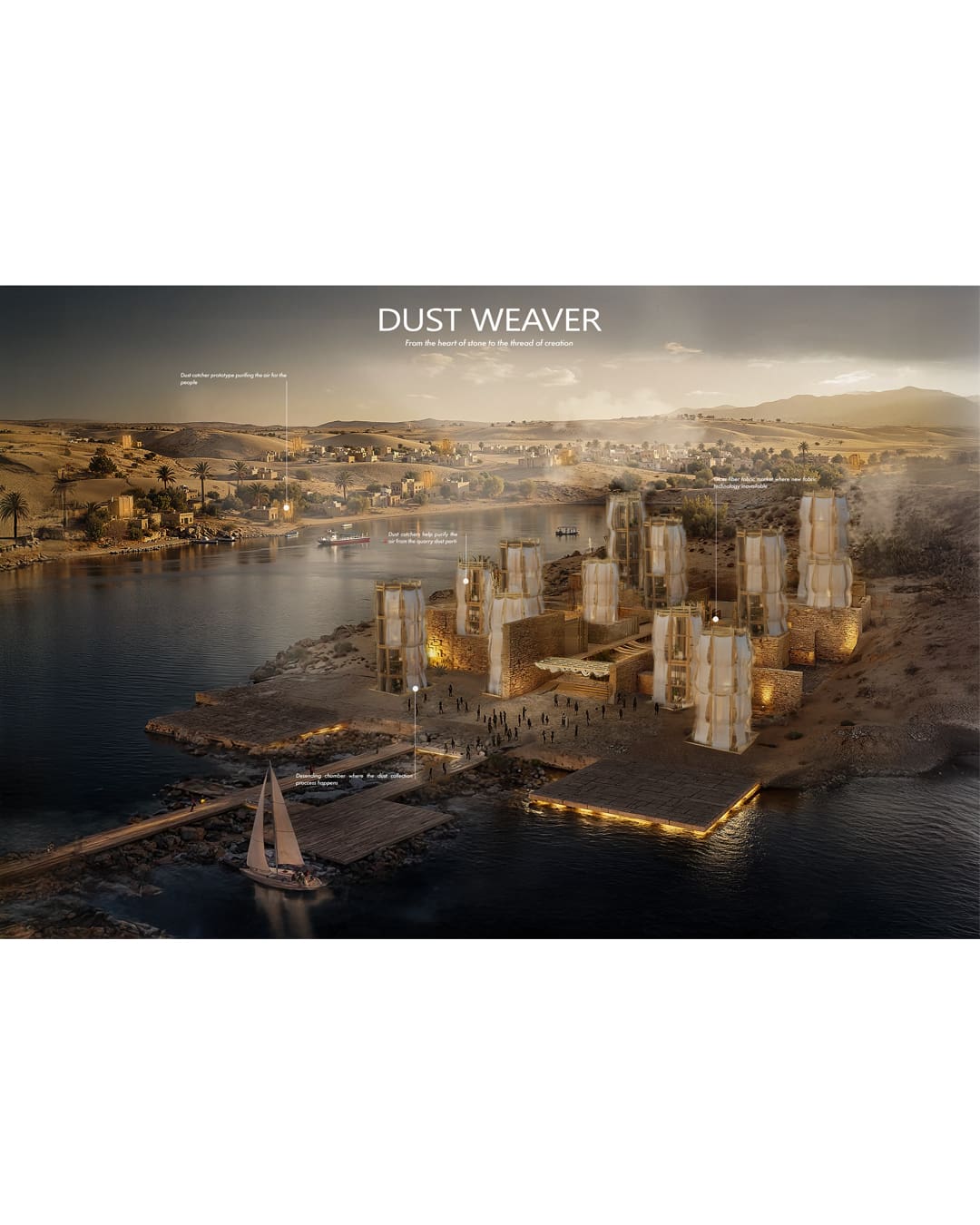
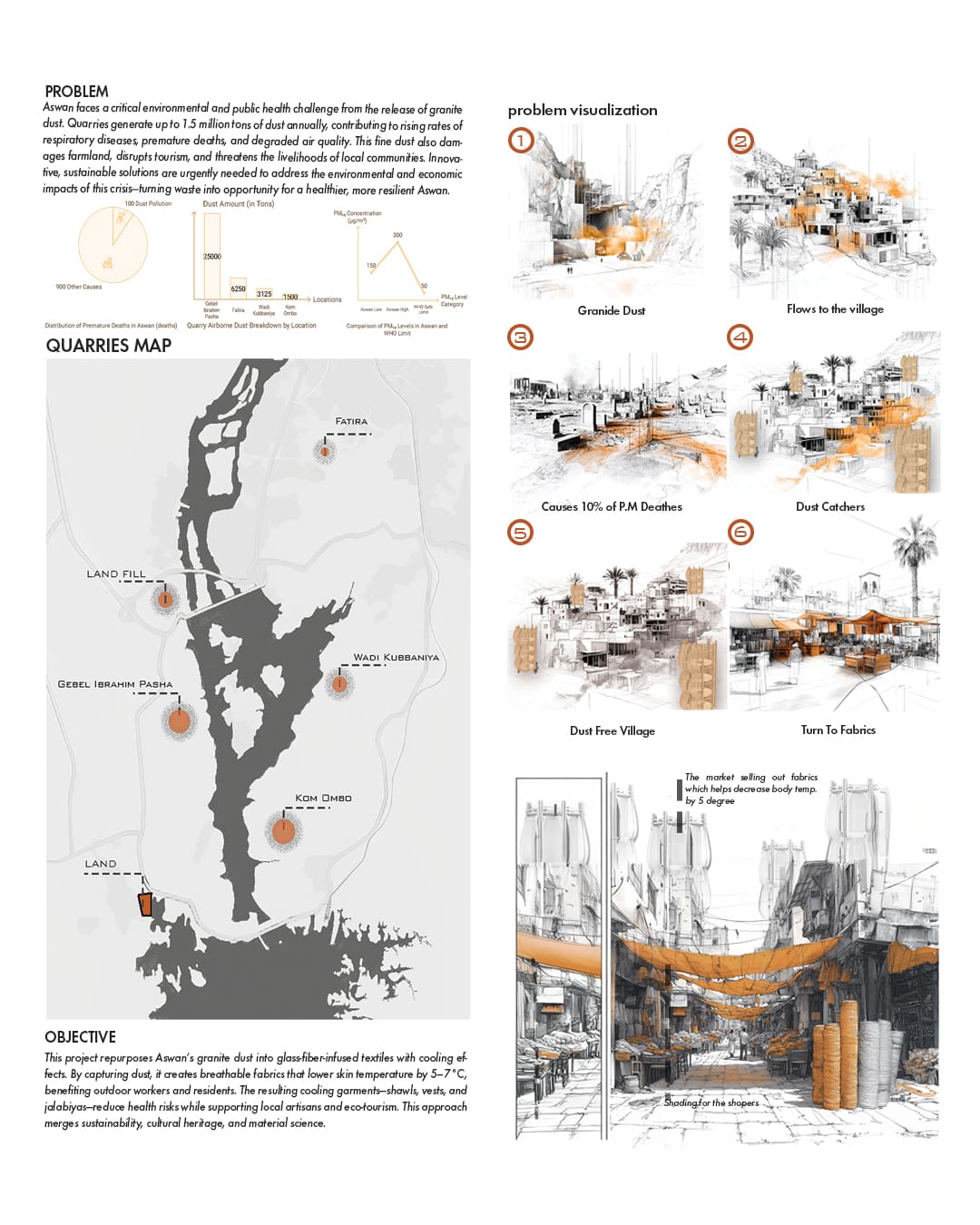
Dust Weaver is a graduation project that reimagines architecture as a system that transforms environmental harm into social, cultural, and economic value. Set in Aswan, Egypt, the project responds to a severe crisis caused by granite quarries, which release over 1.5 million tons of airborne dust every year. This pollution degrades air quality, damages agricultural land, and contributes to serious respiratory illnesses, linked to nearly 10% of premature deaths in the region.
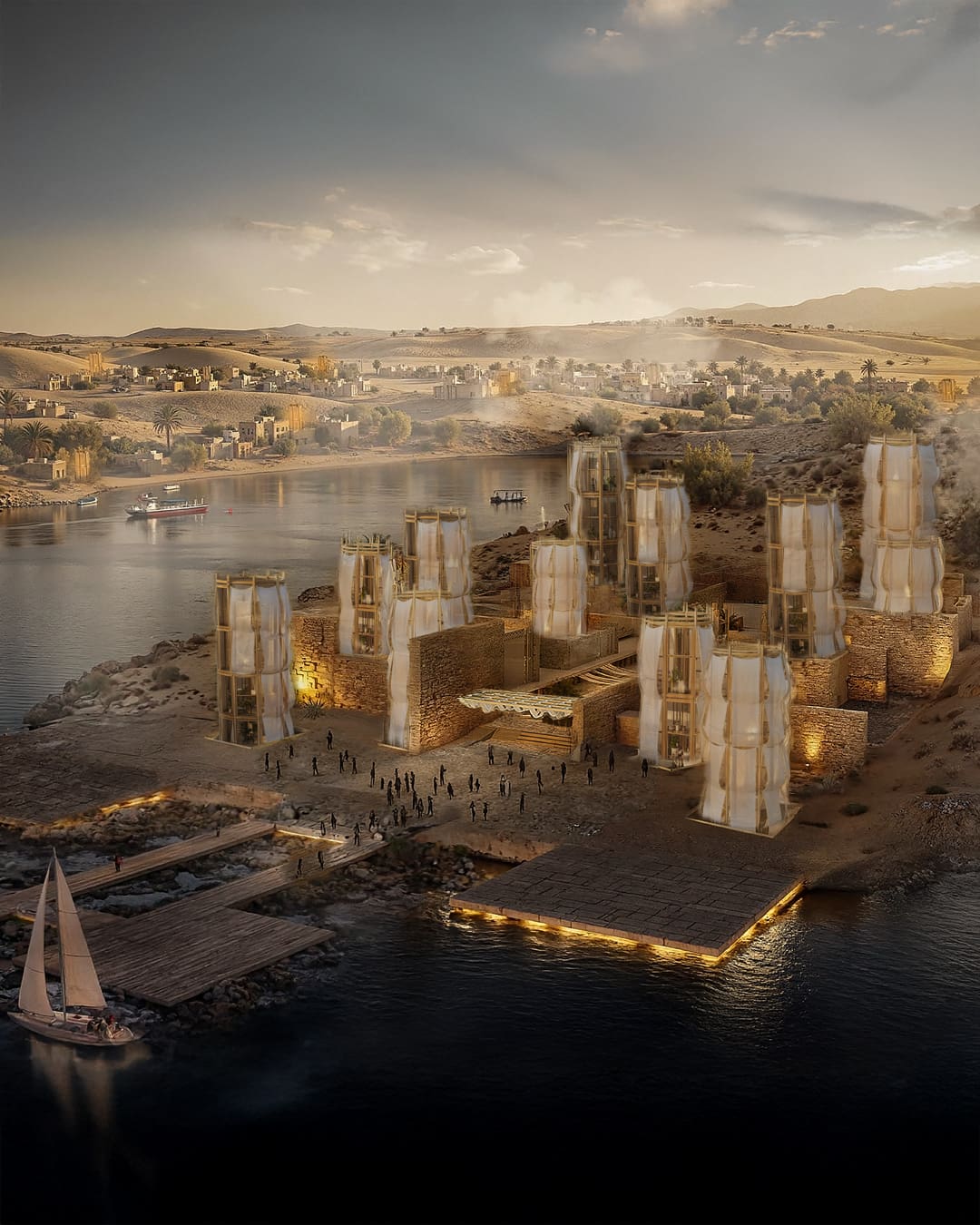
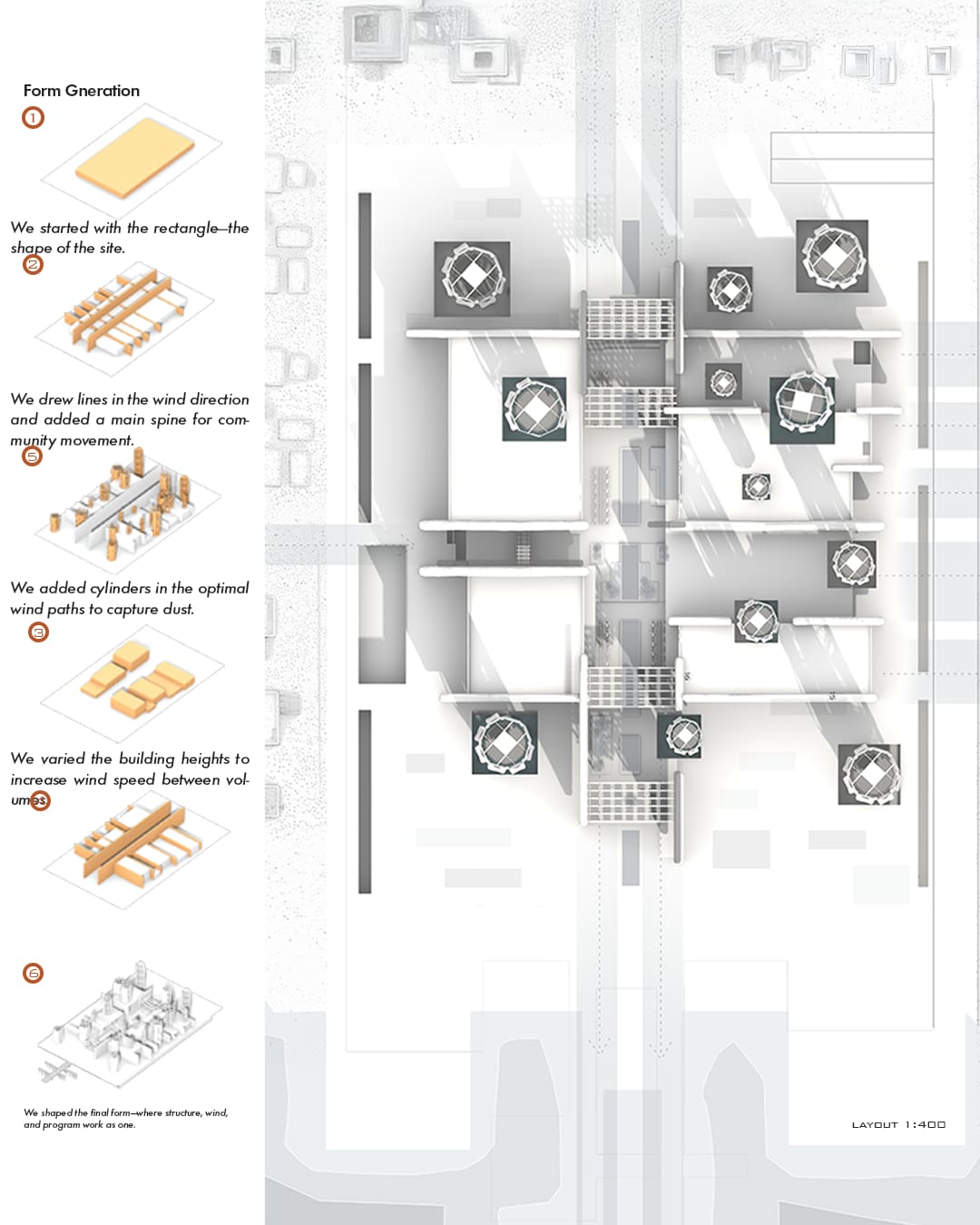
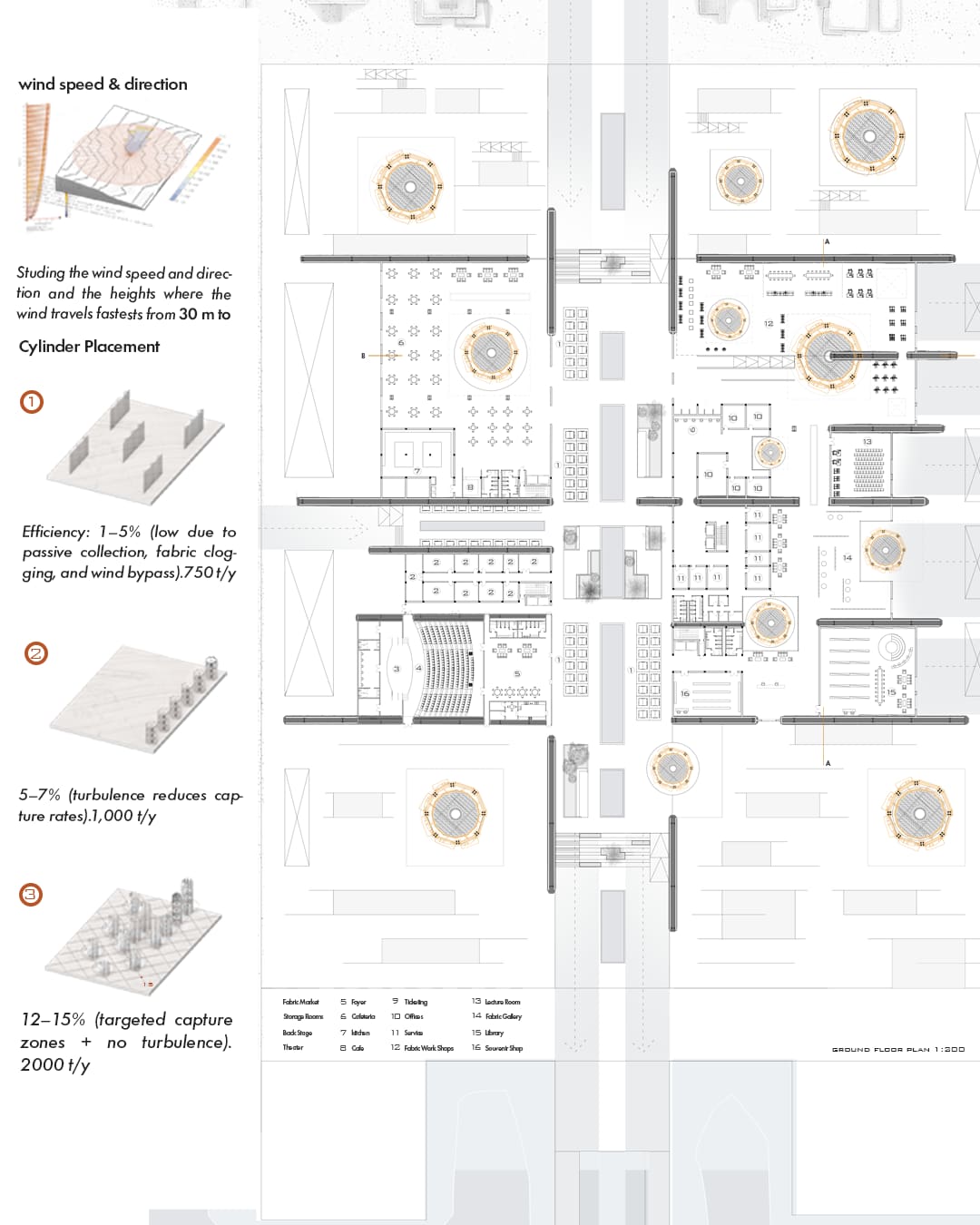
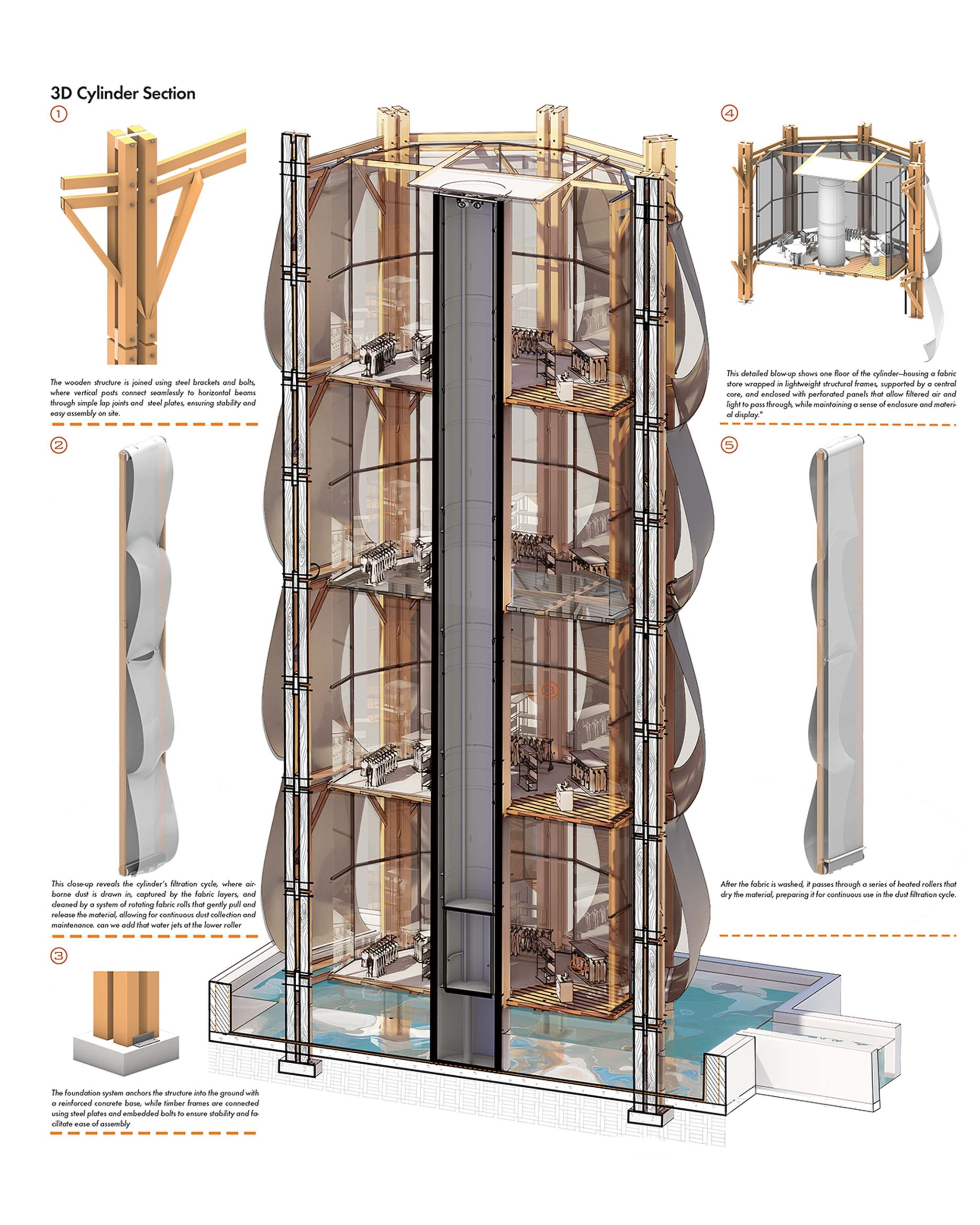
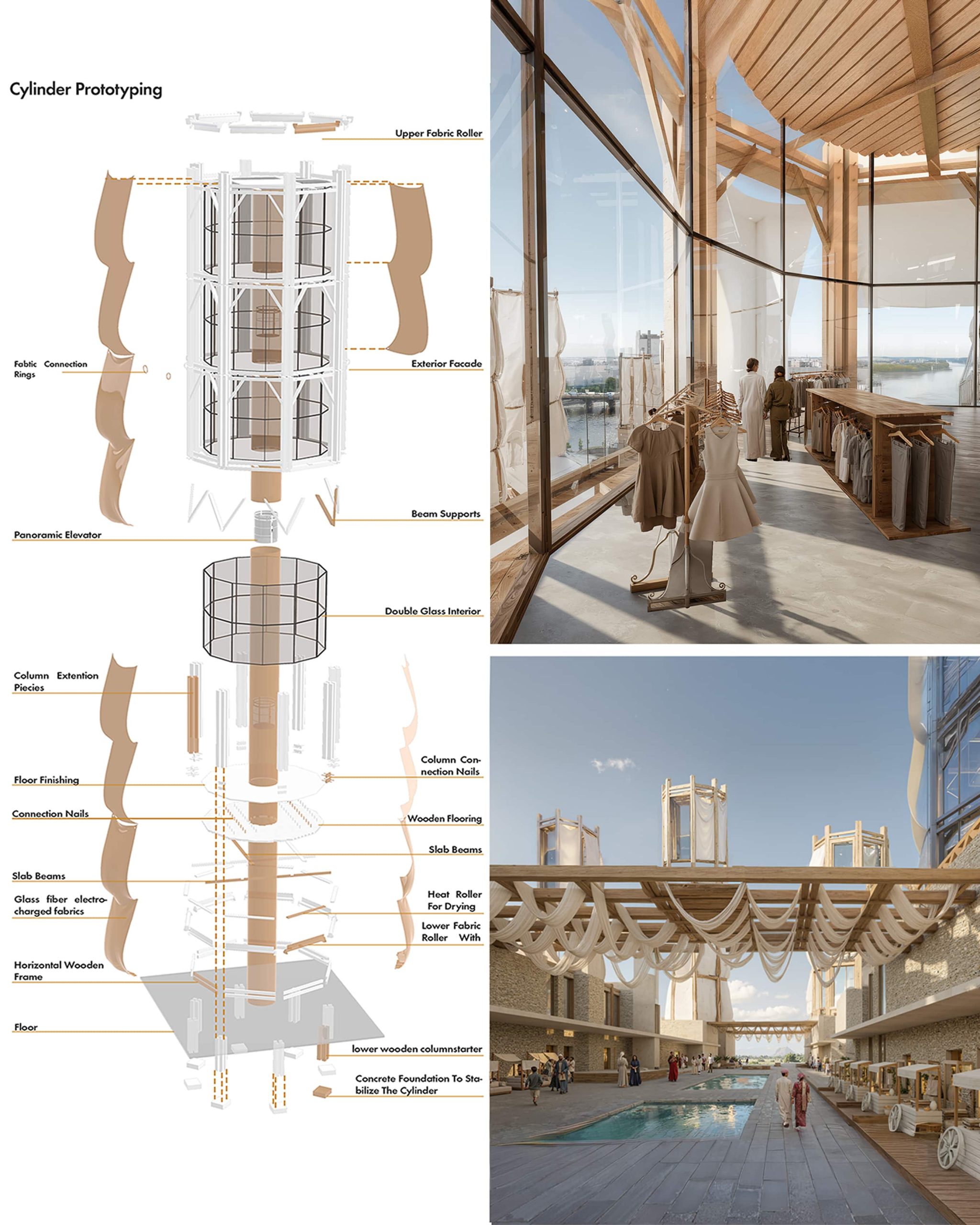
The proposal introduces a network of 40-meter-high timber cylinders wrapped in electrostatically charged fabric. Positioned to intercept winds at heights between 30 and 50 meters, the fabric passively captures airborne granite dust. Once saturated, it cycles downward into a cleaning chamber where it is washed by water jets, dried with heated rollers, and returned for continuous reuse. The collected dust is then processed into glass fibers.
These fibers are woven into cooling textiles such as shawls, jalabiyas, and garments that absorb moisture from the body and reduce skin temperature by 5–7°C, directly responding to Aswan’s extreme desert climate. At the core of the project is a fabric market that acts as both a cultural and economic hub. The market displays and sells the textiles, creates new opportunities for local artisans, and aligns production with Aswan’s tourism season to maximize community benefit. By grounding the system in regional weaving traditions, Dust Weaver ensures the solution is cultural as well as technological.
Architecturally, the project combines stone structures for permanence with timber cylinders as expressive dust collectors, forming a hybrid typology.
Established in 2012, Tamayouz Excellence Award is an unaffiliated, independent initiative that aims to advance the profession of architecture academically and professionally. Tamayouz is dedicated to supporting aspirational and transformative projects that tackle local and global challenges and that are informed by a holistic understanding of context.