





University : The University of Jordan
Tutor(s) : Professor Saleem Dahabreh
Project Description
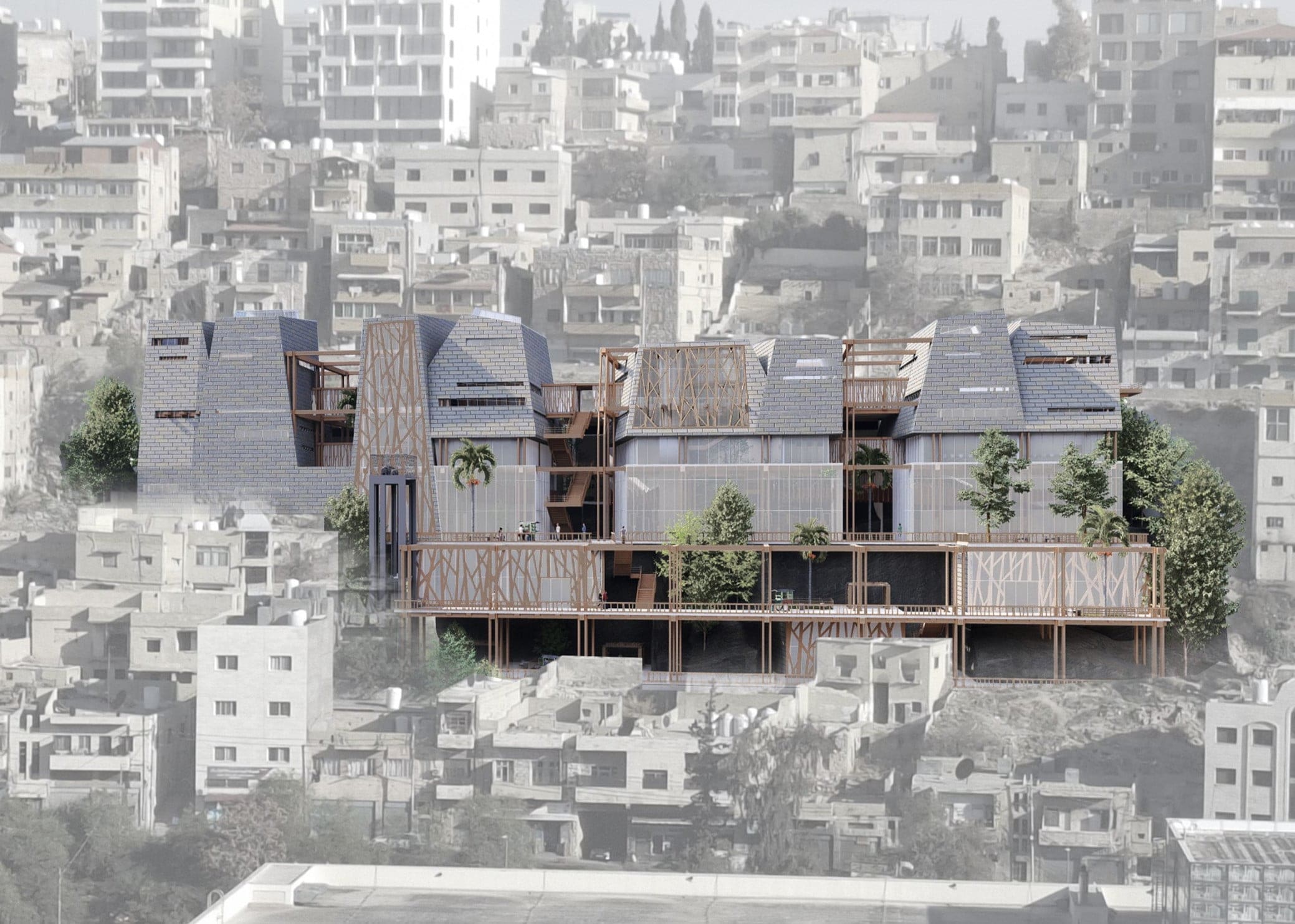
The proposed Carpentry Atelier and Exhibition in Ras Al-Ain, downtown Amman, is envisioned as a contemporary cultural hub that bridges traditional woodworking heritage with emerging digital fabrication technologies. Celebrating Amman’s artisanal heritage, the project fosters innovation and skill development for a new generation of craftspeople while positioning craft as a future-oriented discipline rather than a fading tradition.
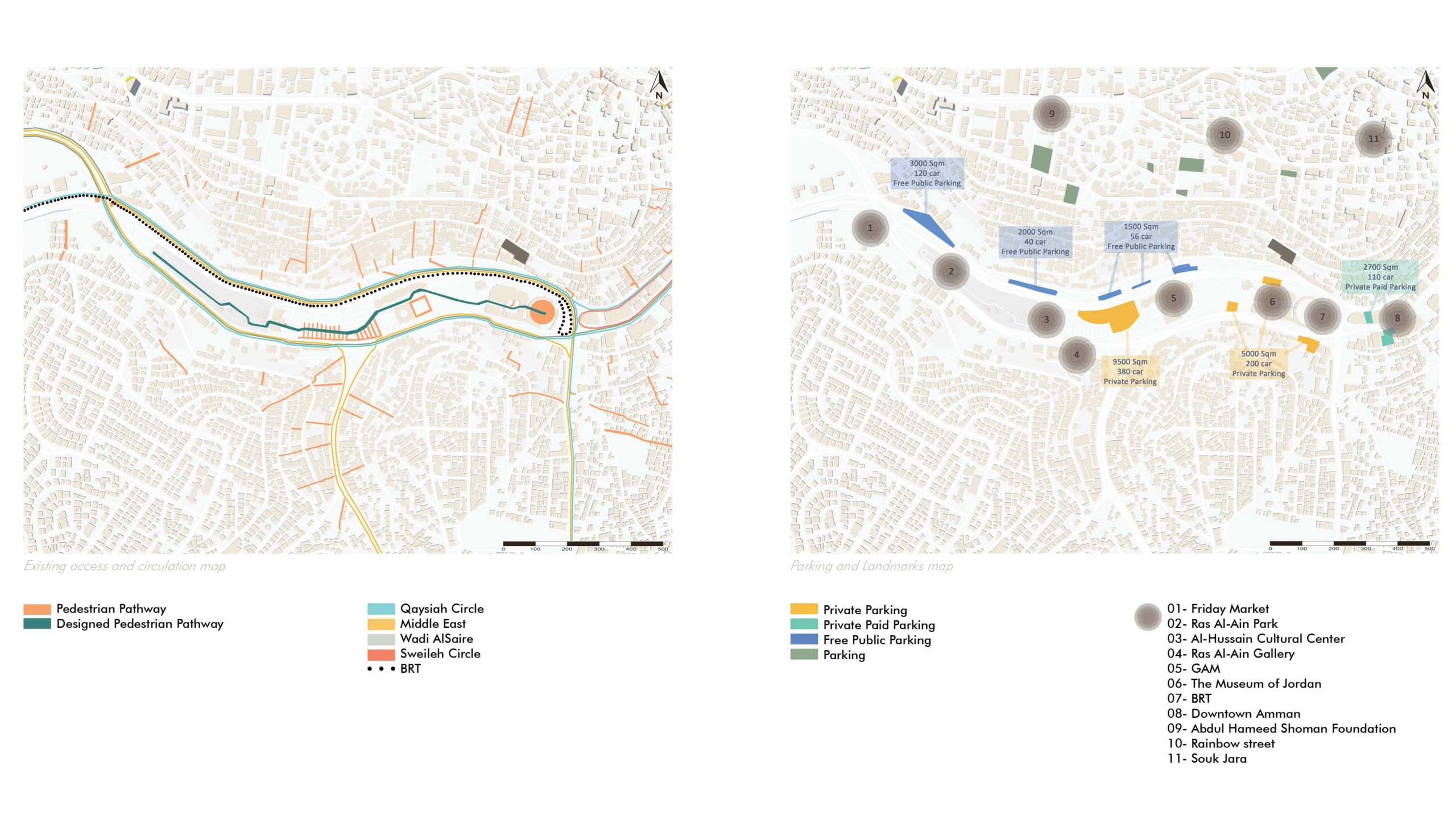
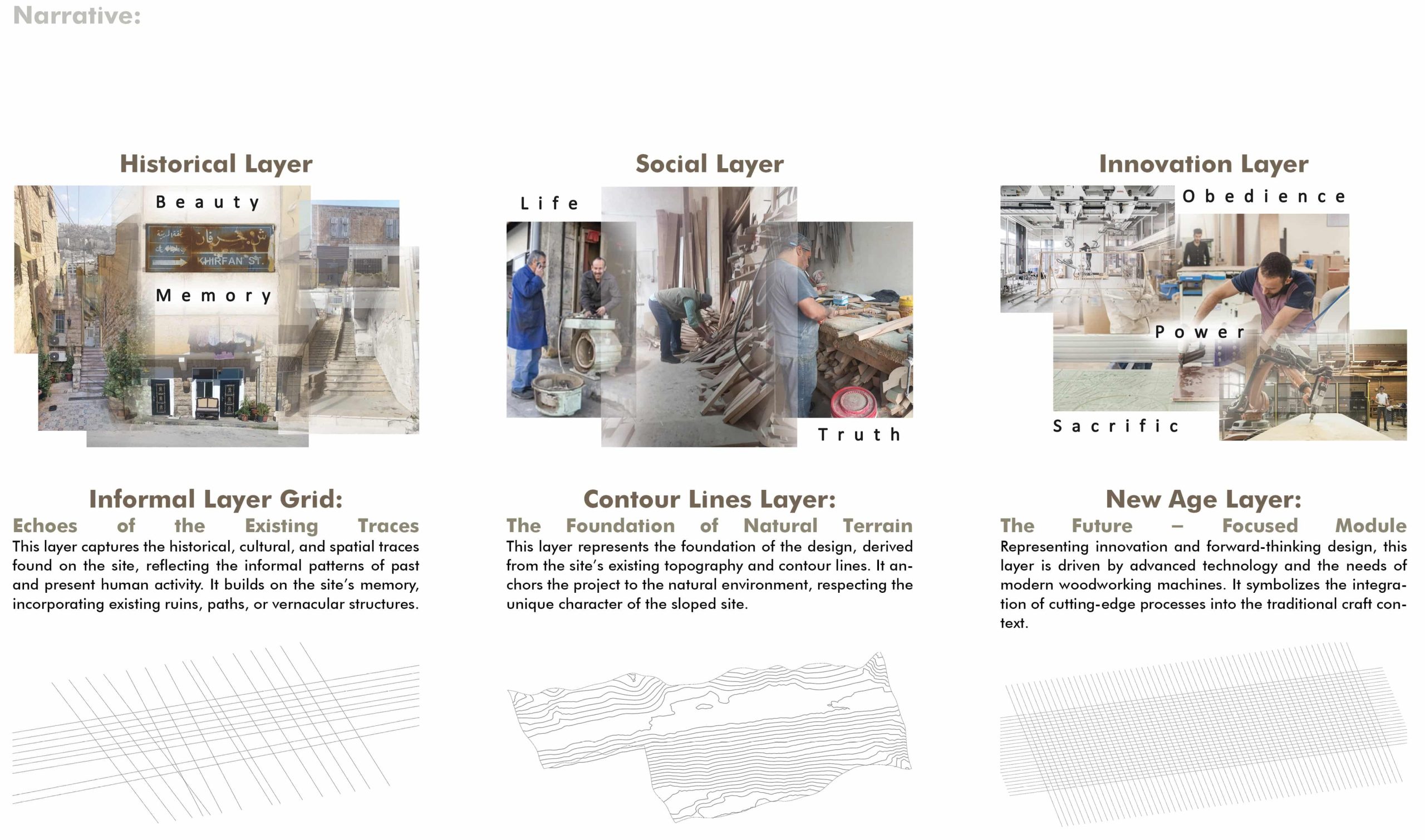
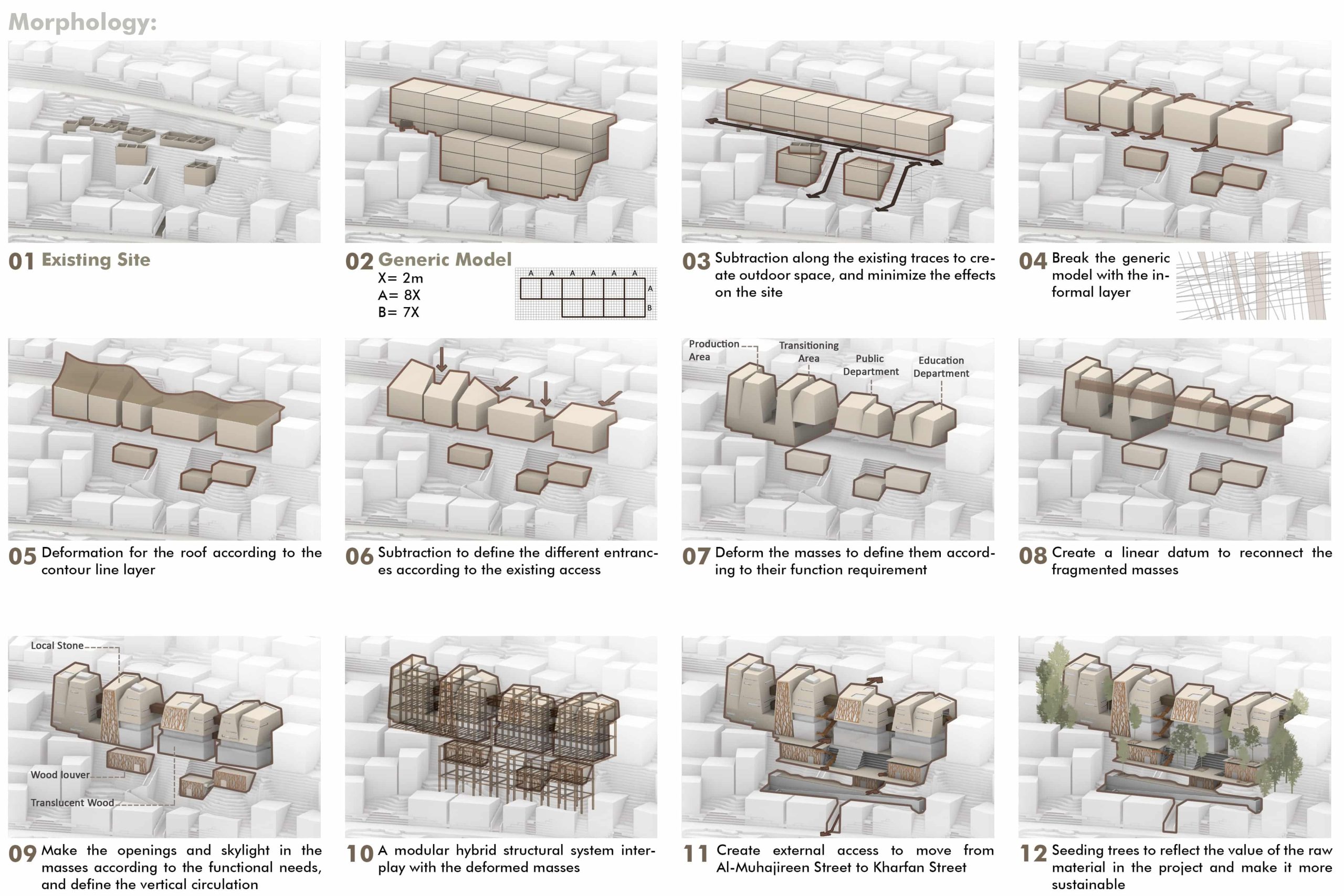
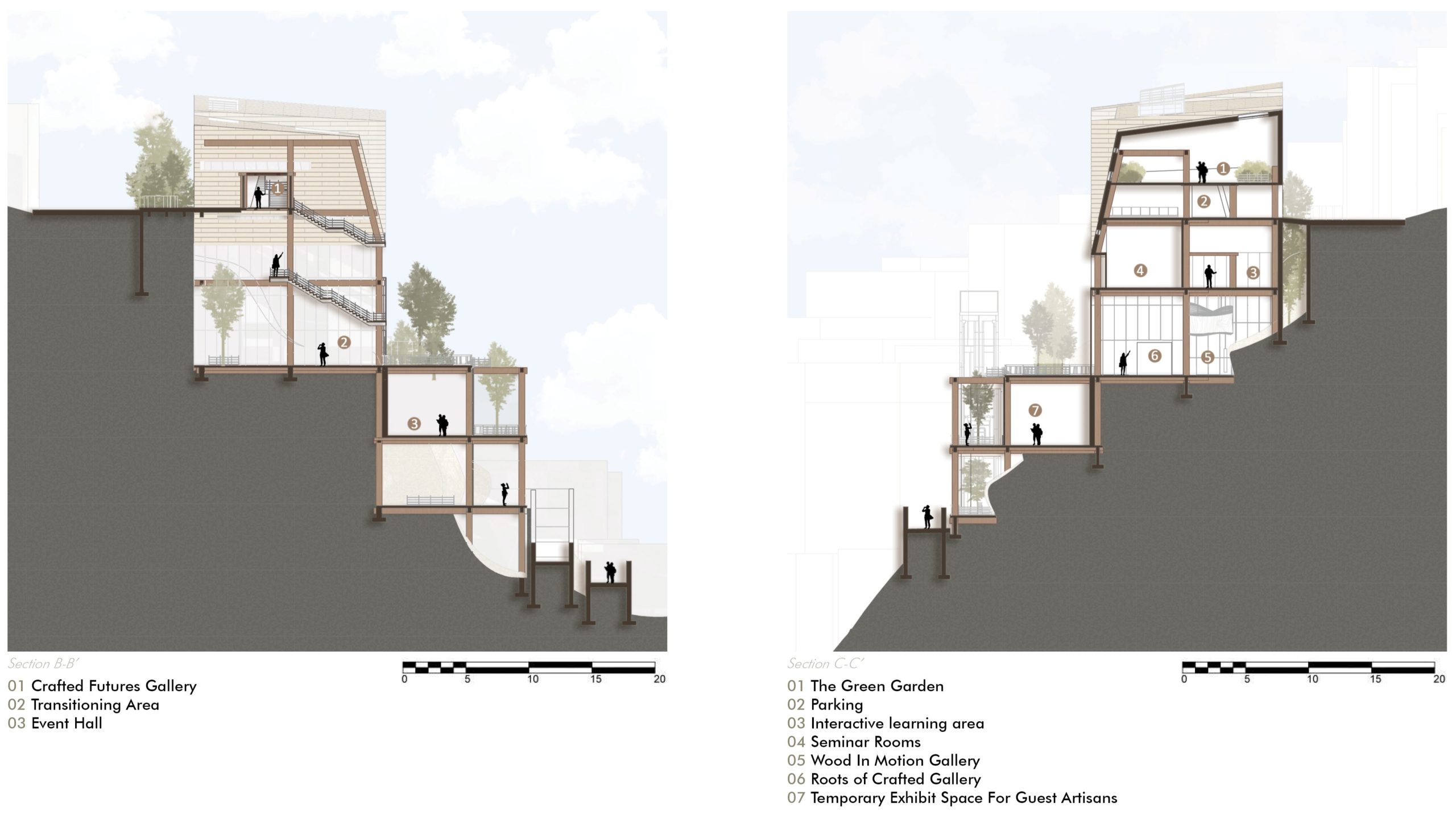
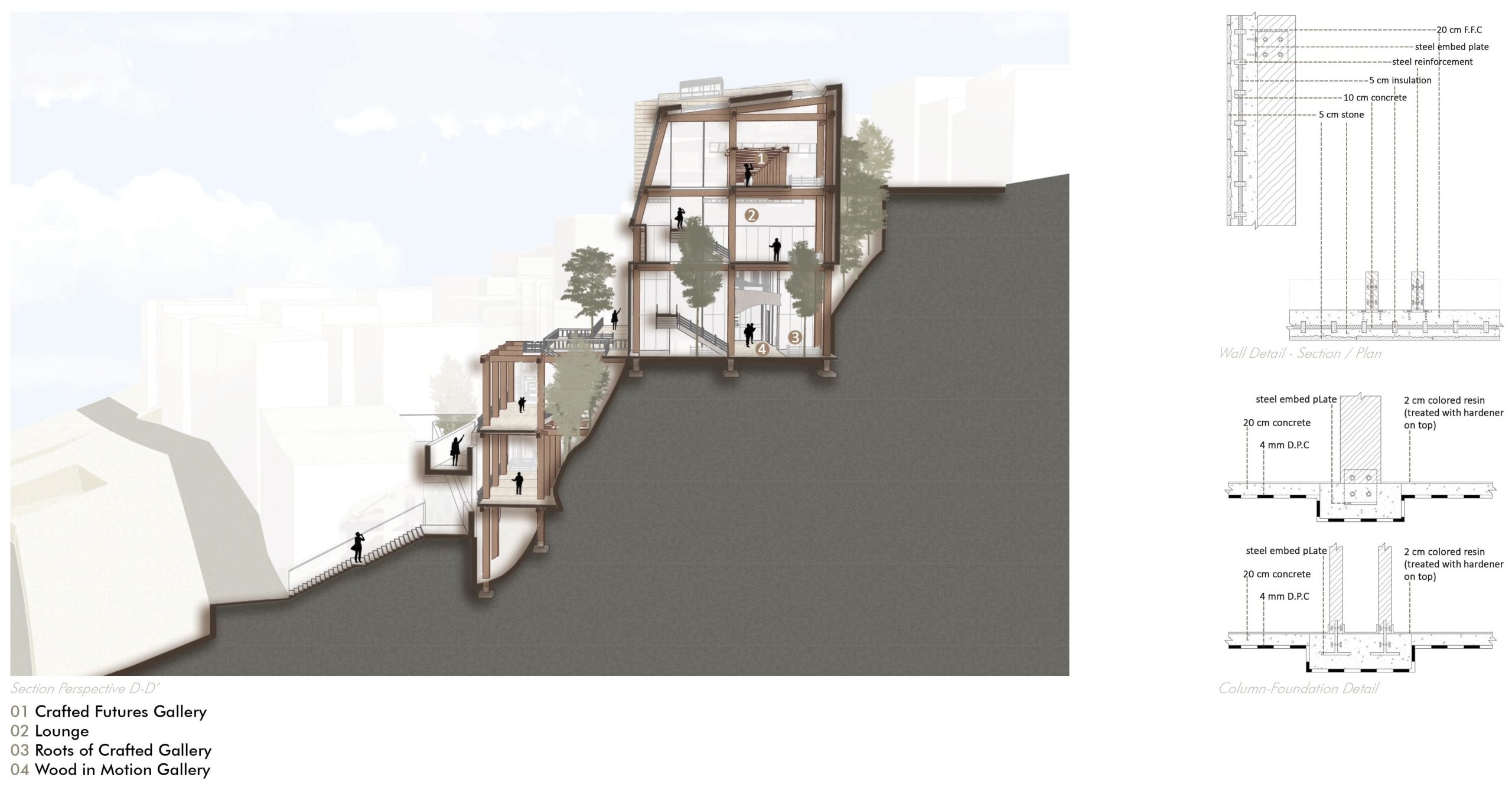
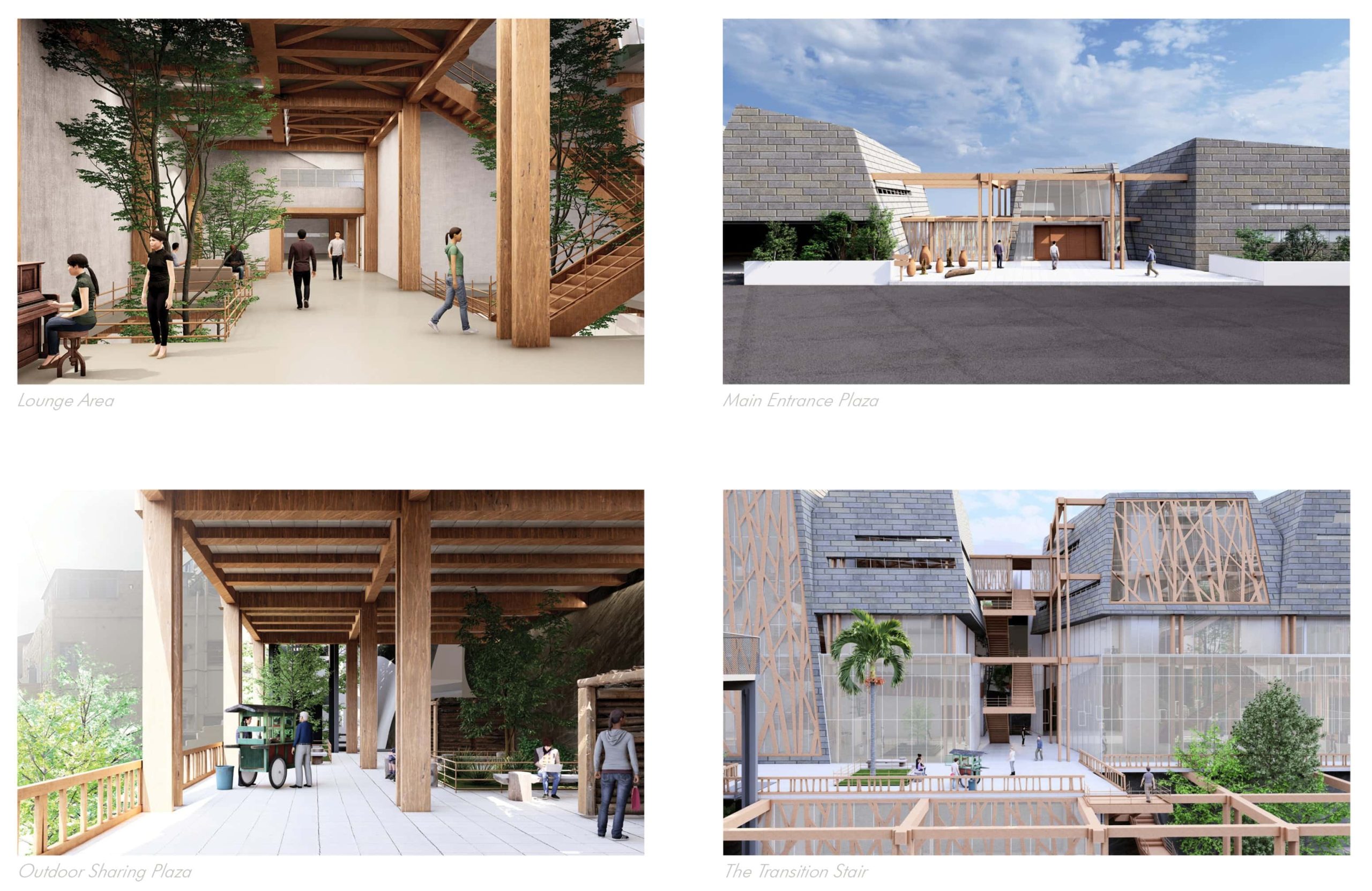
Located in Ras Al-Ain, Downtown Amman, a district marked by layered heritage and cultural vibrancy. Positioned near the cultural strip, the site bridges Amman’s modern public spaces with older residential neighborhoods. Its steep terrain and historical layers informed a design that engages topography, memory, and urban movement.
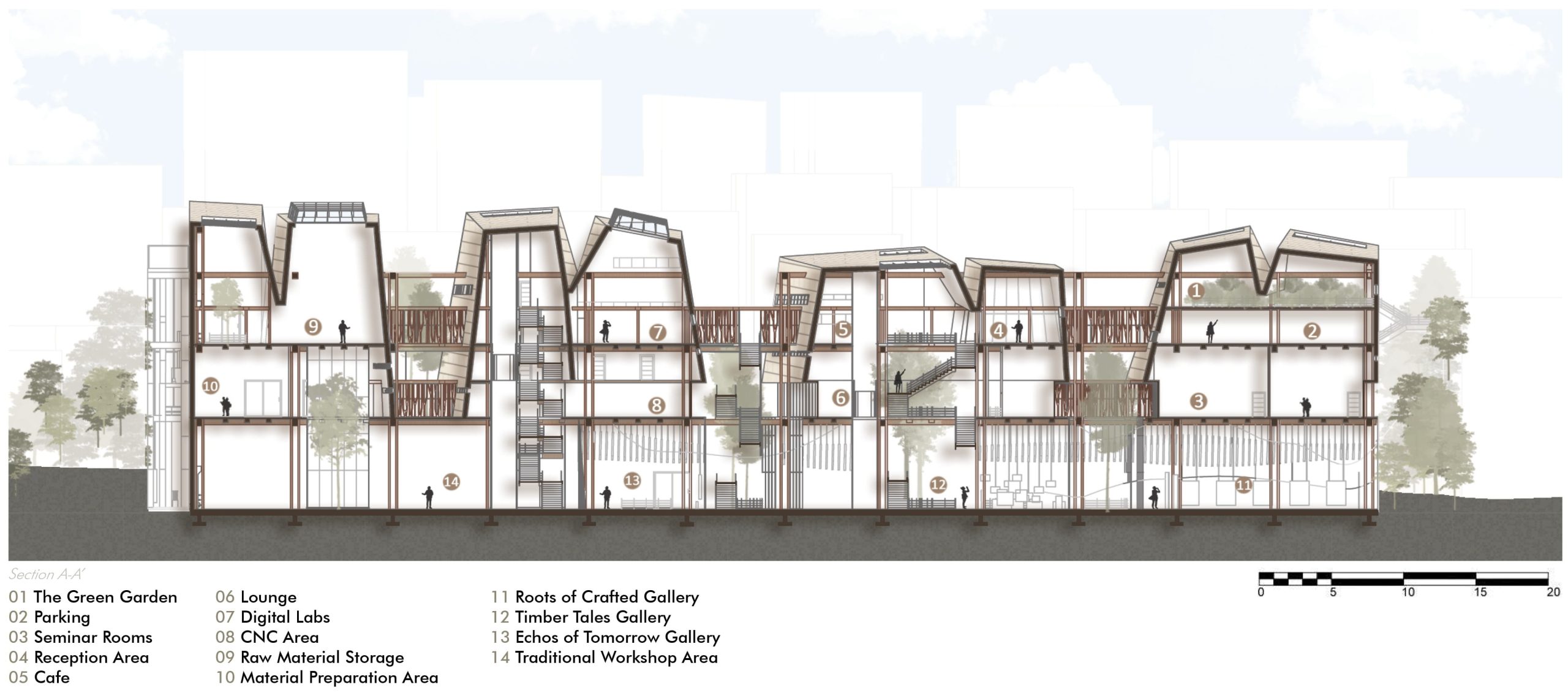
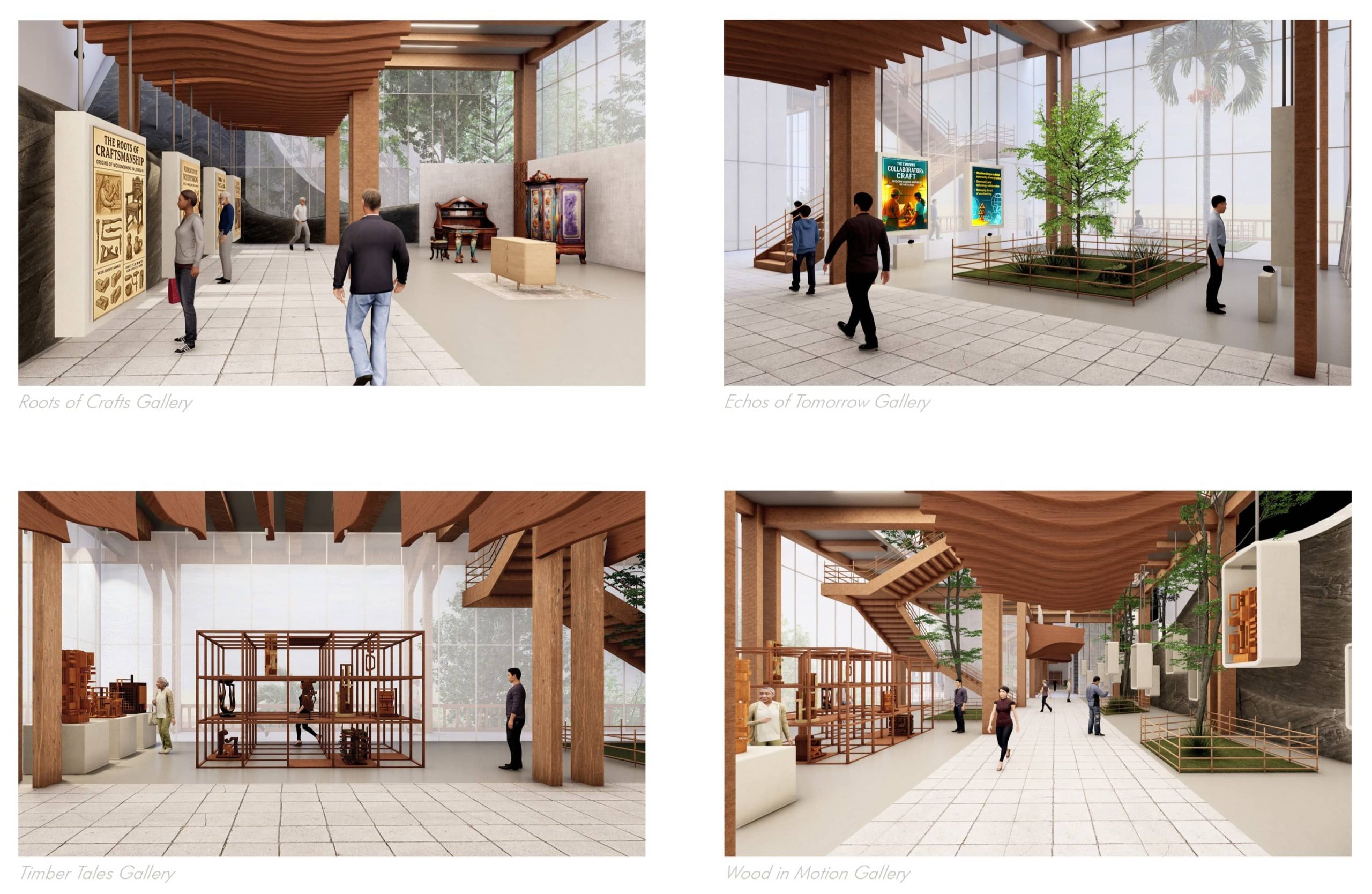
Guided by the concept of Tectonic Harmony, the design explores the balance between handcraft and computation, drawing from Aristotle’s Techne, Poiesis, and Praxis and resonating with Frampton’s tectonic theory. Wood is treated not only as a building material but as a cultural medium and evolving technology. Translucent wood replaces glass in façades and partitions, producing warm diffused light while enhancing sustainability, thermal comfort, and sensory experience.
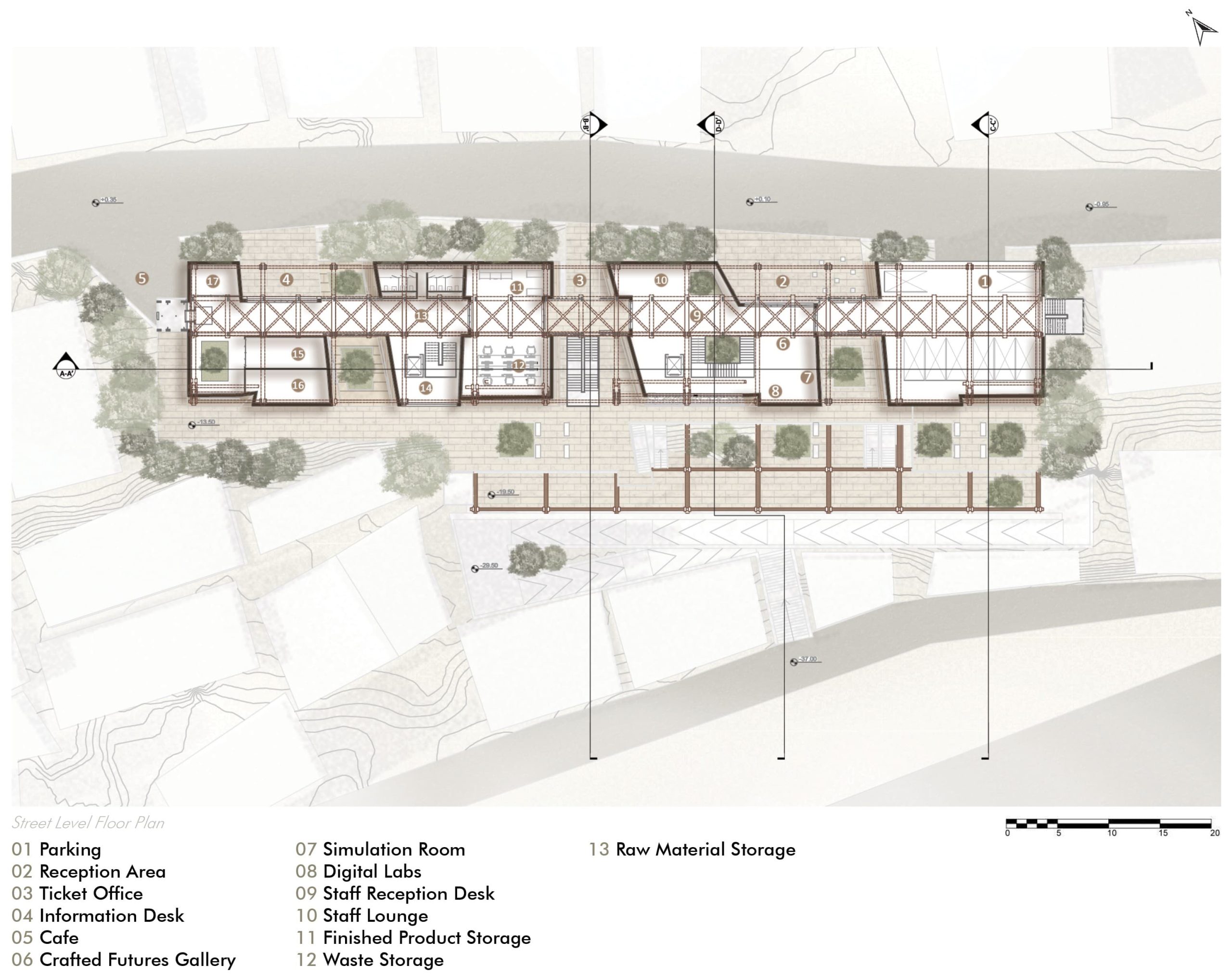
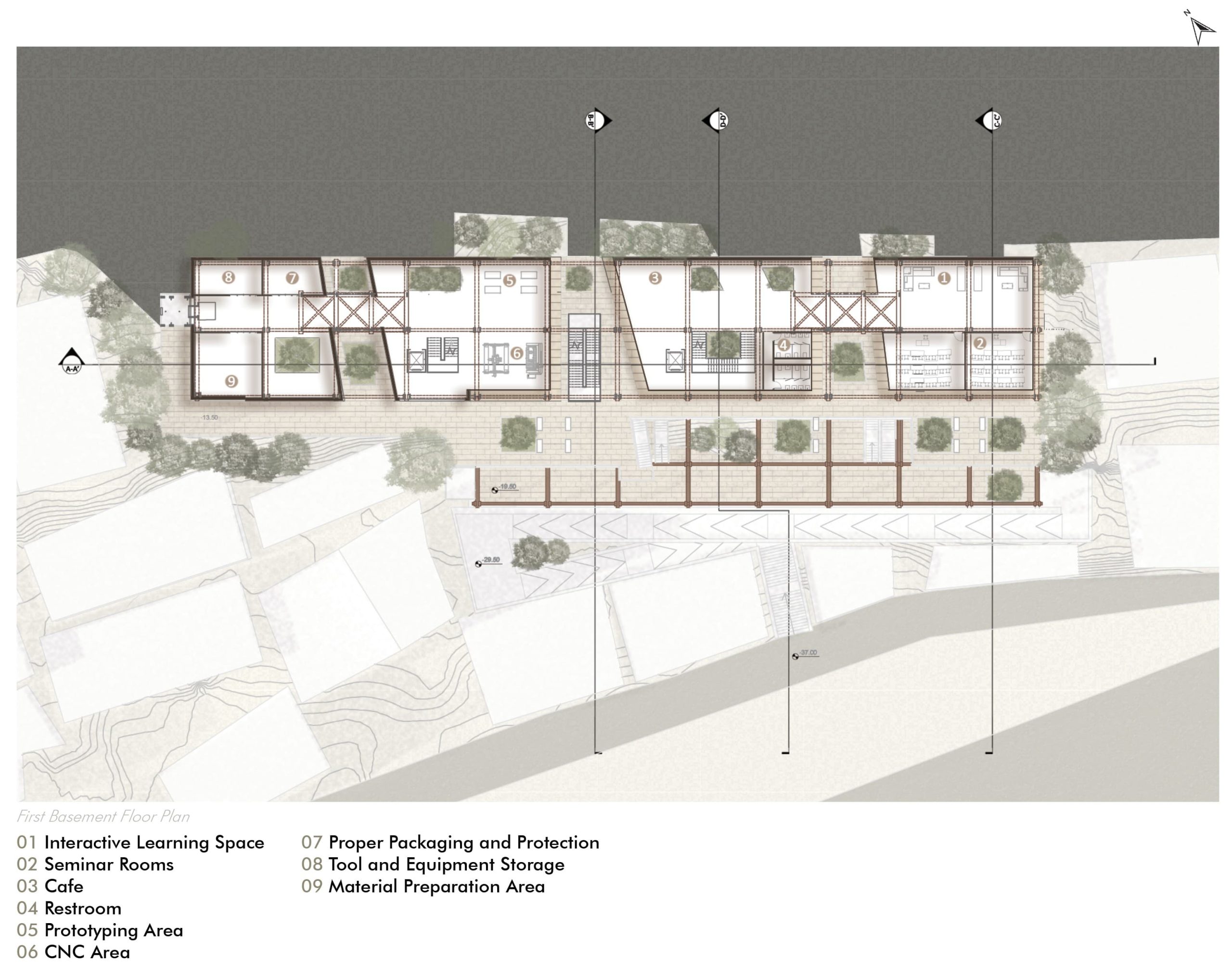
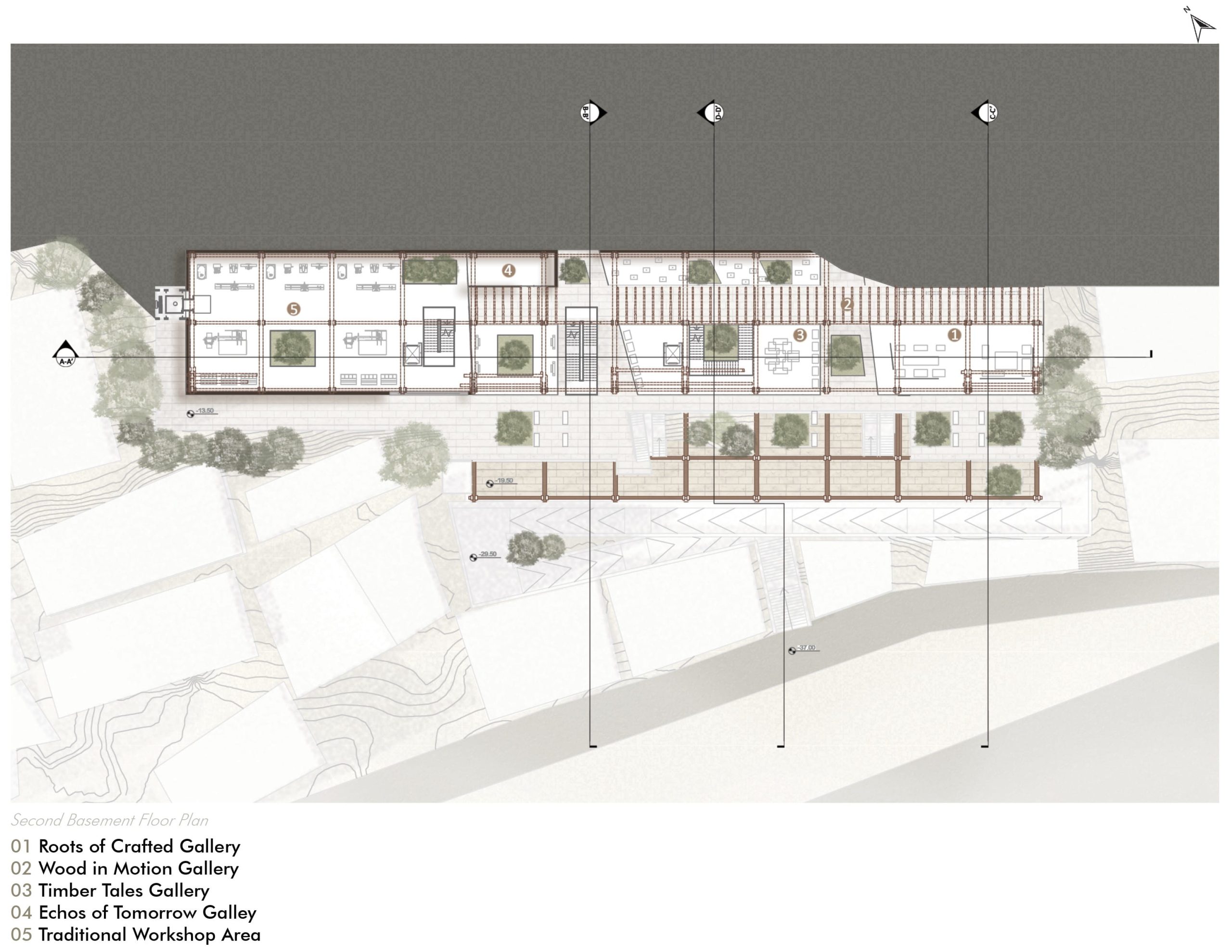
The program is organized around making, learning, and exhibiting. Traditional joinery workshops coexist with CNC and parametric fabrication labs, while studios, seminar rooms, and an event hall support education and public engagement. Exhibition galleries unfold as a chronological narrative—from historical tools and techniques to experimental digital practices—culminating in collaborative future visions of craft.
By merging architecture, fabrication, and public life, the project becomes a living laboratory of carpentry. It empowers artisans, inspires emerging designers, and reweaves Ras Al-Ain into a continuous cultural landscape where tradition and innovation converge.
Established in 2012, Tamayouz Excellence Award is an unaffiliated, independent initiative that aims to advance the profession of architecture academically and professionally. Tamayouz is dedicated to supporting aspirational and transformative projects that tackle local and global challenges and that are informed by a holistic understanding of context.