







University : Al-Quds University
Tutor(s) : Abdul Rahman Al-Kalouti
Project Description
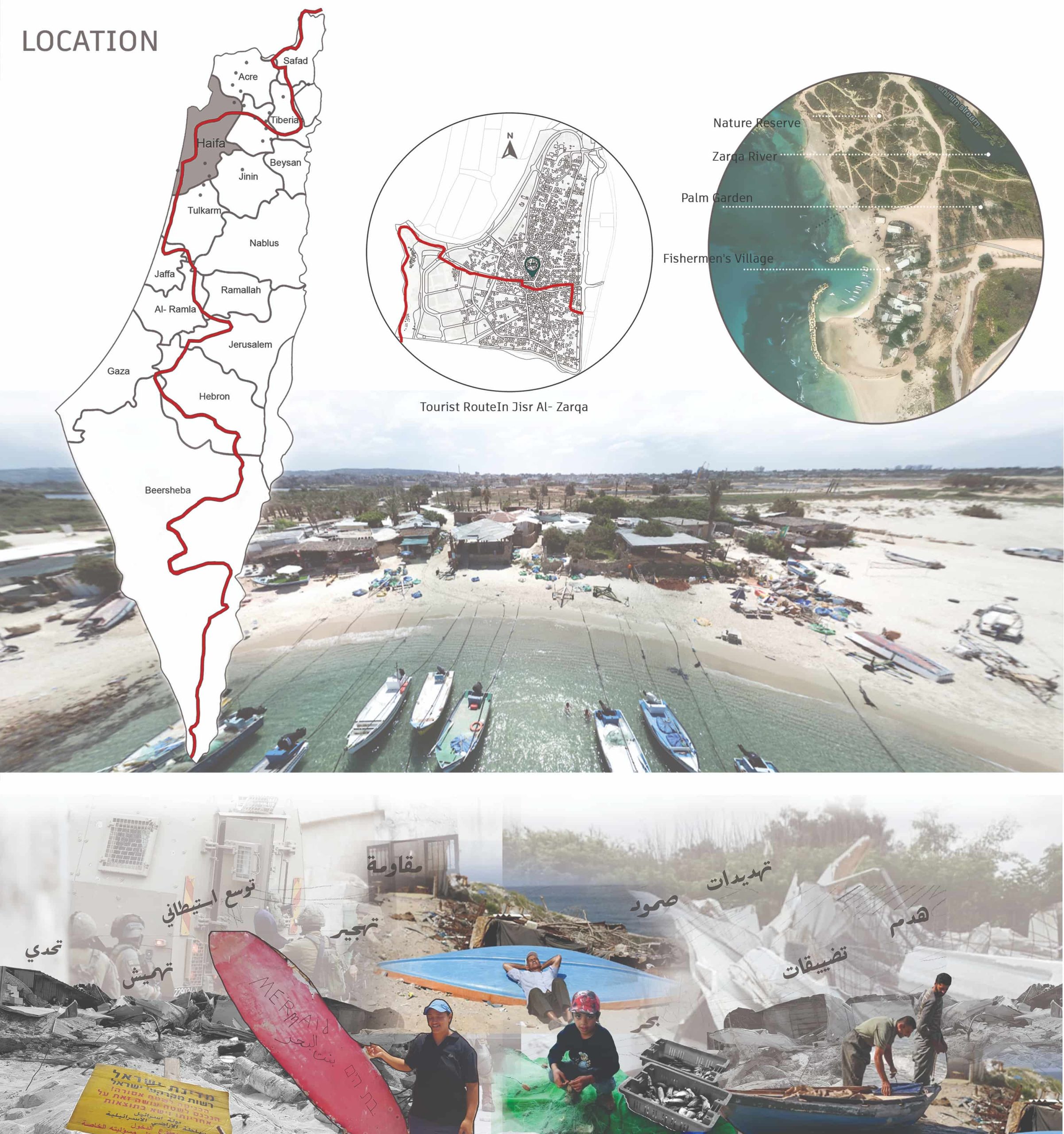
The project aims to revitalize the Fishermen’s Village in Jisr al-Zarqa through social, economic, and tourism development, without compromising its social structure or cultural character. It seeks to strengthen the resilience of local fishermen by supporting the continuity of fishing as a primary livelihood and addressing the restrictions imposed on them, through the revival of maritime heritage and the creation of an environment that facilitates interaction between the local community and visitors.
Environmentally, the project leverages the tourist route commonly known as the “Israeli” route, which we insist on referring to as the National Tourist Route, as it extends from northern to southern Palestine and passes by the Fishermen’s Village without stopping. This is due to the lack of activities or attractions that encourage visitors to engage with or remain in the village. The project aims to attract tourists into the village and connect them with the local community, creating economic opportunities and services linked to the local fishing sector, enhancing community resilience, and establishing cultural bridges of communication.
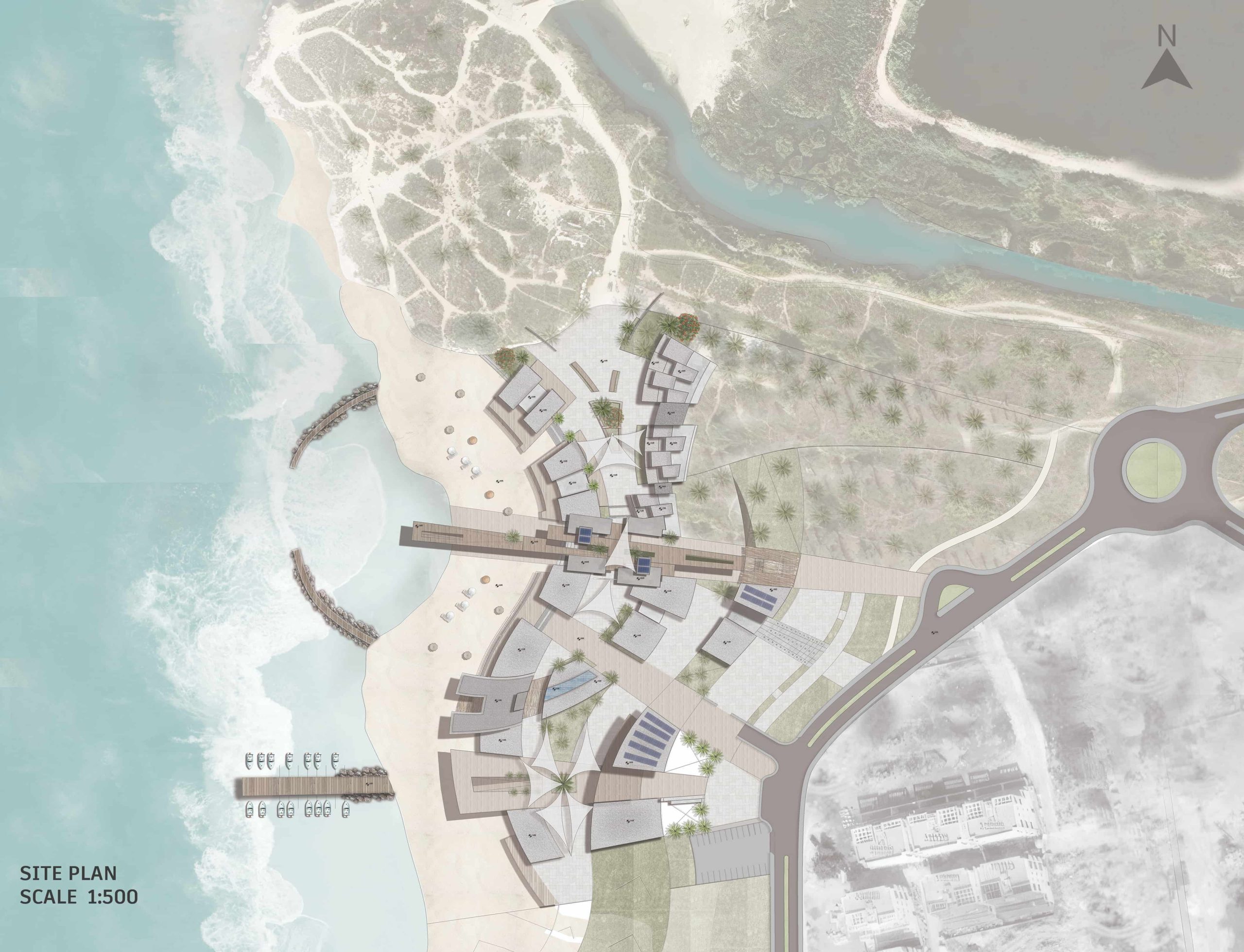
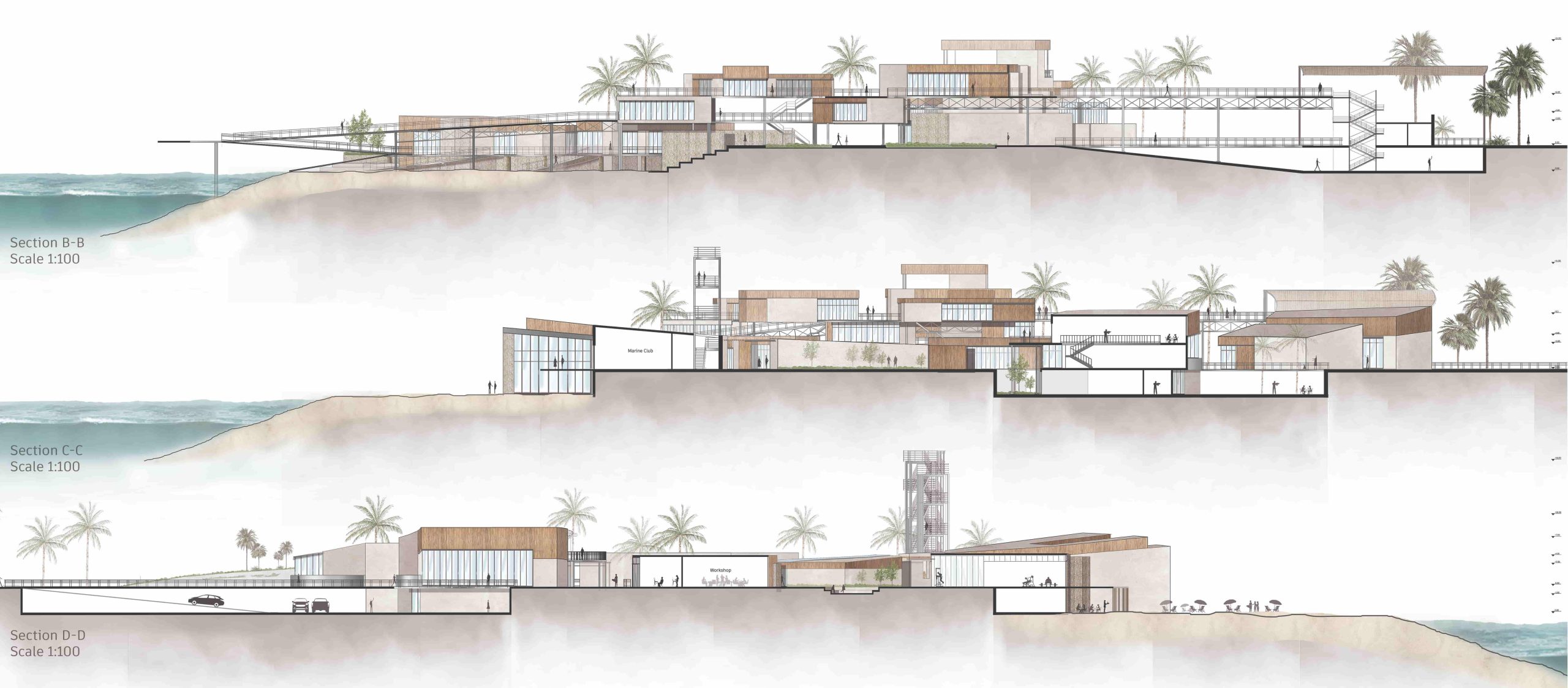
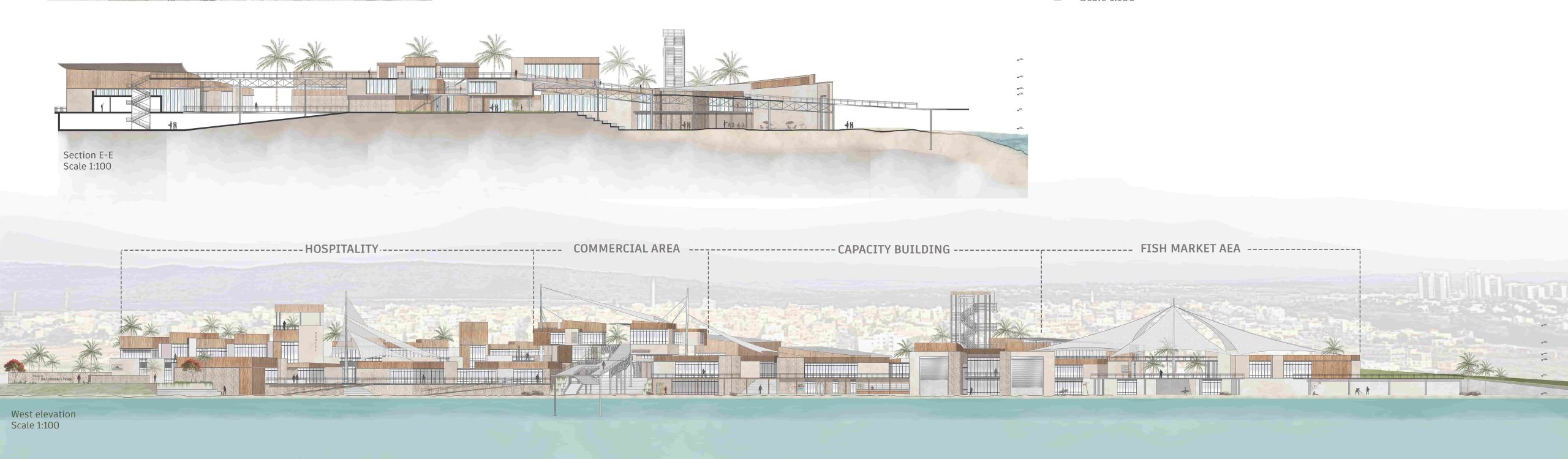
The project is organized into three integrated levels: the recreational and maritime level, which includes restaurants, multipurpose halls, a marina, a marina club, kiosks, and fishing facilities; the cultural and empowerment level, featuring exhibitions, workshops, and hostel accommodations; and the social and commercial level, which connects the fish market, the promenade, and community spaces.
Through this approach, the project redefines the relationship between the village, the sea, and the surrounding natural landscape, promoting sustainable development and tourism that serve the local community while preserving Palestinian maritime heritage and culture.
Established in 2012, Tamayouz Excellence Award is an unaffiliated, independent initiative that aims to advance the profession of architecture academically and professionally. Tamayouz is dedicated to supporting aspirational and transformative projects that tackle local and global challenges and that are informed by a holistic understanding of context.