




University : University of Baghdad
Tutor(s) : Ammar Ashour
Project Description
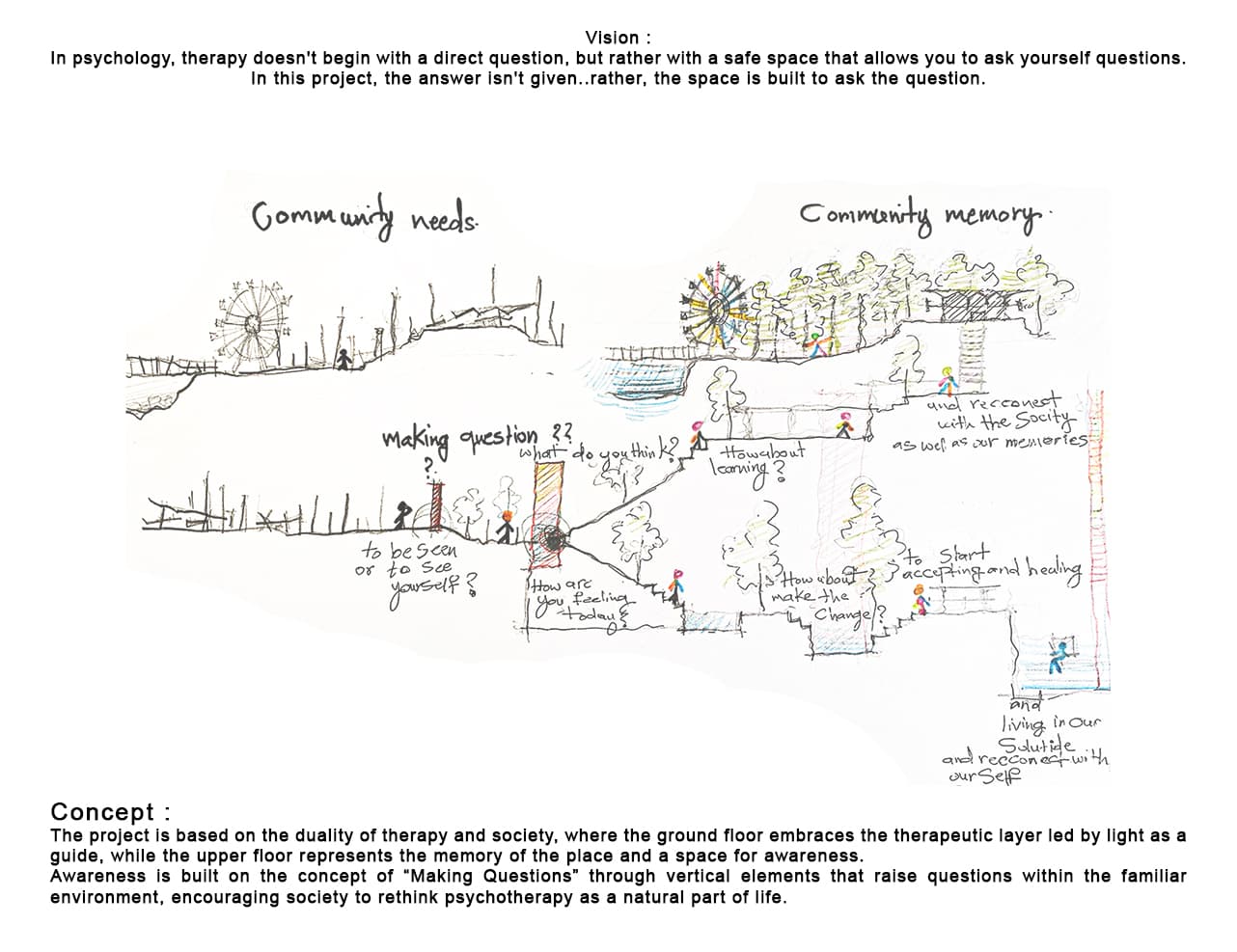
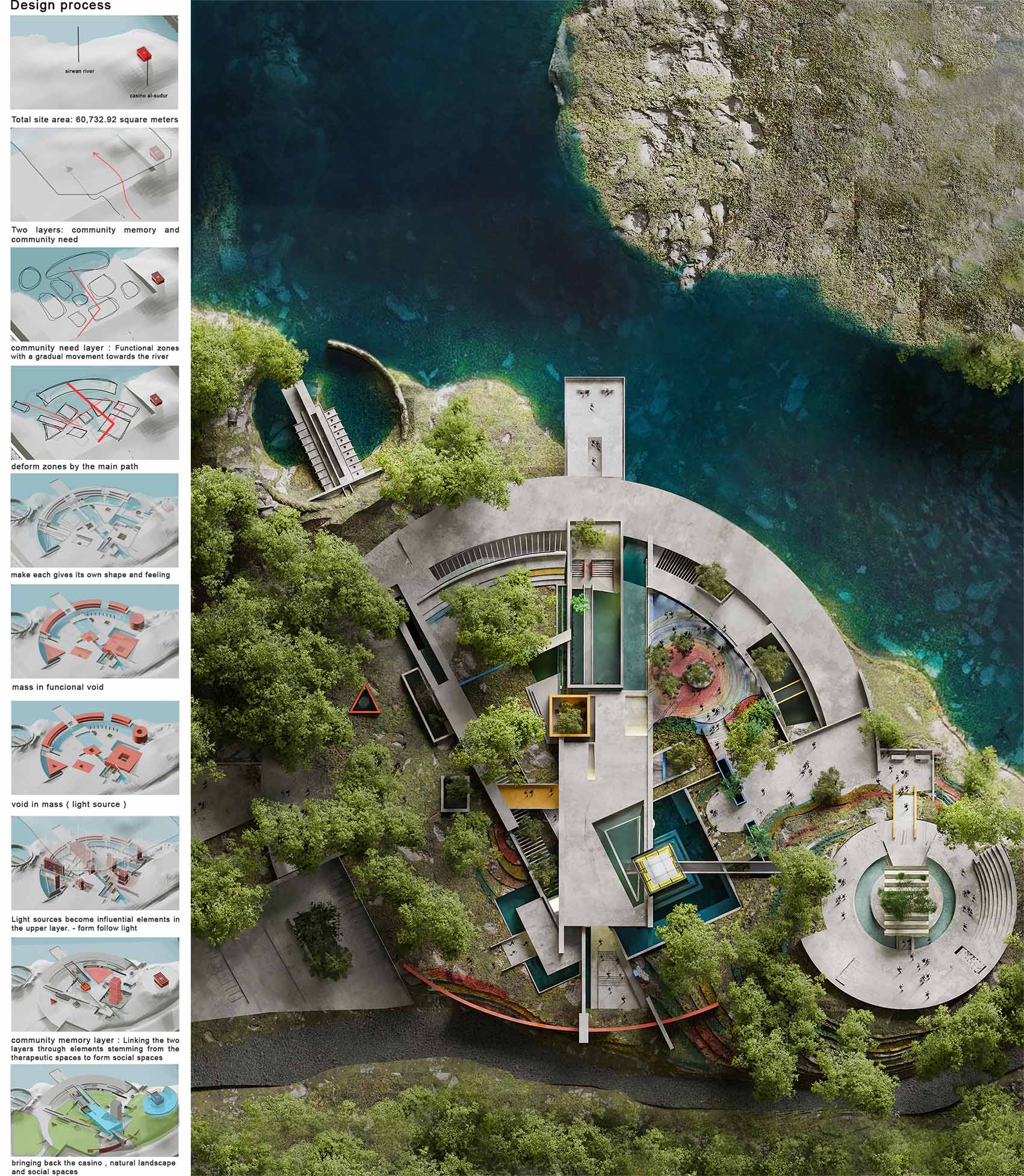
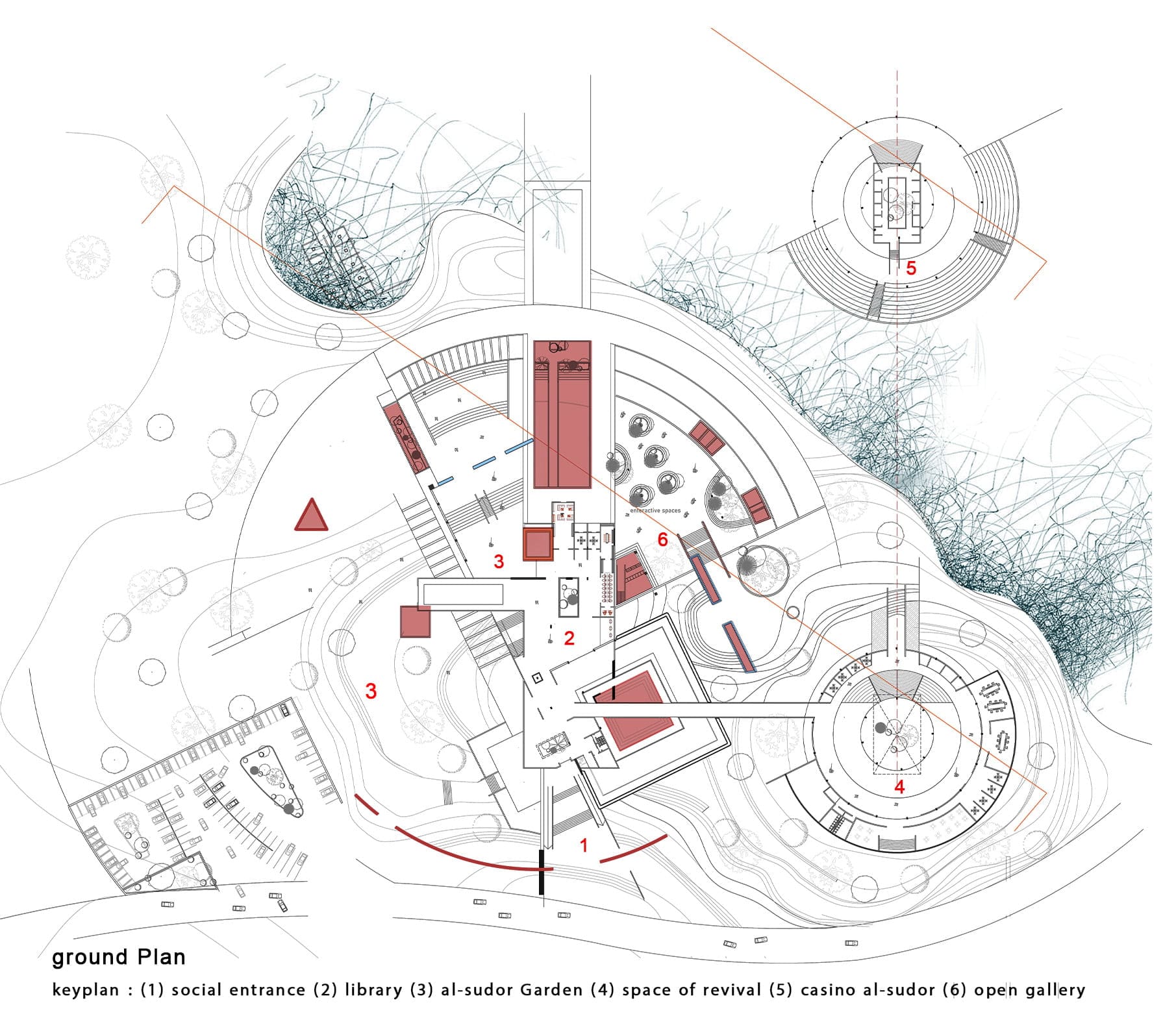
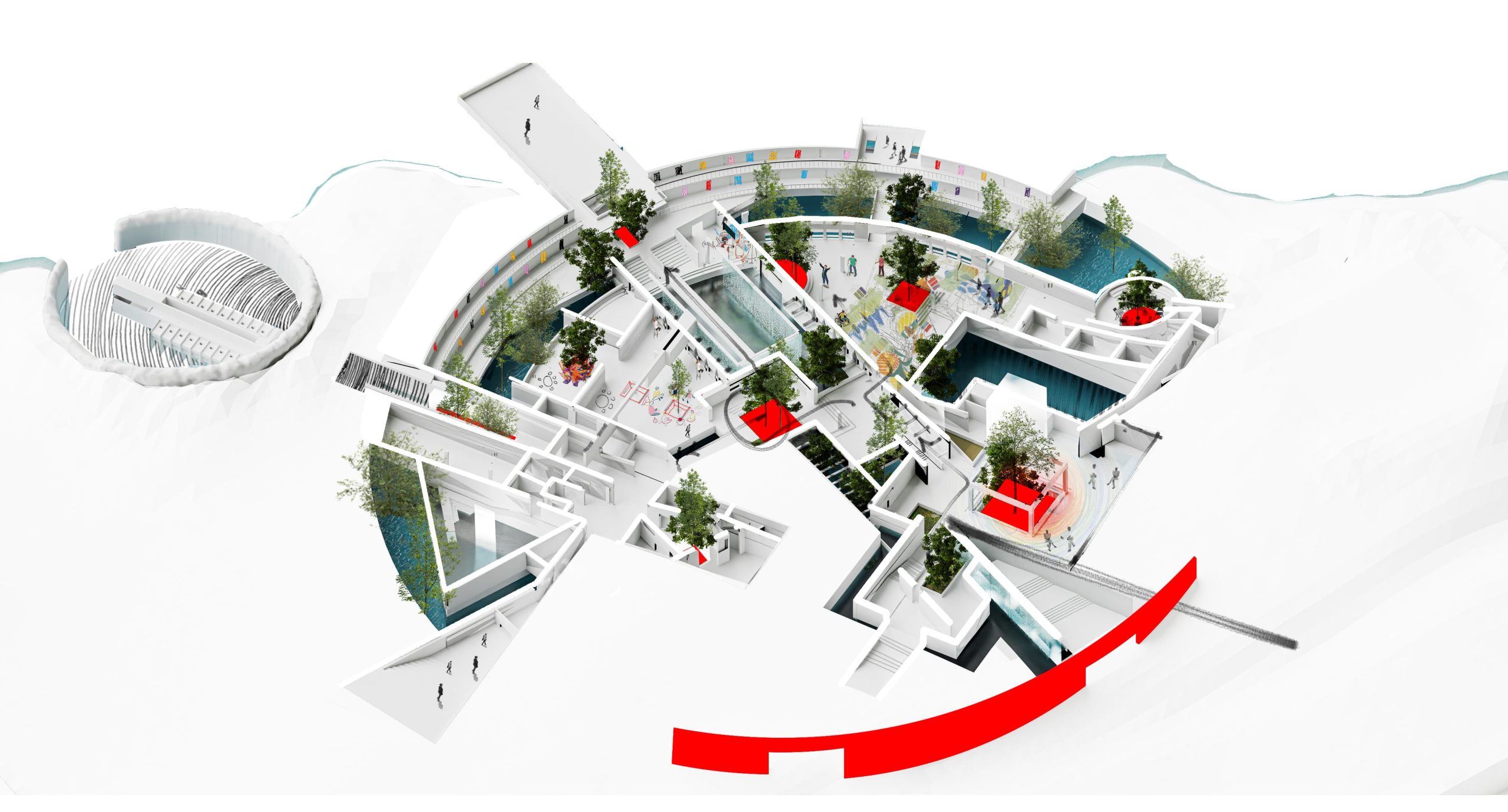
The project is designed based on two functionally and psychologically distinct layers:
The upper layer: an open community cultural space.
The lower layer: a more private indoor therapeutic space.
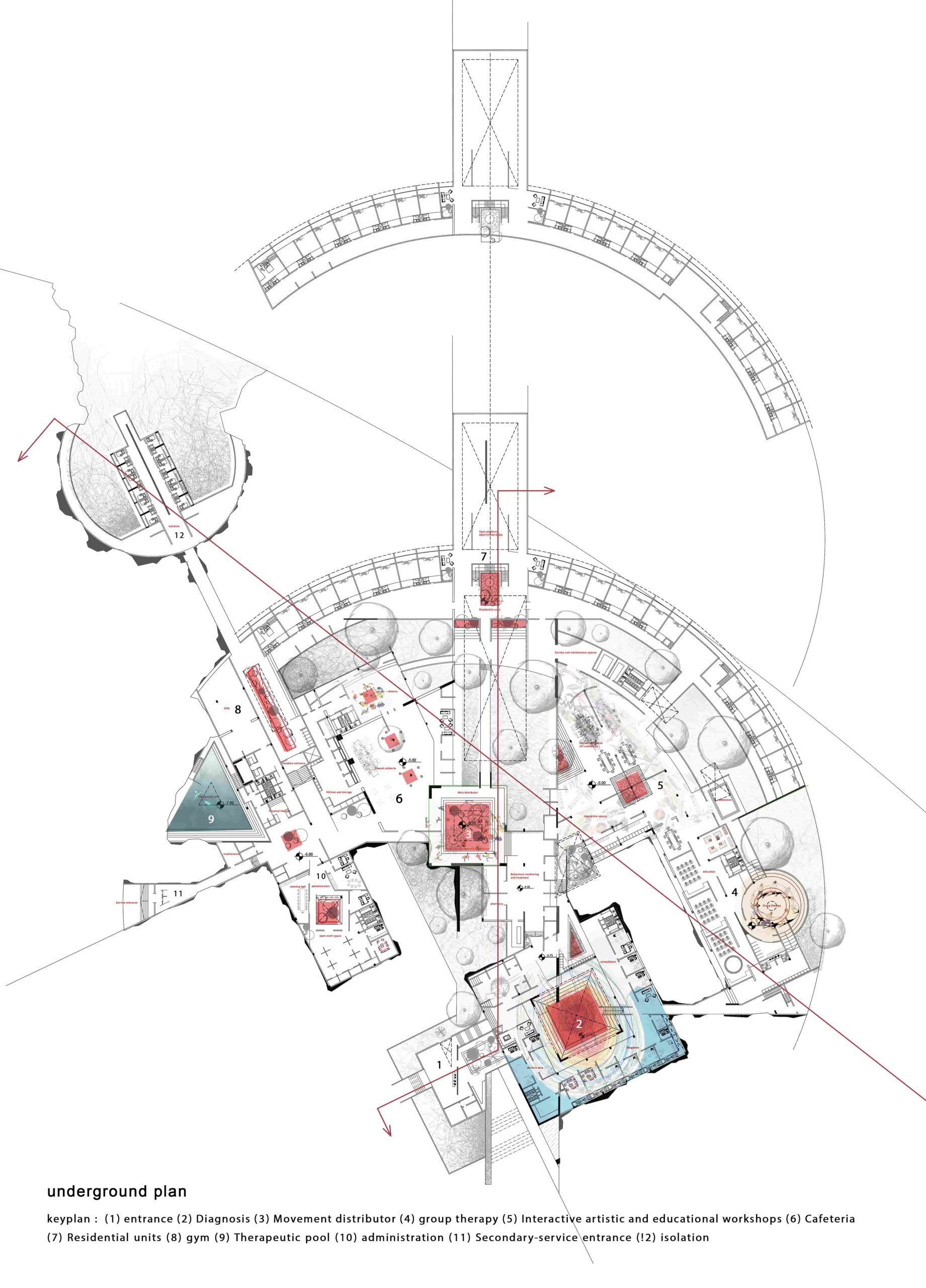
The project begins in the therapeutic layer, where the path starts at the entrance in a social area, breaking the stigma associated with psychotherapy.
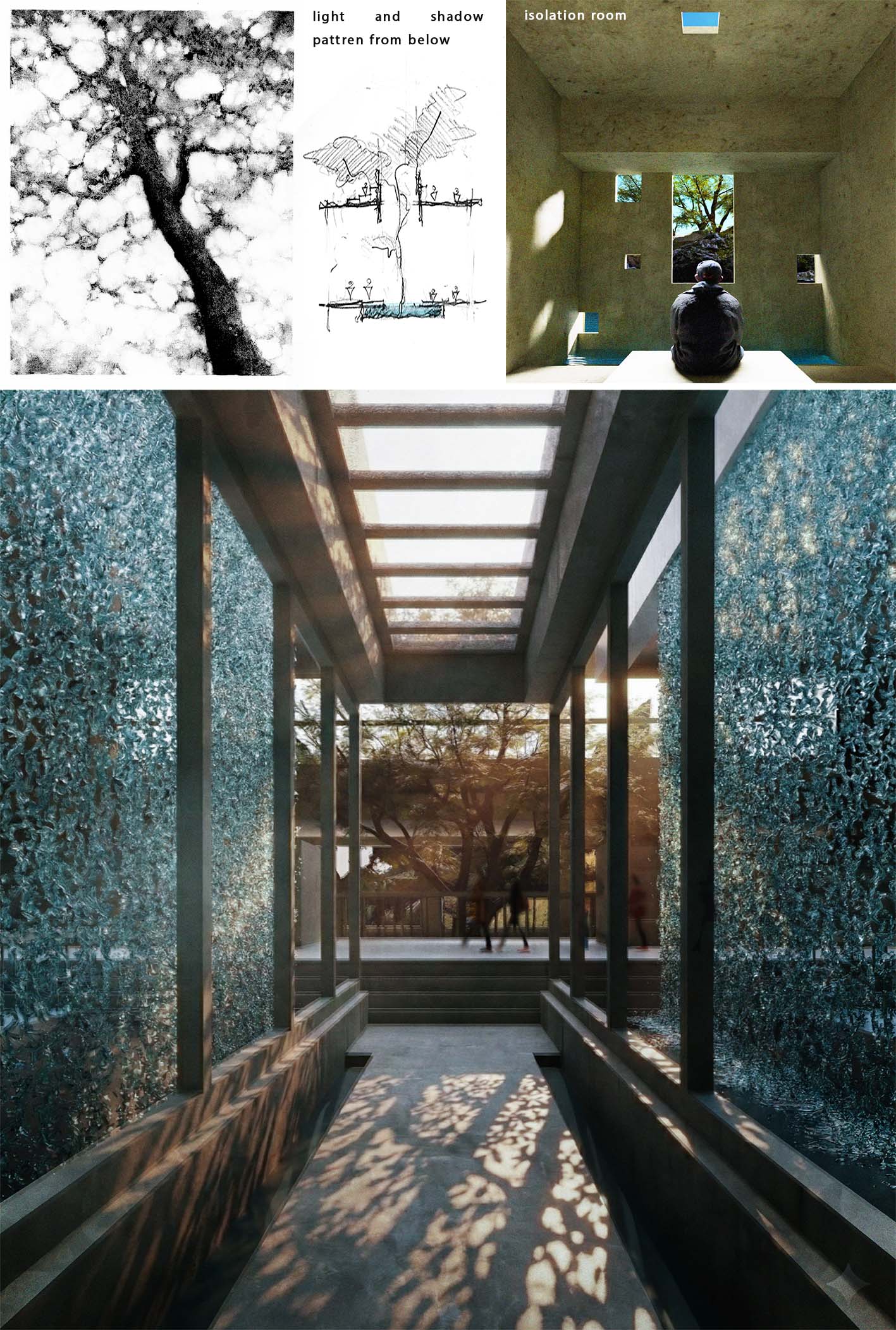
“Form follows light.” Light is the main guide here, with each beam of light falling from above pointing to a specific therapeutic space, feeling, function, or internal moment. The interior environment is designed to rely on indirect lighting through skylights, directing rays toward key therapeutic points and gradually guiding the user between spaces. Meanwhile, shadows create spaces for contemplation and tranquility.
Water is integrated as a living element, reflecting light and generating a continuous visual and auditory rhythm, making the space dynamic and ever-changing.
The therapeutic spaces are open to each other, creating an interactive interior environment, a sense of participation, and preventing negative isolation, where treatment can be experienced collectively.
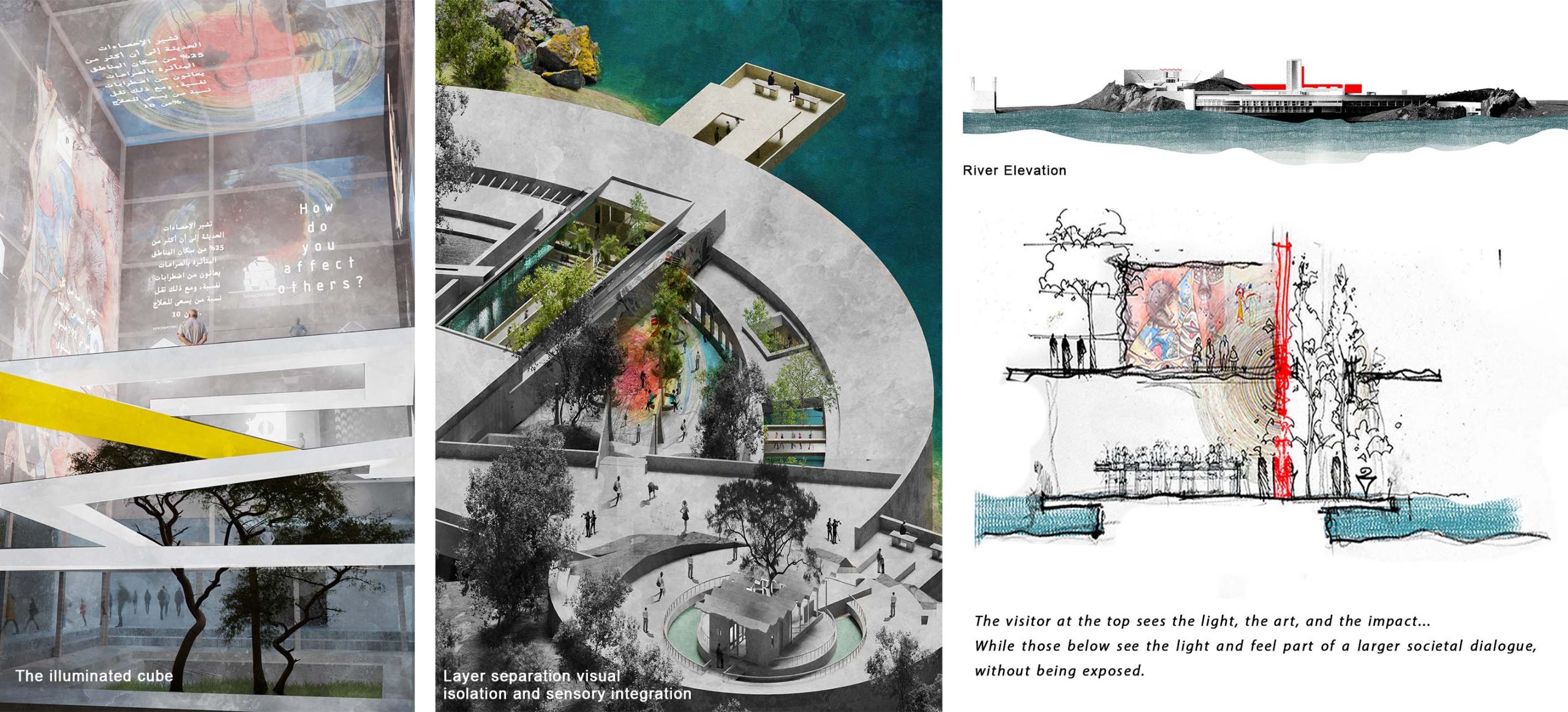
Within each therapeutic space, a courtyard serves as a source of light, its walls extending to the upper level to become an educational element for the community: sometimes in the form of a luminous cube carrying visual messages, other times as colored walls or artistic floors. Thus, an indirect dialogue arises between those below and those above.
To enhance sensory perception and break up monotony, different forms have been adopted for each therapeutic activity, so that users feel that each space has its own identity and experience, helping them to interact with their environment.
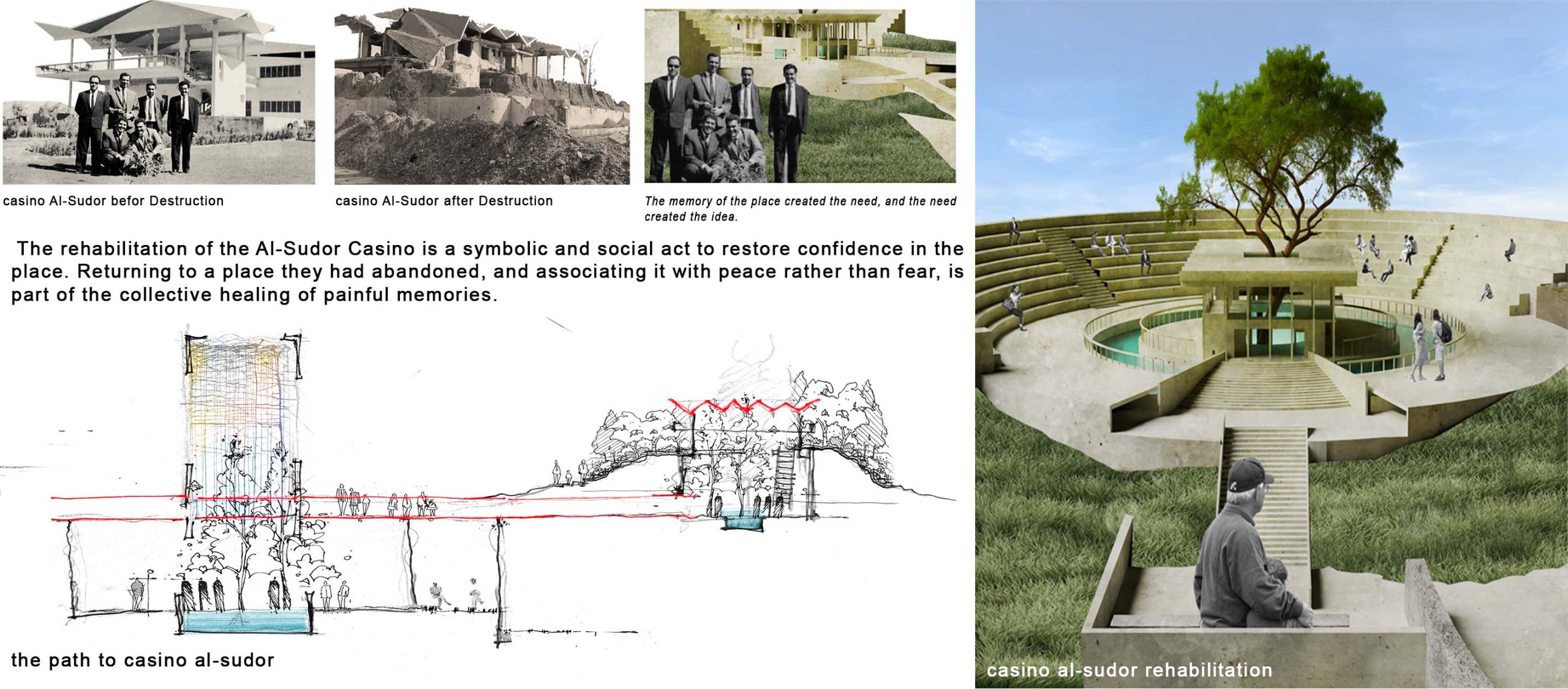
Trees rise from within the therapeutic spaces, extending beyond the ceiling and appearing in the upper layer. The roots become part of the therapeutic environment inside, while the treetops become green umbrellas above.
The movement within the therapeutic layer descends until it reaches the residential units overlooking the river, creating a transparent and calm environment.
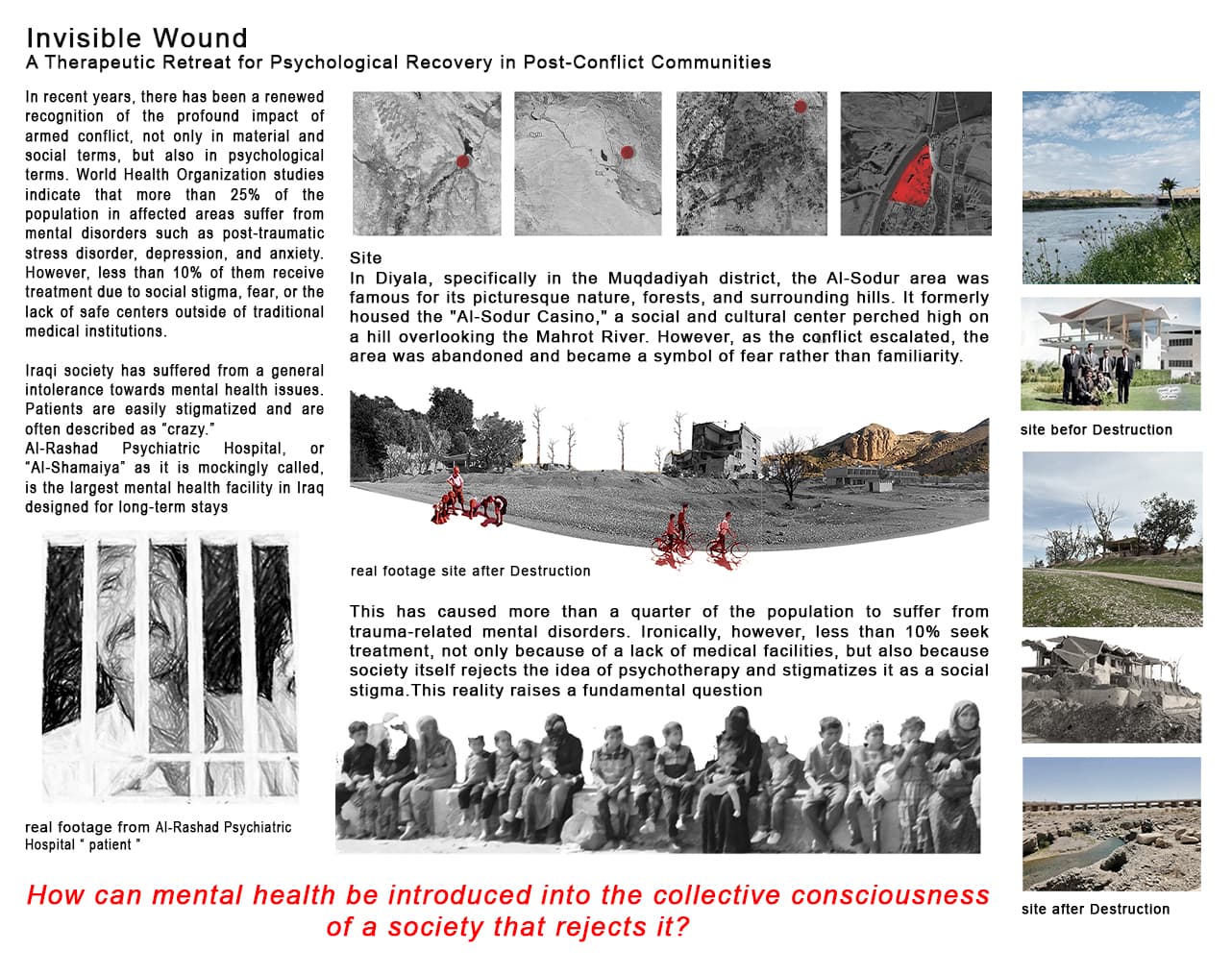
Isolation is not treated as a coercive practice or punitive measure, but is redefined as a free therapeutic space where the mind is embraced within its own space.Invisible Wound
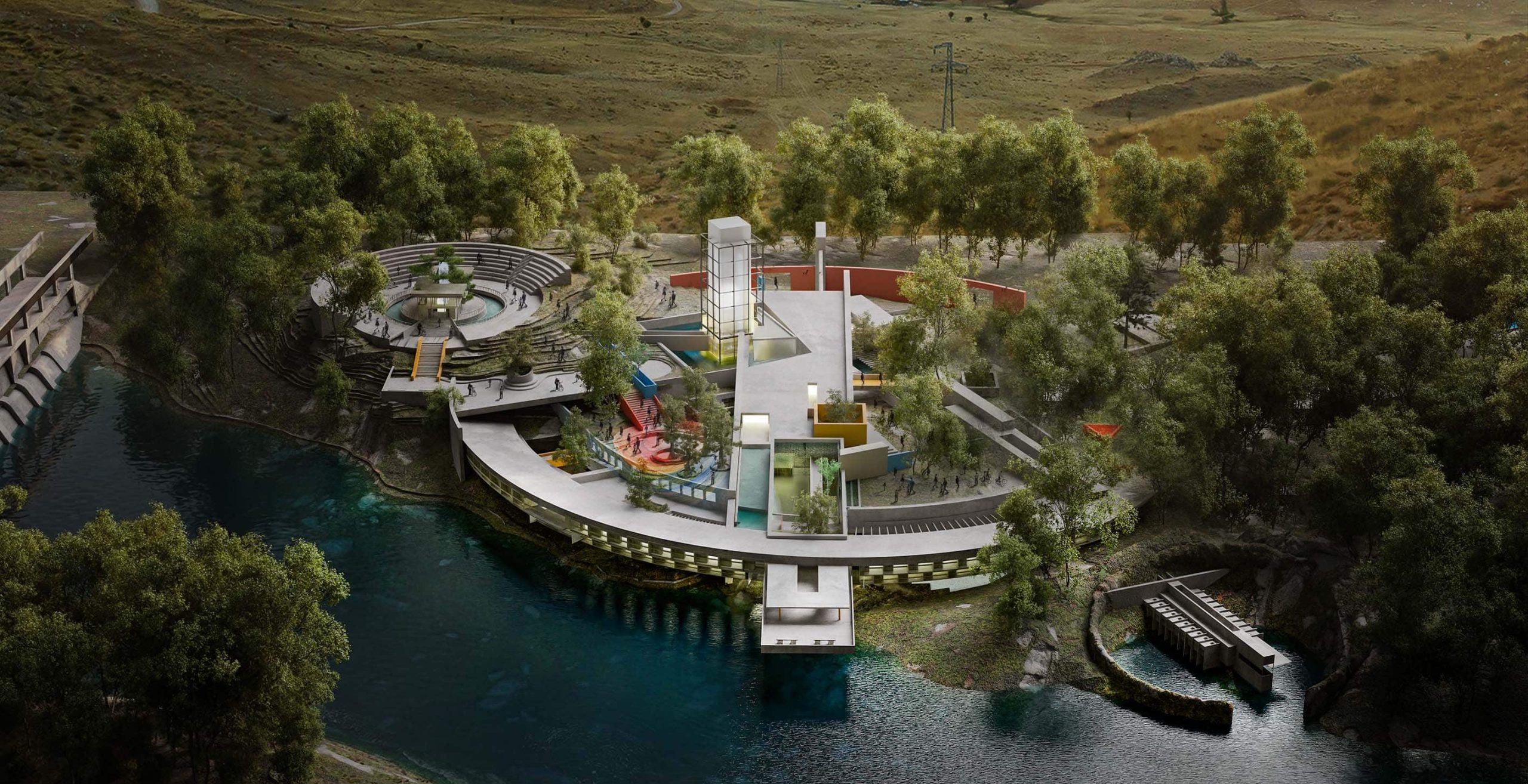
In the urban context, visitors see their familiar old environment, the casino, the natural landscape, and green spaces interspersed with vertical elements whose origin and meaning may be unknown until they delve into them. This happens once at the entrance to the project, when visitors are faced with a philosophical and human decision: “To be seen? Or to see yourself?” With this question, the visitor begins their personal journey, driven by an existential feeling that they may not have realized before.
The illuminated cube
At the symbolic intersection of the therapeutic and social paths, an illuminated glass cube has been placed as an educational and awareness-raising element.
Visitors see this cube and pass through it on their journey to the casino, raising their subconscious awareness
It redefines the concept of mental health care by presenting information in a sensory and experiential way, free from the stigma of “patient.”
Visual separation and sensory integration
Each layer functions independently, but interacts indirectly with the others.
Art workshops are used in the lower areas and the spaces above to display these outputs.
Each of these elements raises questions that users may not have been aware of before or did not have the space to ask.
This makes users rethink their acceptance of mental health treatment.
Established in 2012, Tamayouz Excellence Award is an unaffiliated, independent initiative that aims to advance the profession of architecture academically and professionally. Tamayouz is dedicated to supporting aspirational and transformative projects that tackle local and global challenges and that are informed by a holistic understanding of context.