



University : Bangladesh University of Engineering and Technology
Tutor(s) : Prof. S M Najmul Imam, Fouzia Masud Mouri
Project Description
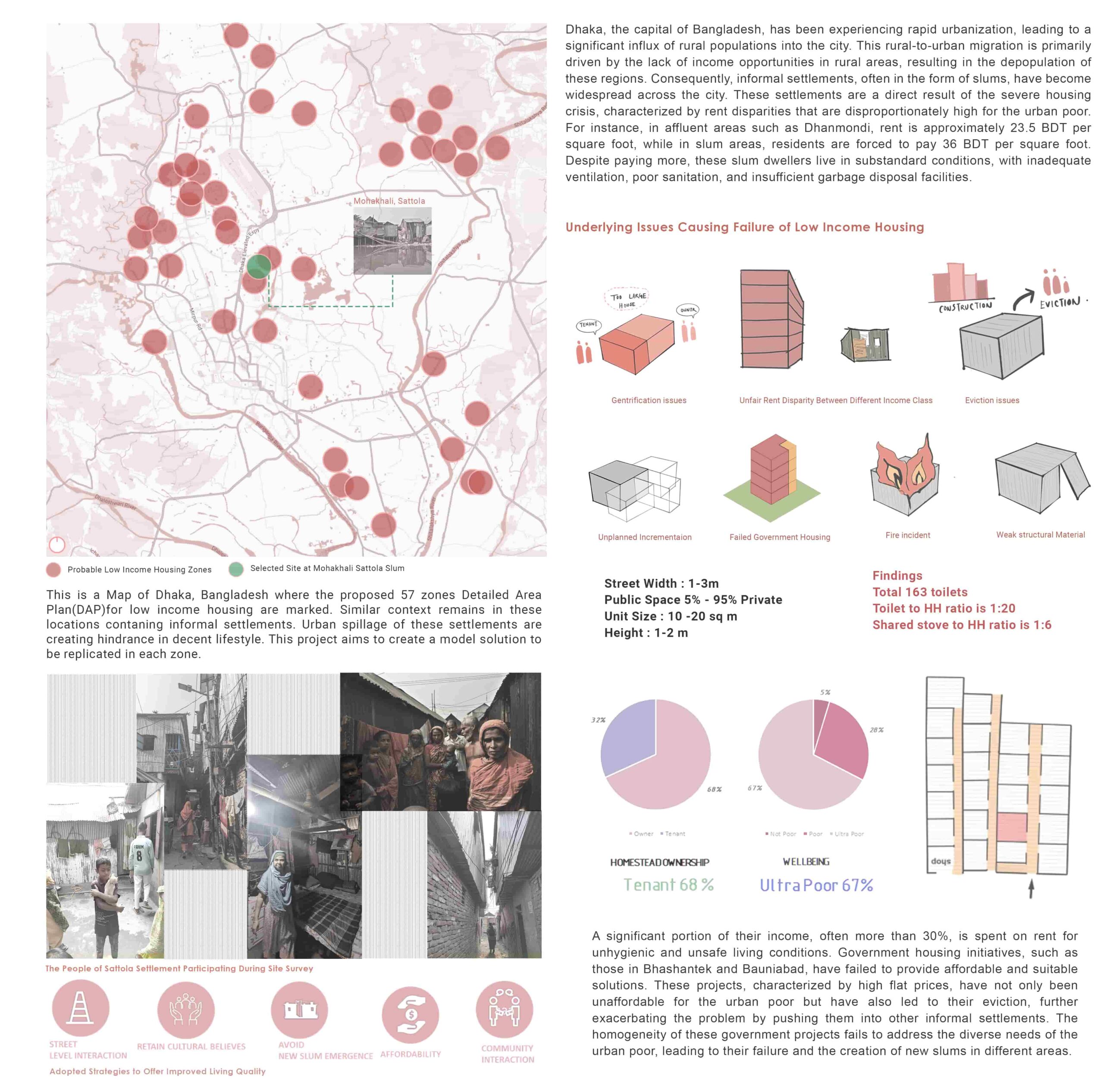
Dhaka’s rapid urbanization has stimulated a large influx of rural migrants, leading to widespread informal settlements causing them to lose their cultural roots. Rural depopulation, driven by limited income opportunities, has exacerbated the creation of slums and severe rent disparities. In well to-do residential areas like Dhanmondi, Dhaka, rents are low compared to slum dwellers who pay high rents for substandard housing lacking ventilation, sanitation, and proper waste disposal.
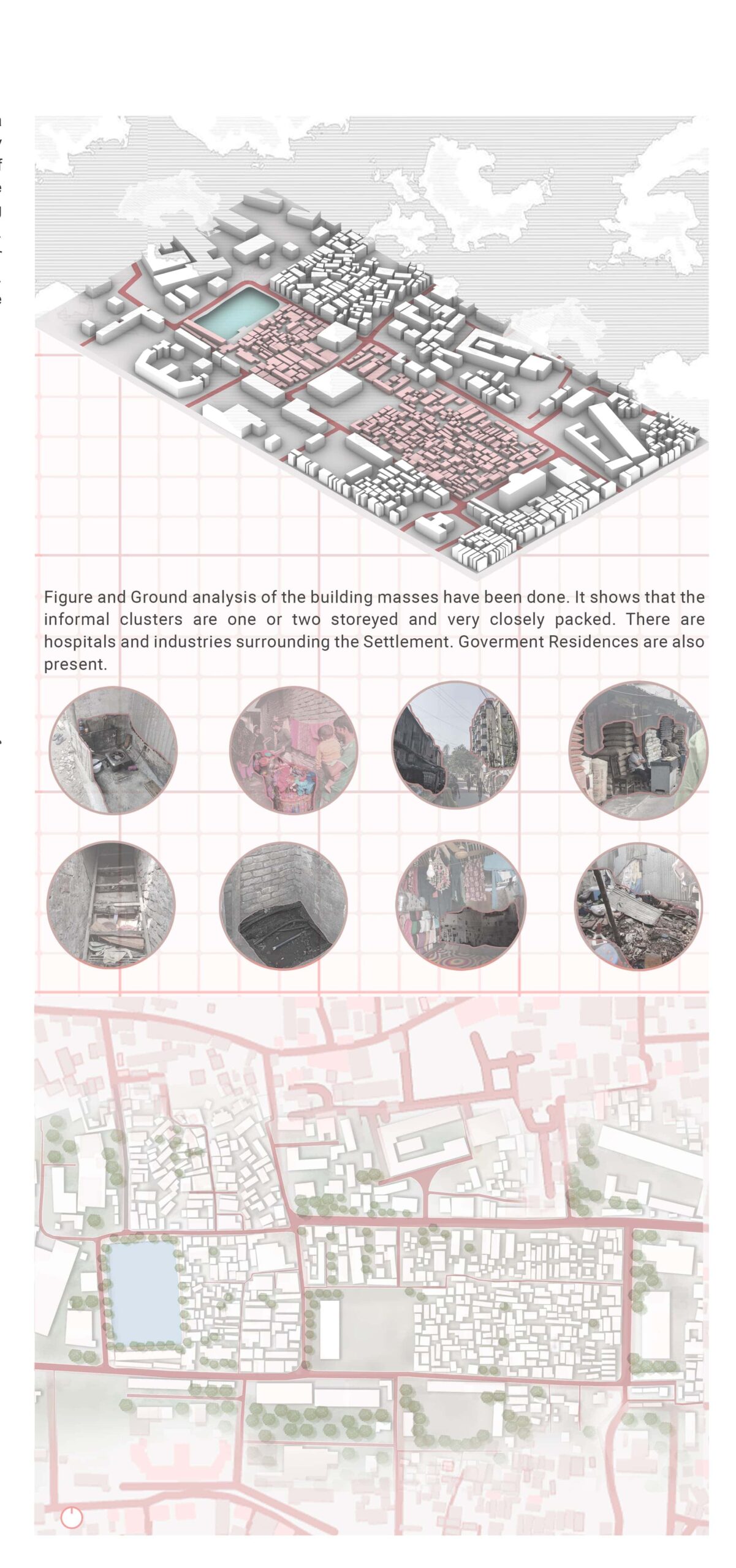
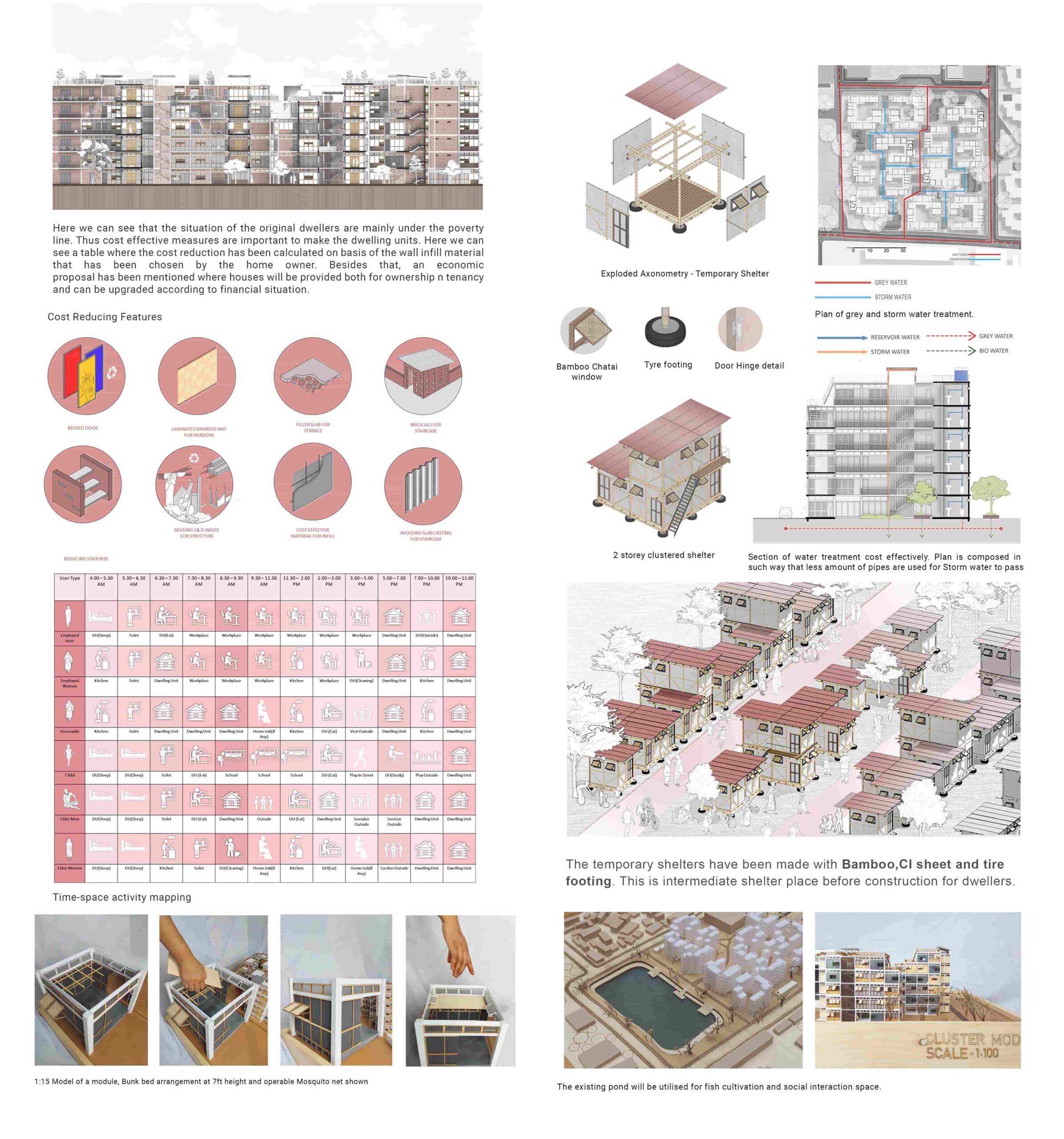
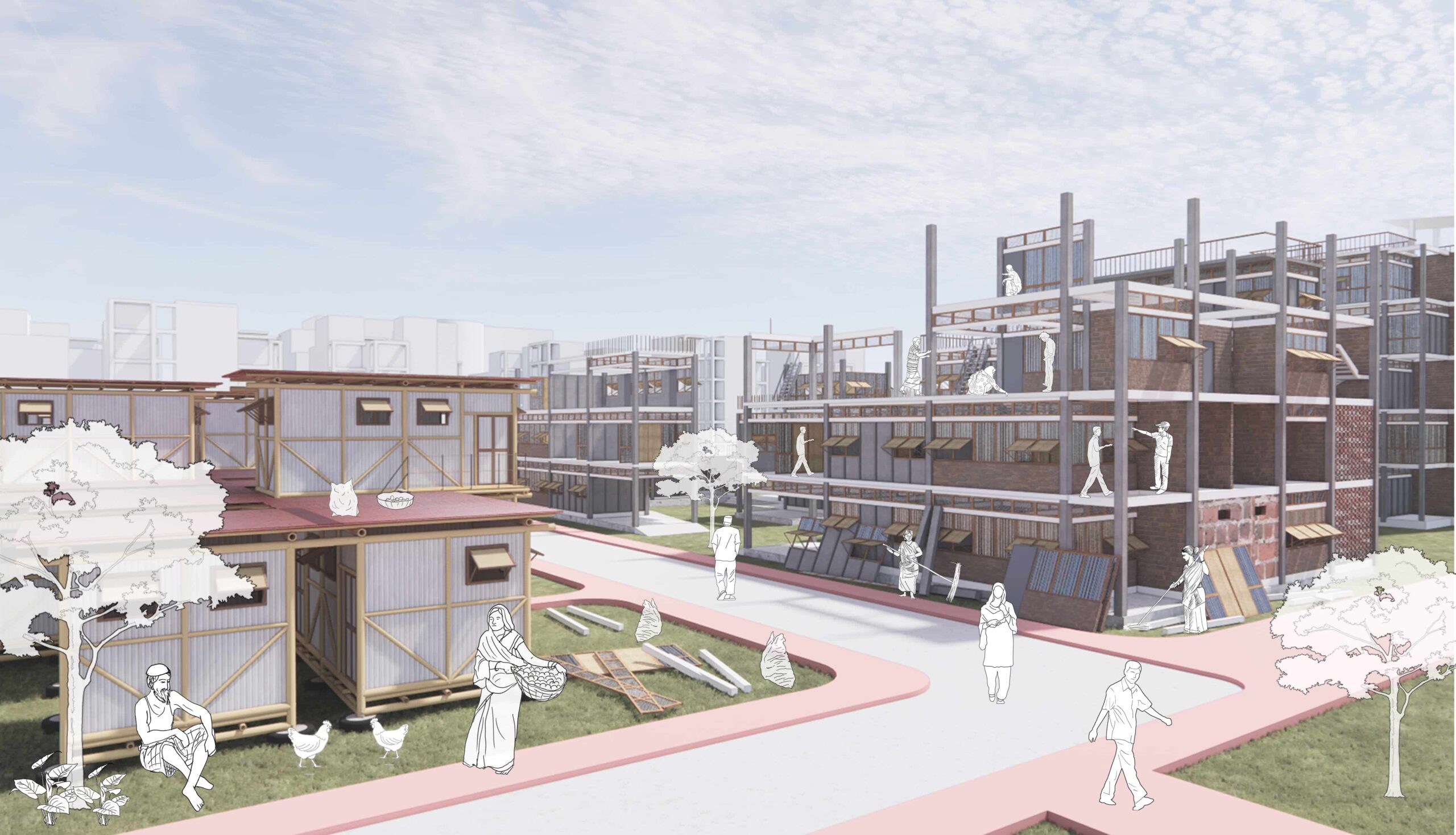
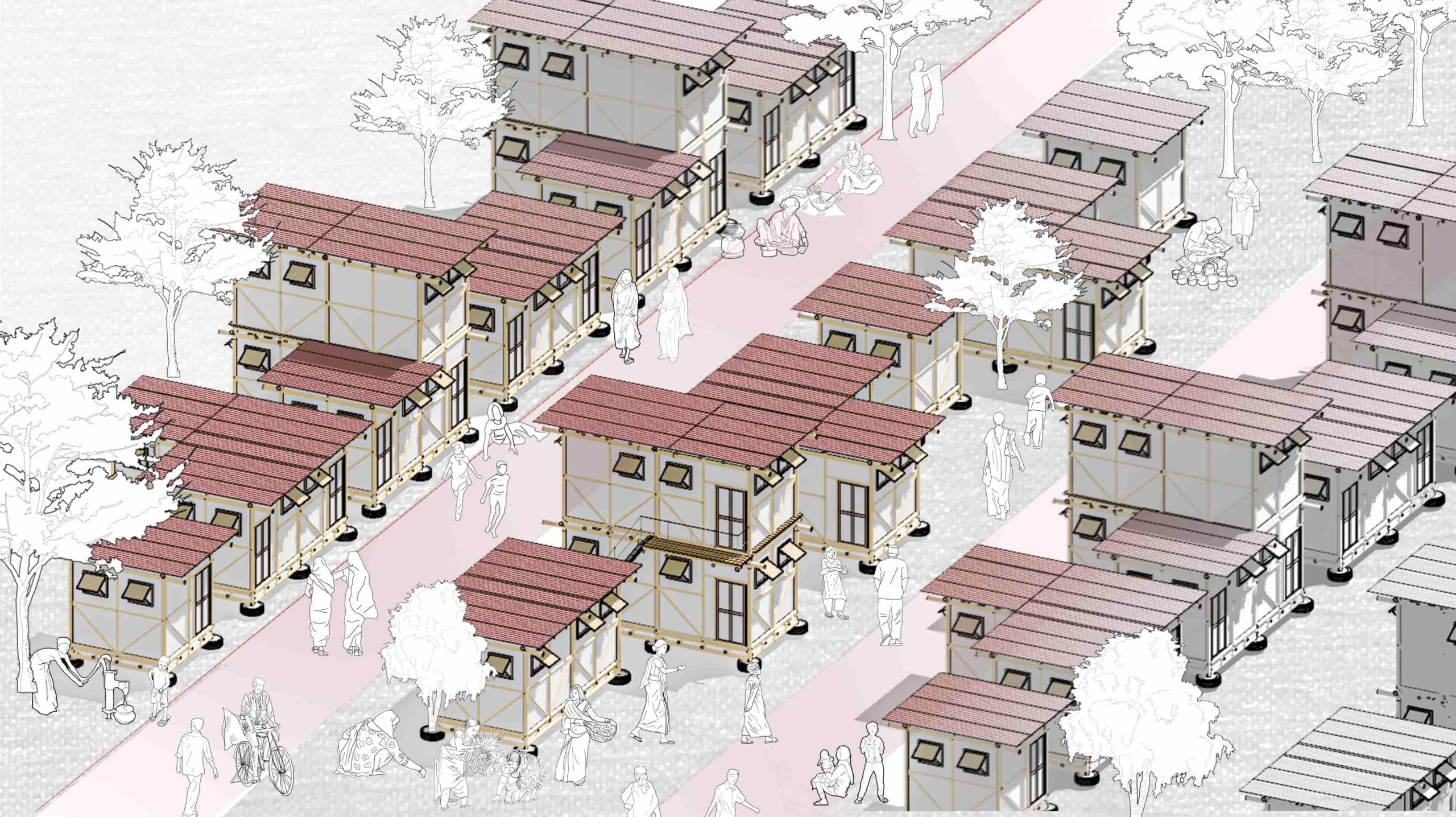
The urban poor, who make up a significant portion of Dhaka’s population and provide greatly to the city’s economy, are caught in a poverty cycle due to overpriced rents that consume about 60% of their income. Many Government housing projects have failed due to offering flats that are unaffordable to the poor, resulting in their eviction and the creation of new slums elsewhere. The “Eco-Homes” project aims to provide a sustainable housing solution tailored to the urban poor in Sattola, an industrial area of Dhaka. A year-long survey with the locals identified key challenges, including evictions, fire hazards, and crime, highlighting the need to preserve community interdependence.
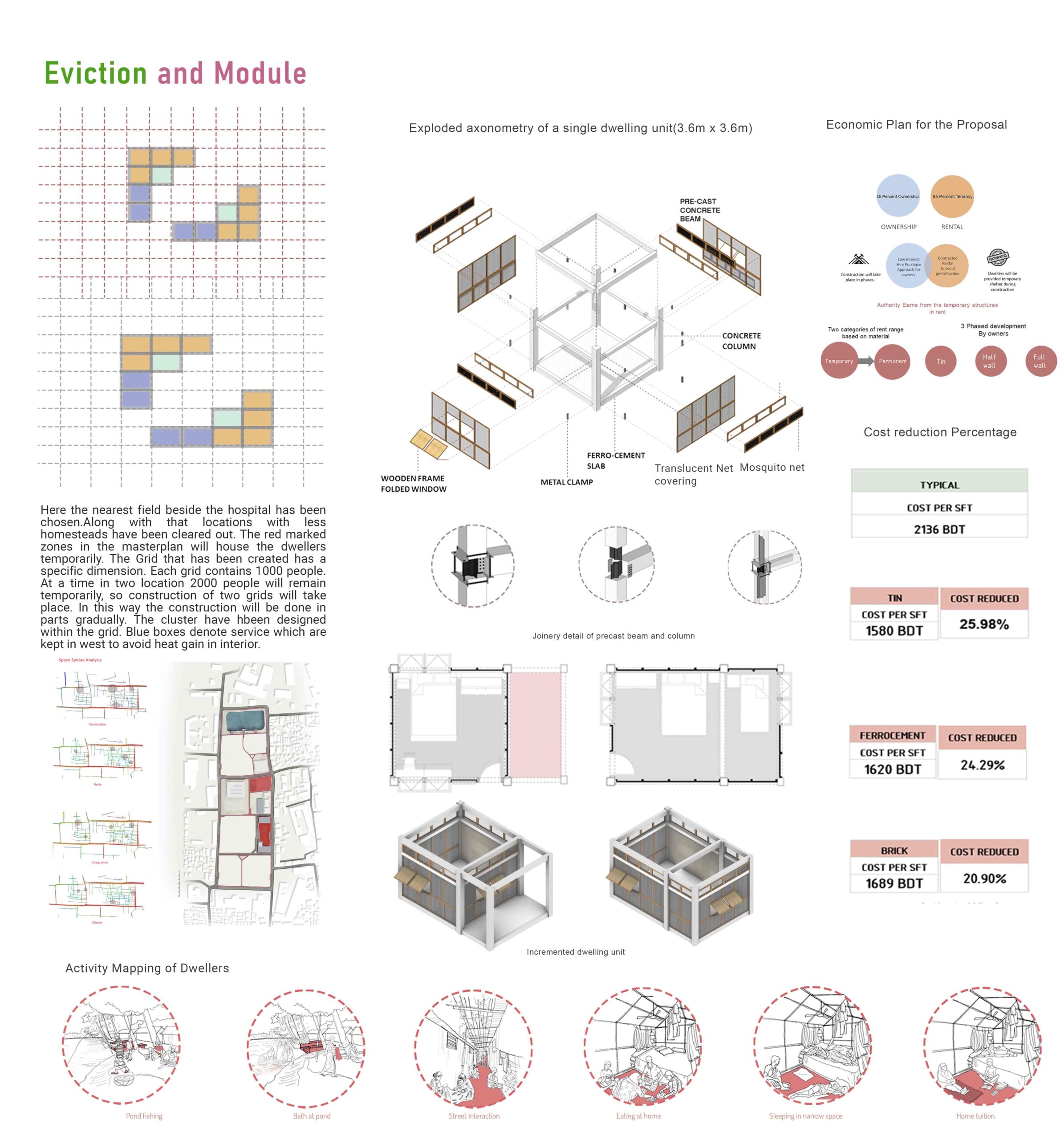
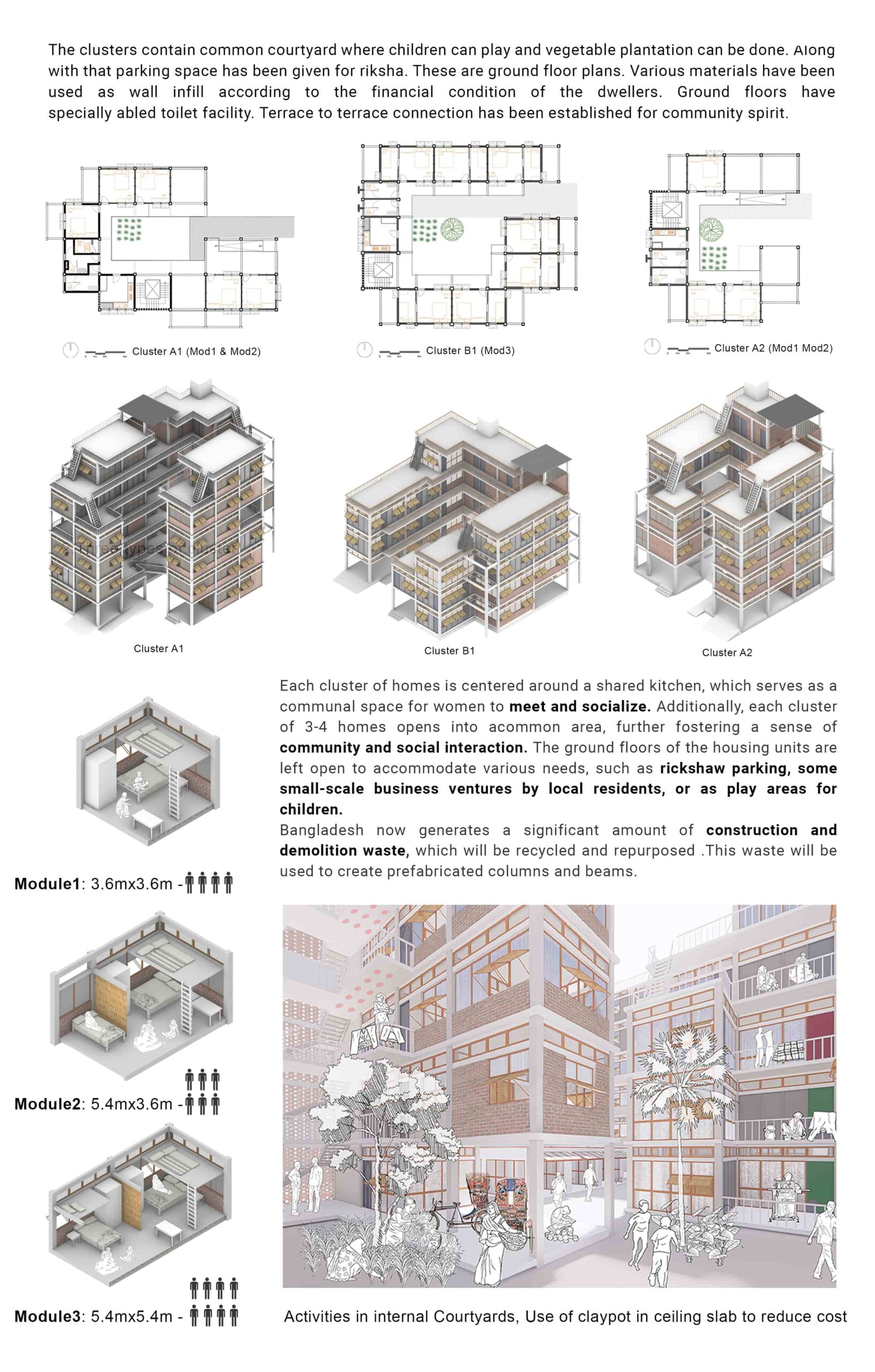
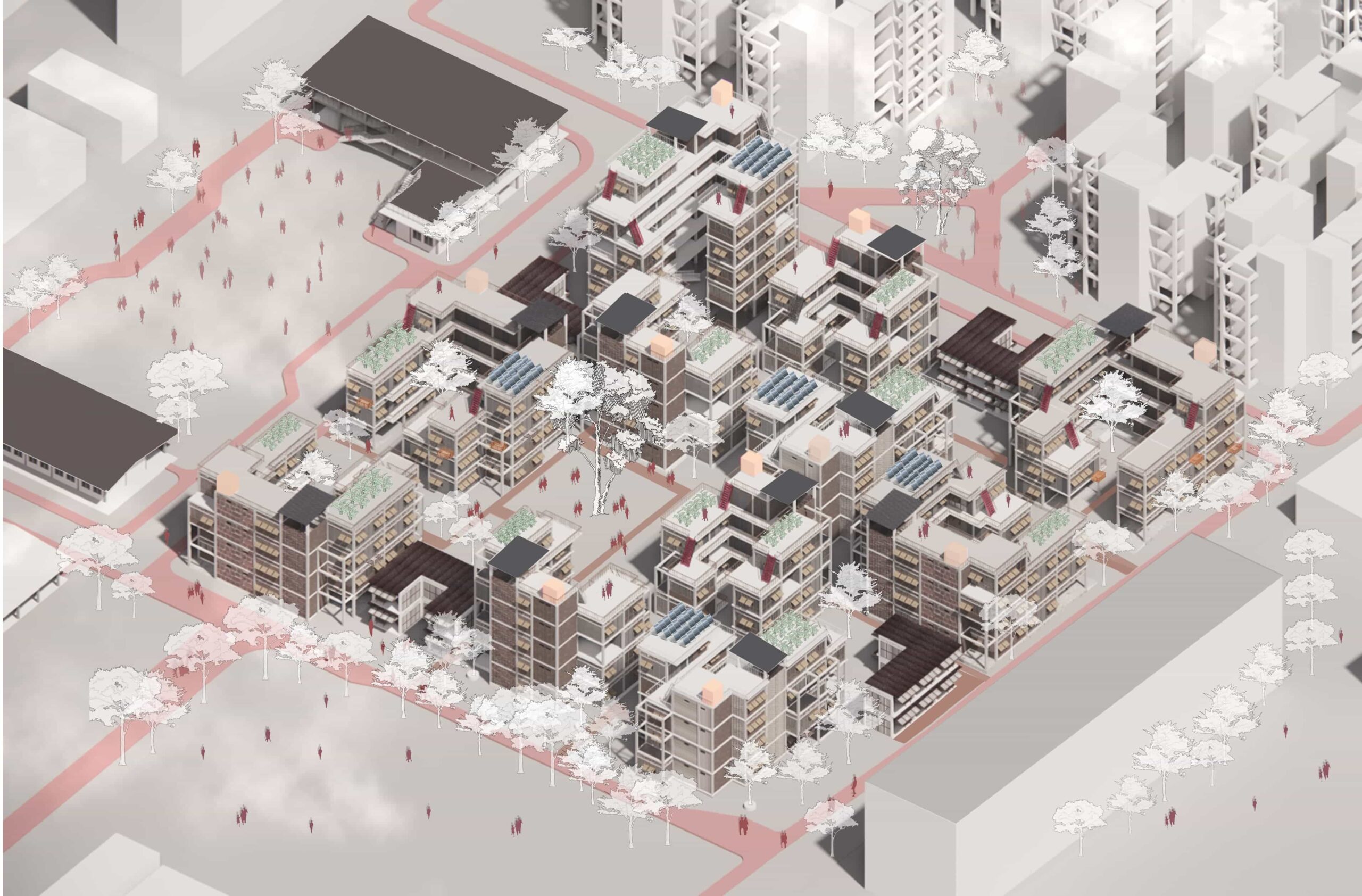
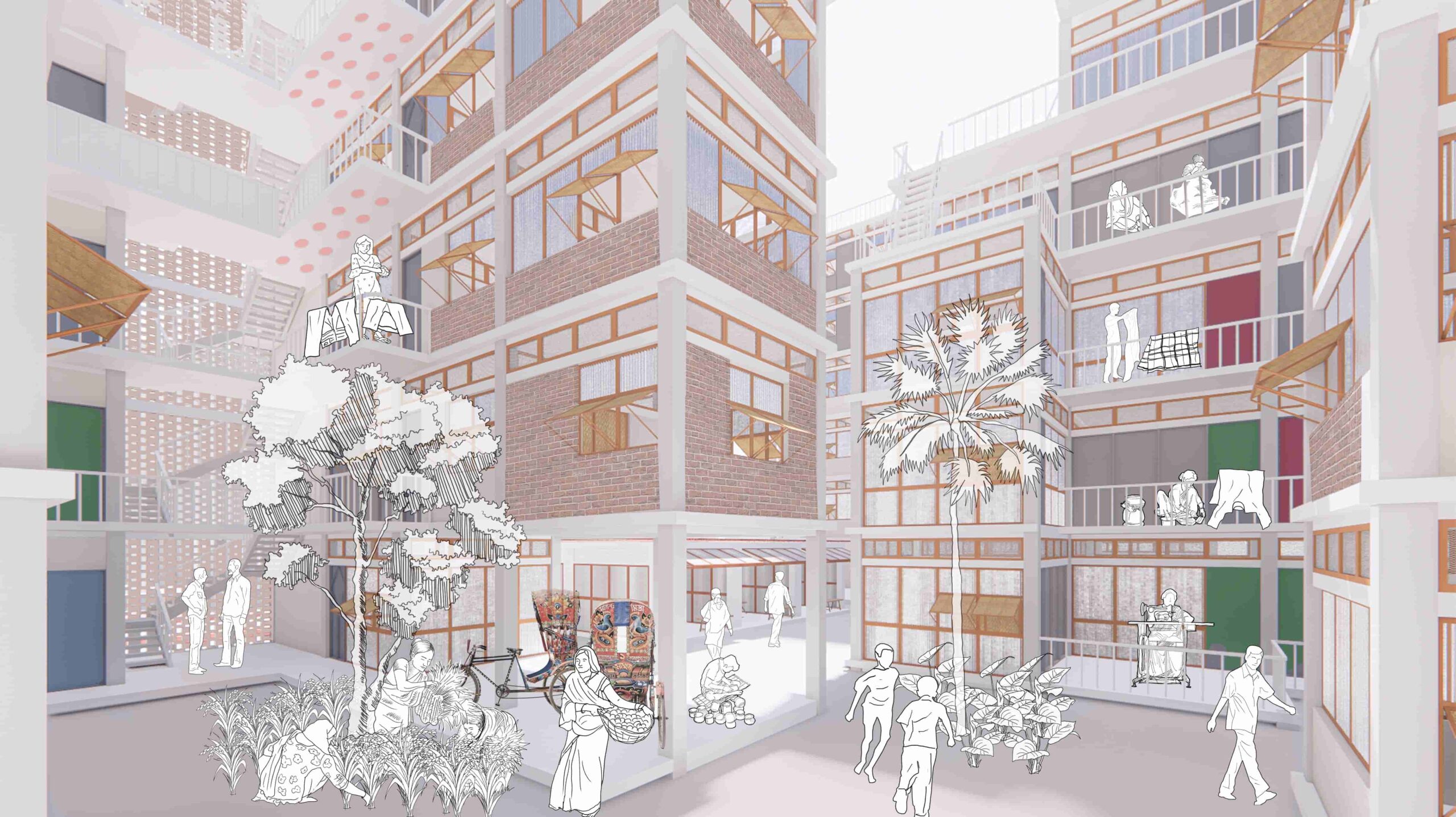
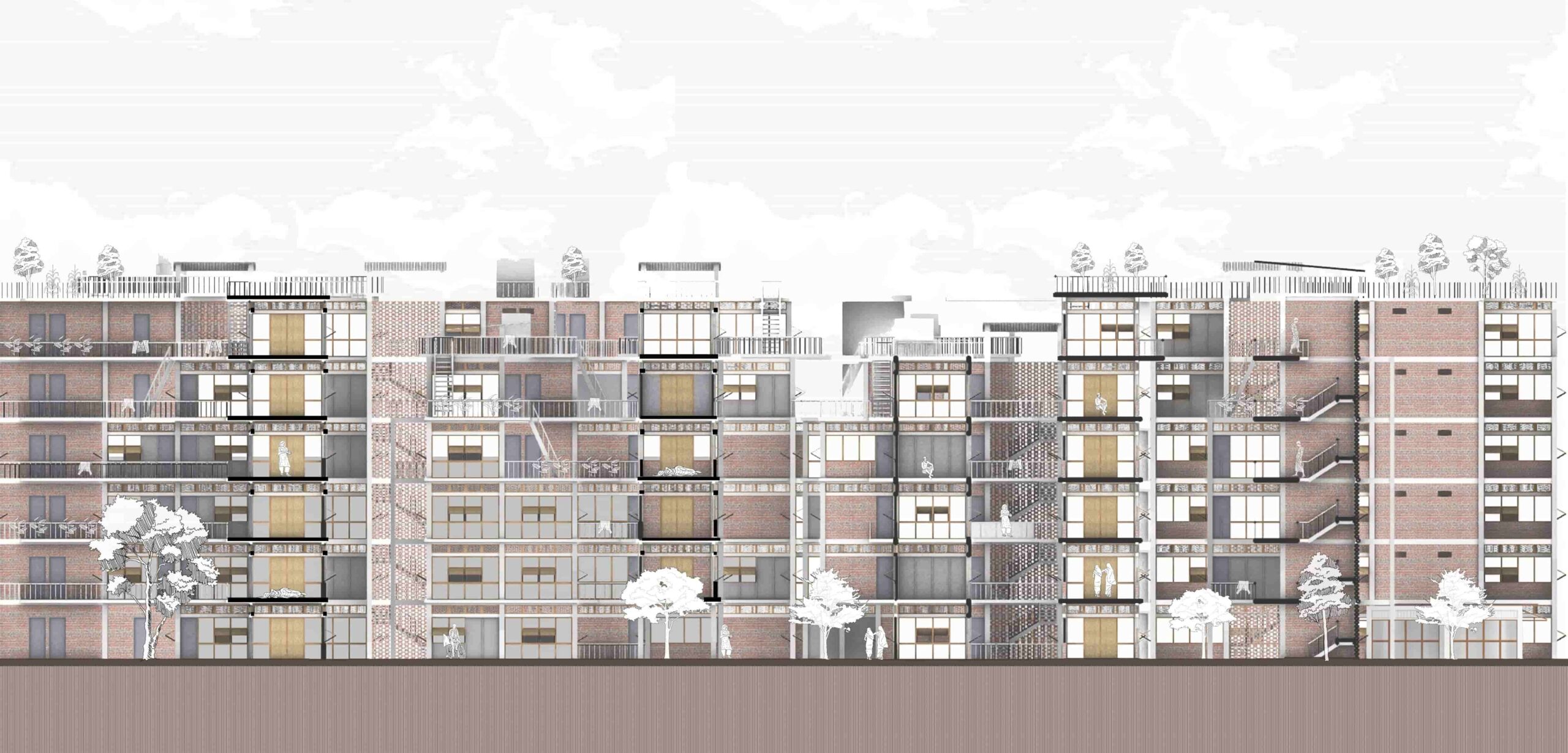
The project contains sustainable design principles by actively involving the dwellers in the design and construction processes. This approach reduces labor costs and fosters a sense of ownership among residents. Through fostering communal integrity and boosting self-confidence by increased social inclusion, Eco-Homes creates an environment where small-scale entrepreneurial practices of the dwellers can thrive. Design solution has been made to avoid eviction during construction.
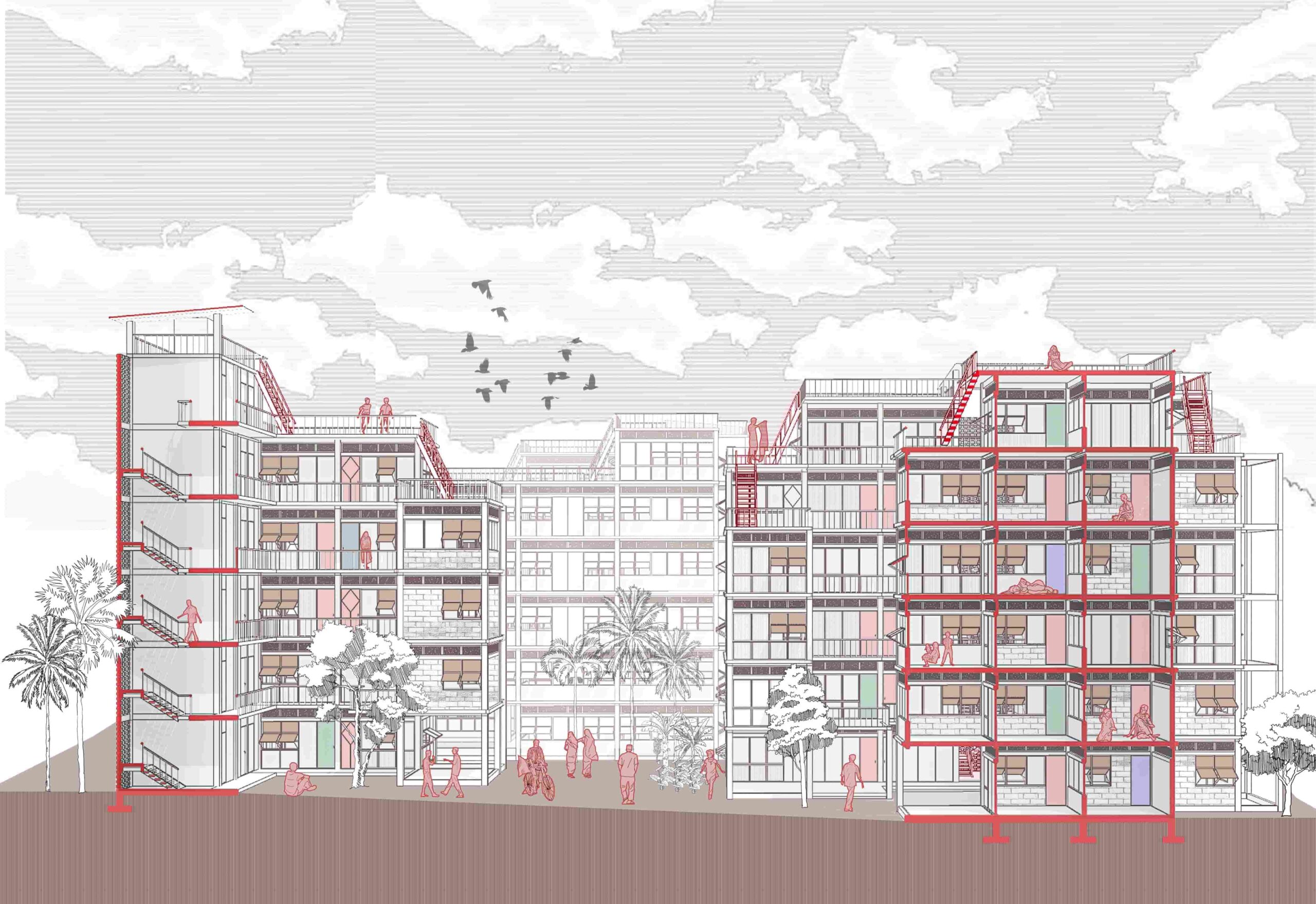
All the traditional practices have been replicated in the design and merged with a modern modular solution involving the community. The common materials they use to make their informal houses are repurposed timber, CI Sheet, Bricks etc. These materials have been used in the design So that it’s easier for the local craftsmen to be involved in the construction. The traditional Brick Jali has been incorporated in the staircase areas of the design which also helps in cost cutting.
All in all, this project is not just a housing solution; it’s a blueprint for uplifting entire communities and is a holistic approach to solving the informal urban growth while maintaining the social interdependence.
Established in 2012, Tamayouz Excellence Award is an unaffiliated, independent initiative that aims to advance the profession of architecture academically and professionally. Tamayouz is dedicated to supporting aspirational and transformative projects that tackle local and global challenges and that are informed by a holistic understanding of context.