
University : Bangladesh University of Engineering and Technology (BUET)
Tutor(s) : Atiqur Rahman & Fatema Tasmia
Project Description
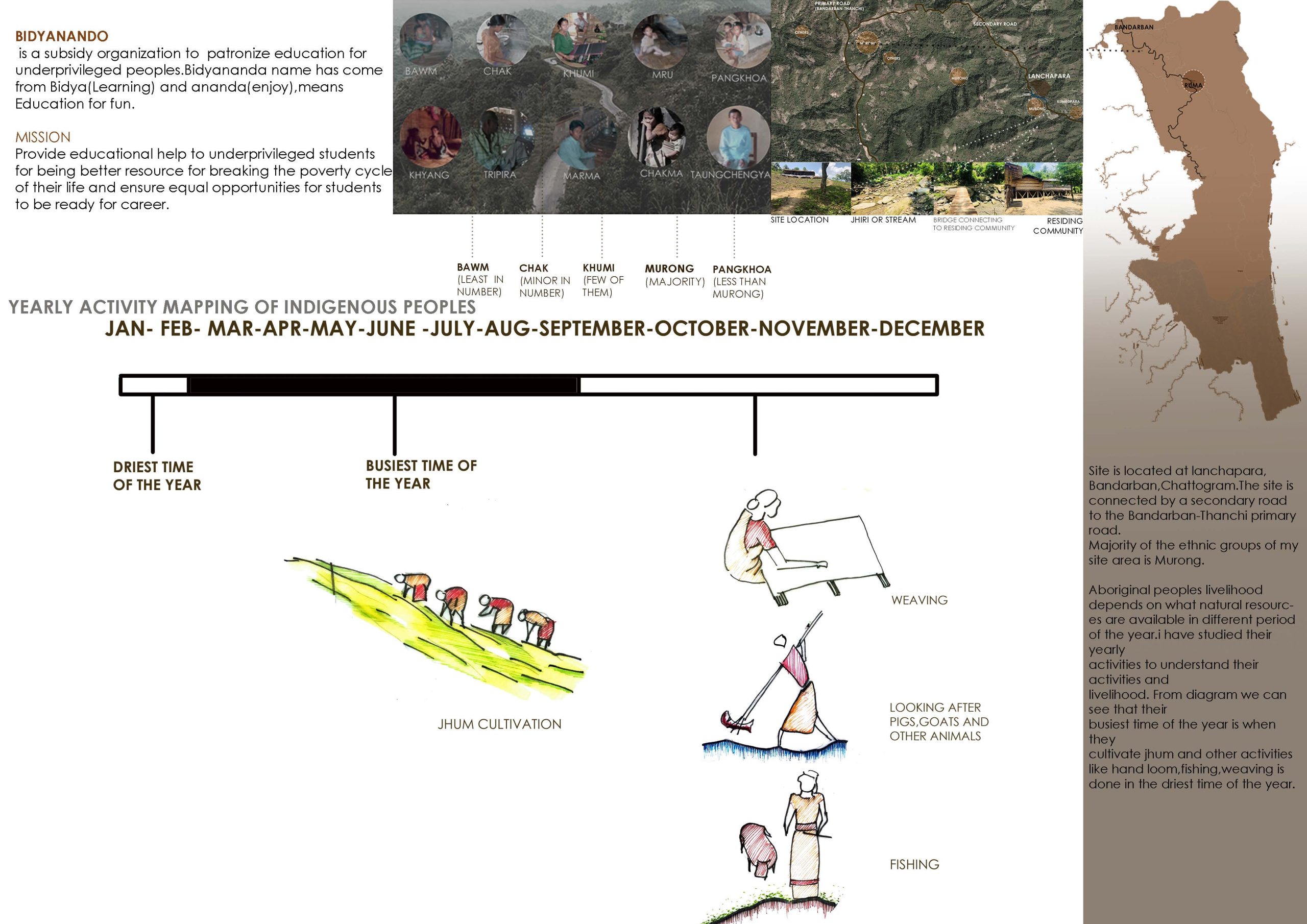
Indigenous communities in Bangladesh have rich, vibrant cultures, traditions, and languages that reflect their deep-rooted heritage. Yet many of these communities continue to face social and economic challenges compared with the Bengali majority. In the Chattogram Hill Tracts, especially in Bandarban, the Murong people constitute a large share of the population, yet they remain among the most marginalized, often living in more difficult conditions than other communities.
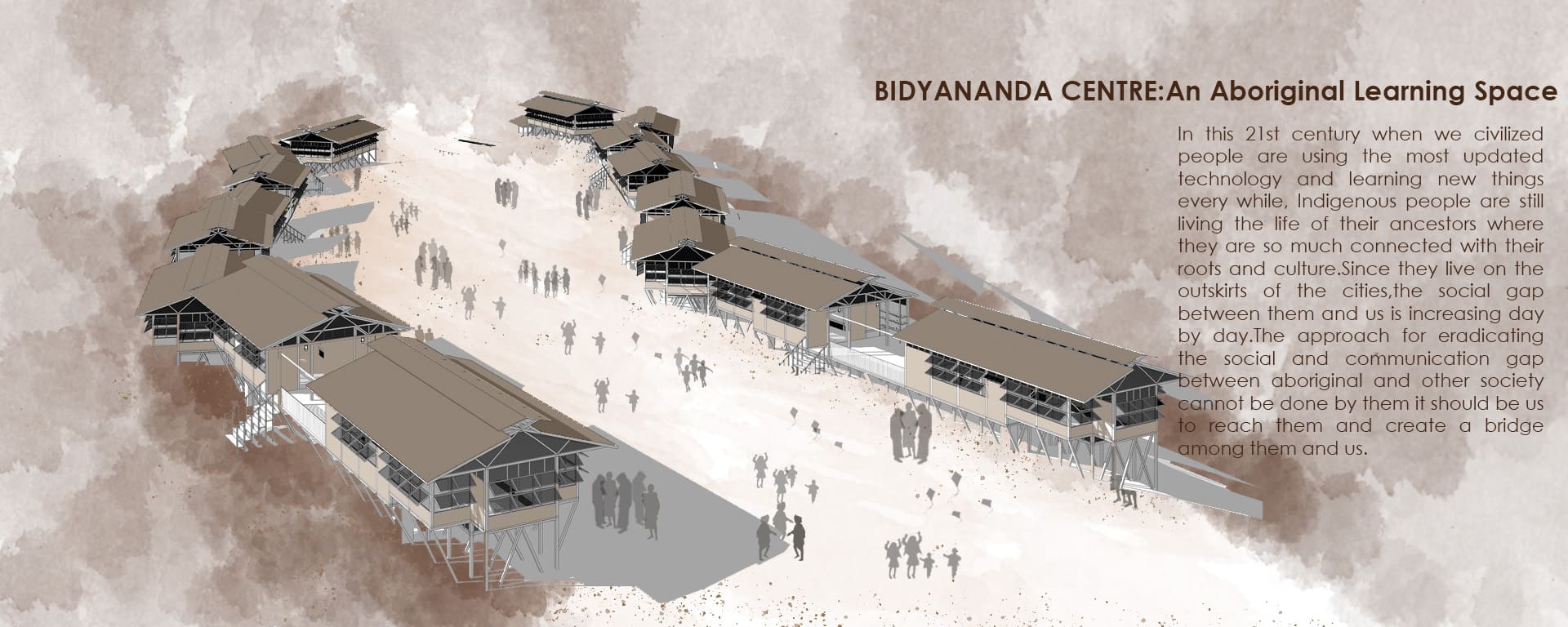
In the 21st century, while we civilized people use the most up-to-date technology and learn new things all the time, indigenous people still live the lives of their ancestors, deeply connected to their roots and culture. Because they live on the outskirts of cities, the social gap between them and us is widening day by day. Eradicating the social and communication gap between Aboriginal and other societies cannot be done by them; it should be us who reach them and create a bridge between them and us.
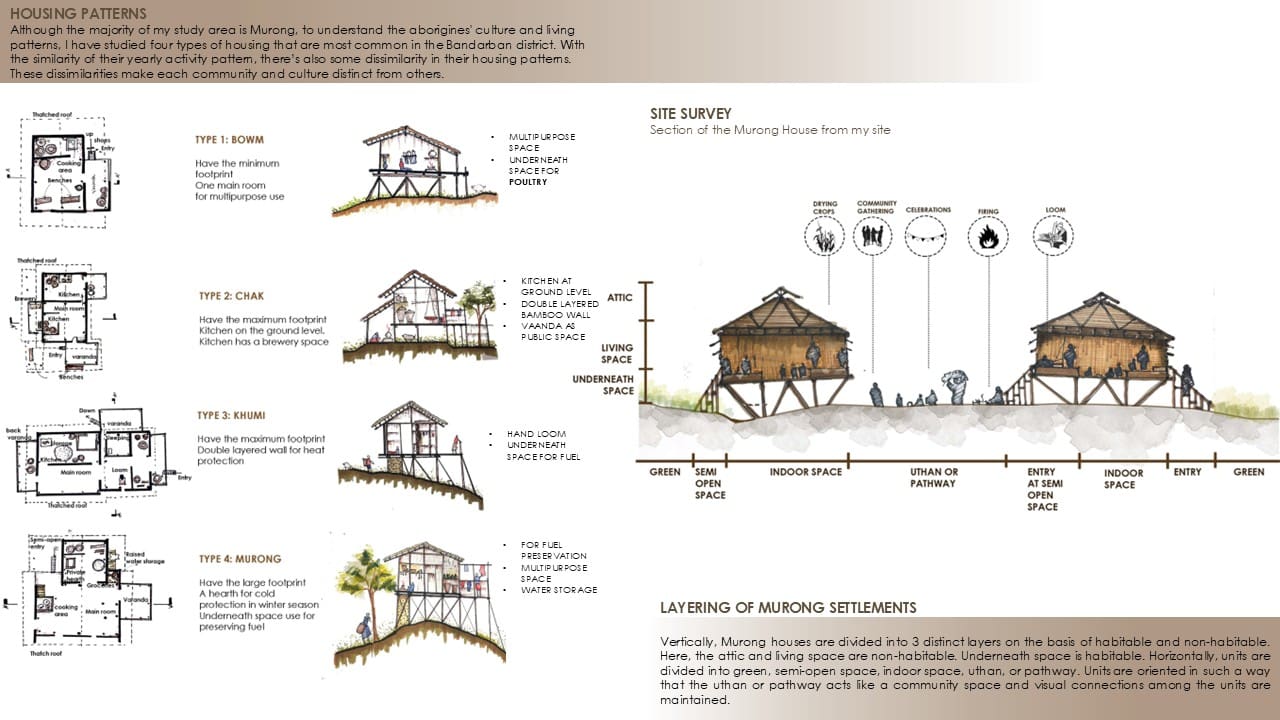
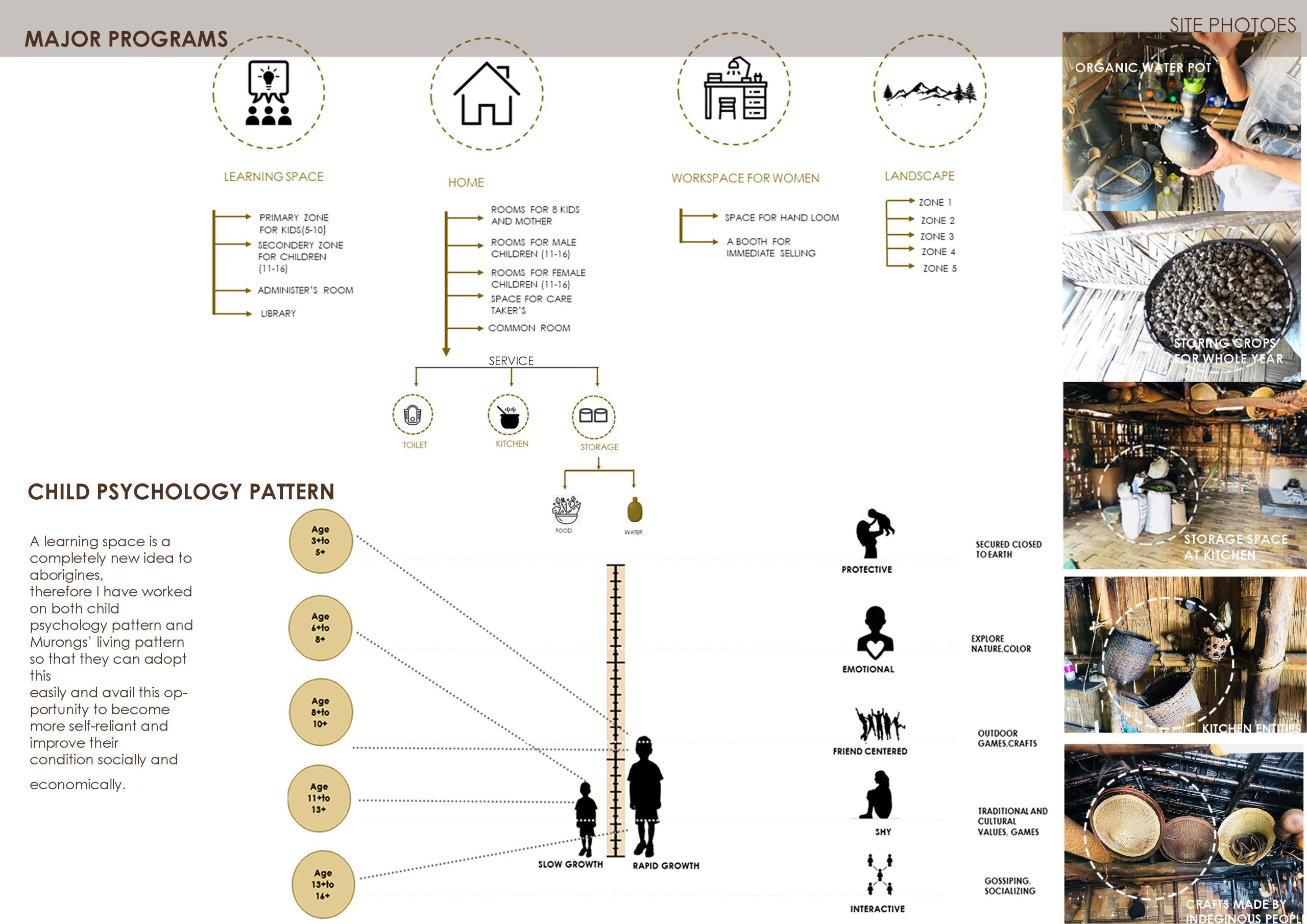
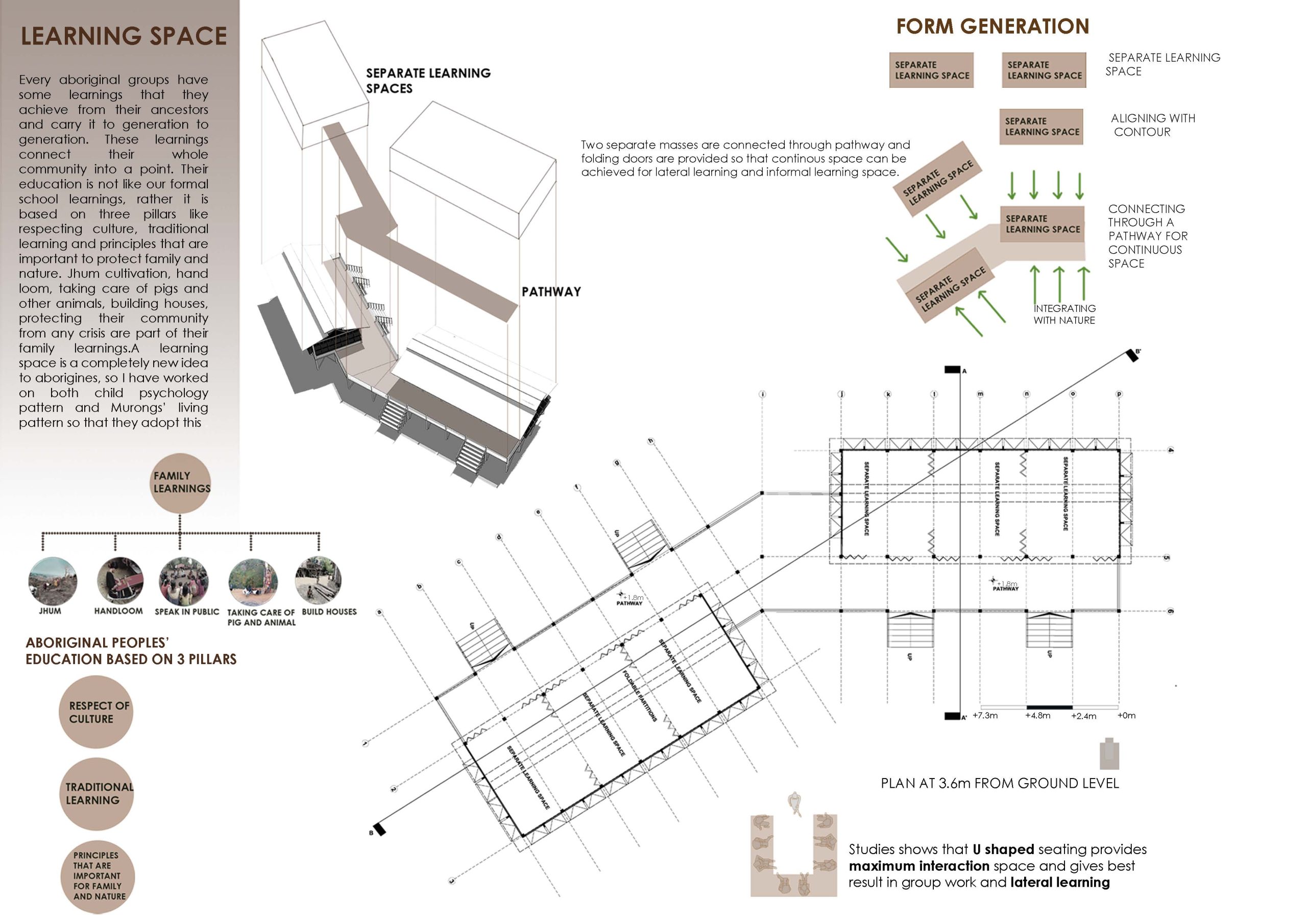
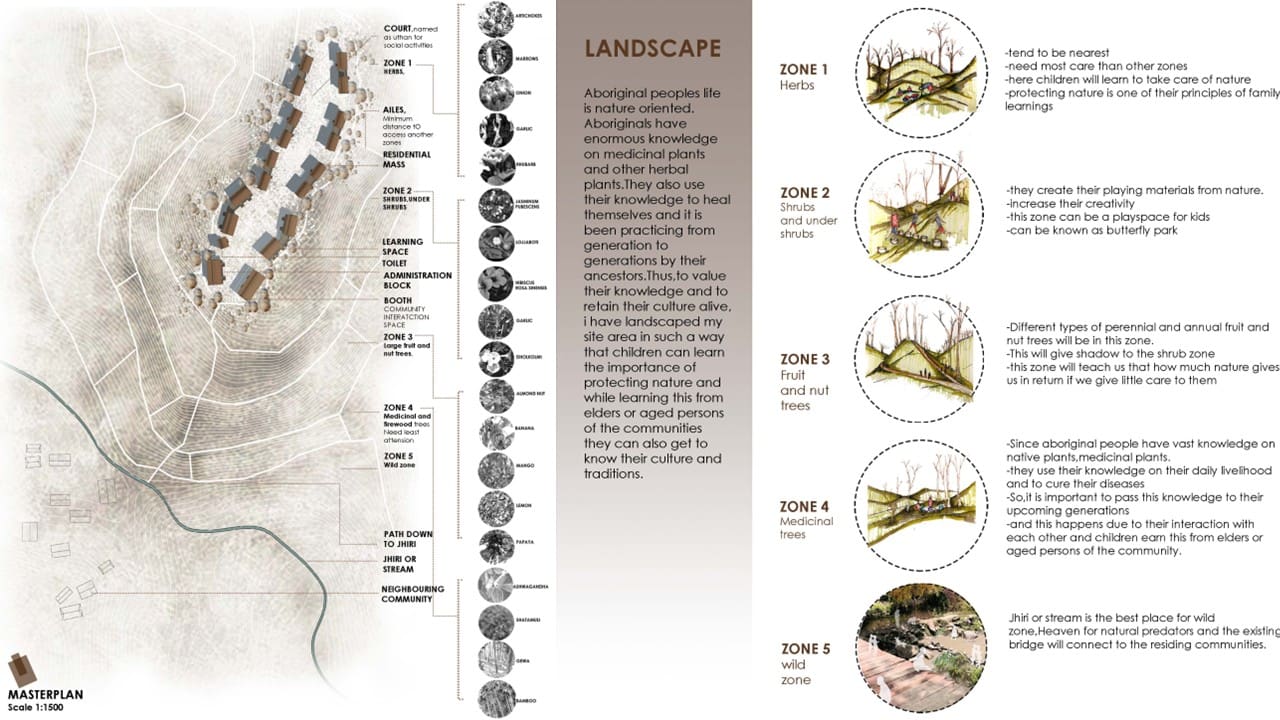
Every Aboriginal group has learnings passed down from their ancestors and shared from generation to generation. These learnings connect their whole community into a point. Their education is not like our formal school learning, rather it is based on “Three Pillars” like respecting culture, traditional learning, and principles that are important to protect family and nature. Jhum cultivation, hand loom, taking care of pigs and other animals, building houses, and protecting their community from any crisis are part of their family learnings. A learning space is a completely new idea to aborigines, so I have worked on both the child psychology pattern and the Murong people’s way of life to help them adopt it.
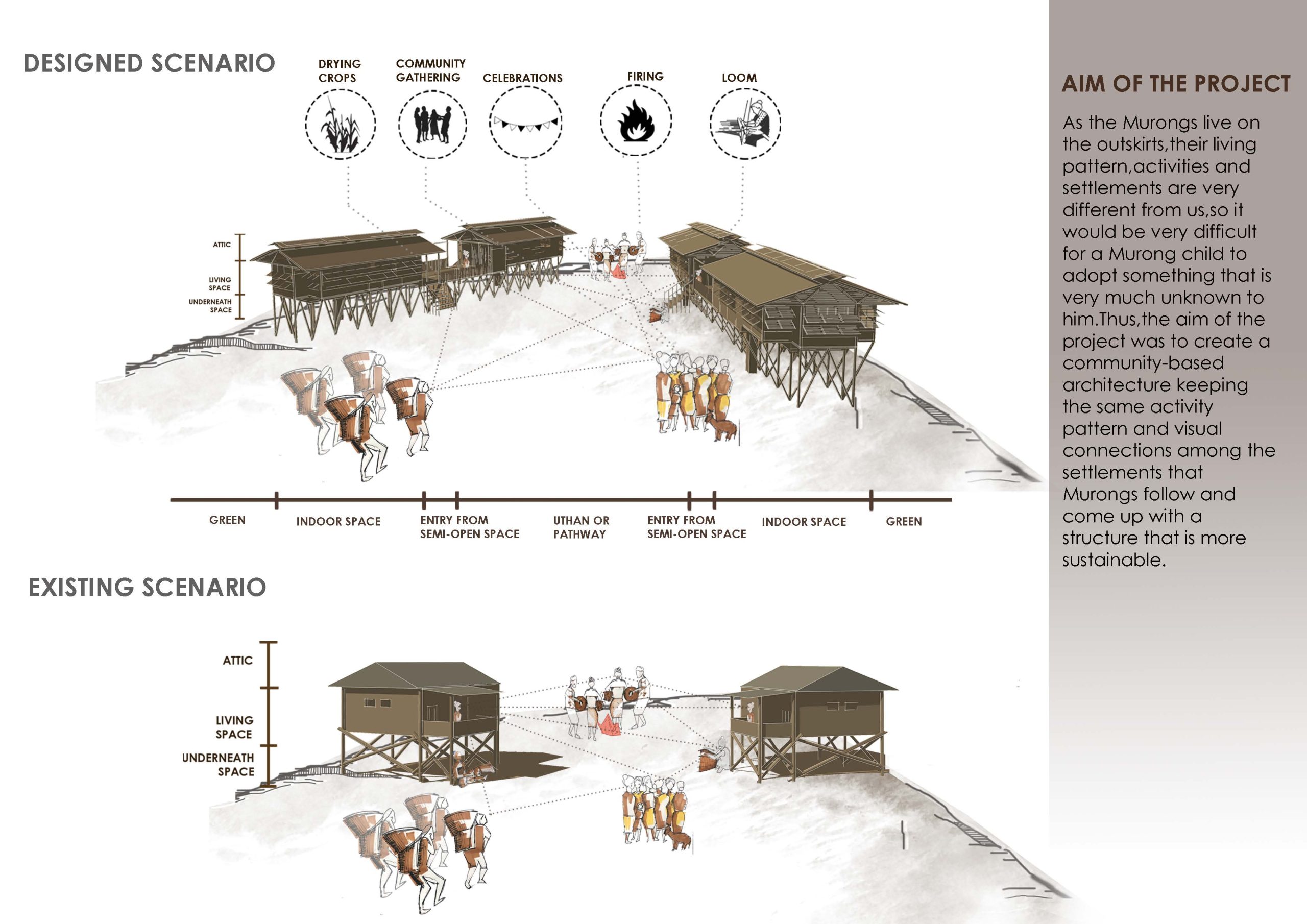
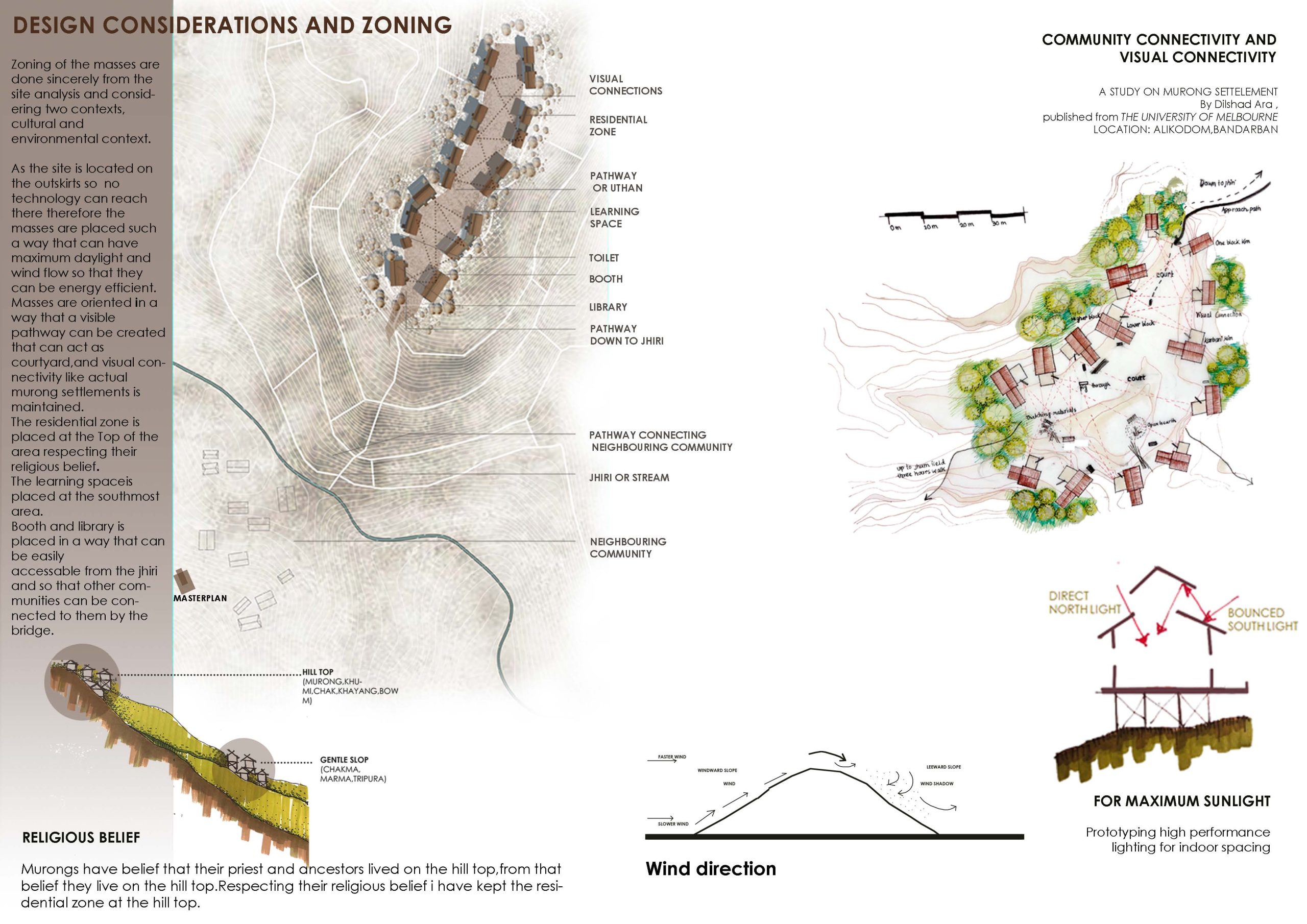
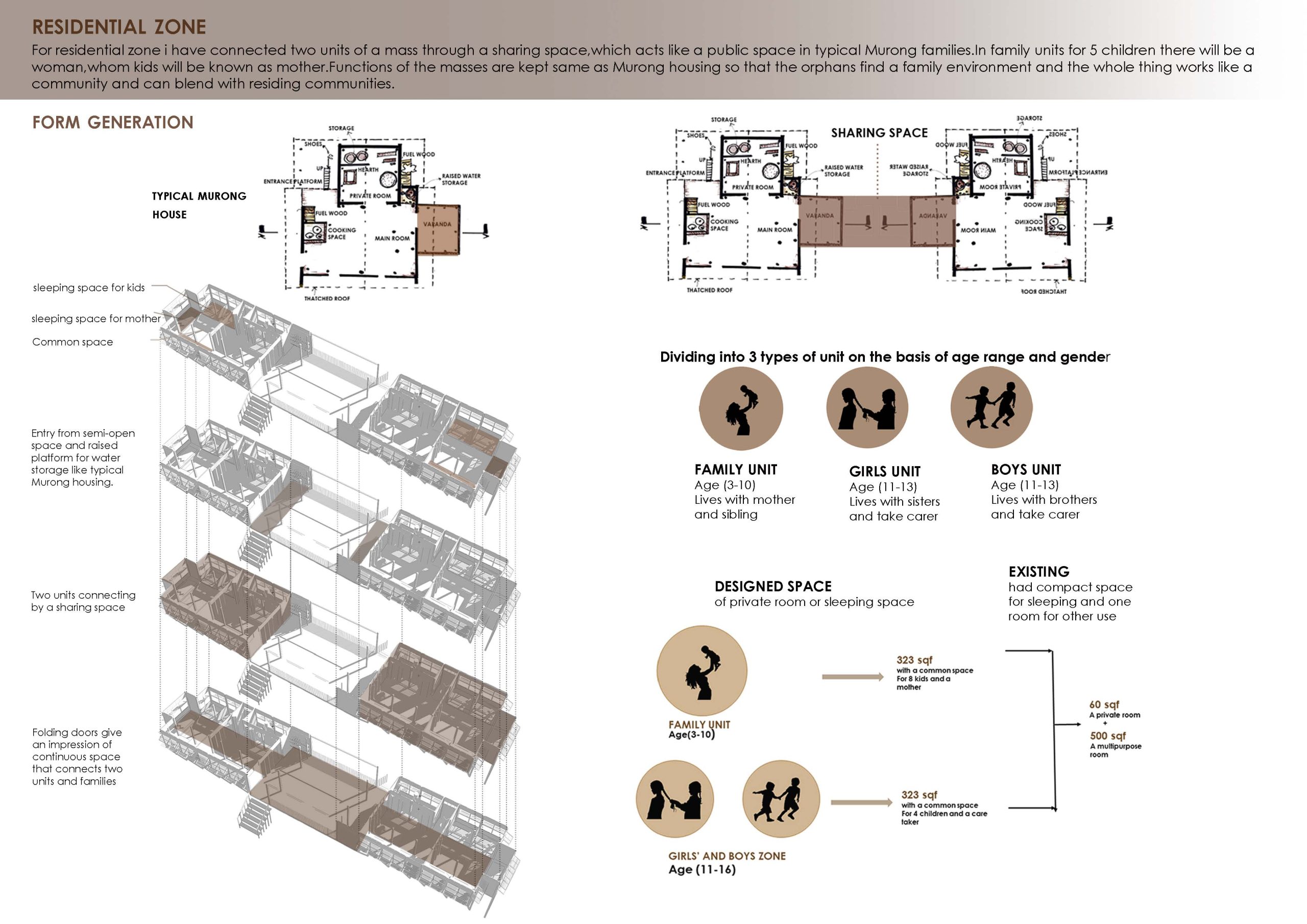
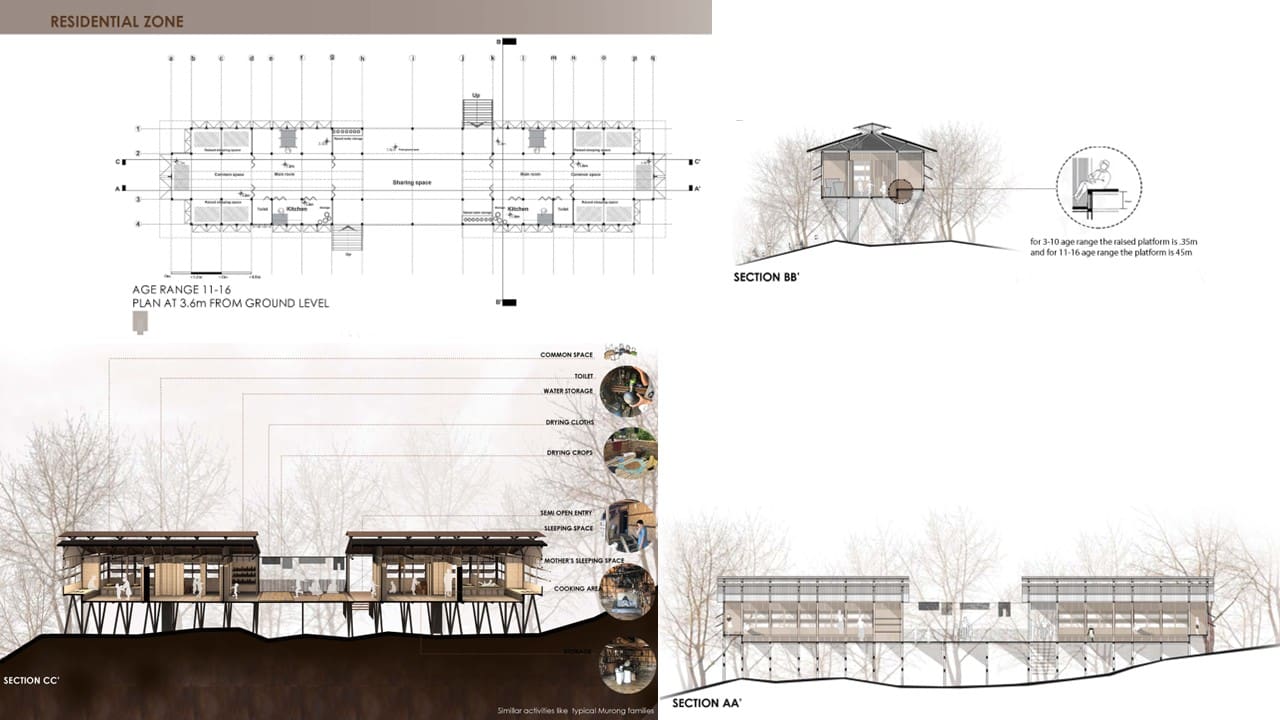
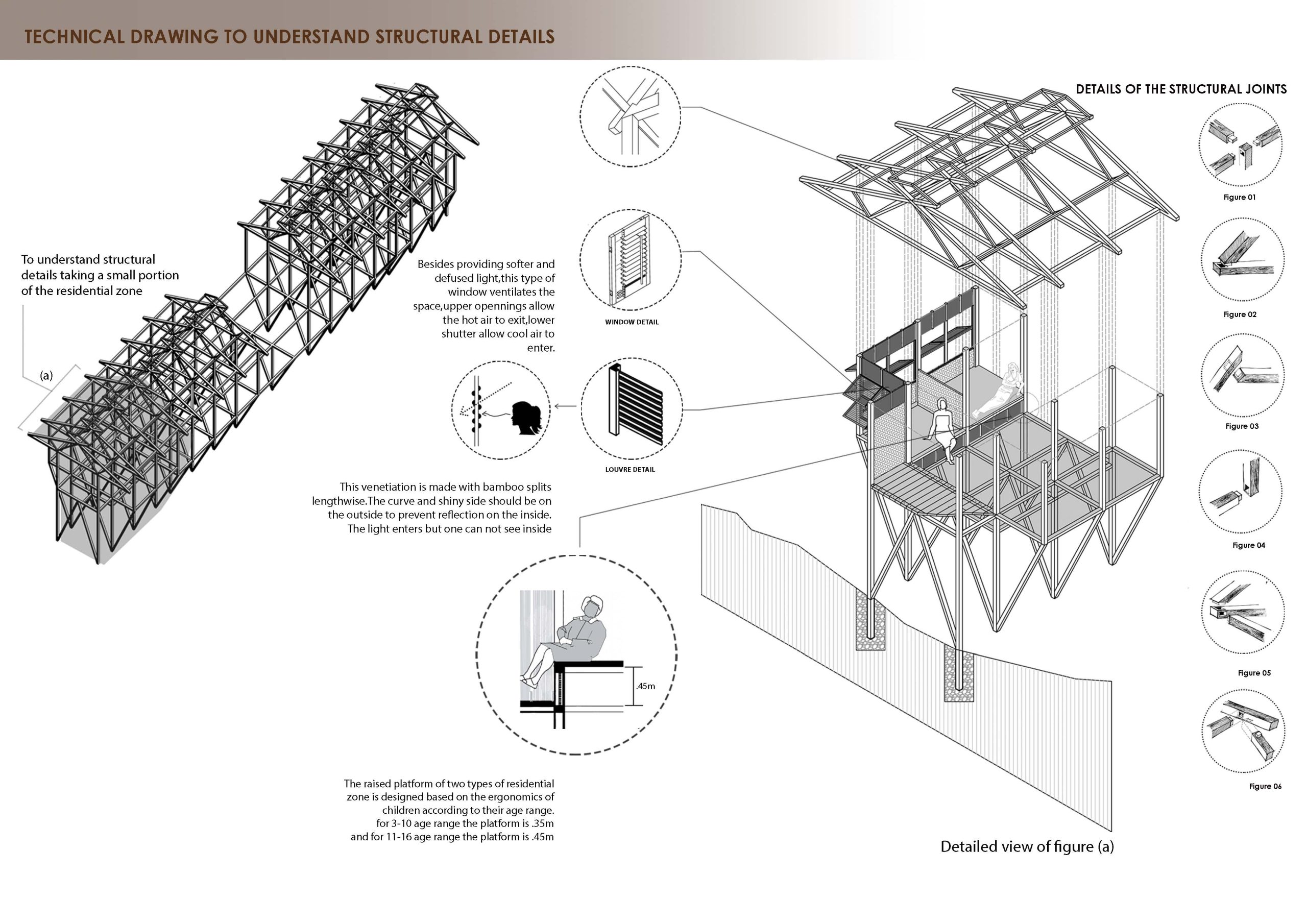
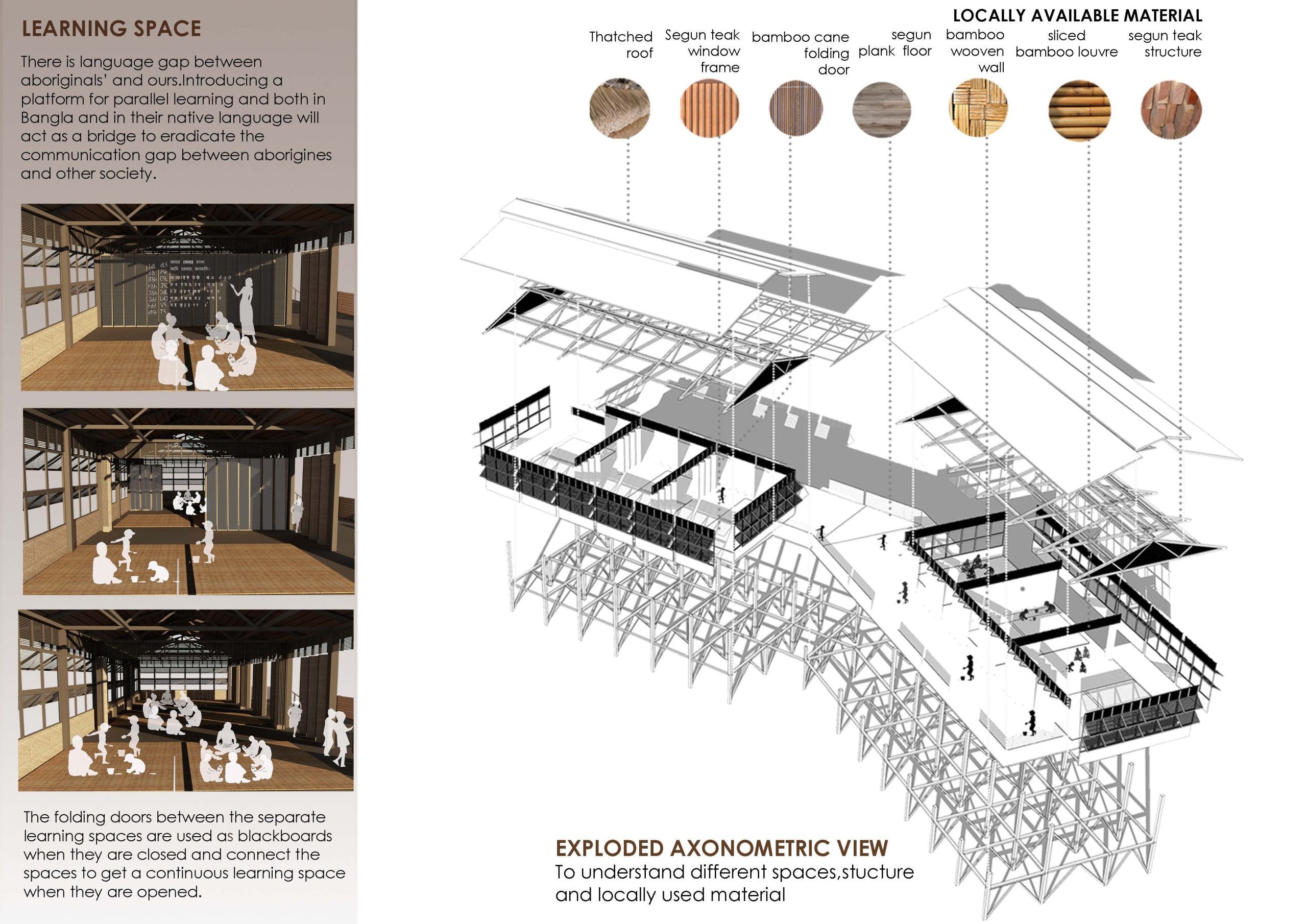
While designing their spaces, we have to prioritize what they need for themselves, not what we want for them. For site analysis, I have also considered cultural contexts (Social, Economic, and Religious) in addition to environmental contexts. In the social context, I have tried to understand how their social bonds work and how their community tasks are connected. Additionally, the site is on the outskirts, so carrying any kind of technology for construction purposes is nearly impossible. Therefore, I have adopted their local materials and local construction system in a more sustainable way so that it can be built by local people and integrate neighboring communities into the whole process.
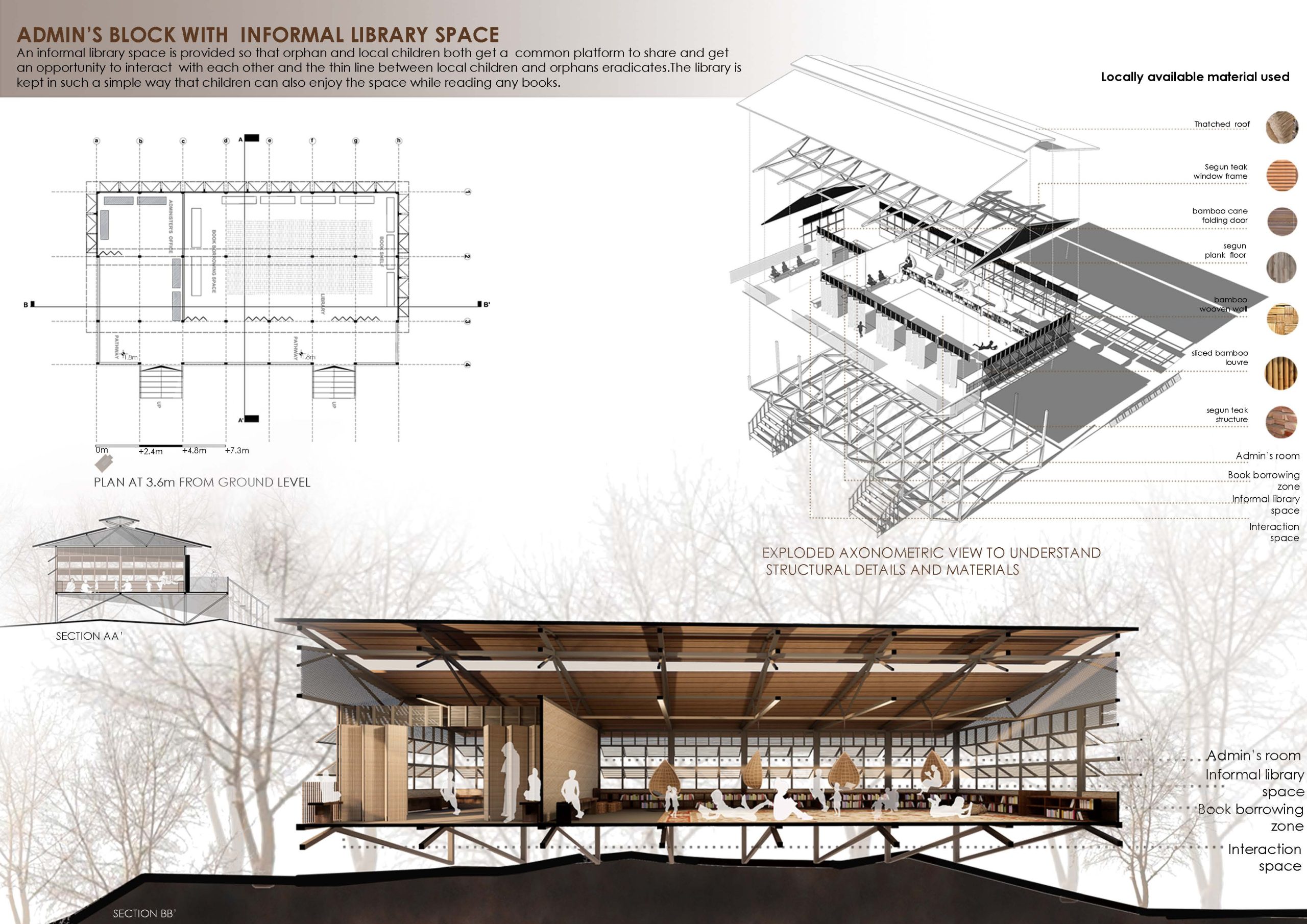
An informal library space is provided so that orphans and local children both get a common platform to share, and the thin line between local children and orphans is eradicated.
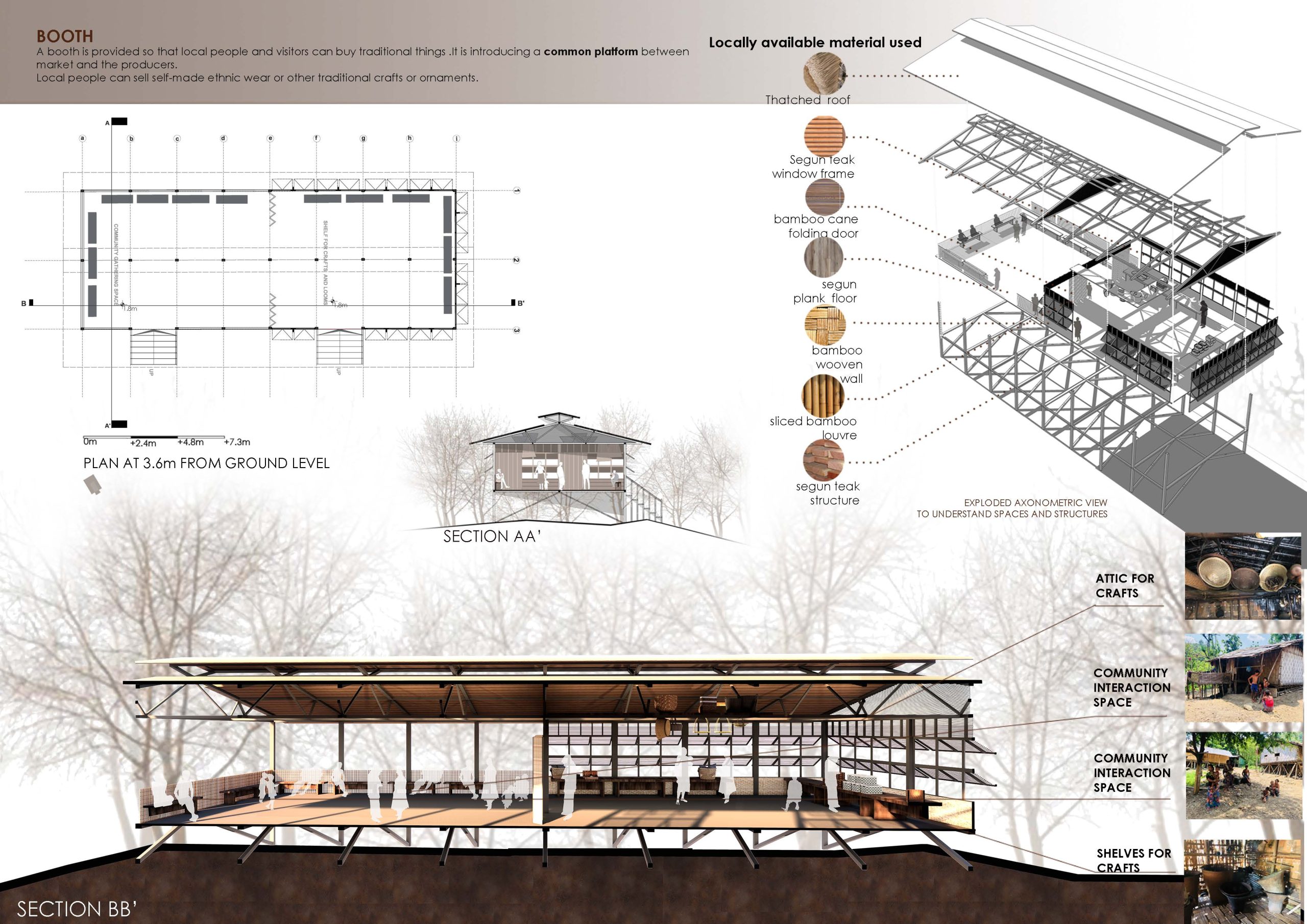
Aborigines make a variety of traditional things: hand looms, ornaments, and handicrafts. But their traditional products don’t get enough recognition and remain unnoticed to the outside world because, from producer to market, there is a missing link that would connect the producer to the market. To encourage Aboriginal women and make them economically sound, I have introduced “Booth,” which will serve as a buying and selling point for the Aboriginal inhabitants and will preserve their culture and traditions through their distinctive crafts among us.
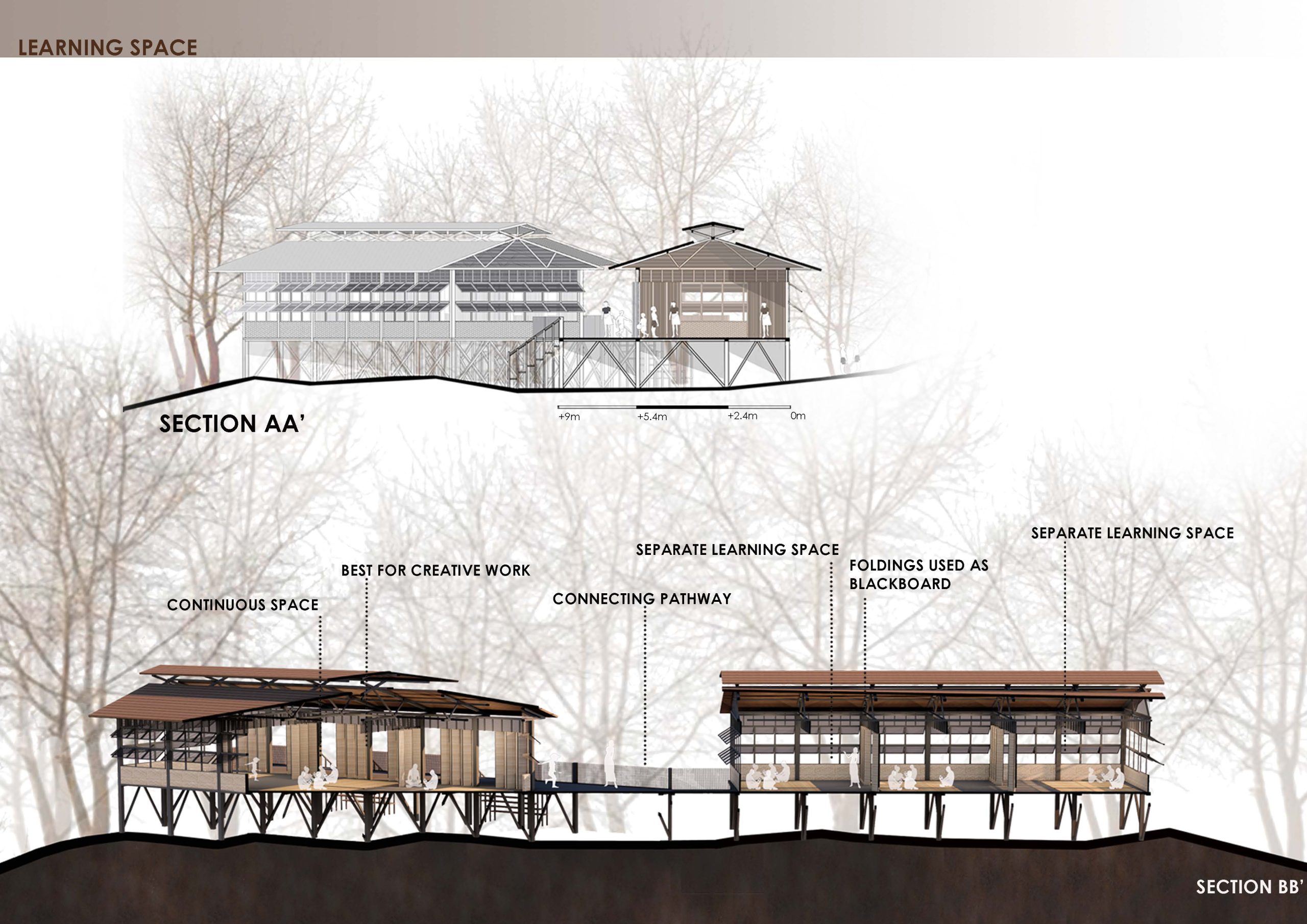
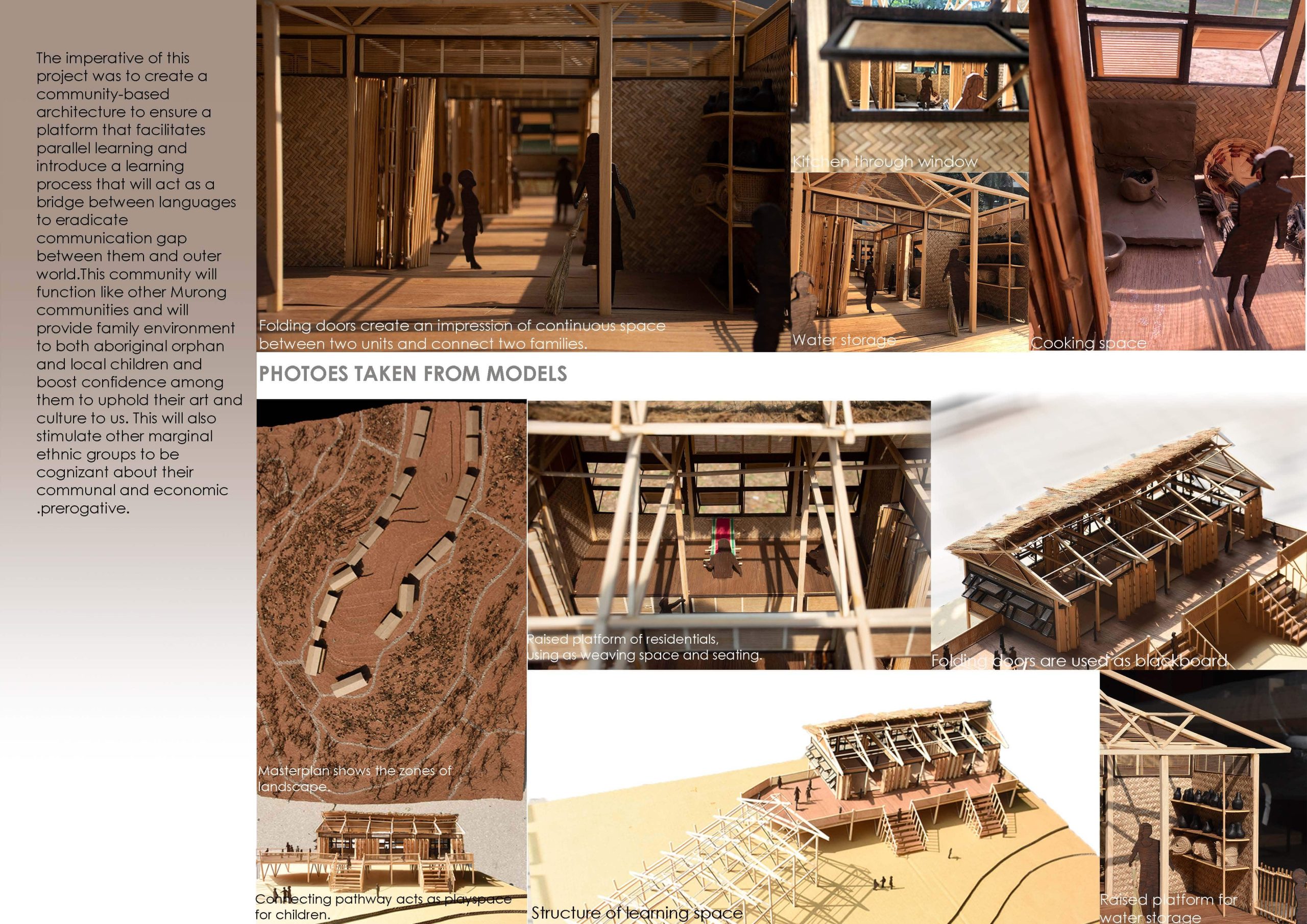
The imperative of this project was to create a community-based architecture that provides a shared platform for parallel learning and introduces a process that will act as a bridge between languages, thereby eradicating the communication gap between these Aboriginal communities and the outside world for both Aboriginal orphans and local children, and boosting their confidence to uphold their art and culture for us. This can also stimulate other marginal Aboriginal groups to be cognizant of their communal, economic, and cultural prerogatives.
Established in 2012, Tamayouz Excellence Award is an unaffiliated, independent initiative that aims to advance the profession of architecture academically and professionally. Tamayouz is dedicated to supporting aspirational and transformative projects that tackle local and global challenges and that are informed by a holistic understanding of context.