


University : Bangladesh University of Engineering and Technology
Tutor(s) : Prof. Dr. Md Ashikur Rahman Joarder, Patrick D' Rozario
Project Description
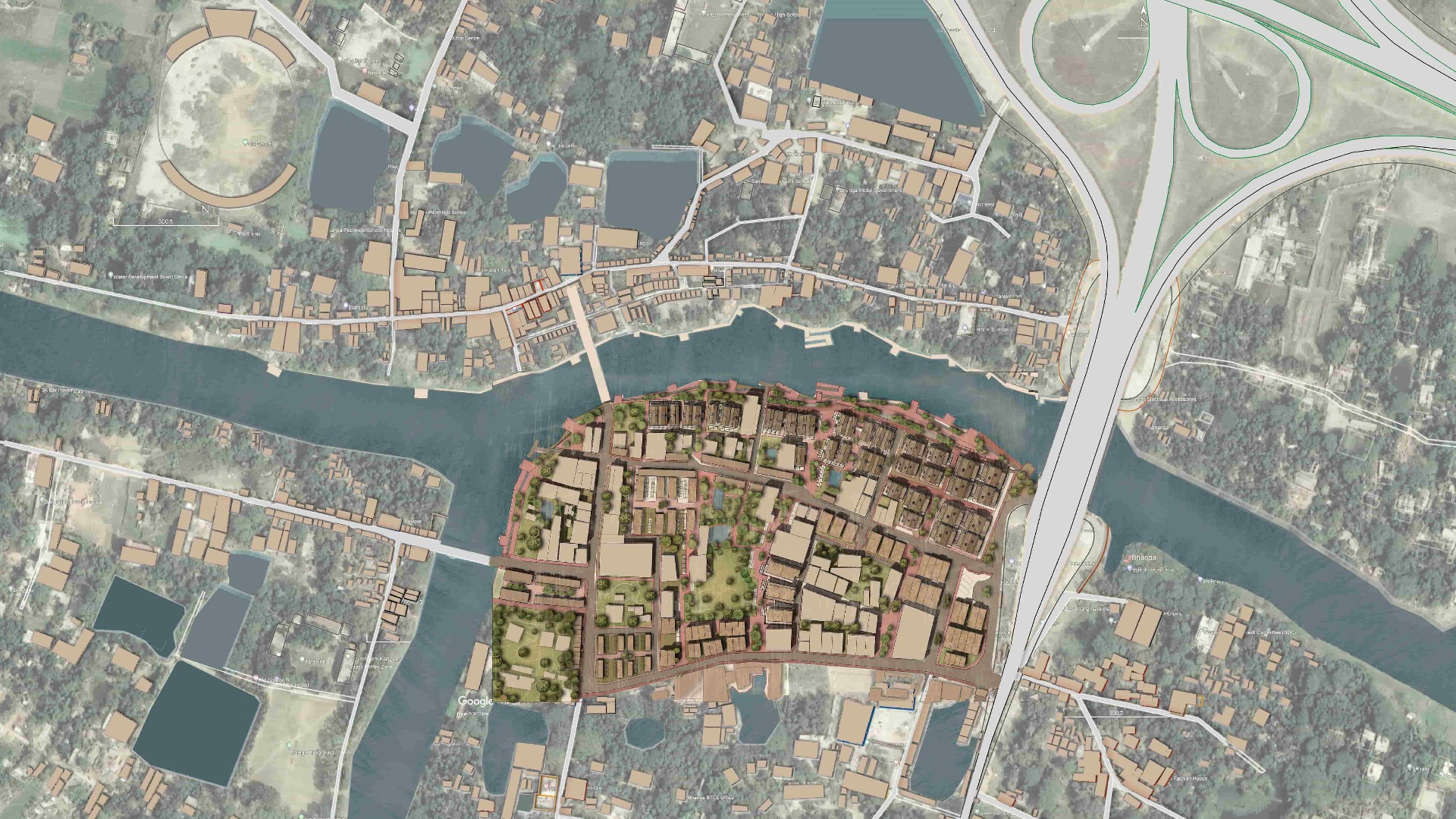
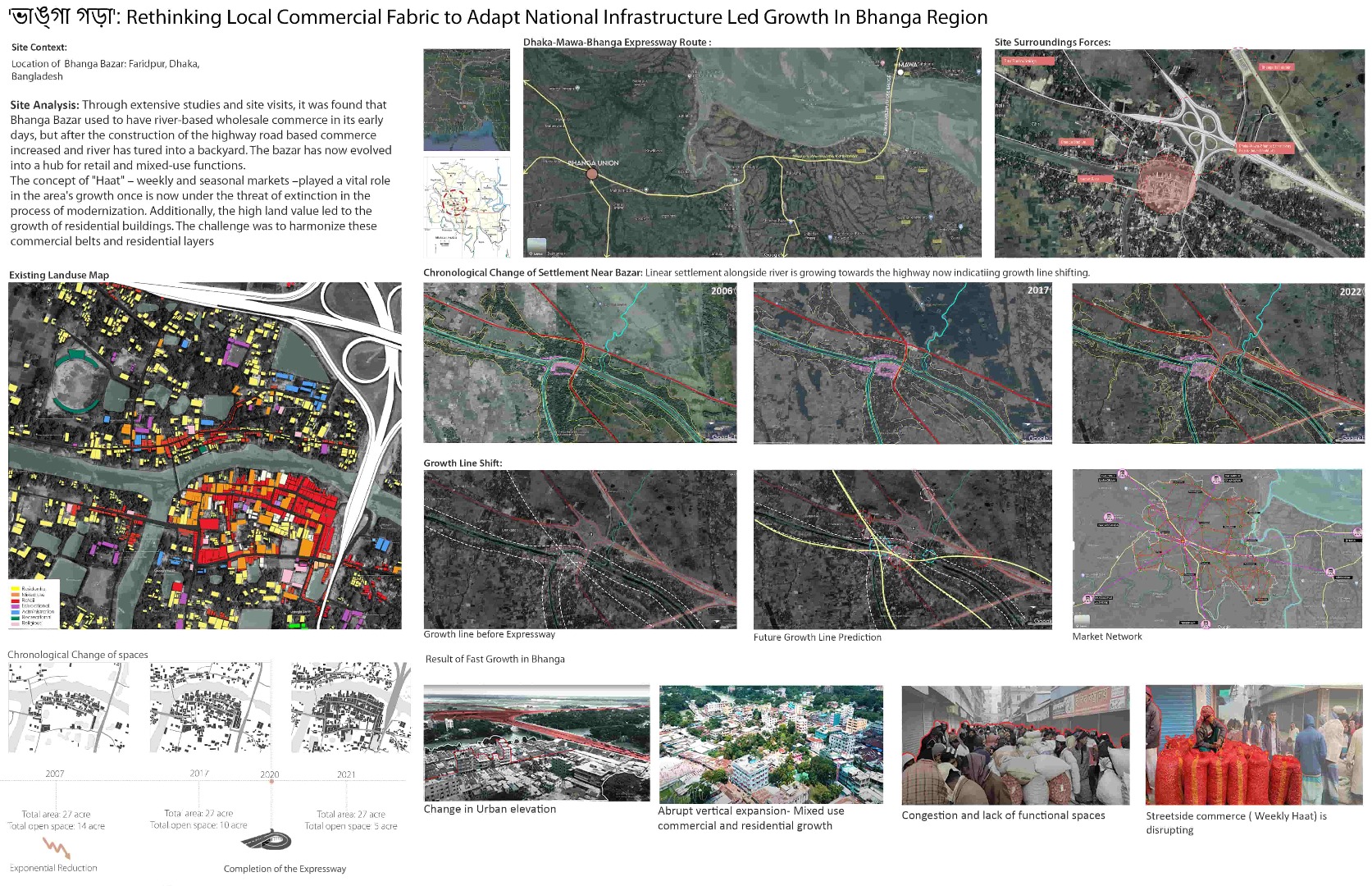
Mega infrastructure projects hold immense potential for economic transformation and are pivotal drivers for accelerating growth in developing nations like Bangladesh. However, they often give rise to a paradox that strains the equilibrium between local and national economies, leading to unplanned and undesirable urbanization, which has often resulted in the transformation of villages into problematic cities. Bhanga Upazila, situated at the southern end of this expressway, serves as a crucial junction, connecting Dhaka, Faridpur, Barisal, Khulna highways, and other southwestern regions. Bhanga Bazar, positioned at the starting point of the Barisal highway, is experiencing rapid urbanization. The high-speed development conflicts with the rural development pace, and this new growth pattern is jeopardizing the rural fabric while transforming the rural streetscape.
The project’s objective is to explore the desirable Growth Pattern for Bhanga Bazar to sustain rapid urbanization and ascertain how it can adapt, evolve, and transform. A comprehensive, multi-level approach encompassing social, economic, and cultural regeneration will be employed to address these challenges and achieve a harmonious and sustainable growth model.
This project aims to strike a delicate balance between modern fast growth and the preservation of local, slow growth, ensuring that tradition and identity are not lost in the process. The project is visualized in the following aspects-
-Studying the chronological transformation of settlement patterns in the Bhanga Bazar area.
-Analyzing the growth pattern changes and their impacts on the local fabric.
-Creating a coexistence between modernization and tradition.
-Design a commercial belt that encourages local growth without hampering it.
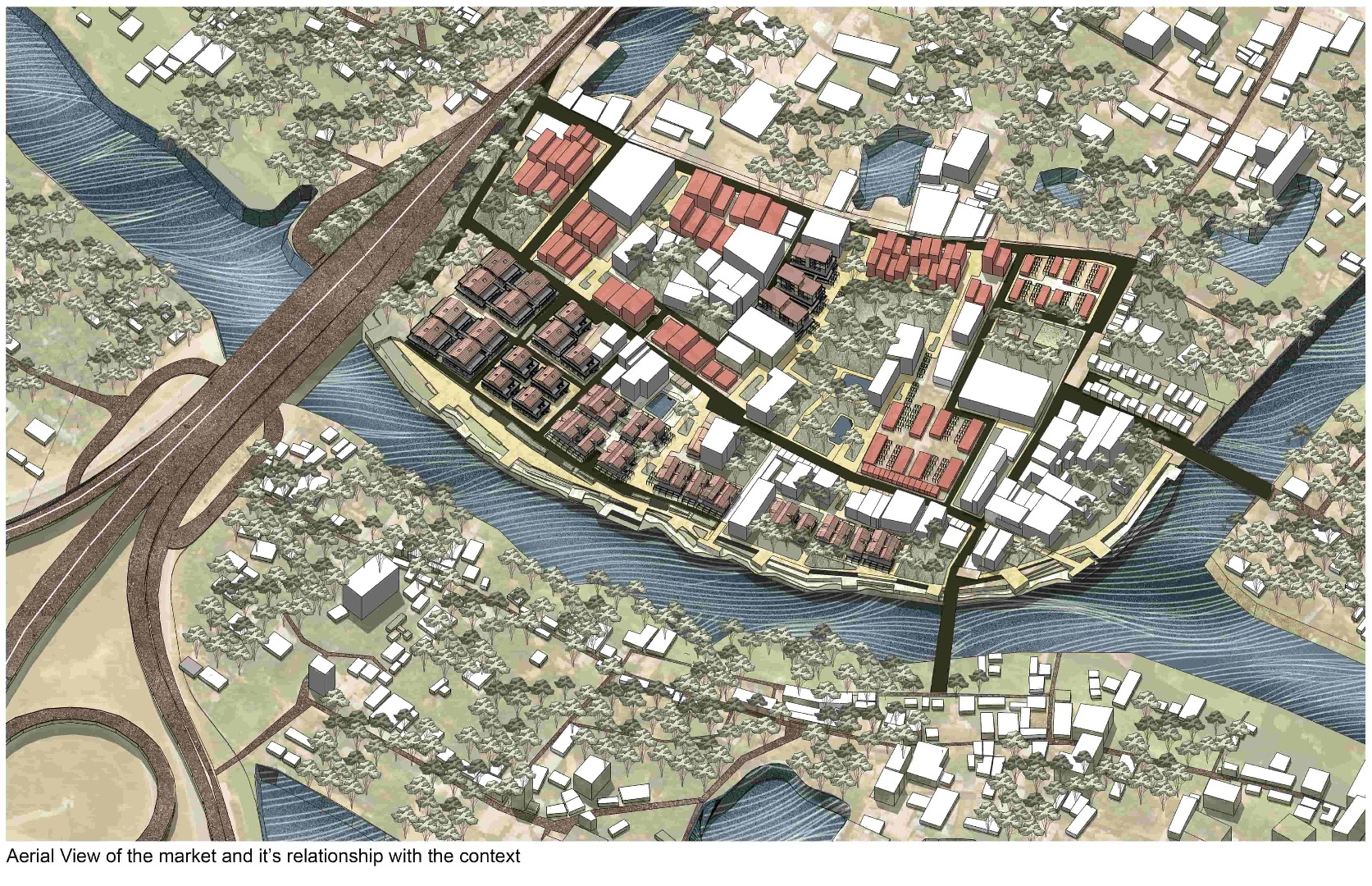
Site Analysis: Through extensive studies and site visits, it was found that Bhanga Bazar used to have river-based wholesale commerce in its early days, but after the construction of the highway road road-based commerce increased and the river has turned into a backyard. The bazaar has now evolved into a hub for retail and mixed-use functions.
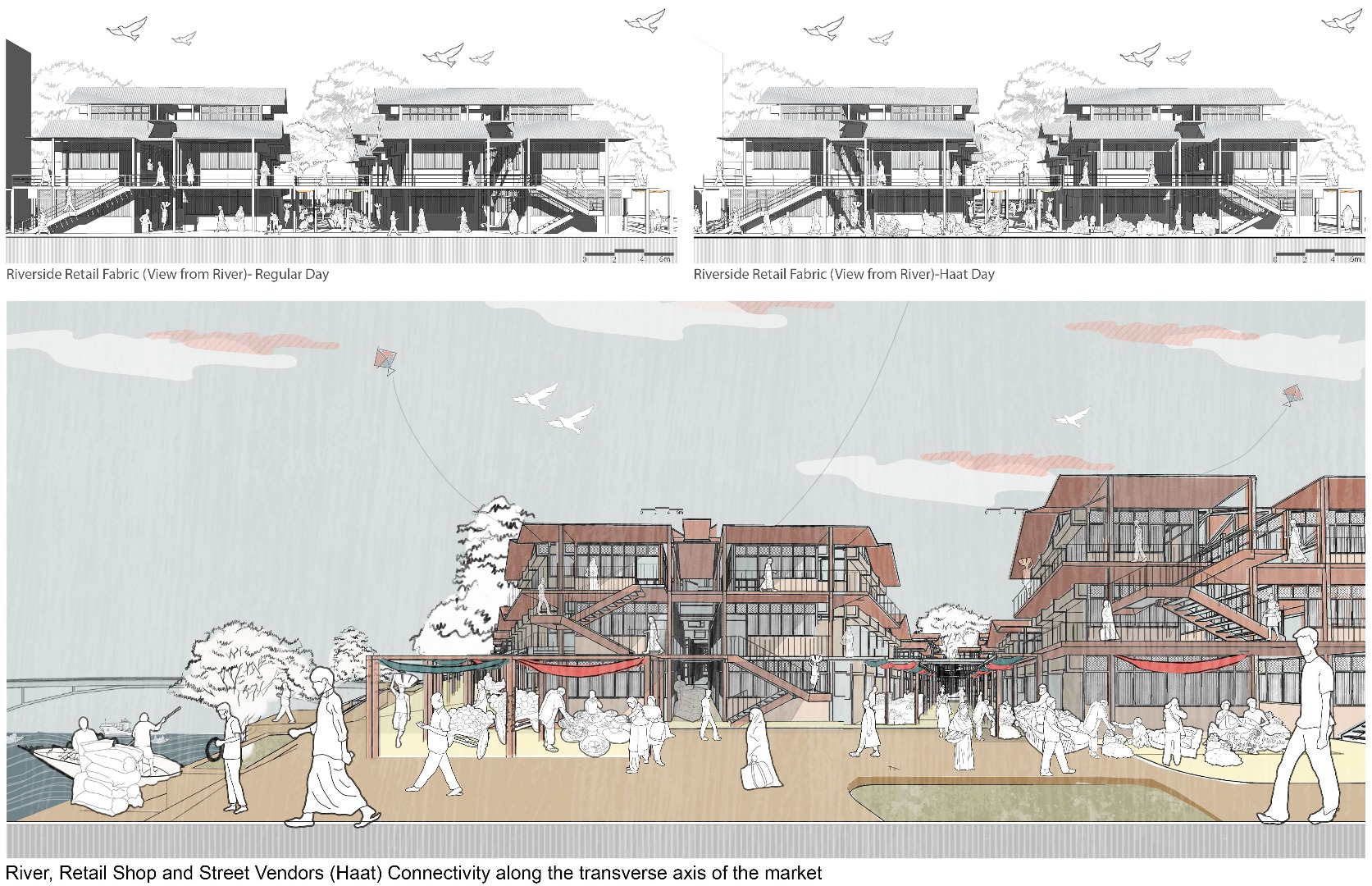
The concept of “Haat” – weekly and seasonal markets –played a vital role in the area’s growth once is now under the threat of extinction in the process of modernization. Additionally, the high land value led to the growth of residential buildings. The challenge was to harmonize these commercial belts and residential layers.
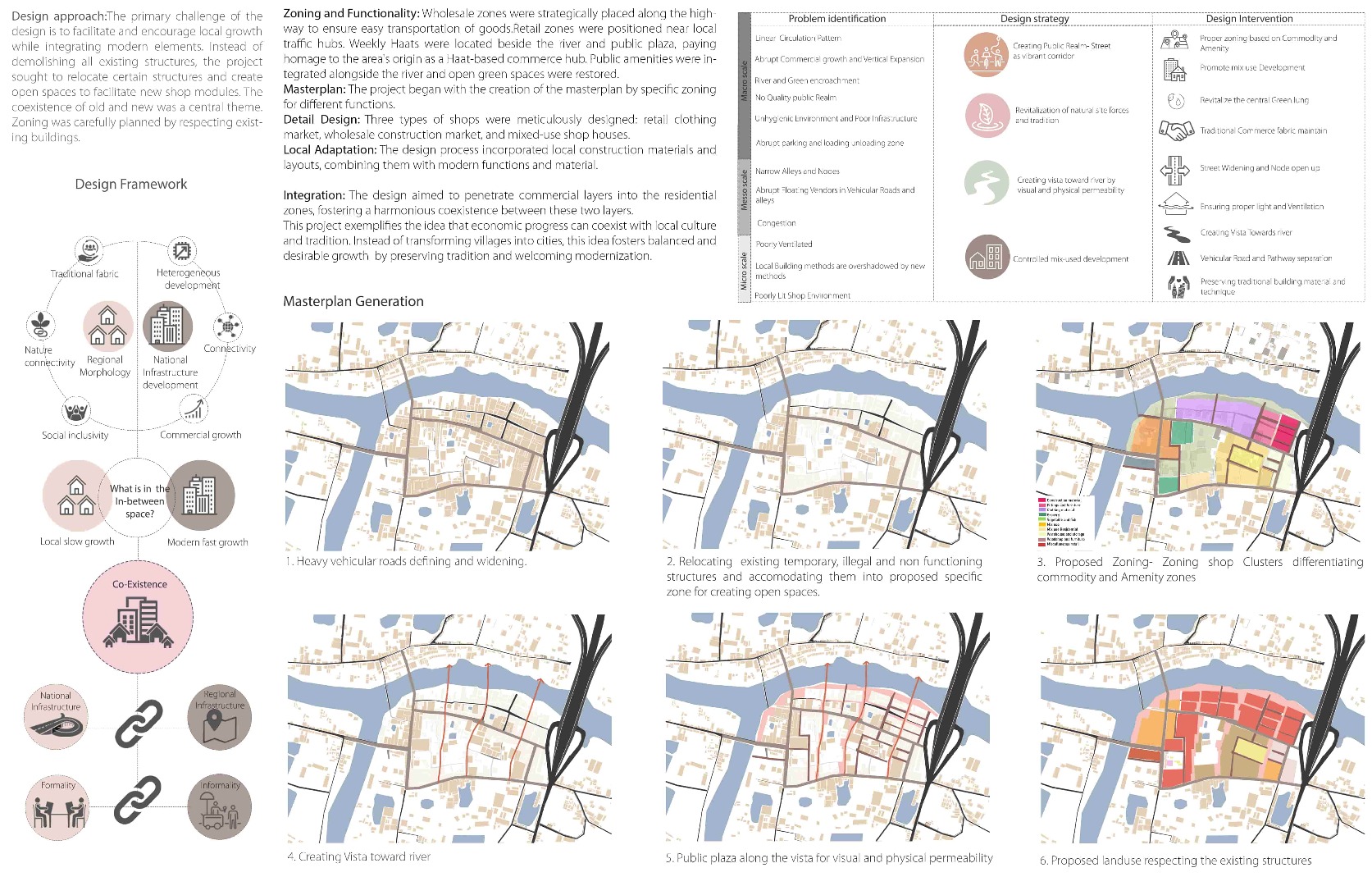
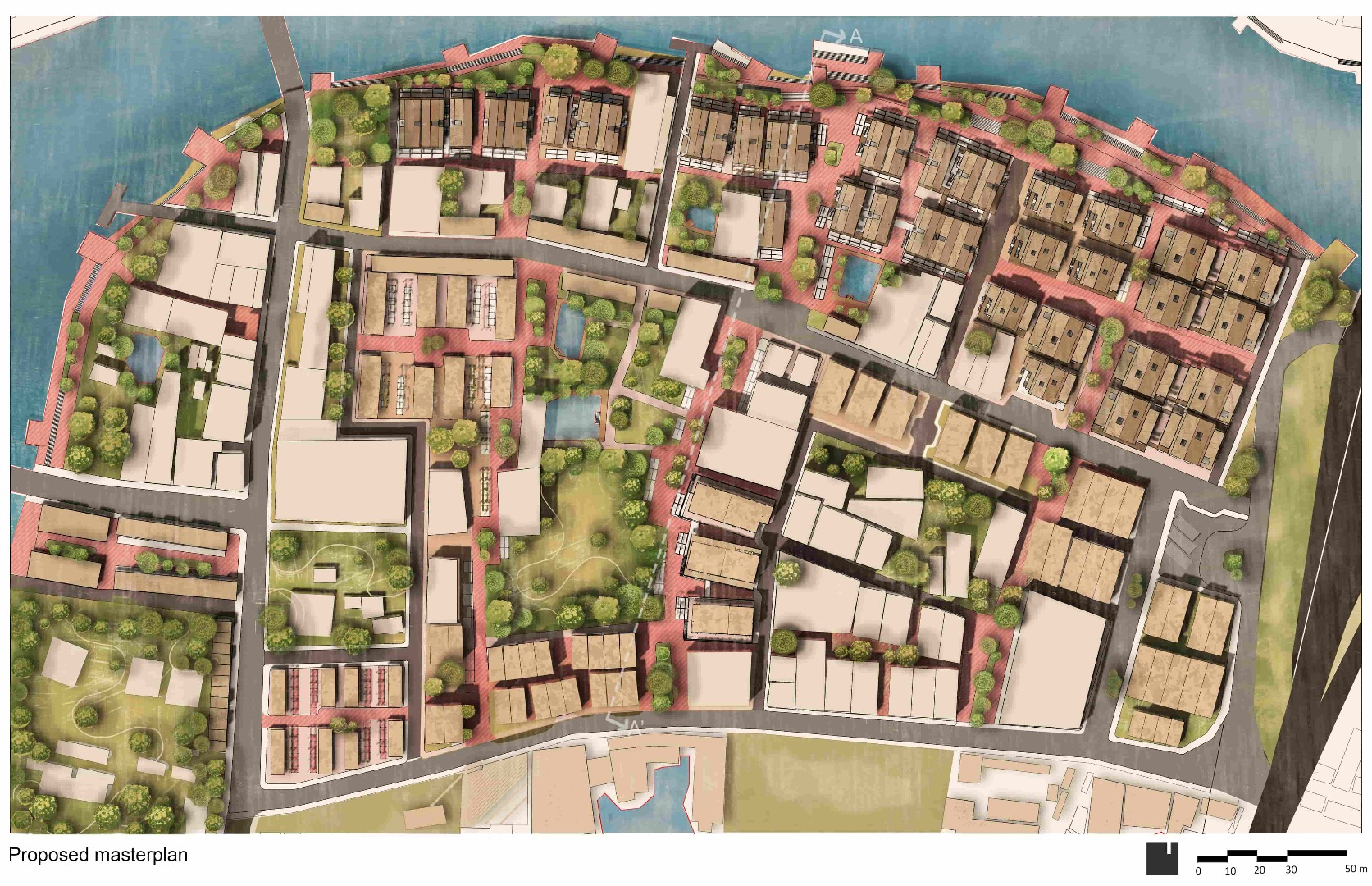
Design approach: The primary challenge of the design is to facilitate and encourage local growth while integrating modern elements. Instead of demolishing all existing structures, the project sought to relocate certain structures and create open spaces to facilitate new shop modules. The coexistence of old and new was a central theme. Zoning was carefully planned by respecting existing buildings.
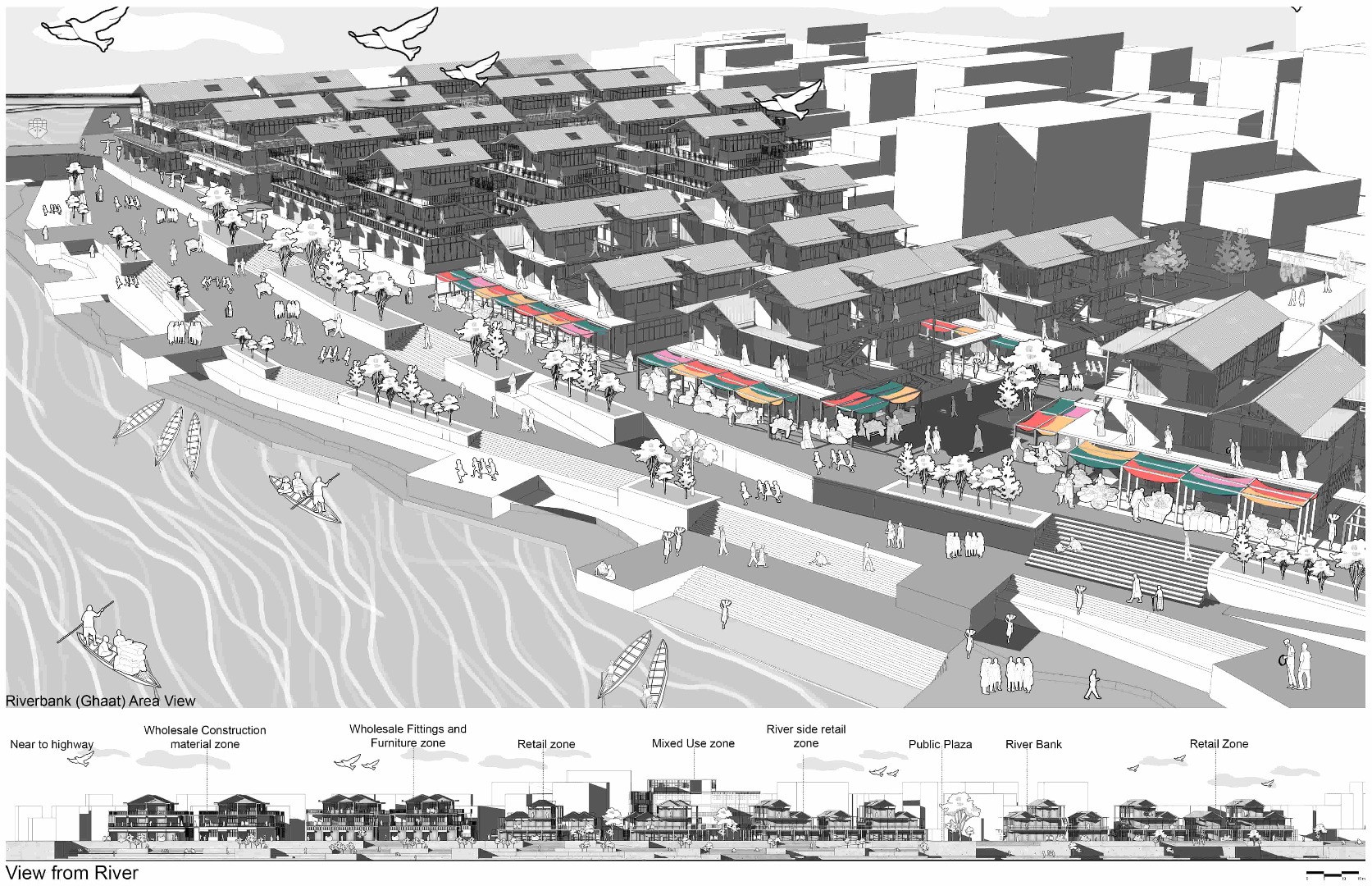
Zoning and Functionality: Wholesale zones were strategically placed along the highway to ensure easy transportation of goods. Retail zones were positioned near local traffic hubs. Weekly Haats were located beside the river and public plaza, paying homage to the area’s origin as a Haat-based commerce hub. Public amenities were integrated alongside the river and open green spaces were restored.
Masterplan: The project began with creating the masterplan by specific zoning for different functions.
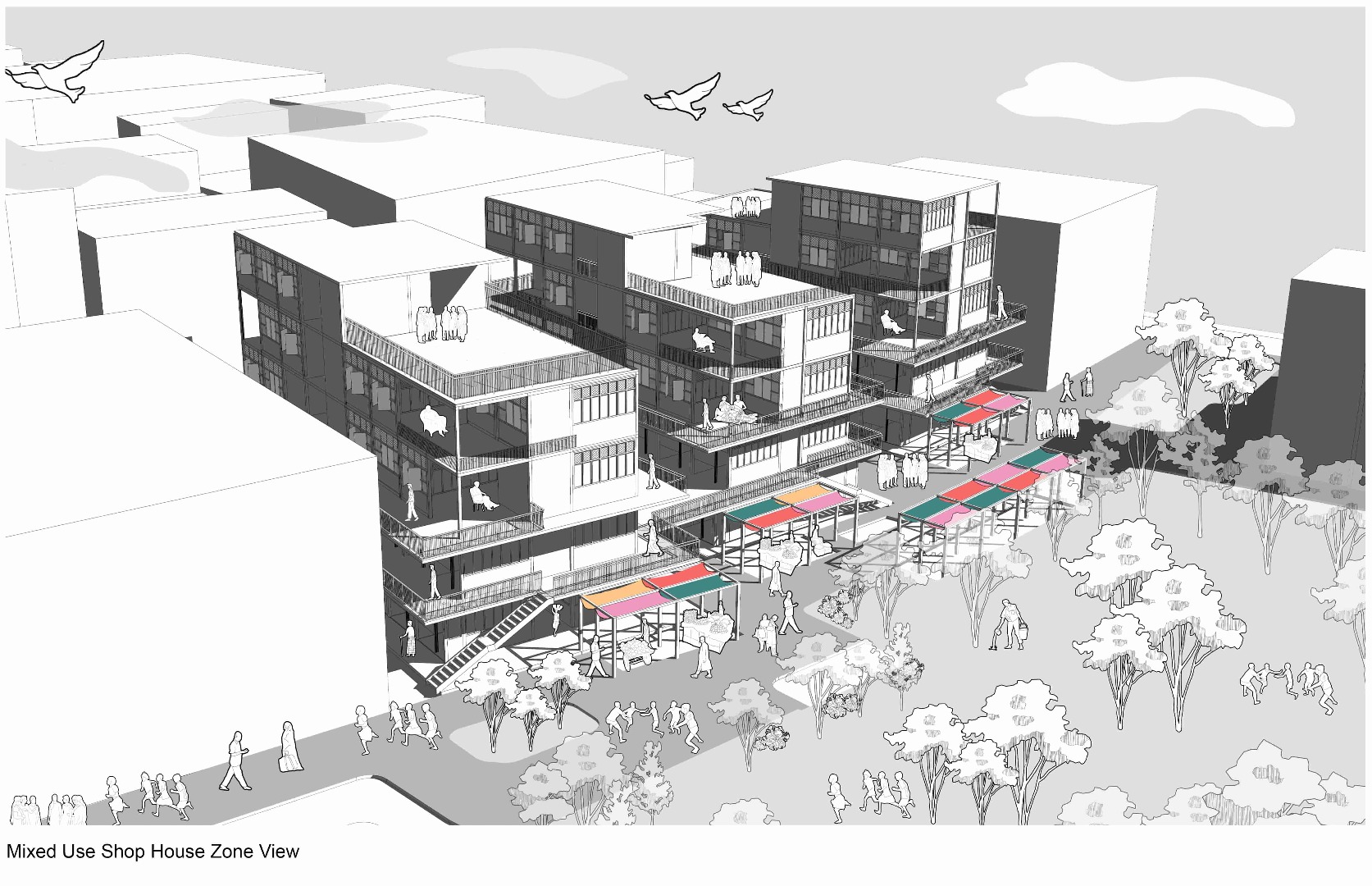
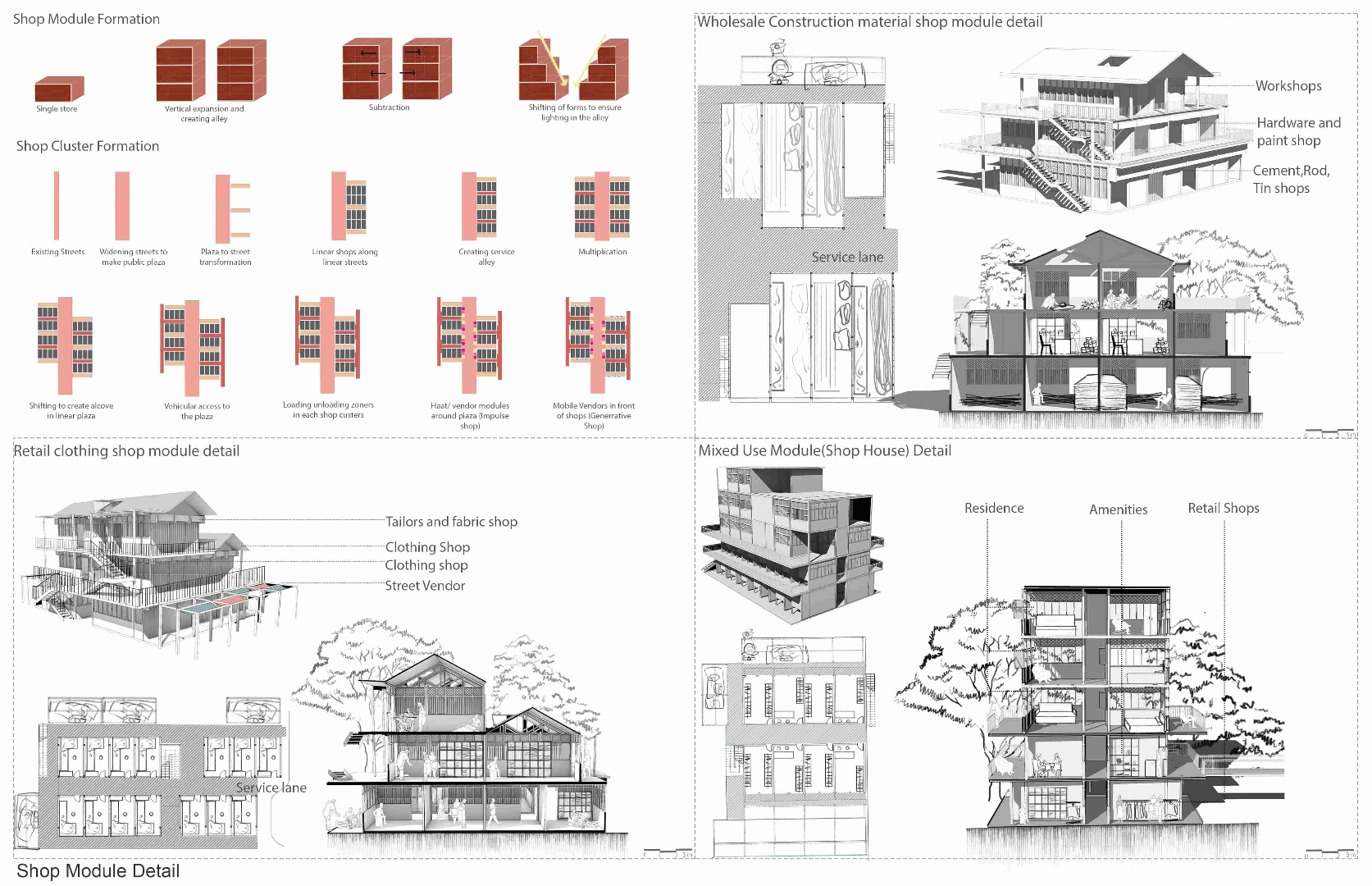
Detail Design: Three types of shops were meticulously designed: retail clothing market, wholesale construction market, and mixed-use shop houses.
Local Adaptation: The design process incorporated local construction materials and layouts, combining them with modern functions and materials.
Integration: The design aimed to penetrate commercial layers into the residential zones, fostering a harmonious coexistence between these two layers.
This project exemplifies the idea that economic progress can coexist with local culture and tradition. Instead of transforming villages into cities, this idea fosters balanced and desirable growth by preserving tradition and welcoming modernization.
Established in 2012, Tamayouz Excellence Award is an unaffiliated, independent initiative that aims to advance the profession of architecture academically and professionally. Tamayouz is dedicated to supporting aspirational and transformative projects that tackle local and global challenges and that are informed by a holistic understanding of context.