
University : Cairo University
Tutor(s) : Professor Mohamed Noaman
Project Description
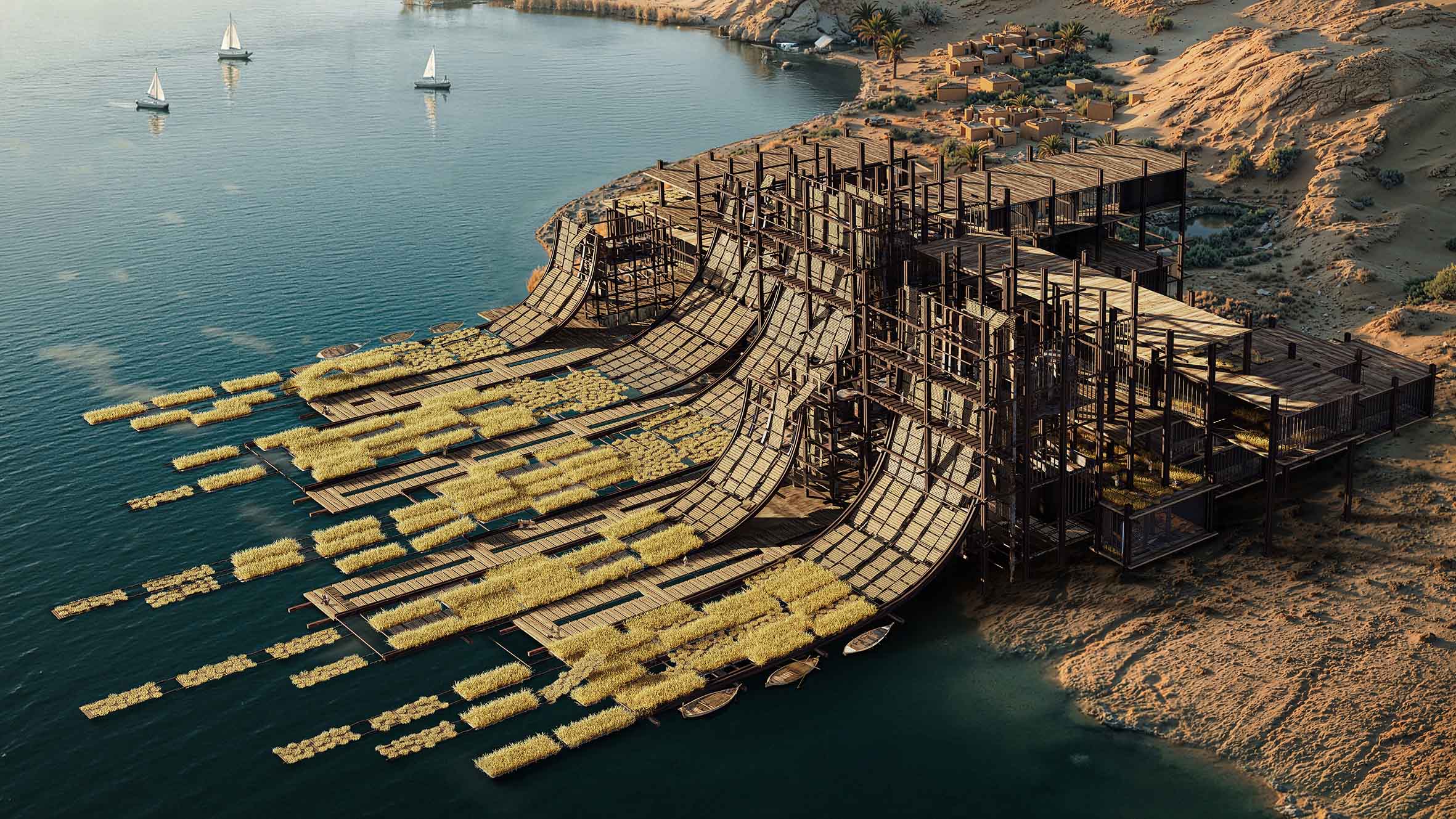
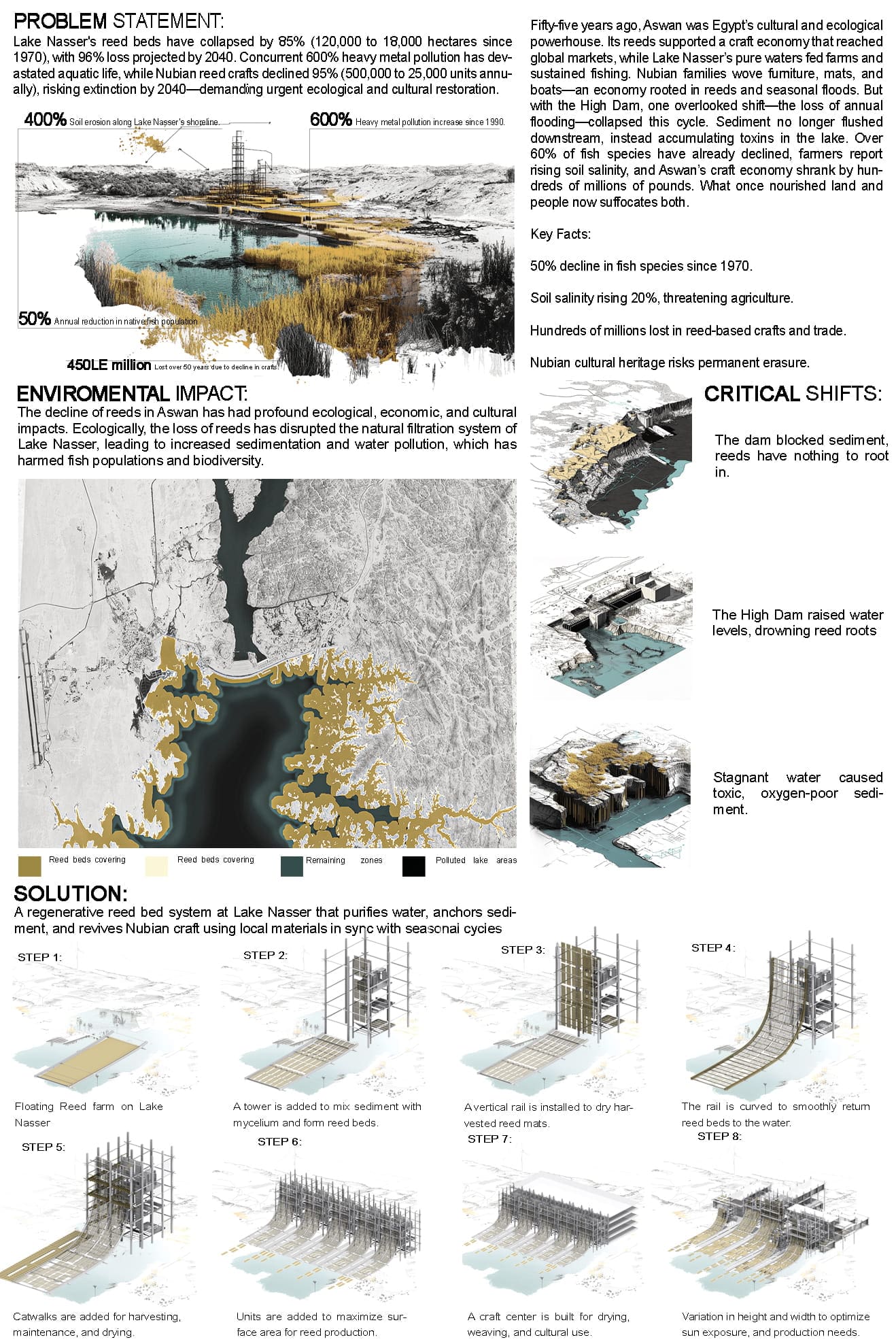
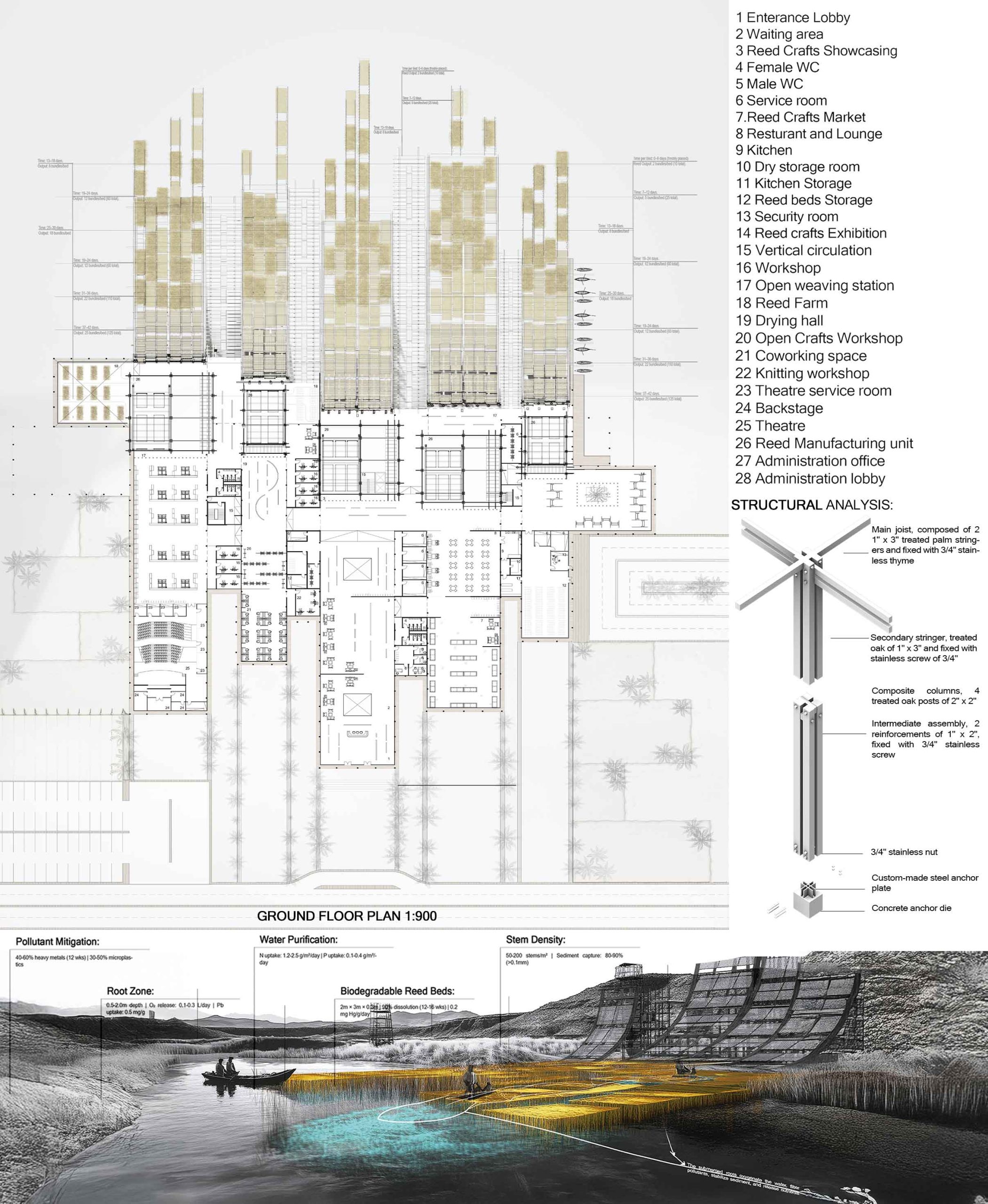
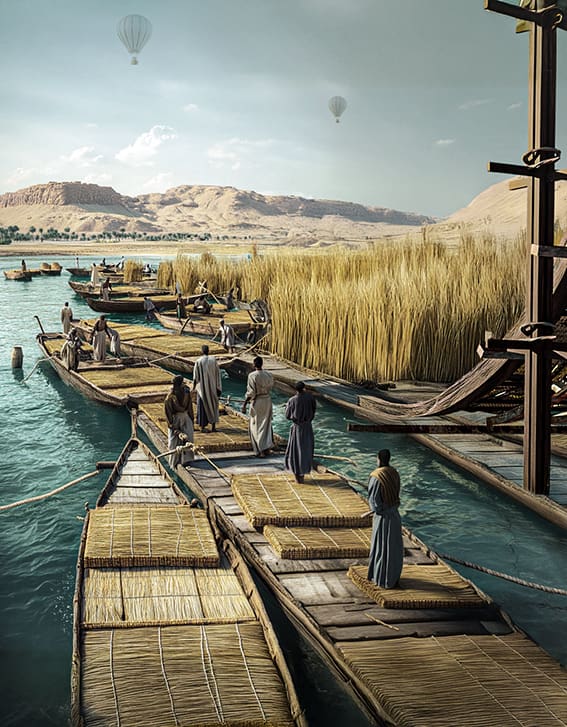
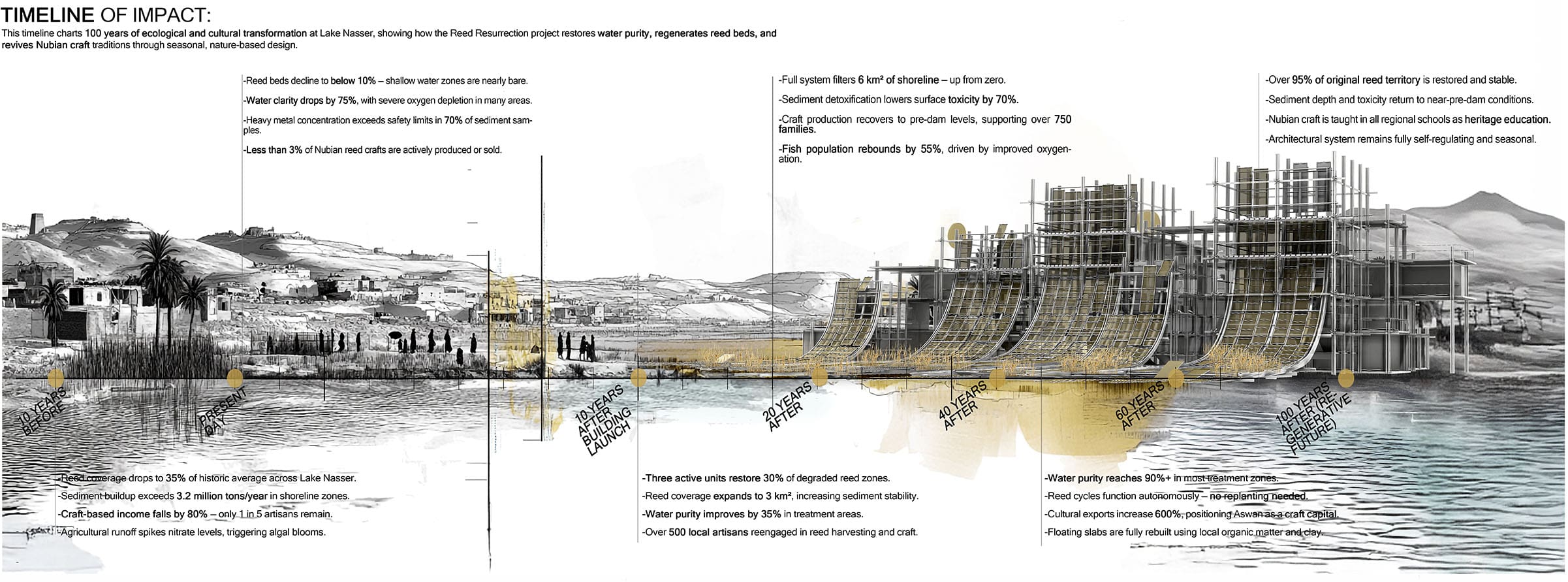
Reed Resurrection proposes a seasonal, biodegradable architectural system on Lake Nasser that responds to the environmental and cultural damage caused by the Aswan High Dam. Before the dam, seasonal flooding sustained vast reed ecosystems that naturally filtered the Nile and supported Nubian crafts and trade. Their disappearance led to ecological degradation and the loss of cultural knowledge. This project reintroduces reeds as both an environmental agent and a cultural typology, transforming sediment pollution into a regenerative resource.
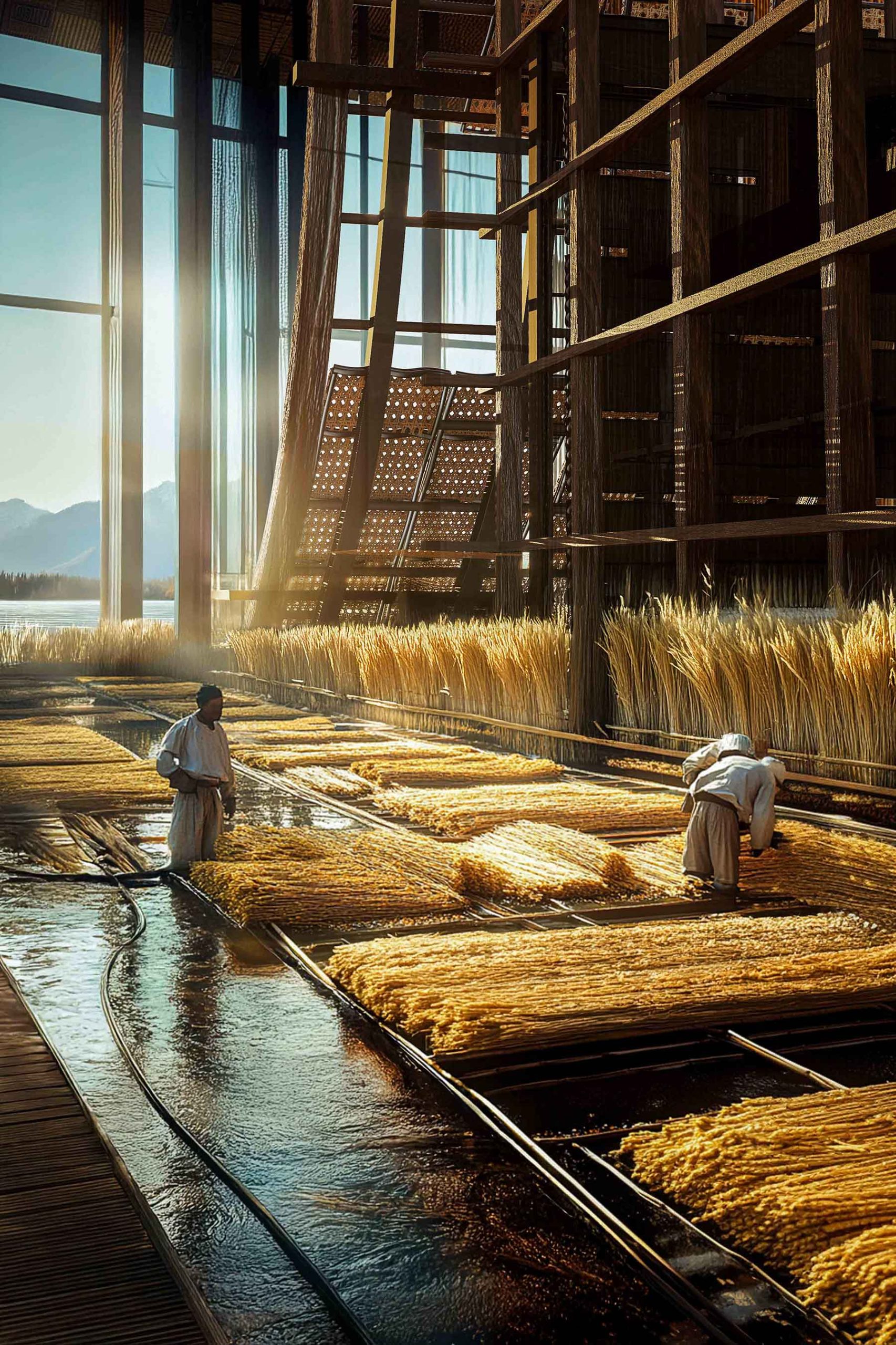
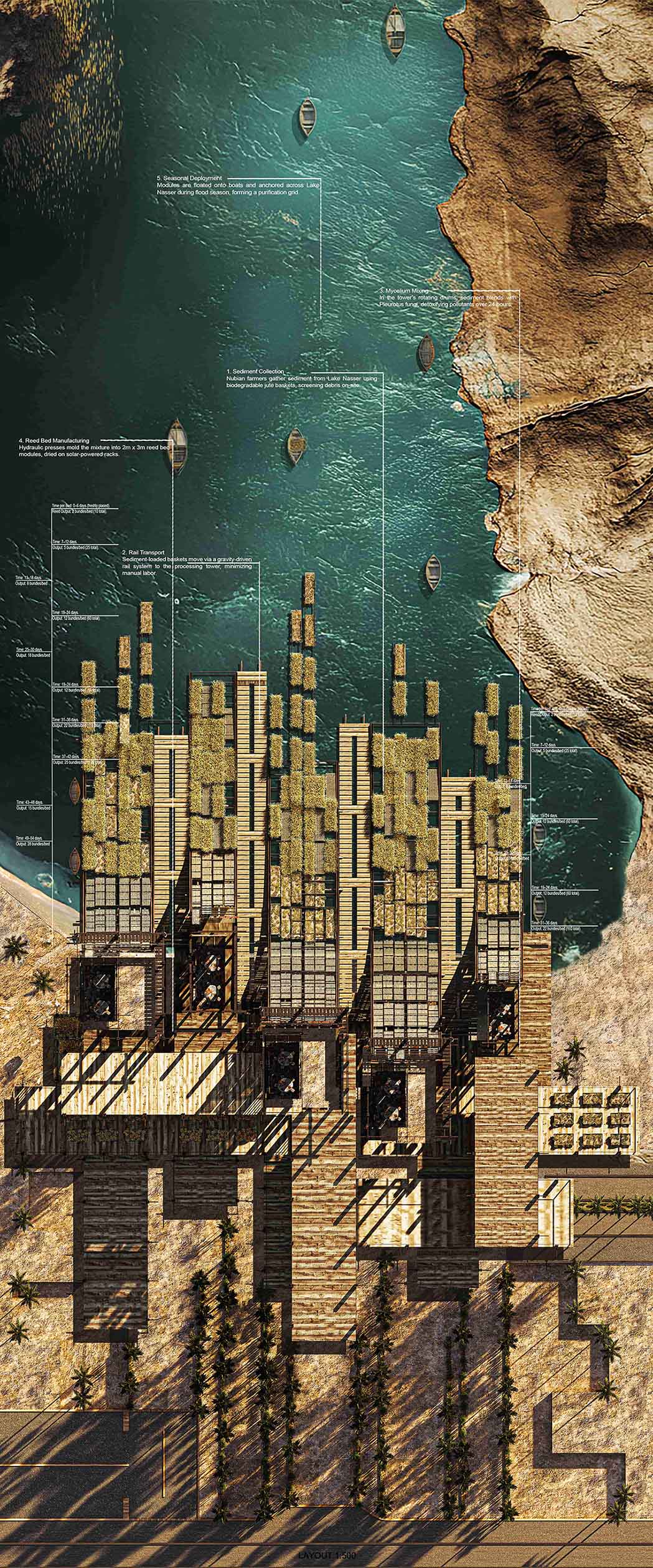
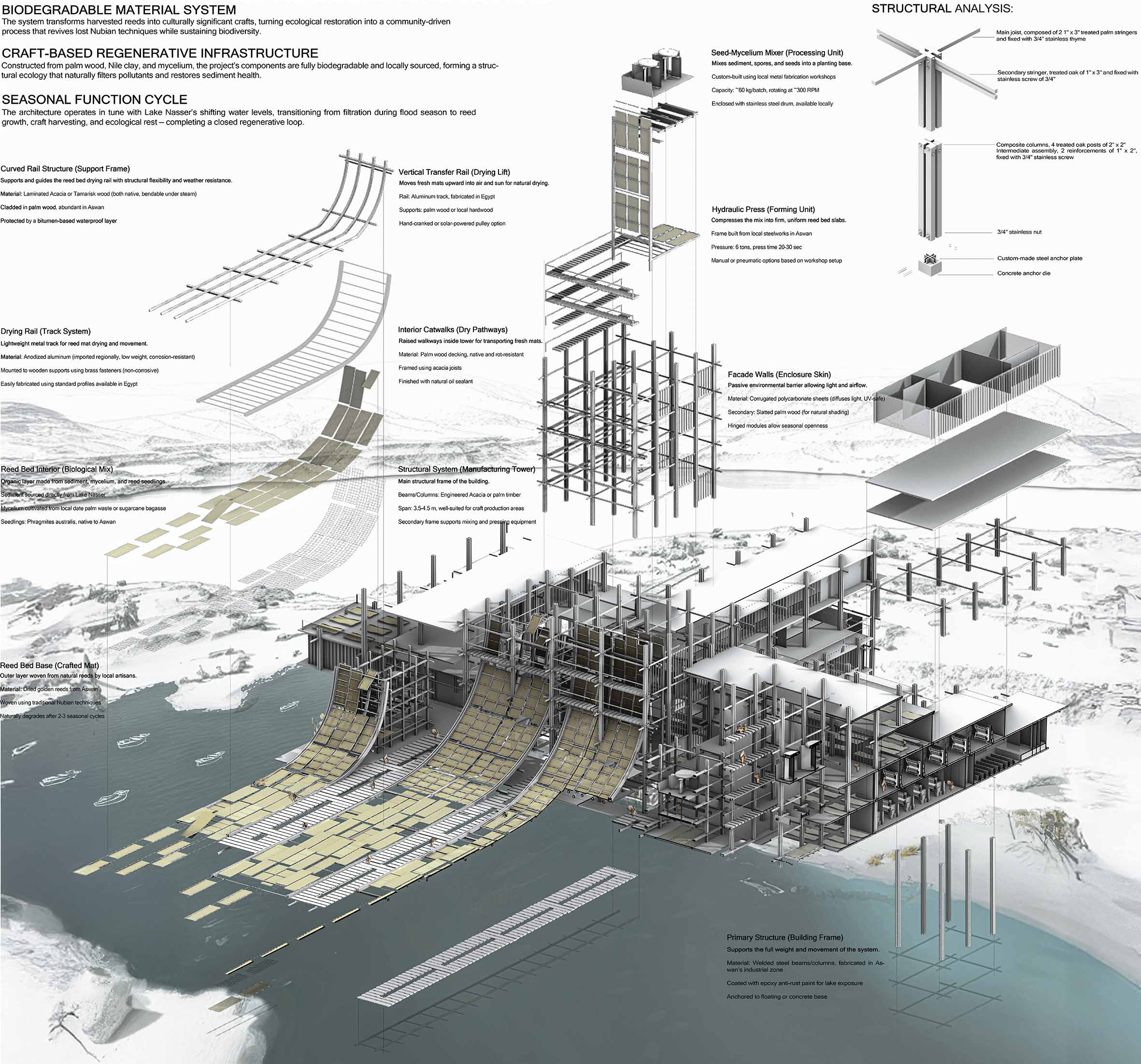
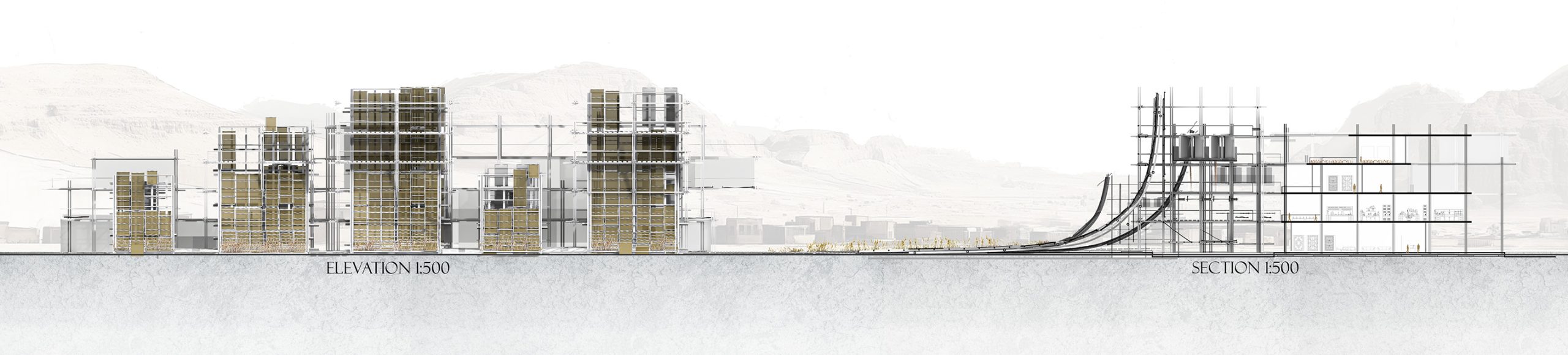
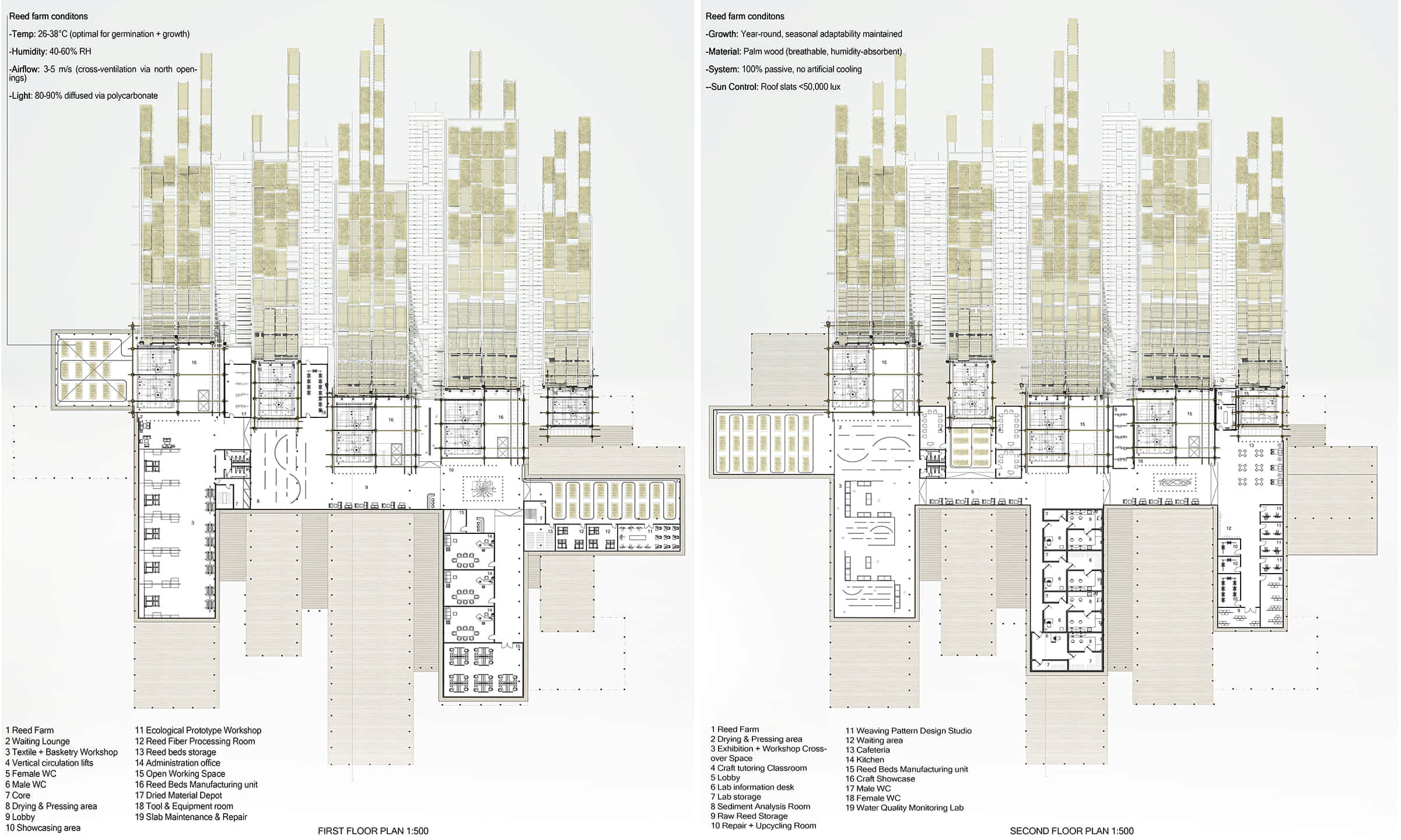
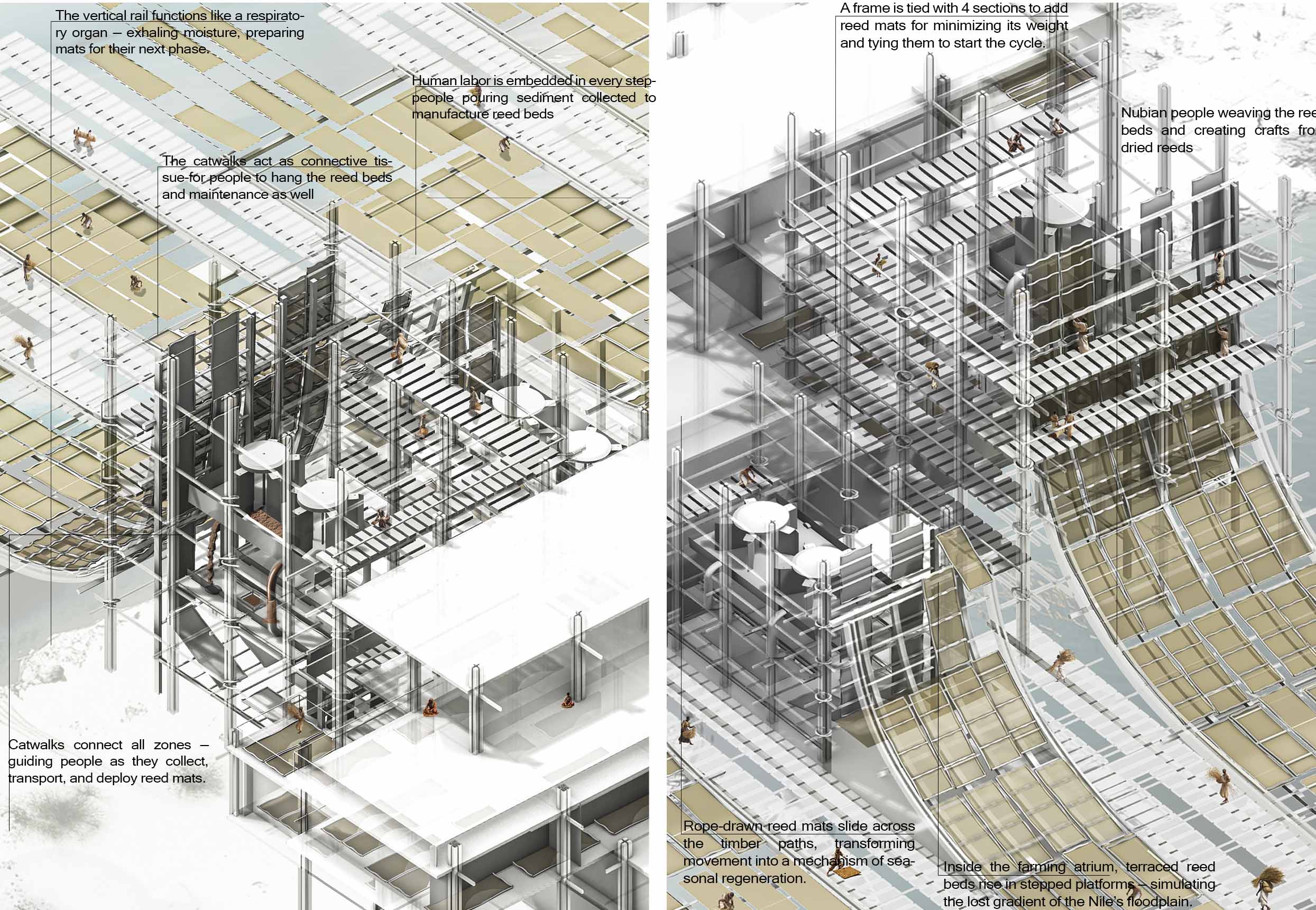
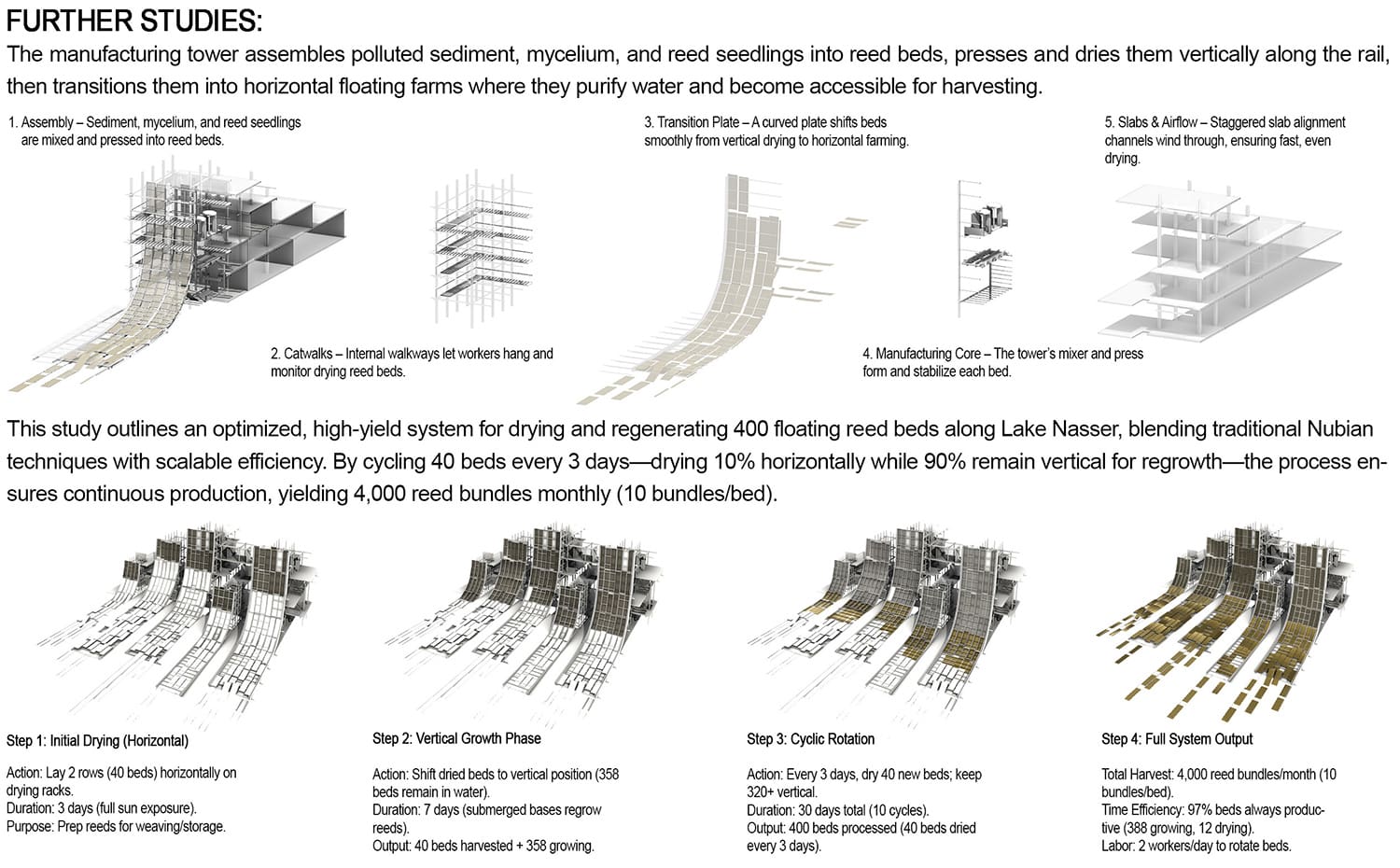
The project operates as a hybrid of floating and land-based architecture composed of three interconnected elements: a manufacturing tower, a vertical drying rail, and modular floating reed farms connected to a Nubian cultural craft center. Polluted sediment is mixed with mycelium and reed seedlings to form biodegradable slabs, which are dried vertically using natural airflow before being deployed horizontally onto floating platforms. Over each growth cycle, the reed beds purify the lake while producing harvestable biomass.
As seasons shift, the architecture transforms—floating, rising, and biodegrading in direct response to water levels. Harvested reeds are processed in shaded workshops where traditional Nubian weaving techniques are revived and passed to new generations, creating a renewed seasonal economy. Built entirely from local materials and requiring no external energy, the project functions as a closed-loop system that merges ecological repair with cultural regeneration.
Established in 2012, Tamayouz Excellence Award is an unaffiliated, independent initiative that aims to advance the profession of architecture academically and professionally. Tamayouz is dedicated to supporting aspirational and transformative projects that tackle local and global challenges and that are informed by a holistic understanding of context.