


University : An-Najah National University
Tutor(s) : Dr Hasan Al-Qadi
Project Description
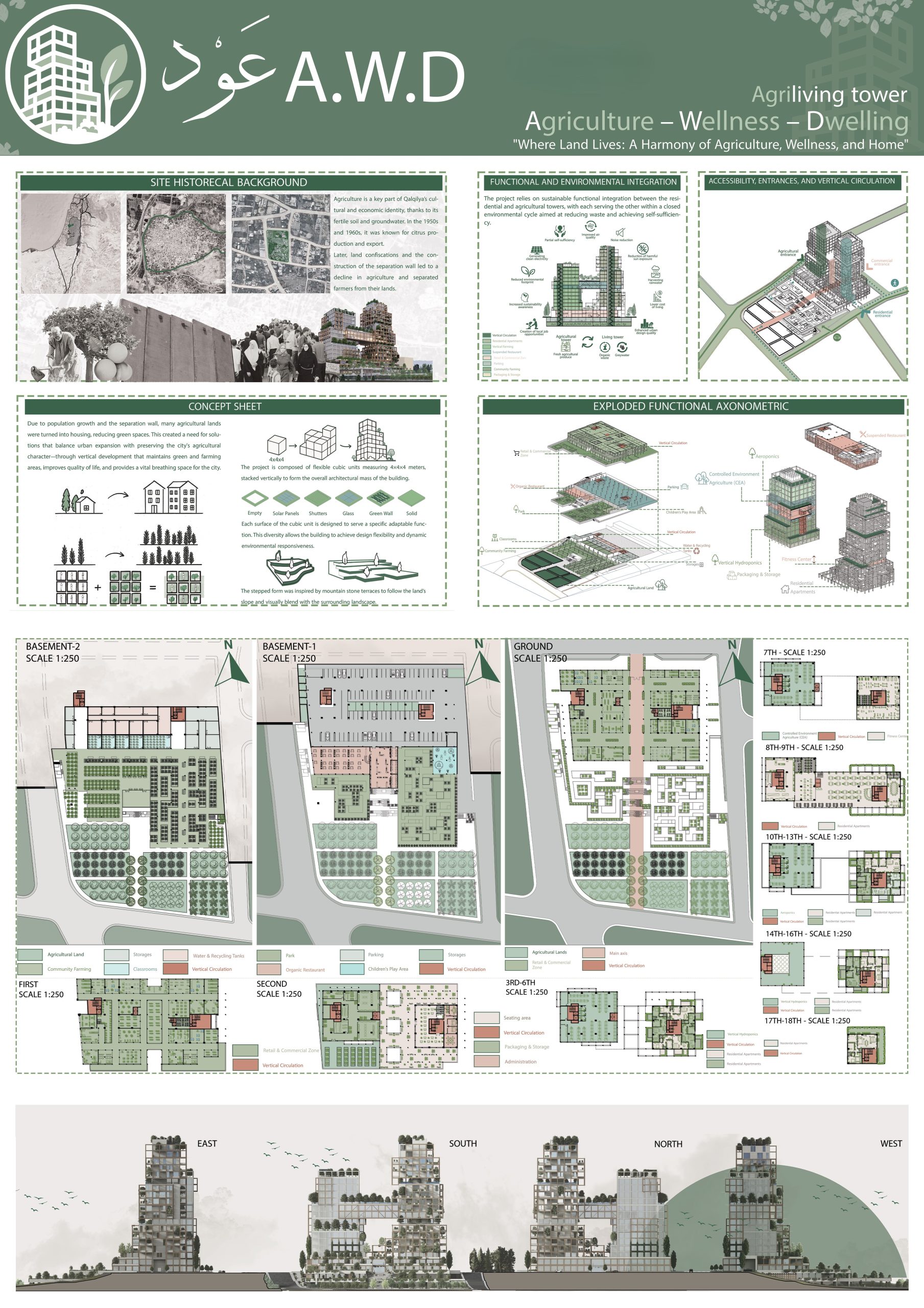
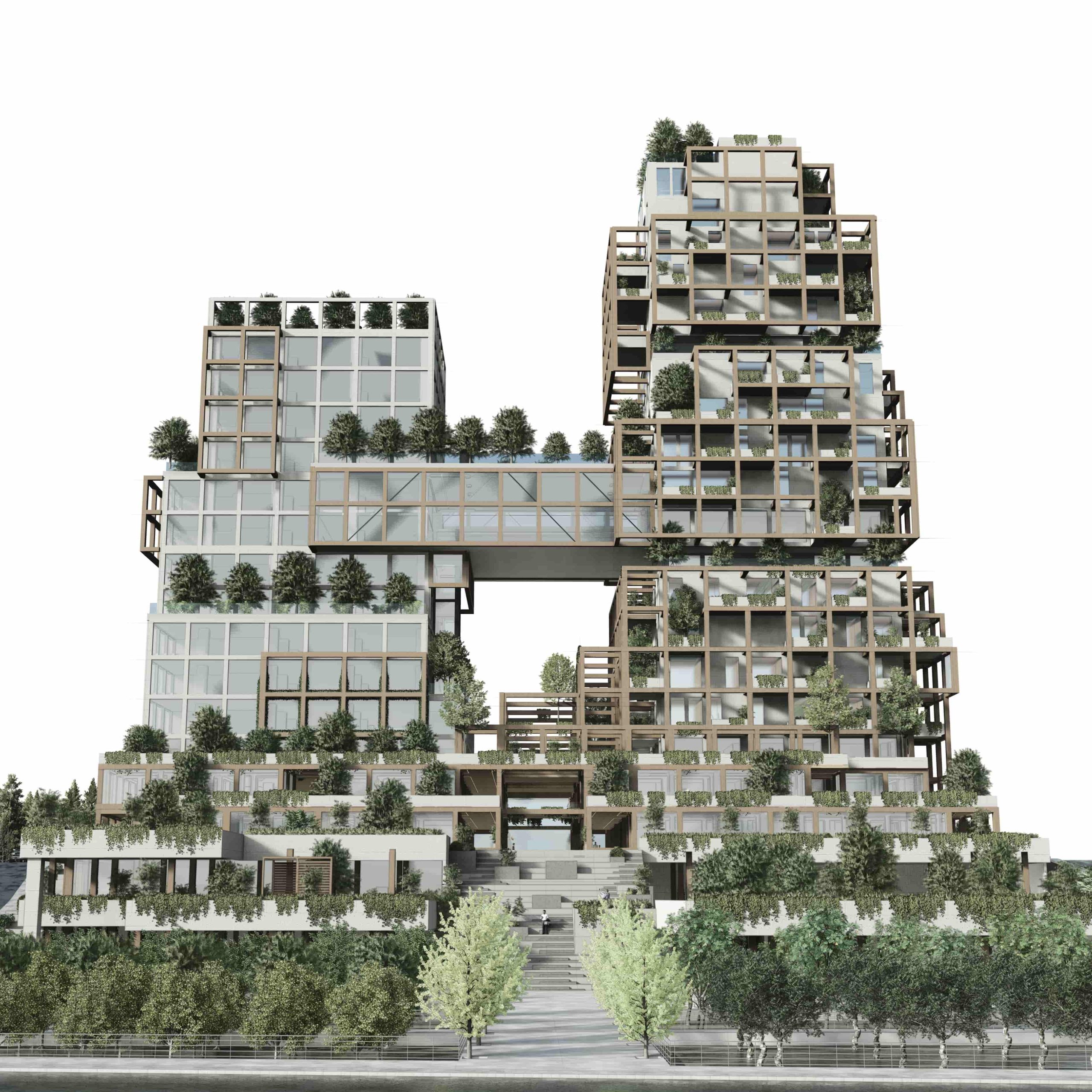
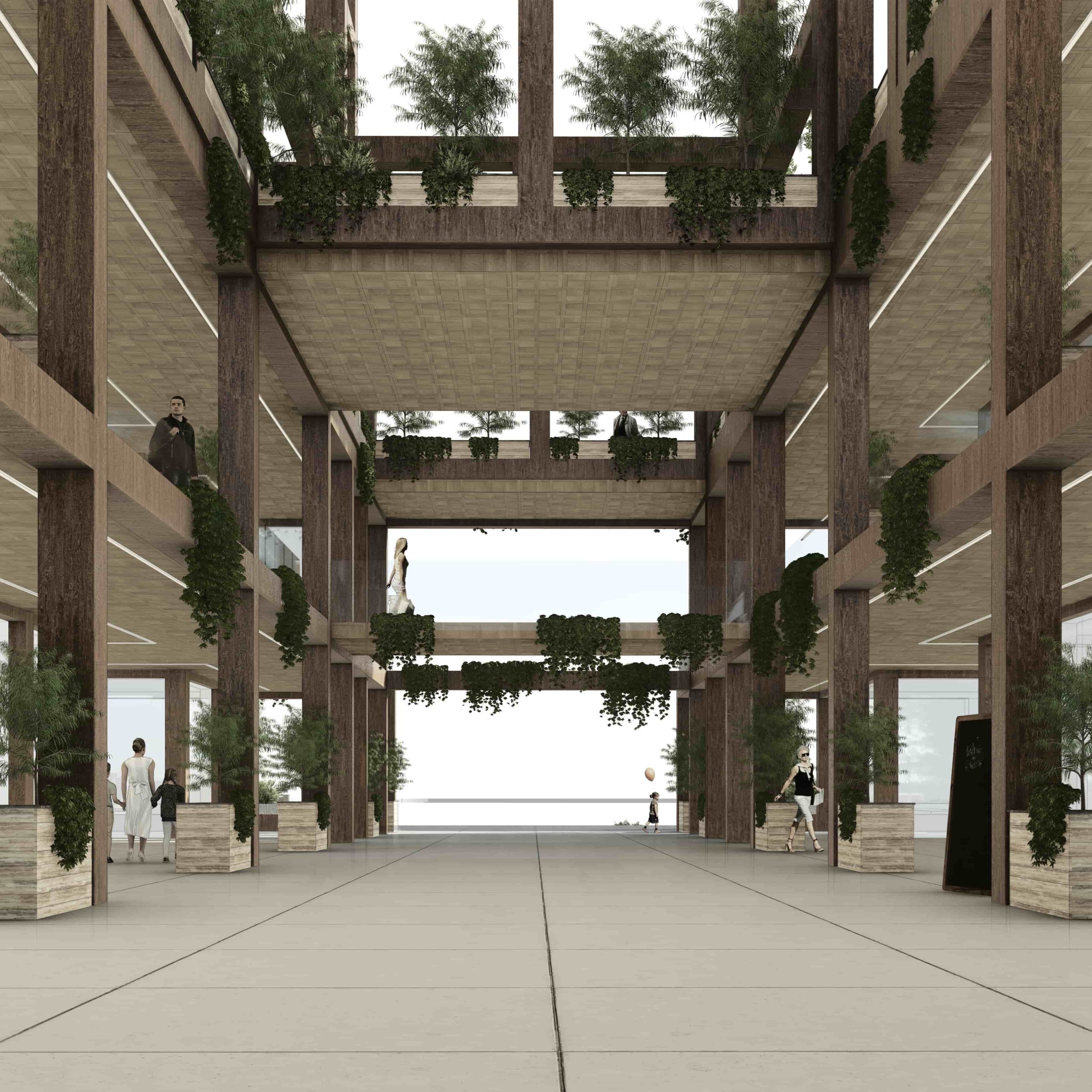
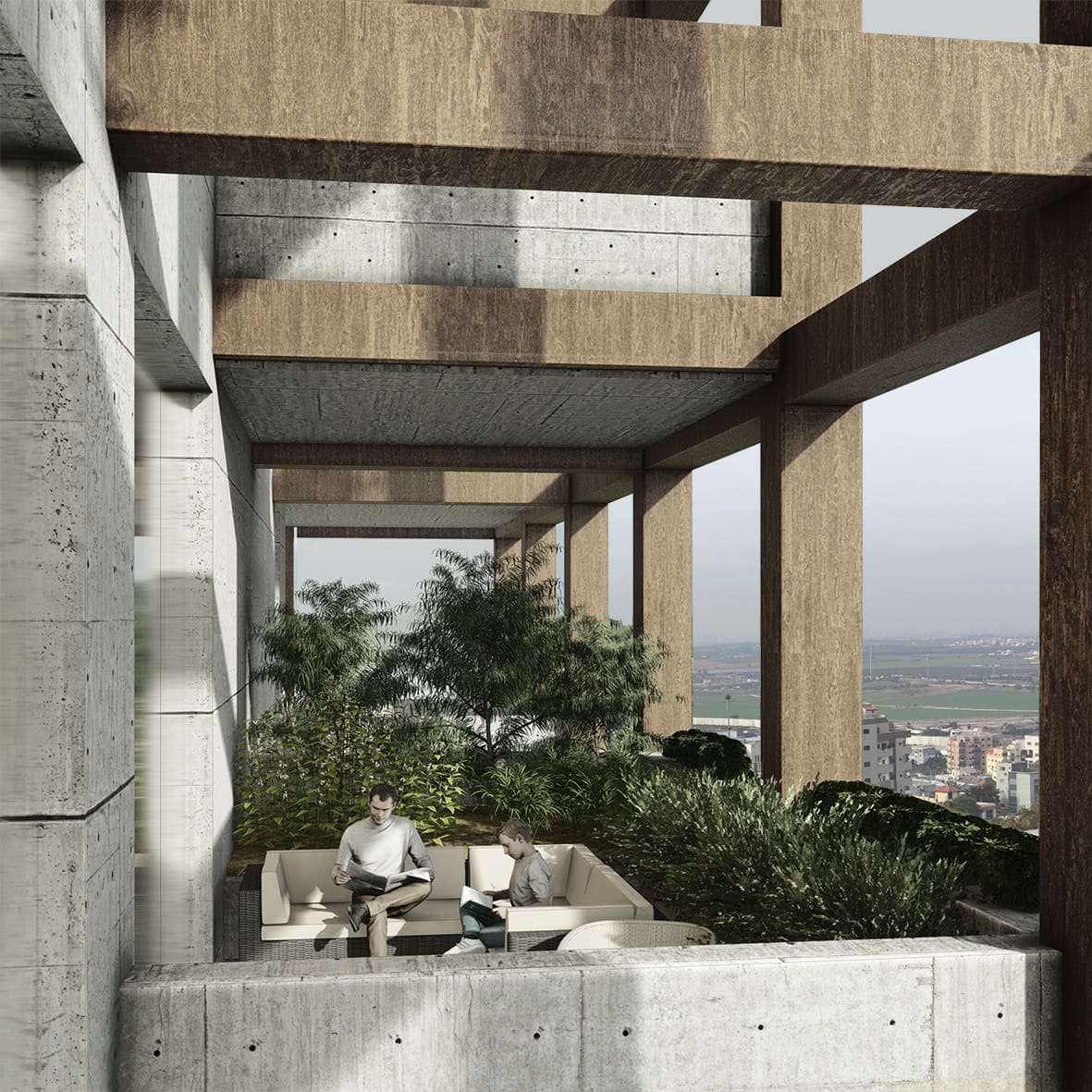
The Awd project is not merely a building; it is an architectural attempt to reconnect what has been severed — the enduring bond between people and their land, and between the city and its environment.
In the heart of Palestine lies Qalqilya, once celebrated as the “basket of citrus,” exporting its harvests abroad. Yet everything changed with the construction of the Separation Wall. Qalqilya was suffocated — not only spatially, but symbolically. One-third of its agricultural land was confiscated, its boundaries remained static while the population grew, and urban expansion began devouring green fields, plot by plot.
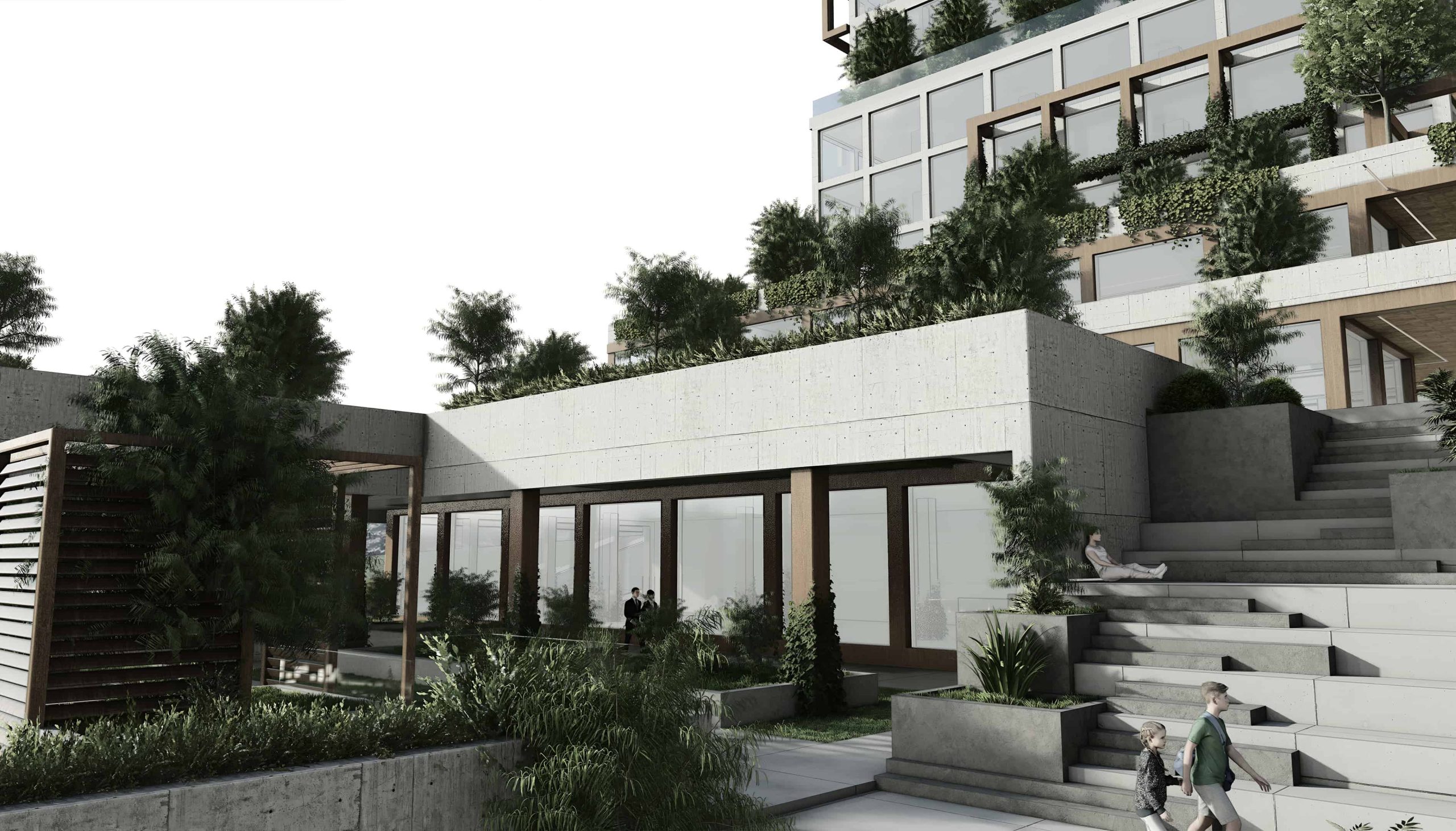
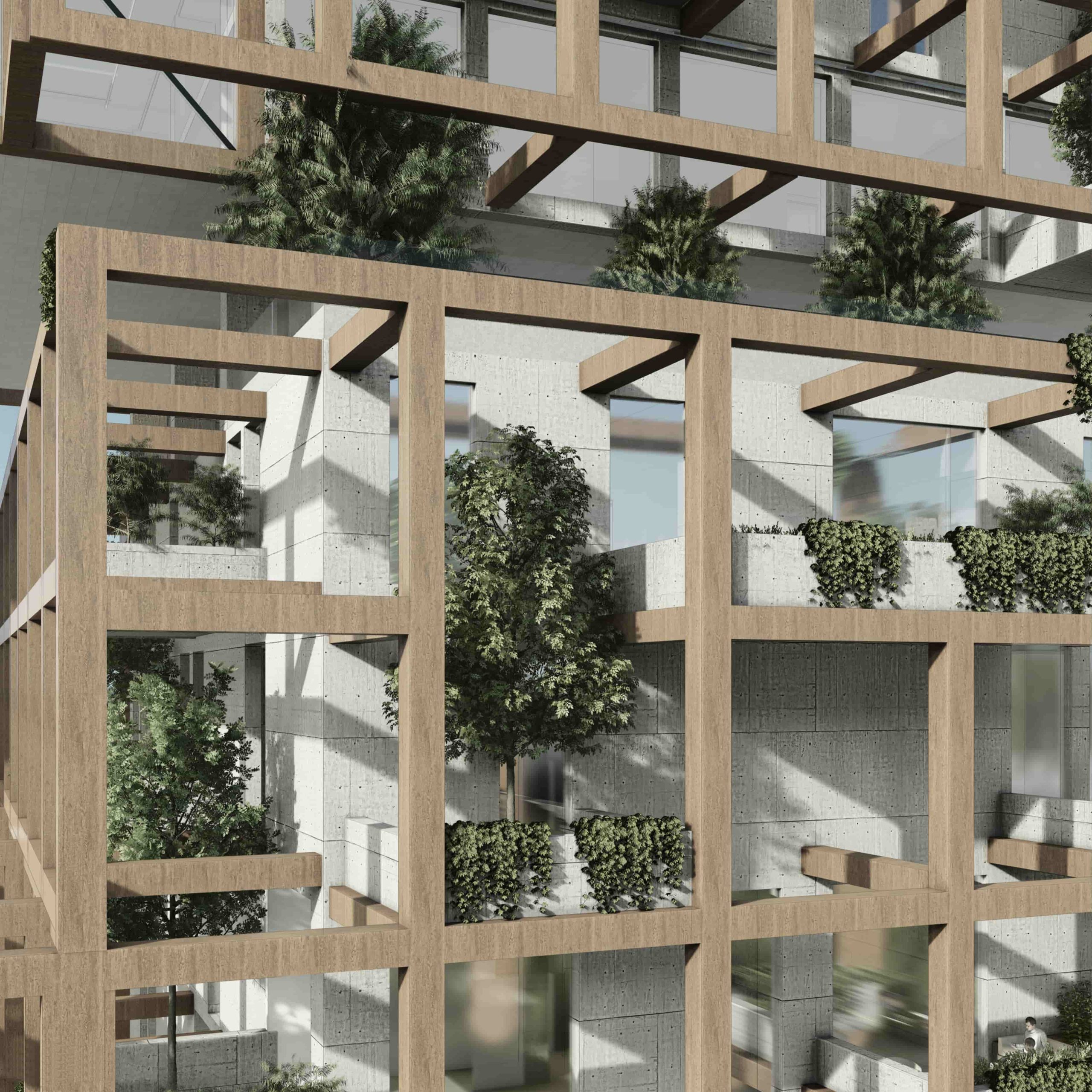
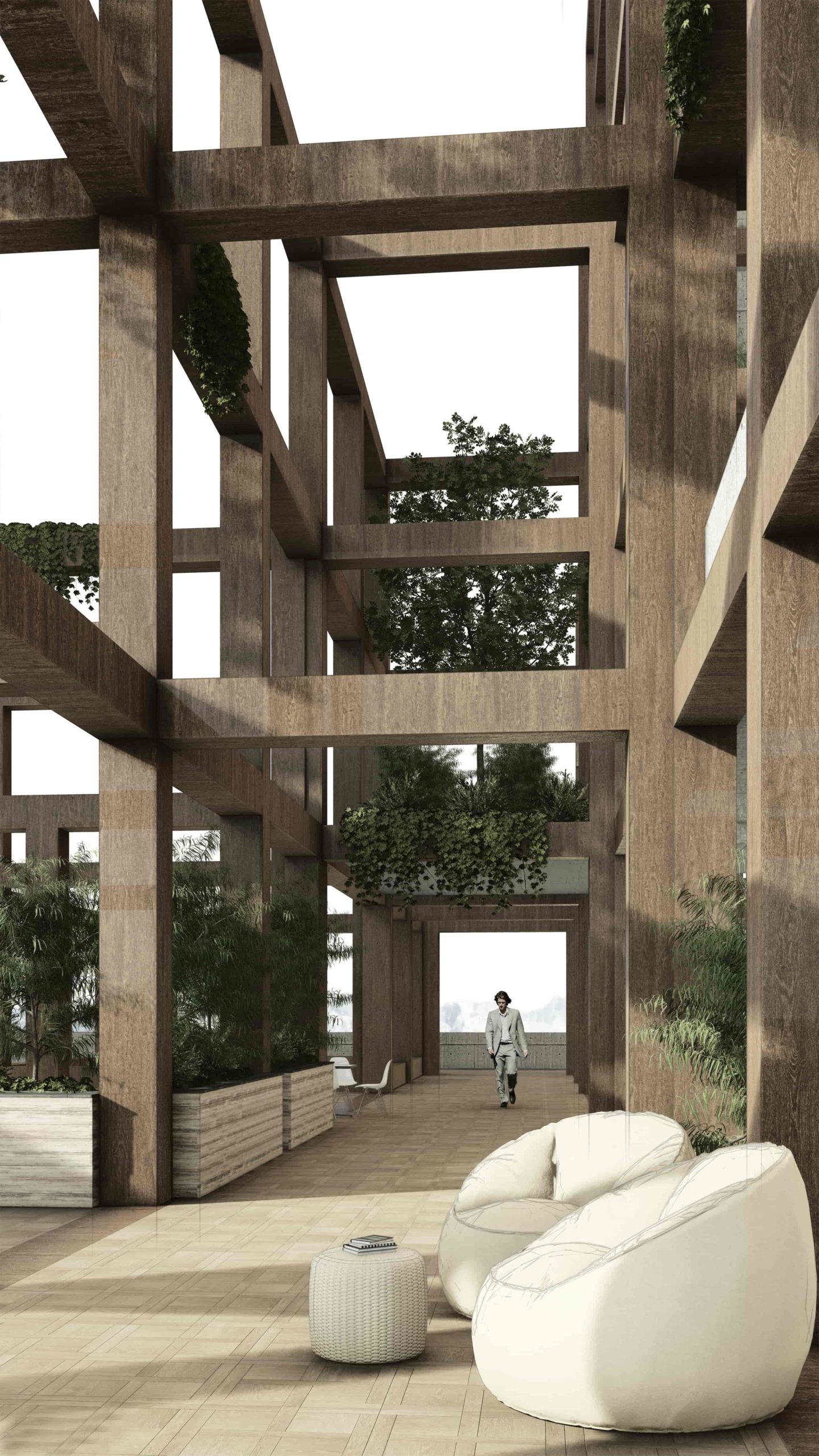
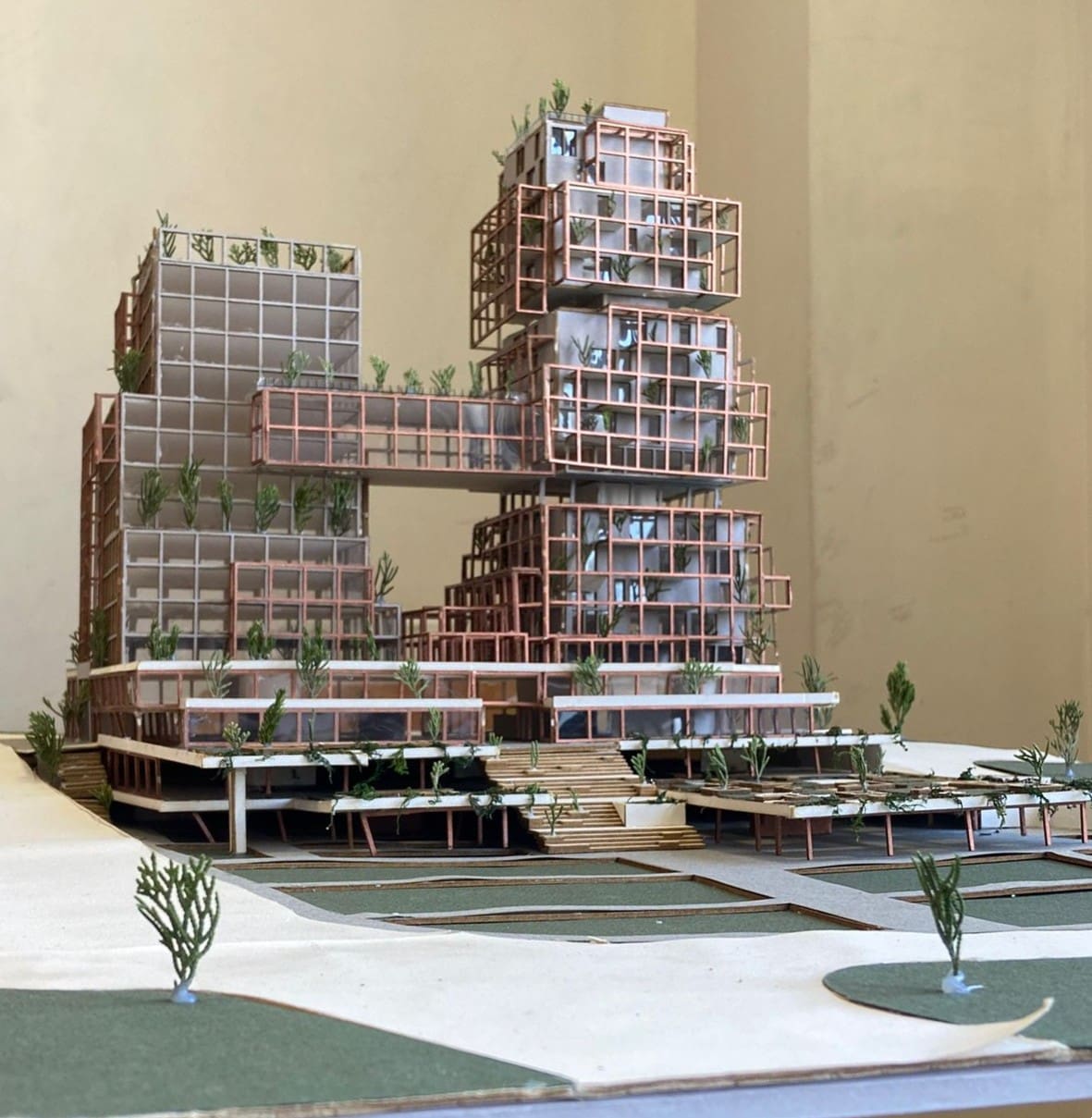
Here, an urgent need emerged. Instead of abandoning agriculture in favor of housing, or sacrificing housing for agriculture, the project asked a different question: Why not elevate both together? Why not cultivate the sky and live within the green?
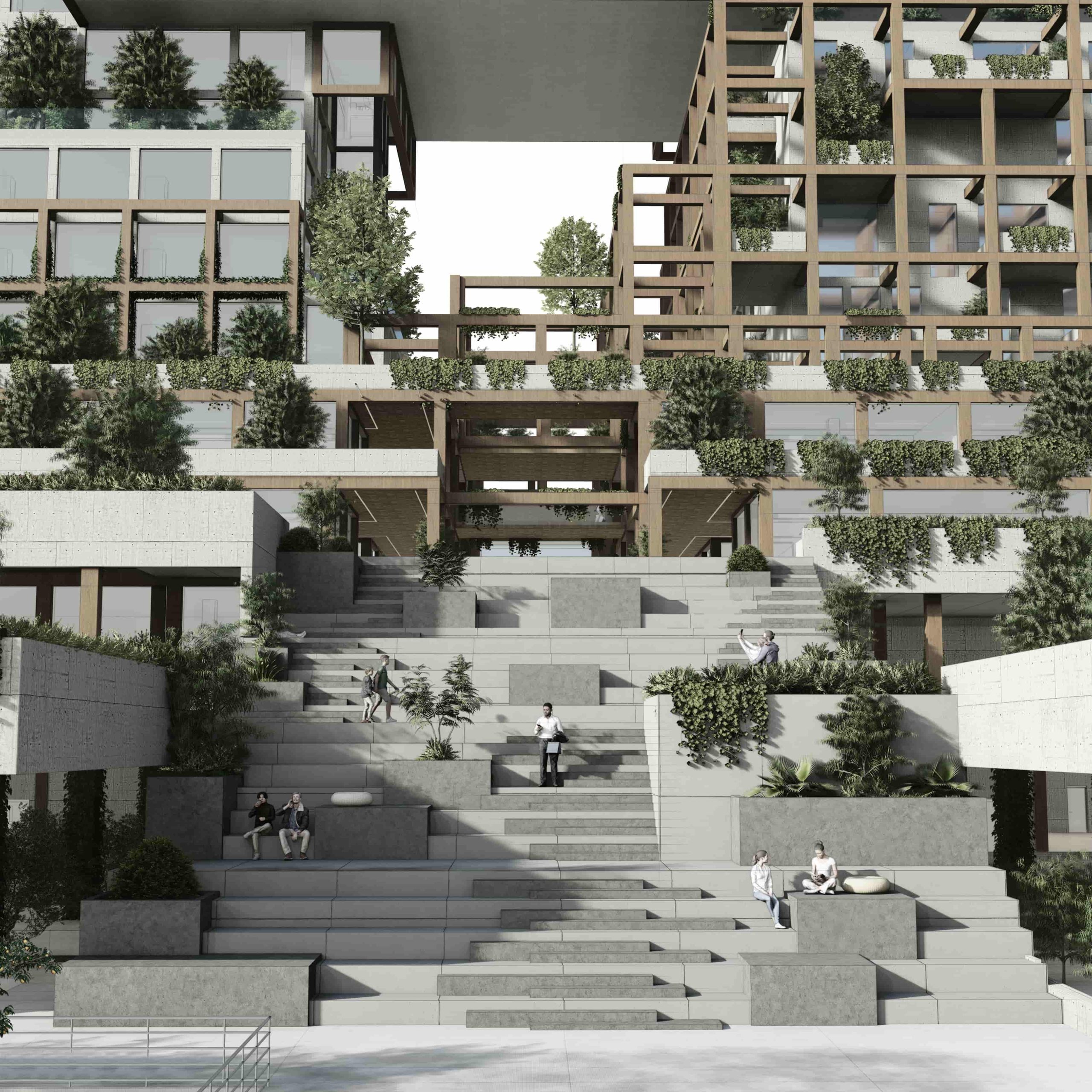
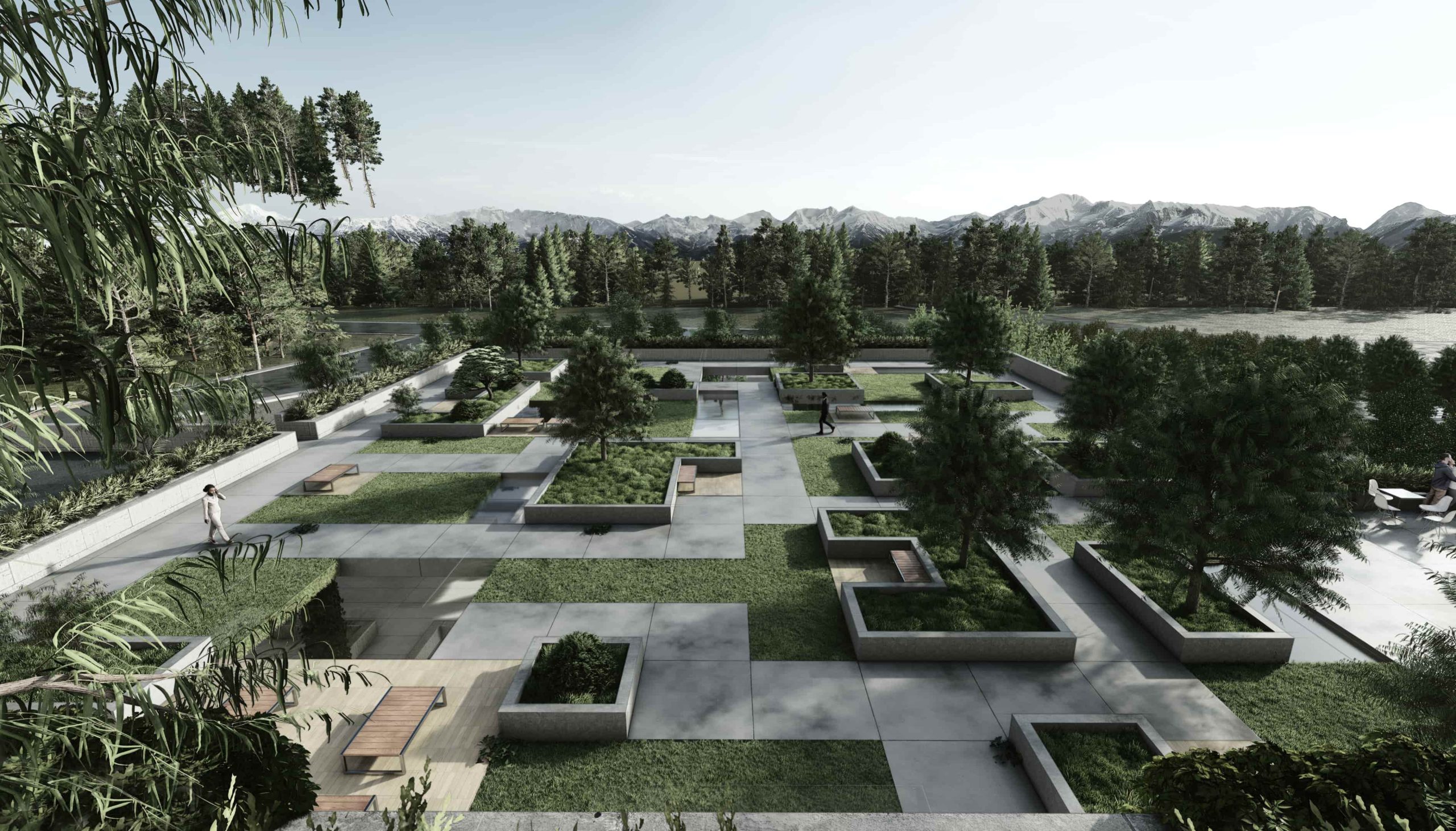
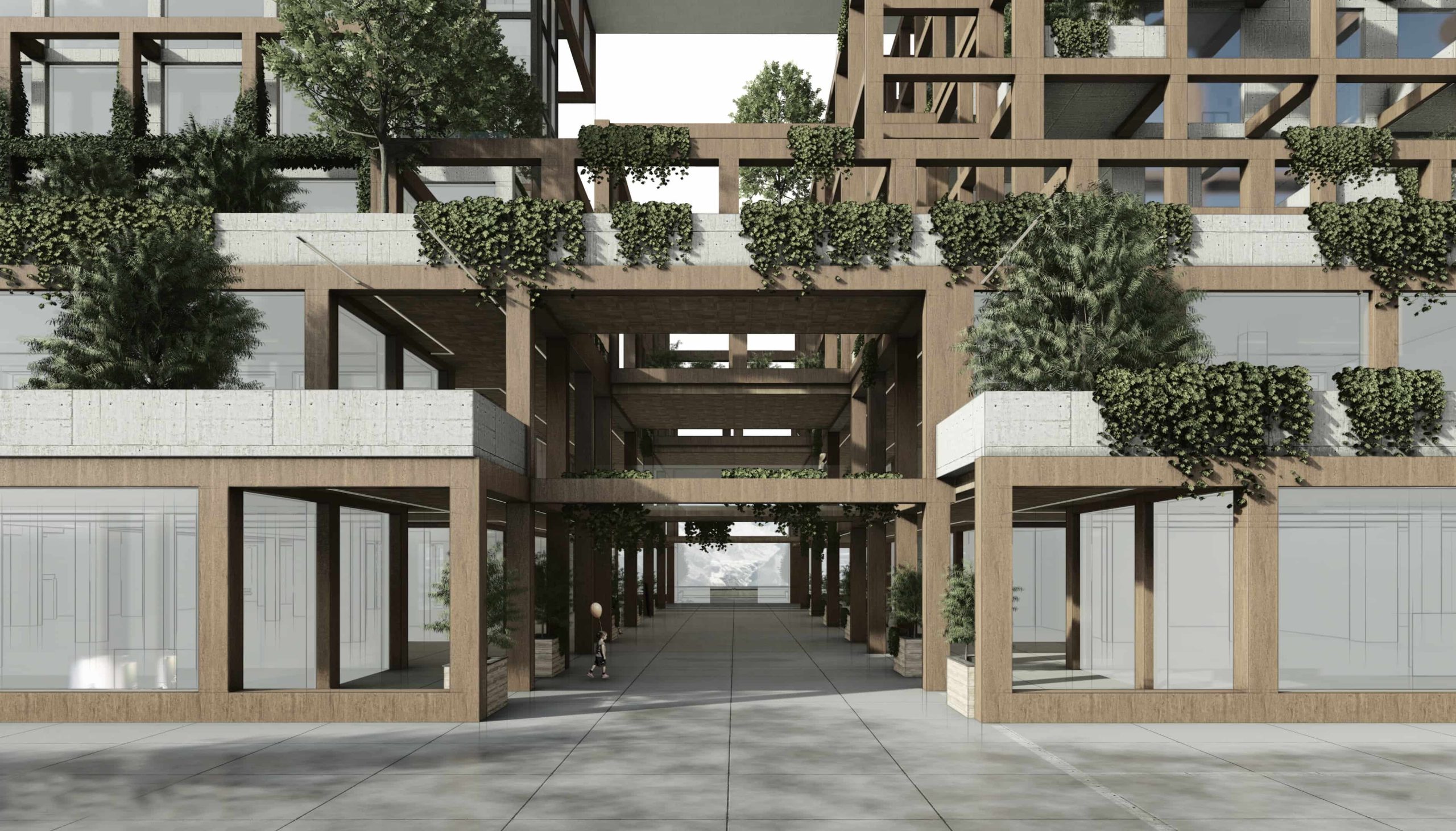
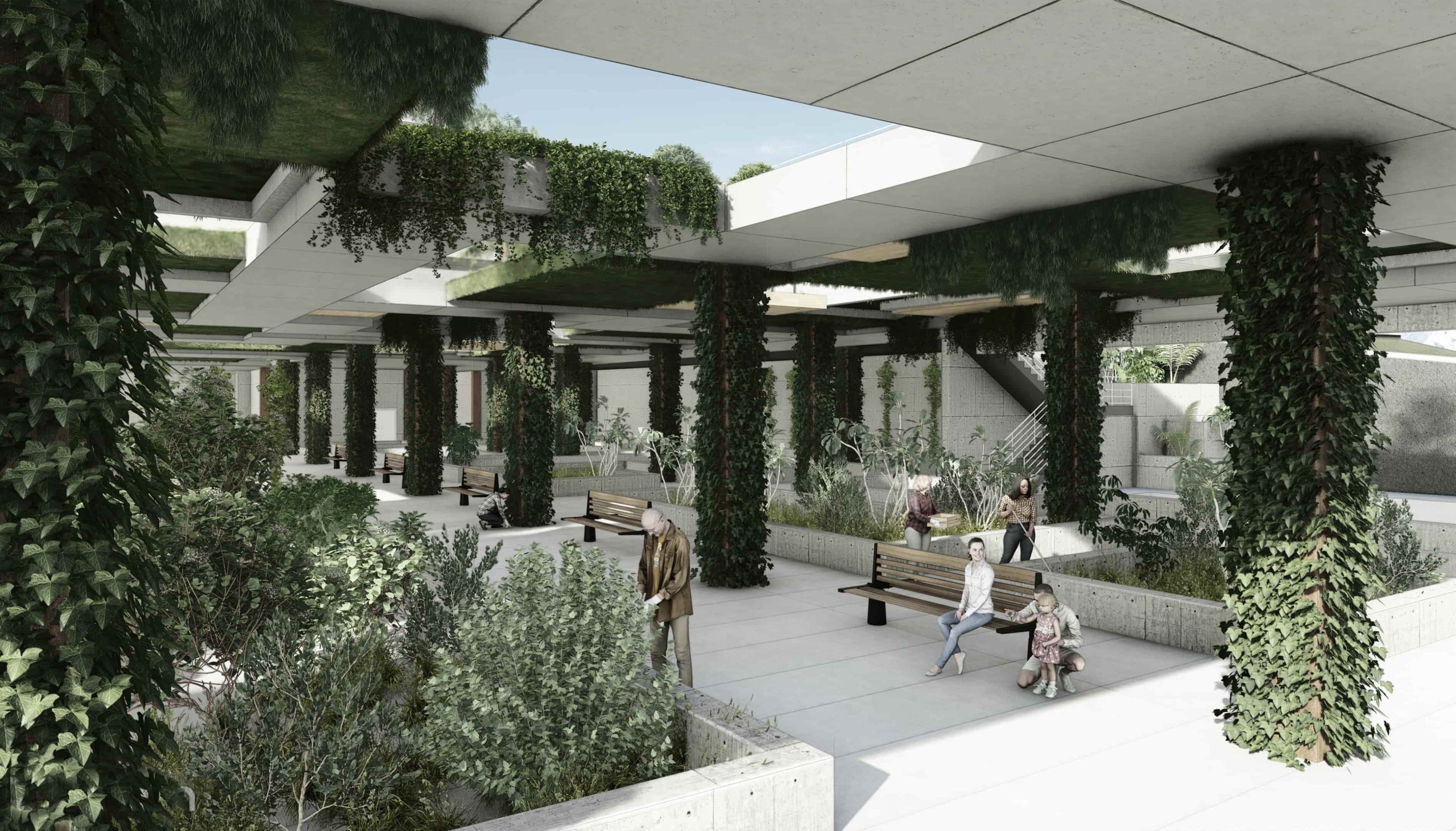
The project envisions an innovative ecological and recreational space that redefines the urban identity of Qalqilya. It integrates natural gardens, children’s play areas, sports and cultural facilities, and commercial spaces that serve residents and visitors. Beyond recreation, it contributes to economic vitality by generating jobs and attracting tourism, reinforcing the city’s resilience.
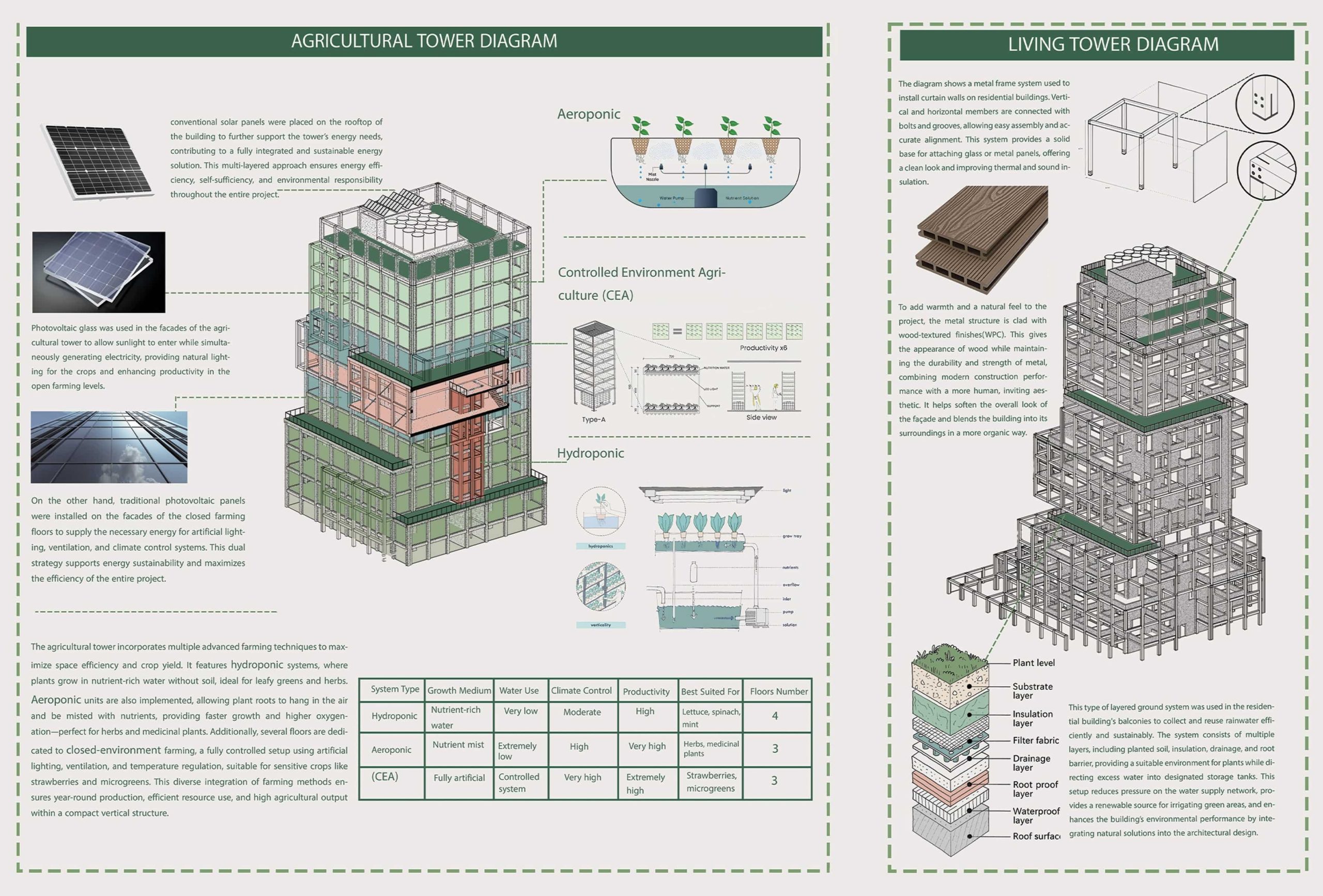
Sustainability lies at the core of the design: modern irrigation systems, expanded green cover, and environmentally conscious strategies enhance awareness and improve the urban landscape.
Ultimately, Awd aspires to be more than a destination; it is a living model of coexistence between housing and farming, between architecture and landscape — a family-oriented hub that reflects community needs while supporting social and economic growth.
Established in 2012, Tamayouz Excellence Award is an unaffiliated, independent initiative that aims to advance the profession of architecture academically and professionally. Tamayouz is dedicated to supporting aspirational and transformative projects that tackle local and global challenges and that are informed by a holistic understanding of context.