
University : North South University
Tutor(s) : Mujtaba Ahsan and A K M Saleh Ahmed Anik
Project Description
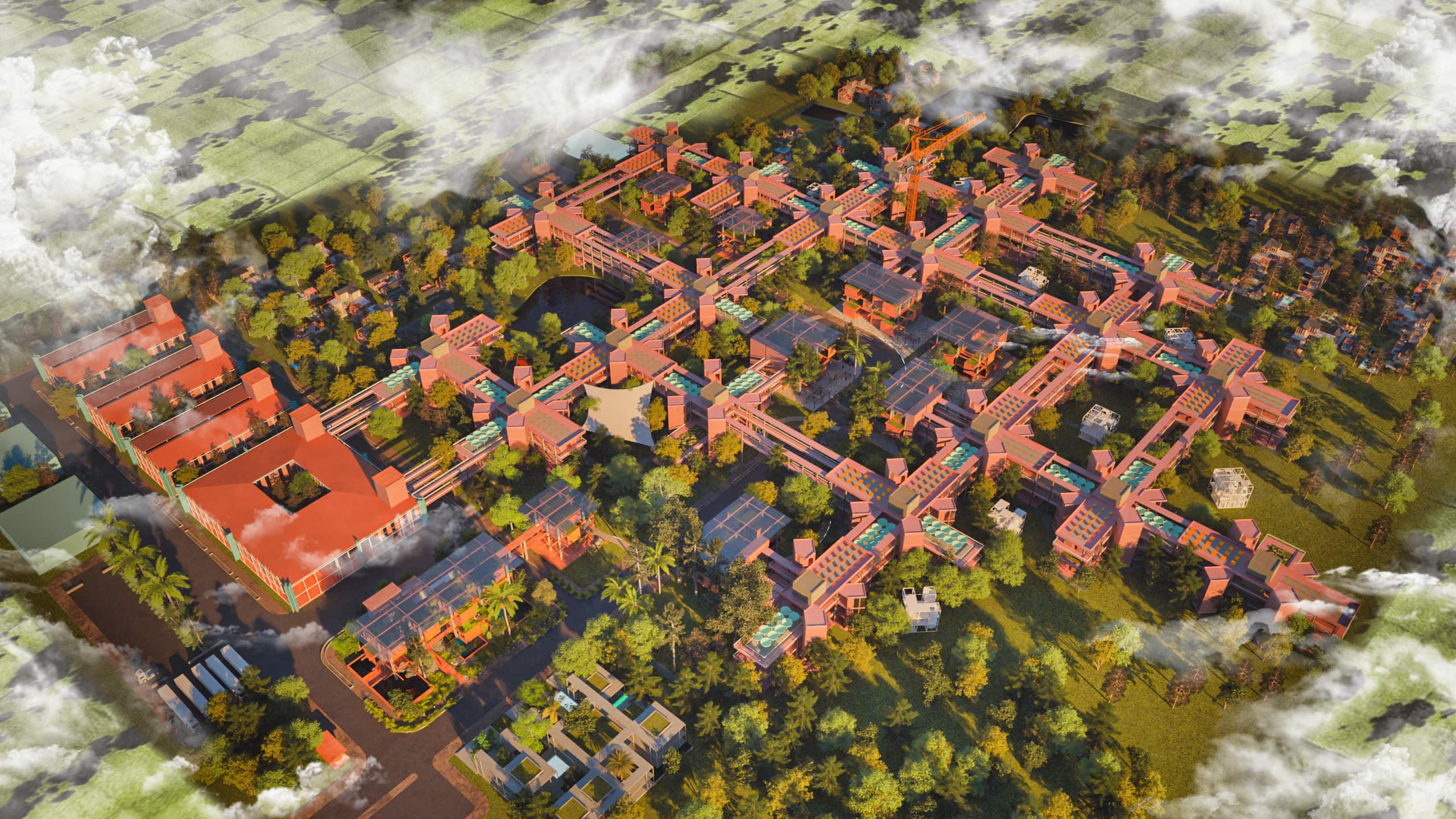
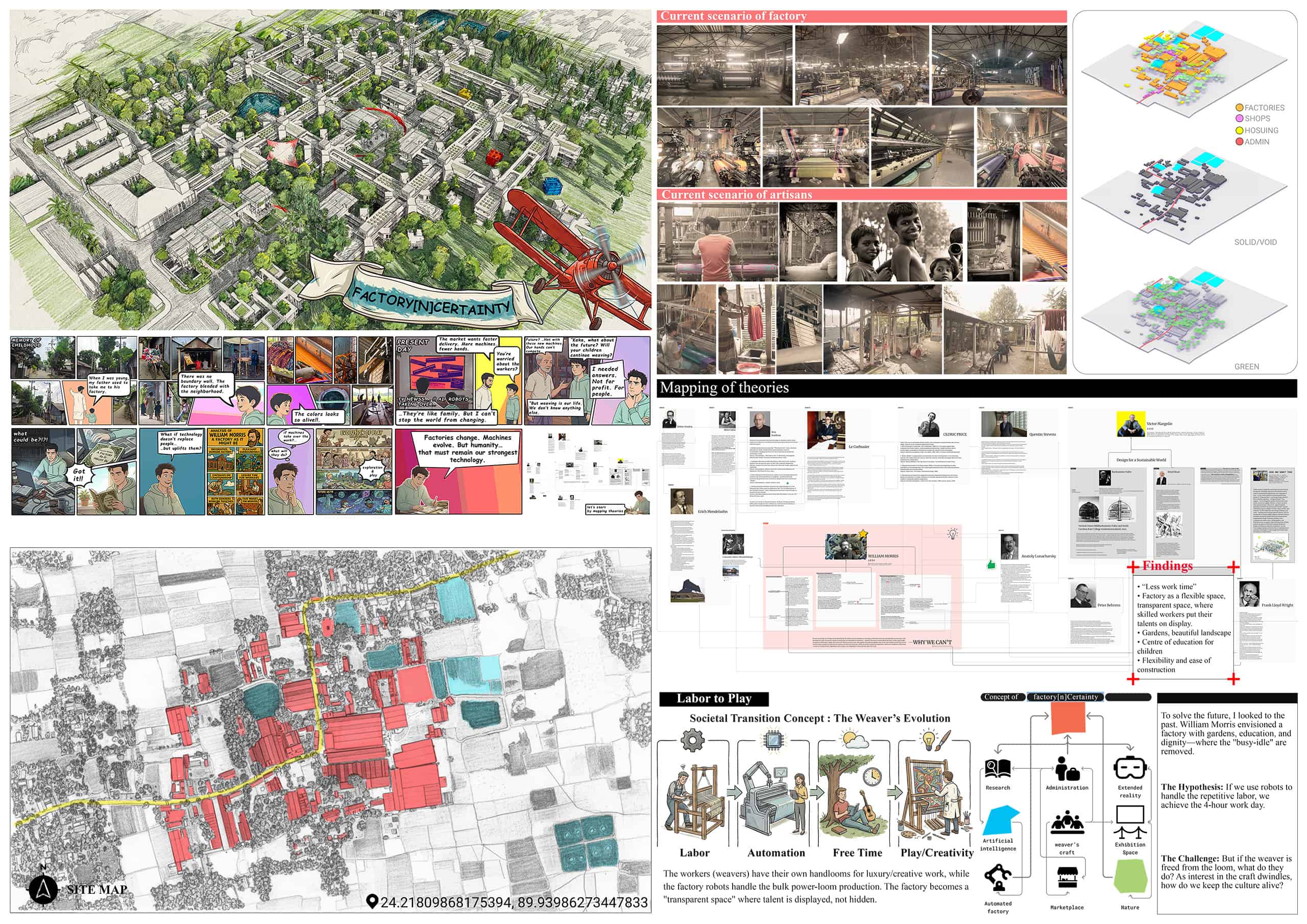
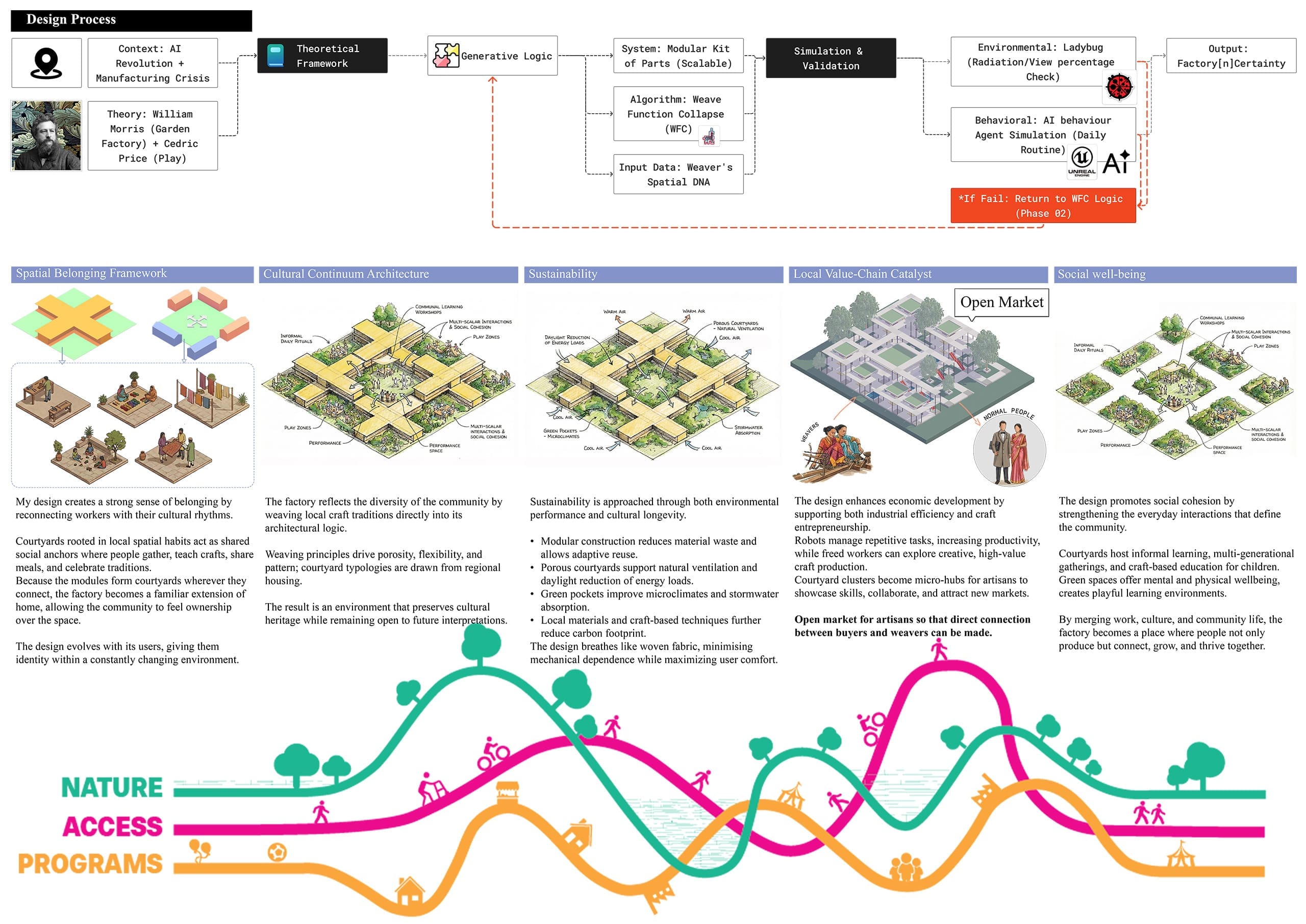
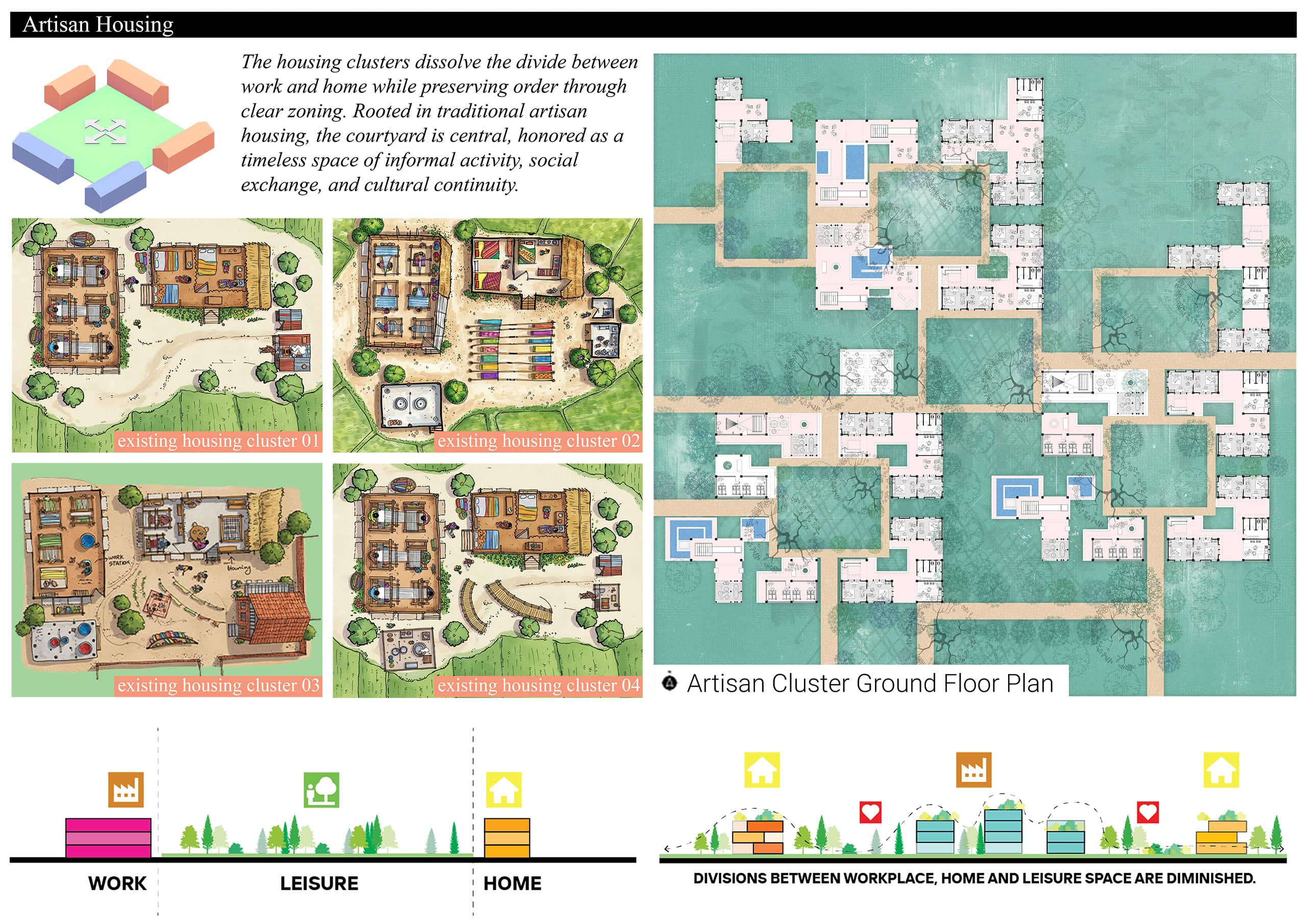
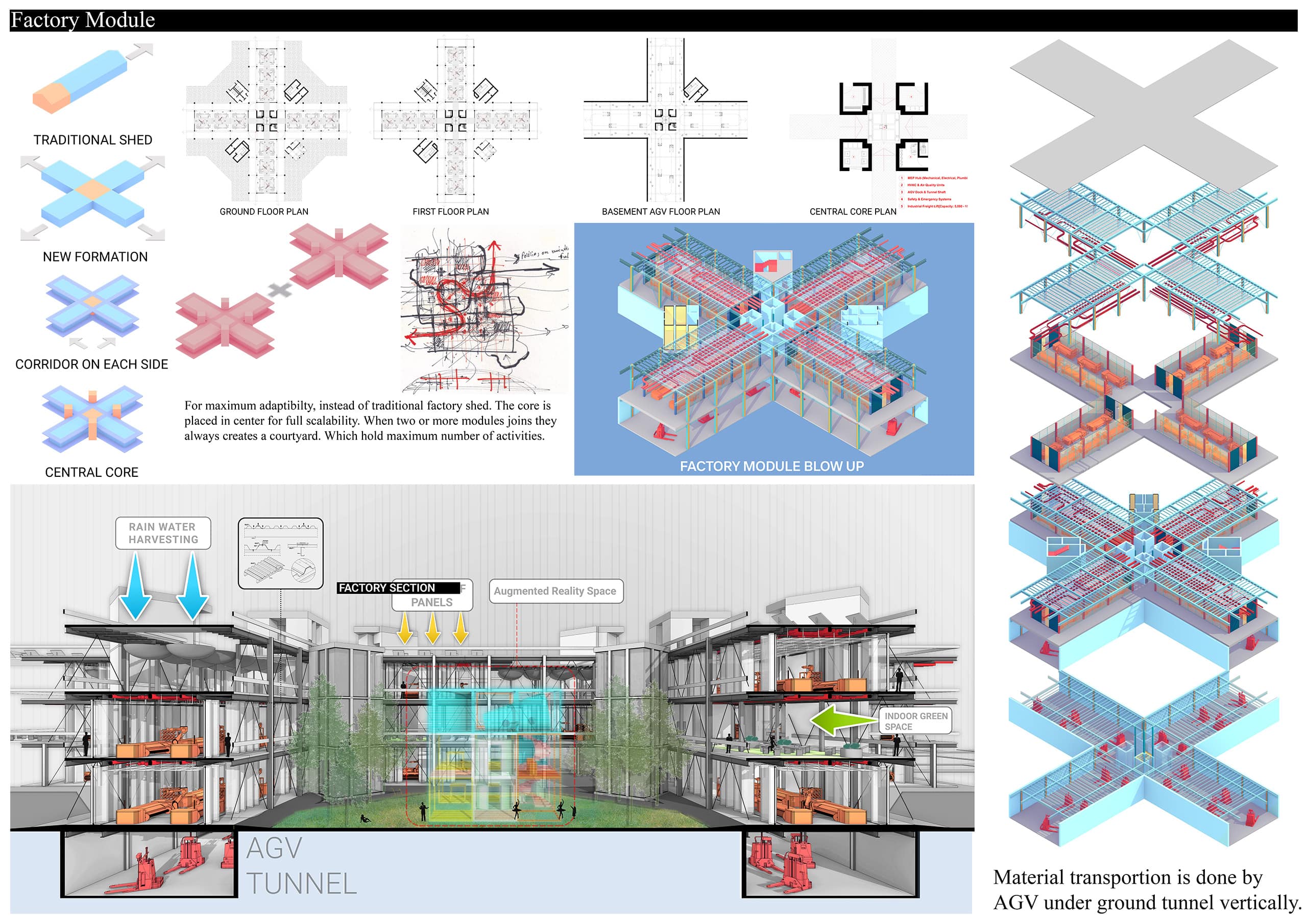
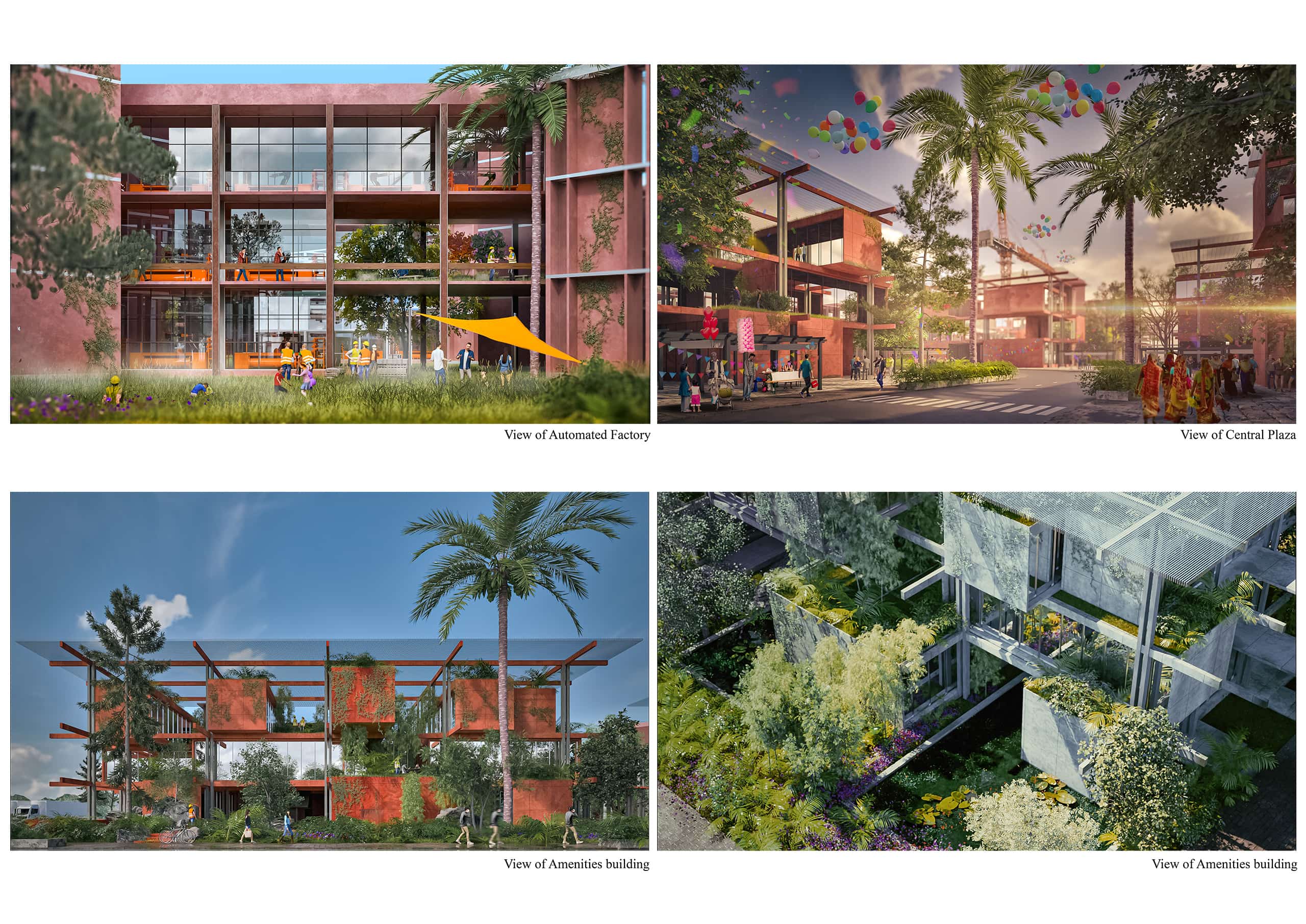
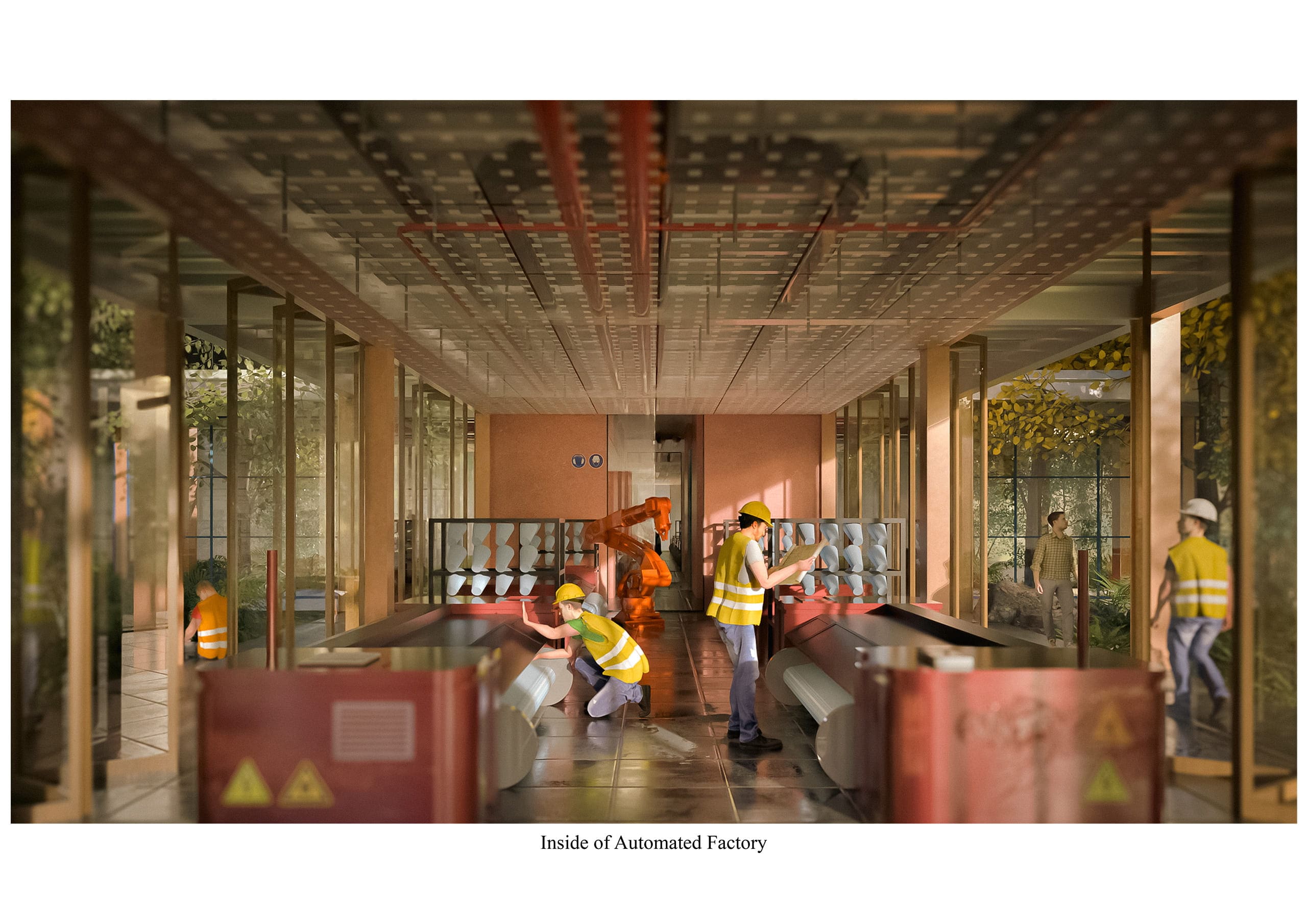
This project begins with a fundamental question: can a factory be more than a production machine? It proposes the factory as an evolving cultural landscape where work, life, and community merge fluidly. Rejecting the idea of a fixed, alienating industrial complex, the project envisions an adaptable system that can scale, reorganize, and transform over time in response to culture, technology, and human needs. Nothing is permanent; spaces shift, modules recombine, and architecture remains open-ended. The textile factory is reimagined as a human-centered environment where boundaries between work, leisure, and living dissolve.
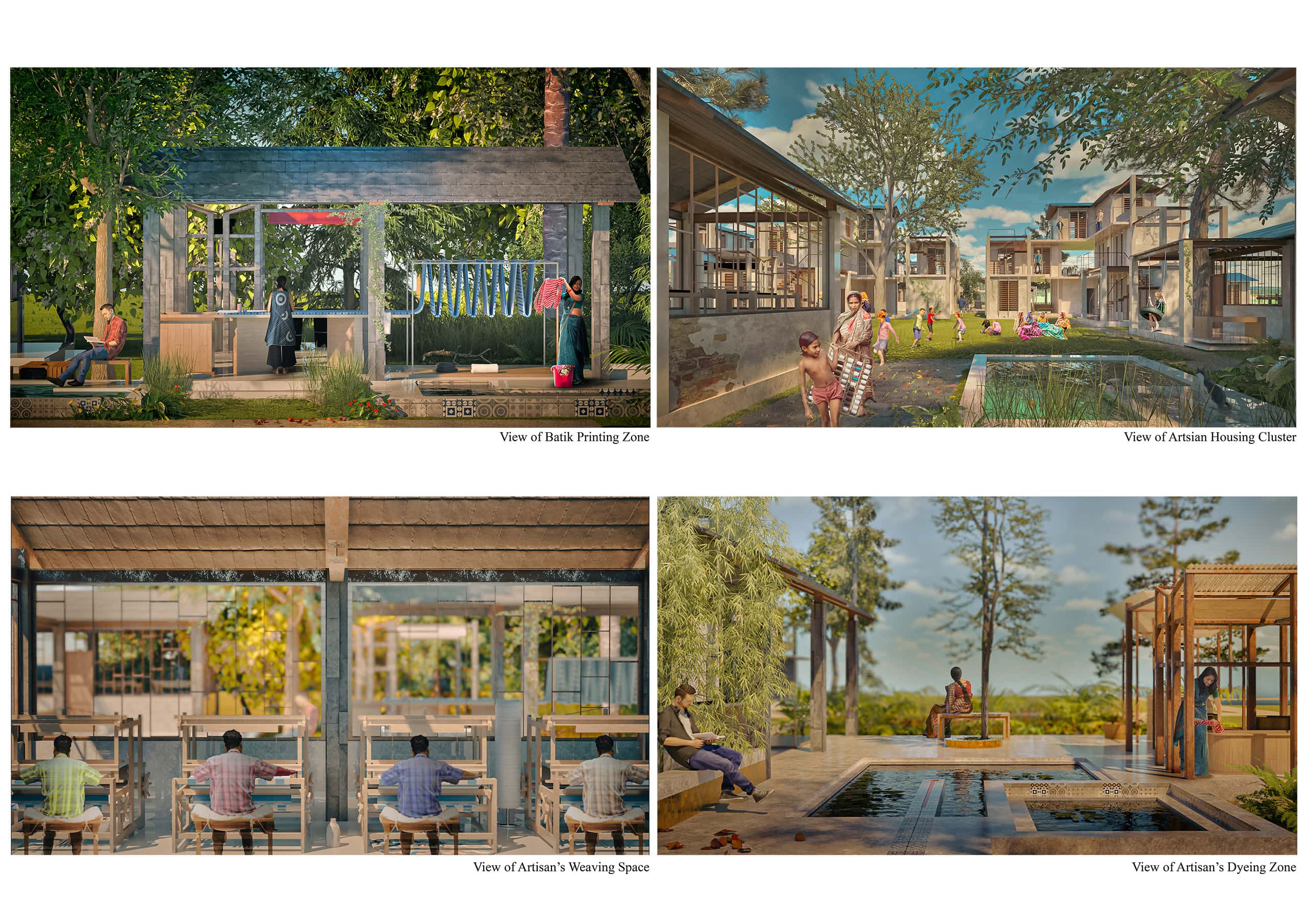
The design is rooted in craft culture and the social fabric of weaving communities. Shared courtyards, collaboration, intergenerational knowledge transfer, and collective identity shape its spatial logic. Inspired by William Morris’s belief that meaningful work and humane environments are inseparable, the project revives craft values in a forward-looking way, integrating artisans, power looms, and automation into one continuous cultural narrative. It also draws from Cedric Price’s adaptable architecture and Constant Nieuwenhuys’s vision of spaces shaped by human activity.
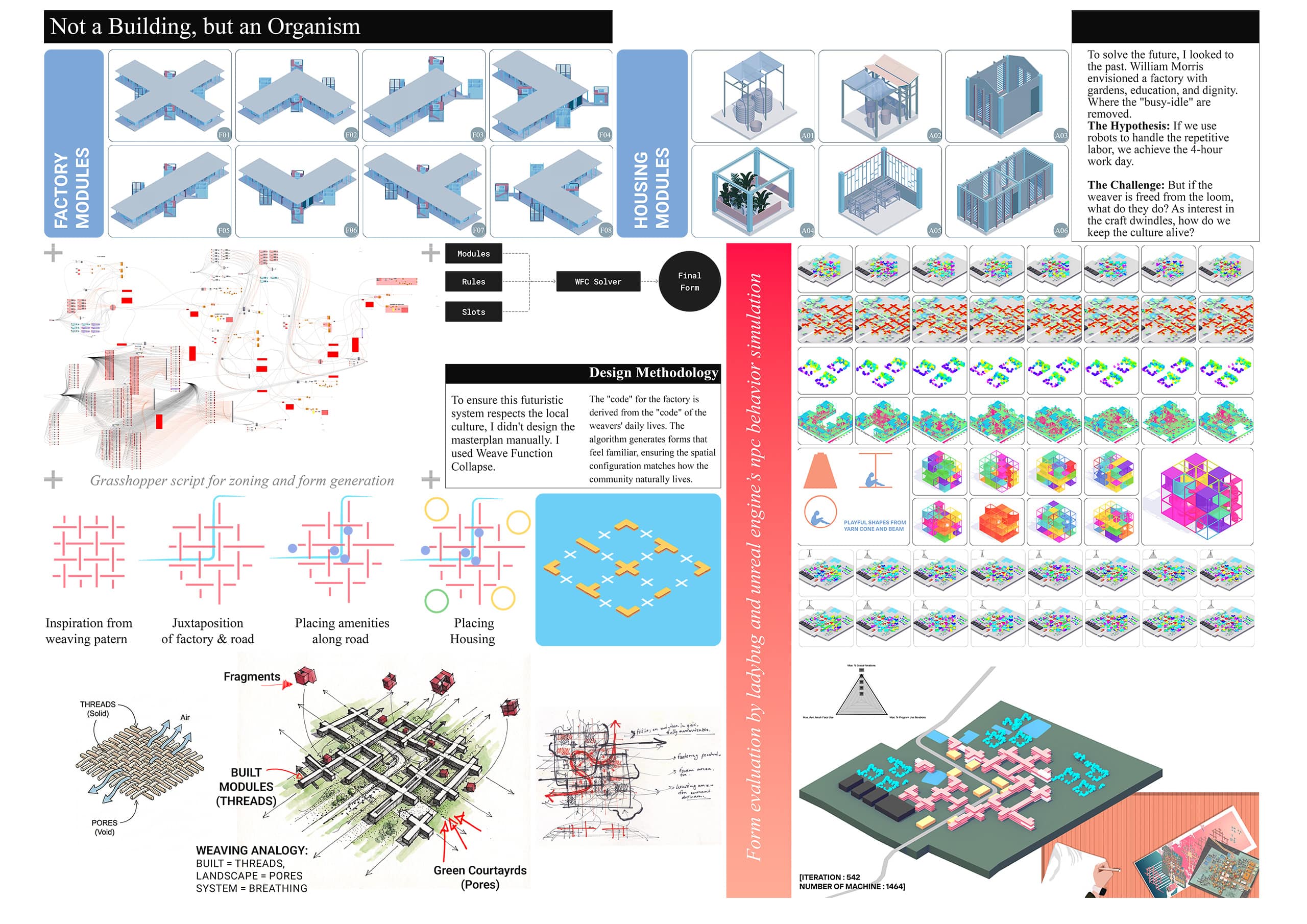
The process began with theory, behavior, and environmental logic rather than form. Modular units were iterated over a thousand times, recombining like living cells. Courtyards consistently emerged as climatic and social voids, echoing traditional weaving practices. Environmental performance was tested using Ladybug radiation analysis, narrowing thousands of options to twenty-five low-radiation schemes.
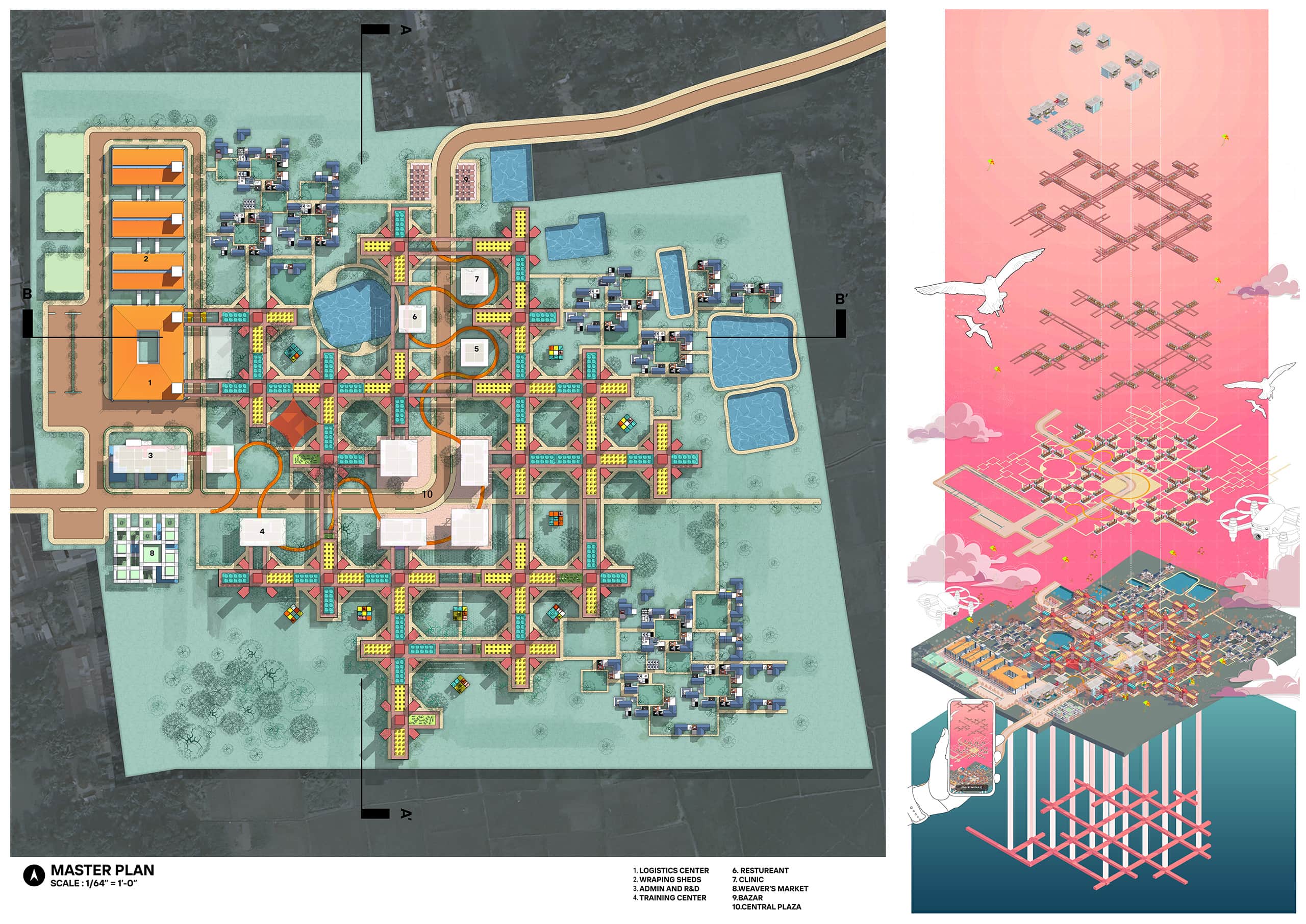
Human behavior was simulated using AI agents in Unreal Engine, representing different worker profiles and daily routines. Social interaction, program usage, and spatial occupancy were evaluated to assess performance. Iteration 542 emerged as optimal, organizing climate-responsive courtyards between eastern housing and western work zones, creating a gradient from production to living.
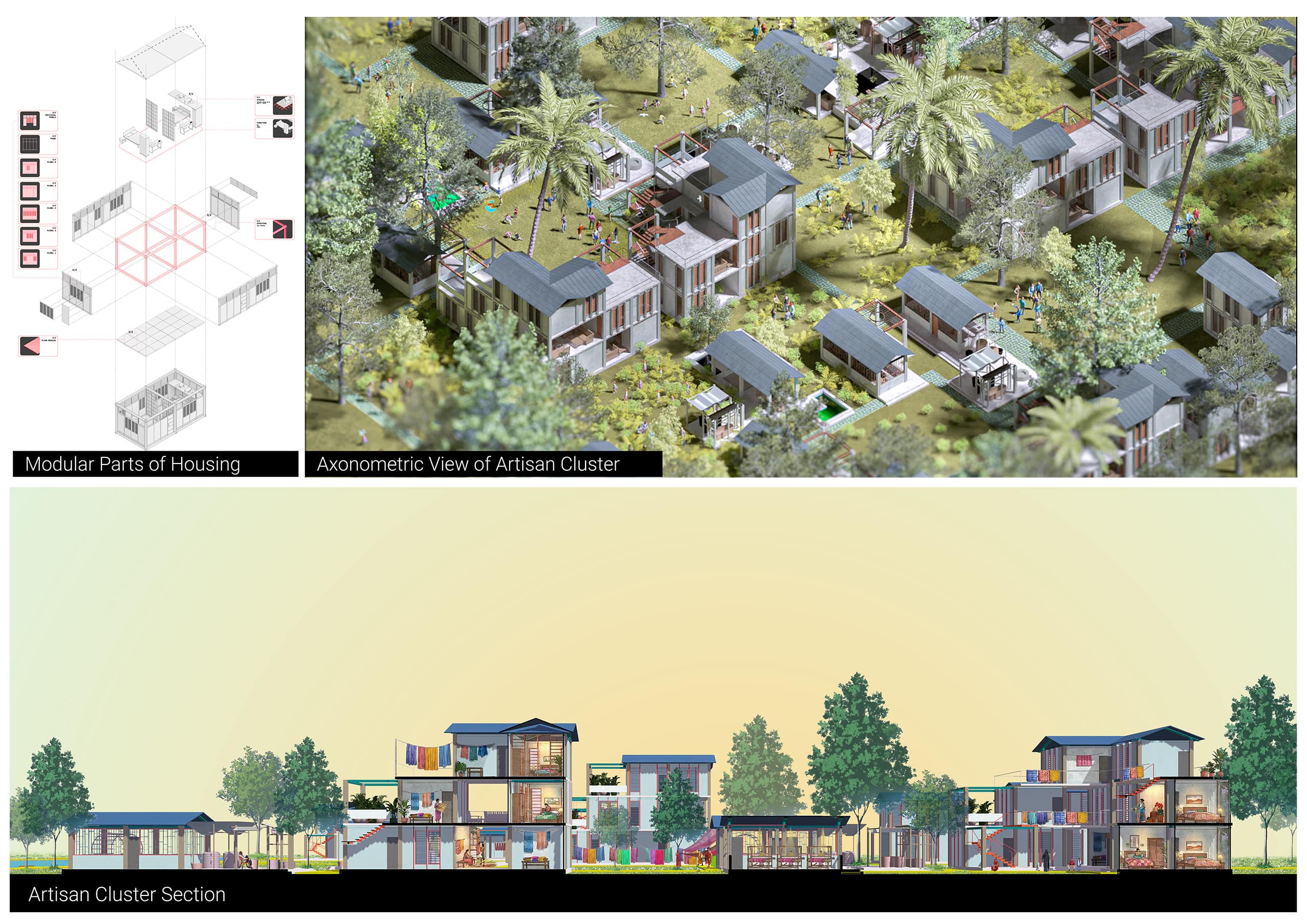
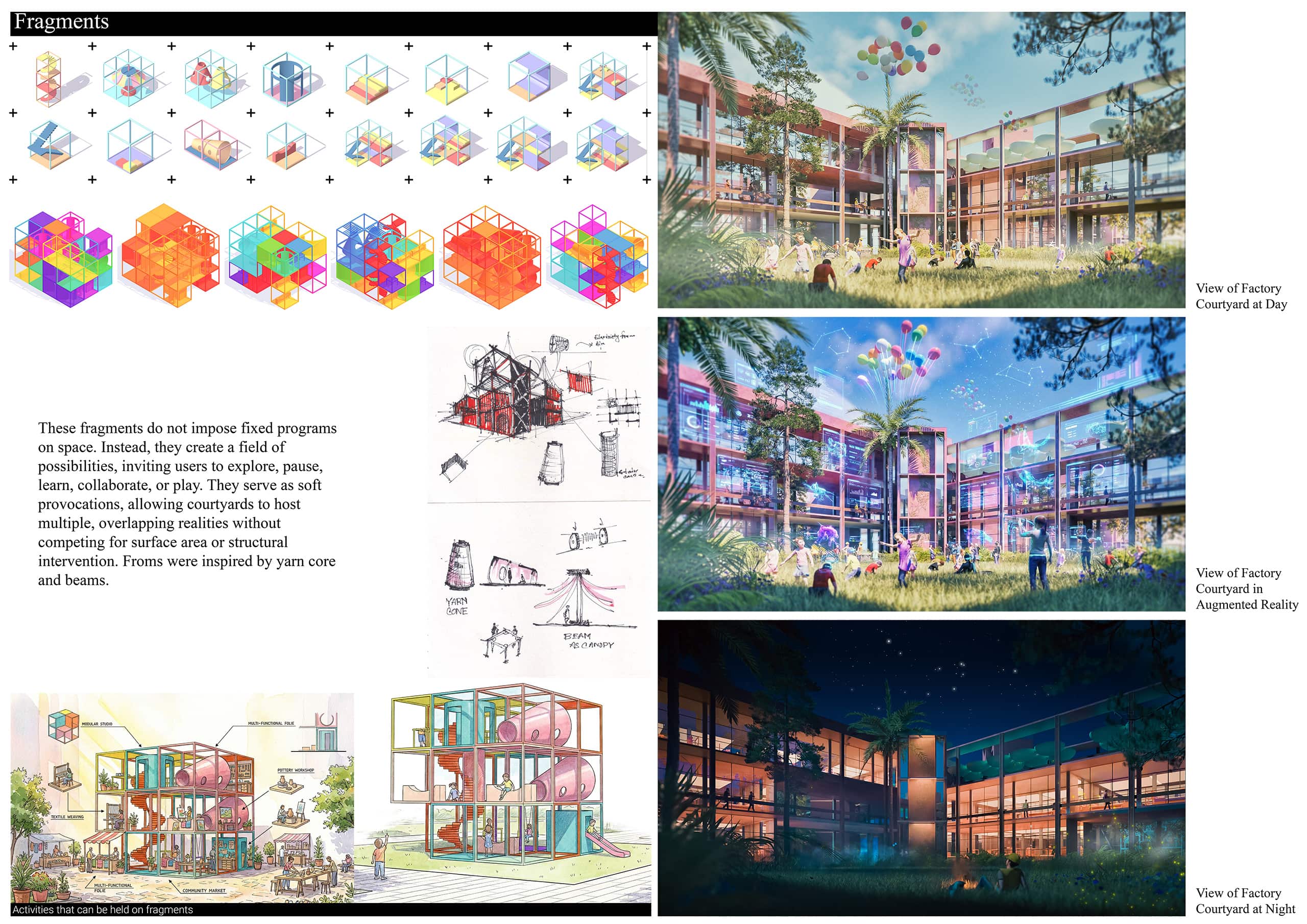
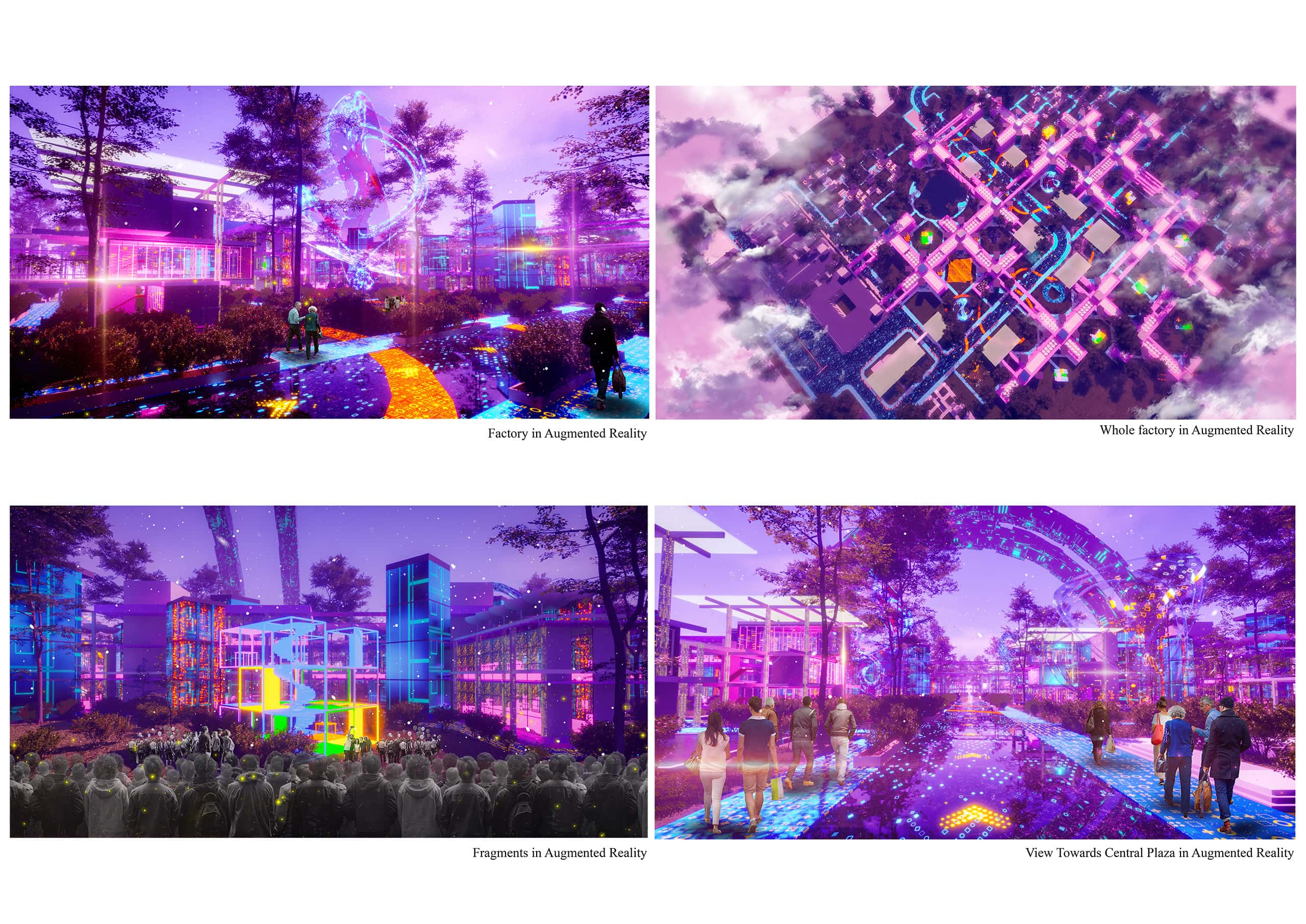
Courtyard “fragments”—pavilions, shaded decks, and cultural nodes—enhance daily experience and community life. Supported by AR/VR and an Unreal Engine platform, the factory becomes participatory and evolving. Ultimately, the project proposes the factory as a living organism: adaptive, inclusive, and culturally continuous, where architecture enables coexistence in a human-centered industrial future.
Established in 2012, Tamayouz Excellence Award is an unaffiliated, independent initiative that aims to advance the profession of architecture academically and professionally. Tamayouz is dedicated to supporting aspirational and transformative projects that tackle local and global challenges and that are informed by a holistic understanding of context.