

University : Middle East University
Tutor(s) : Dr Shaden Abu Safeieh
Project Description
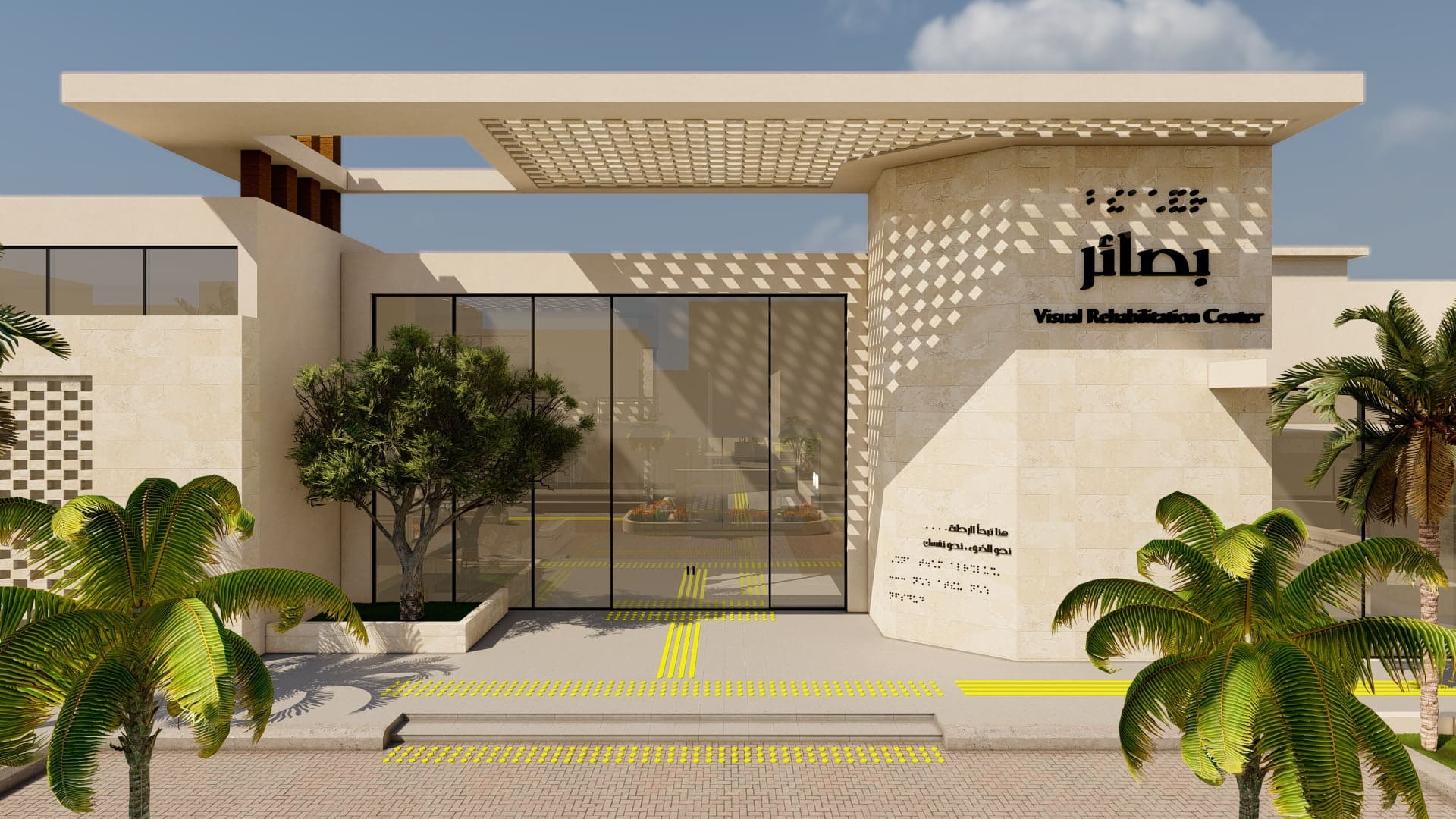
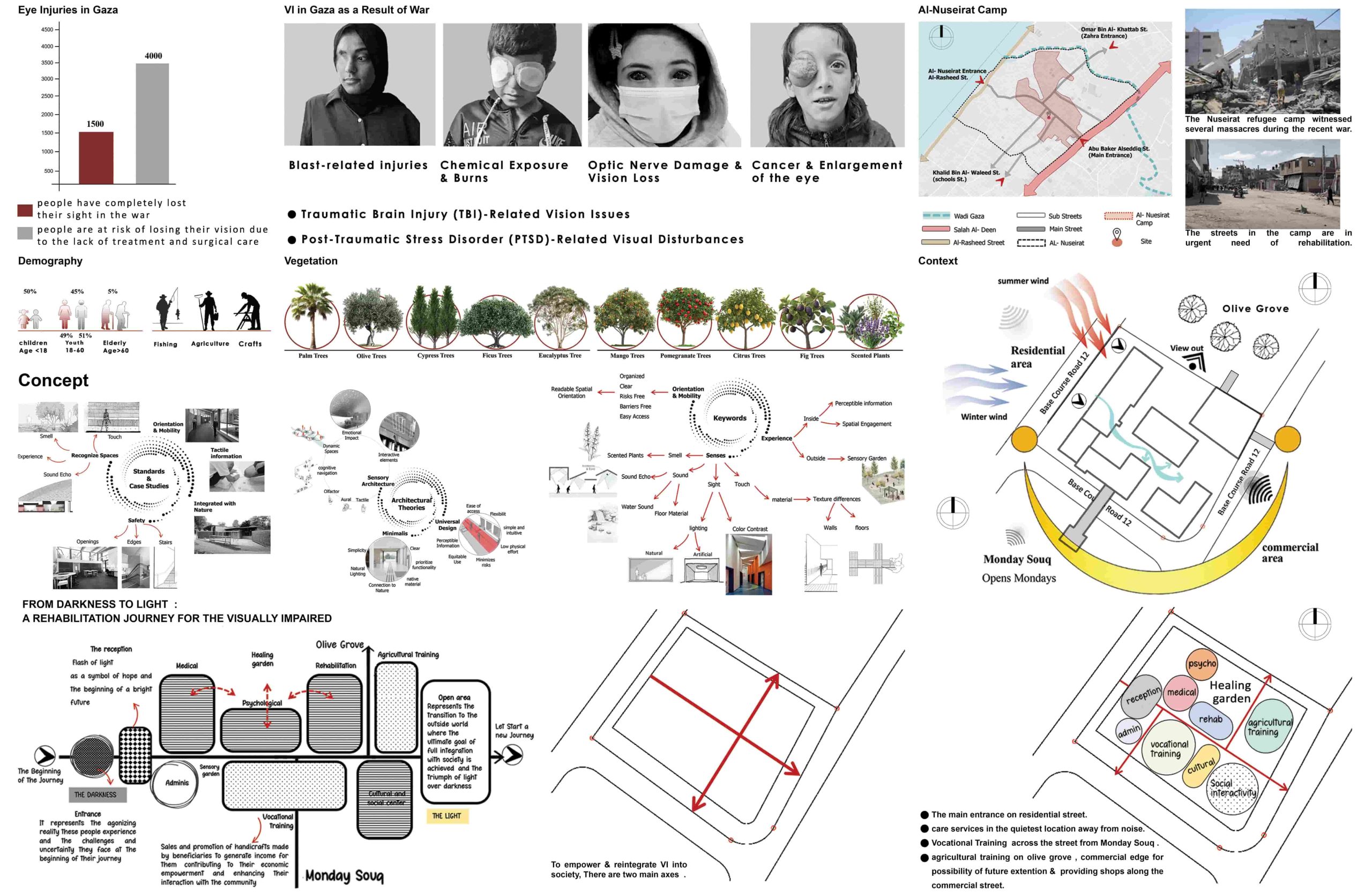
This project proposes a comprehensive rehabilitation and empowerment center for visually impaired victims of war in Gaza. Designed to serve both children and adults who have lost their sight due to conflict, the center provides a safe, inclusive, and dignified environment that supports physical recovery, psychological healing, and social reintegration. More than a medical facility, the center is envisioned as a community-oriented space where rehabilitation, education, and social interaction intersect to restore independence and hope.
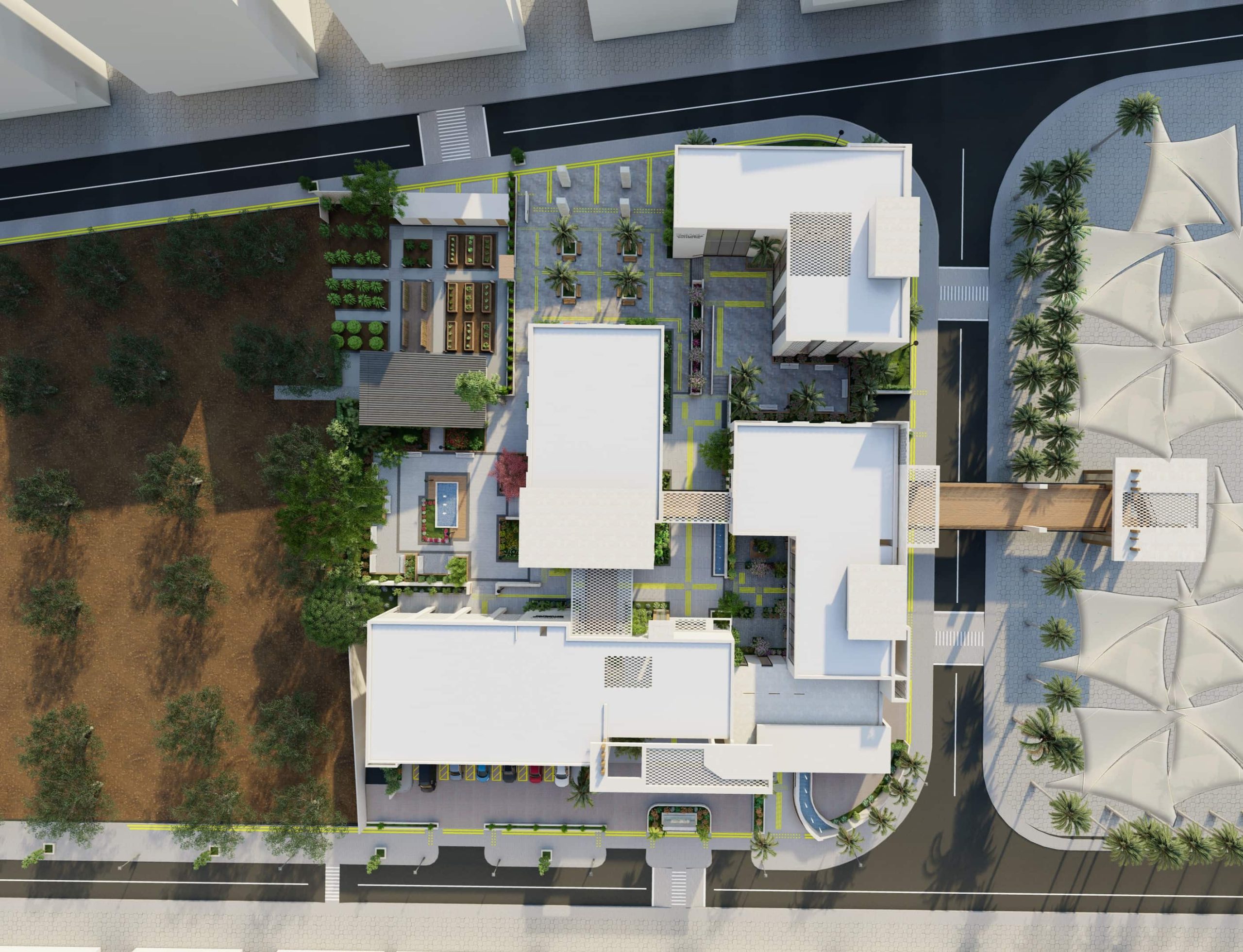
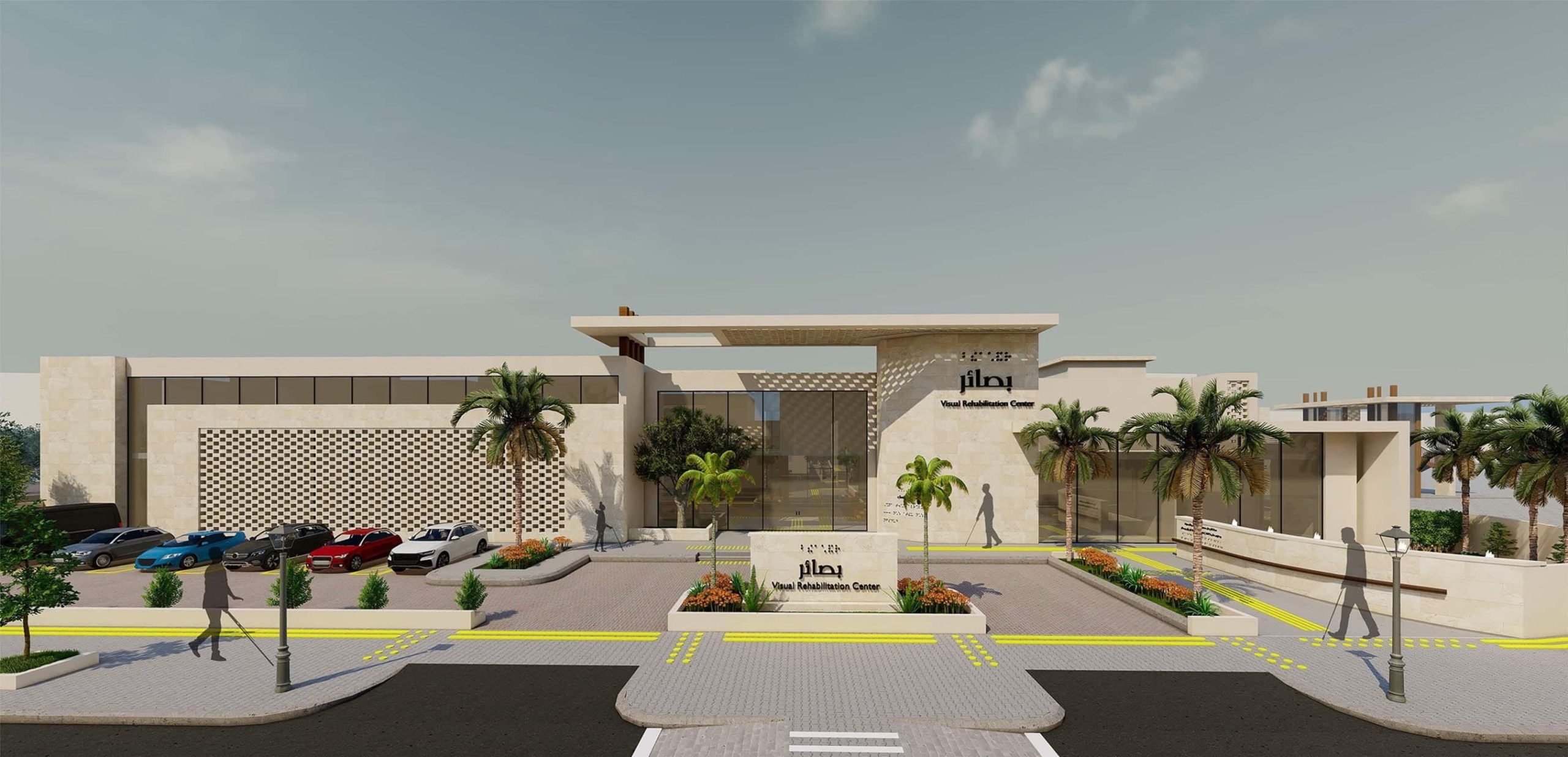
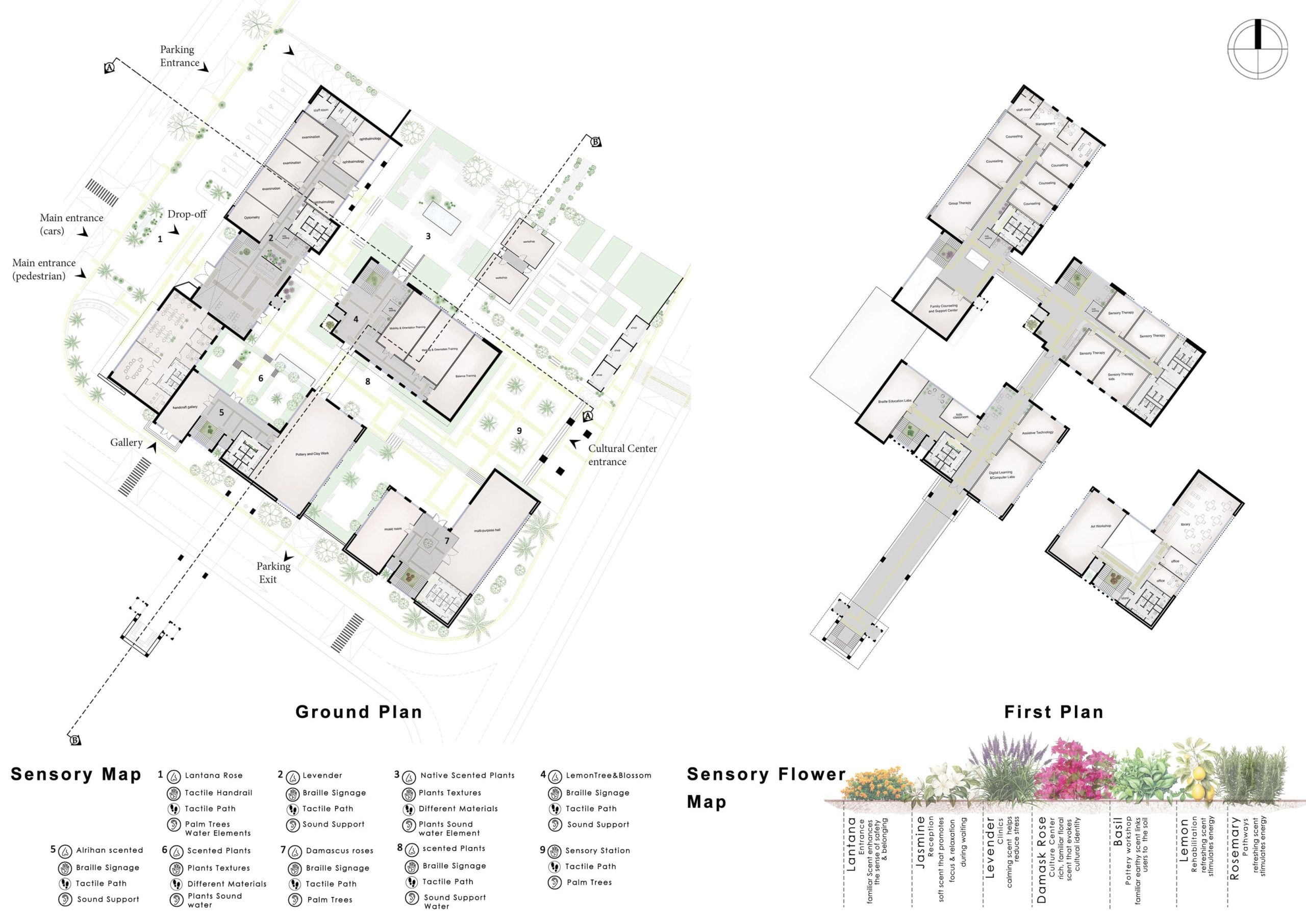
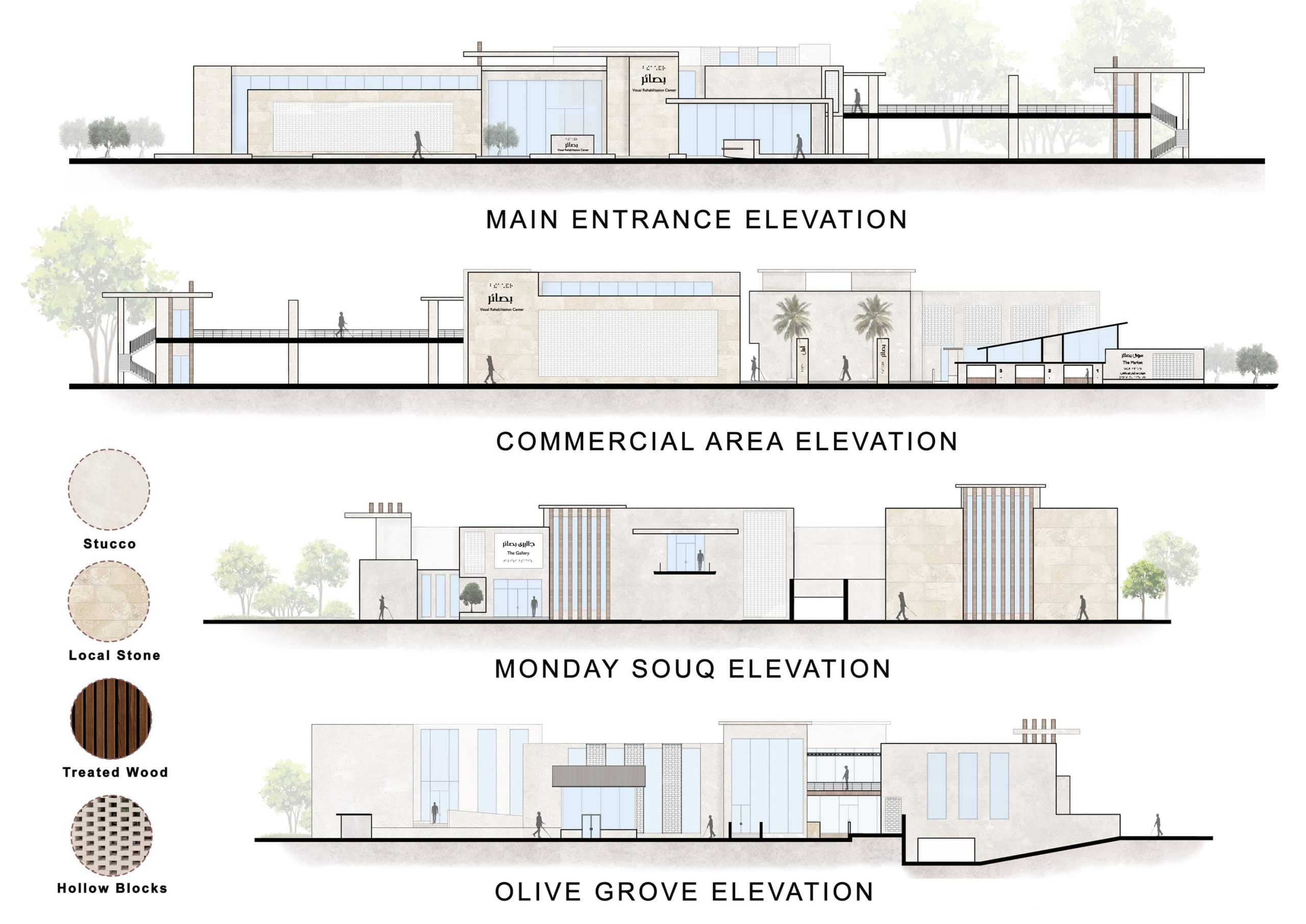
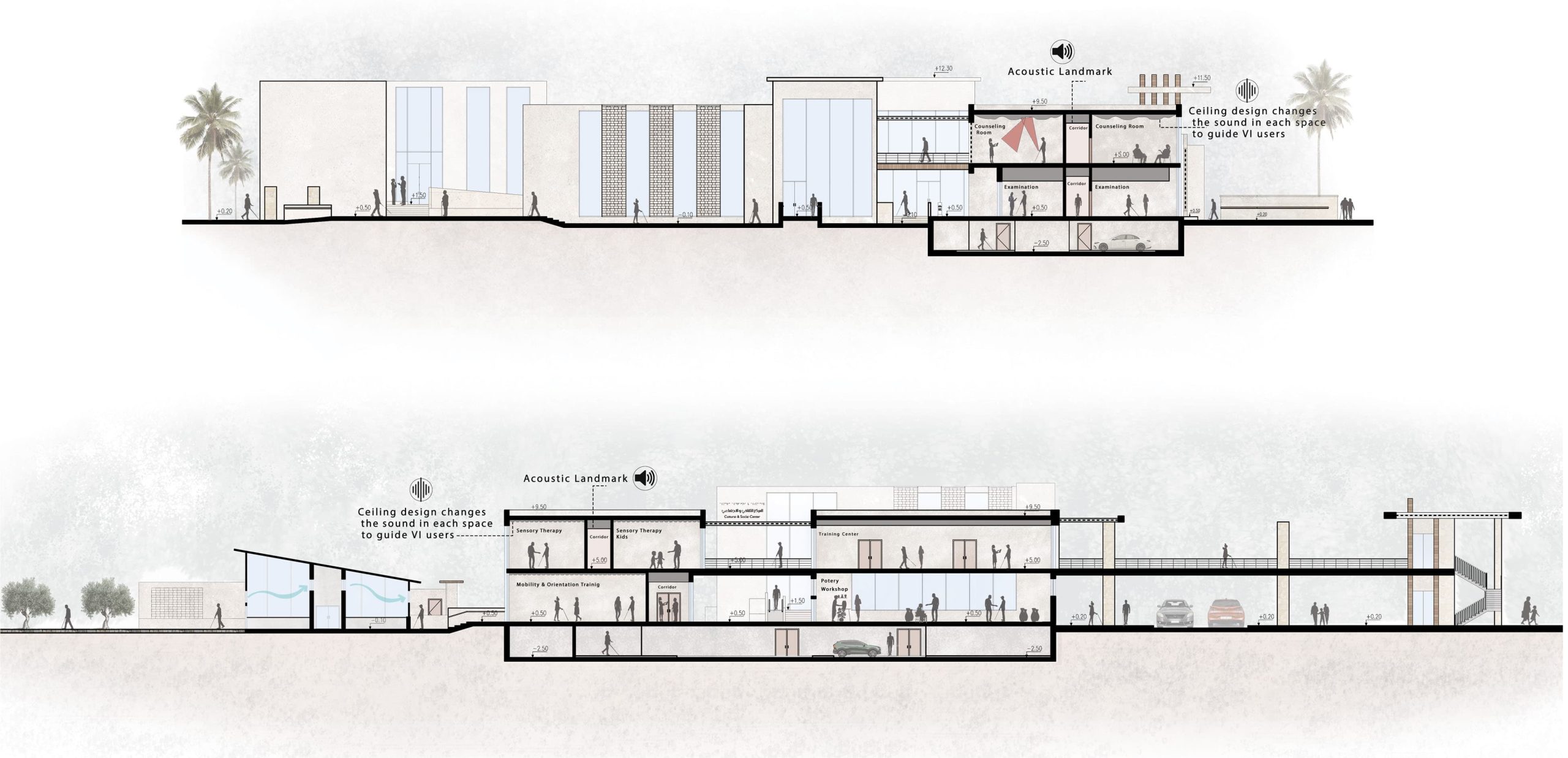
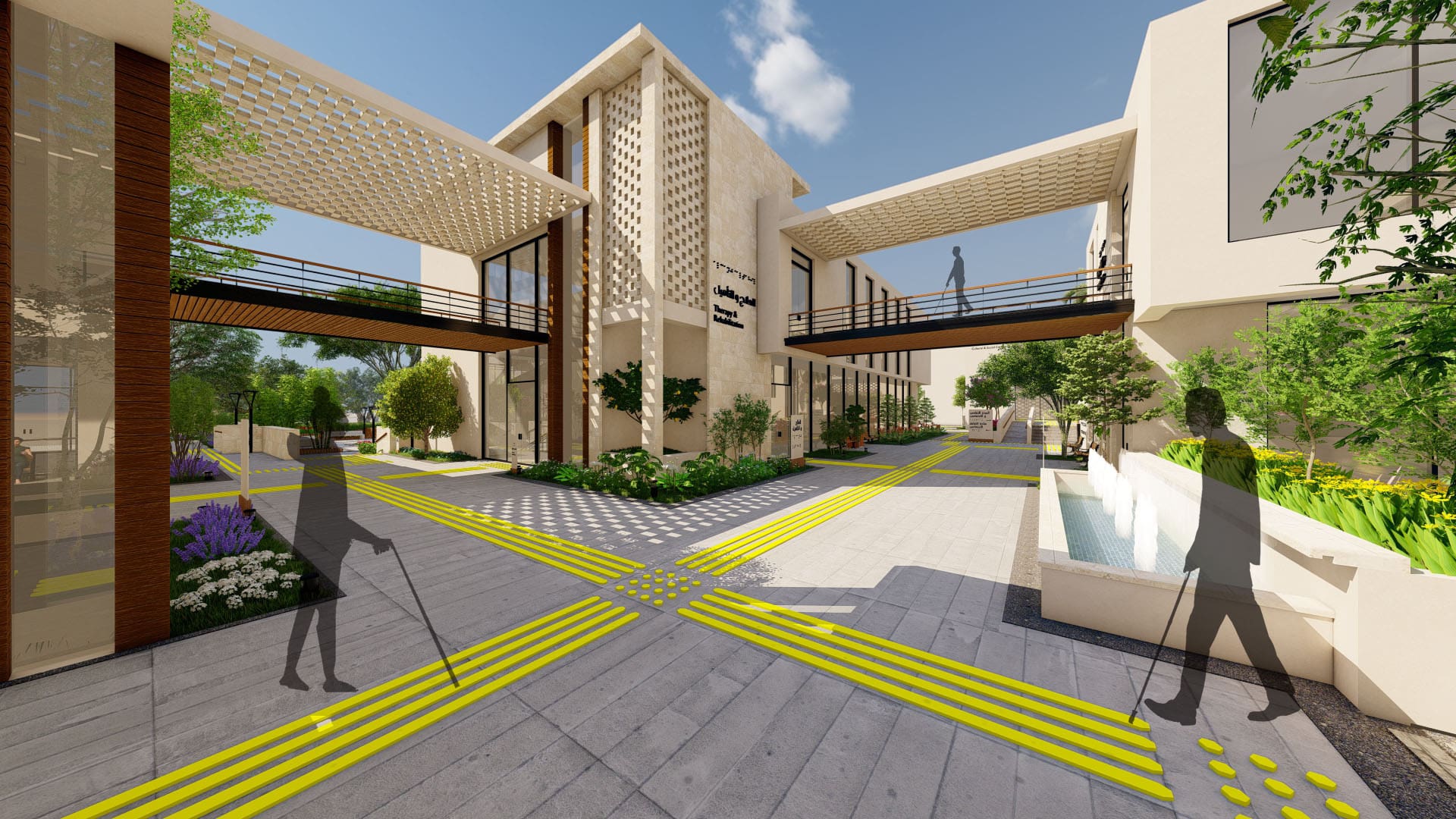
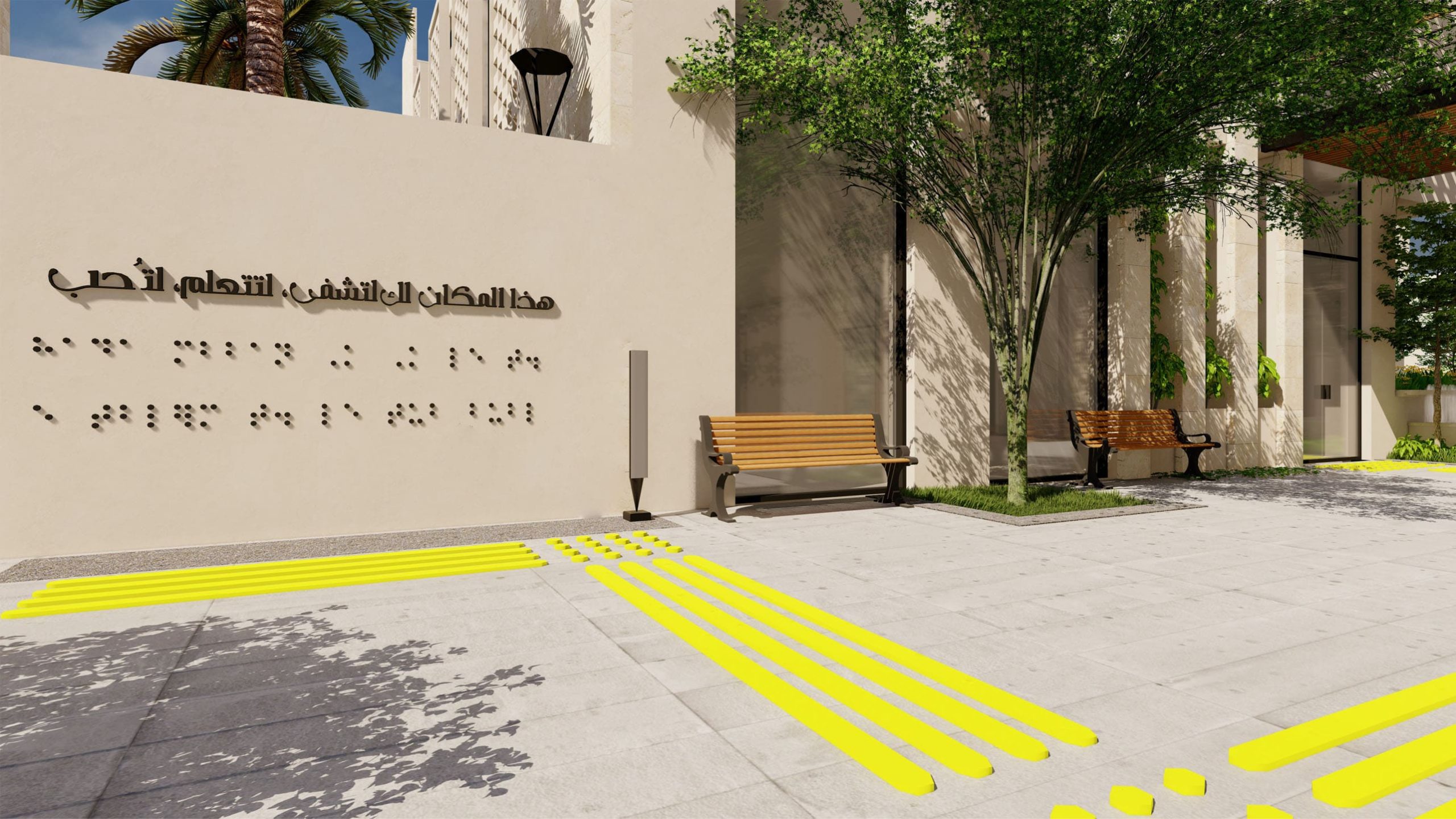
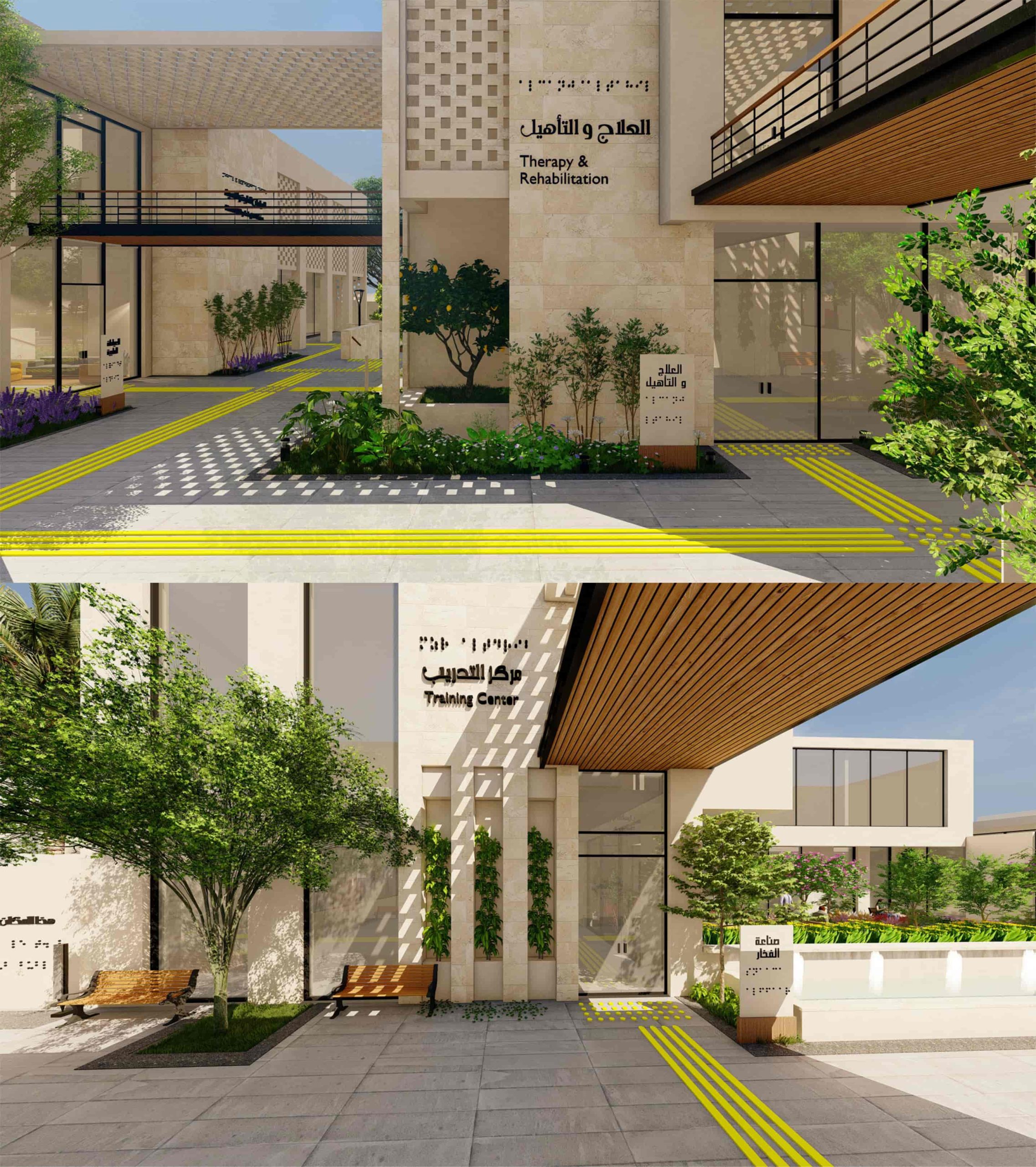
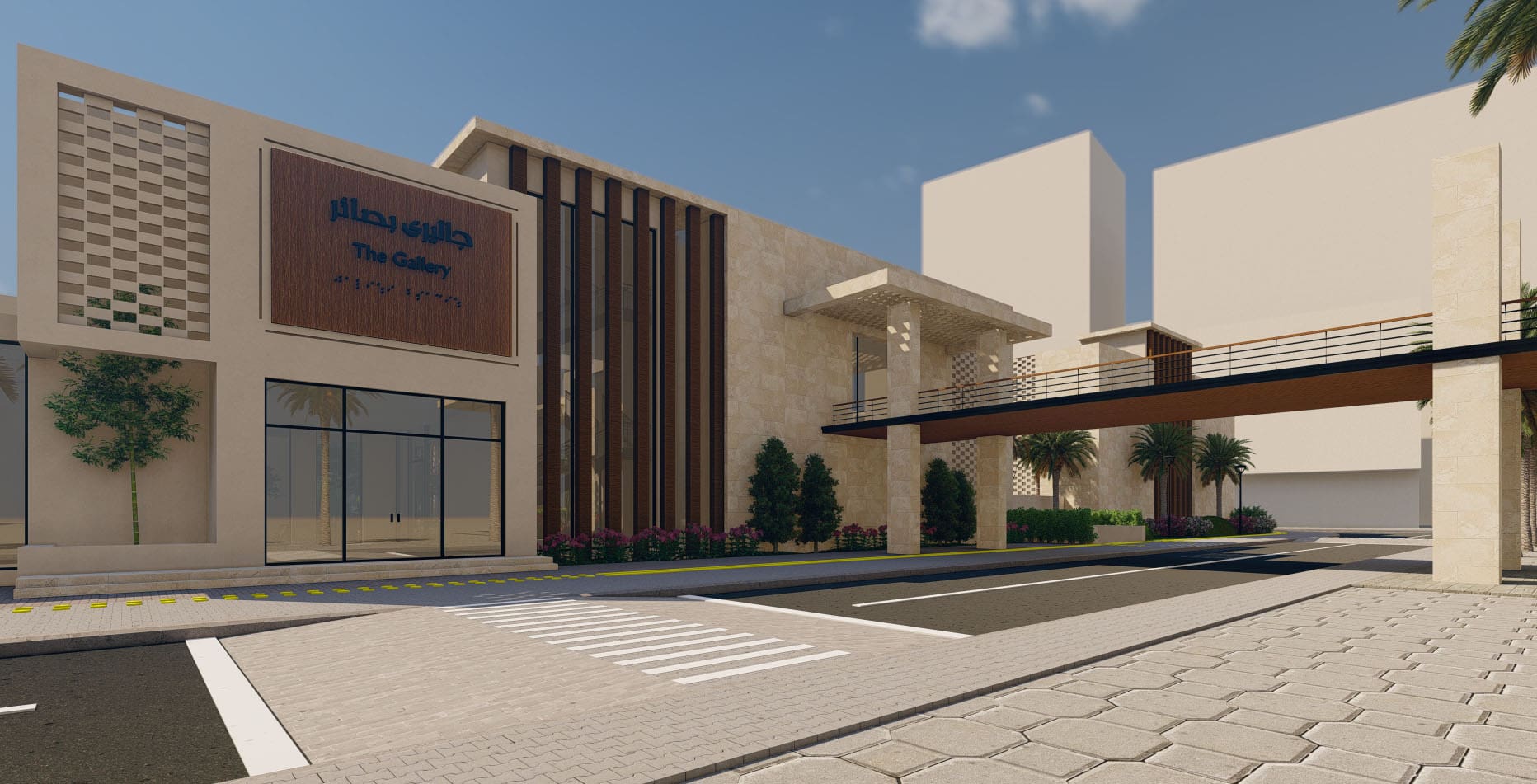
The architectural concept is based on a cluster of separate low-rise buildings, each limited to two stories, ensuring spatial clarity and intuitive circulation for visually impaired users. Inspired by the traditional architectural character of Gaza, the design incorporates familiar forms, shaded courtyards, tactile materials, and human-scaled spaces. These elements enhance comfort, orientation, and a strong sense of identity while reinforcing a connection to place.
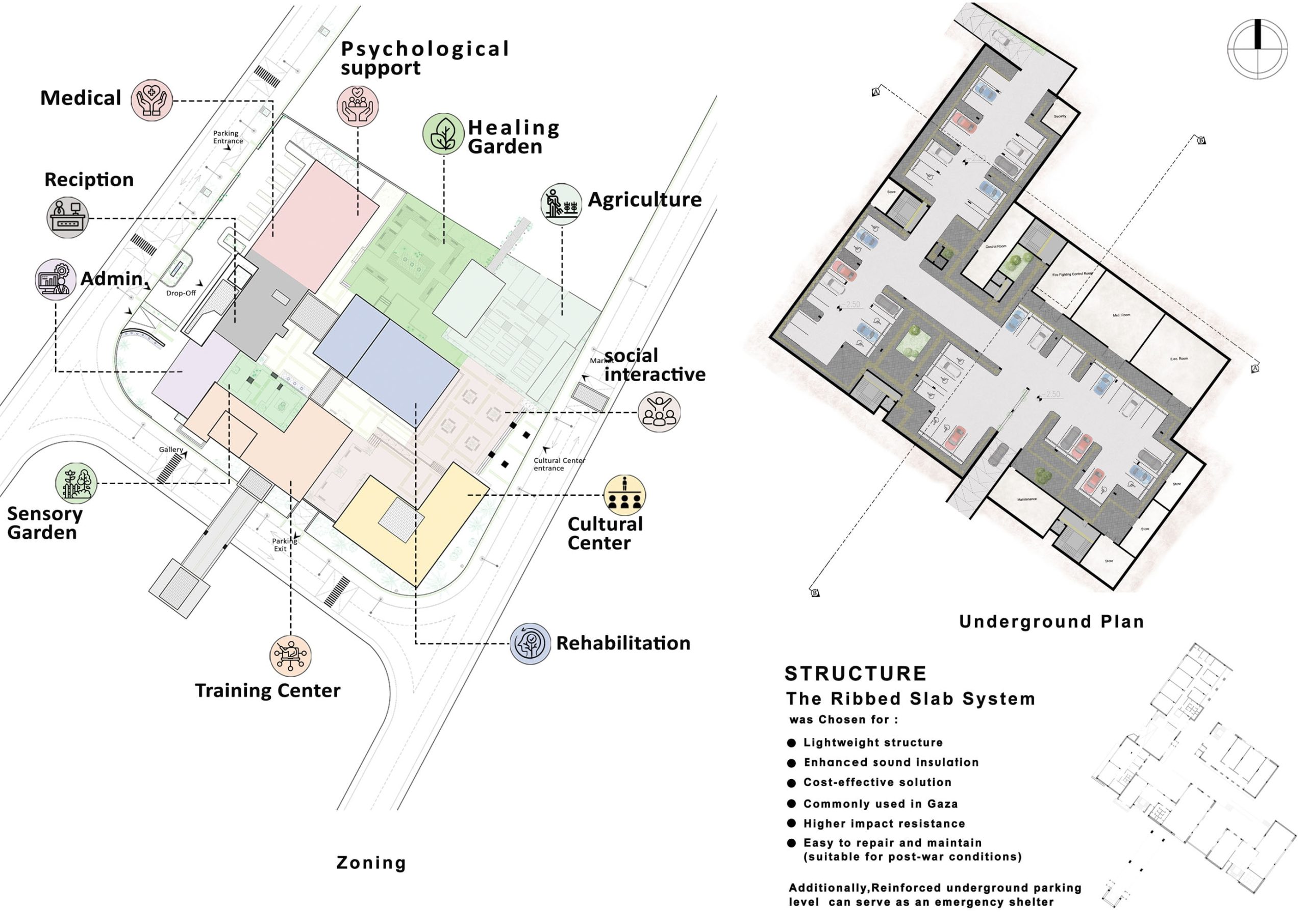
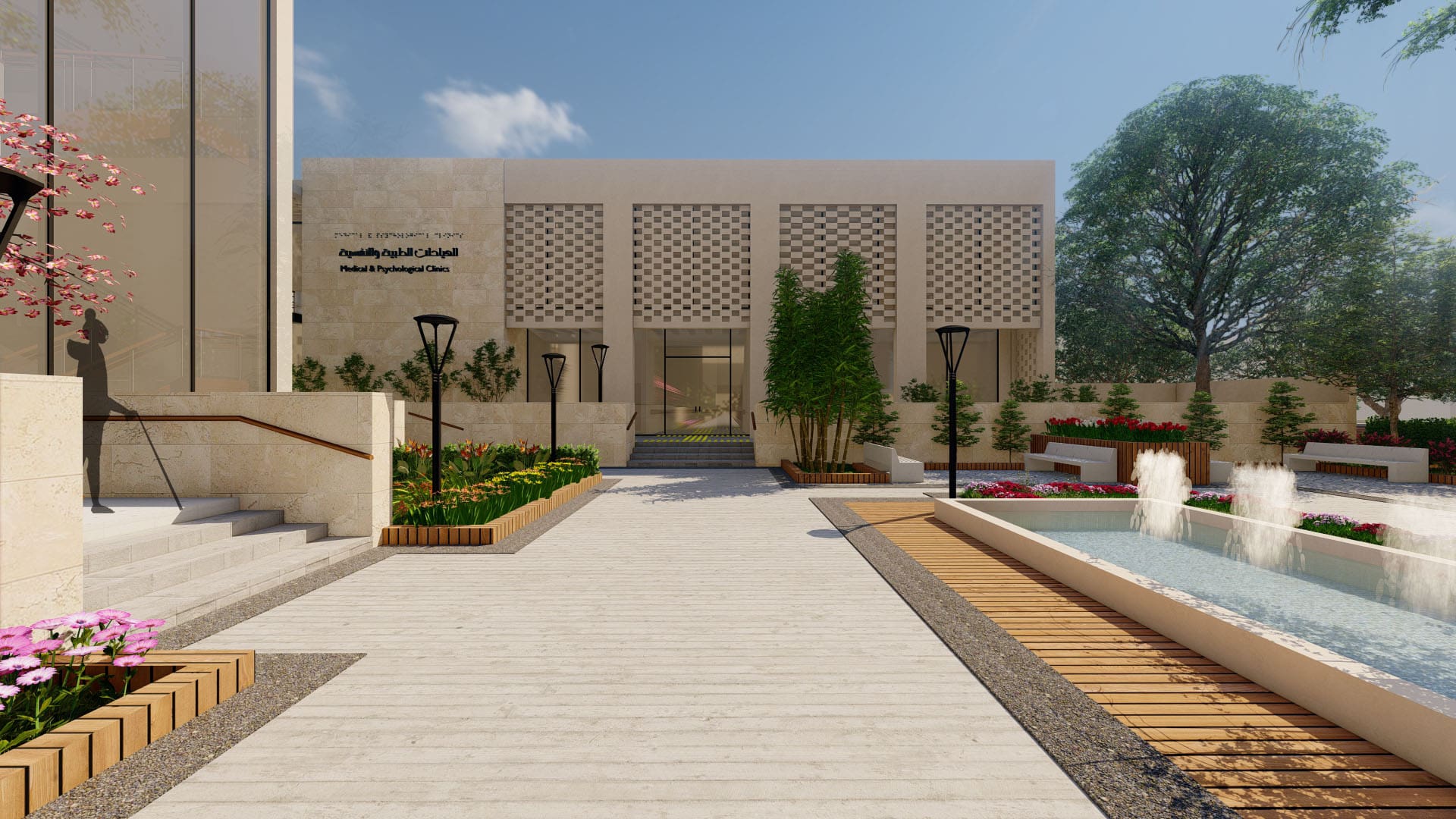
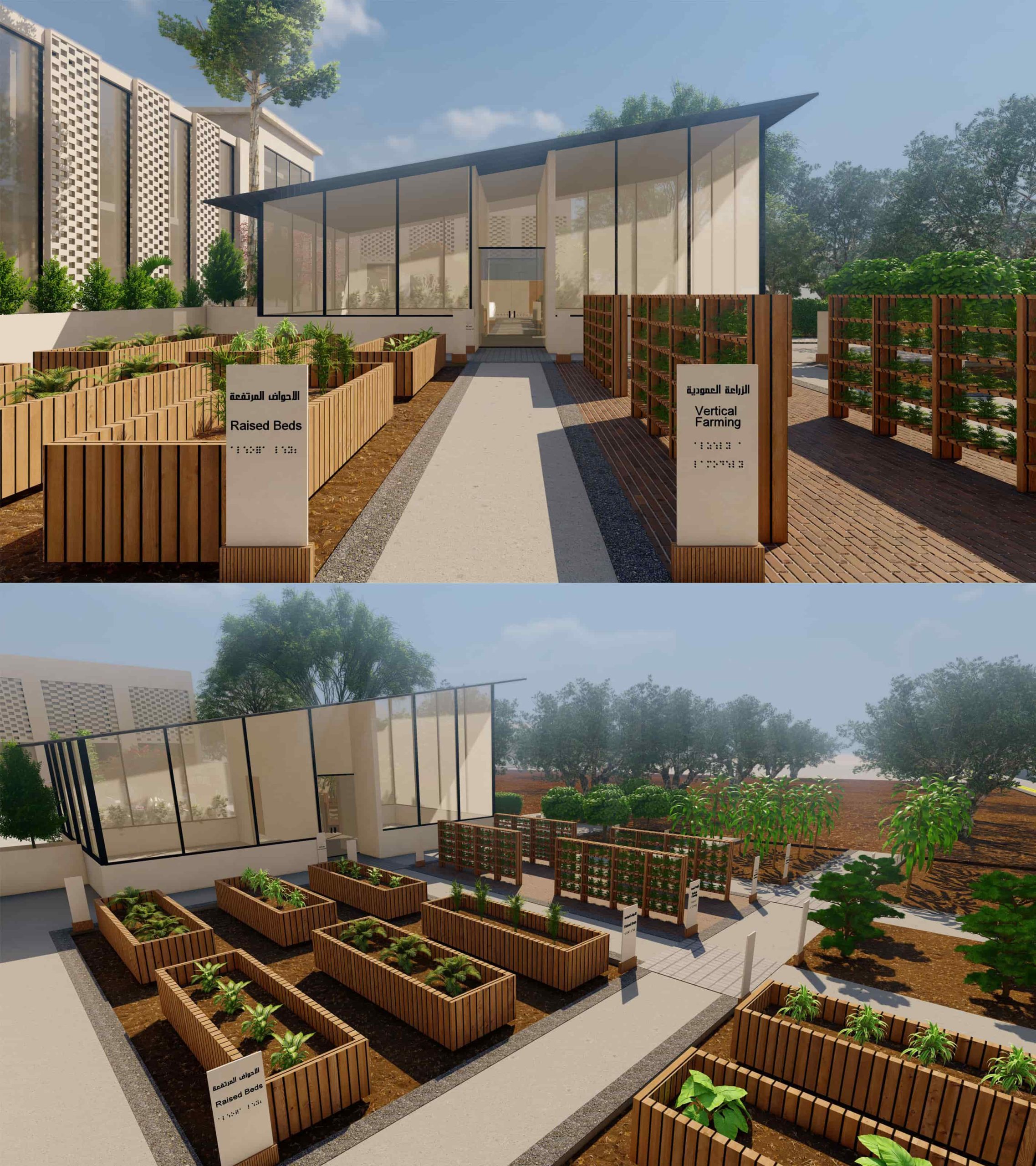
At the core of the project lies the Therapy and Rehabilitation Building, acting as the dominant hub that connects all functions. Surrounding it are complementary facilities, including a reception and administration building for guidance and support; medical clinics and psychological support spaces addressing both physical and mental health needs; and a vocational training center where users gain practical skills in agriculture, traditional crafts, and digital technologies. An internal bazaar allows trainees to showcase and sell their products, promoting financial independence. A cultural and social center further strengthens inclusion through events, performances, and communal activities.
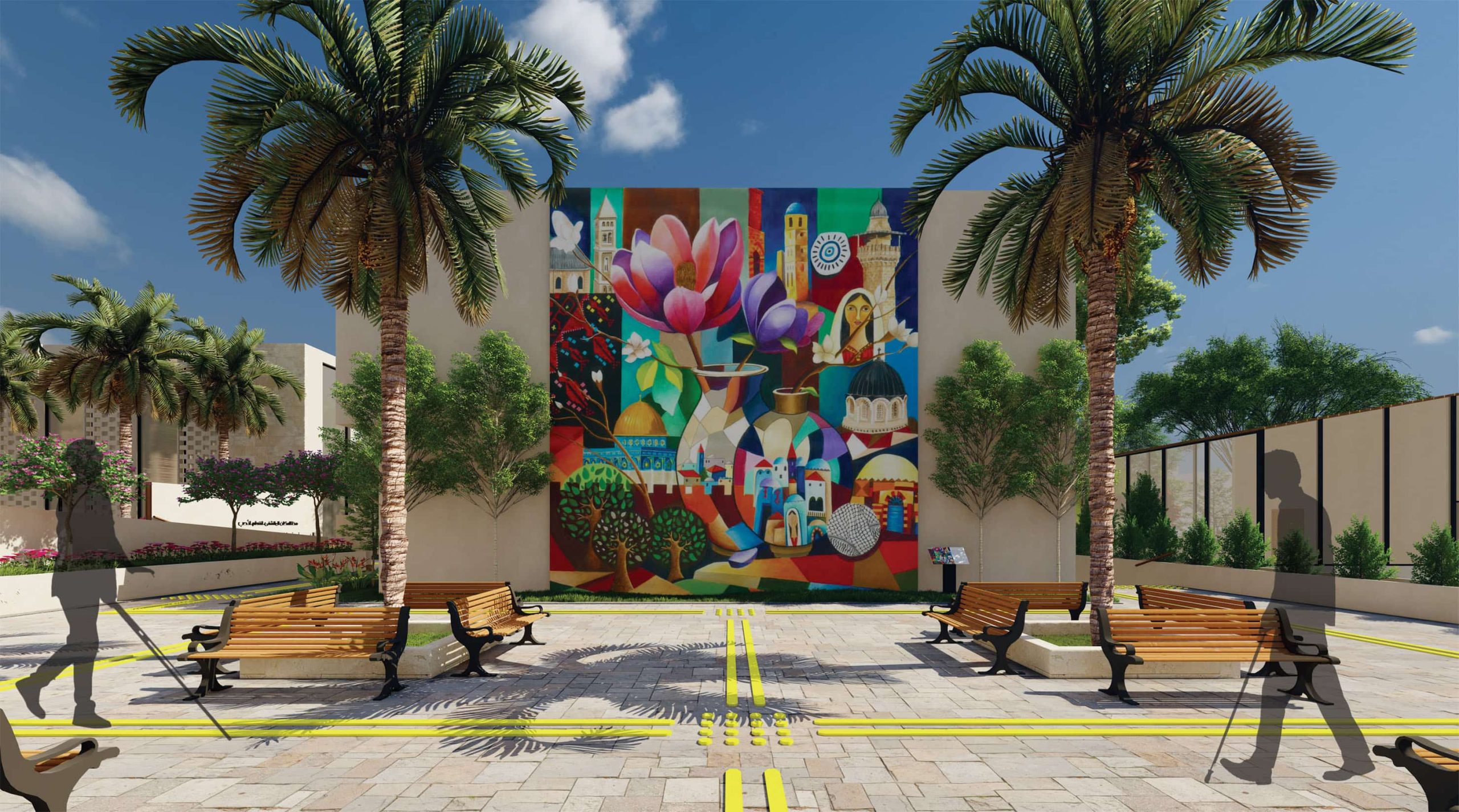
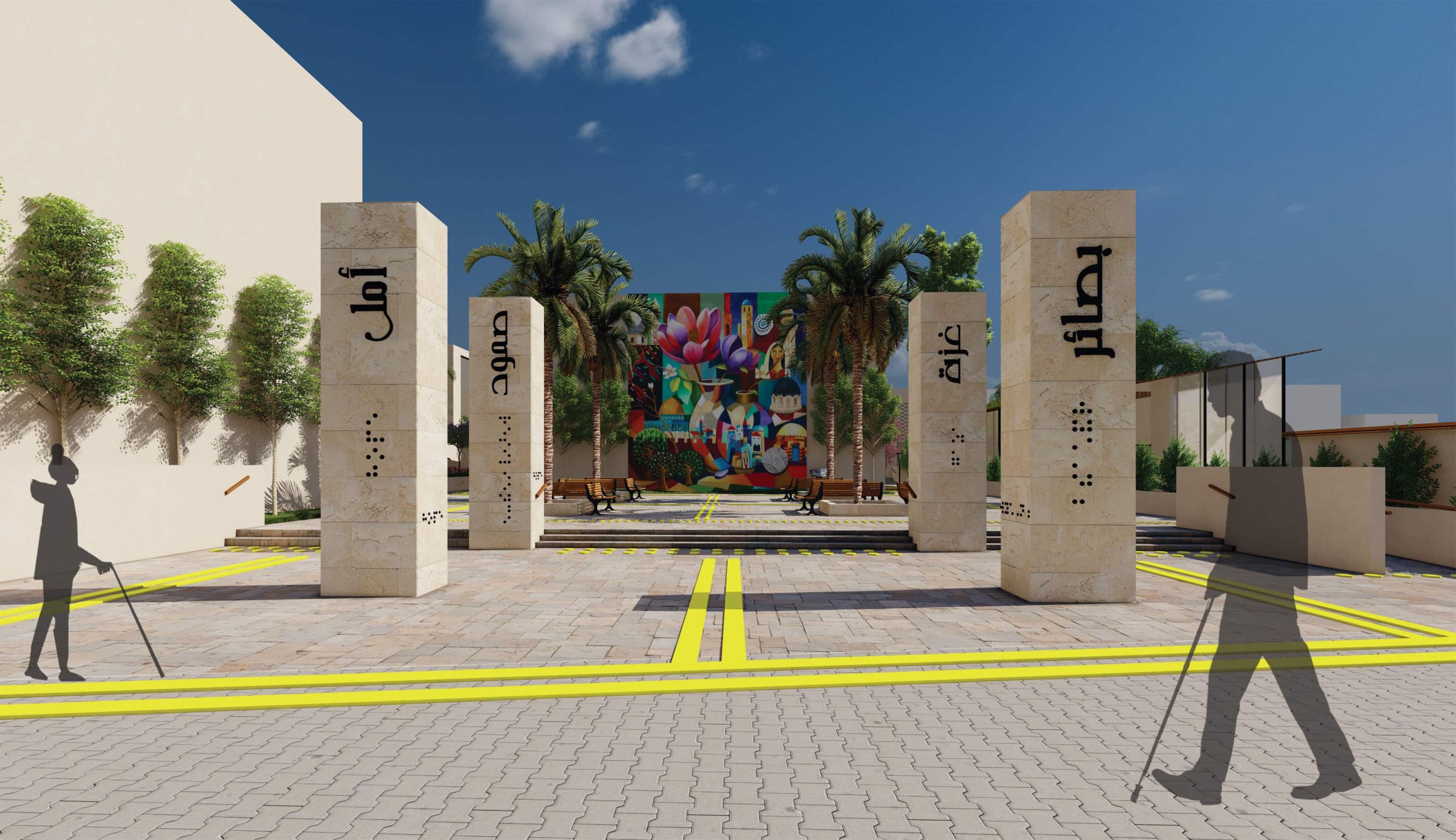
Nature plays a vital role in the healing process through three specialized outdoor spaces: a Healing Garden for calm reflection, a Sensory Garden engaging touch, sound, and smell, and a Social Interaction Plaza encouraging connection and belonging. Together, these elements create a holistic, human-centered environment that symbolizes resilience, empowerment, and renewed opportunity for visually impaired war victims in Gaza.
Established in 2012, Tamayouz Excellence Award is an unaffiliated, independent initiative that aims to advance the profession of architecture academically and professionally. Tamayouz is dedicated to supporting aspirational and transformative projects that tackle local and global challenges and that are informed by a holistic understanding of context.