

University : Damascus University
Tutor(s) : Dr Mayssoun Ide
Project Description
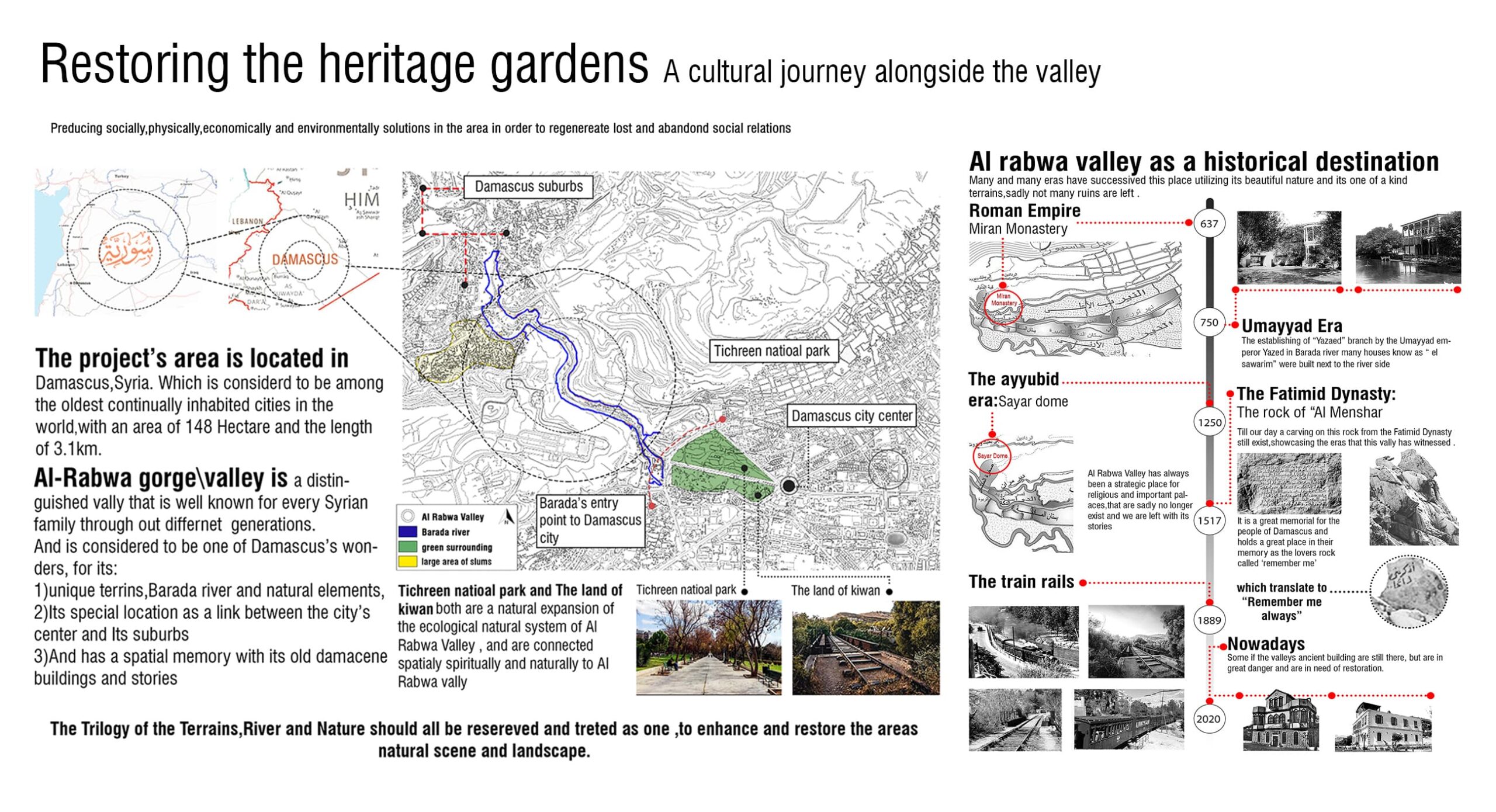
The project area is situated in Damascus, Syria, a city renowned for being one of the oldest continuously inhabited urban centers in the world. Encompassing an area of 148 hectares and extending over a length of 3.1 kilometers, this region epitomizes historical and cultural significance.
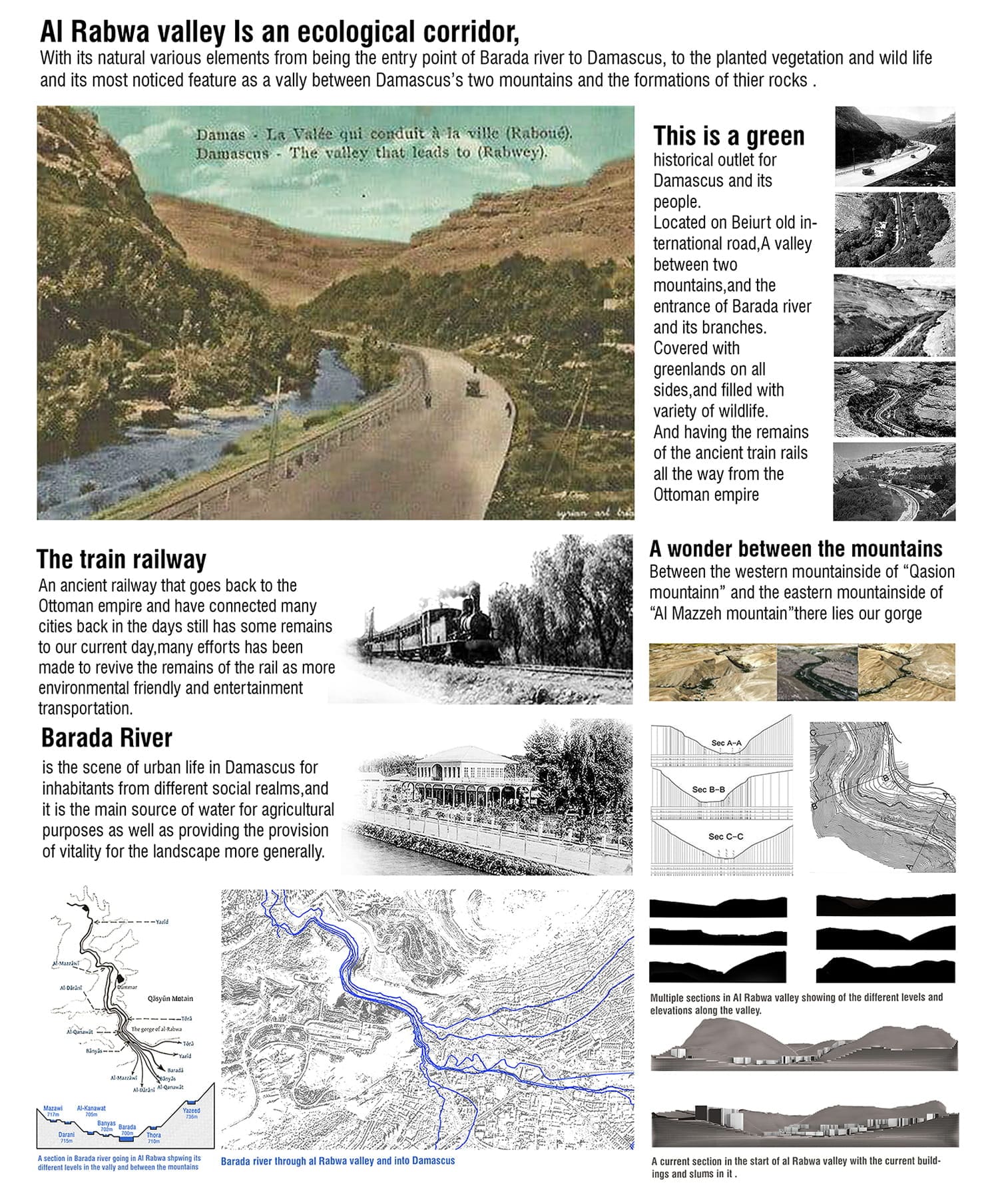
“THE DAYS OF ROSE” (Ayam al-Ward) marks the advent of spring, a season during which individuals stroll beyond the ancient city gates to revel in a picturesque, one-of-a-kind valley characterized by a harmonious blend of plains, rivers, and diverse terrains. The natural setting has historically served as a backdrop for numerous picnics and gatherings, particularly amid the verdant branches of the Barada River. This river has long been a vital artery of urban life in Damascus, catering to inhabitants from various social strata, while also serving as the primary water source for agricultural activities and enhancing the overall vitality of the landscape. From ancient times to the present day, the Barada River has contributed to the physical and emotional well-being of the city’s residents, flowing into Damascus through its seven main tributaries within the Al-Rabwa Valley.
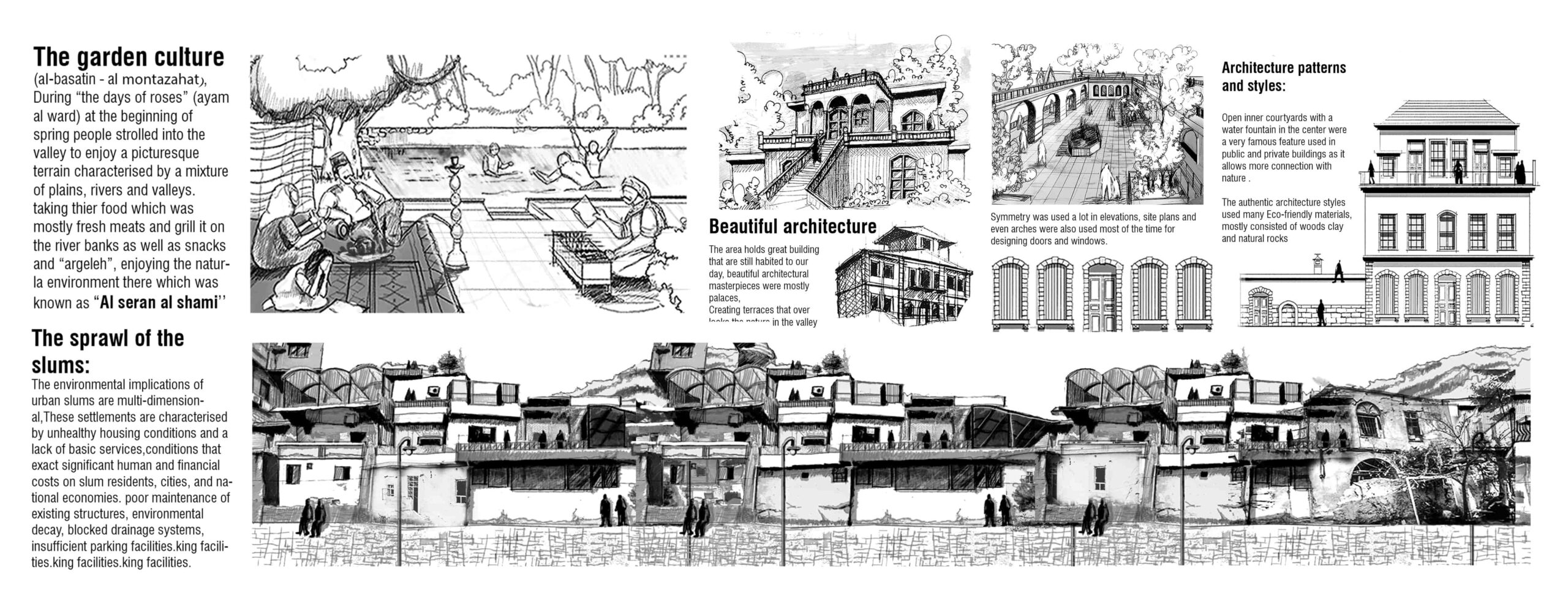
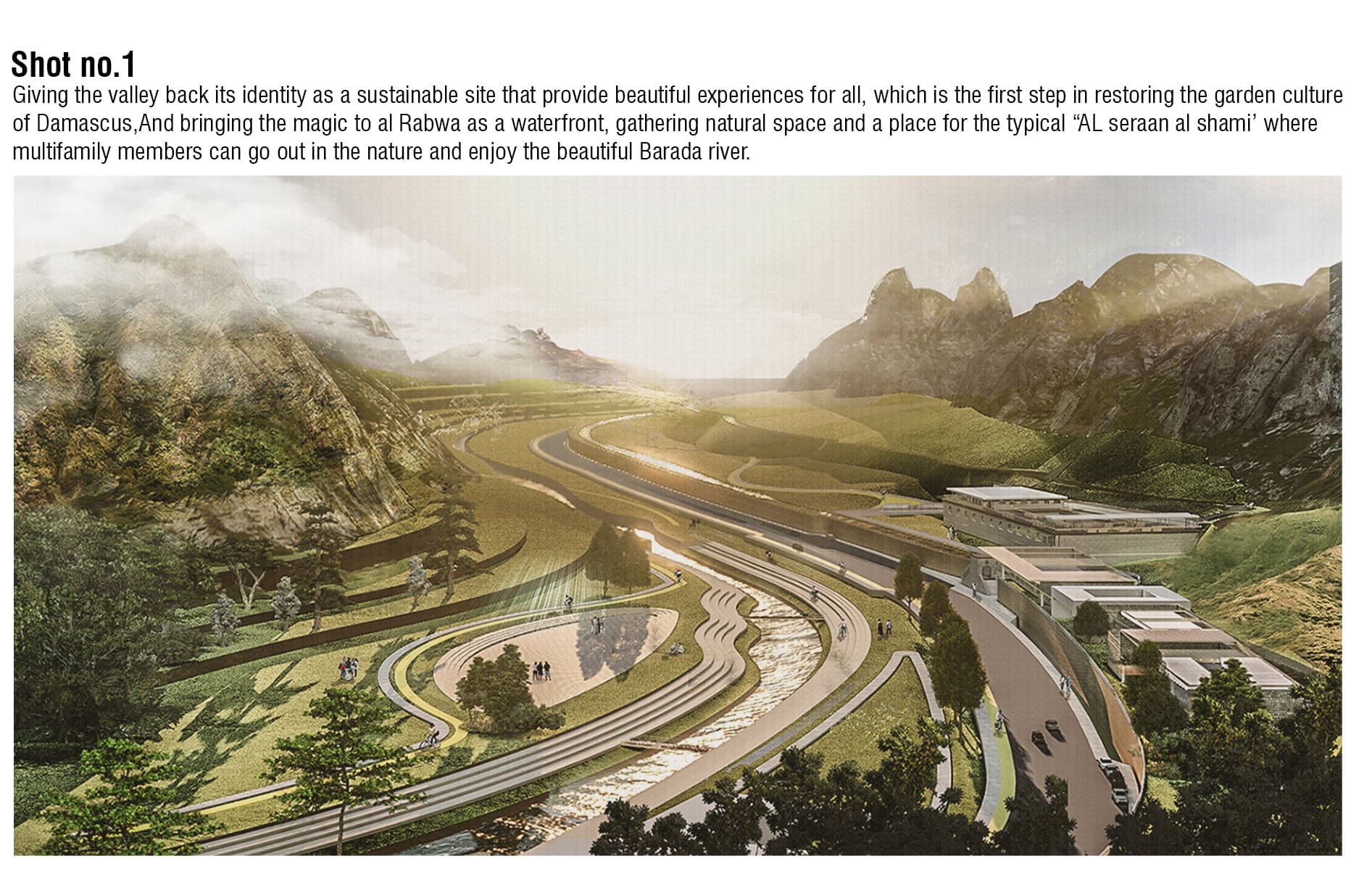
Al-Rabwa Gorge/Valley is a distinctive area intimately familiar to every Syrian family across generations. It was one of the principal locales that nurtured the blossoming of a vibrant garden culture, fostering a heightened commitment to leisure, entertainment, and intellectual engagement. This cultural renaissance was further enriched by the urban amenities that accompanied the proliferation of gardens.
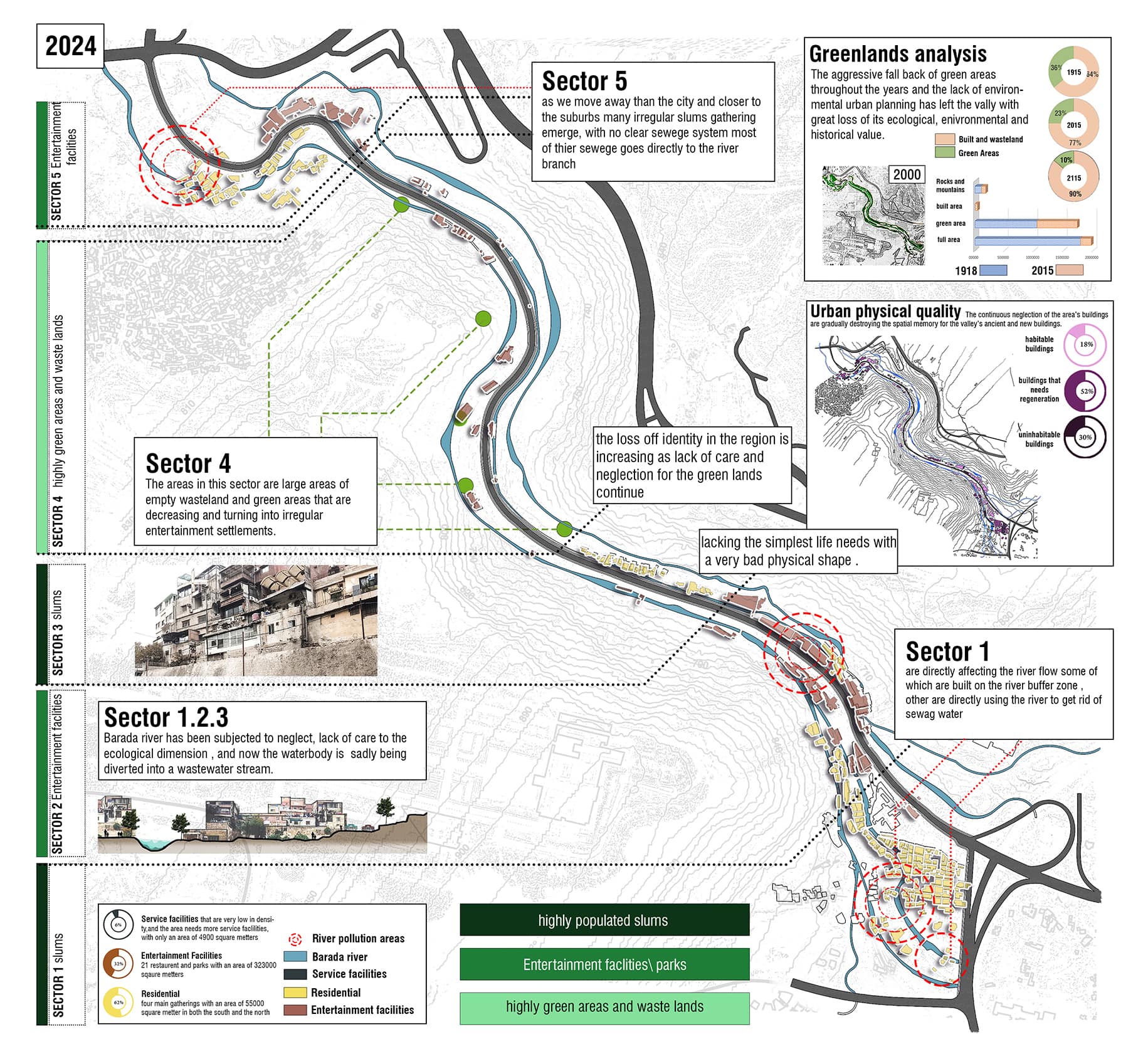
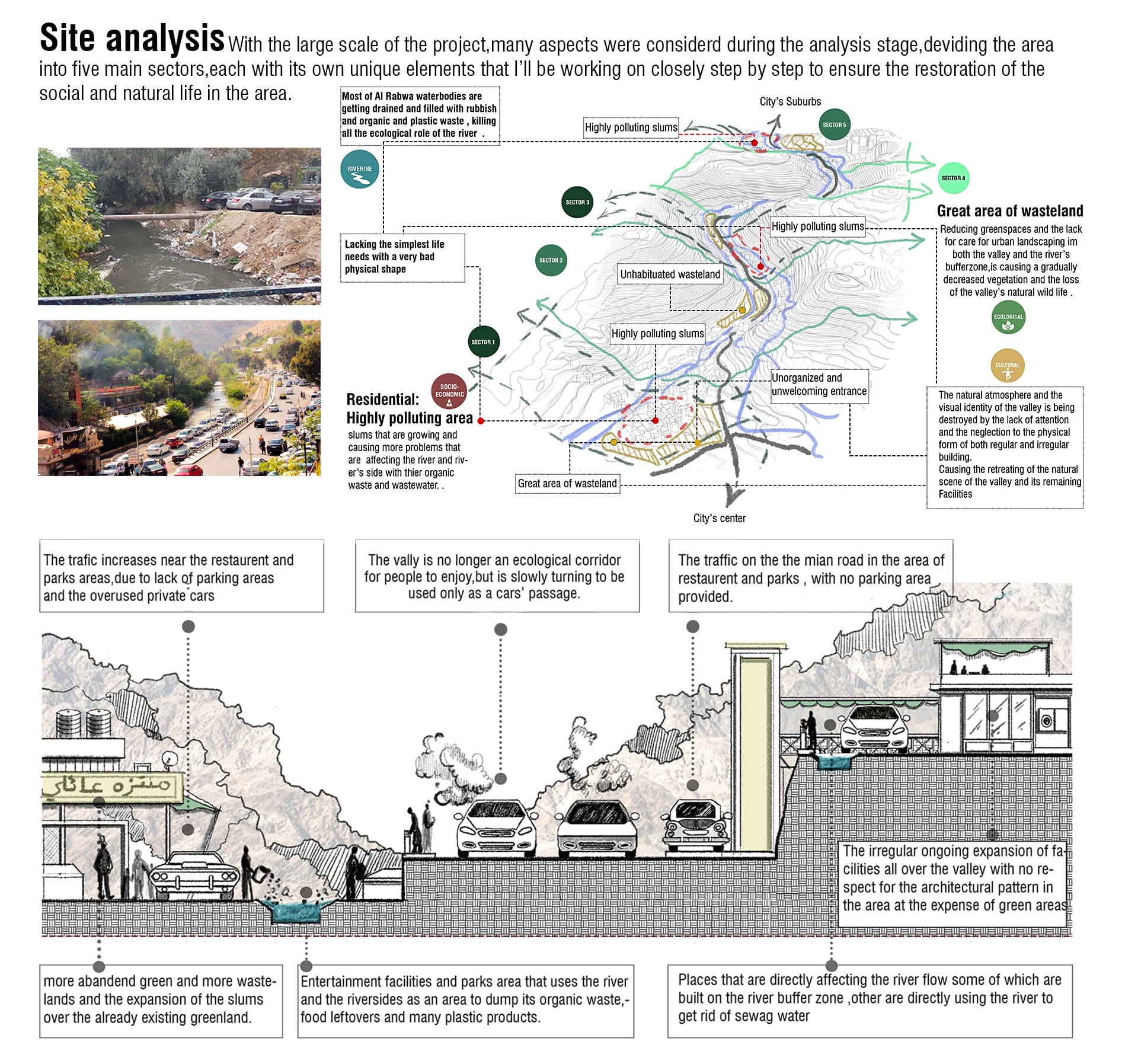
However, as years progressed, the urban identity of Al-Rabwa began to wane, largely due to a diminishing appreciation for social values and heritage that led to a gradual departure from the once-flourishing garden culture of Damascus. The rapid population growth in the late 1990s, combined with the demand for residential housing near the city center, prompted many to inhabit previously unoccupied green spaces between the river’s branches.
The proliferation of illegal housing developments around and within Al-Rabwa resulted in significant environmental degradation, with untreated sewage water contaminating the Barada River and depleting its ecological life, thereby rendering the environment uninhabitable for many forms of life. The encroachment of slums and the neglect of green areas have obscured the distinctive features that once characterized the valley.
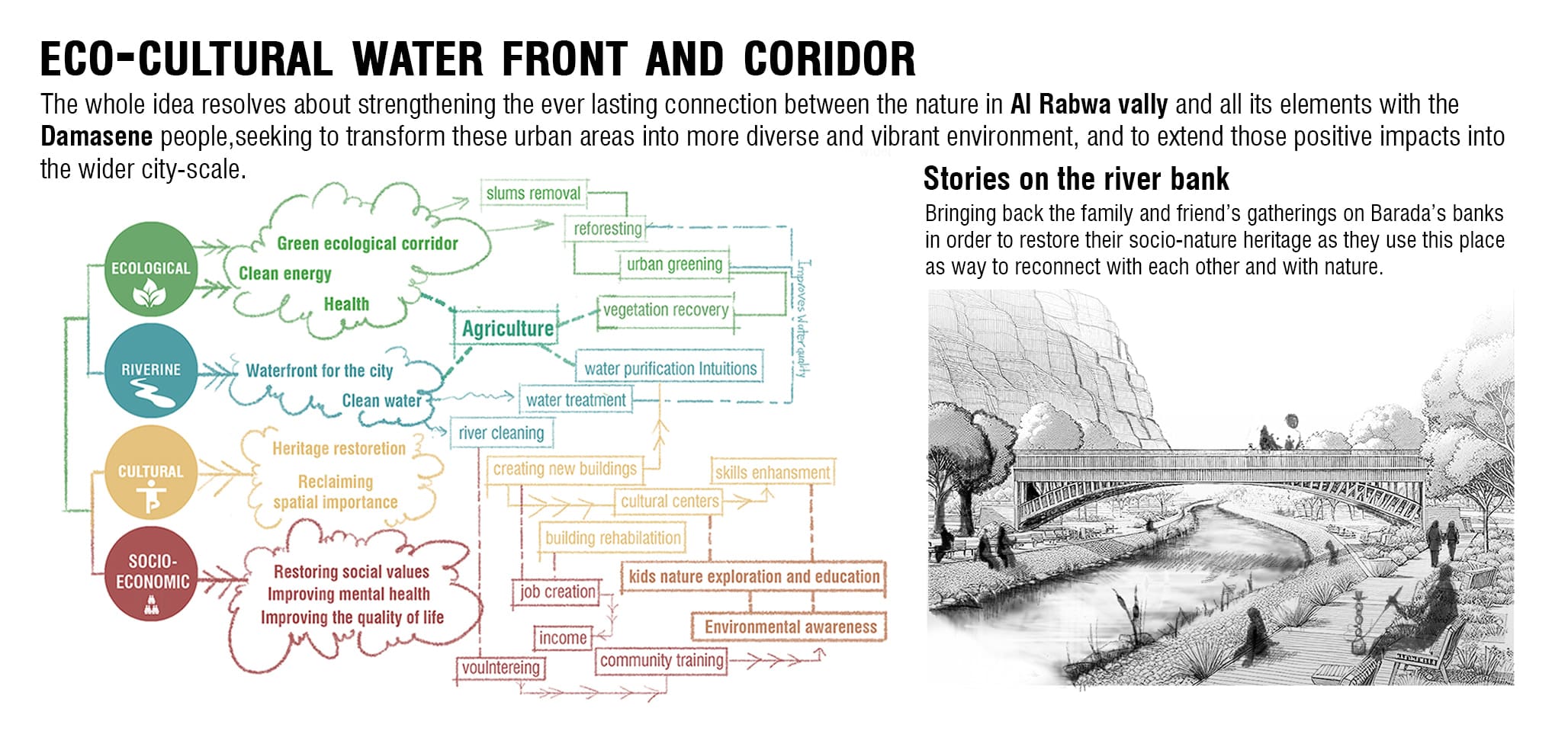
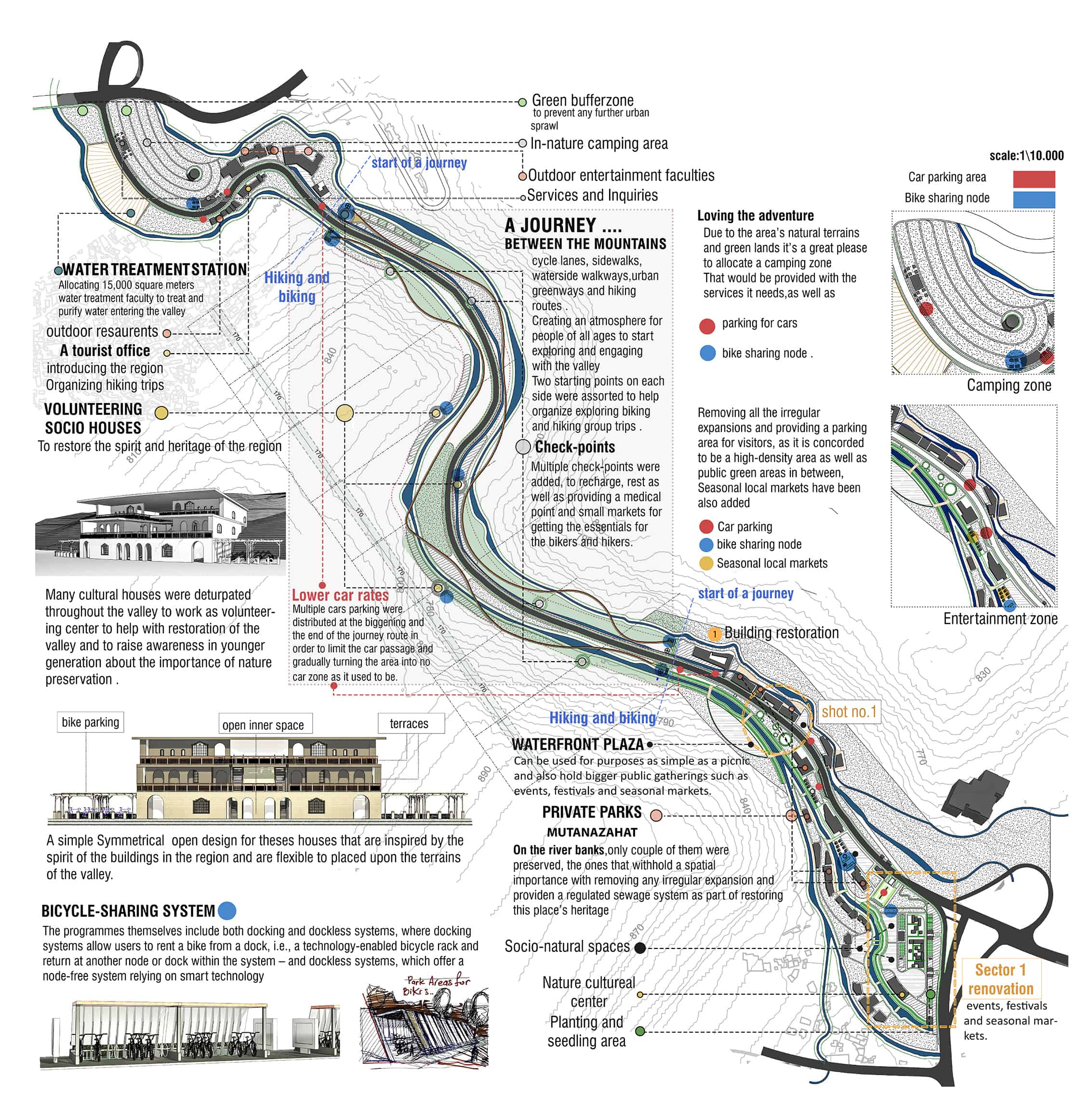
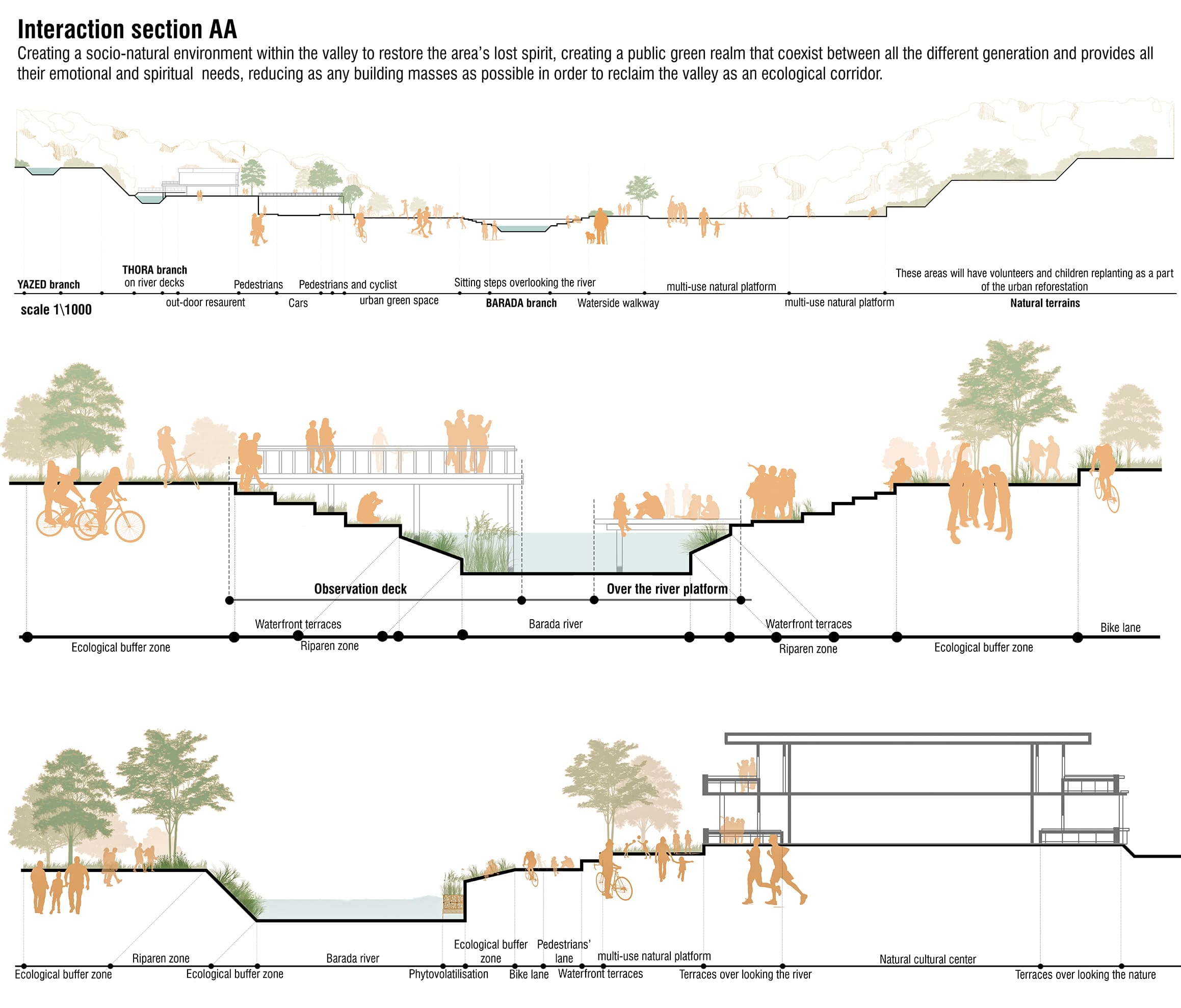
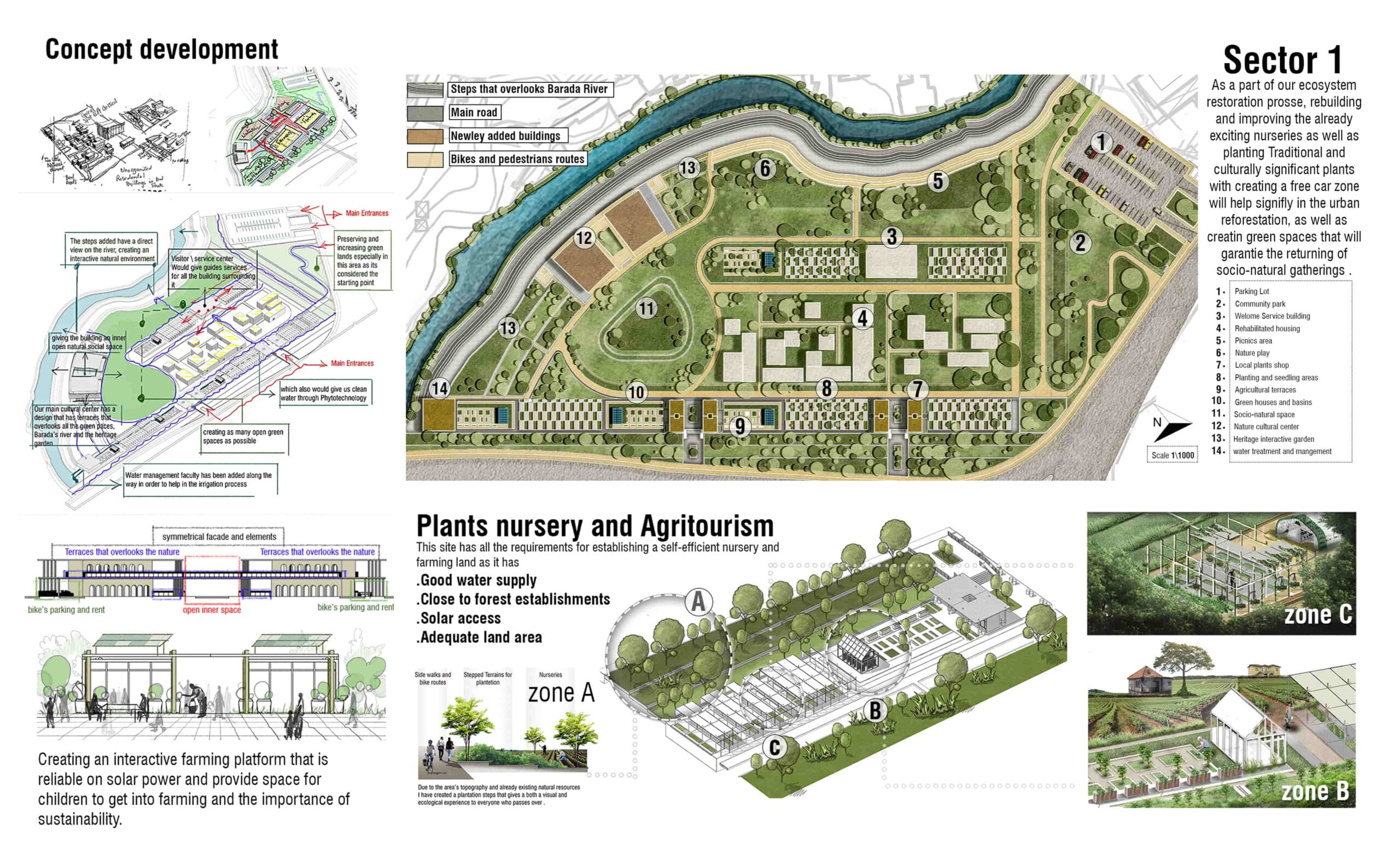
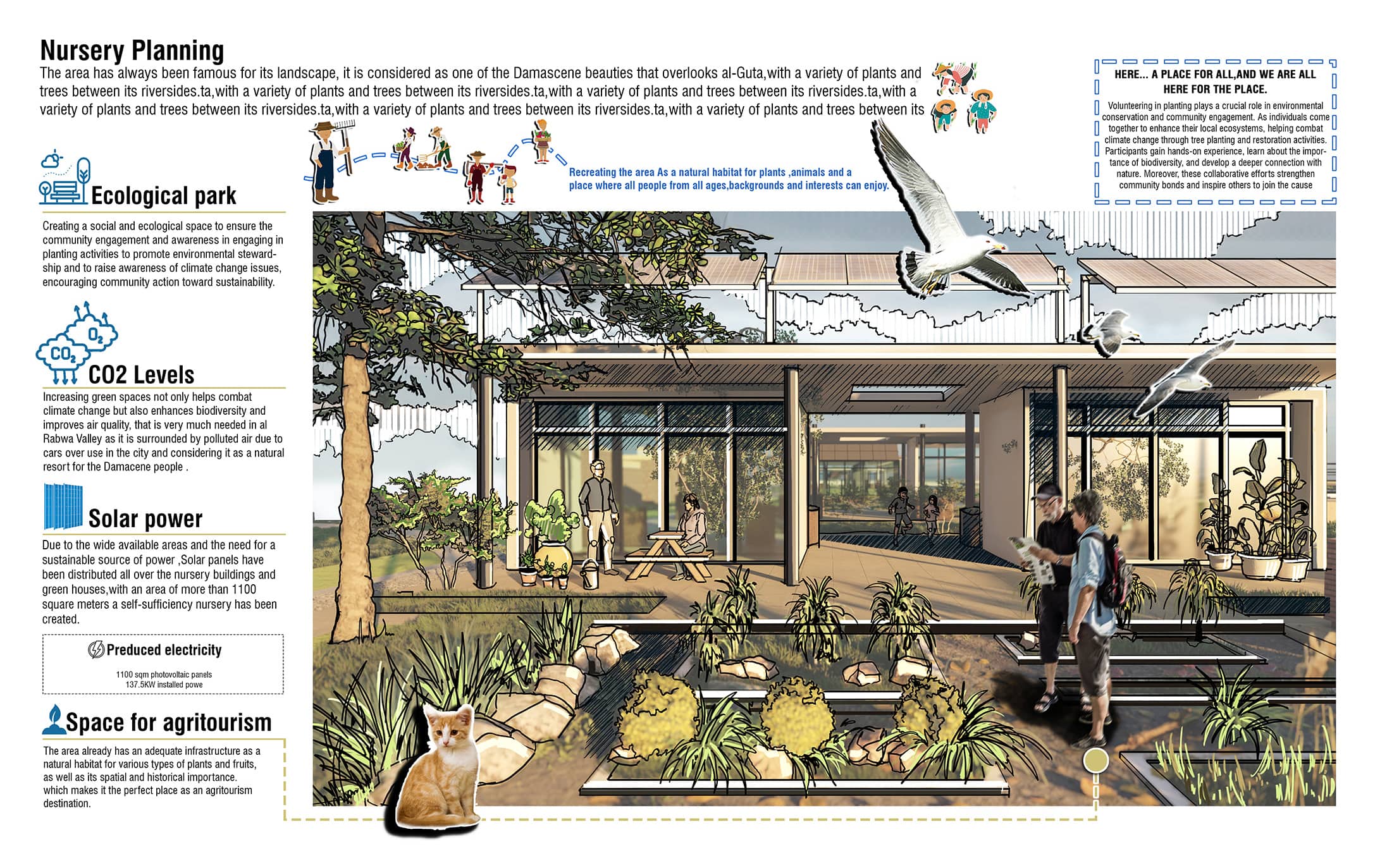
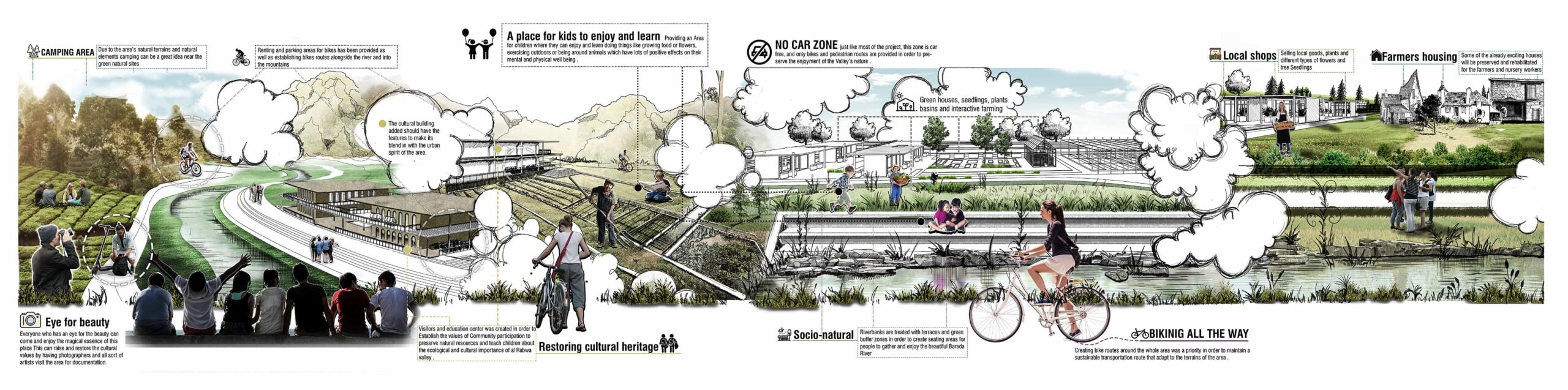
In response to these challenges, various initiatives have been undertaken to restore and enhance the environmental, social, economic, cultural, and physical conditions of the area, facilitating the regeneration of long-lost social relations. Environmental measures have prioritized enhancing the relationship between the valley and its visitors, fostering stronger interactions by advocating for pedestrian and cyclist accessibility over vehicular traffic, as well as promoting green public spaces in lieu of unsustainable dining establishments.
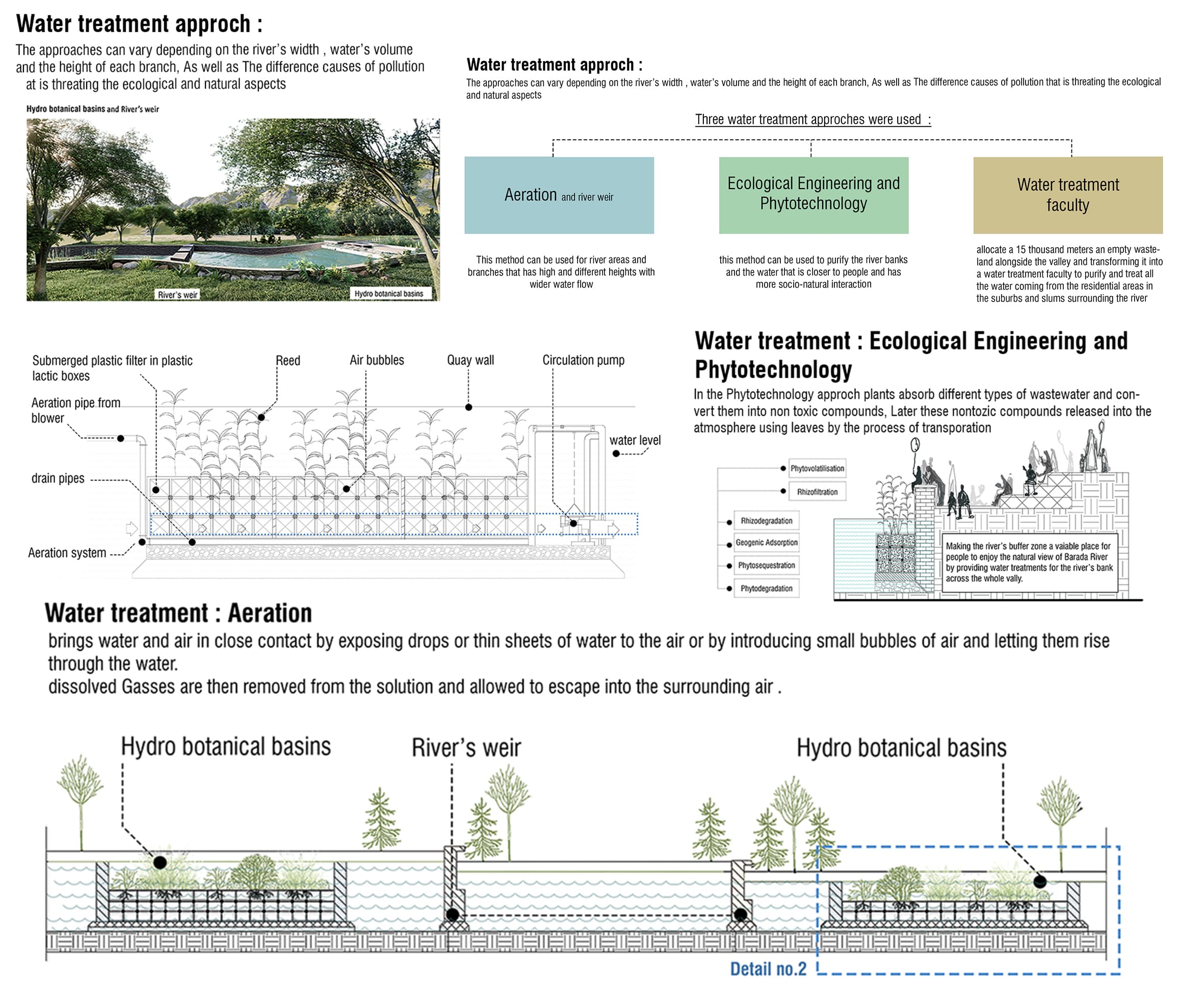
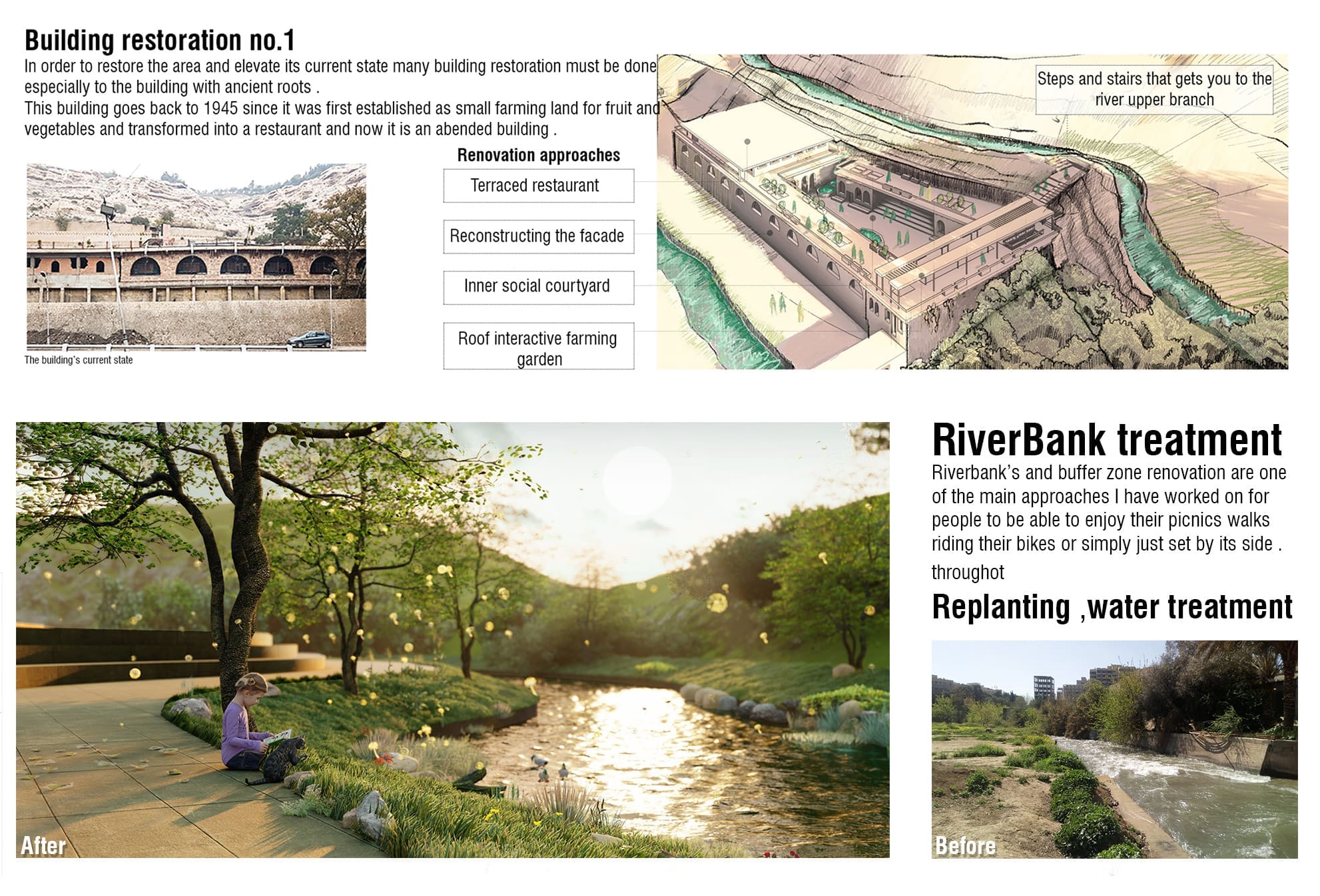
Efforts have included the purification and treatment of the Barada River’s water, alongside the cleaning and rehabilitation of its banks to facilitate meaningful interaction between the community and the river. The establishment of cultural houses and centers throughout the area aims to provide educational resources about the region’s history and foster socio-cultural gatherings, thereby raising environmental awareness and creating a multitude of volunteer opportunities. The valley’s sustainability hinges upon the conscientious engagement of its users, alongside the preservation of the architectural styles inherent to the region.
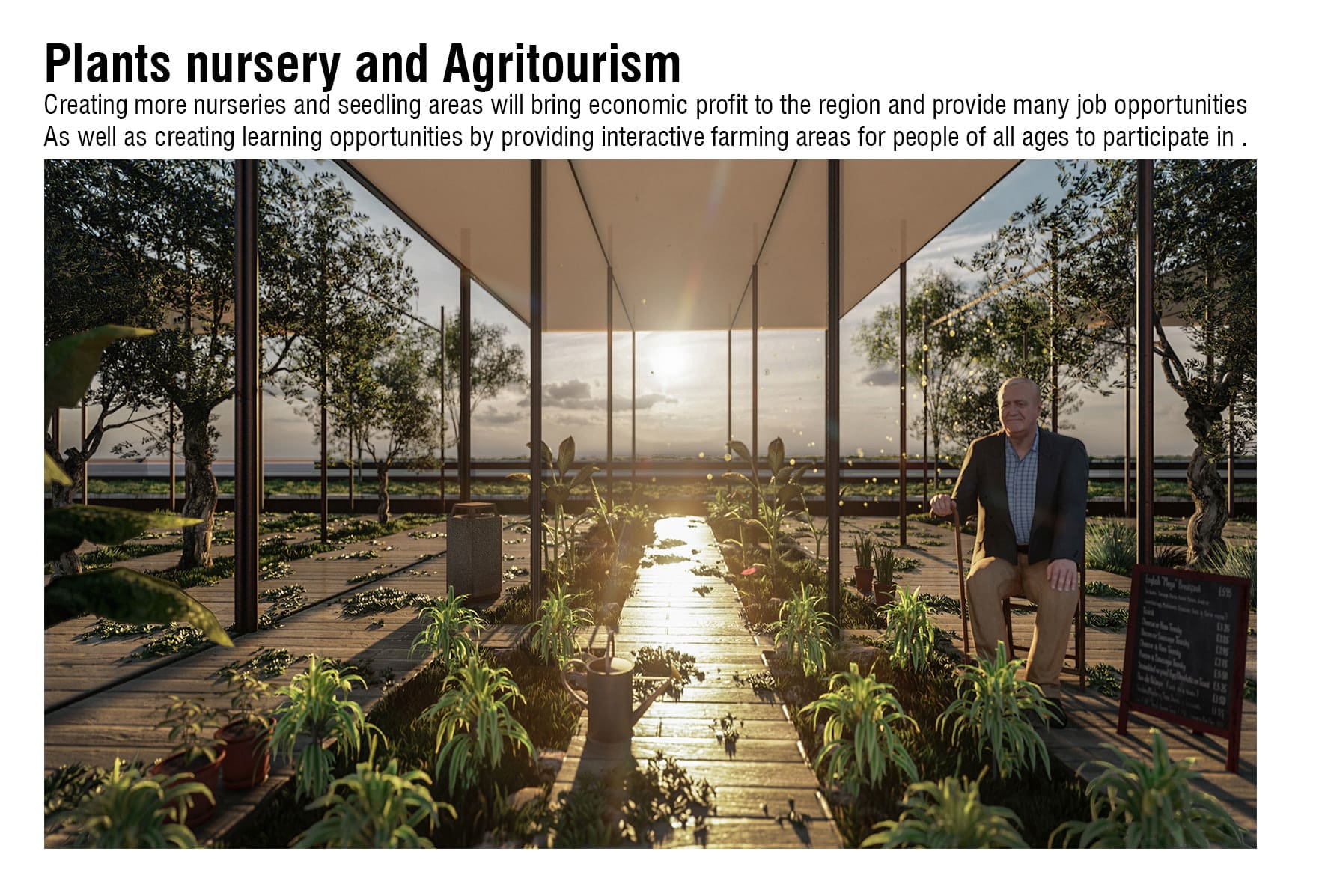
Physical and economic enhancements have focused on improving urban and landscape design, restoring historical structures, and revitalizing agricultural and horticultural lands. These endeavors are anticipated to generate numerous job opportunities and promote agritourism within the region.
Ultimately, Al-Rabwa Valley possesses the potential to be transformed into a sustainable ecological corridor, reviving Damascus’s rich garden heritage and cultural legacy.
Established in 2012, Tamayouz Excellence Award is an unaffiliated, independent initiative that aims to advance the profession of architecture academically and professionally. Tamayouz is dedicated to supporting aspirational and transformative projects that tackle local and global challenges and that are informed by a holistic understanding of context.