


University : Damascus University
Tutor(s) : Dr Rida Dieb
Project Description
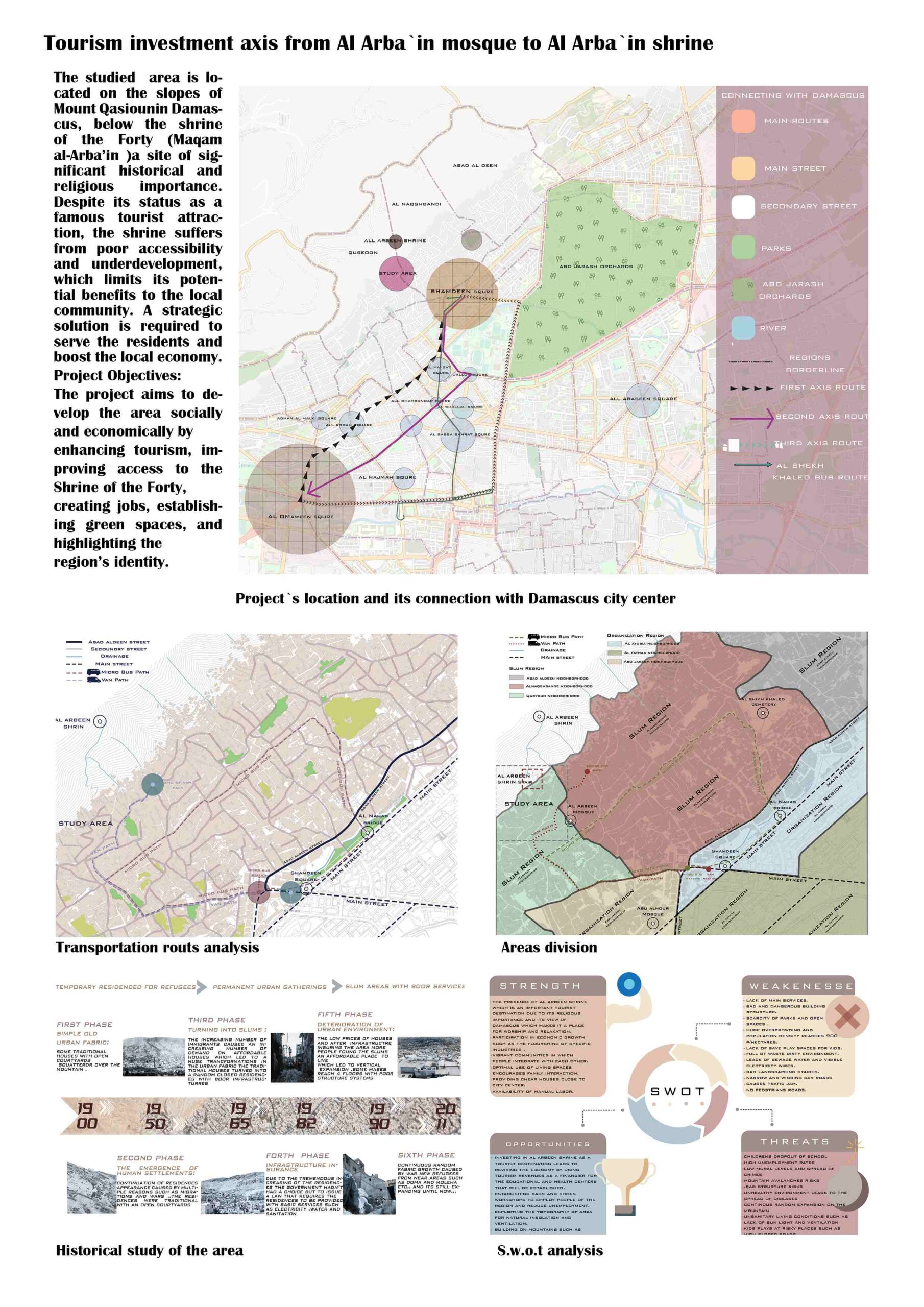
The Qasioun area, an informal settlement in Damascus, faces severe challenges such as poor housing, limited services, environmental hazards, economic difficulties, and high population density. Located near Mount Qasioun and the historically significant Shrine of the Forty as known as (Maqam al- Arba`in), the area lacks proper development and tourism infrastructure, hindering its potential benefits to locals and tourists alike.
– Project Objectives: The project aims to develop the area socially and economically by enhancing tourism, improving access to the Shrine of the Forty, creating jobs, establishing green spaces, and highlighting the region’s identity.
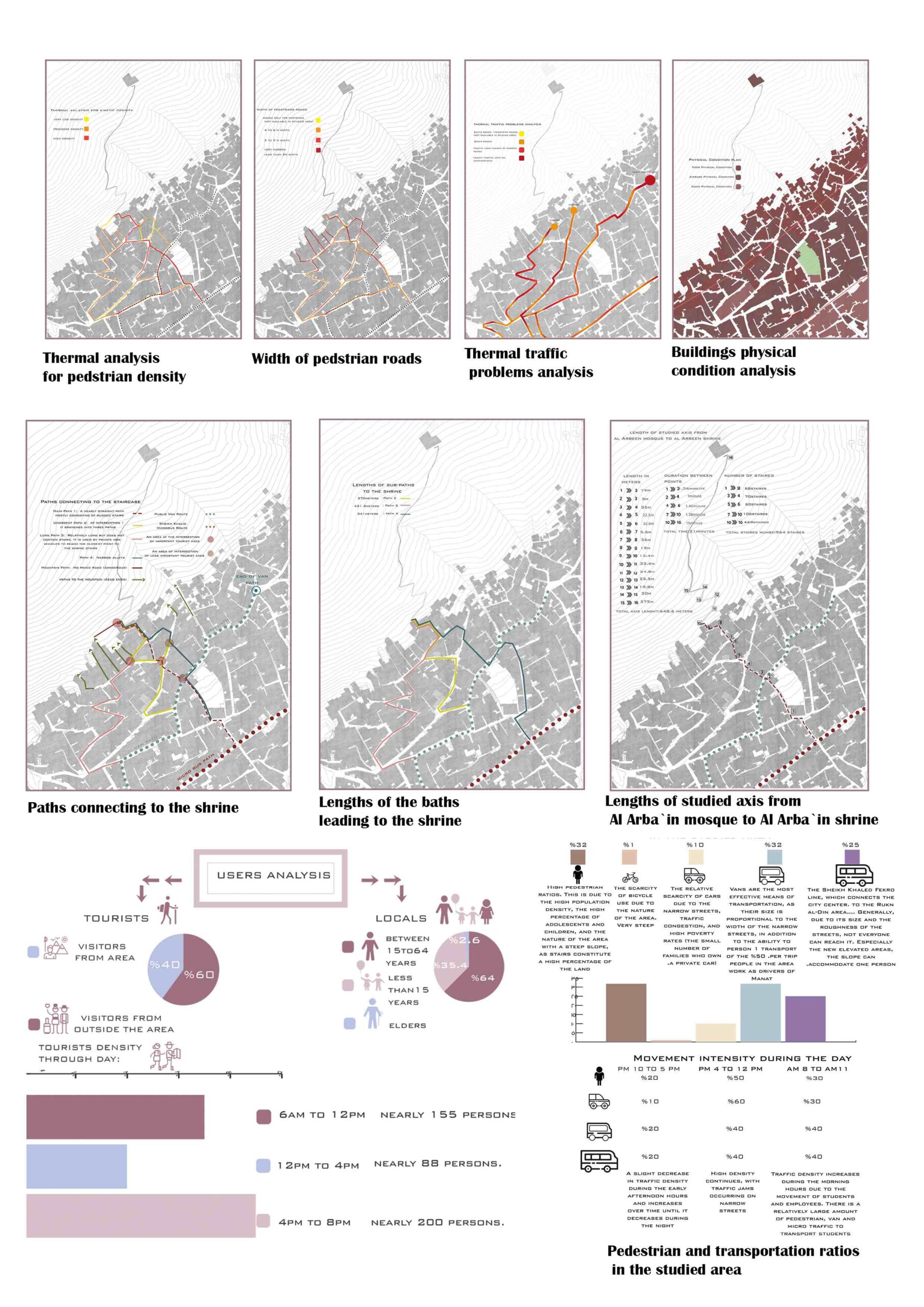
– Phases of Study: The study analyzed the area’s transformation in the urban fabric Building`s physical condition, connectivity, topography, access roads, and mobility patterns to propose a clear route to the shrine.
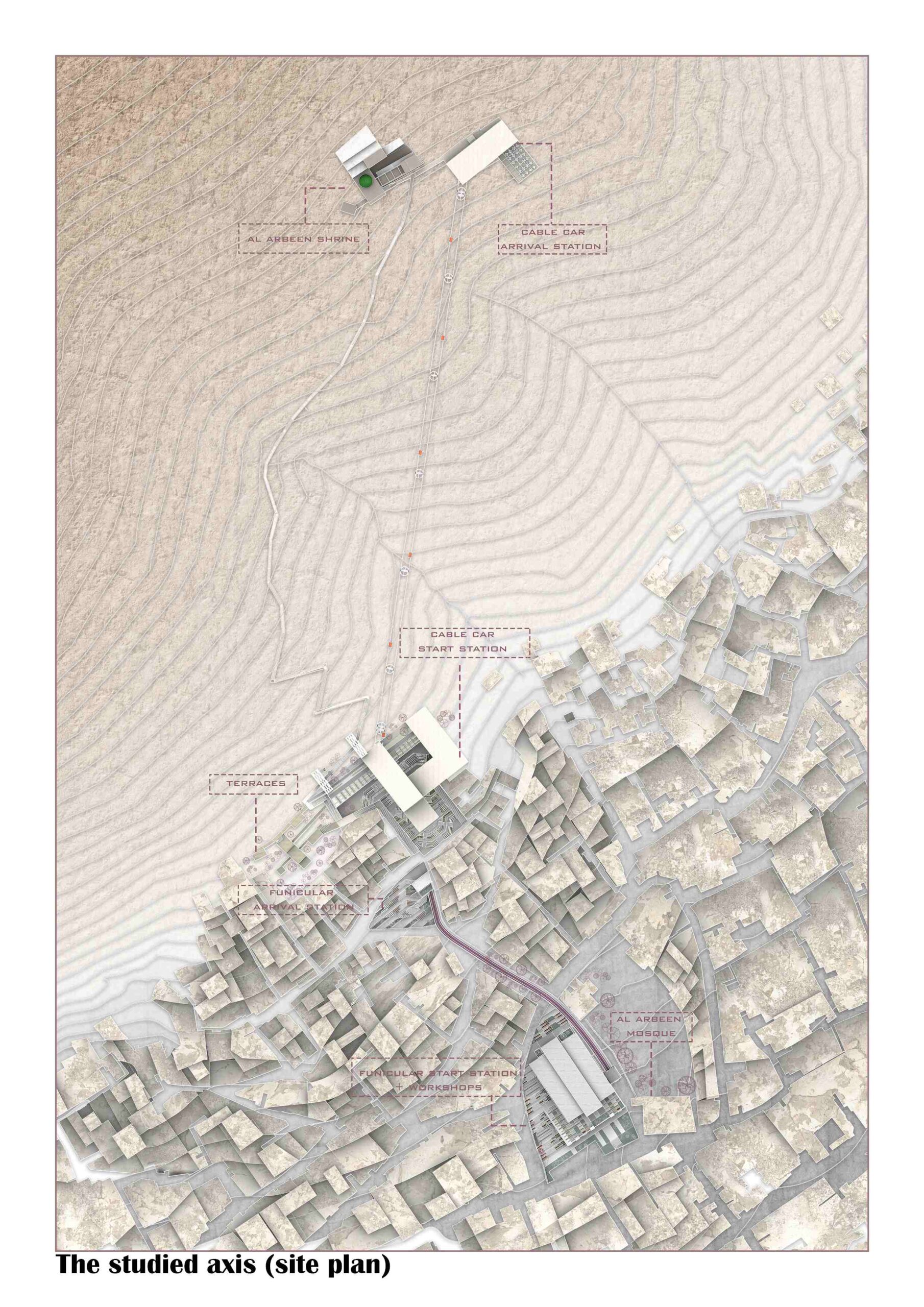
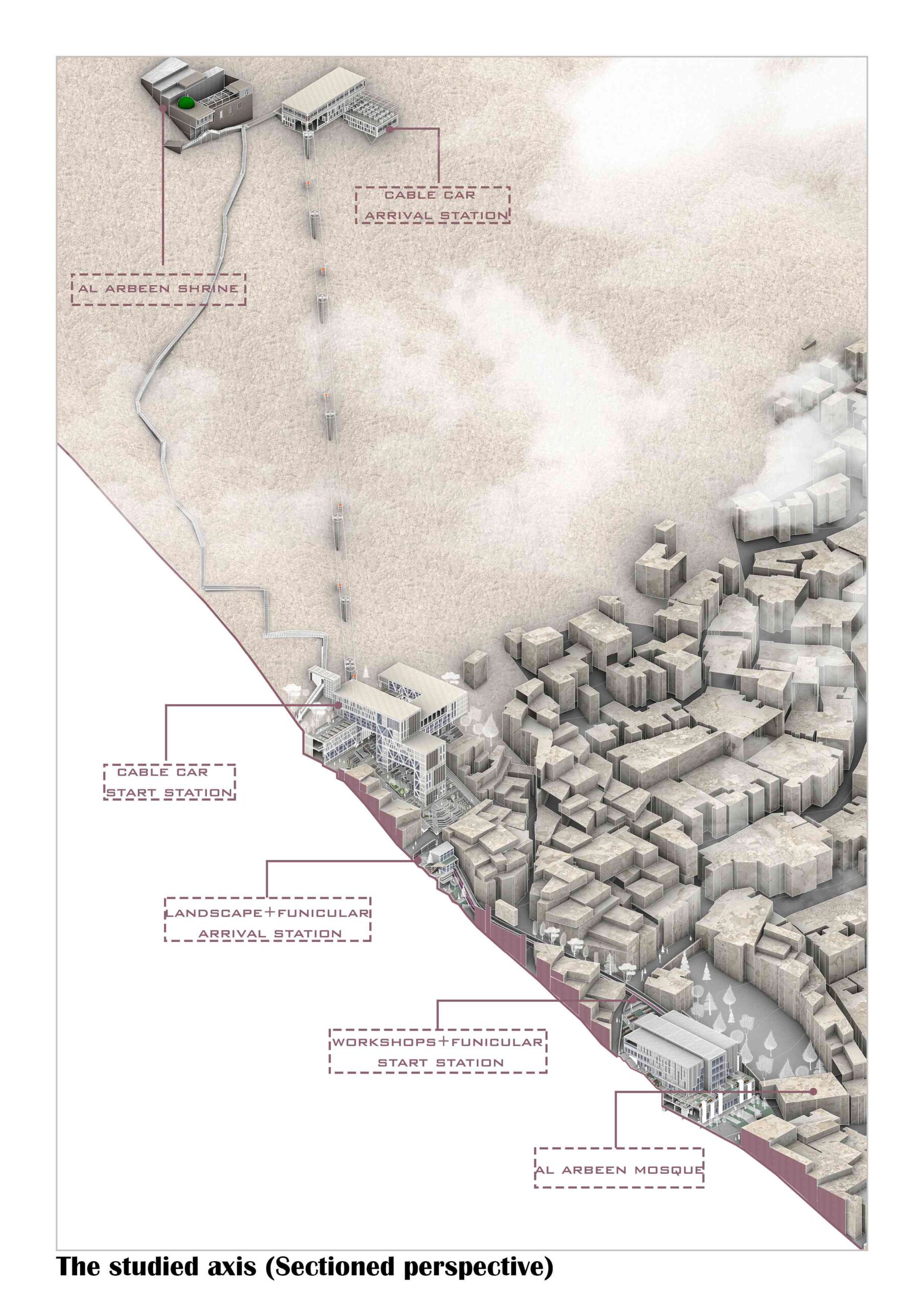
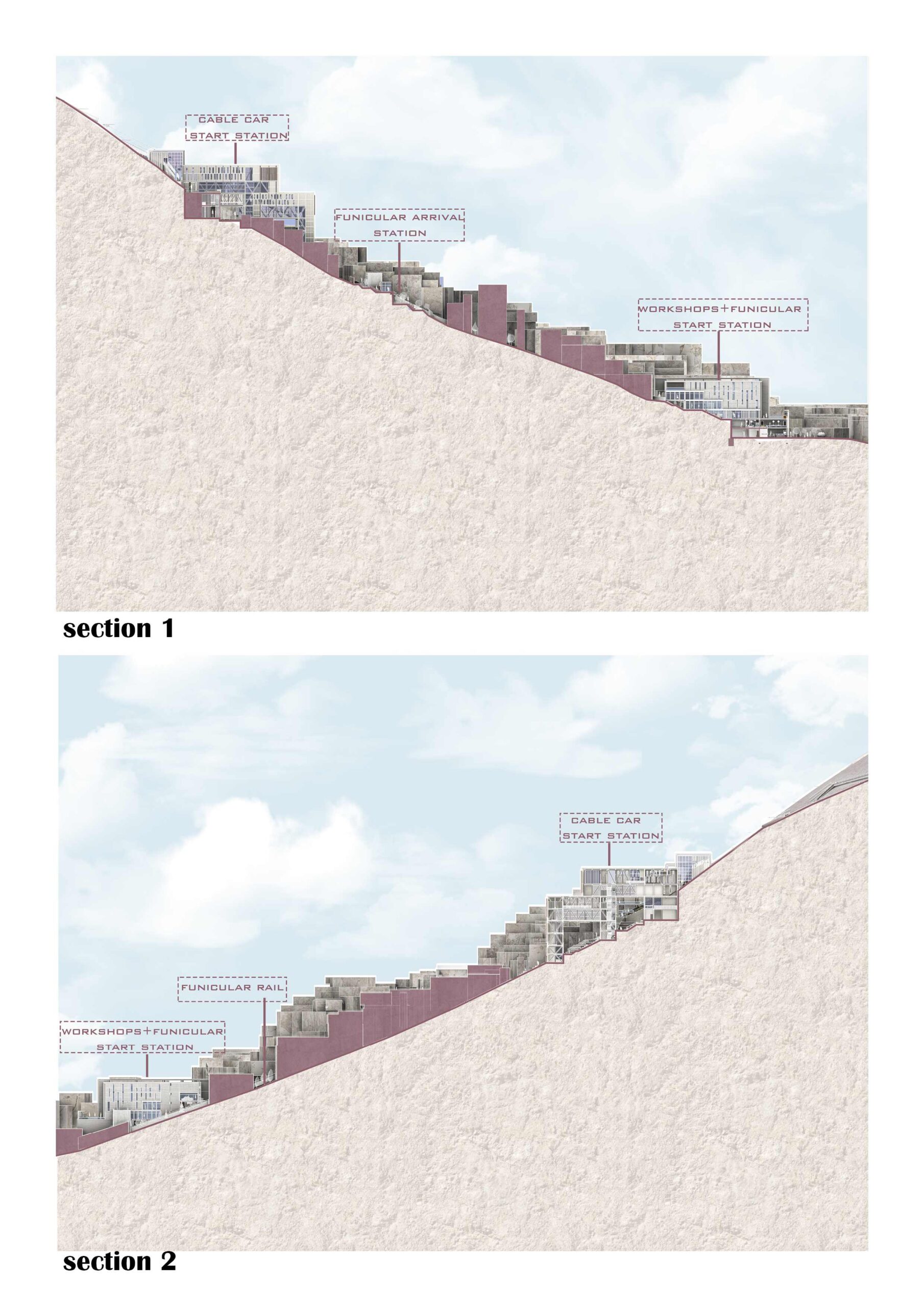
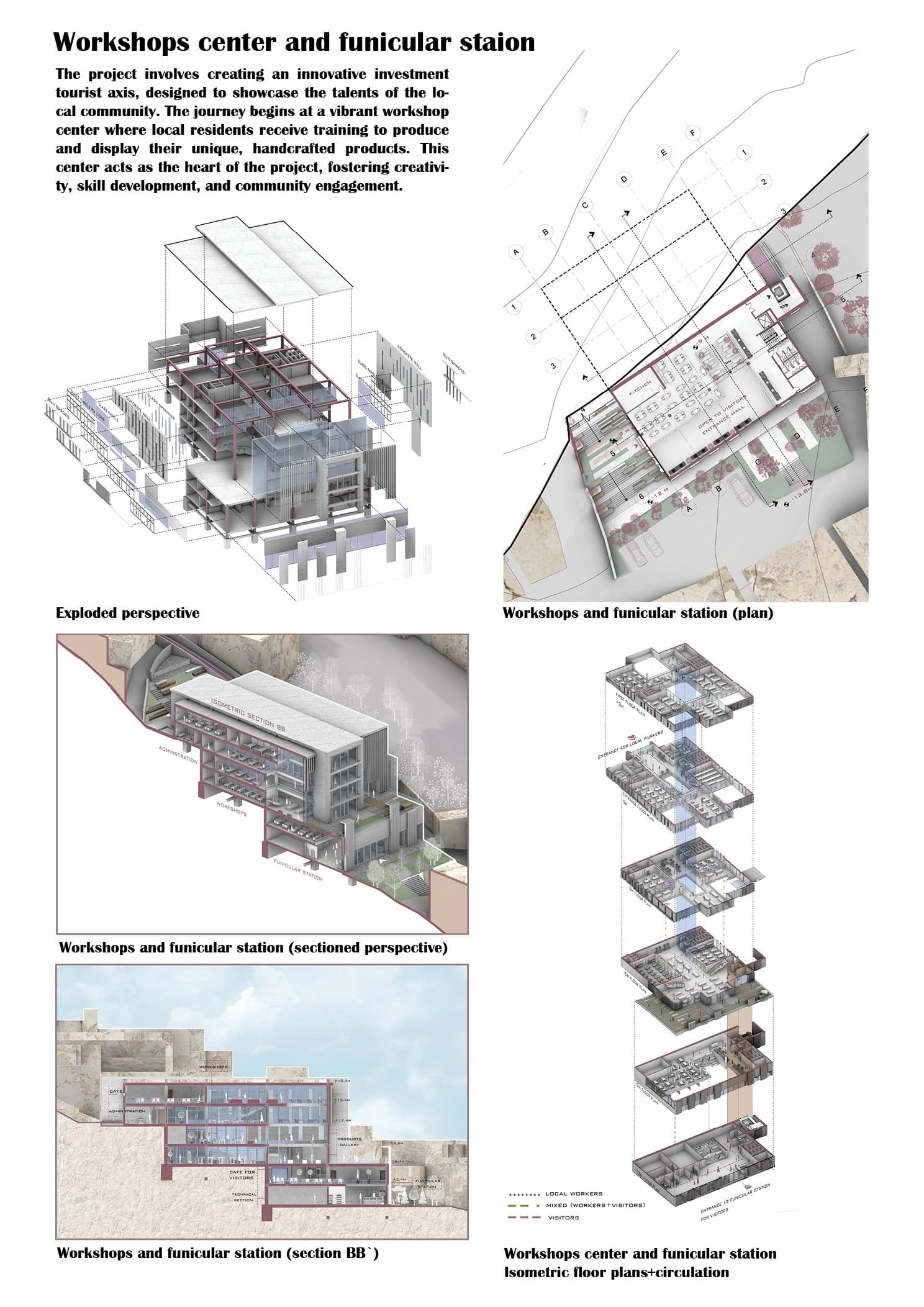
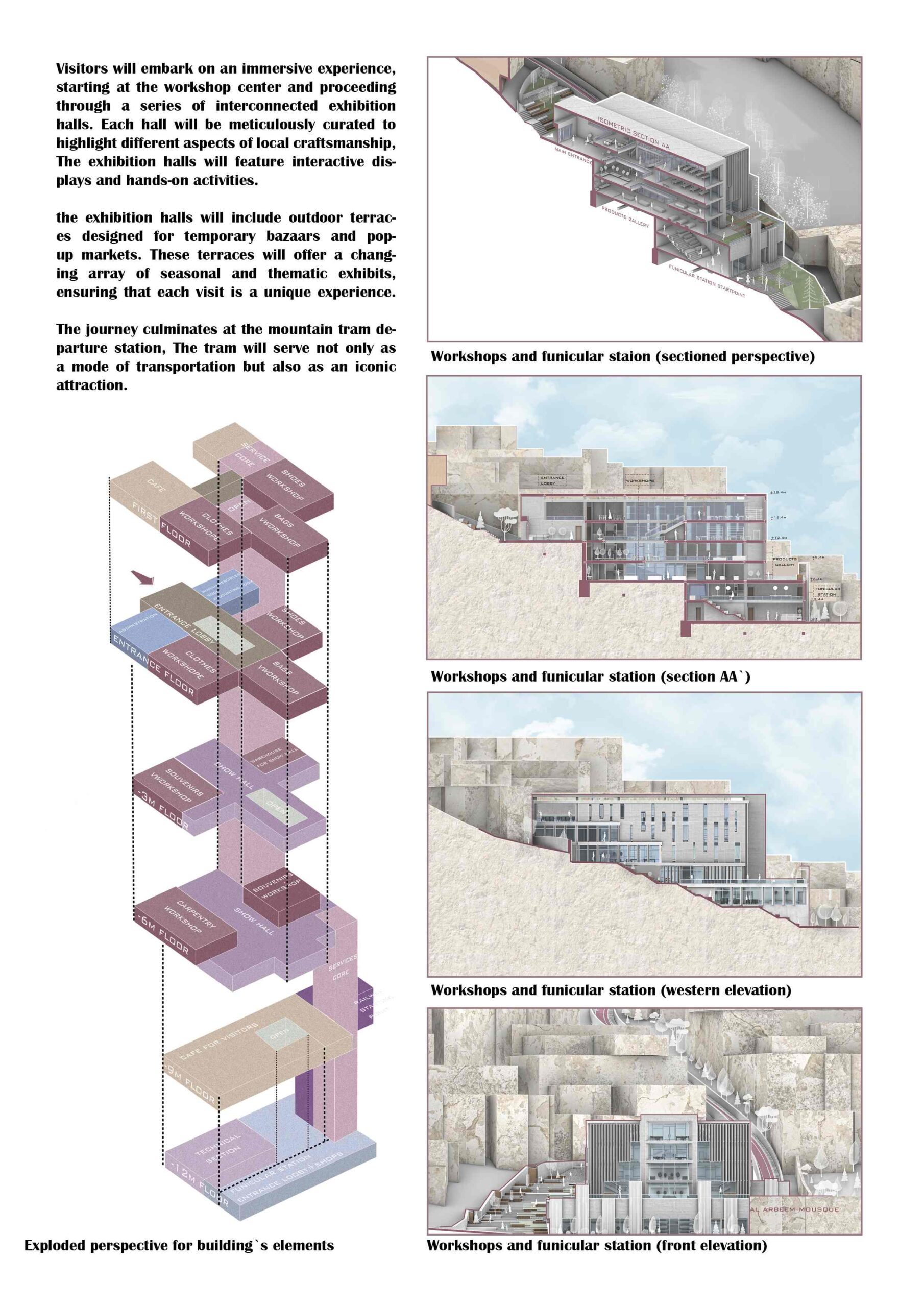
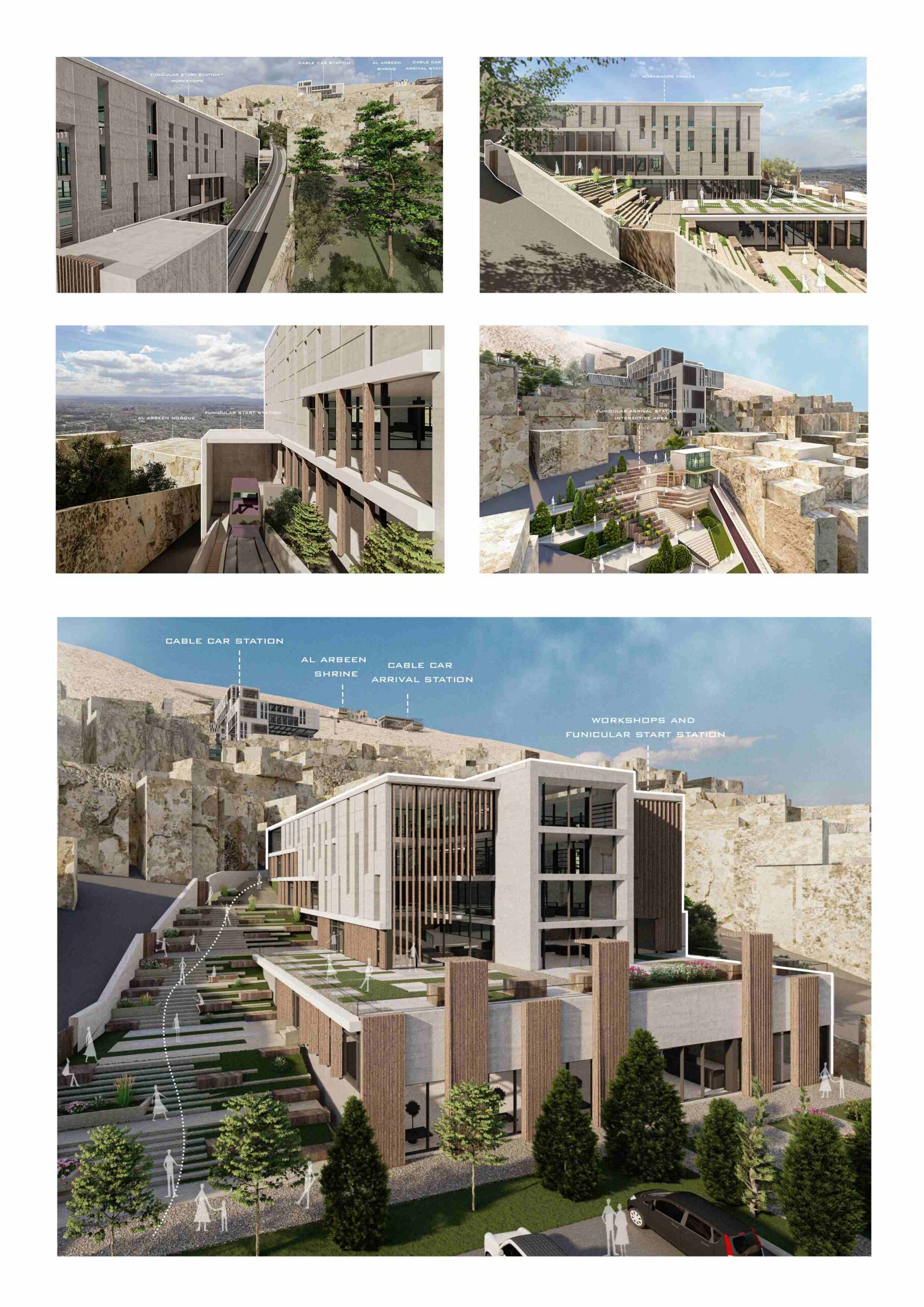
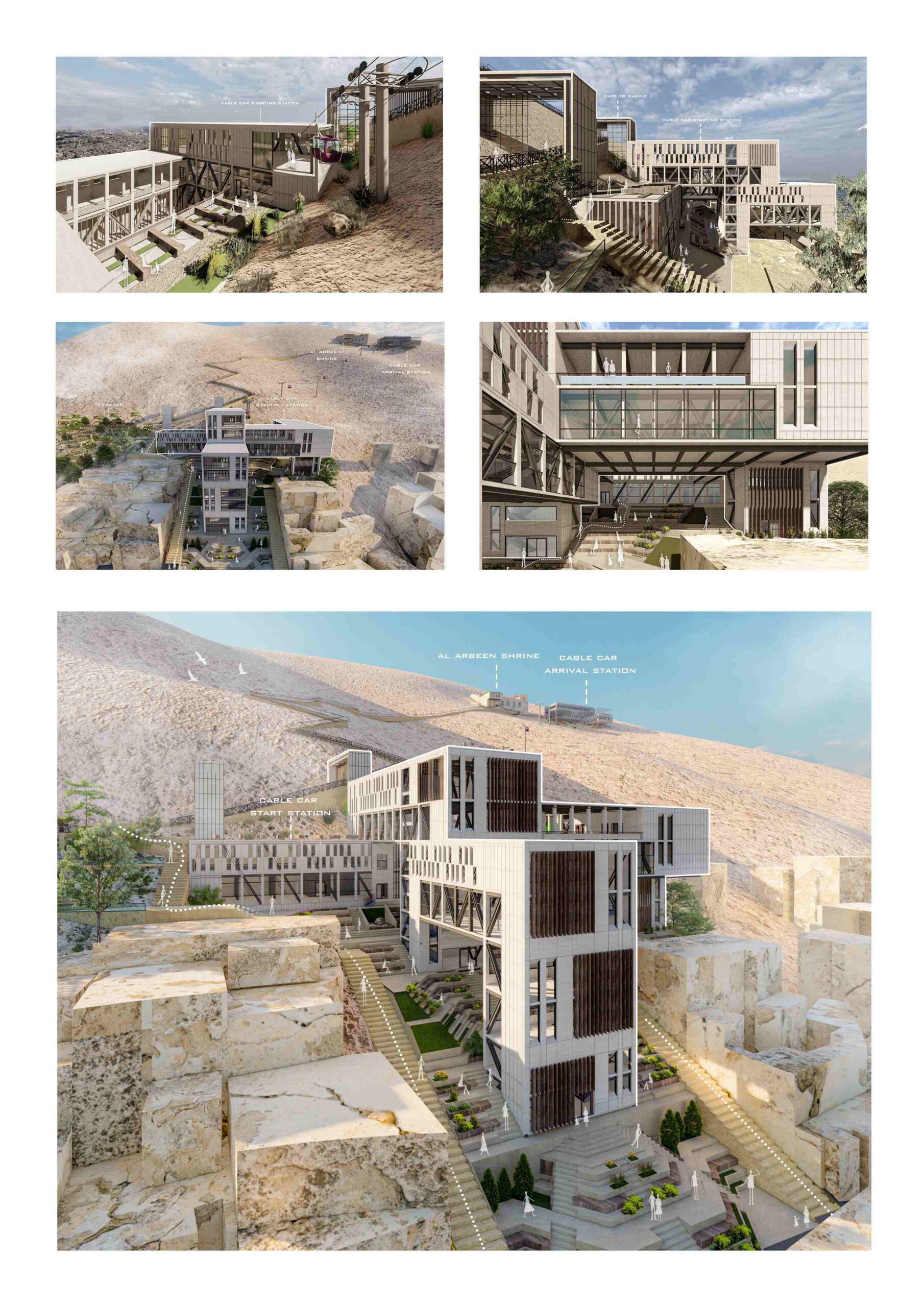
– Project Concept: The project introduces an investment tourist axis starting with a workshop center for training locals and showcasing local products. Visitors will journey through exhibition halls, an interactive green area, and finally reach the Shrine of the Forty via a mountain tram and cable car system.
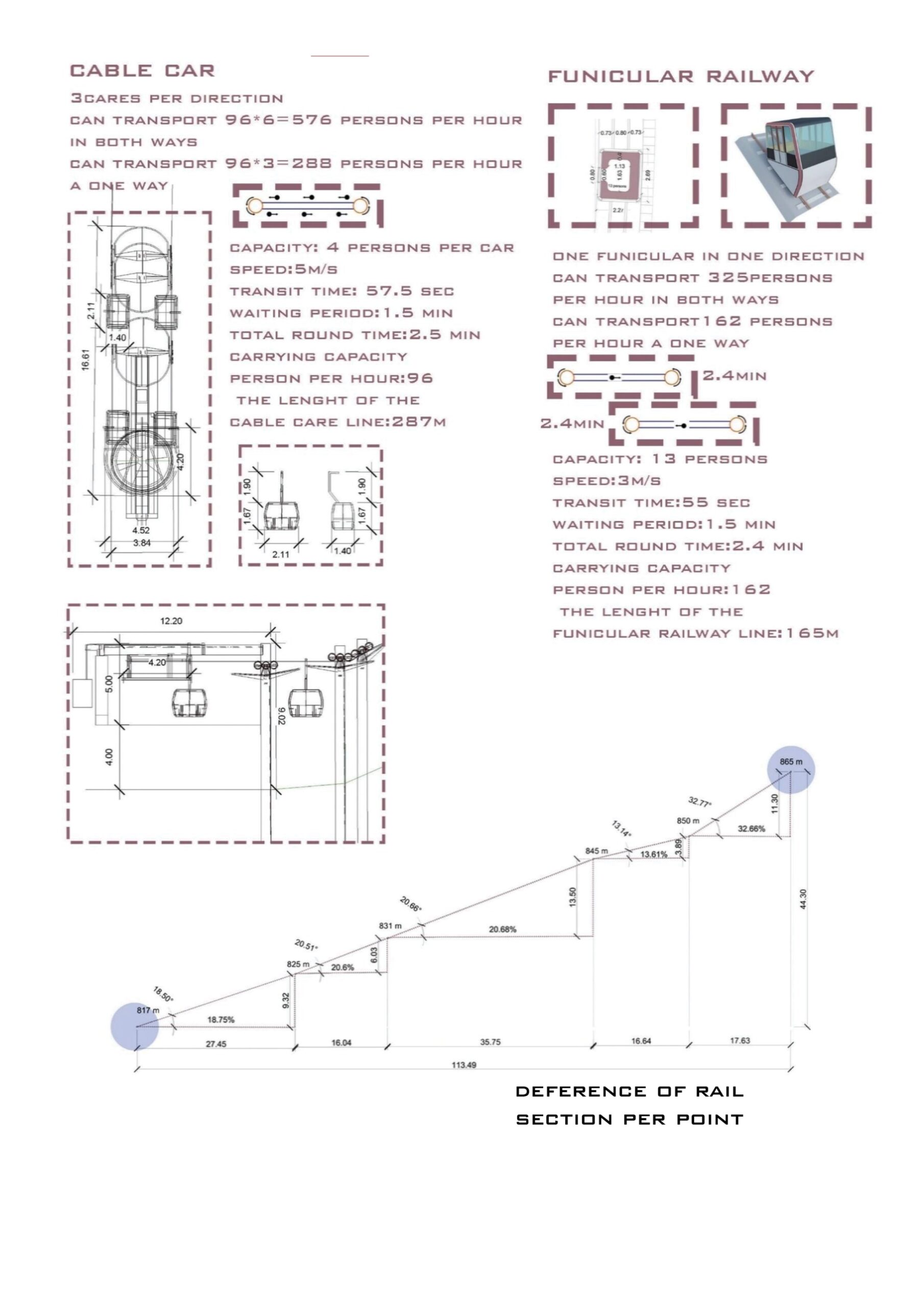
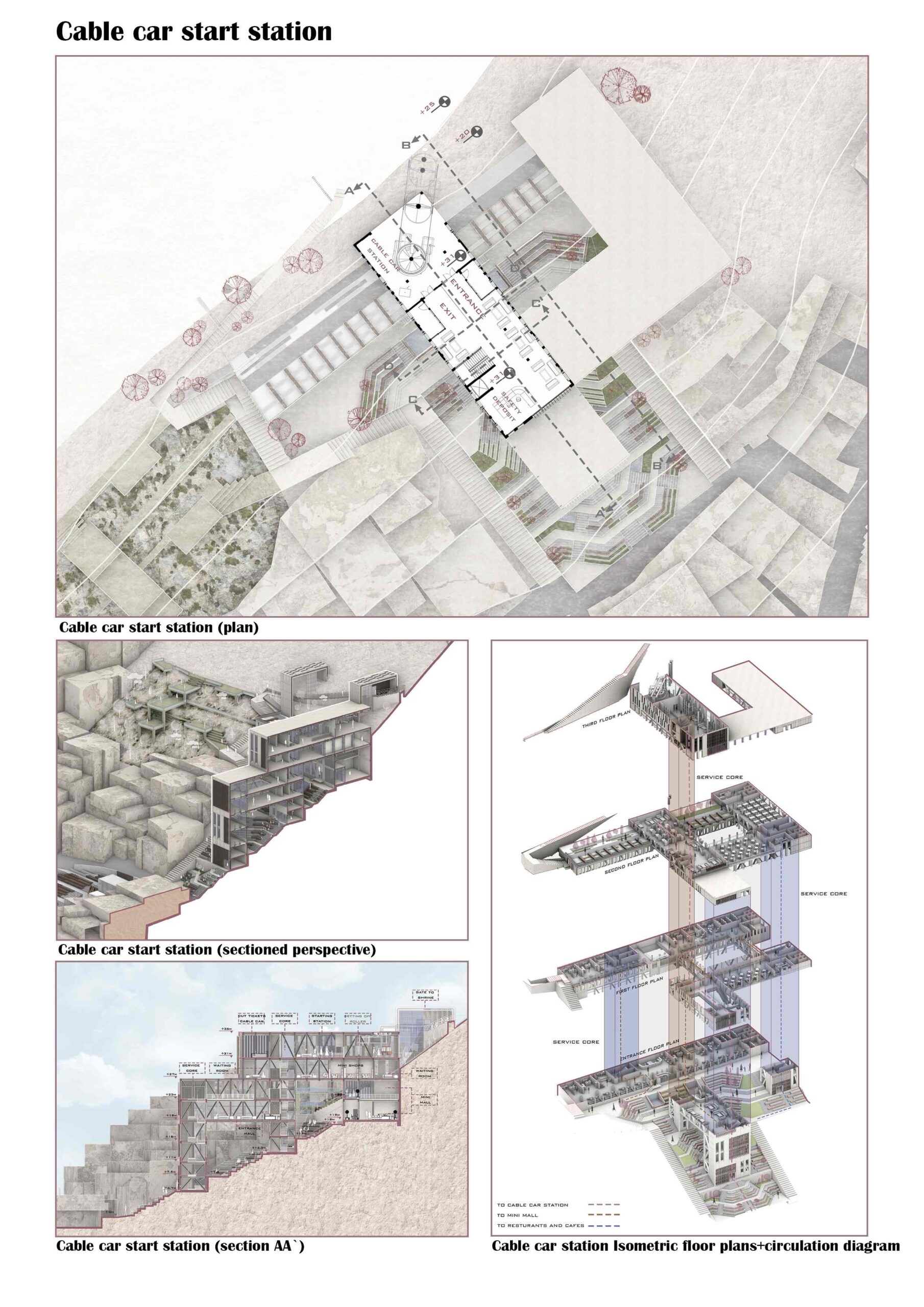
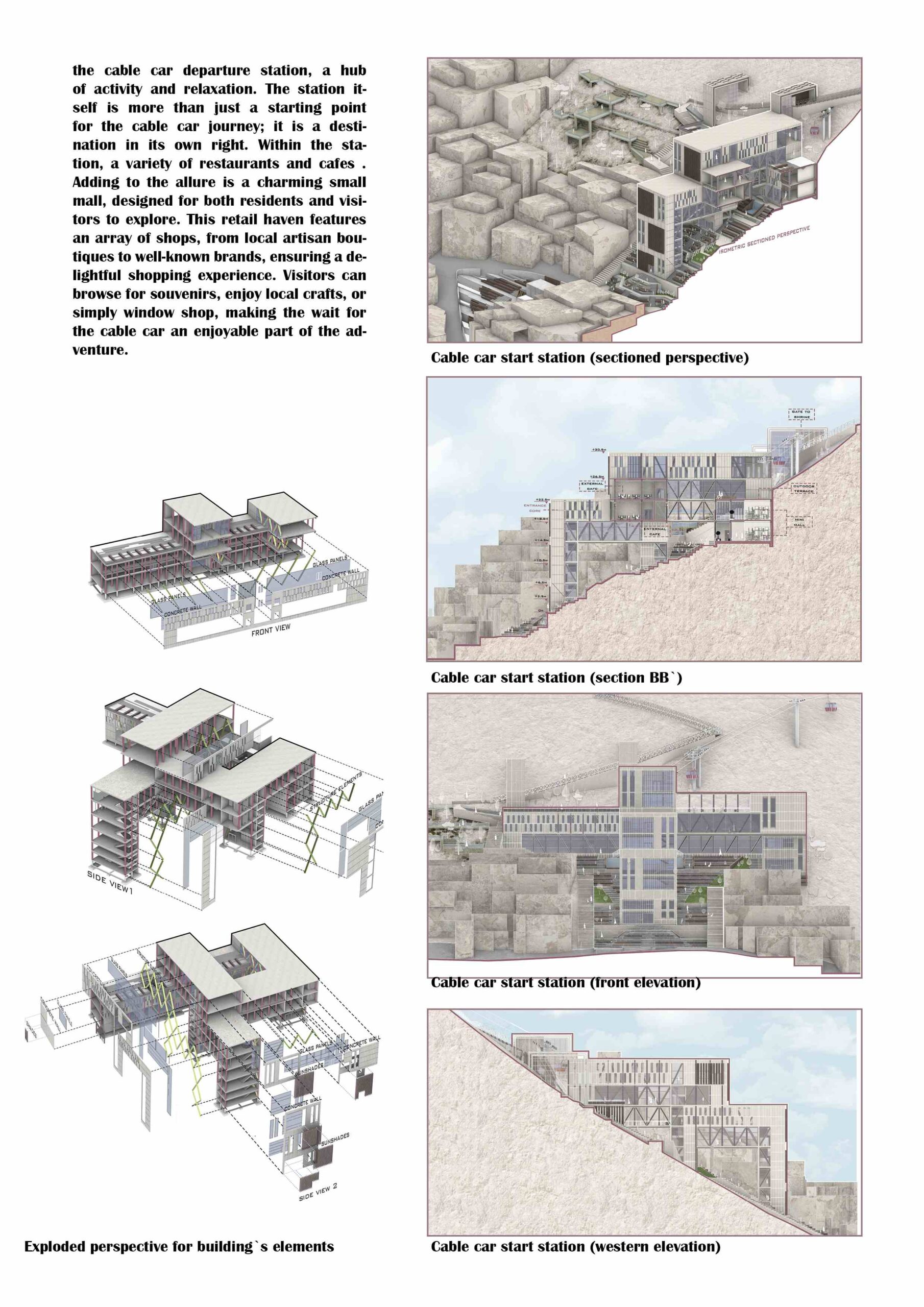
– Project Facilities: Facilities include a workshop center, mountain tram stations, cable car station with amenities like restaurants and a small mall, and a cable car arrival station linked with maqam al arbaeen which marks the end of the journey. This initiative seeks to revitalize the Qasioun area by integrating tourism and local development, preserving its cultural and historical value.
Established in 2012, Tamayouz Excellence Award is an unaffiliated, independent initiative that aims to advance the profession of architecture academically and professionally. Tamayouz is dedicated to supporting aspirational and transformative projects that tackle local and global challenges and that are informed by a holistic understanding of context.