







University : Ecole Nationale d'Architecture et d'Urbanisme de Tunis
Tutor(s) : Alia Bel Haj Hamouda
Project Description
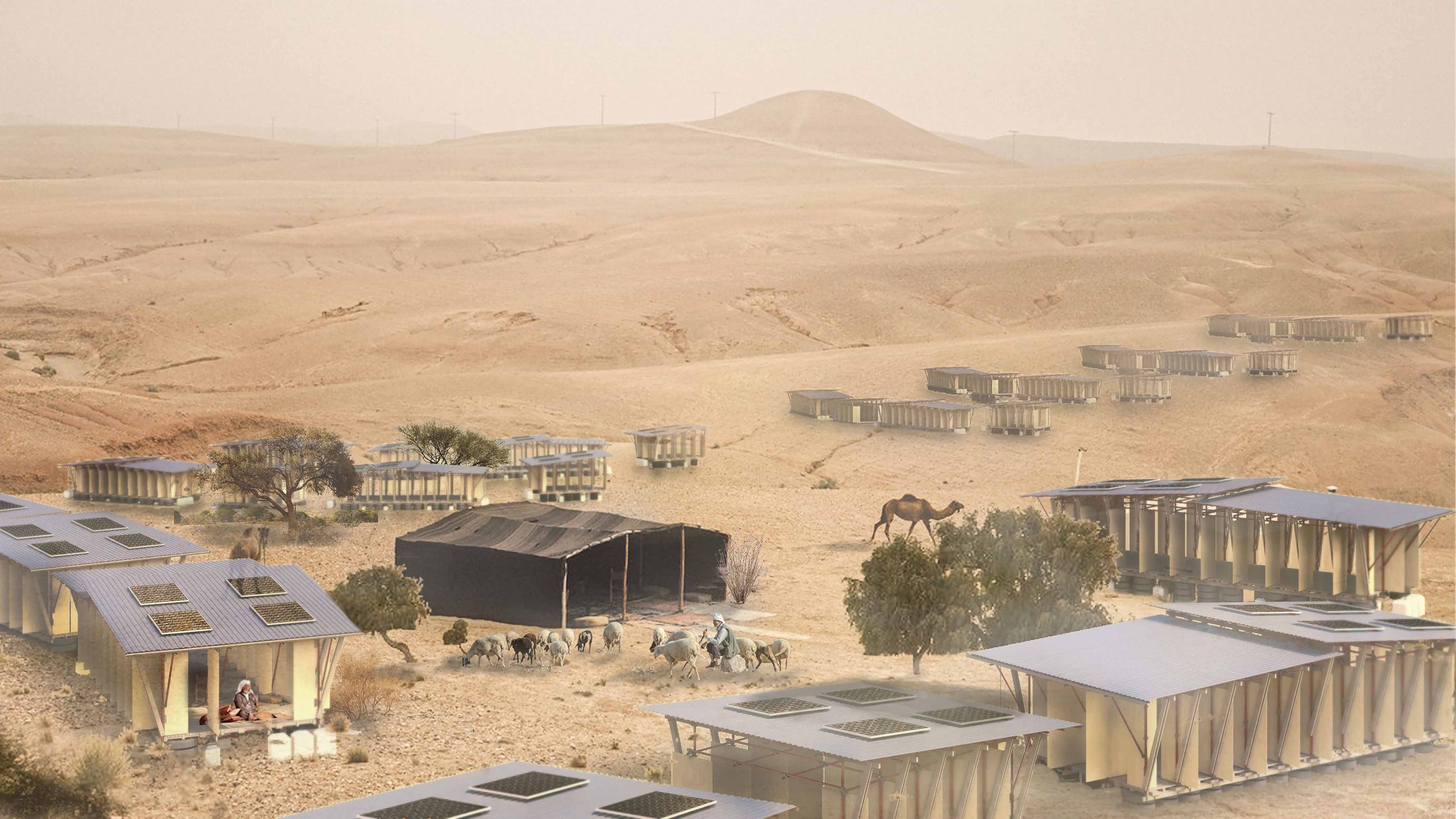
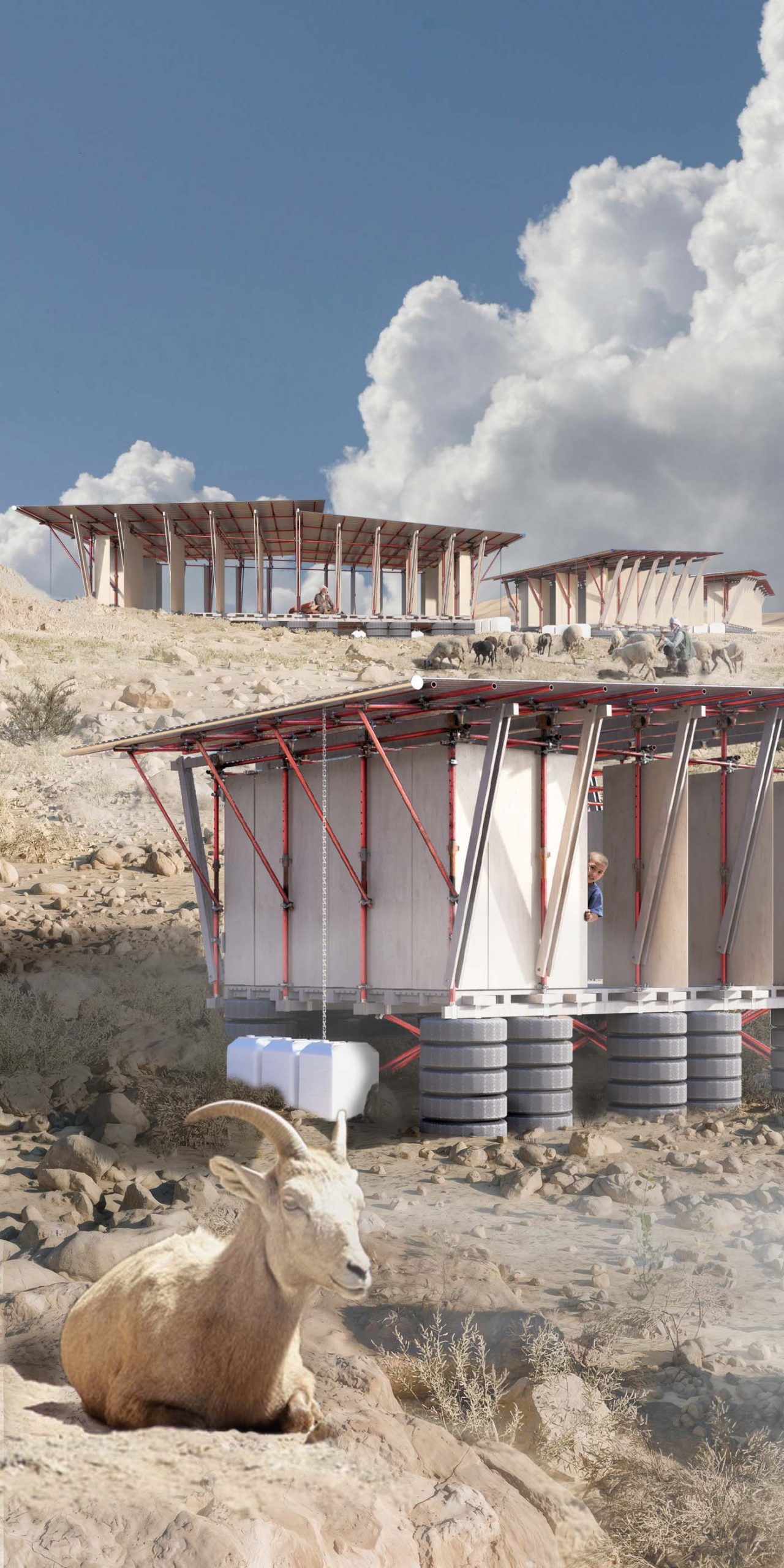
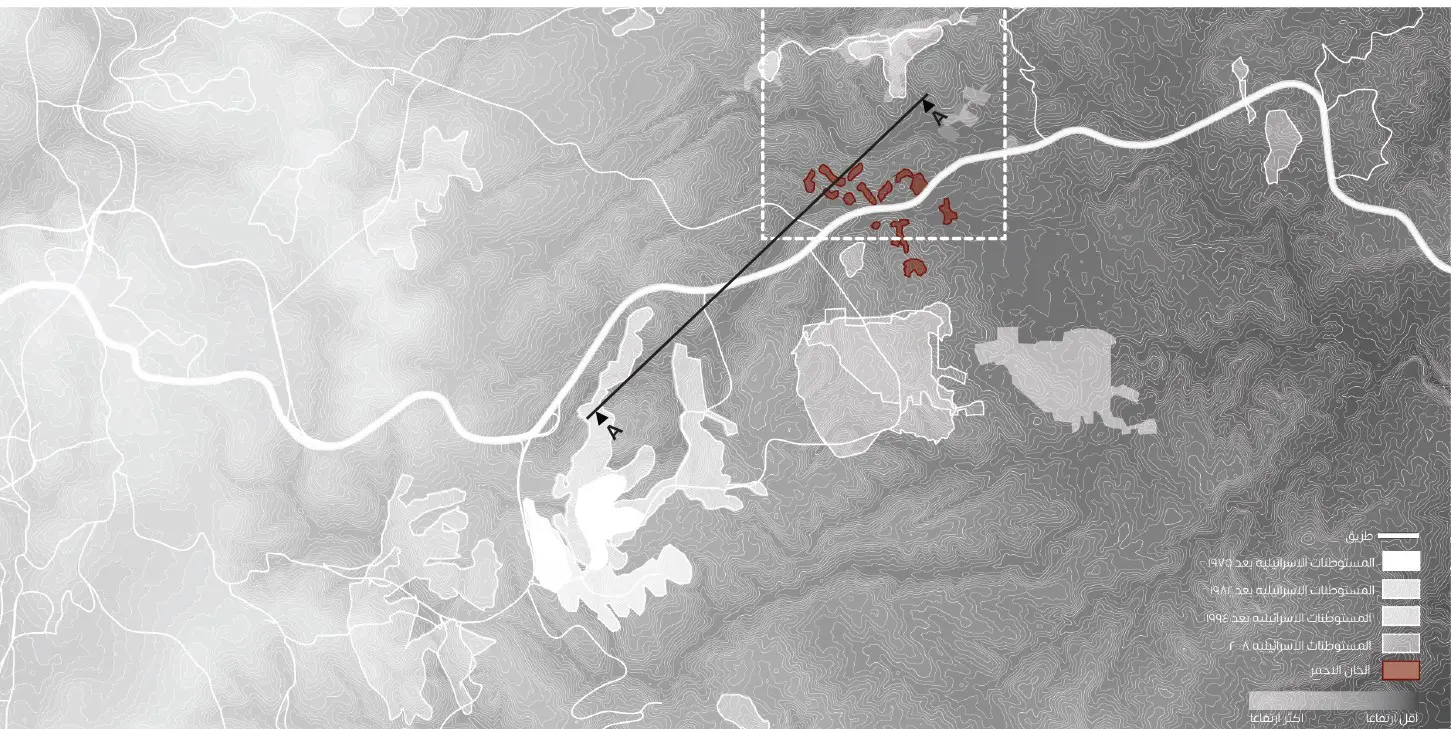
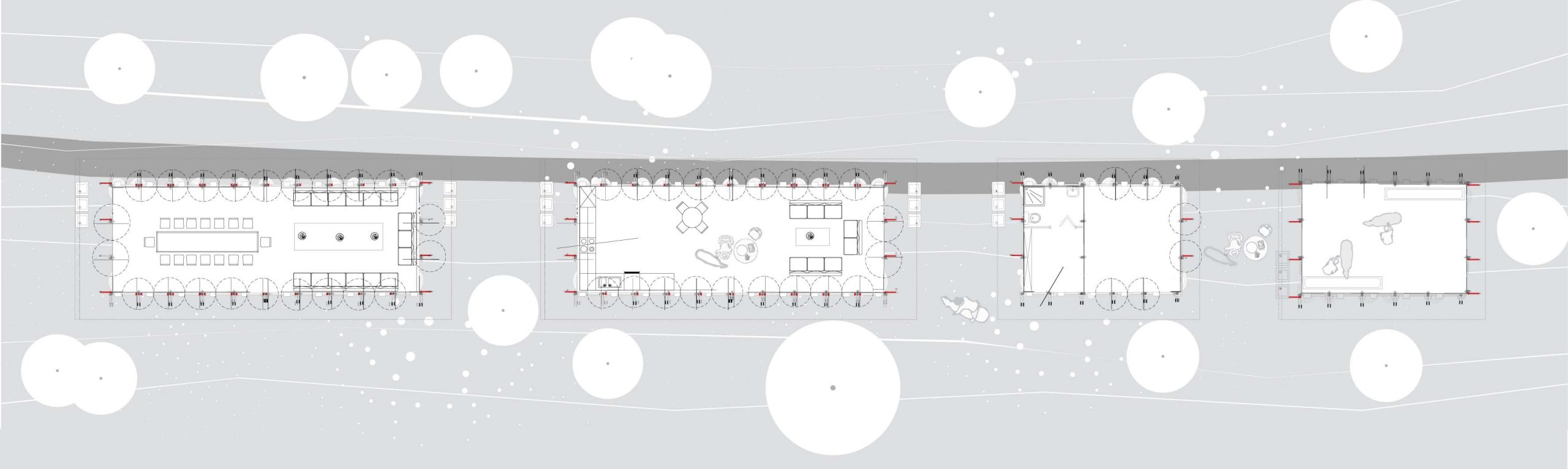
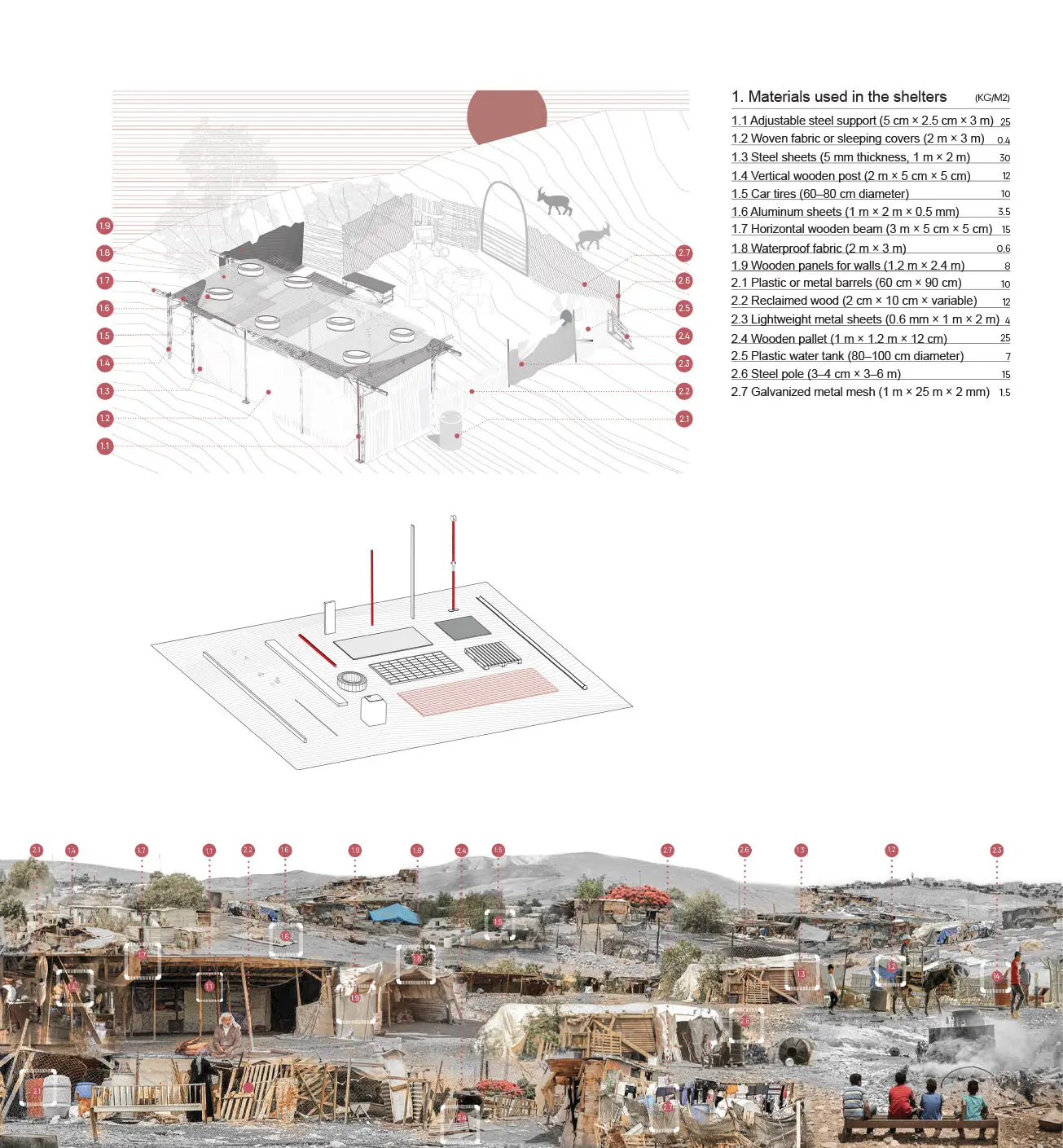
The Reclaimed Temporary’ emerges from the challenging landscape of ‘Khan al-Ahmar’, a territory marked by constant threat, scarce resources, and fragile daily life. The project is inspired by ‘Bedouin tents’, translating their flexibility, simplicity, and human-centered design into a modular, lightweight, and demountable architectural system. Each unit adapts to terrain and climate, with adjustable heights, rotatable walls, and self-sufficient systems for water collection and renewable energy, turning constraints into opportunities for innovation and resilience. The courtyards, drawn from the communal Bedouin culture, function as social hubs where private, semi-private, and open spaces merge. Their orientation and placement shift with topography and sun path, maintaining intimacy while fostering community interaction. The ‘reciprocal frame structure’ allows the units to adjust to uneven ground, reflecting the philosophy of human solidarity and adaptability. Materials used in the project echo the local context, reinforcing cultural authenticity and simplicity. Each intervention preserves the identity of the landscape while providing practical solutions for mobility, rapid assembly, and functional flexibility. The project as a whole is self-sufficient, resilient, and responsive, capable of enduring crises and adapting to diverse scenarios. Ultimately, ‘The Reclaimed Temporary’ is more than architecture, it is a living system of survival, identity, and dignity. By merging heritage, technology, and adaptability, the project offers a universal model for resilient, culturally rooted architecture that responds to conflict, displacement, and environmental challenges, providing hope and continuity to communities in precarious contexts worldwide.
Established in 2012, Tamayouz Excellence Award is an unaffiliated, independent initiative that aims to advance the profession of architecture academically and professionally. Tamayouz is dedicated to supporting aspirational and transformative projects that tackle local and global challenges and that are informed by a holistic understanding of context.