



University : Balqaa Applied University
Tutor(s) : Dr Ayman N. Maayah
Project Description
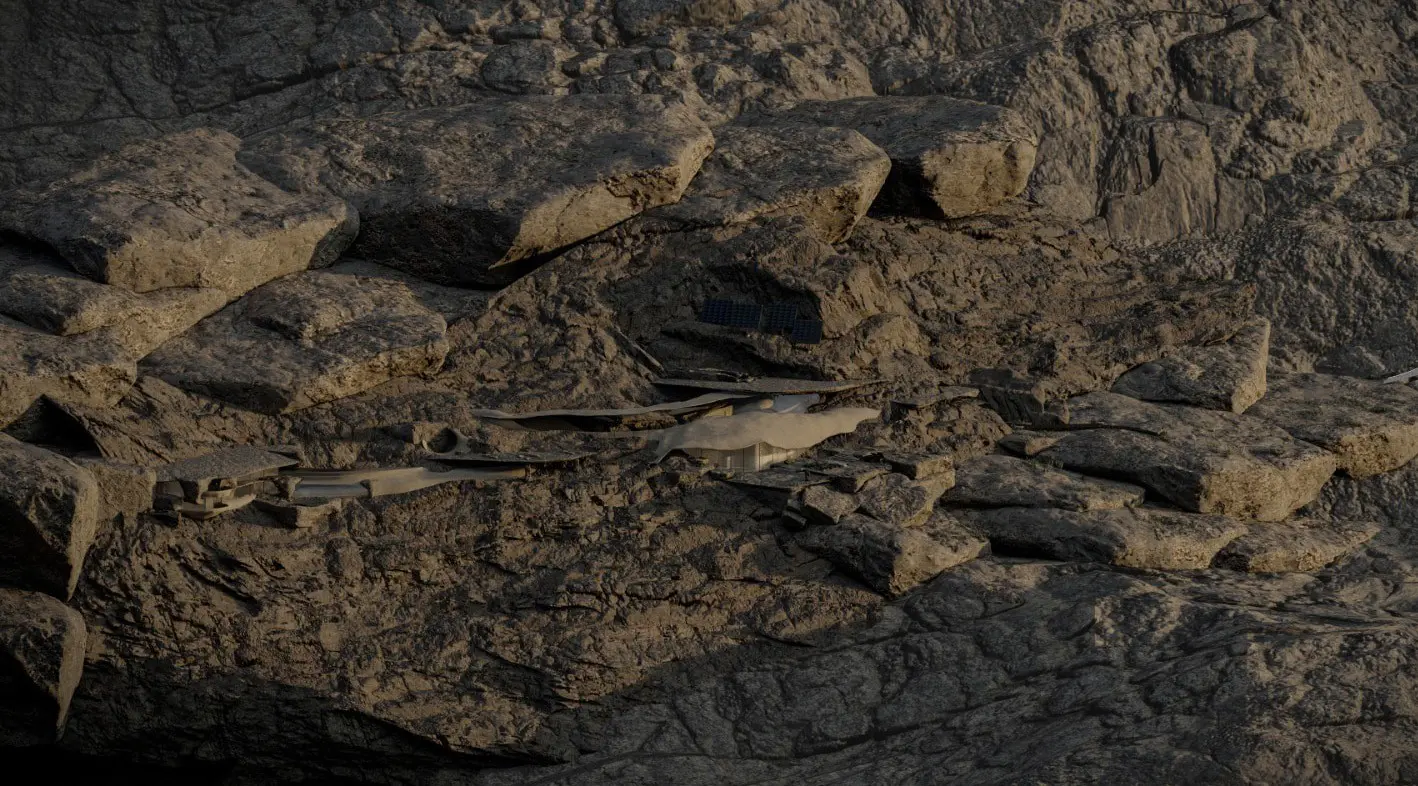
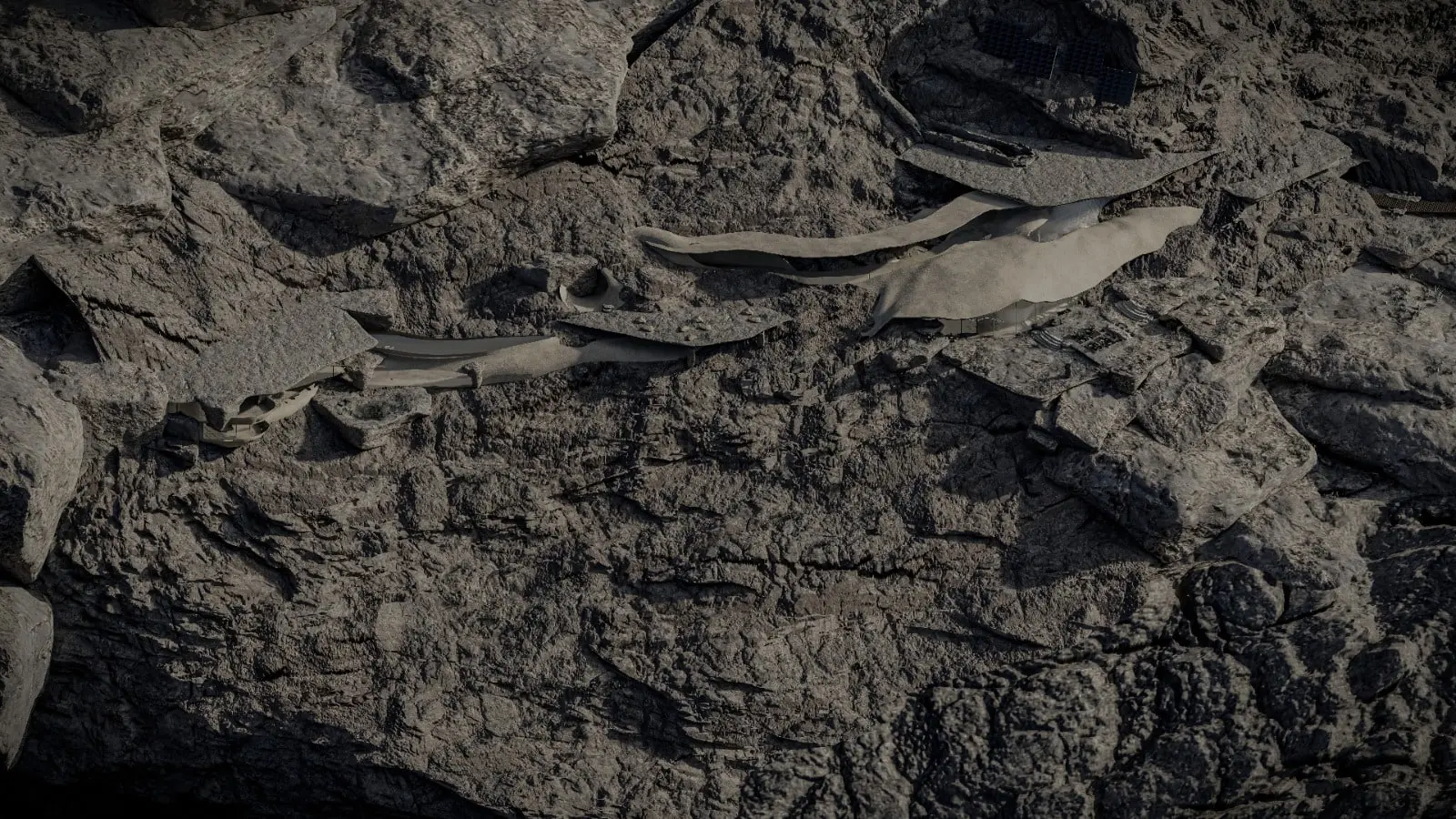
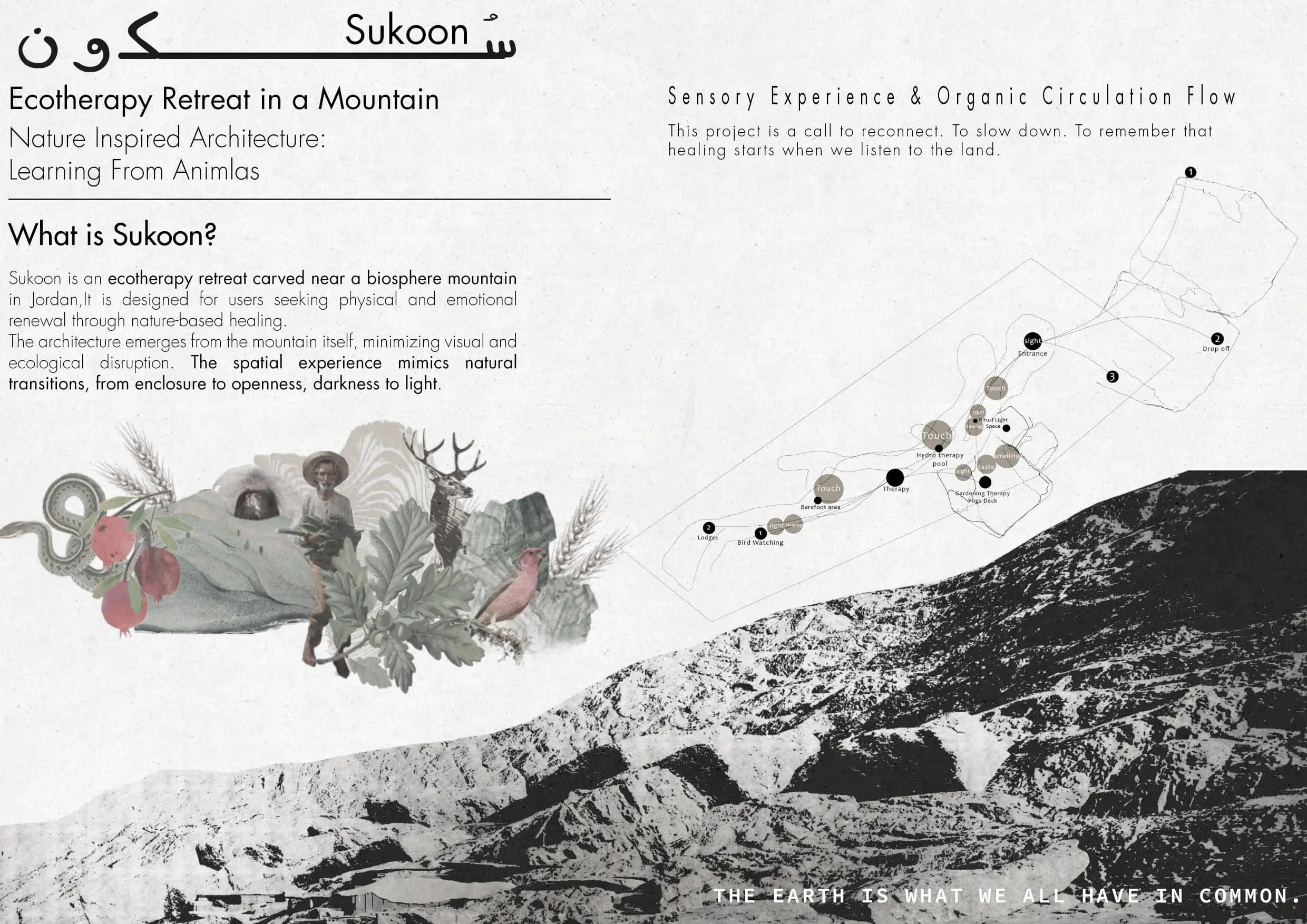
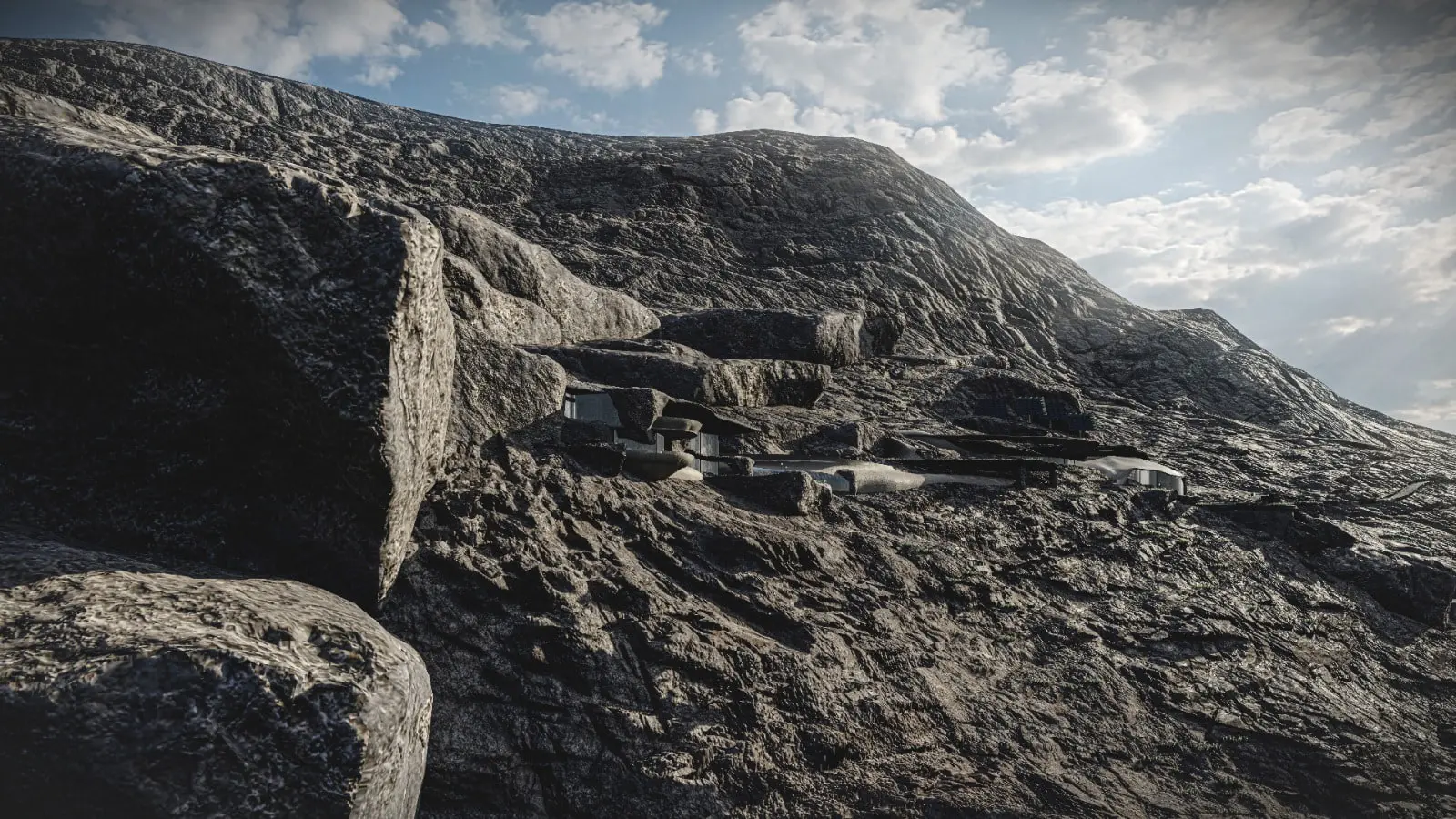
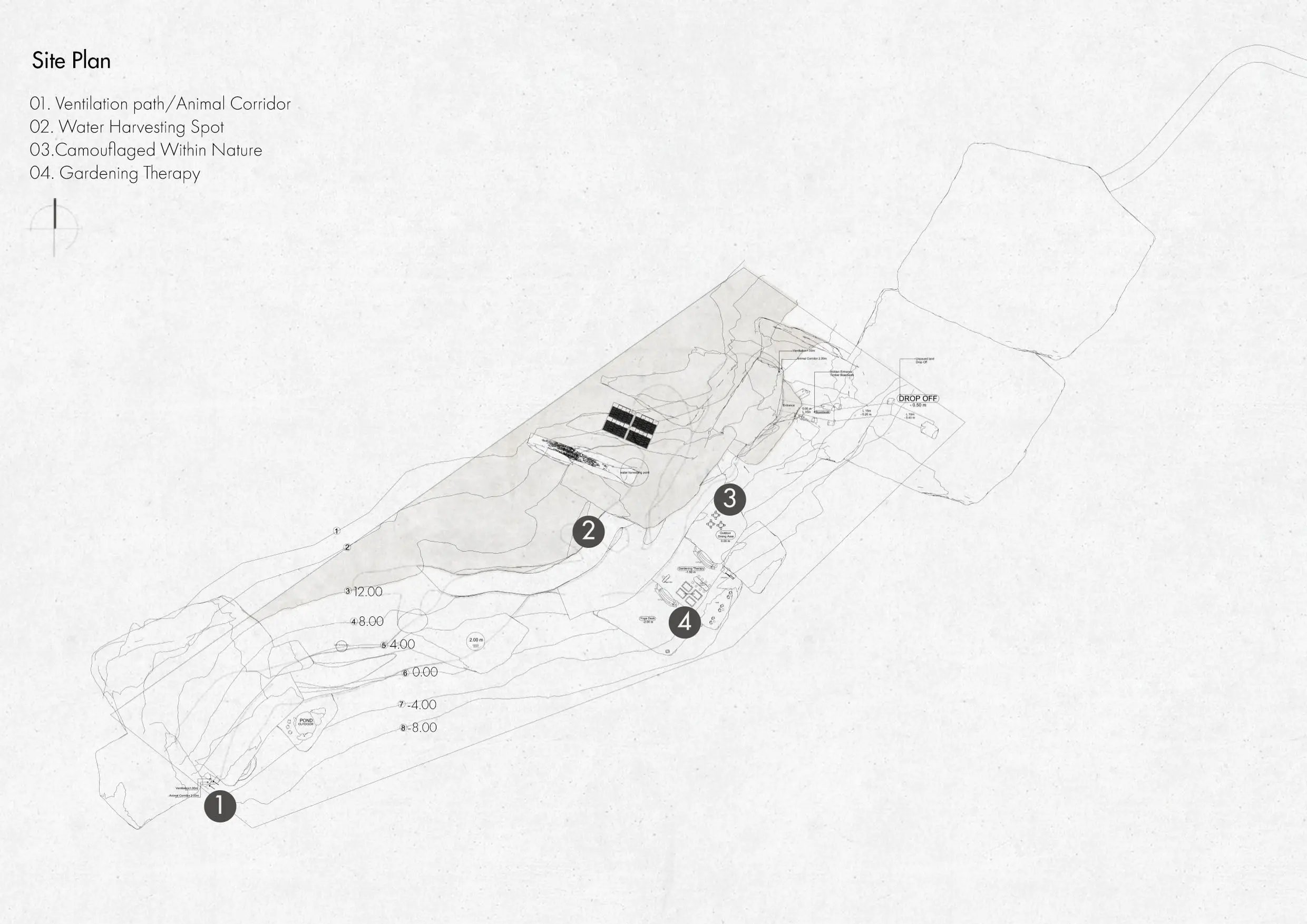
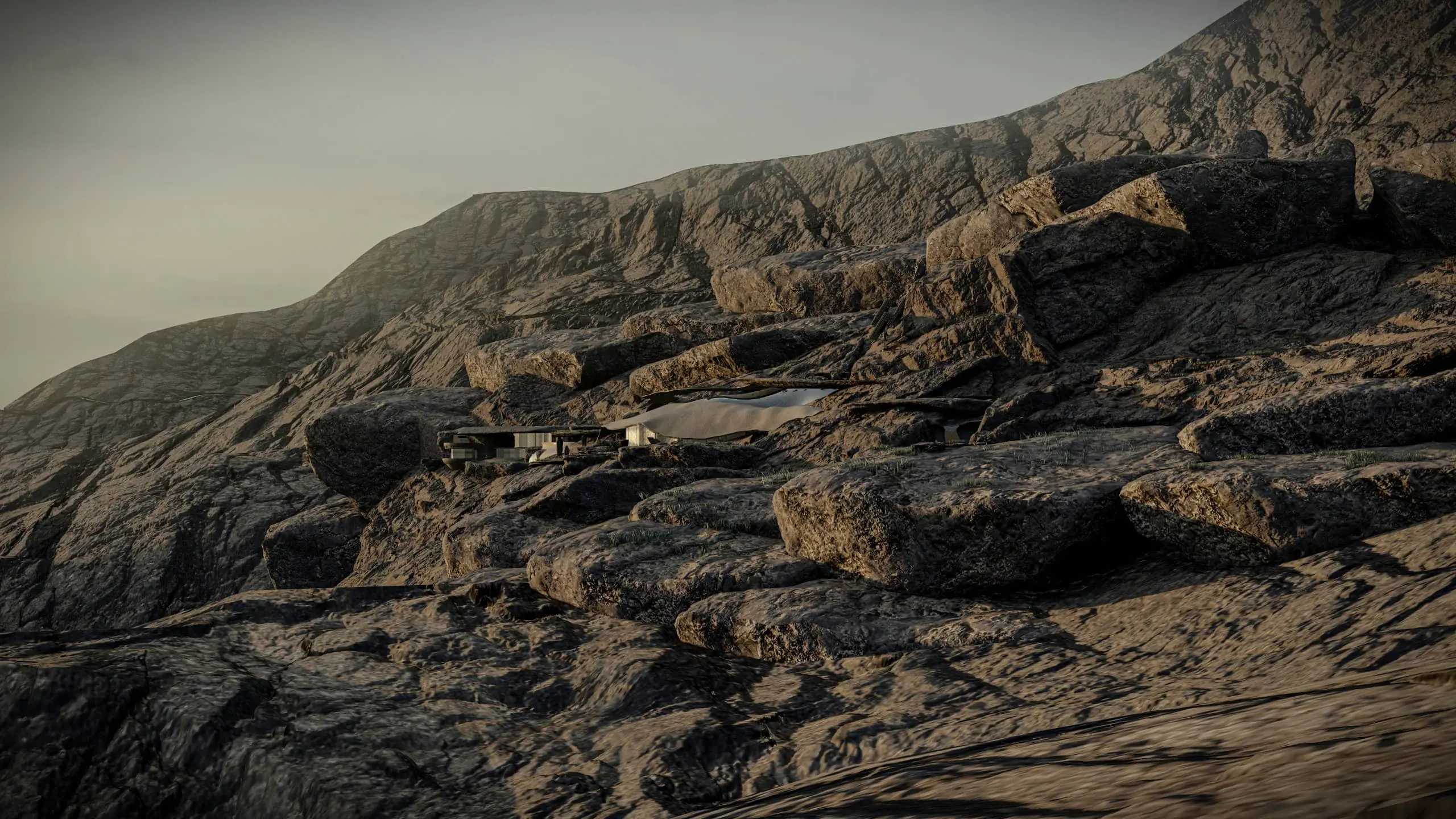
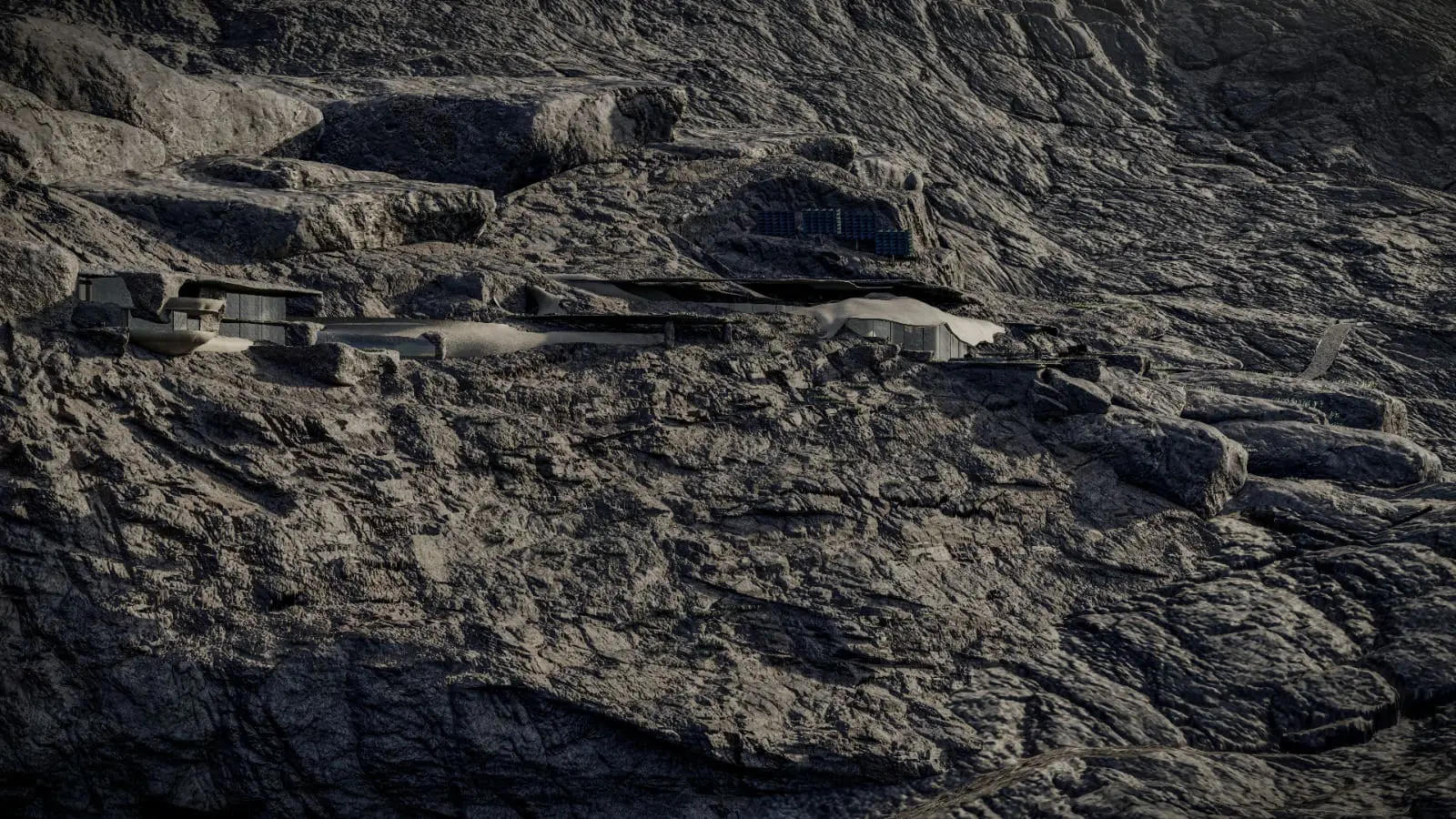
Sukoon, meaning serenity, explores architecture as a medium of healing through a retreat carved into a Jordanian mountain near a protected biosphere reserve. The project reimagines the human–nature relationship as a spatial journey of emotional transition, moving from dark, enclosed spaces toward open, light-filled experiences that foster renewal, reflection, and sensory reconnection.
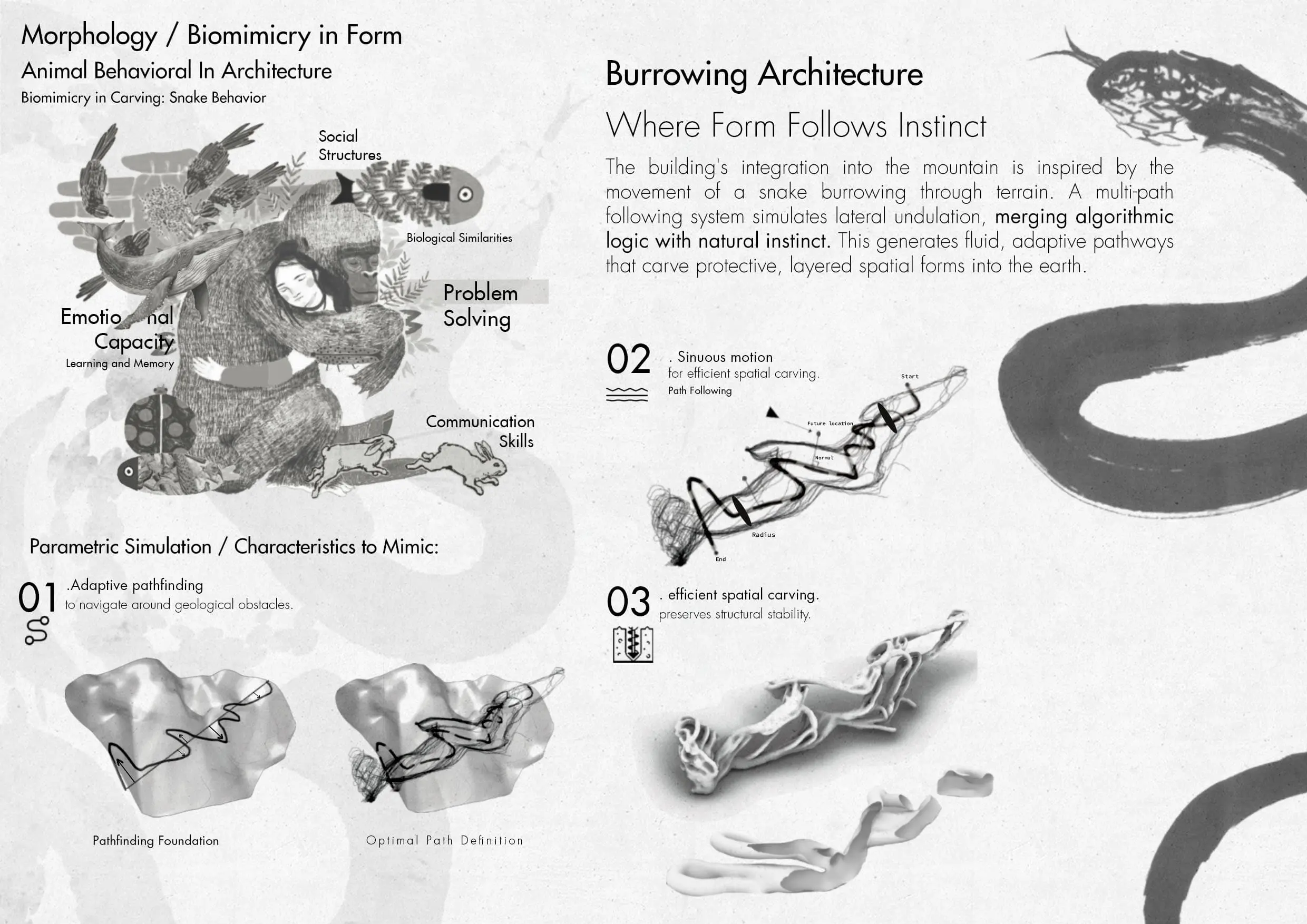
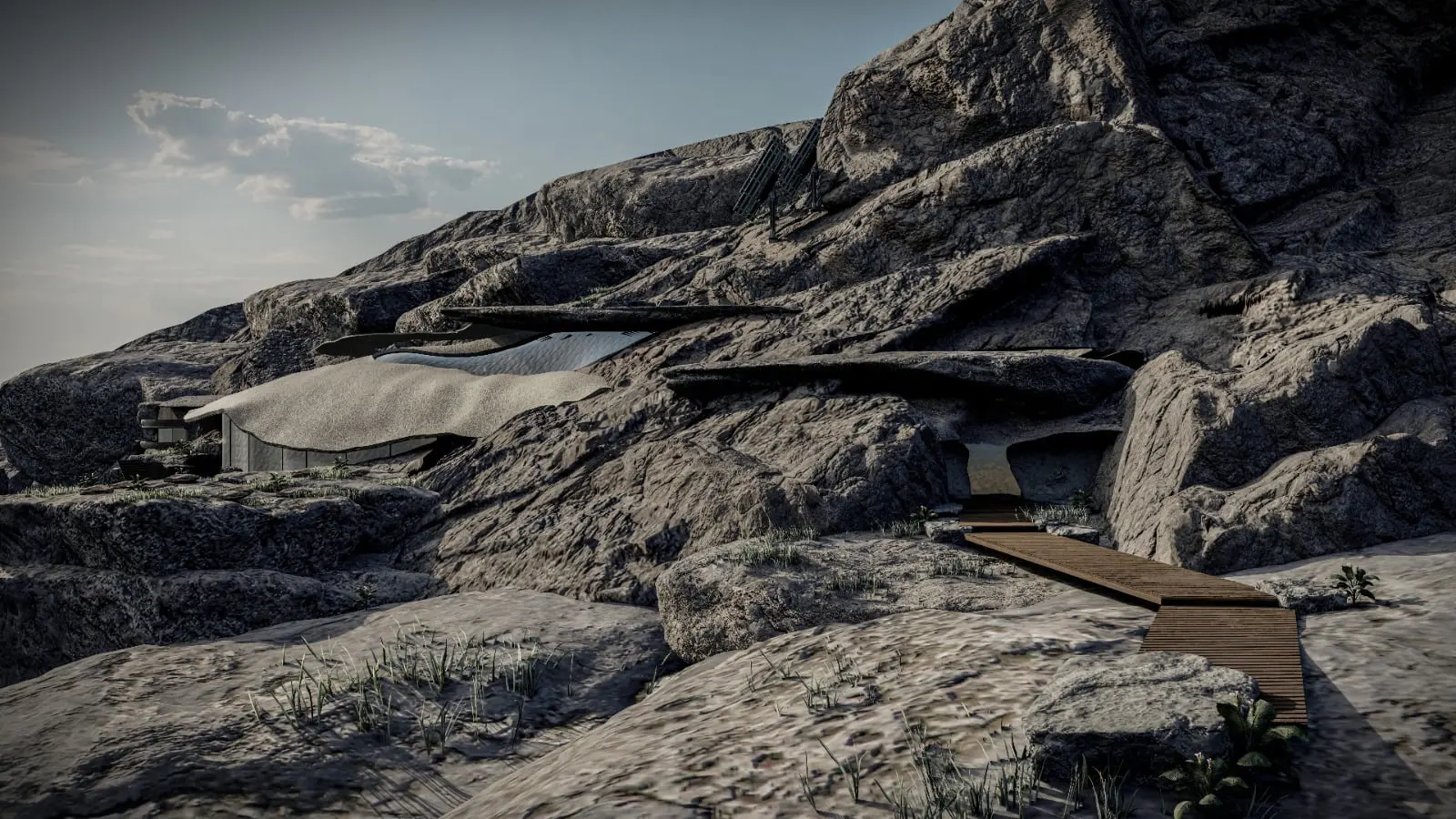
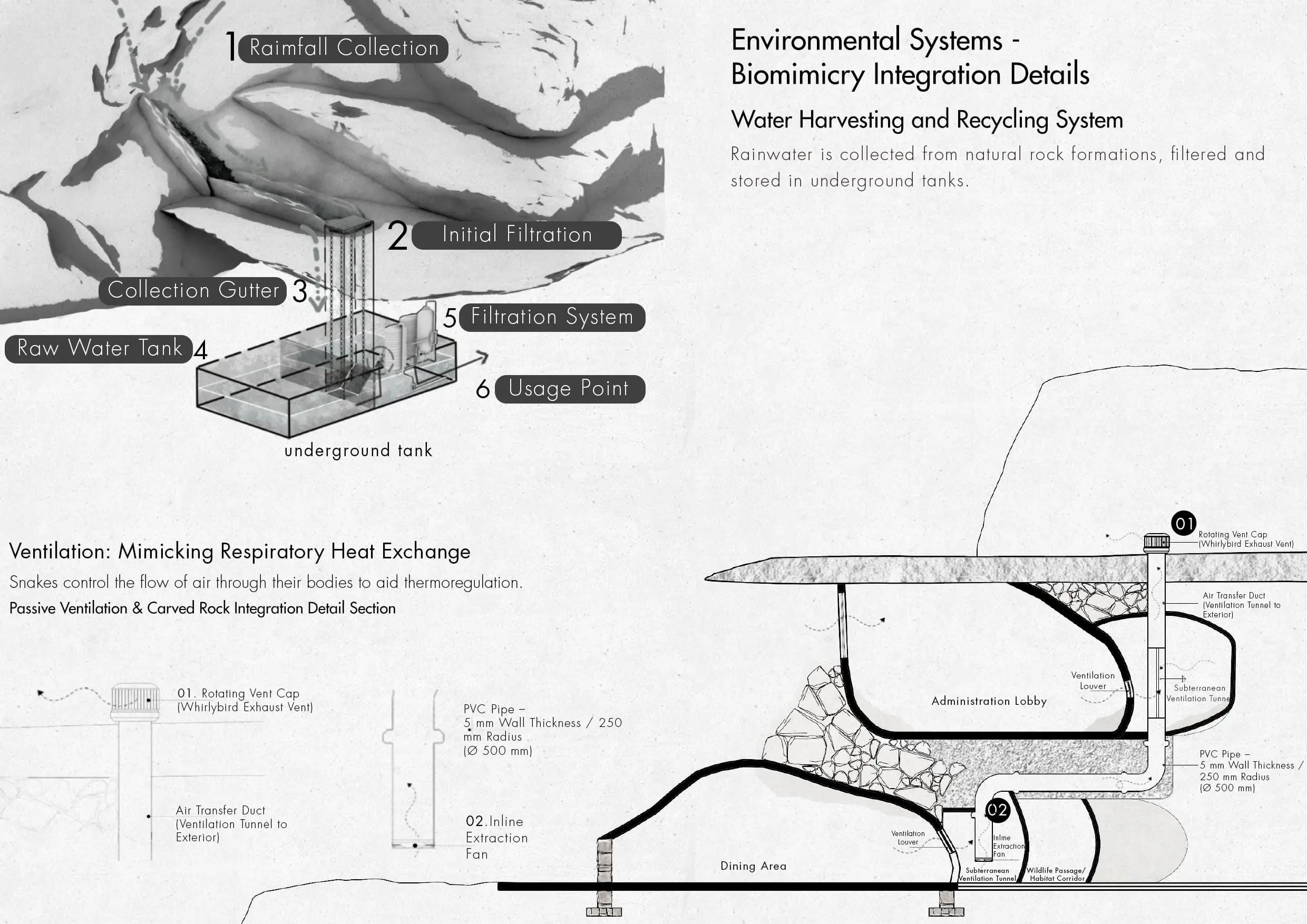
Rooted in biomimicry and environmental responsiveness, the design draws inspiration from animal behaviours observed in natural habitats. Snake burrowing techniques inform the hidden subterranean entrance, creating a sense of protection and grounding at the beginning of the journey, while bird flight patterns shape circulation, guiding users through fluid and intuitive movement across the site. Hanging paths and carved passages merge seamlessly with the mountain’s geology, allowing architecture to emerge gradually from the landscape rather than dominate it.
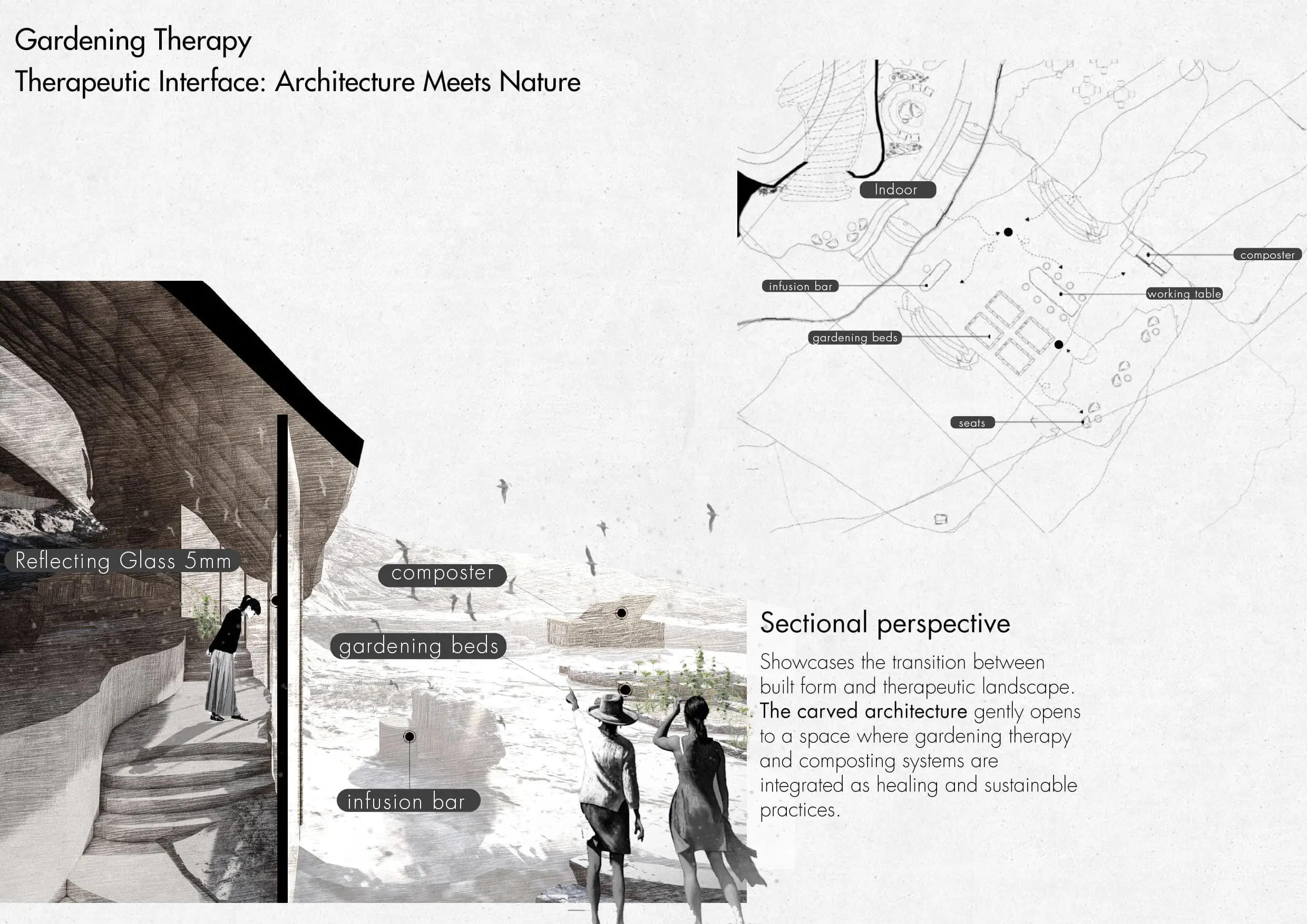
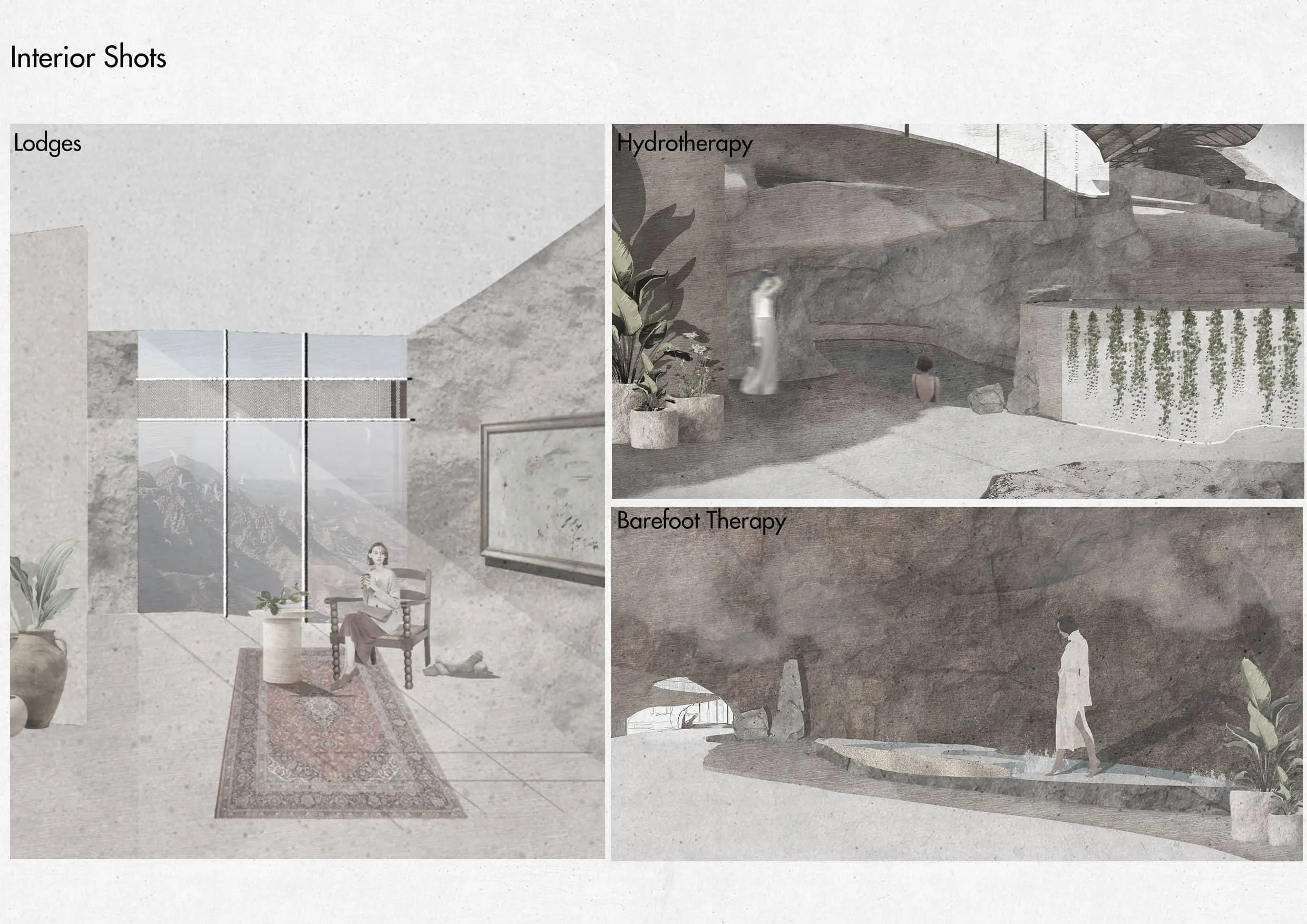
As the journey unfolds, users move through a sequence of shared and restorative spaces that gradually shift from social interaction to introspective retreat. Moments of pause, water elements, and framed views are woven along the path, reinforcing mindfulness, emotional balance, and a continuous connection to the surrounding landscape.
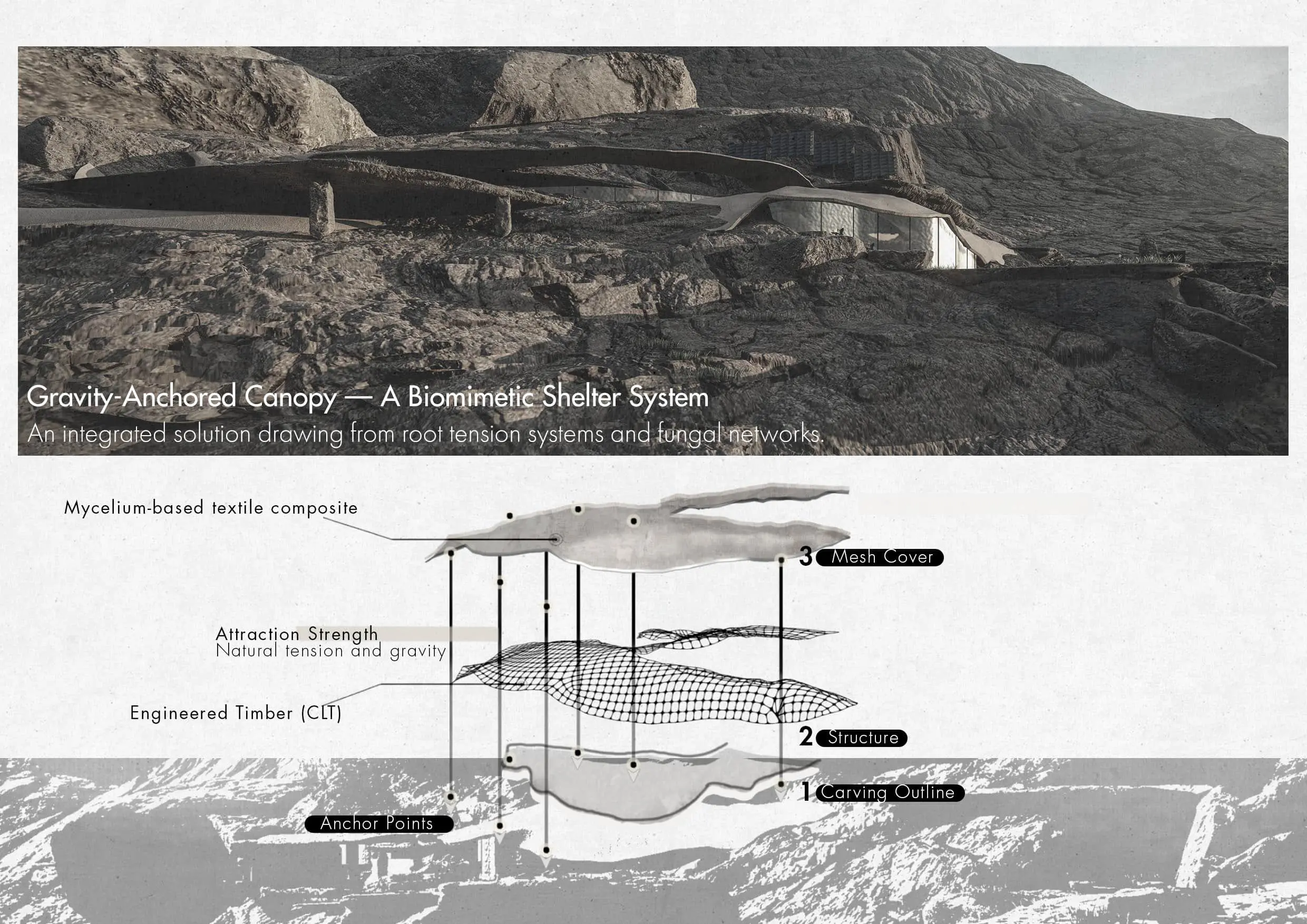
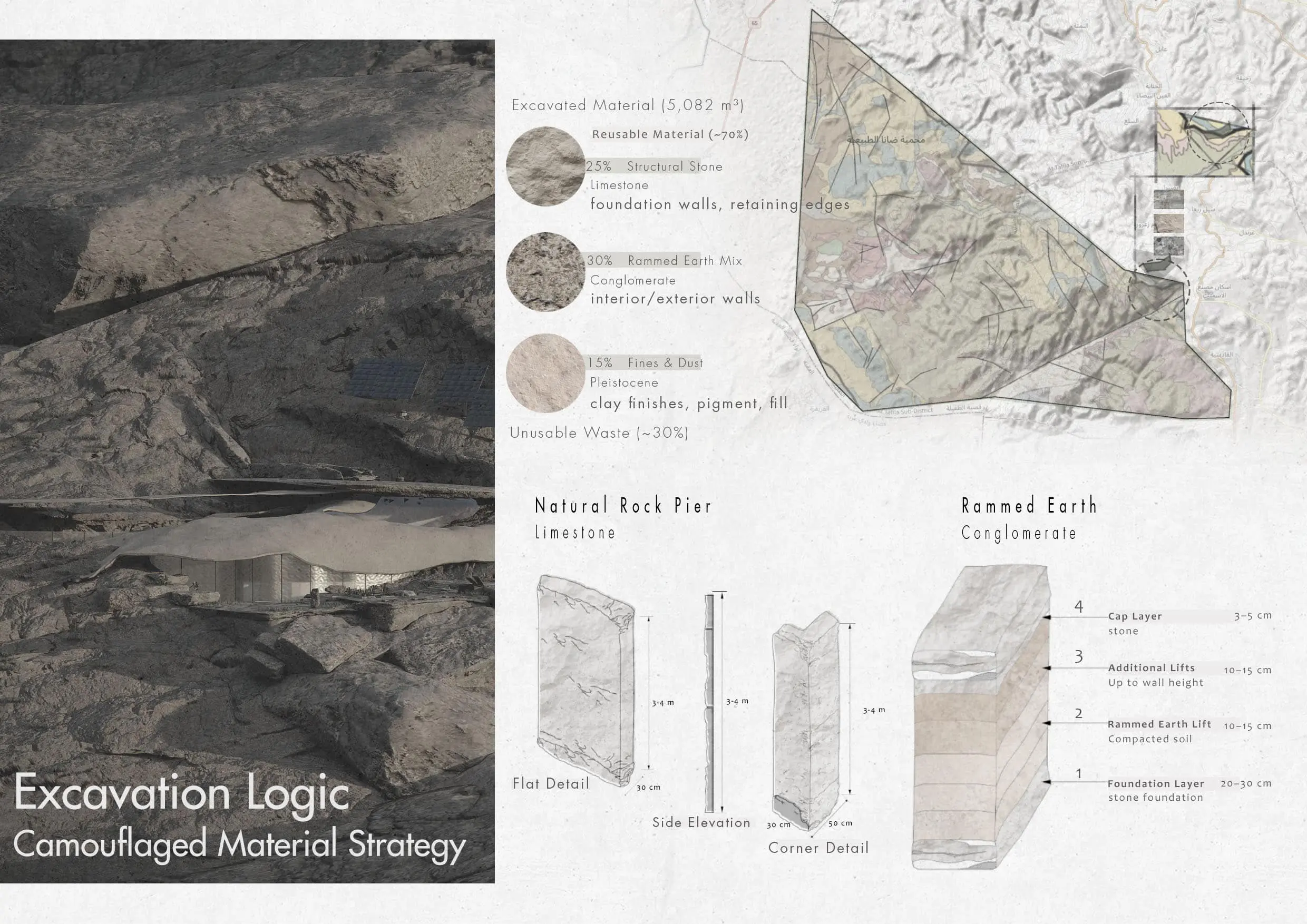
Constructed using 3D-formed rammed earth and locally sourced stone, the project minimizes ecological disruption while reinforcing a tactile, grounded architectural language. Passive environmental strategies, natural ventilation, and sustainable material use support both human well-being and long-term ecological preservation, positioning Sukoon as a model for healing architecture rooted in landscape, behaviour, and place.
Established in 2012, Tamayouz Excellence Award is an unaffiliated, independent initiative that aims to advance the profession of architecture academically and professionally. Tamayouz is dedicated to supporting aspirational and transformative projects that tackle local and global challenges and that are informed by a holistic understanding of context.