







University : Ahsanullah University of Science and Technology. (AUST)
Tutor(s) : Dr. Ayasha Siddiqua
Project Description
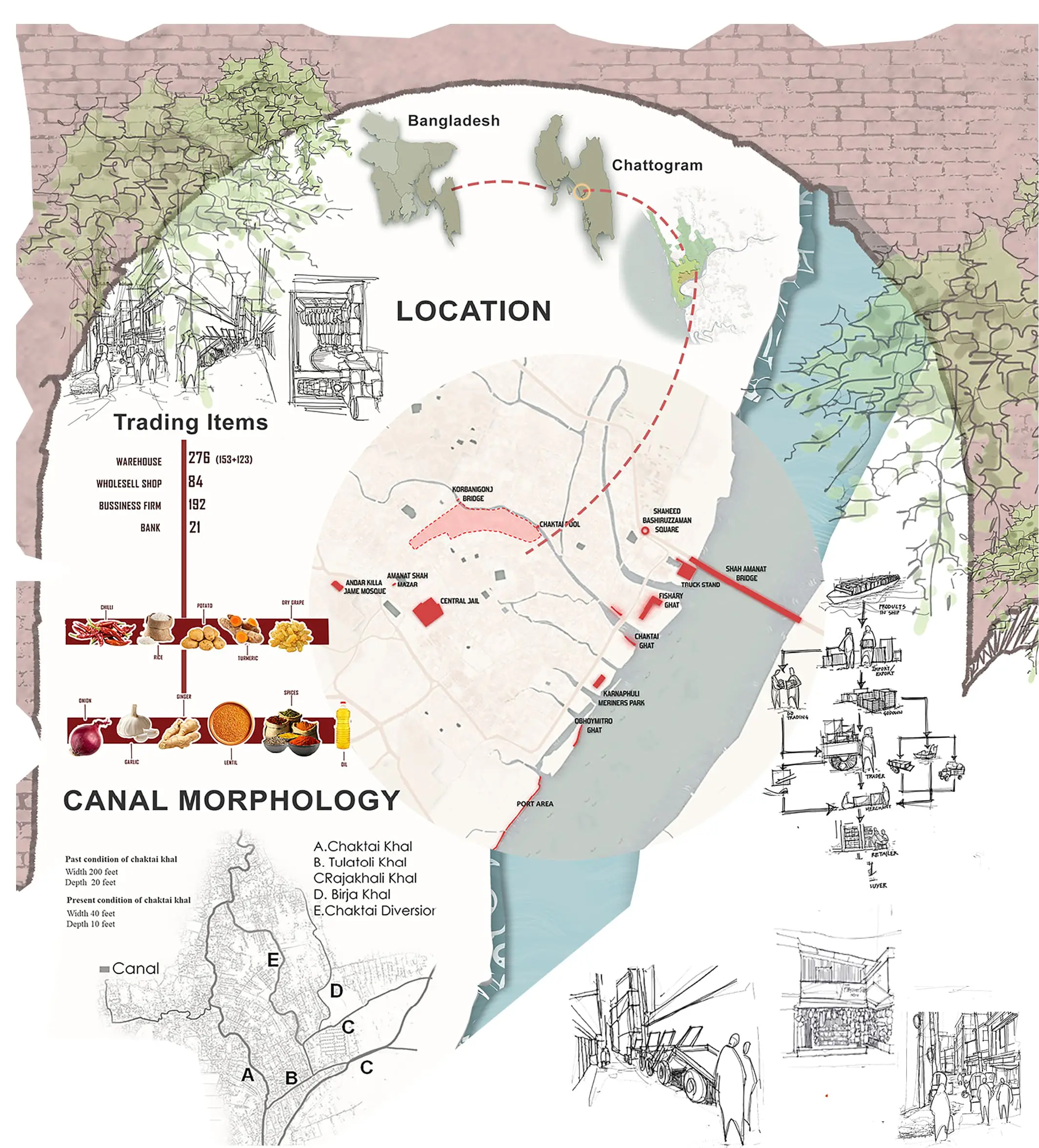
Khatunganj, the largest consumer wholesale market in Bangladesh, sits along the Karnaphuli River and Chaktai Canal. Historically, it has been pivotal for import and export activities, distributing goods nationwide and serving as a central trade hub. Its significance dates back to the 2nd century, with Chand Sawdagar initiating the first business there. The market flourished through successive eras, attracting Arab, Turkish, Portuguese, Dutch, and French traders, and forming part of the Maritime Silk Route.
By the British era, Khatunganj had evolved into a significant commercial center, contributing substantially to the world’s GDP during the Mughal era and Bangladesh’s GDP post-independence. Despite a decline in daily business transactions from 2,000 crore BDT in 2010 to 500 crore BDT now, Khatunganj remains vital to the country’s economy.
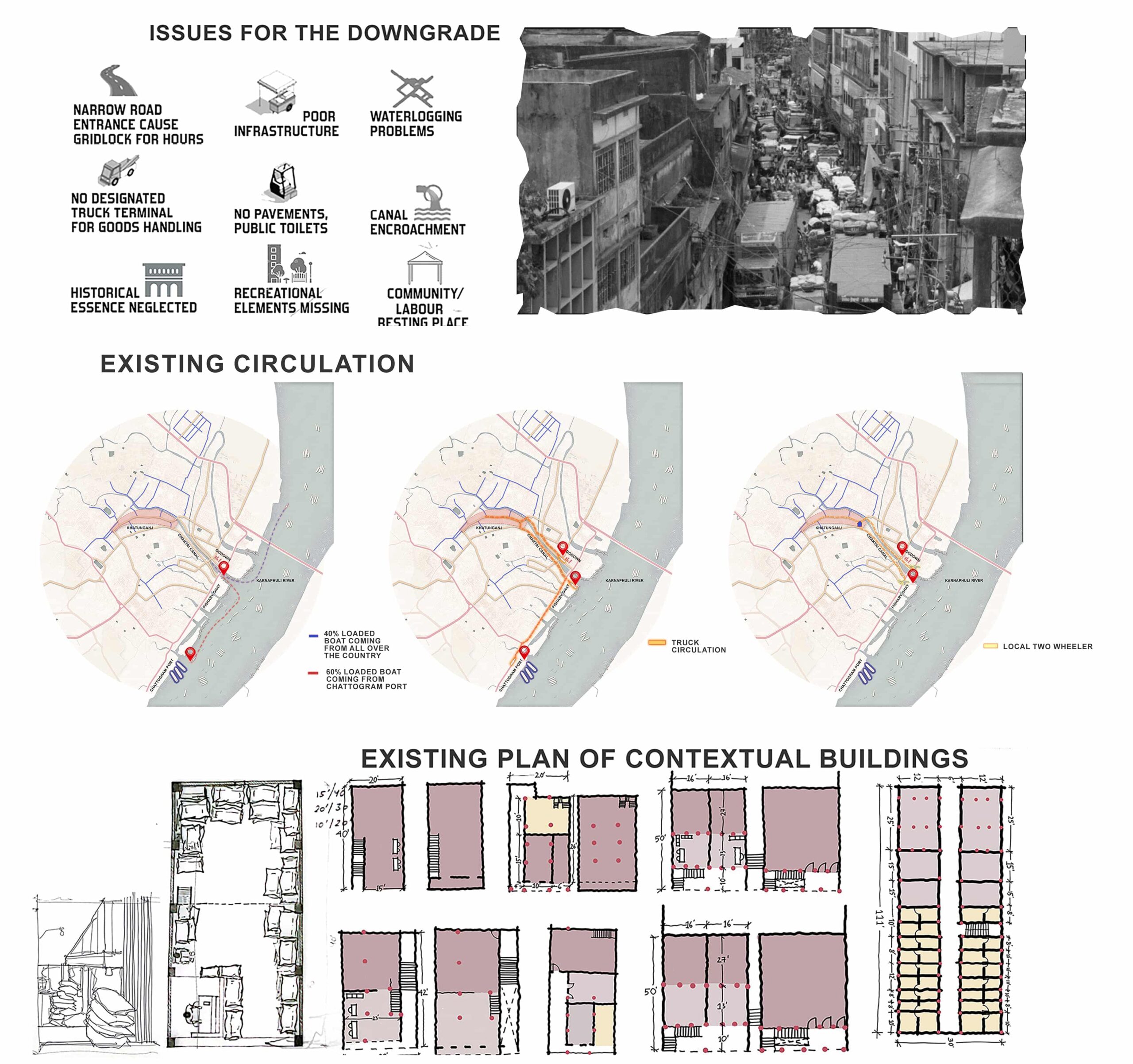
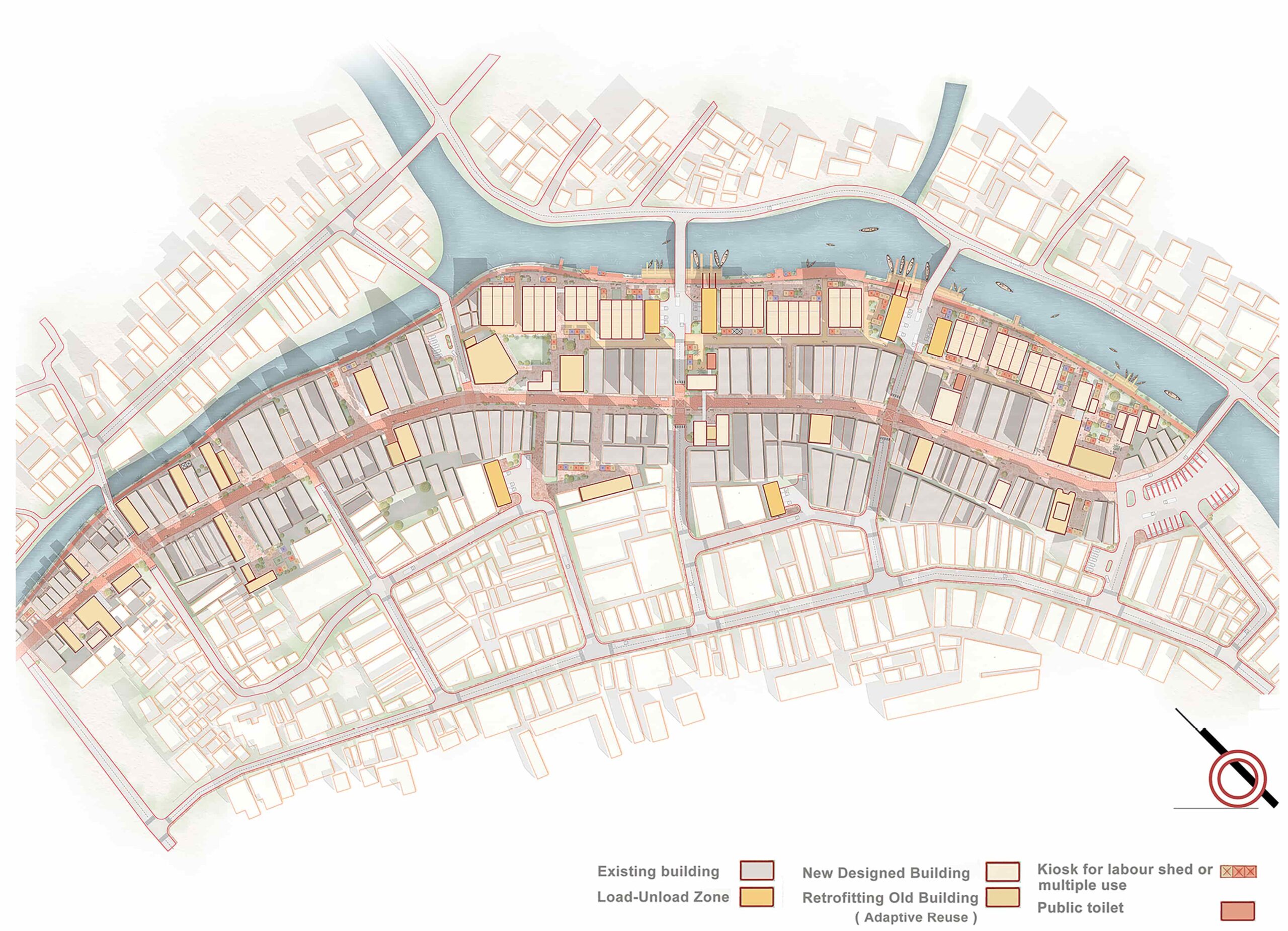
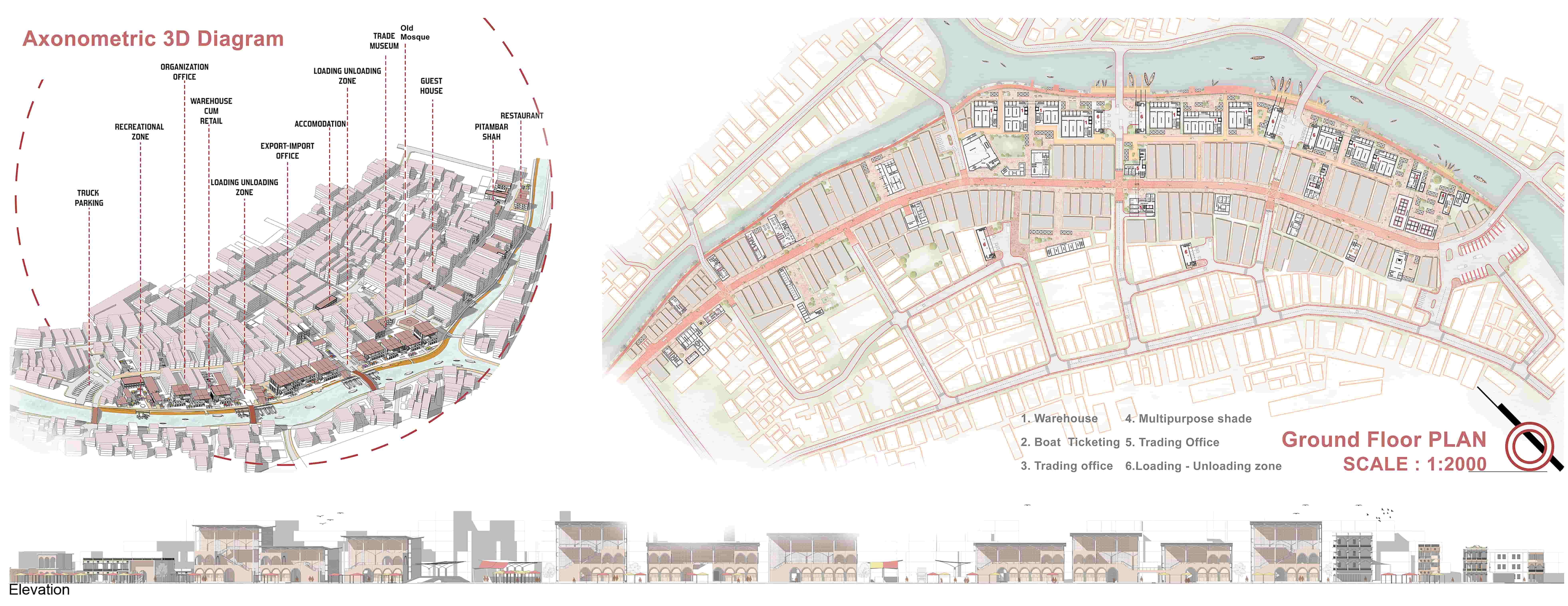
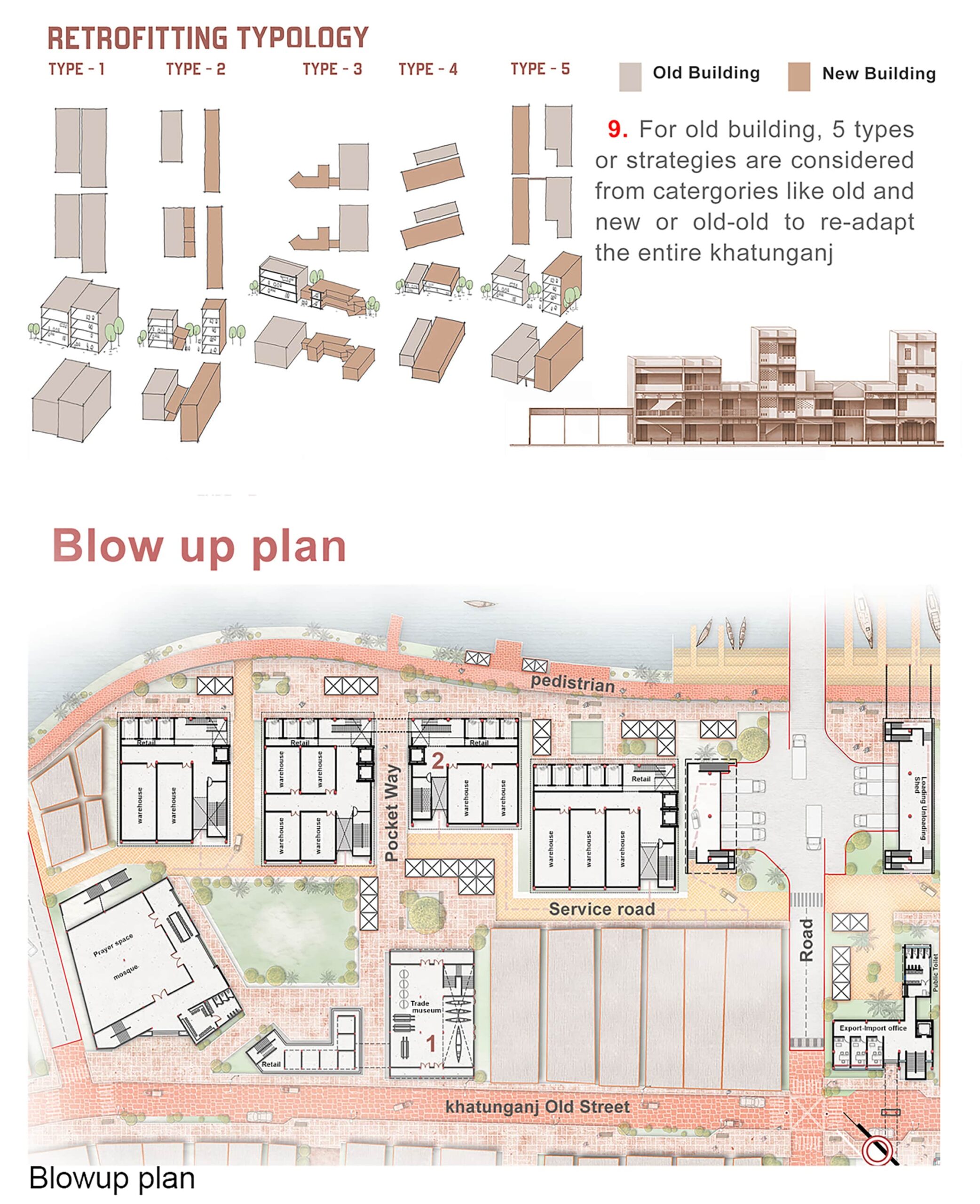
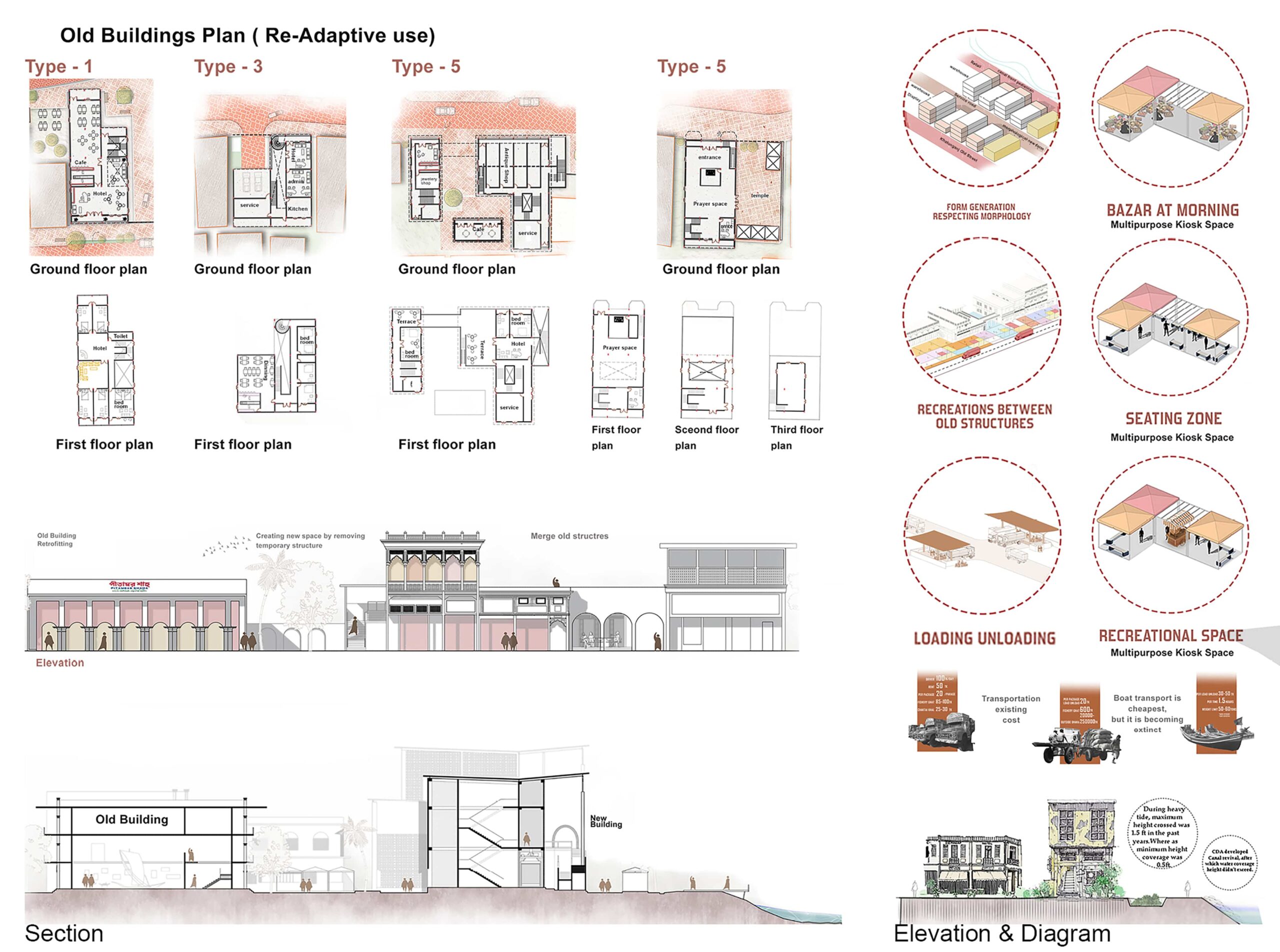
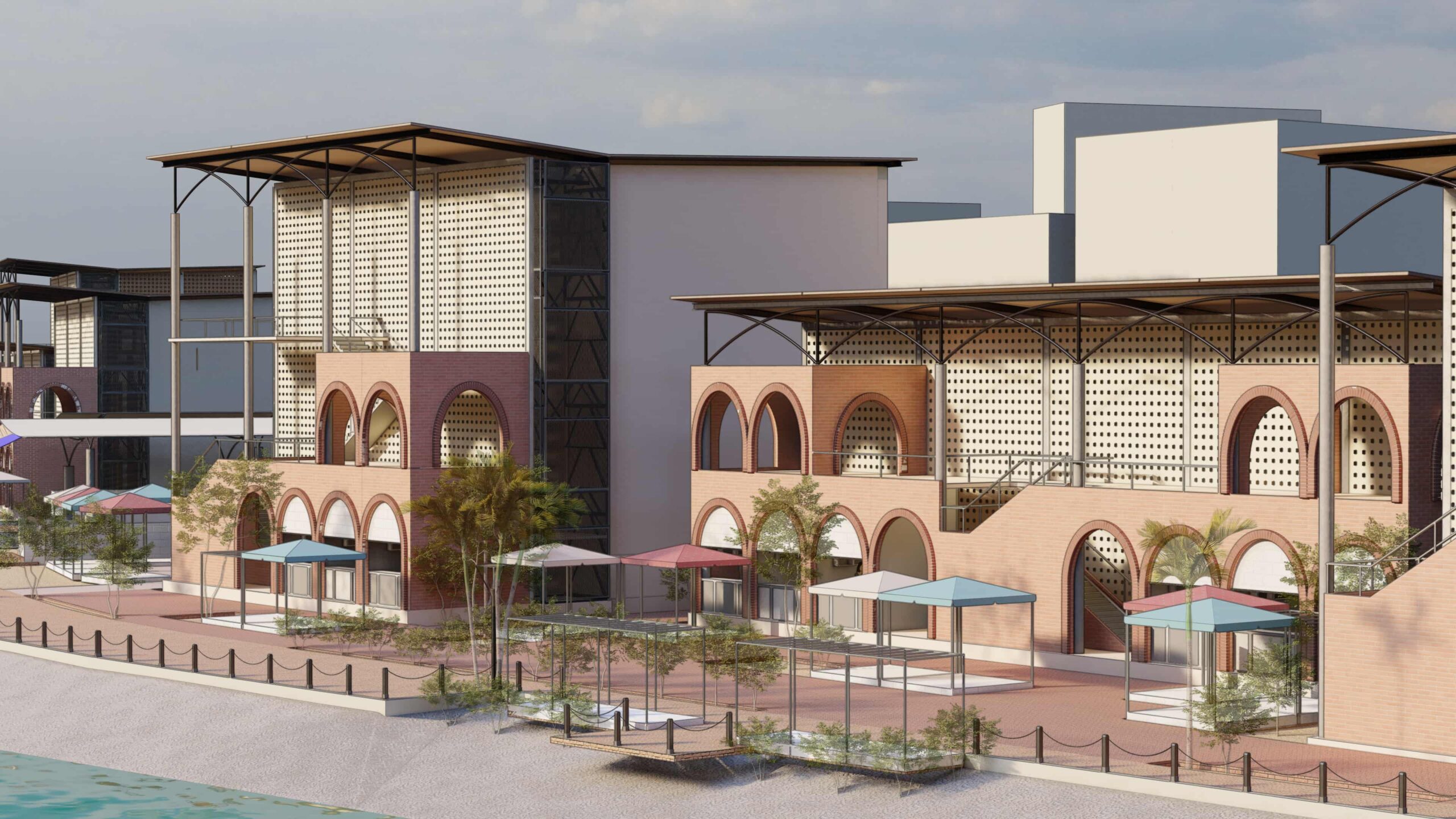
The market’s architecture reflects its rich history, with 18 to 20 structures from the 1700s to 1900s, initially designed for businesses and luxurious residences. These have deteriorated, necessitating adaptive reuse. Revitalizing Khatunganj involves addressing social, cultural, economic, and environmental aspects. Proposals include converting old streets into pedestrian-friendly areas, creating sheds for efficient loading/unloading, establishing water transport points, and developing facilities to support boat traffic and recreational boating.
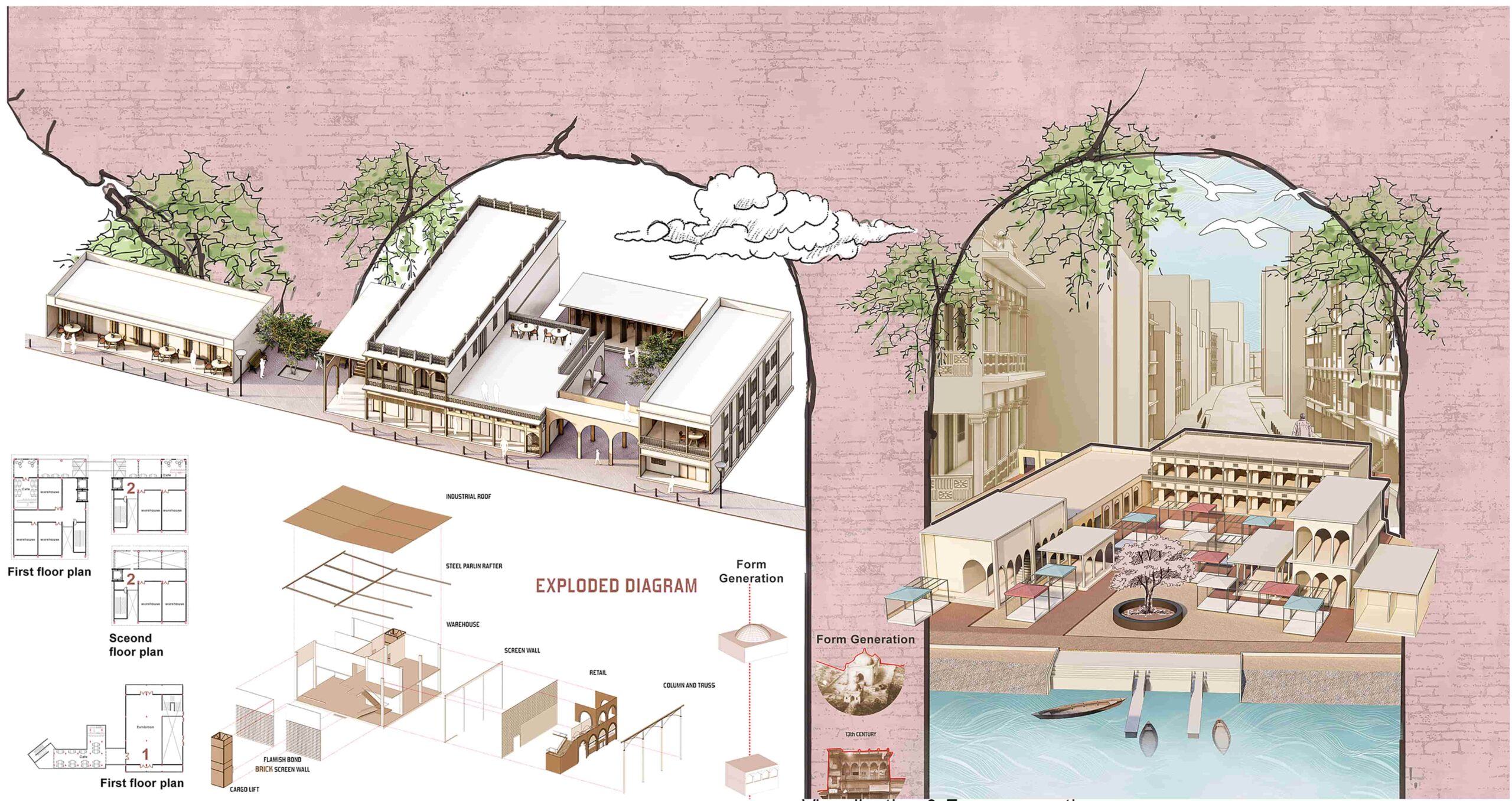
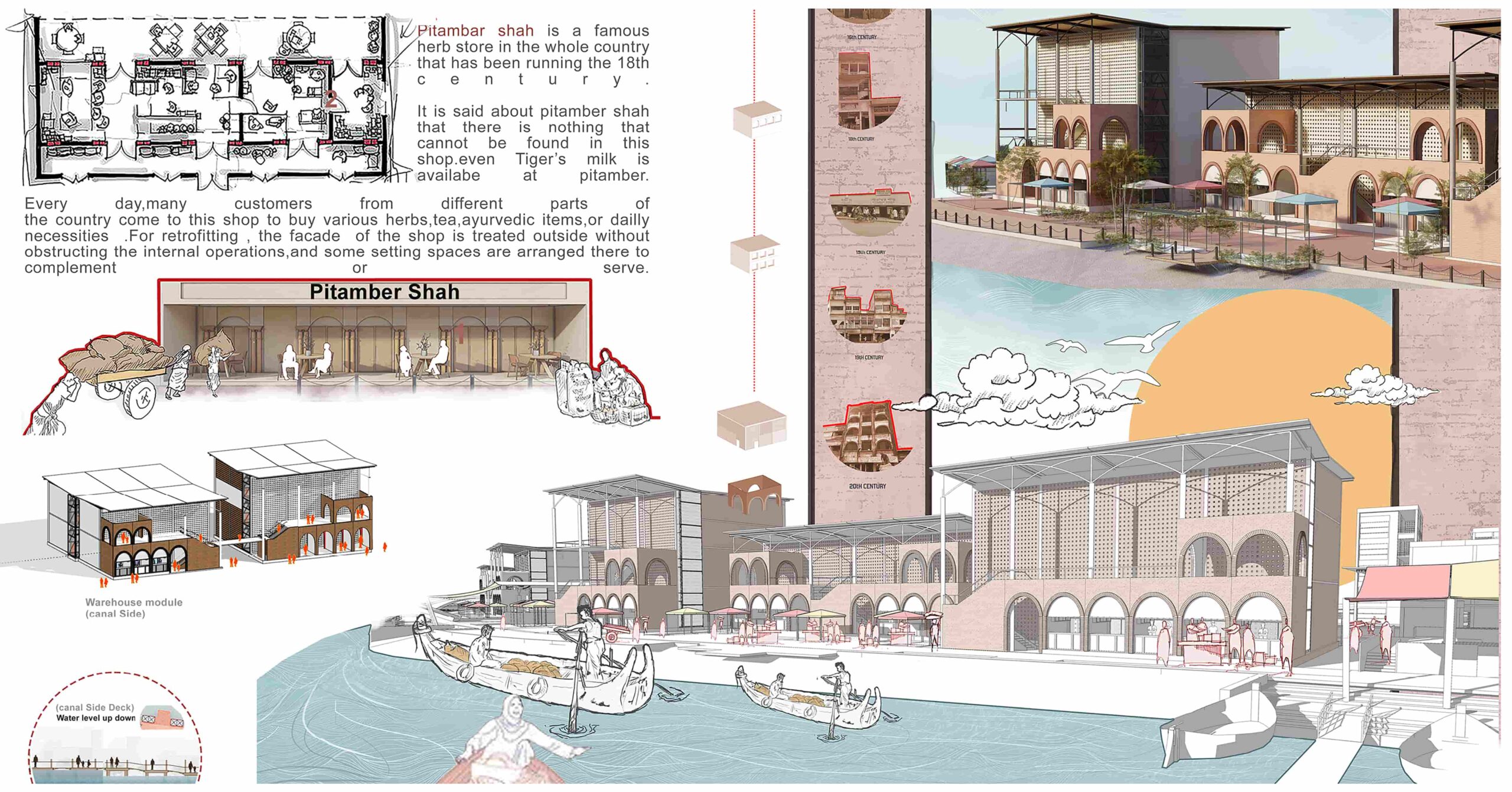
Further, integrating modular warehouse designs, incorporating old-style architectural elements, and promoting tourism through adaptive reuse of buildings are crucial strategies. Restoring the canals to prevent waterlogging and enhance navigability will also support Khatunganj’s revitalization, ensuring it serves future generations.
Established in 2012, Tamayouz Excellence Award is an unaffiliated, independent initiative that aims to advance the profession of architecture academically and professionally. Tamayouz is dedicated to supporting aspirational and transformative projects that tackle local and global challenges and that are informed by a holistic understanding of context.