





University : Sahmyook University
Tutor(s) : Kyu-Il Lee
Project Description
This project responds to the increasing stagnation of urban redevelopment in Korea, where aging residential complexes continue to accumulate while redevelopment projects remain suspended due to policy, economic, and social constraints. As redevelopment stalls, the risks of urban decline, slumification, and residential polarization become more severe. The project proposes an integrated system that restarts halted redevelopment cycles through the combination of modular construction and construction-waste recycling.
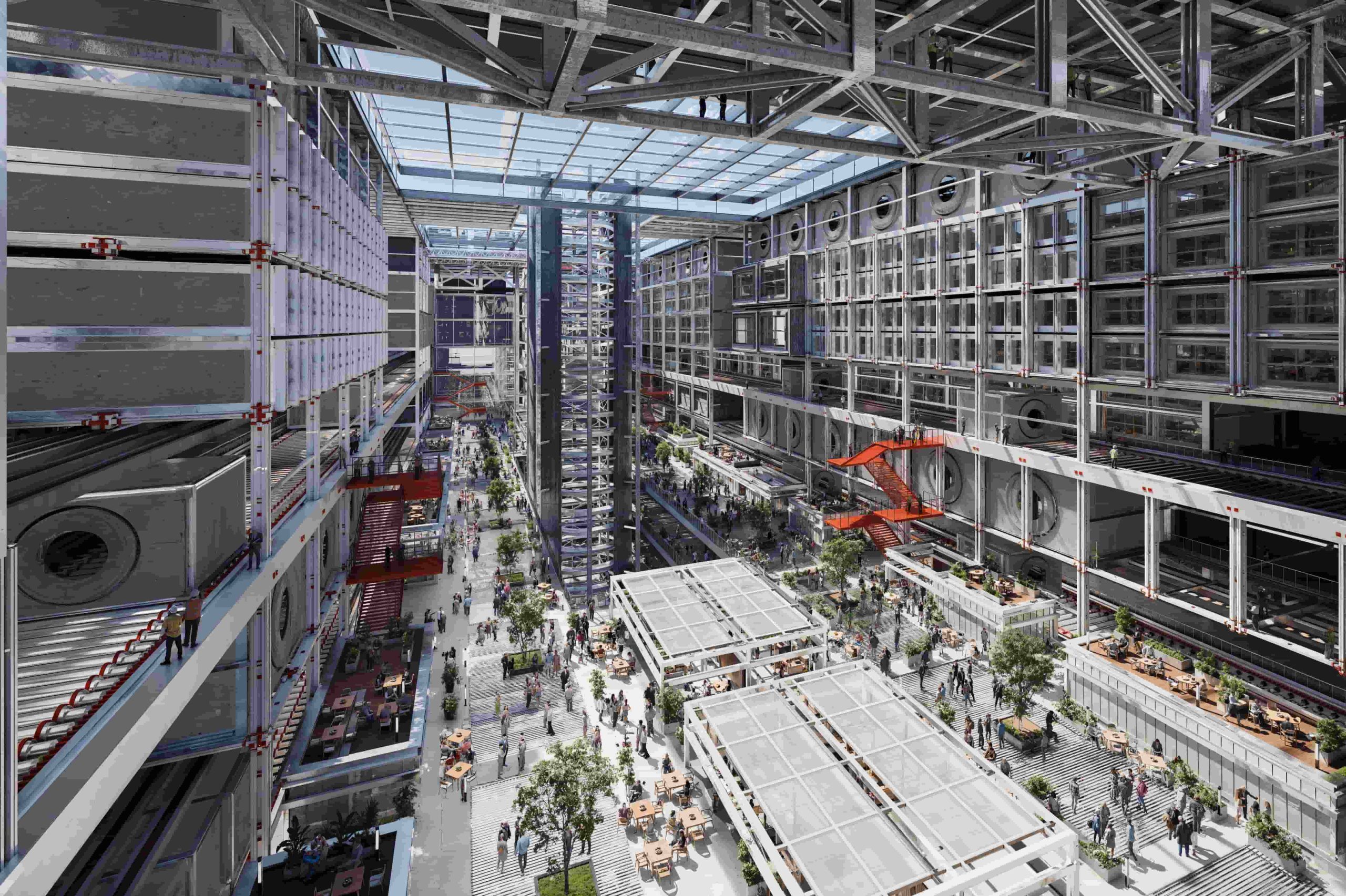
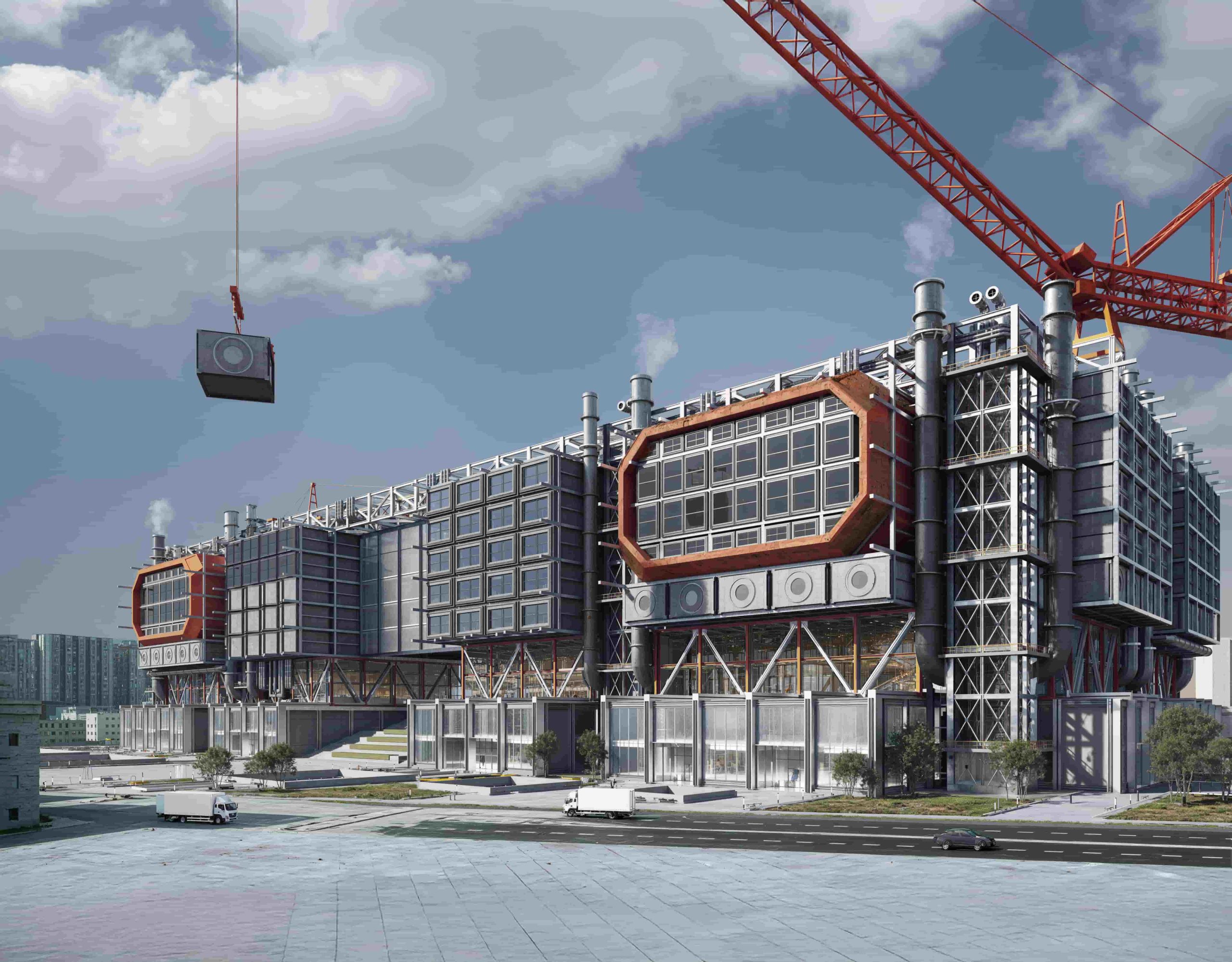
The proposal establishes a closed resource loop in which demolition waste is recycled on-site, converted into reusable concrete material, fabricated into modular components, and redistributed through a dedicated logistics network. These modules are then used not only for housing but also for cultural and public programs, enabling continuous regeneration without relying on unstable external material supplies. A hybrid complex consisting of a recycling plant, modular production factory, logistics hub, and cultural facilities forms the core infrastructure that allows cities to conduct redevelopment independently.
Yeongdeungpo in Seoul—historically an industrial and railway district—is selected as the pilot site. The project aims to transform the area from a consumer city into a productive urban node, restoring its industrial identity while positioning it as a prototype for future modular-based regeneration. Structurally, the design references mega-frame systems such as those used in the Shanghai World Financial Center to achieve stability and efficient load transfer.
Ultimately, the project aspires not merely to serve as an aesthetic academic work, but as a practical and socially responsive model addressing Korea’s redevelopment crisis through architecture.
Established in 2012, Tamayouz Excellence Award is an unaffiliated, independent initiative that aims to advance the profession of architecture academically and professionally. Tamayouz is dedicated to supporting aspirational and transformative projects that tackle local and global challenges and that are informed by a holistic understanding of context.