








University : Arab Academy for Science, Technology, & Maritime Transport
Tutor(s) : Dr Omar Mohamed Galal
Project Description
War transforms lands into unstable and dangerous environments, disrupting both human settlements and the systems that sustain them. In Sudan, the current civil war and the potential environmental threats posed by the Grand Ethiopian Renaissance Dam (GERD) create an uncertain and unpredictable “warscape” in which individuals, resources, and conflict lines are constantly changing.
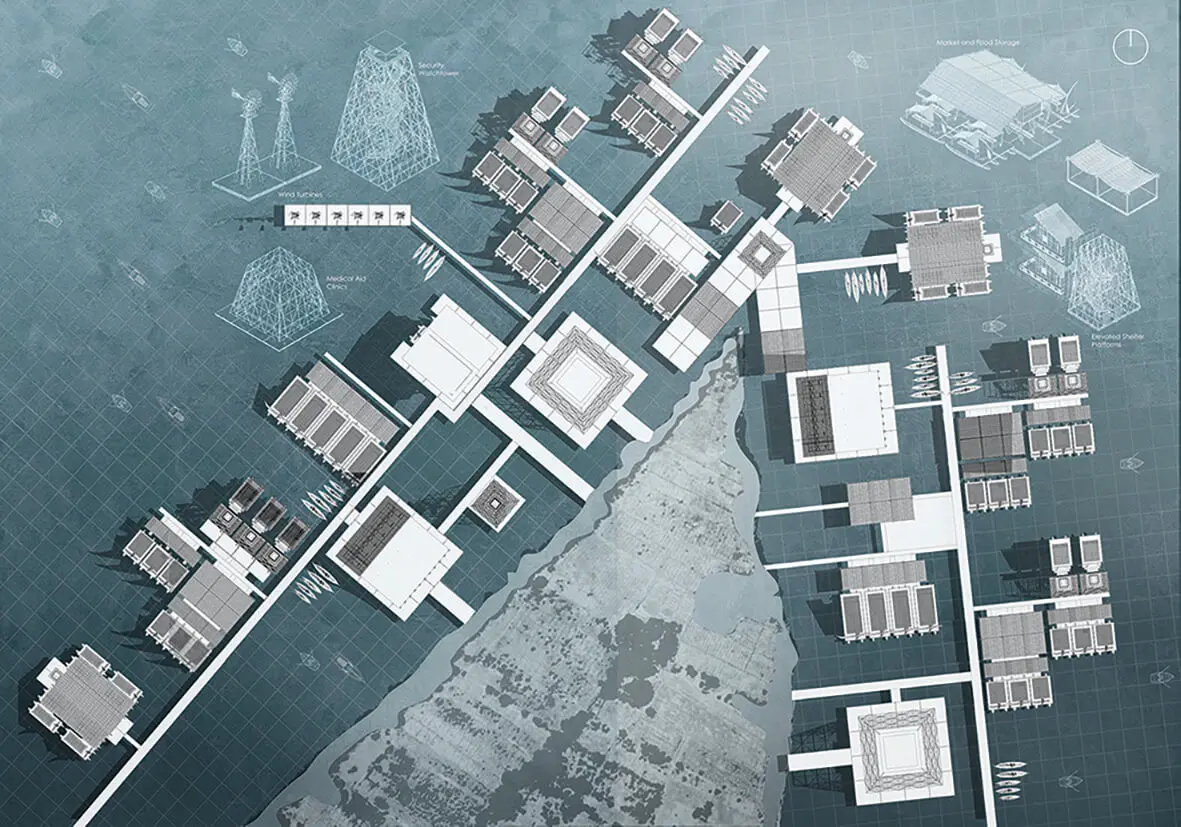
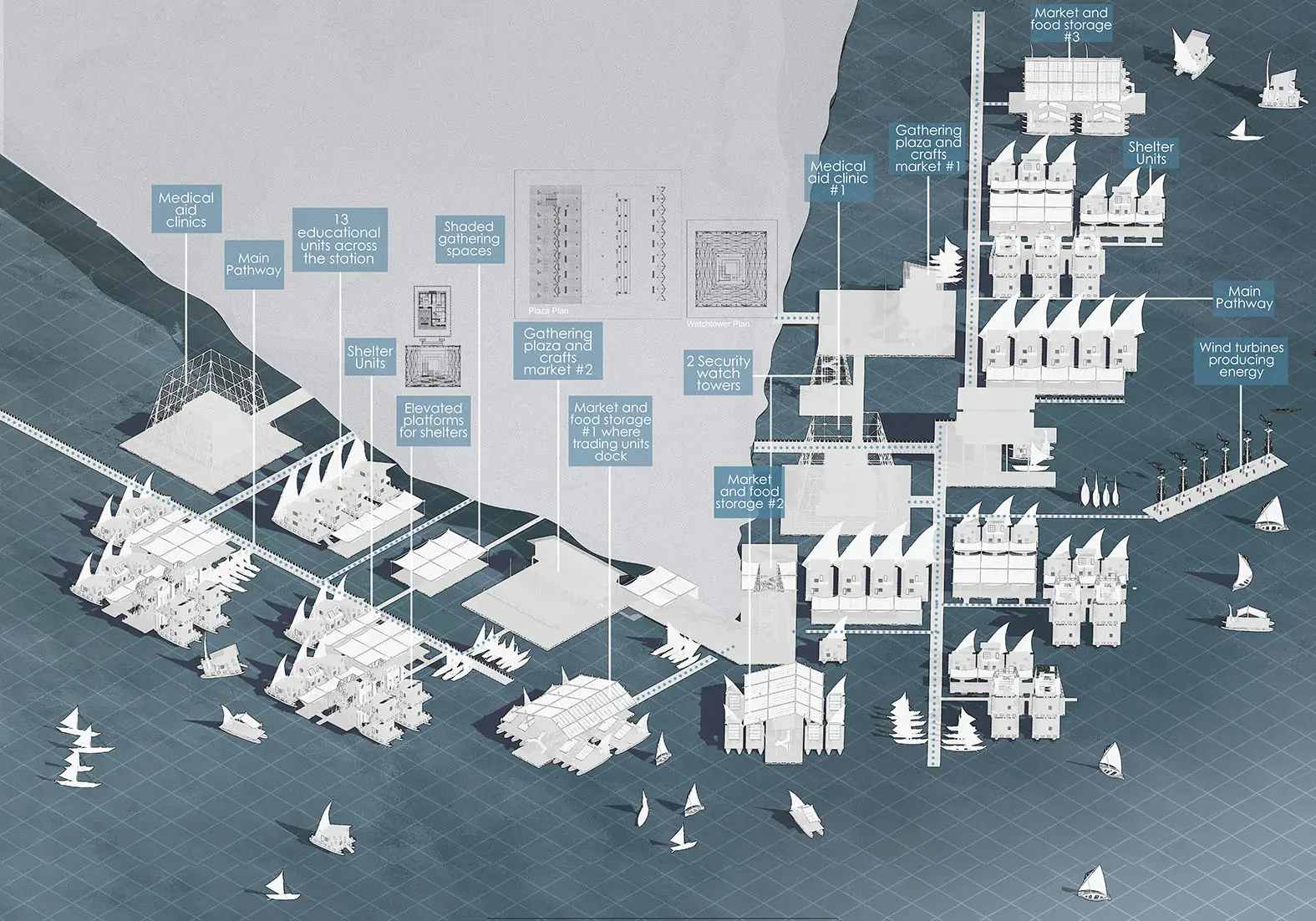
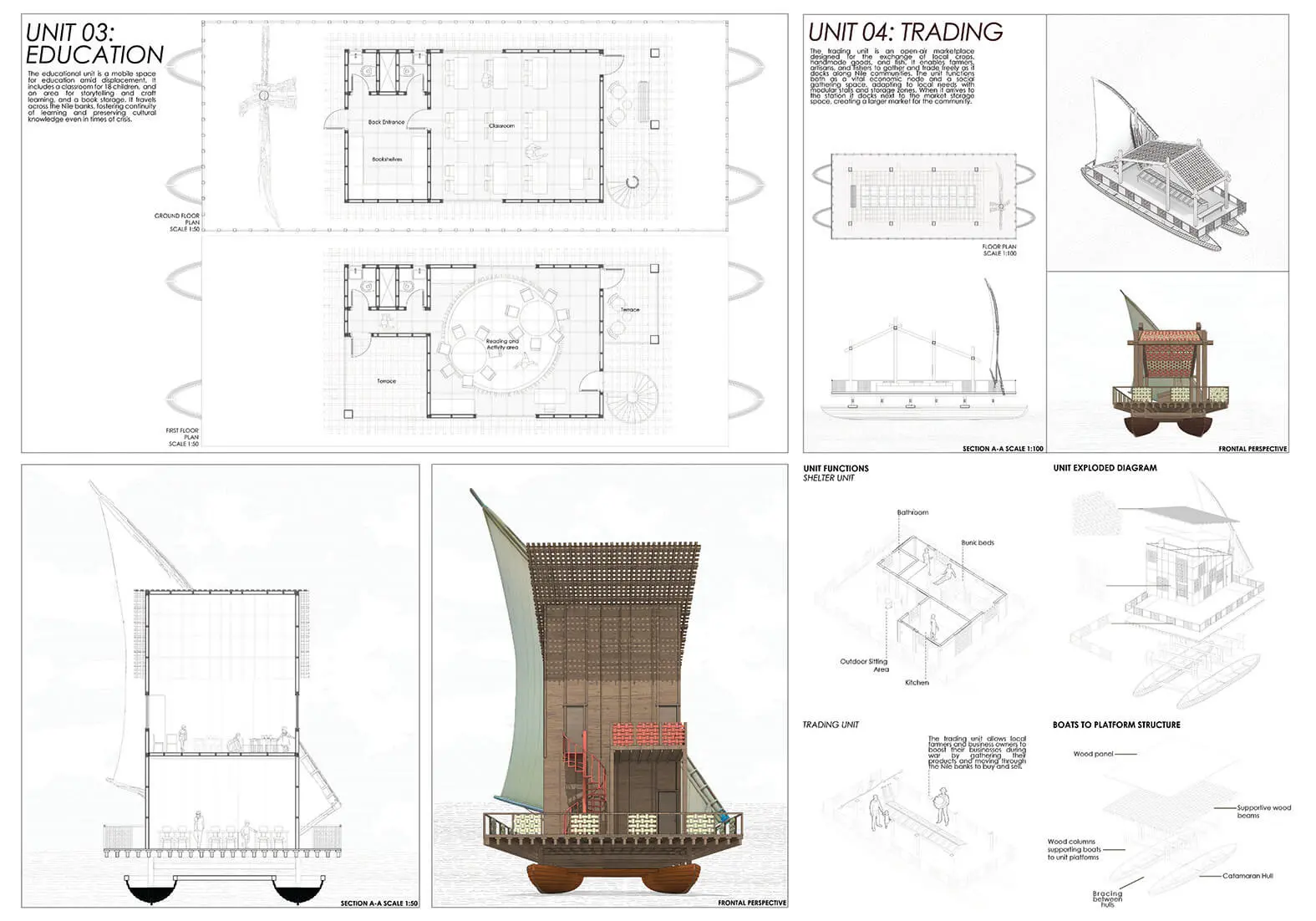
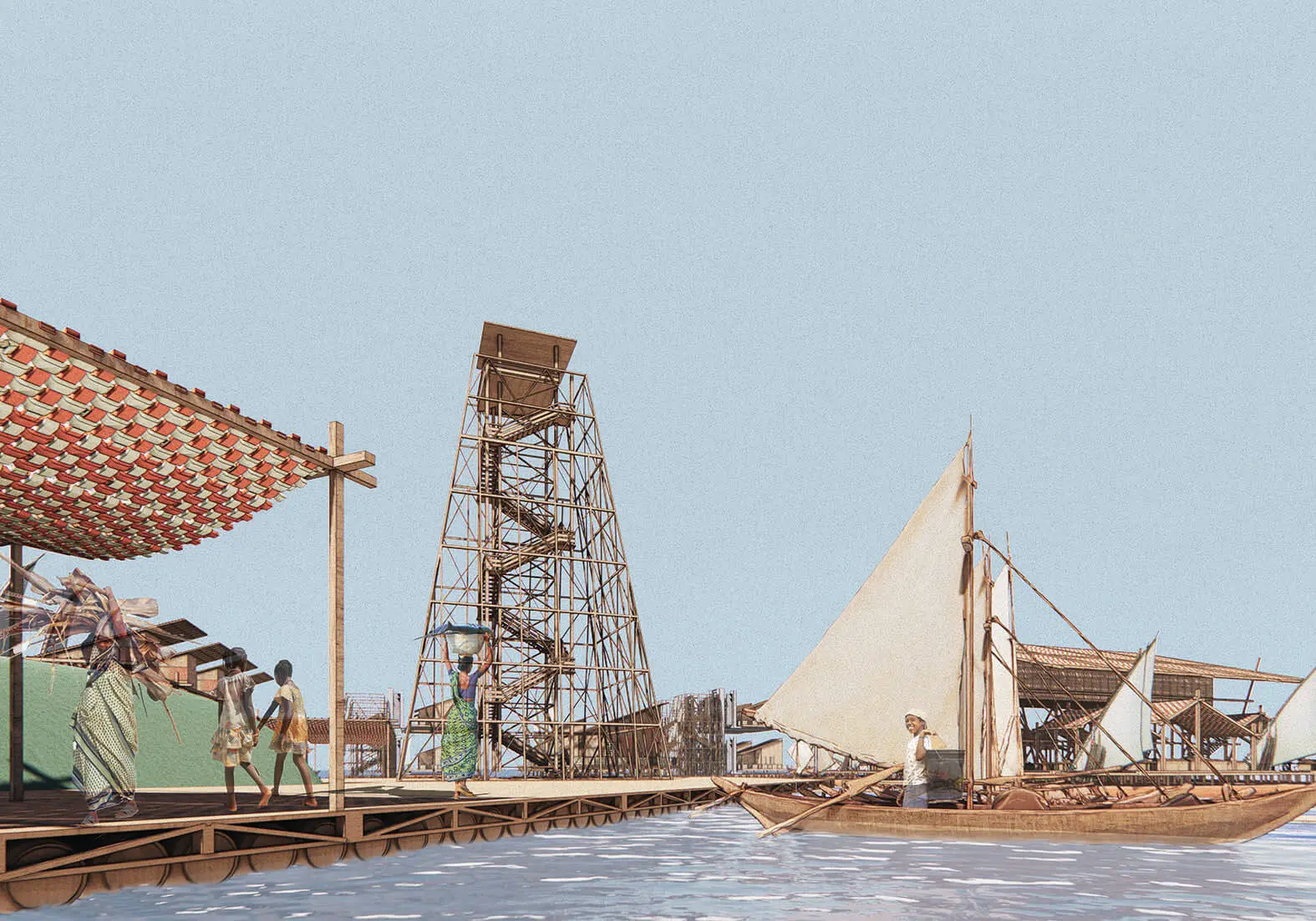
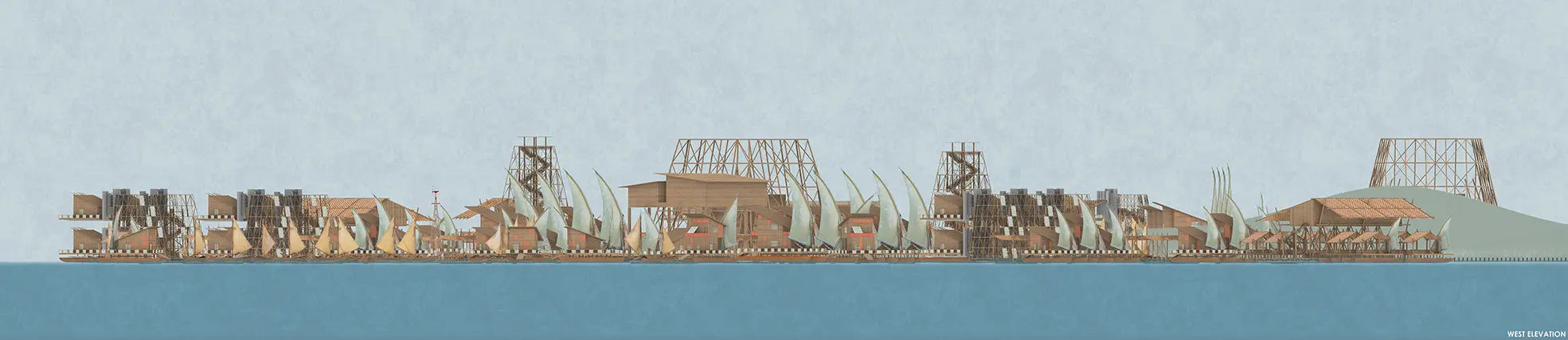
Nile Settlements proposes a system of floating, mobile settlements along the Nile River to provide safe and adaptable shelters for people displaced by the ongoing civil war and the potential risks posed by the Grand Ethiopian Renaissance Dam. The design draws inspiration from local wood boat-building craft to develop modular floating units. These units travel between floating secure stations located along the Nile’s shore. The stations integrate basic services and resource systems to support displaced communities in both the immediate short term and long term.
The Nile is reimagined as a habitable corridor, seen not only as a natural resource but also as a sheltering landscape. This design offers a scalable and culturally rooted response to a humanitarian crisis through mobility and self-sufficiency. It does not exist within a single permanent site, as it is a mobile settlement system that relocates along the Nile River. The stations and moving units can be positioned in different locations depending on the state of the war, security conditions, and the needs of displaced users. This mobility system provides safe shelter and community infrastructure in situations where fixed land-based sites would be vulnerable or inaccessible due to conflict or flooding.
Established in 2012, Tamayouz Excellence Award is an unaffiliated, independent initiative that aims to advance the profession of architecture academically and professionally. Tamayouz is dedicated to supporting aspirational and transformative projects that tackle local and global challenges and that are informed by a holistic understanding of context.