




University : University of Architecture Ho Chi Minh City
Tutor(s) : Dang Thanh Hung
Project Description
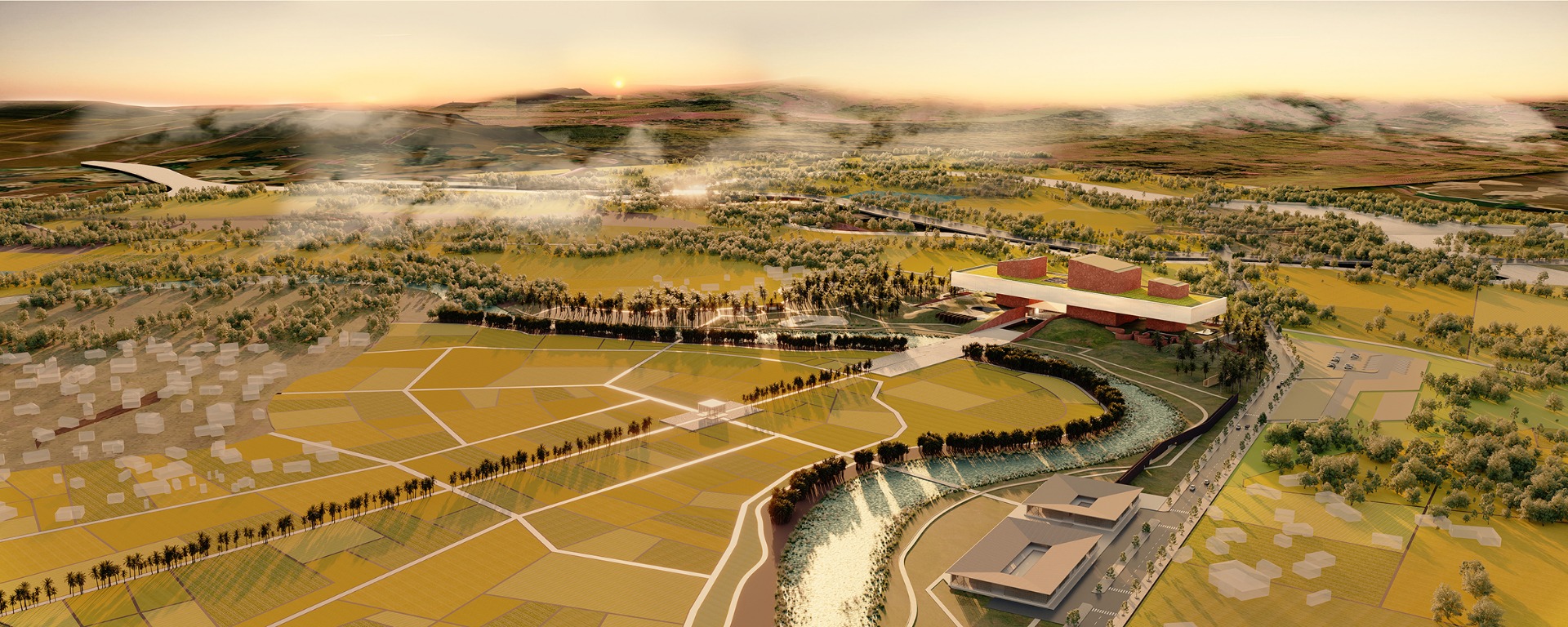
My Lai in Quang Ngai is renowned for its beautiful and serene environment. The village’s peaceful atmosphere coupled with its proximity to the sea, vast rice fields, and winding rivers, creates a picturesque and tranquil setting. In addition to its natural beauty, My Lai holds significant religious importance for the local population. The sacred mountains in the area serve as a focal point for spiritual practices and cultural traditions. The presence of these mountains adds to the human spiritual connection here. A picture of My Lai is drawn by harmony and tranquility.
However, on March 16, 1968, during the Vietnam War, this place suffered a horrible massacre, widely known as the My Lai Massacre otherwise known as the Pinkville Massacre. This tragedy involved the killing of unarmed Vietnamese civilians, in total, it is estimated that between 347 and 504 Vietnamese civilians, including infants, children, and elderly.
The My Lai Massacre which was later called “the most shocking episode of the Vietnam War” stands as a dark chapter in history, representing the devastating impact of war and the loss of innocent lives. It is a somber reminder of the atrocities committed during times of conflict and the need for remembrance, reflection, and lessons to be learned from such events.
While My Lai has sought to heal and rebuild, it is essential to recognize the significance of this tragic event in order to promote understanding, reconciliation, and a commitment to peace. A peace museum for My Lai along with its narratives is significant to this land, which suffered excessive losses in the past, to remember and honor the victims, educate visitors about the historical context, and contribute to the healing process.
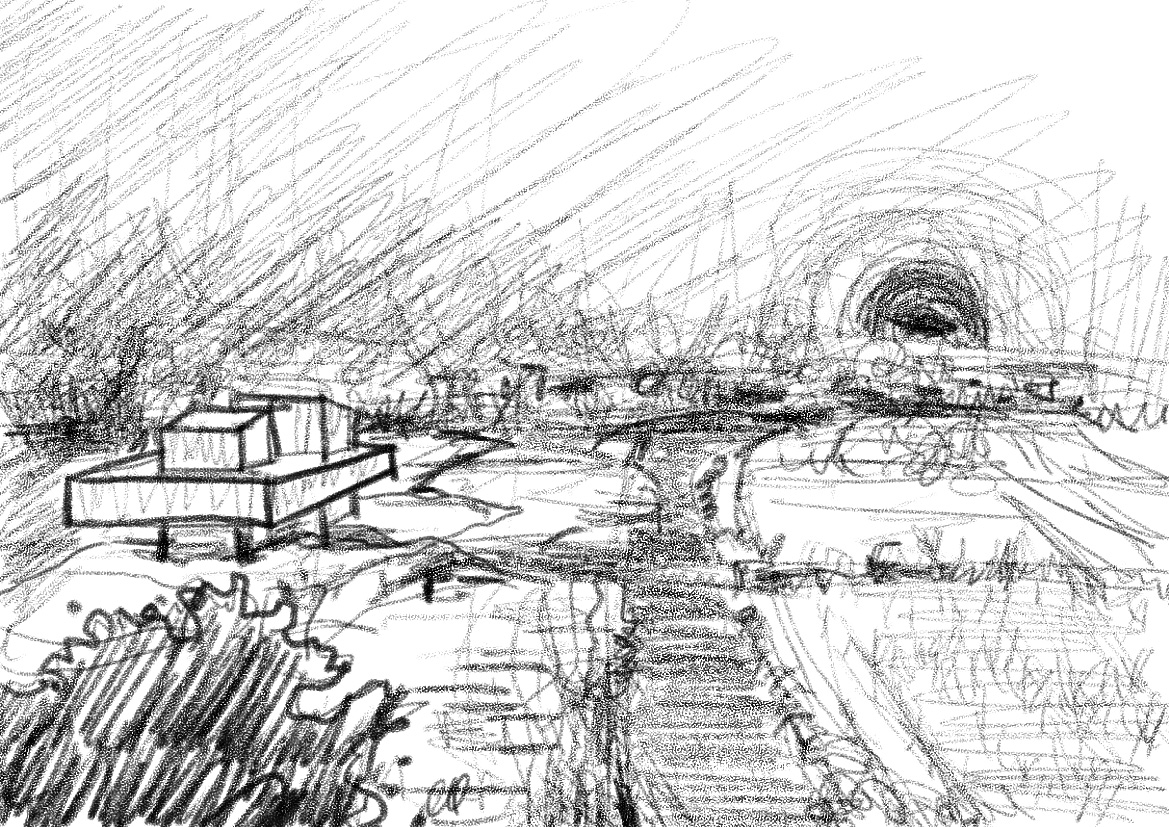
In this project, I want to provide a proposal from urban planning to programming solutions for the museum. The region’s existing problem is the lack of development on the key attraction, unoriented traveling route. Livelihood of citizens is not linked with their rich cultural and historical base. Its aim is to create a mixture of landscape and display area that not only caters to museum-goers but also a public space that engages people in the city, a truly ‘living museum’ that creates an ecosystem around it.
The first consideration is urban planning. The My Lai Peace Museum is located in a cultural park according to the planning of Quang Ngai City. This park includes the My Lai relic site – a national historic site that retains a number of ruins such as partially burned houses, mass graves,… The planning of cultural works in or around the park is a model that connects and enhances urban life, brings experiences of culture, history, and art; education; and complete relaxation for people.
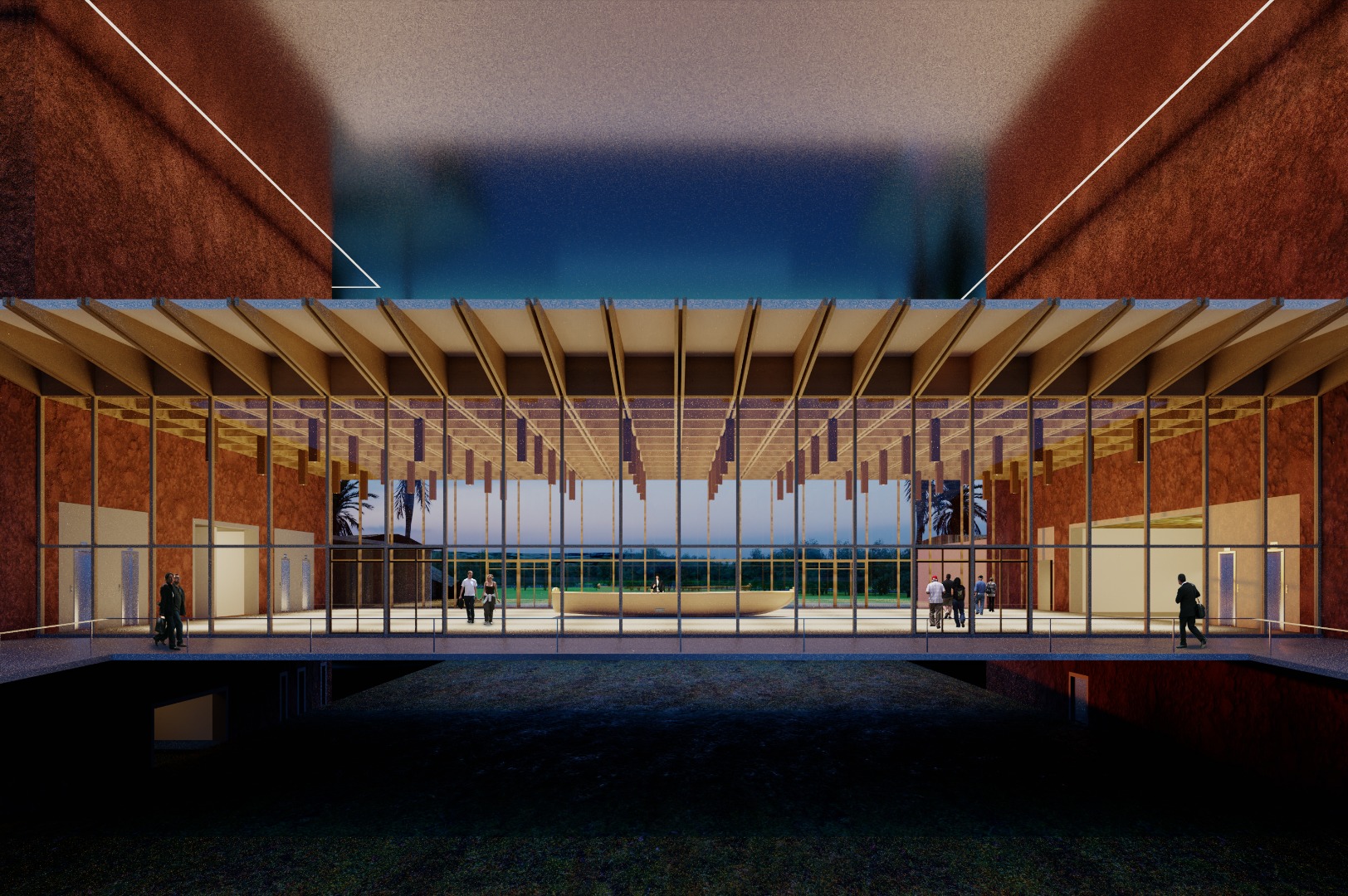
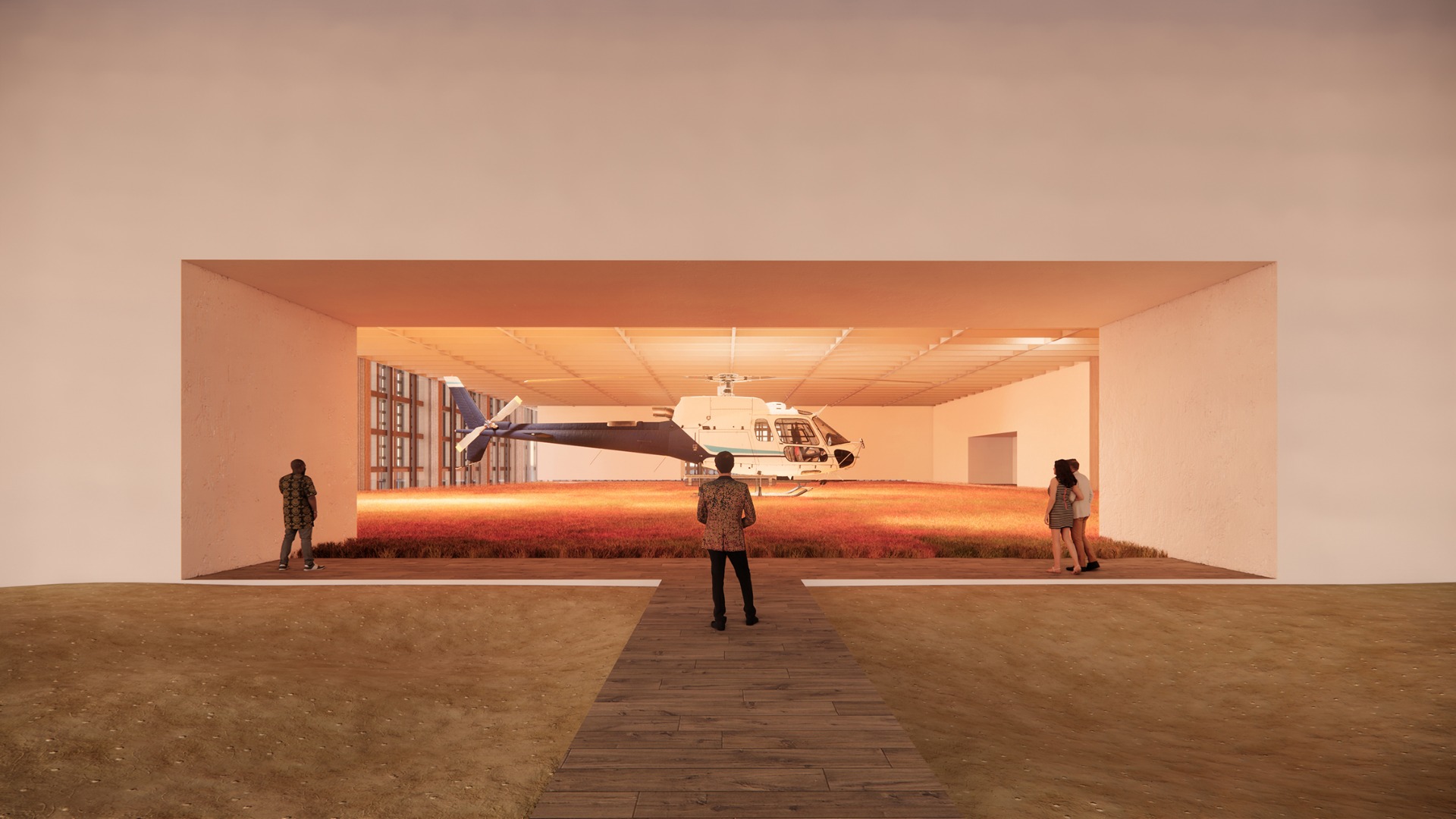
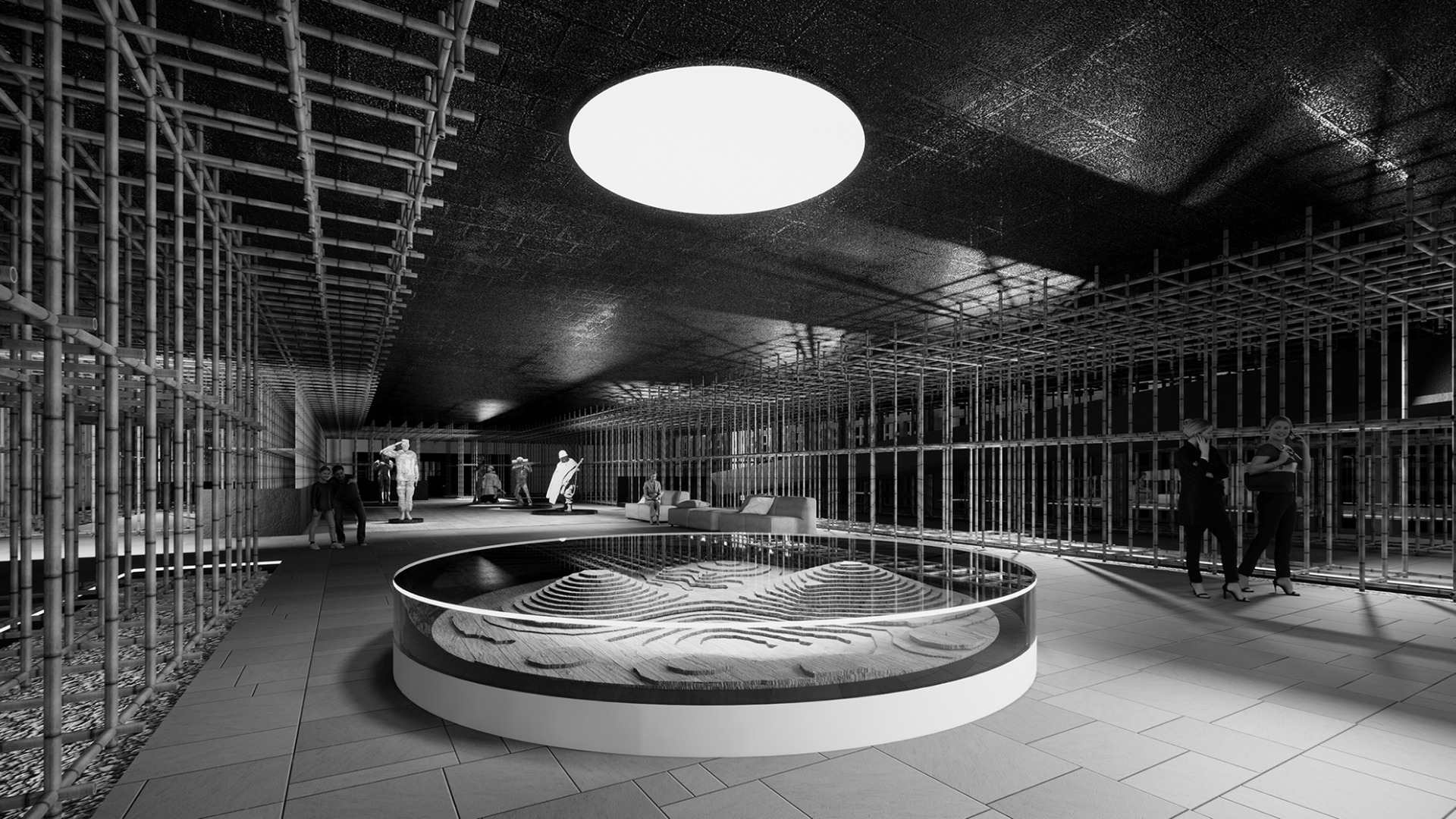
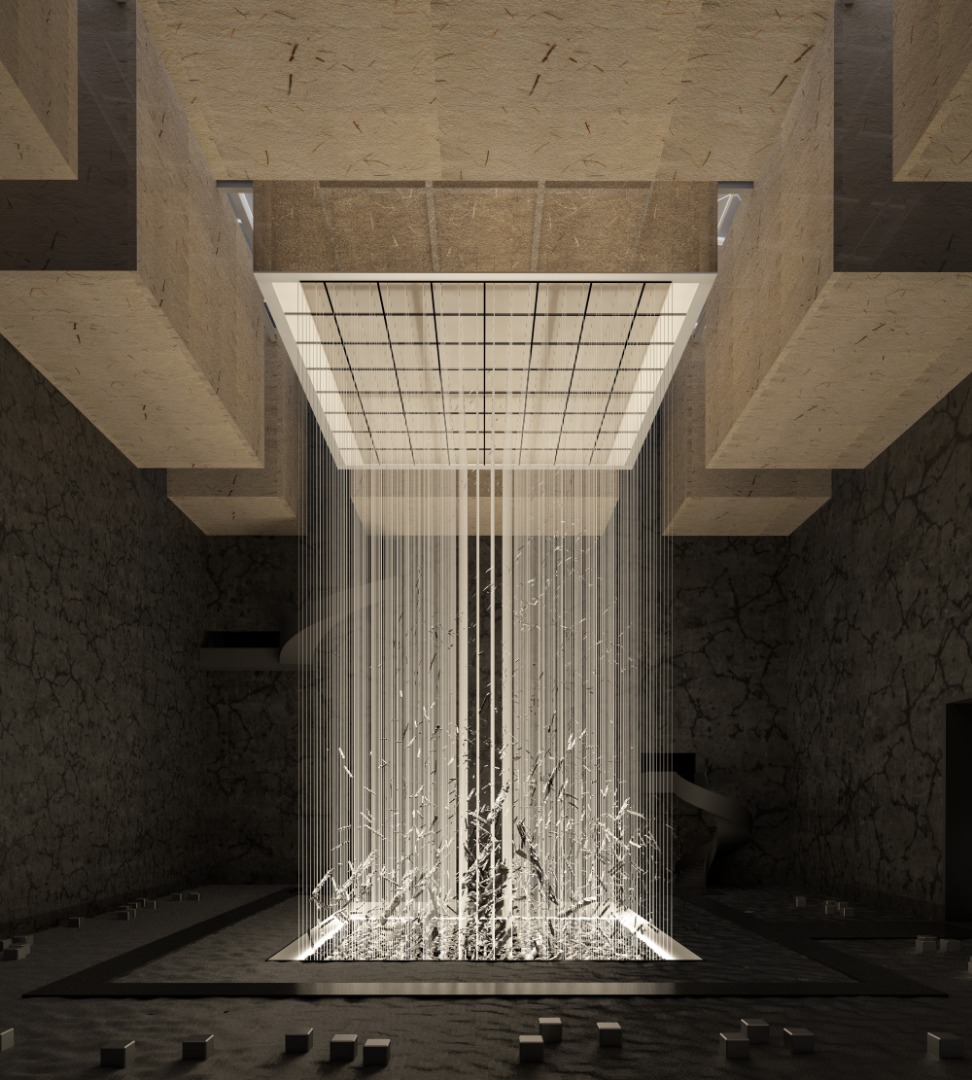
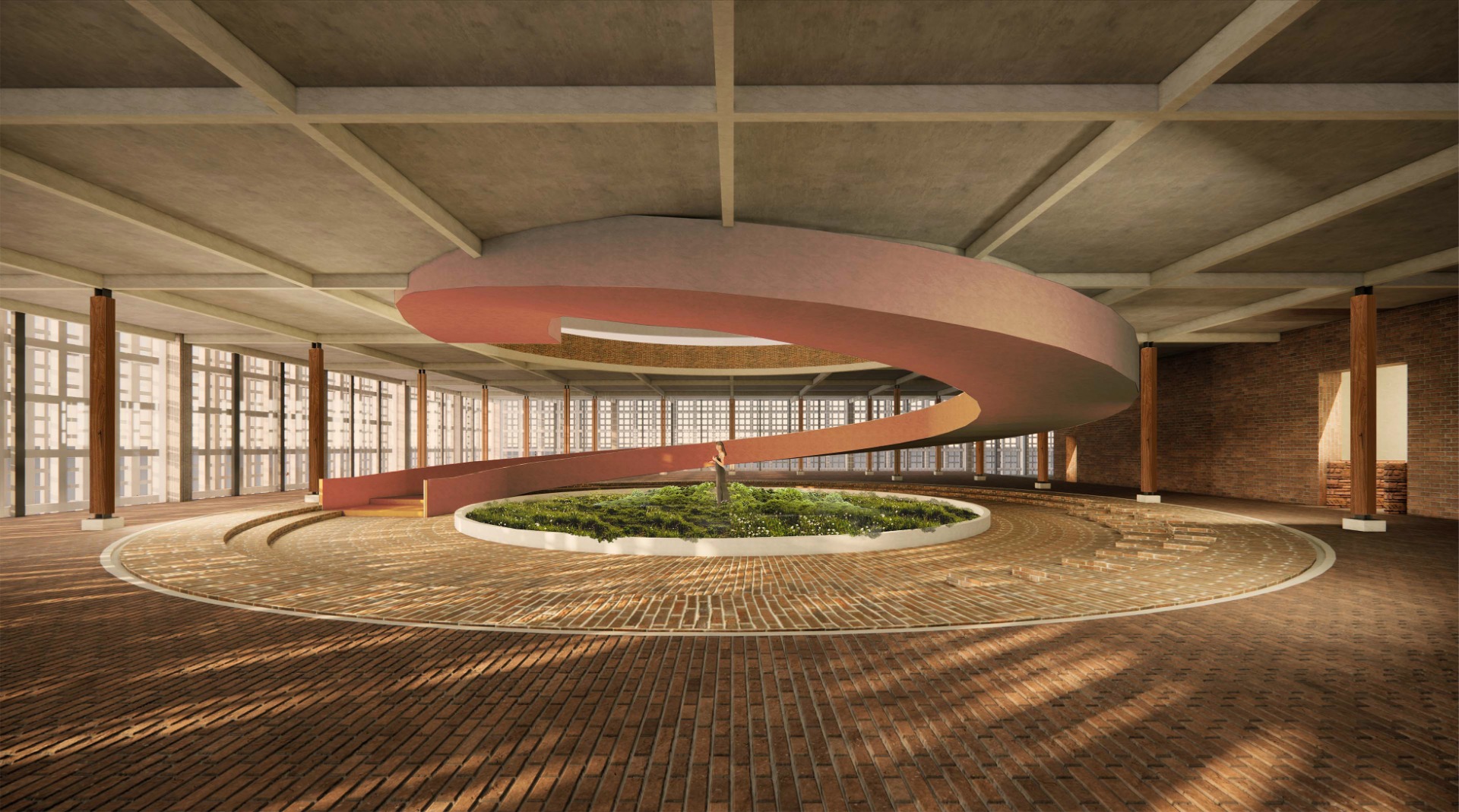
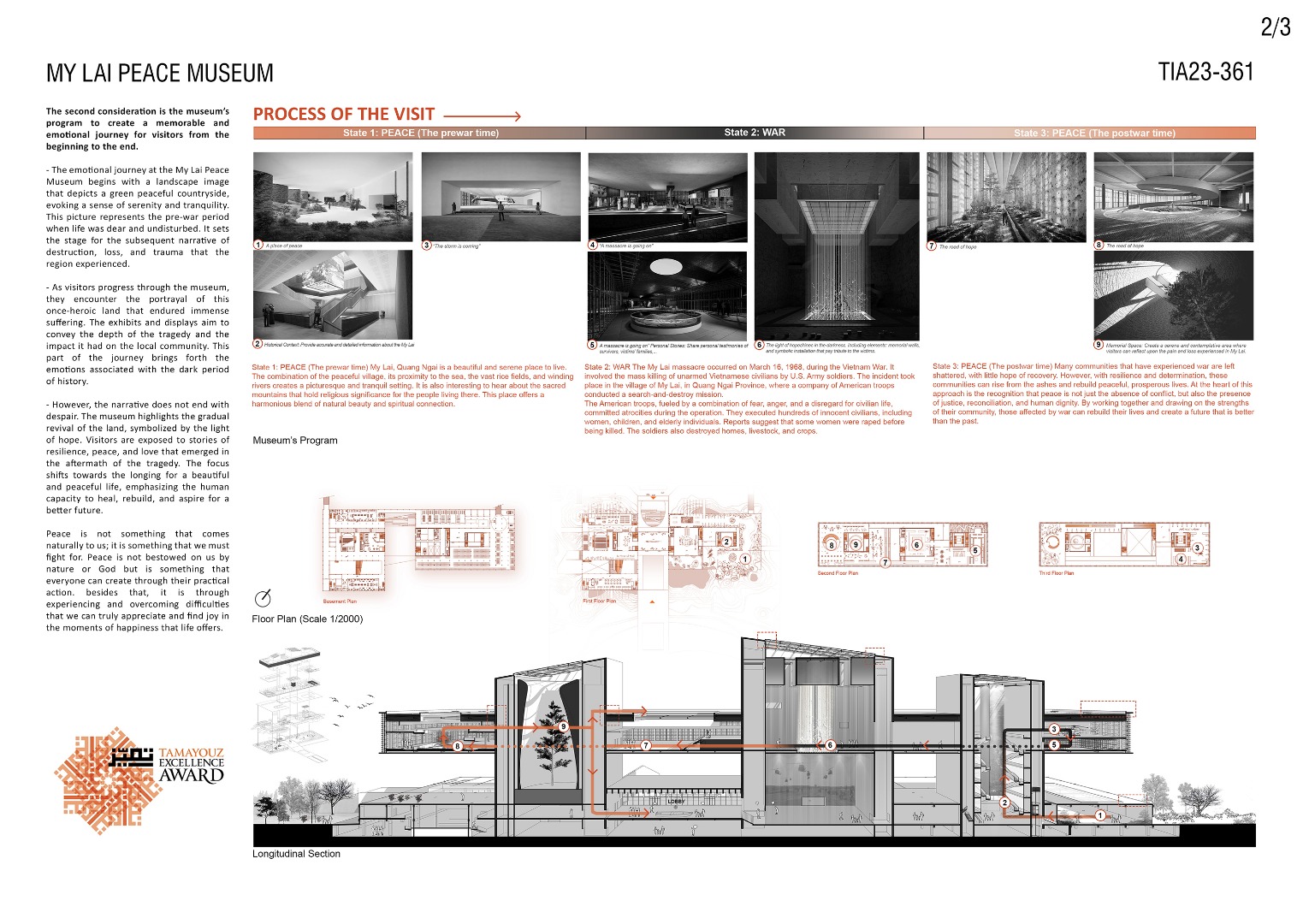
The second consideration is the museum’s program to create a memorable and emotional journey for visitors from the beginning to the end.
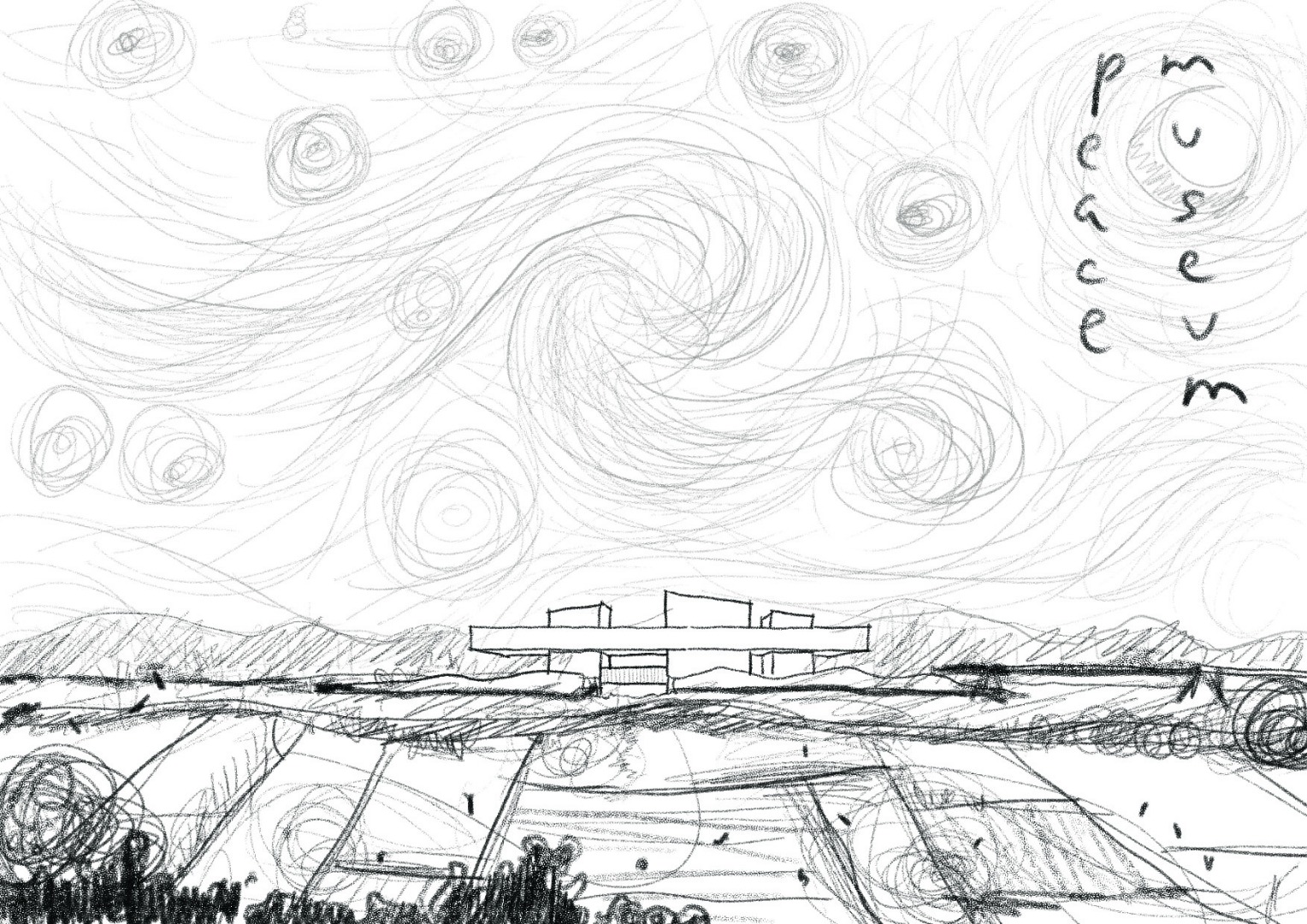
The third consideration is the design for the building form. From the outside, the museum reimagines sturdy and straight trees with intertwined large canopies in a forest. This symbolizes strength, stability, and resilience, reflecting the museum’s message of vitality and endurance
Peace is not something that comes naturally to us; it is something that we must fight for. Peace is not bestowed on us by nature or God but is something that everyone can create through their practical action.
Established in 2012, Tamayouz Excellence Award is an unaffiliated, independent initiative that aims to advance the profession of architecture academically and professionally. Tamayouz is dedicated to supporting aspirational and transformative projects that tackle local and global challenges and that are informed by a holistic understanding of context.