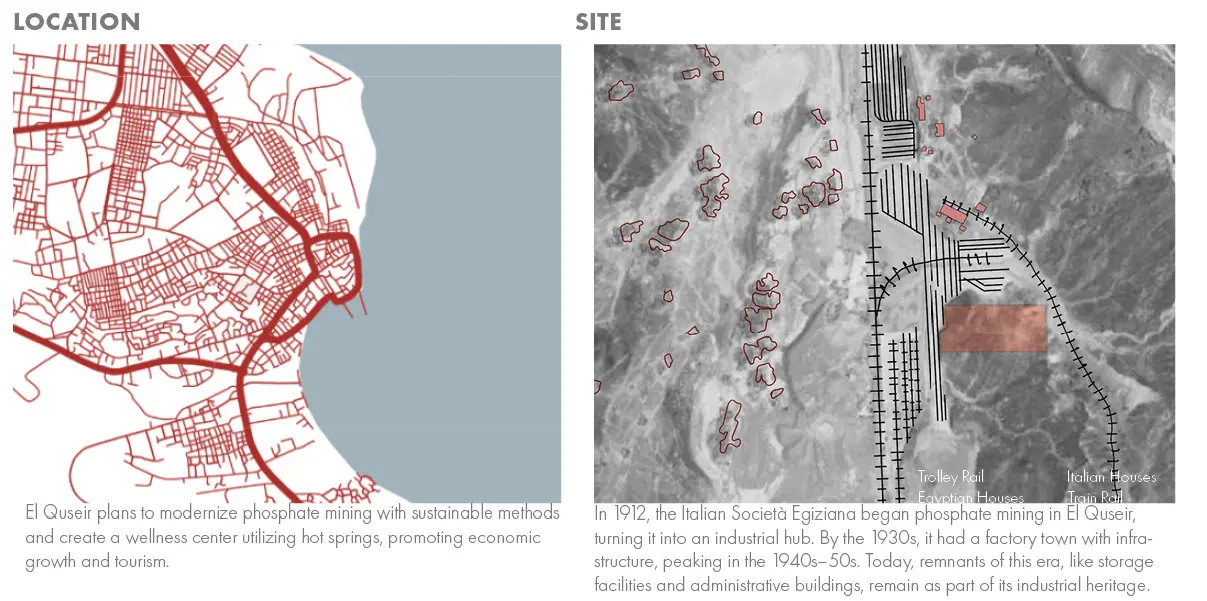
El Quseir, once a major phosphate mining hub on Egypt’s Red Sea coast, is today defined by abandoned mines, degraded landscapes, and a weakened local economy. Traditional extraction methods, surface-based storage, and poor environmental management have led to declining productivity and long-term ecological damage. As mining activity fades, the town risks losing both its economic foundation and its cultural connection to the land.
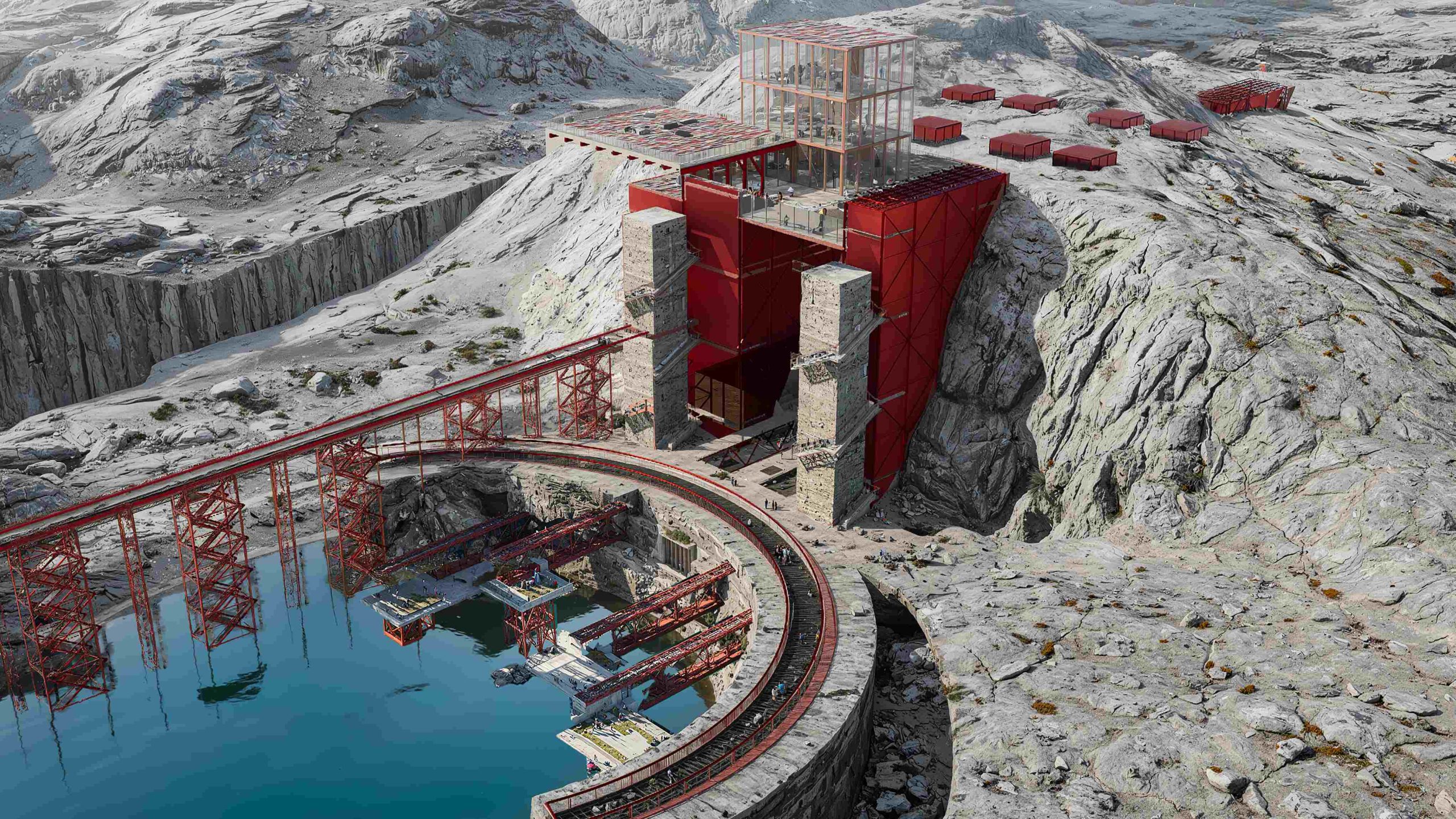
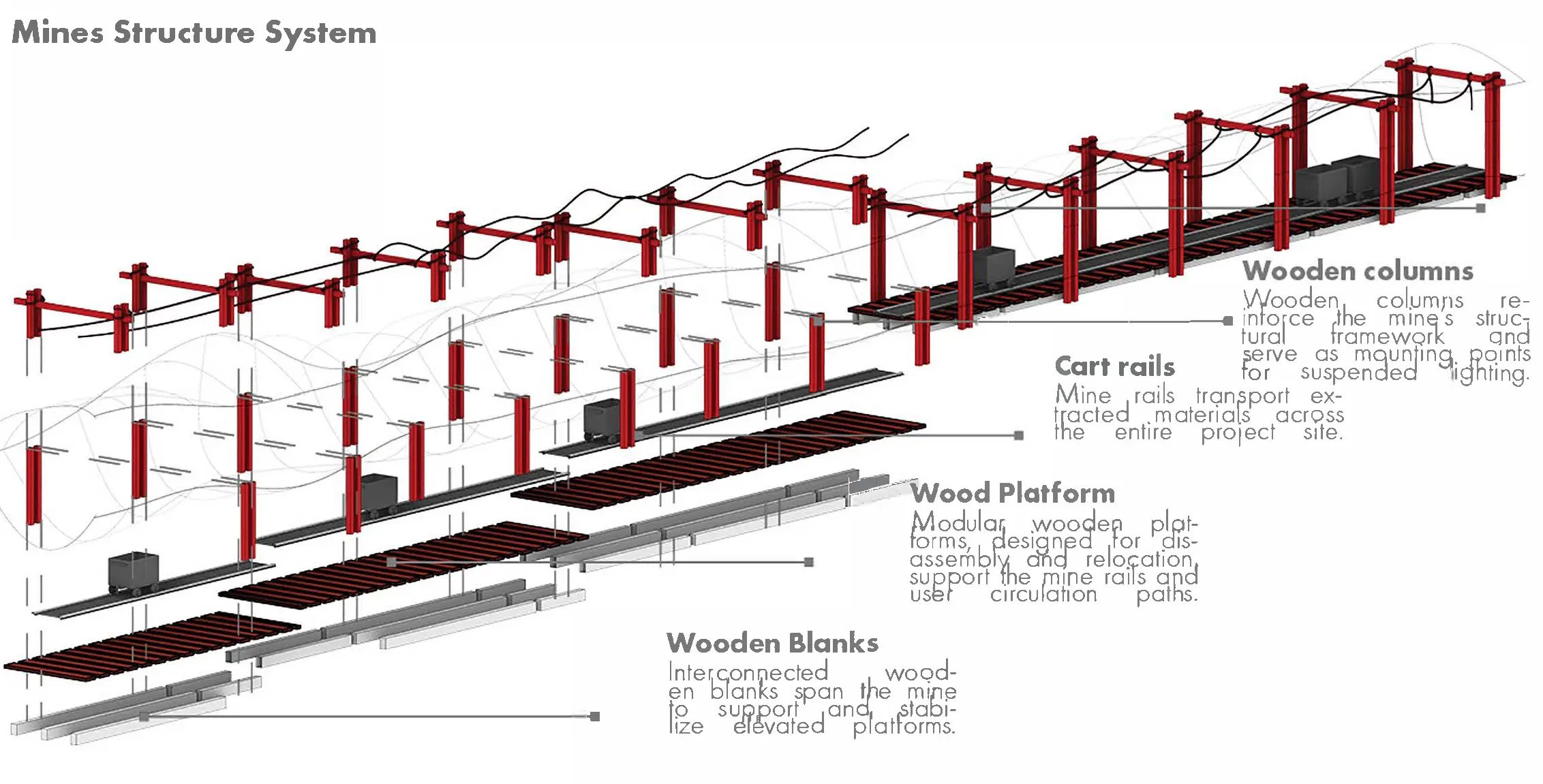
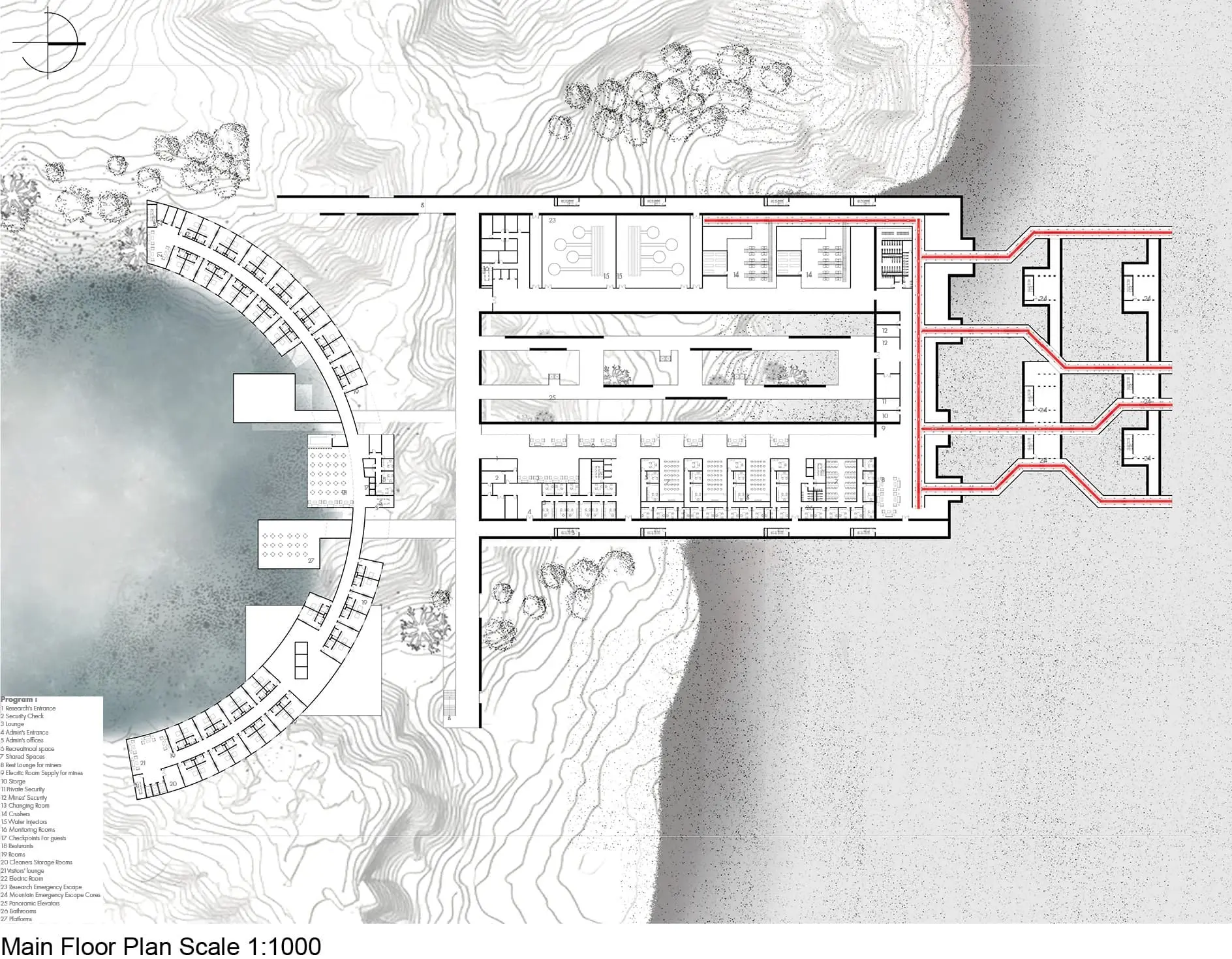
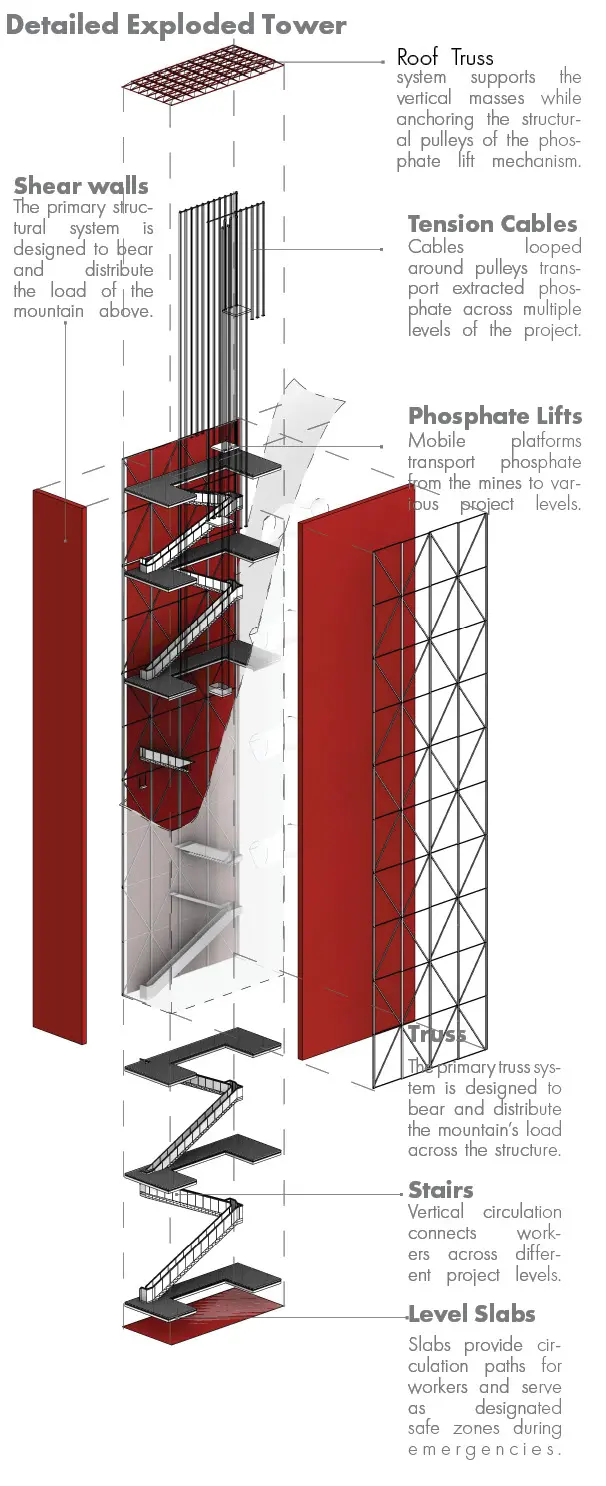
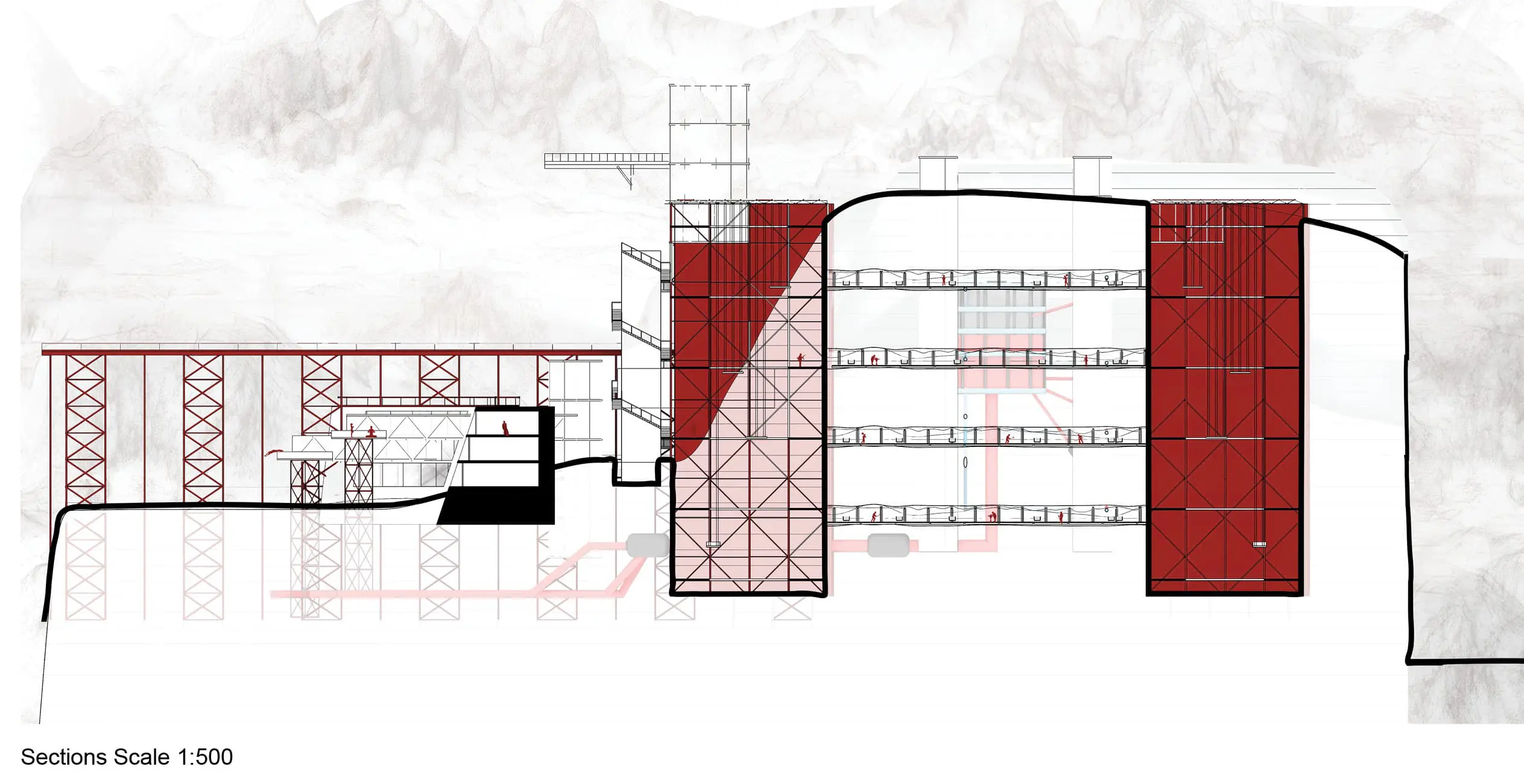
MineX proposes a new architectural and infrastructural model that reframes mining as a productive, social, and restorative act. Rather than erasing the physical scars left by extraction, the project embraces them as spatial opportunities. Modern mining and processing units are embedded within the mountain itself, reusing existing tunnels and vertical shafts to minimize surface disruption and reduce environmental impact. Phosphate is transported through underground conveyors, allowing the landscape above to be reclaimed for public use.
Surrounding the industrial core is a civic layer composed of platforms, bridges, and towers that invite people into the site. Visitors can move across the terrain, observe the mining process, and experience the dramatic geology of El Quseir from multiple vantage points. Waste byproducts are transformed into mineral-rich phosphate pools carved into stone or suspended over valleys, introducing wellness and healing as a counterpoint to extraction.
Educational, cultural, and community spaces reconnect the mine with the town, turning an isolated industrial zone into a shared civic landscape. Through this integration of mining, public access, and environmental repair, MineX redefines El Quseir’s legacy—shifting it from exhaustion and abandonment toward renewal, balance, and innovation.