






University : Hashemite University
Tutor(s) : Professor Shaher Rababeh and Professor Rama Alrabady
Project Description
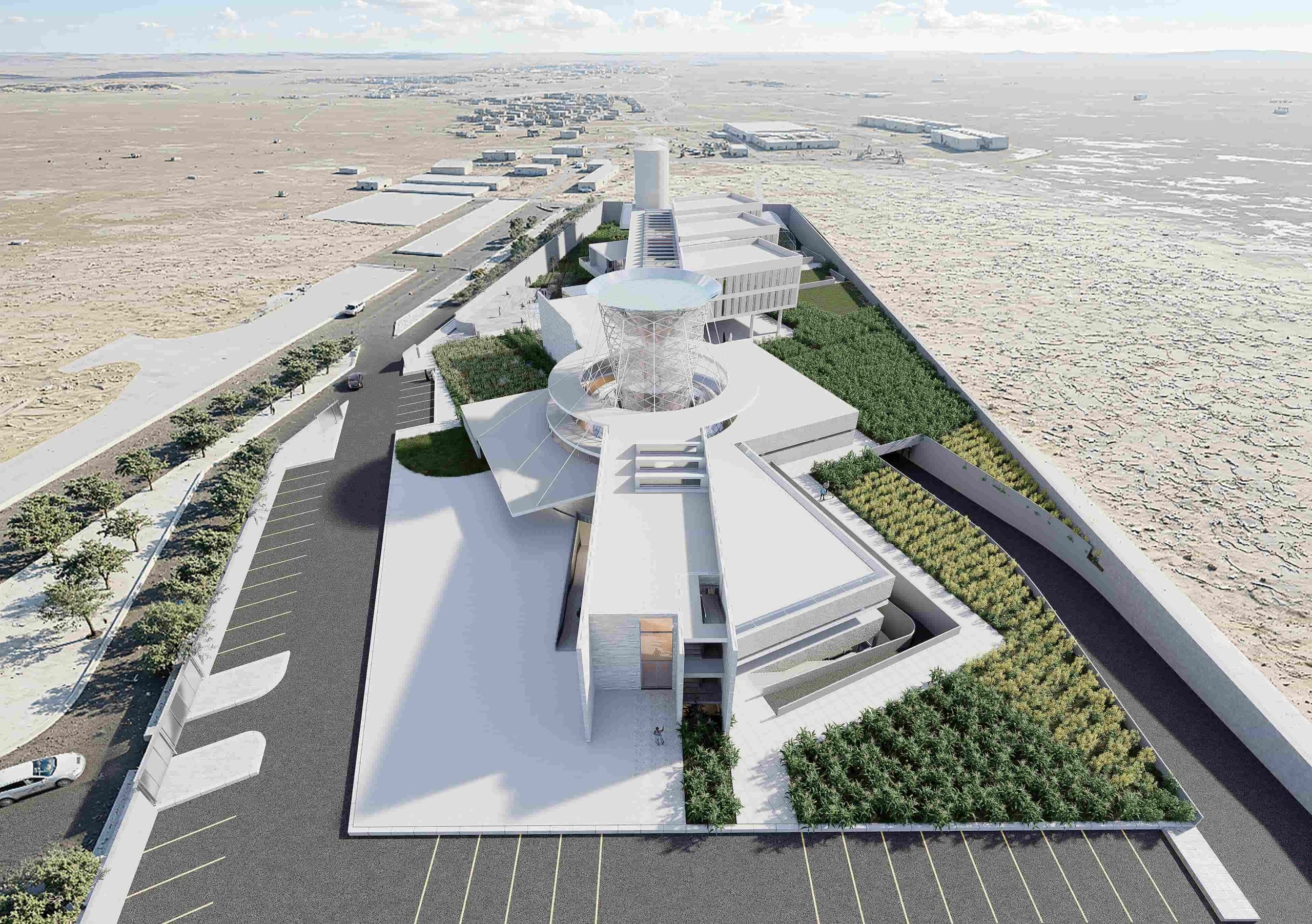
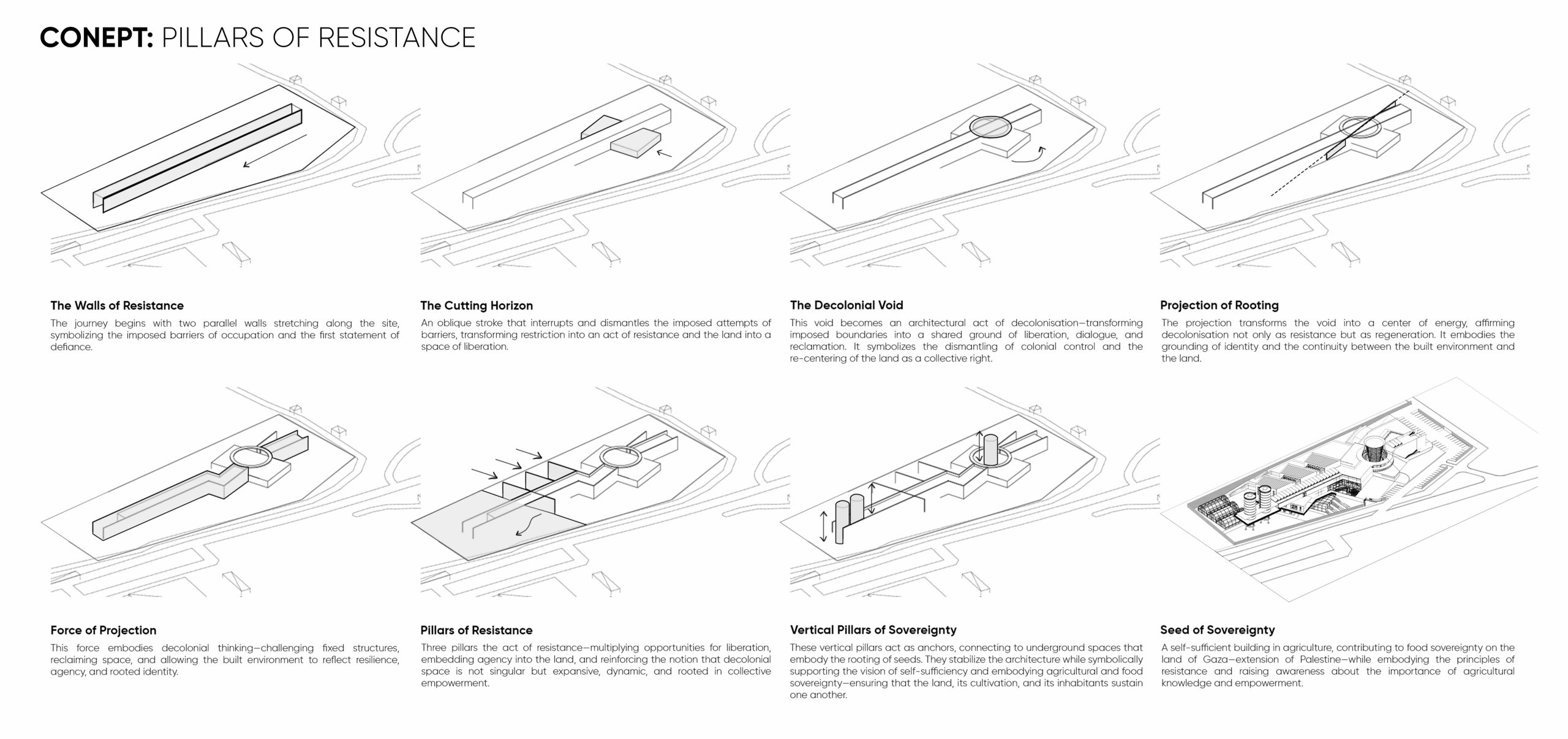
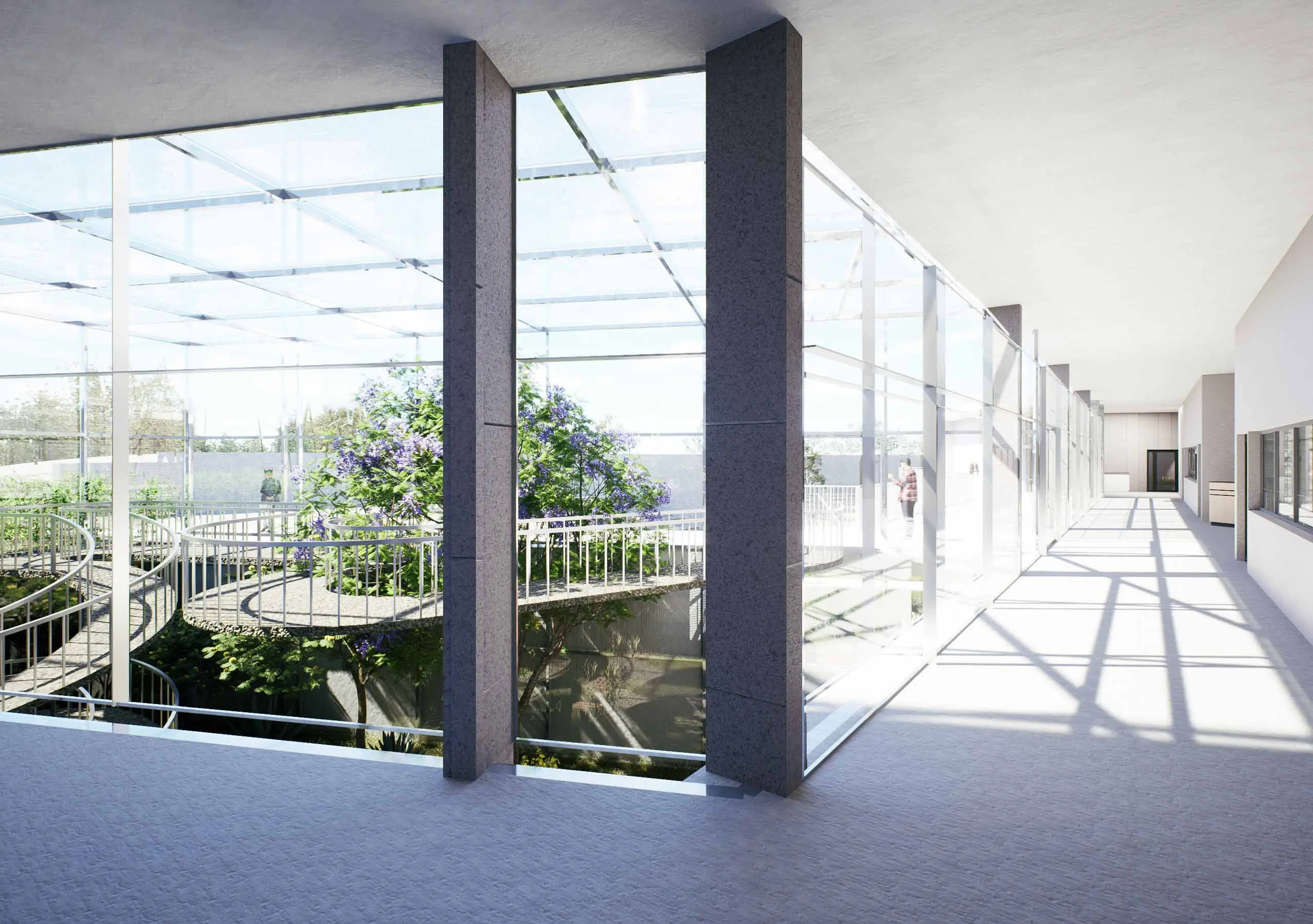
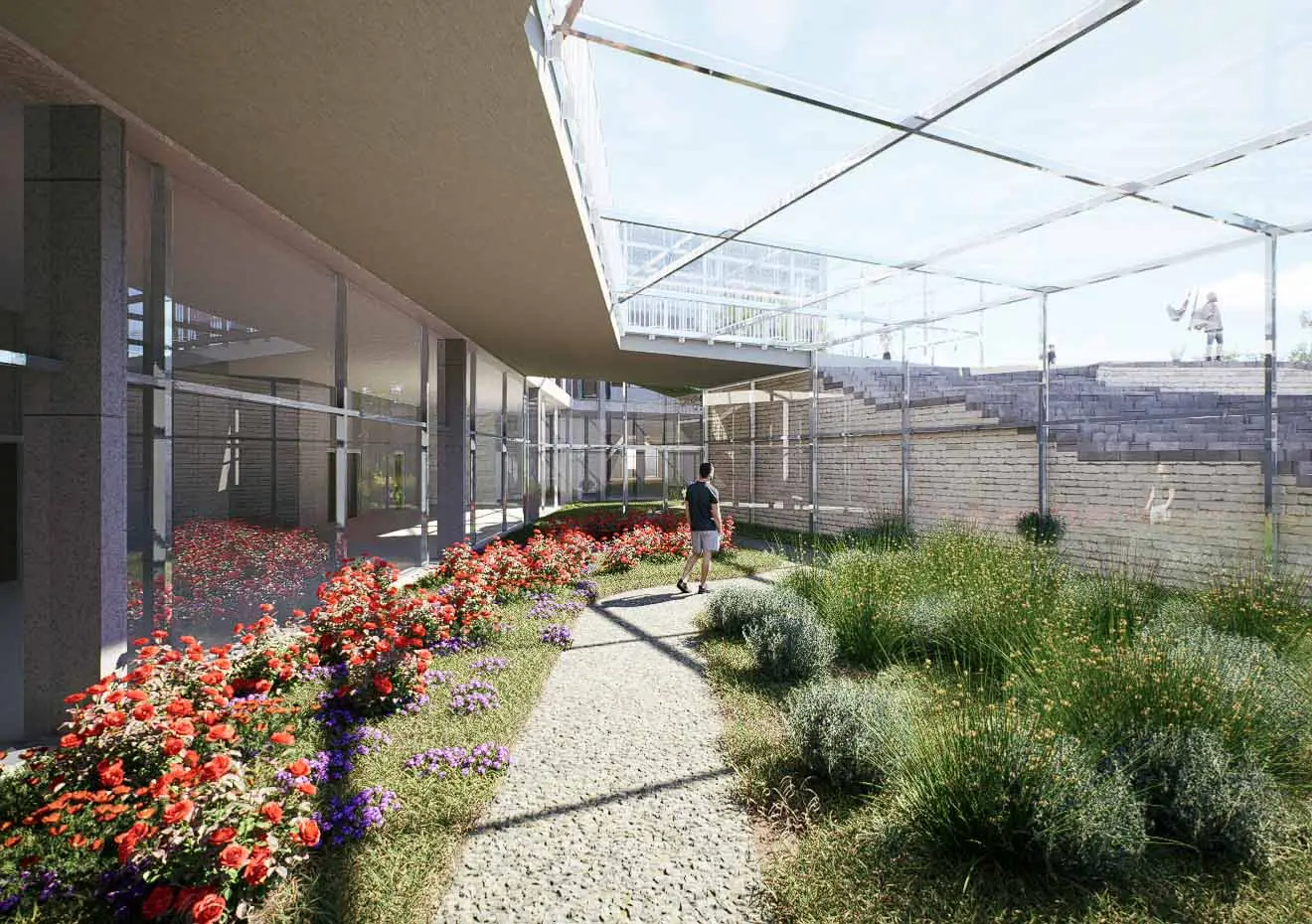
The project emerges as a line of resistance, a decolonial architectural response to the urgent struggle for food and water sovereignty in Gaza. Within a territory marked by blockade, scarcity, and dependence, the proposal reclaims Palestinian agricultural heritage while reimagining systems of survival and resilience.
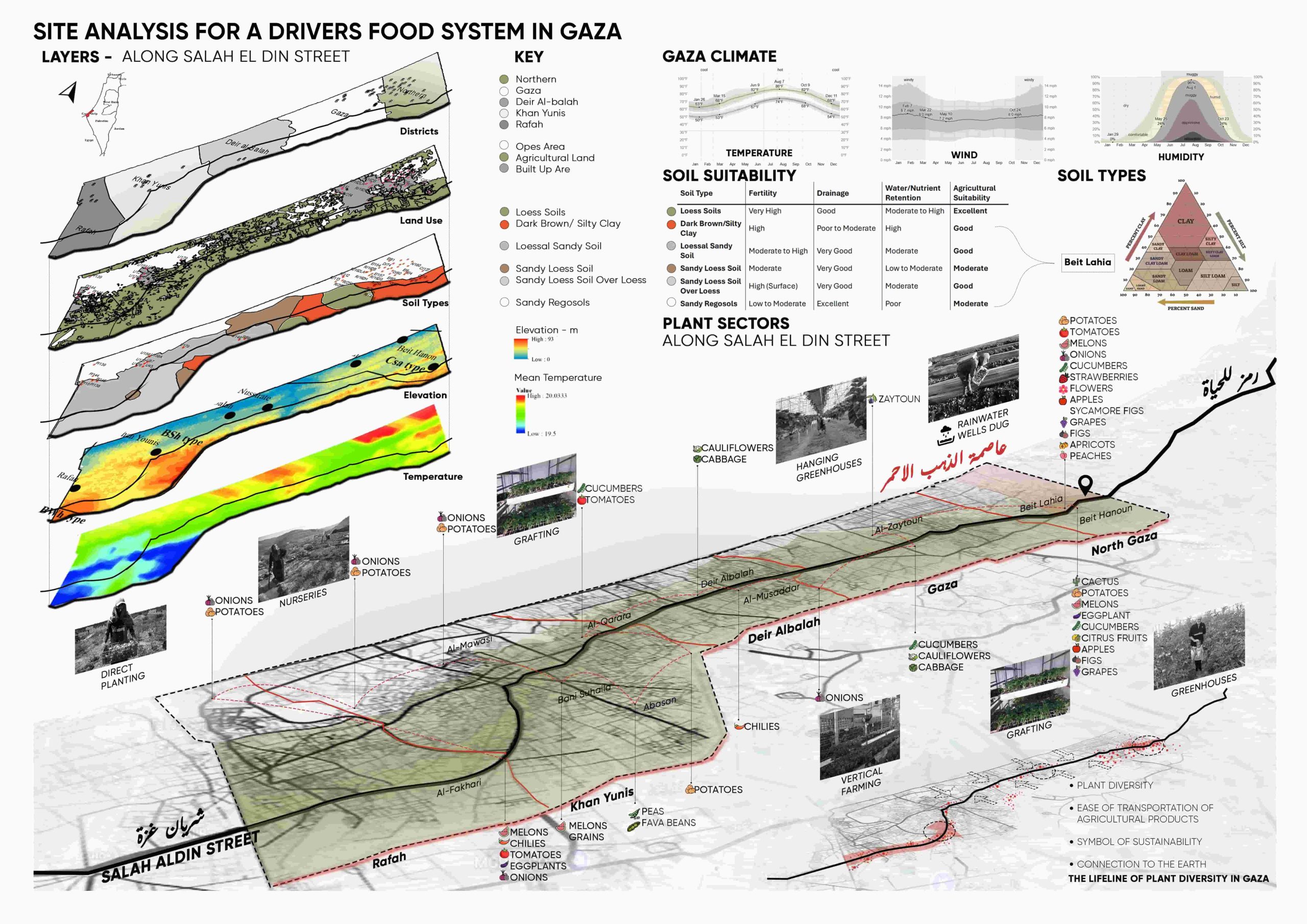
Located in Gaza, the project responds to two crises: the restriction on fertile seeds and the severe shortage of water. Hybrid seeds imported under occupation germinate once, undermining cultivation, while climate change and limited infrastructure intensify scarcity. Against these conditions, the project creates an ecosystem of autonomy rooted in empowerment, traditional knowledge, and sustainable technologies.
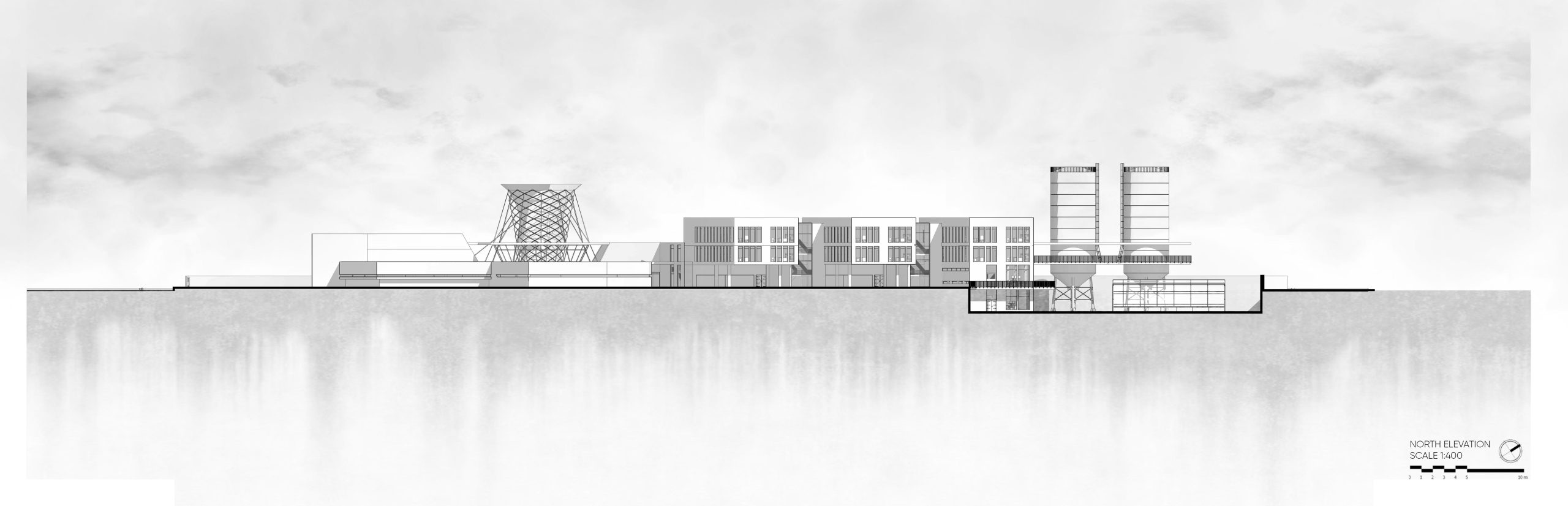
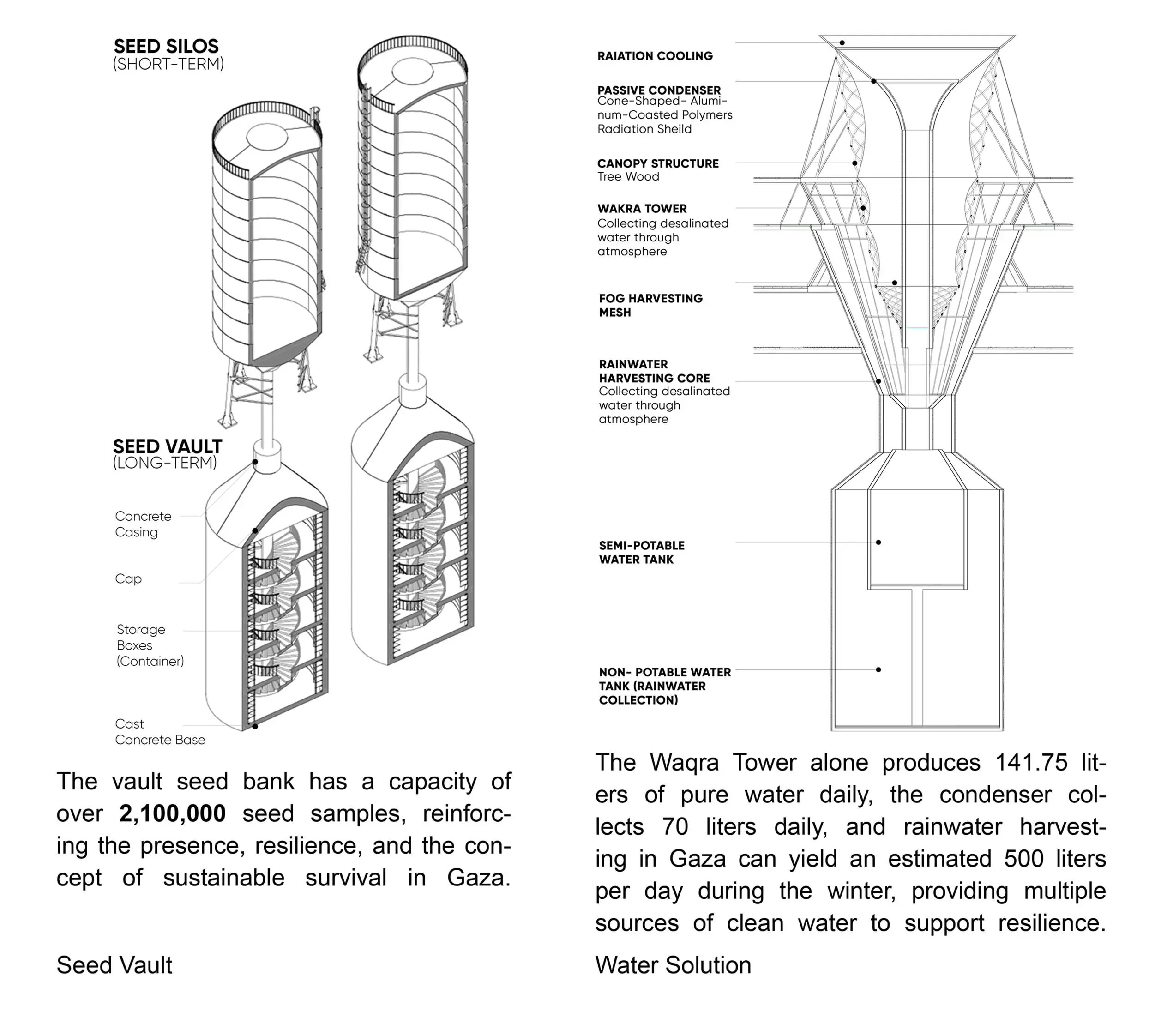
The program is structured around three key elements. The first is the Seed Bank, a cylindrical underground facility 20–30 meters below ground level, where stable temperature and humidity preserve biodiversity. Organized into three storage stages—microbiotic (0–3 years), mesobiotic (3–15 years), and macrobiotic (15–100 years)—it ensures survival of genetic resources for generations. A secure entrance reinforces safety and control.
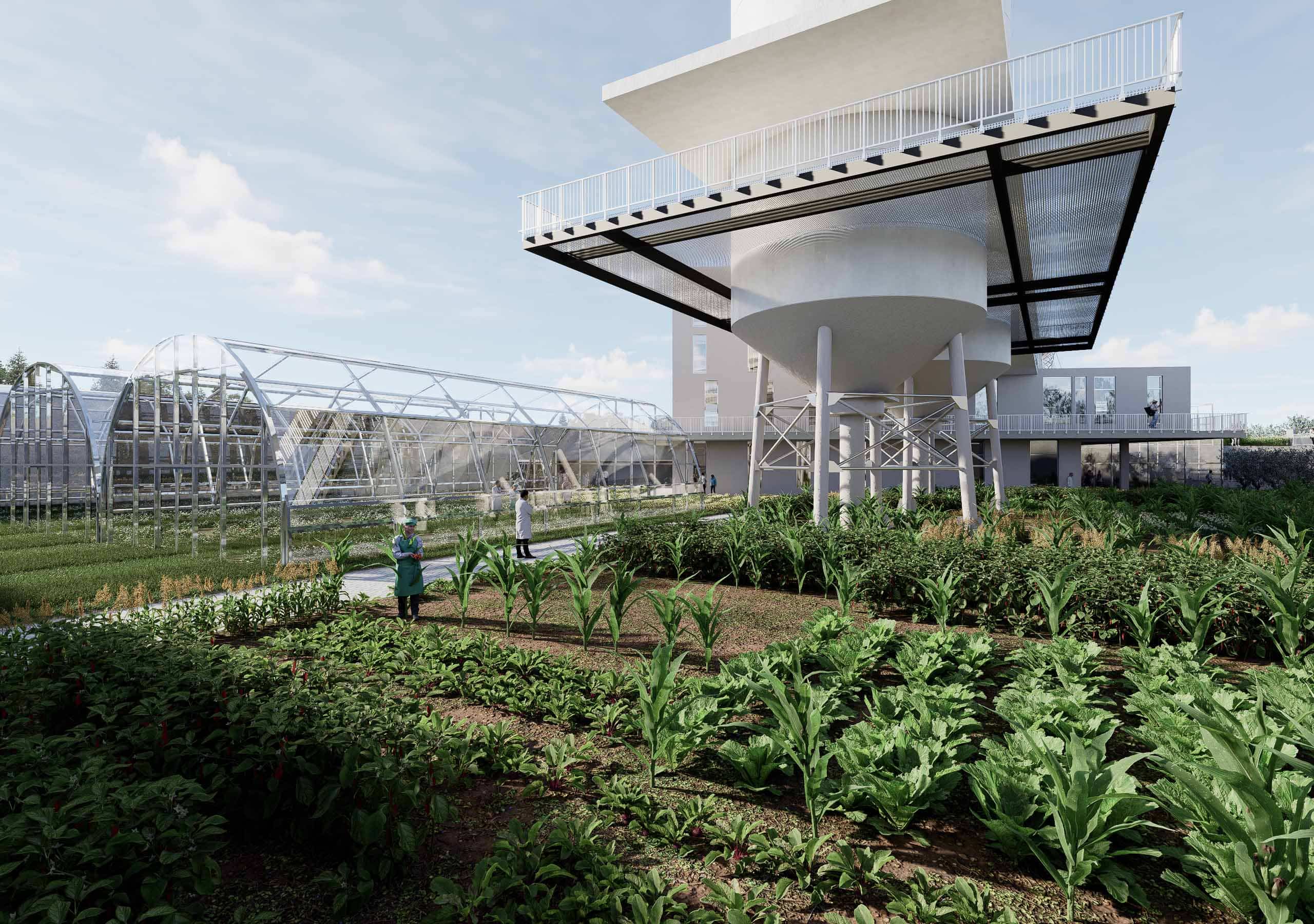
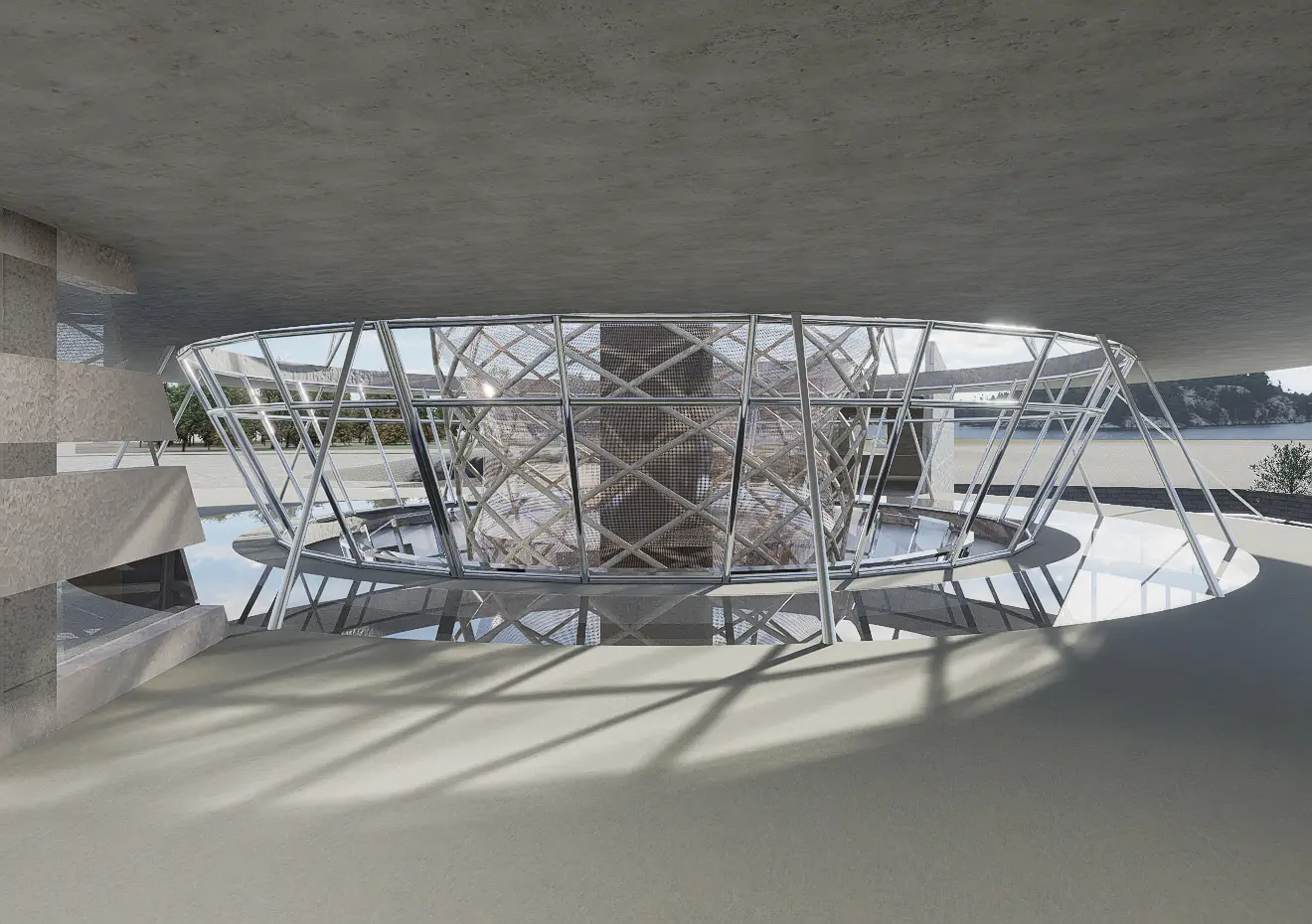
The second element is the Water System, integrating atmospheric water generation towers, condensation devices, and harvesting rainwater to provide continuous supplies of water. These technologies transform Gaza’s semi-arid climate into a resource, extracting water from air and sky.
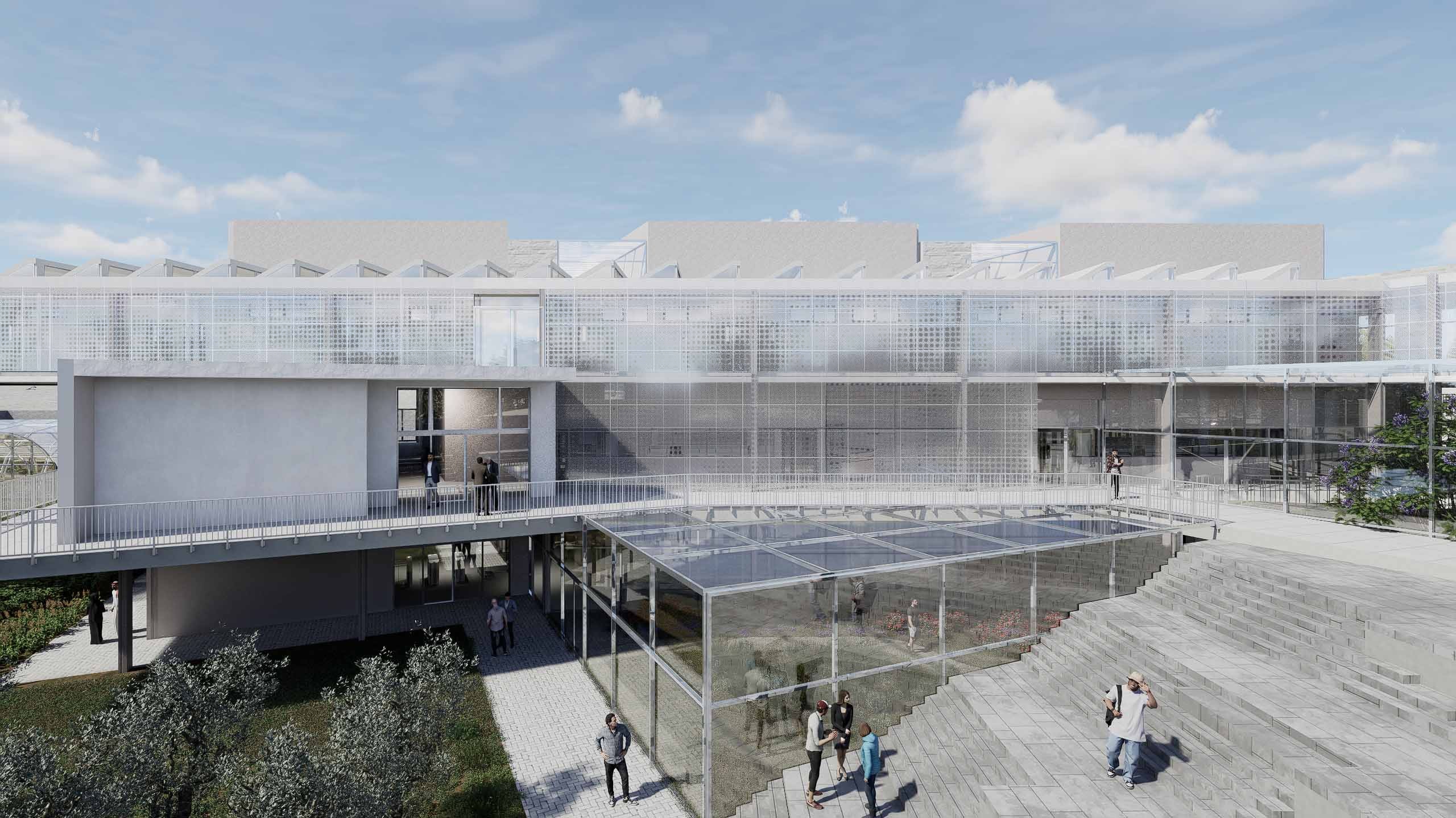
The third component is the Educational and Community Axis, where farmers, students, and citizens come together to learn, exchange, and innovate. This space promotes agricultural awareness, resilience, and strategies for self-sufficiency.
The formal composition organizes spaces as a linear journey—both literal and symbolic—where visitors encounter.
Established in 2012, Tamayouz Excellence Award is an unaffiliated, independent initiative that aims to advance the profession of architecture academically and professionally. Tamayouz is dedicated to supporting aspirational and transformative projects that tackle local and global challenges and that are informed by a holistic understanding of context.