


University : Birzeit University
Tutor(s) : Sara Khasib
Project Description
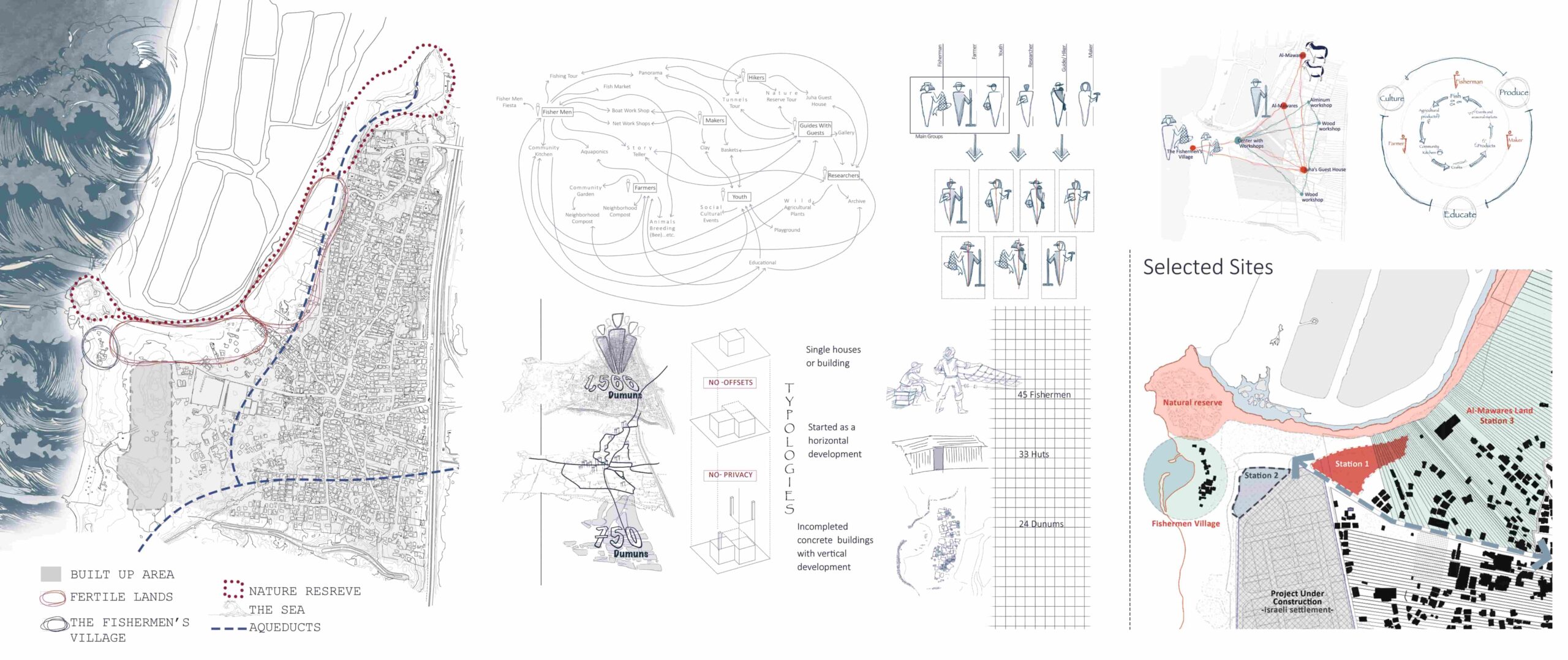
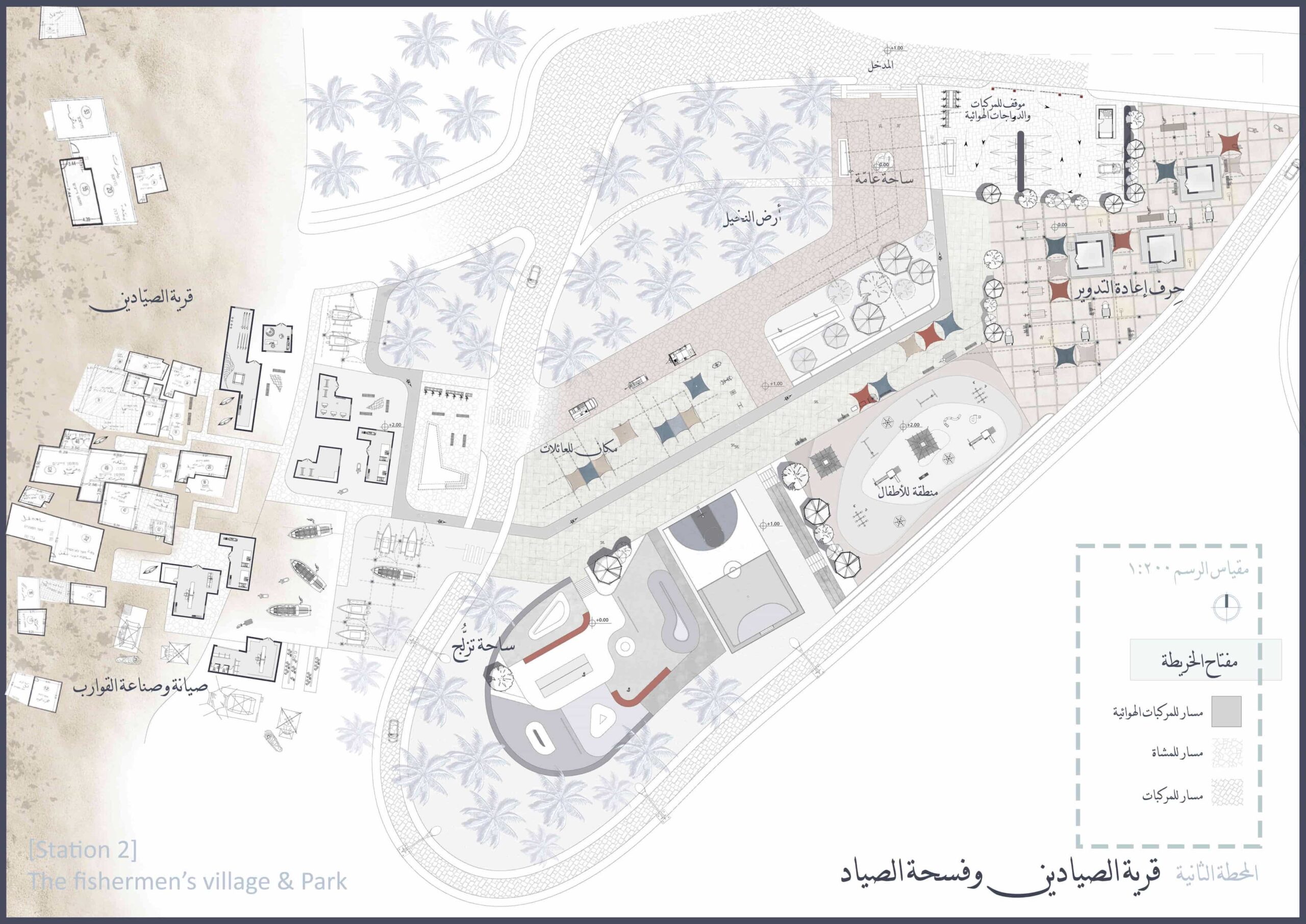
This project focuses on Jisr az-Zarqa, the last Palestinian coastal village remaining on land confiscated by Israel in 1948. The primary goal is to address the challenges faced by the village due to the Israeli occupation, which hinders its development and threatens its existence.
A participatory design strategy was adopted, involving the active participation of the village inhabitants. The aim is to blur the lines between locals and visitors by creating a network of economic activities, linking local resources to regional demands. This involves reviving traditional professions like fishing, agriculture, and handicrafts, fostering a self-sufficient and culturally rich community.
The project recognizes the deep historical connection between Palestinian farmers, fishermen, and craftsmen, a self-sufficient society disrupted by colonial interventions. Jisr az-Zarqa, as the last coastal village, faces the threat of Israeli attempts to isolate and “Judaize” the area.
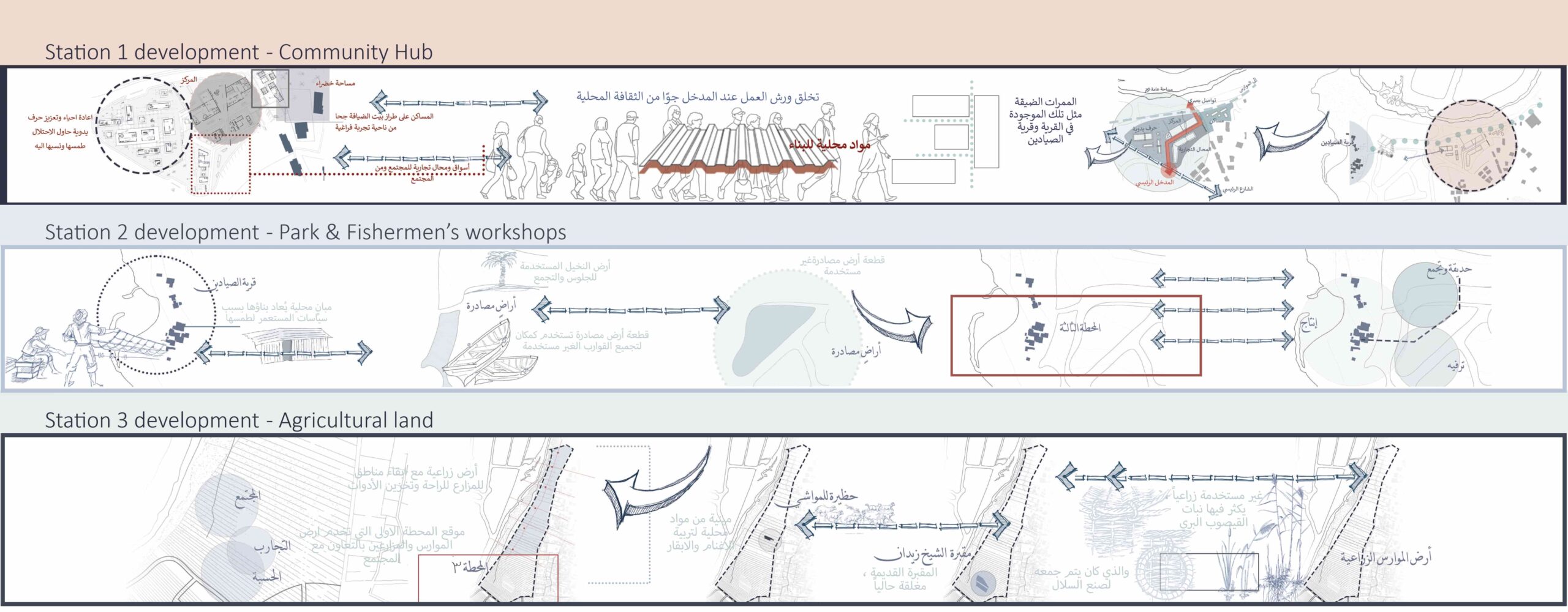
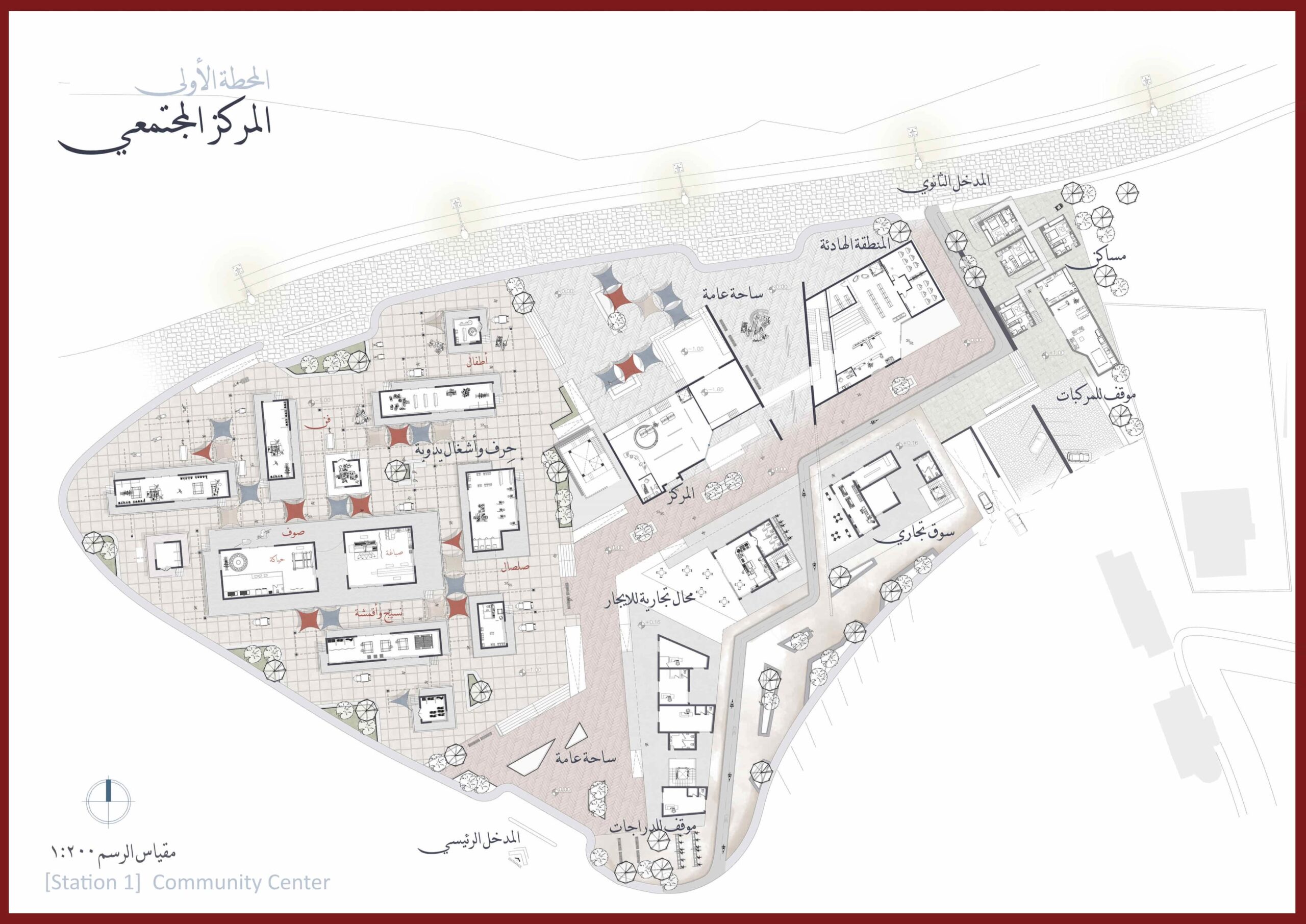
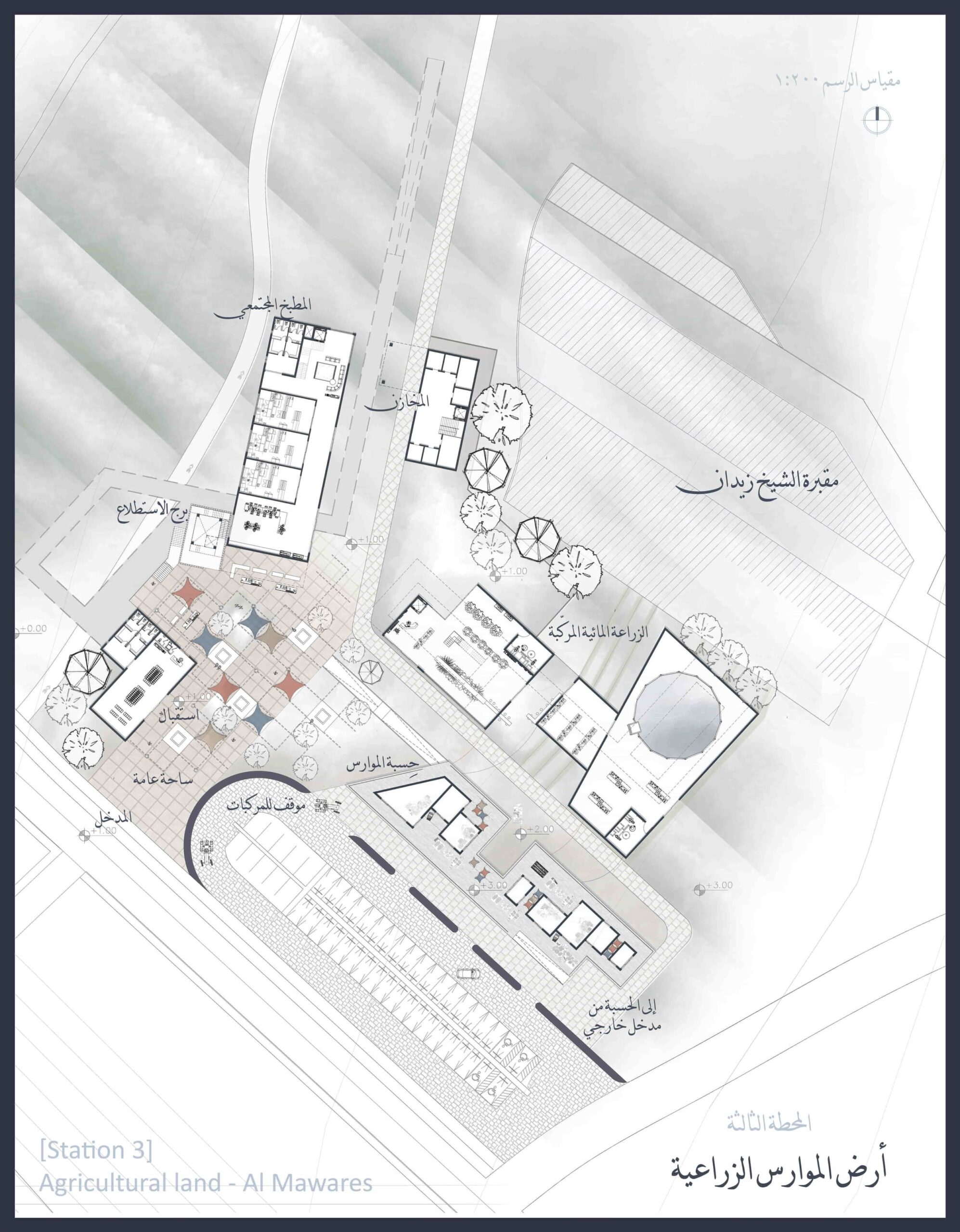
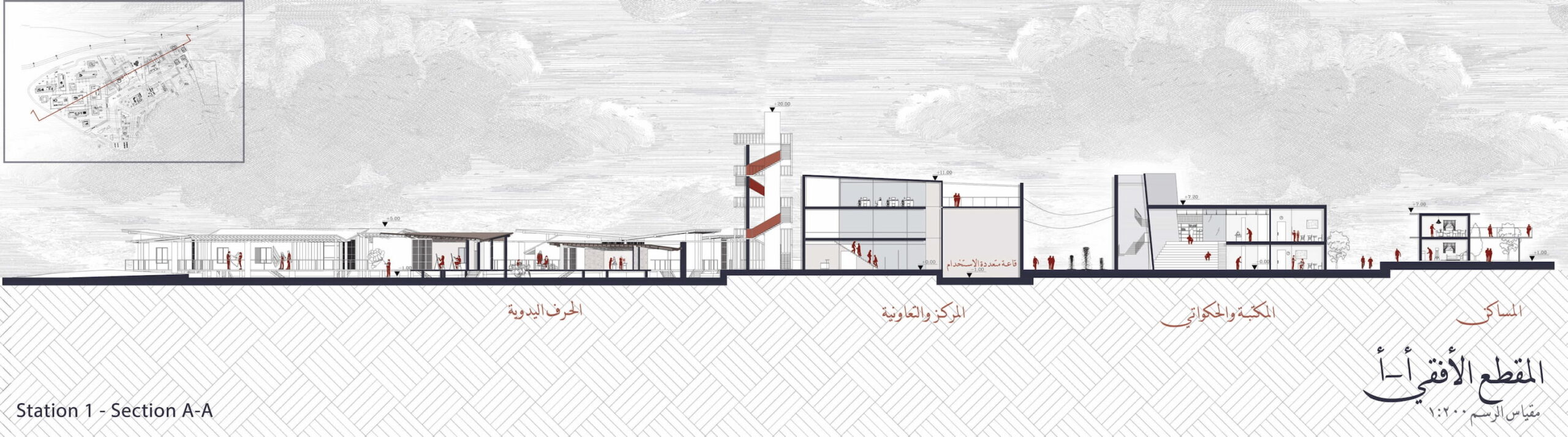
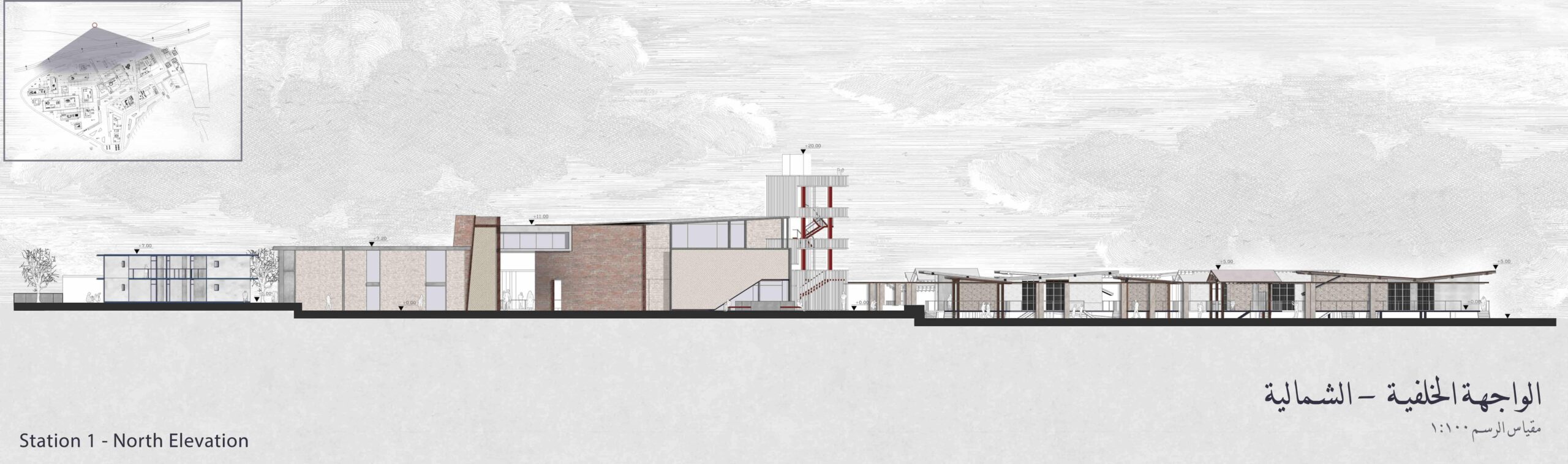
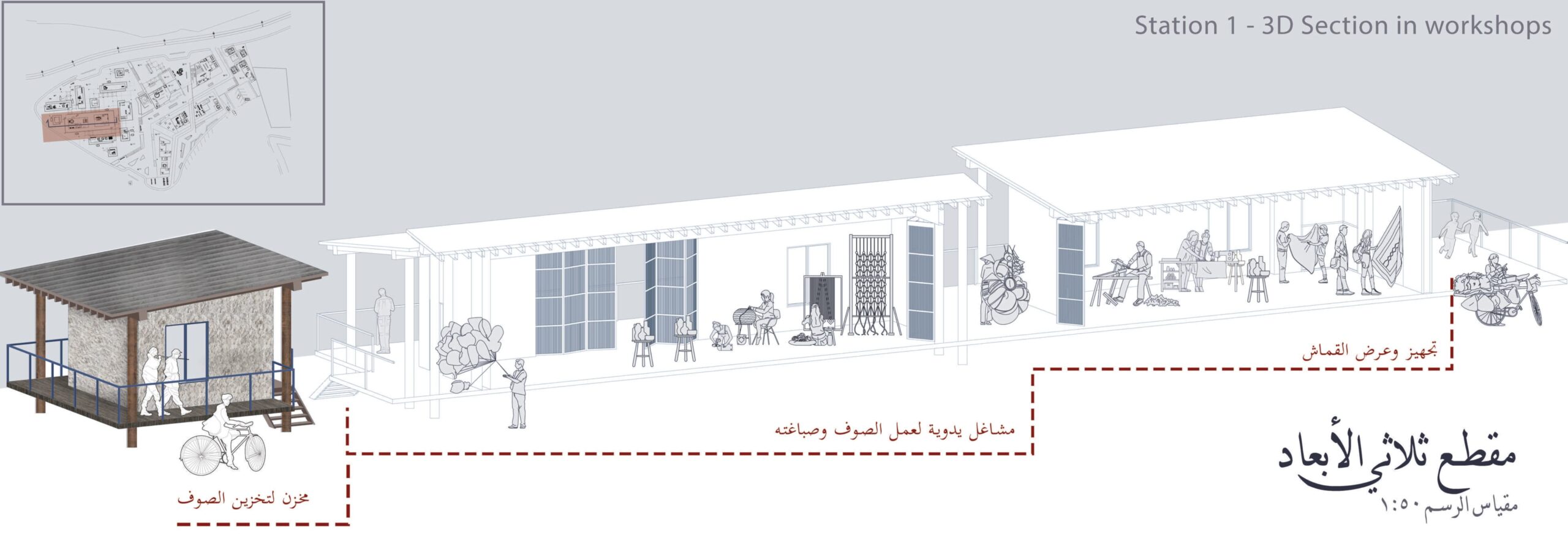
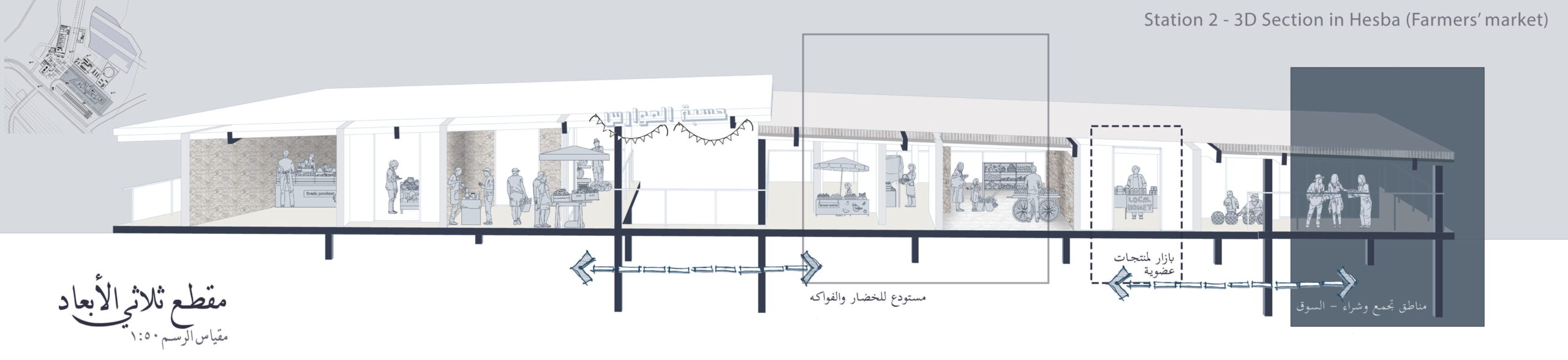
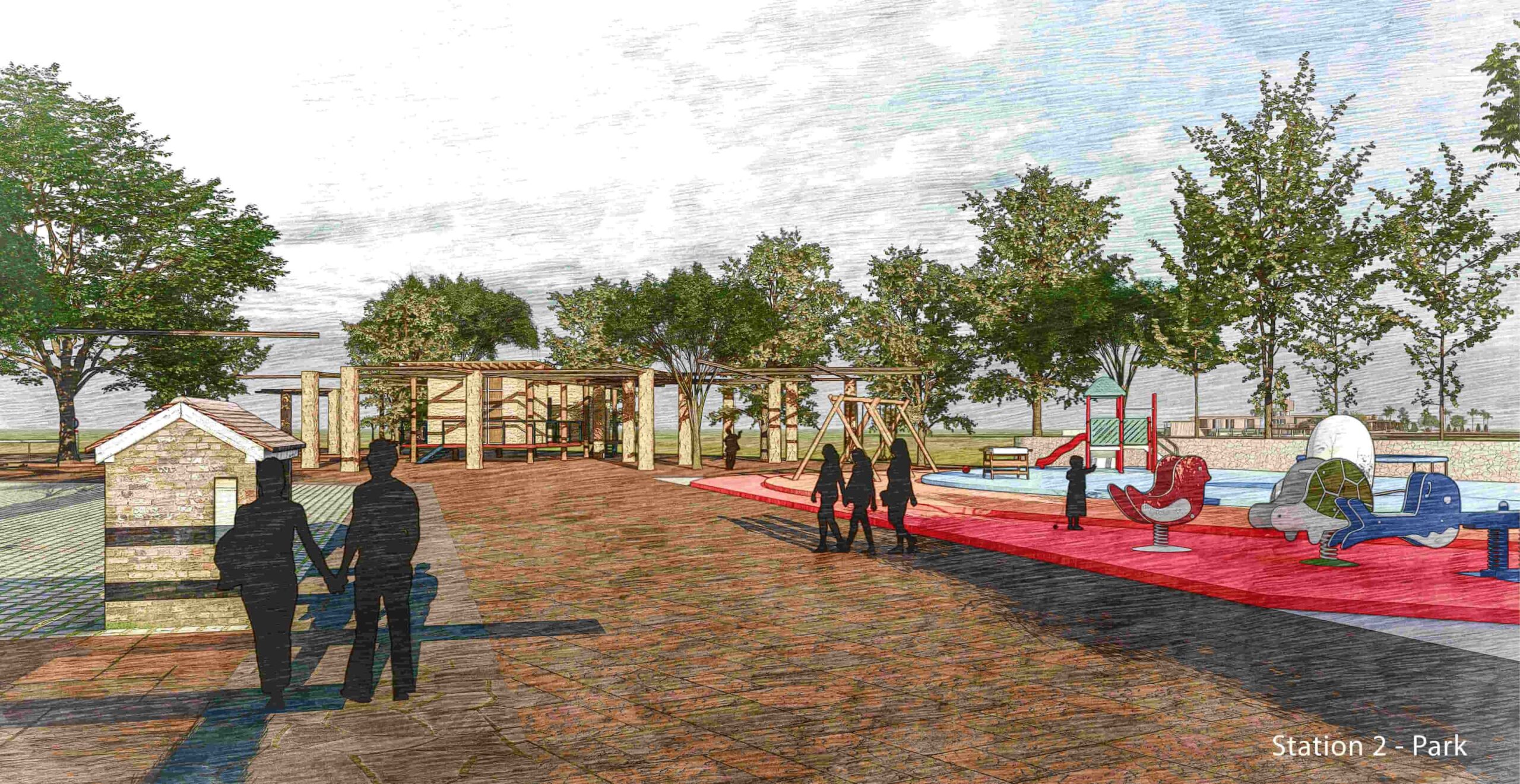
The project incorporates several key functions: Local Markets: To support local farmers and connect them with consumers. Revitalized Crafts: To revive traditional crafts like pottery, weaving, and embroidery, preserving cultural heritage and creating employment. Community Center: To serve as a social hub, host cultural events, and preserve oral history. Fishermen’s Park: To support the fishing community and provide a public space.
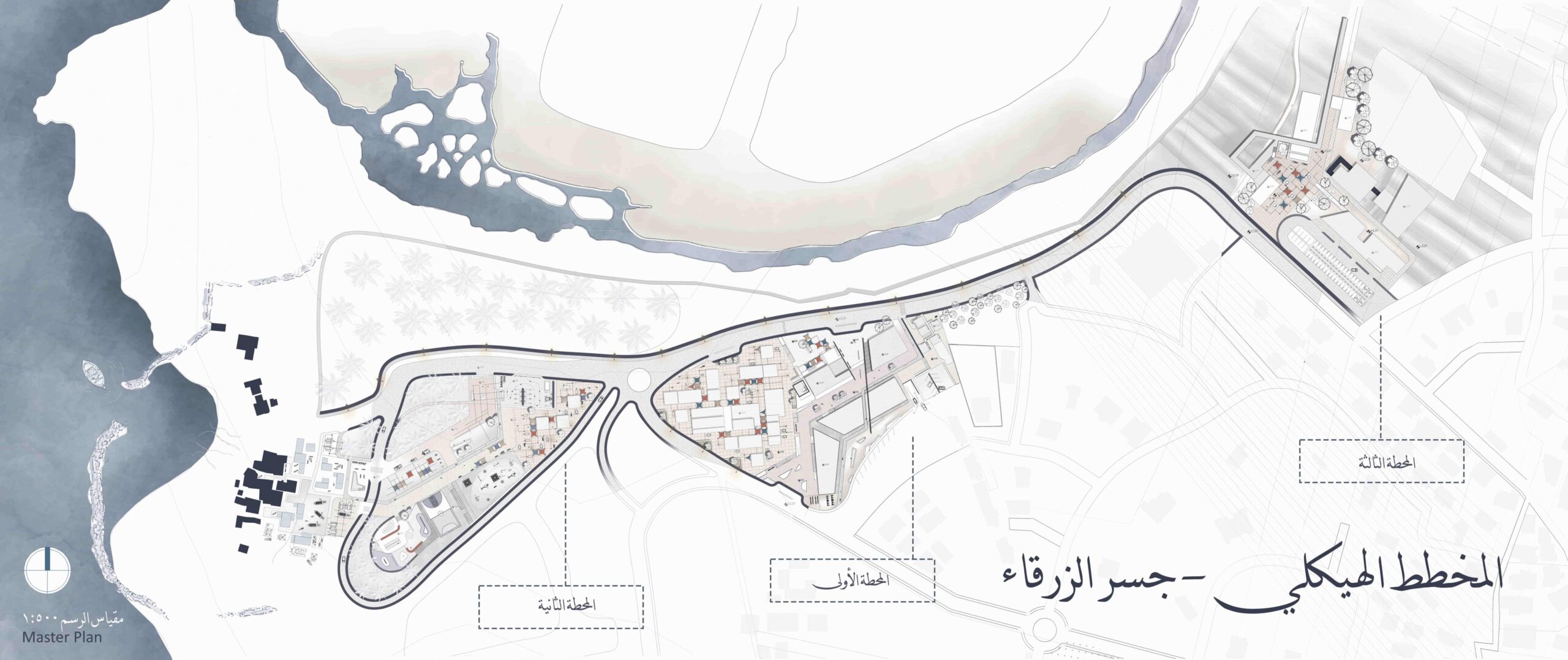
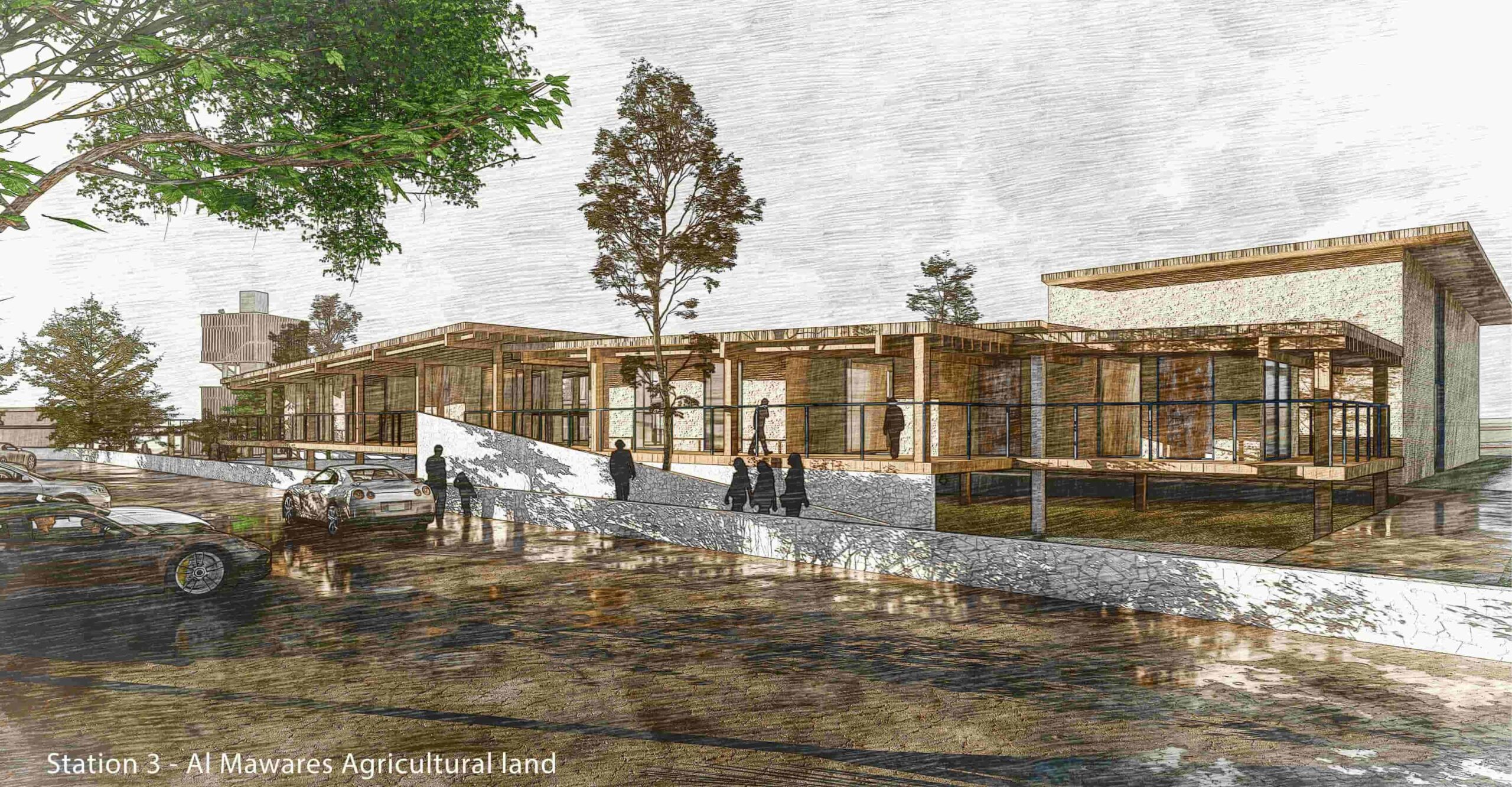
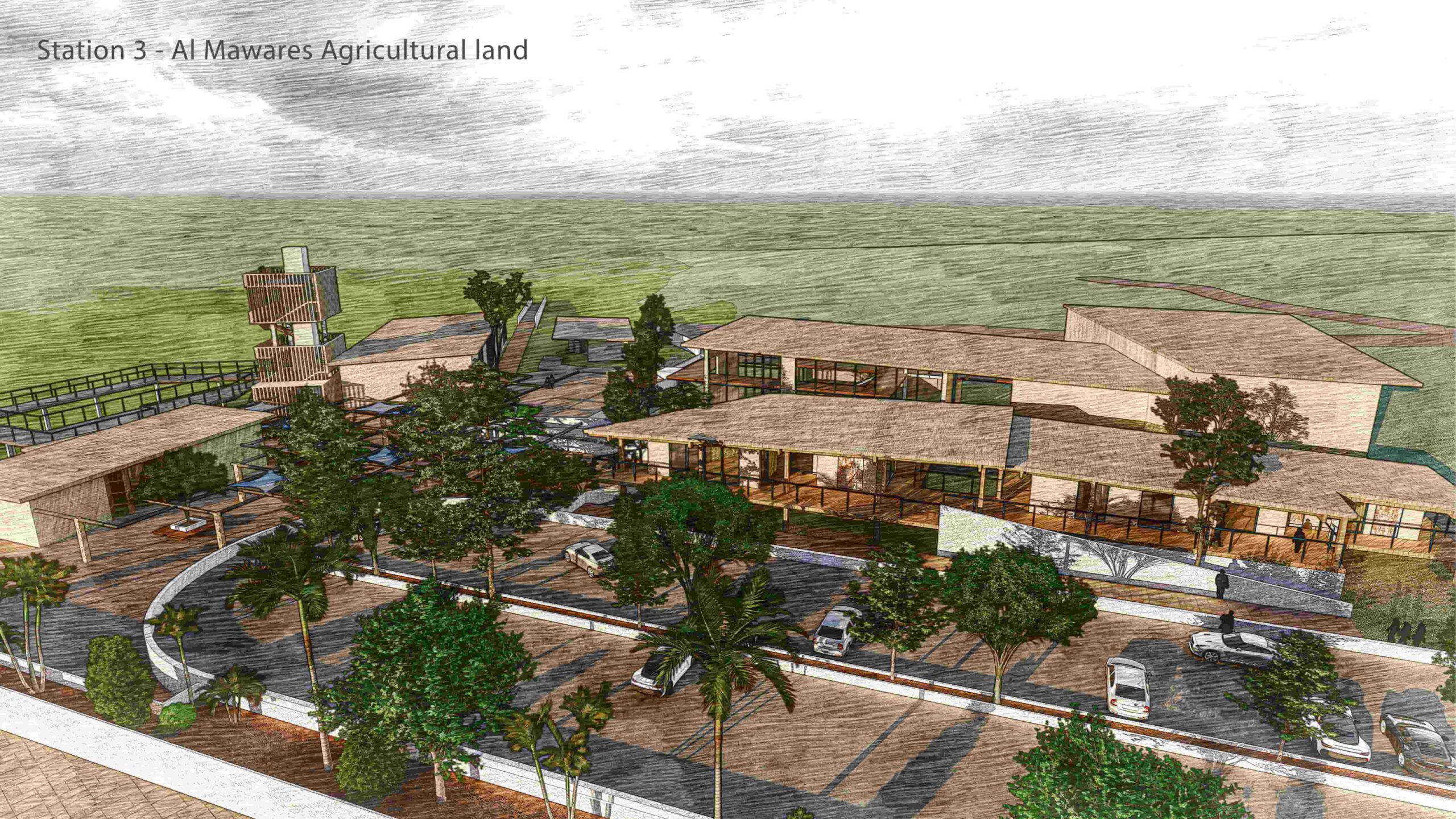
The project strategically focuses on three sites: the community center, the fishermen’s village, and agricultural land. These sites form a network, connecting the village center to the sea and preventing isolation. The master plan emphasizes simple forms, narrow passageways, and a 15-minute walking distance between sites.
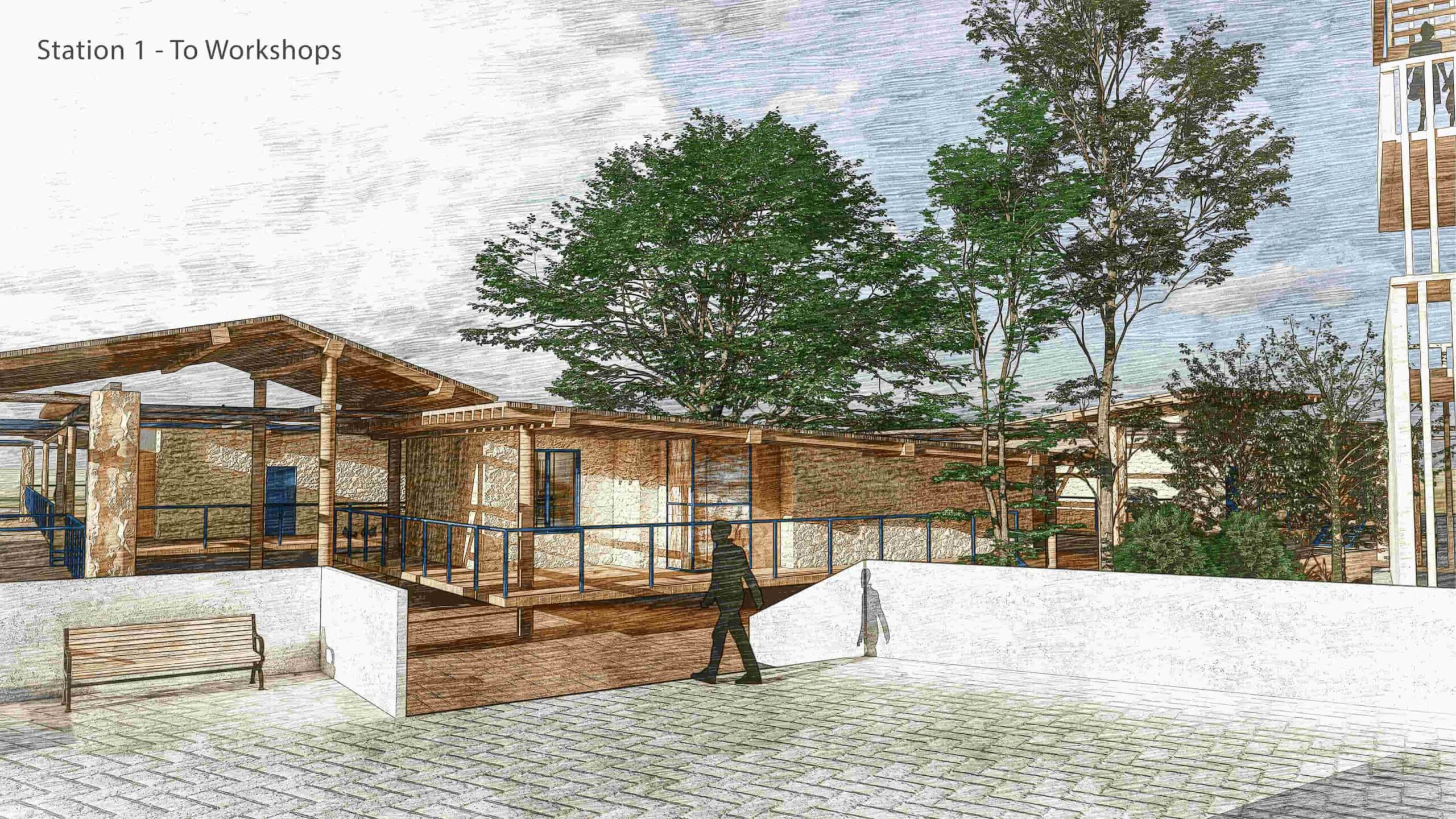
The architectural approach emphasizes the use of local materials and construction methods, such as sandy limestone, seashells, and sloped roofs. This reflects the local building style and reinforces the connection to the environment and traditional practices.
By implementing these strategies, the project aims to: Strengthen the village’s resilience against the occupation. Create an integrated social and economic framework. Preserve Palestinian cultural identity and heritage. Foster a self-sufficient and sustainable community.
Established in 2012, Tamayouz Excellence Award is an unaffiliated, independent initiative that aims to advance the profession of architecture academically and professionally. Tamayouz is dedicated to supporting aspirational and transformative projects that tackle local and global challenges and that are informed by a holistic understanding of context.