
University : Palestine Polytechnic University
Tutor(s) : Dr Bader Al-atawneh
Project Description
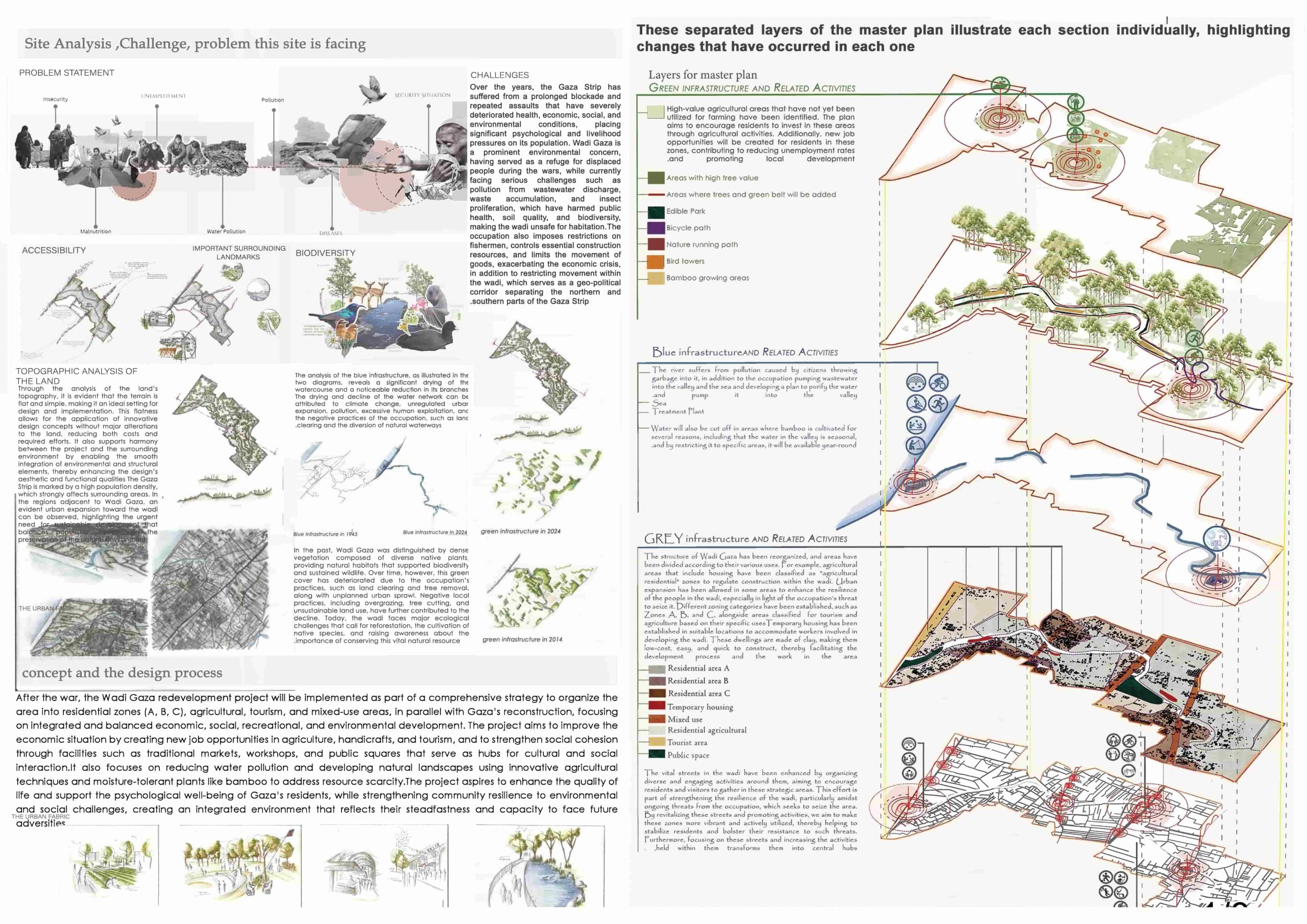
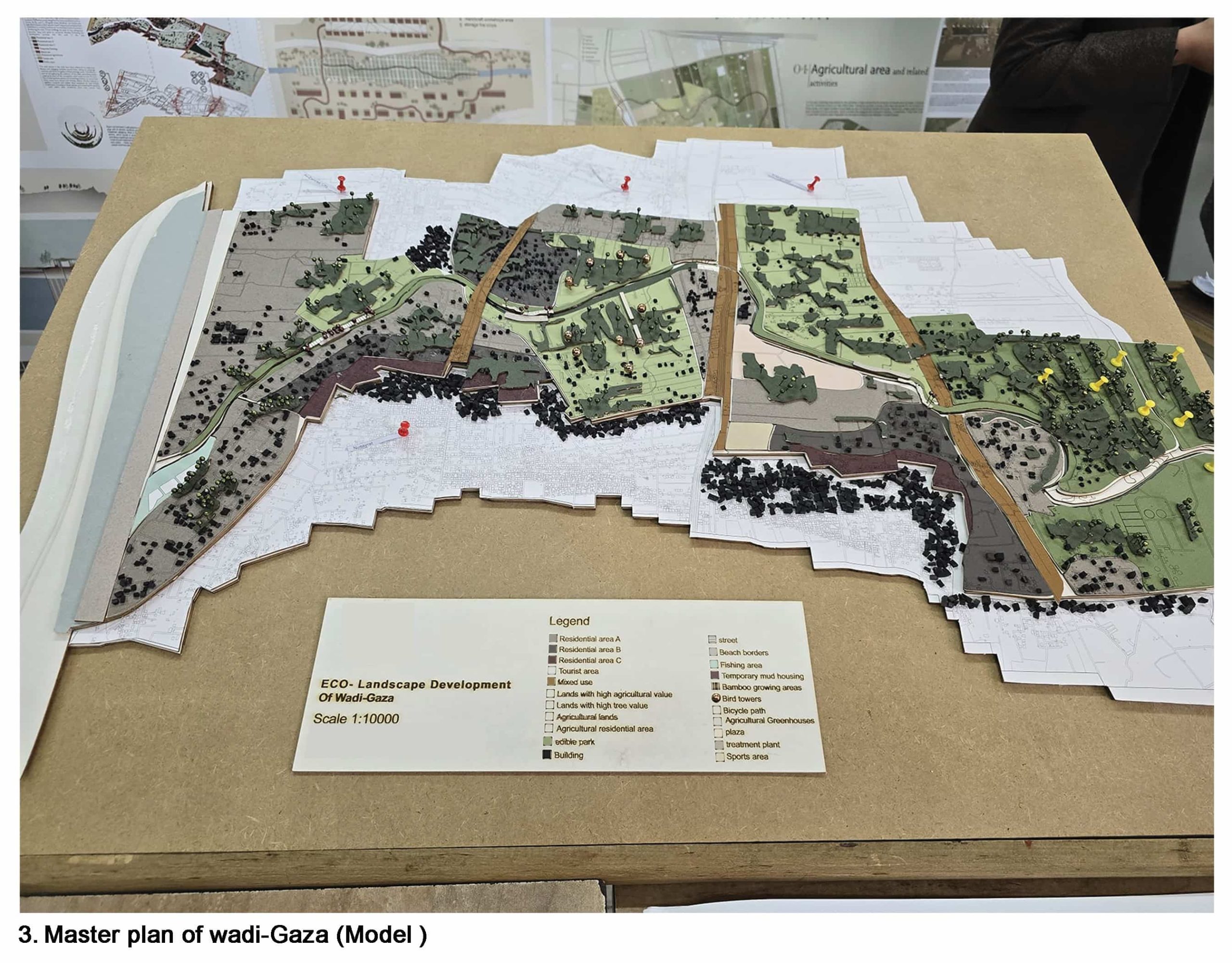
Over the years, Gaza has endured continuous blockade and recurrent assaults, causing severe deterioration in health, economic, social, and environmental conditions, while imposing immense psychological pressures on its population. Among the most urgent environmental crises is Wadi Gaza, which once sheltered displaced families during wars, but now suffers from untreated wastewater discharge, solid waste accumulation, and insect proliferation. These conditions have degraded public health, soil quality, and biodiversity, rendering the valley unsafe for habitation. Further restrictions—on fishing, access to basic building materials, and mobility across the valley as a geo-political corridor—have deepened the crisis.
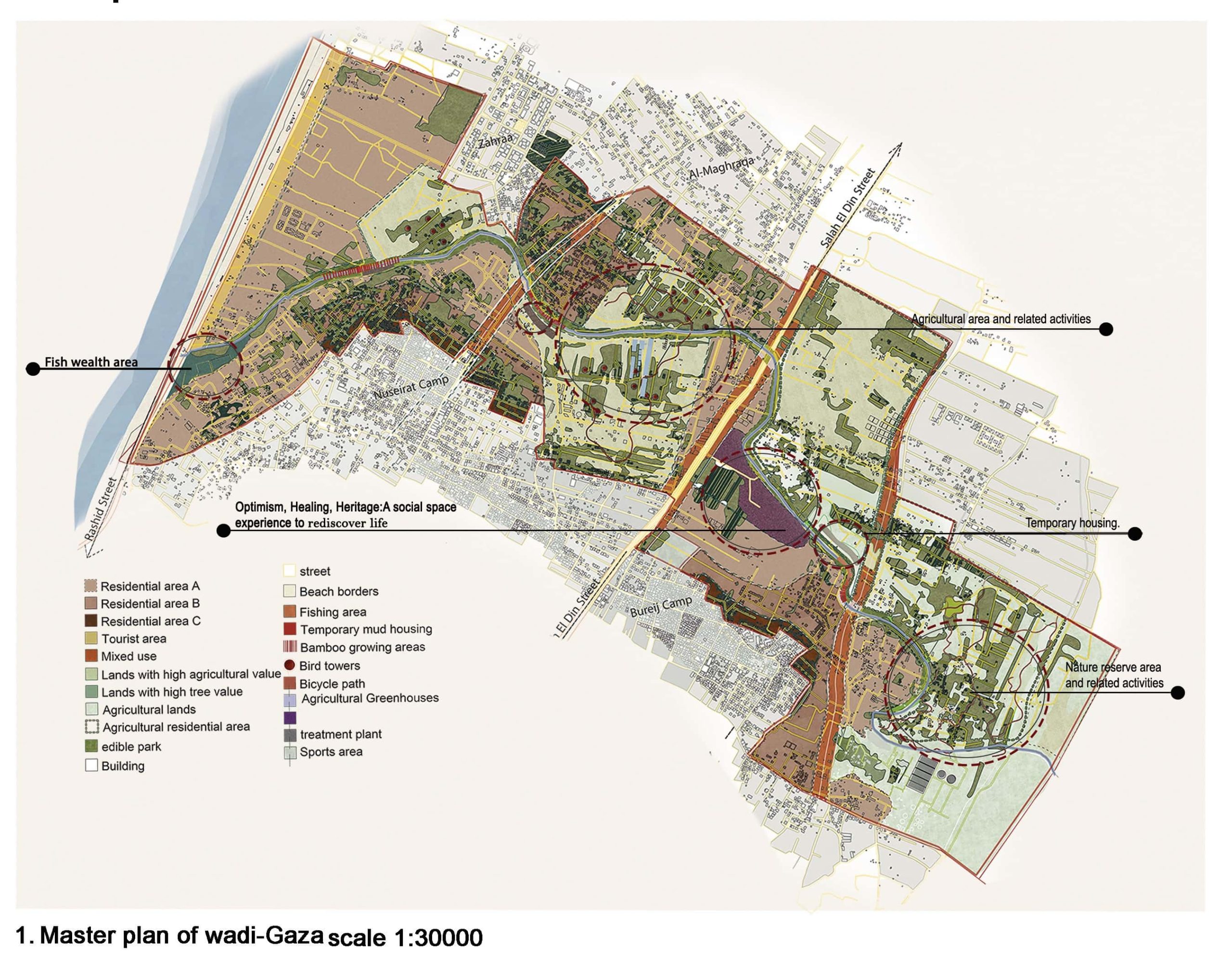
The Wadi Gaza Rehabilitation Project envisions the valley as a natural urban breathing space, structured around three pillars:
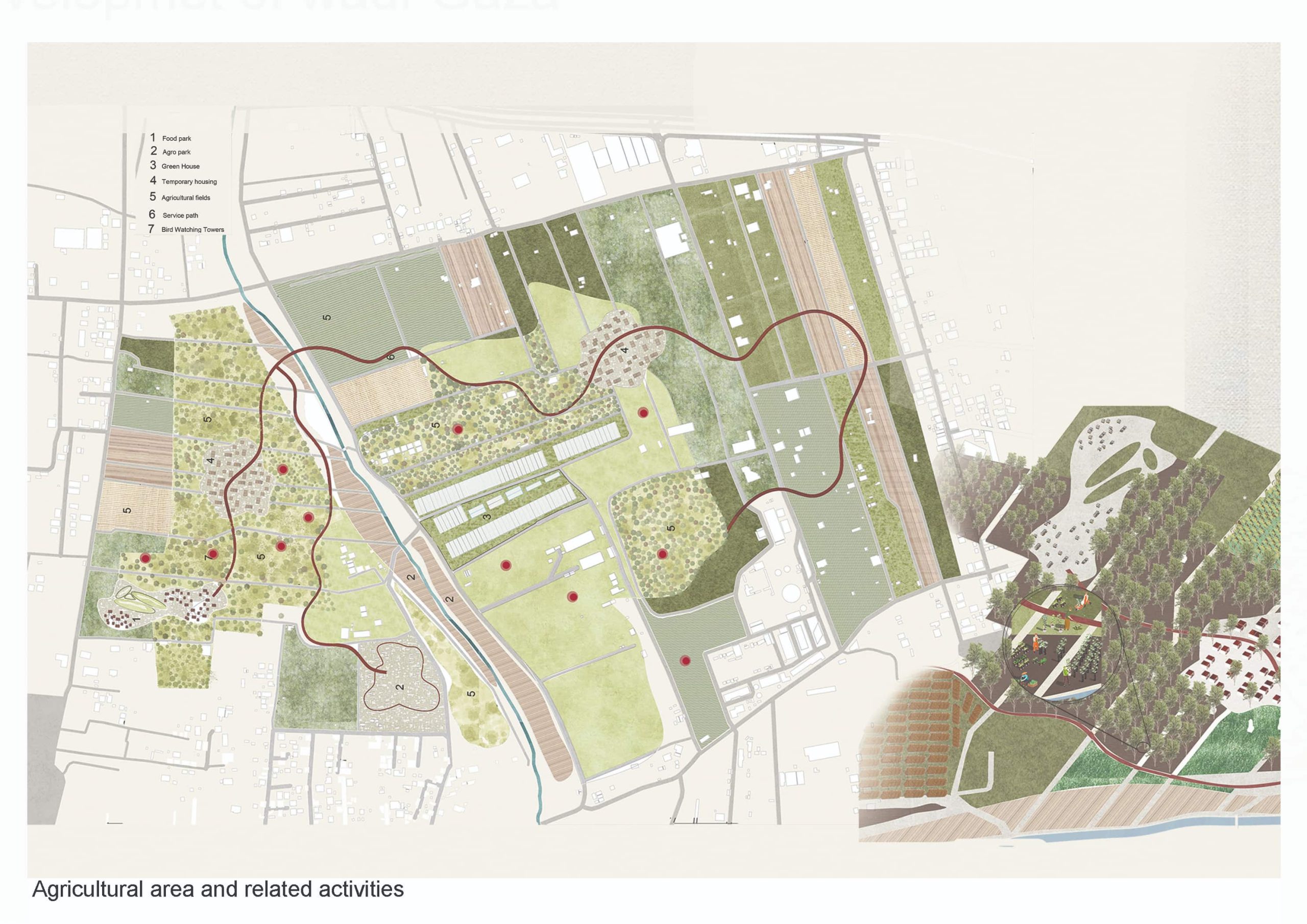
1. Environmental sustainability through use of local and recycled post-war materials, upgrading Al-Bureij desalination plant for sustainable agriculture, and establishing a green belt to limit urban sprawl.
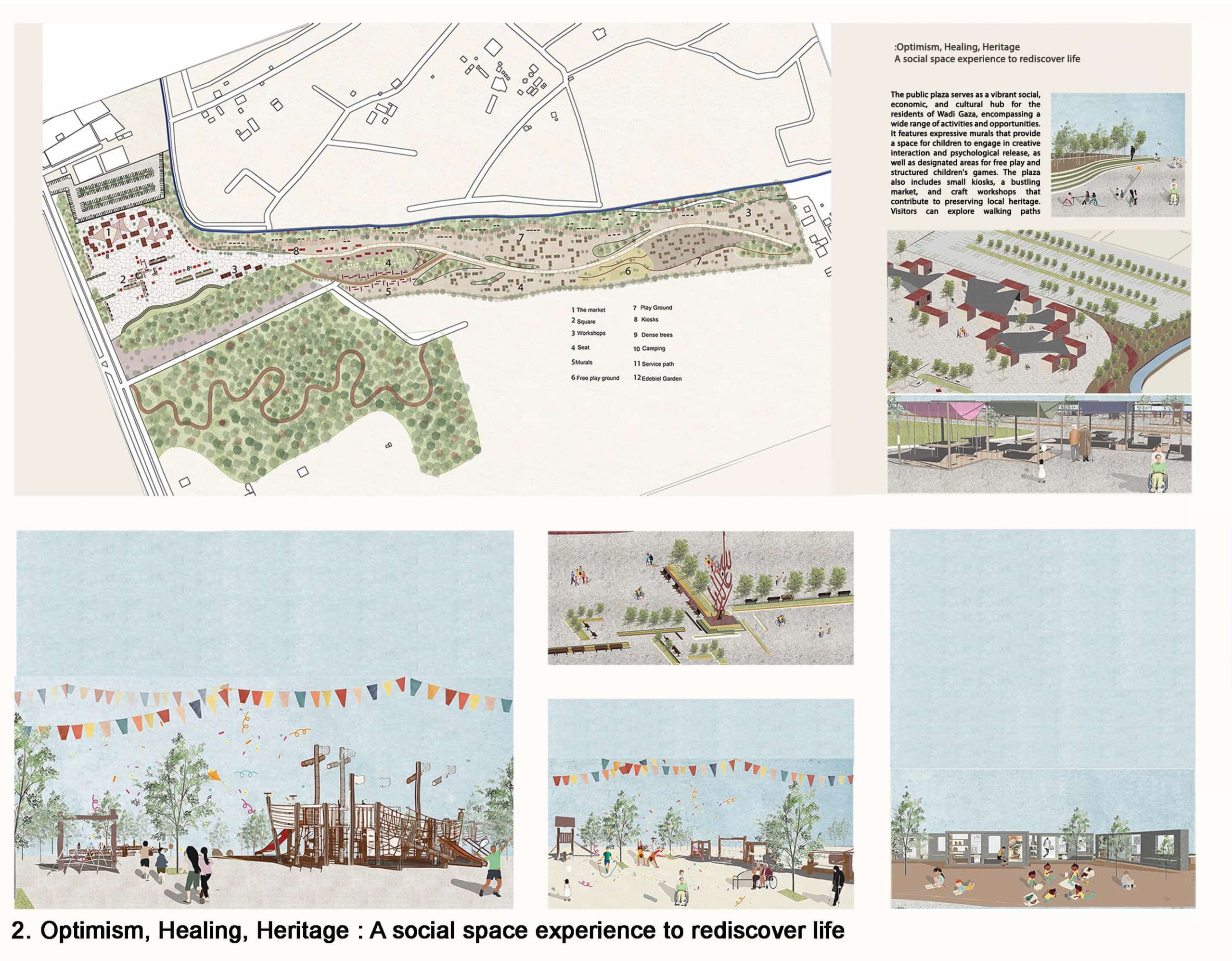
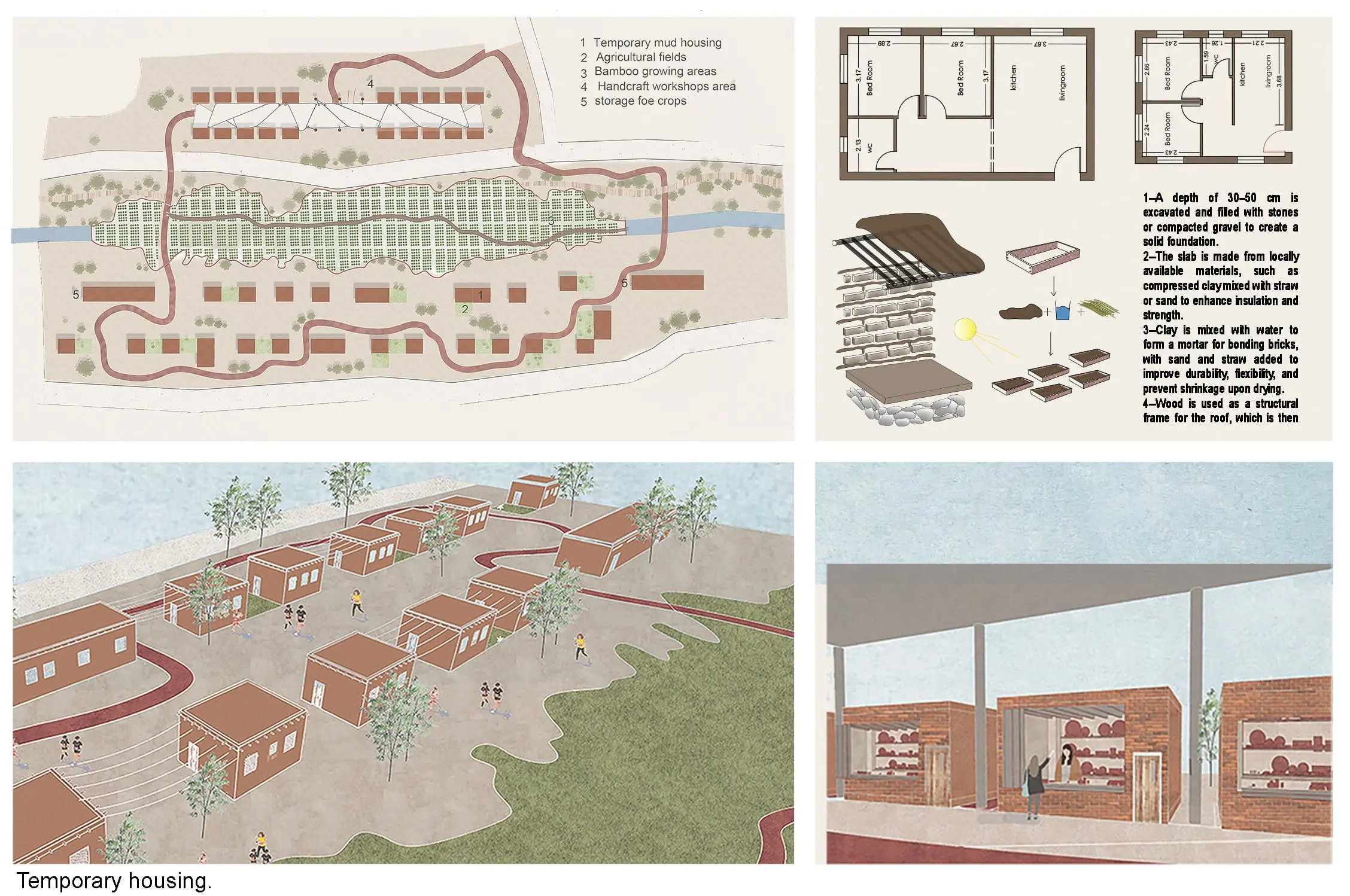
2. Social innovation via temporary agro-housing for displaced families, integrating them into farming, crafts, and rehabilitation workforces, alongside development of public spaces, playgrounds, and cultural hubs.
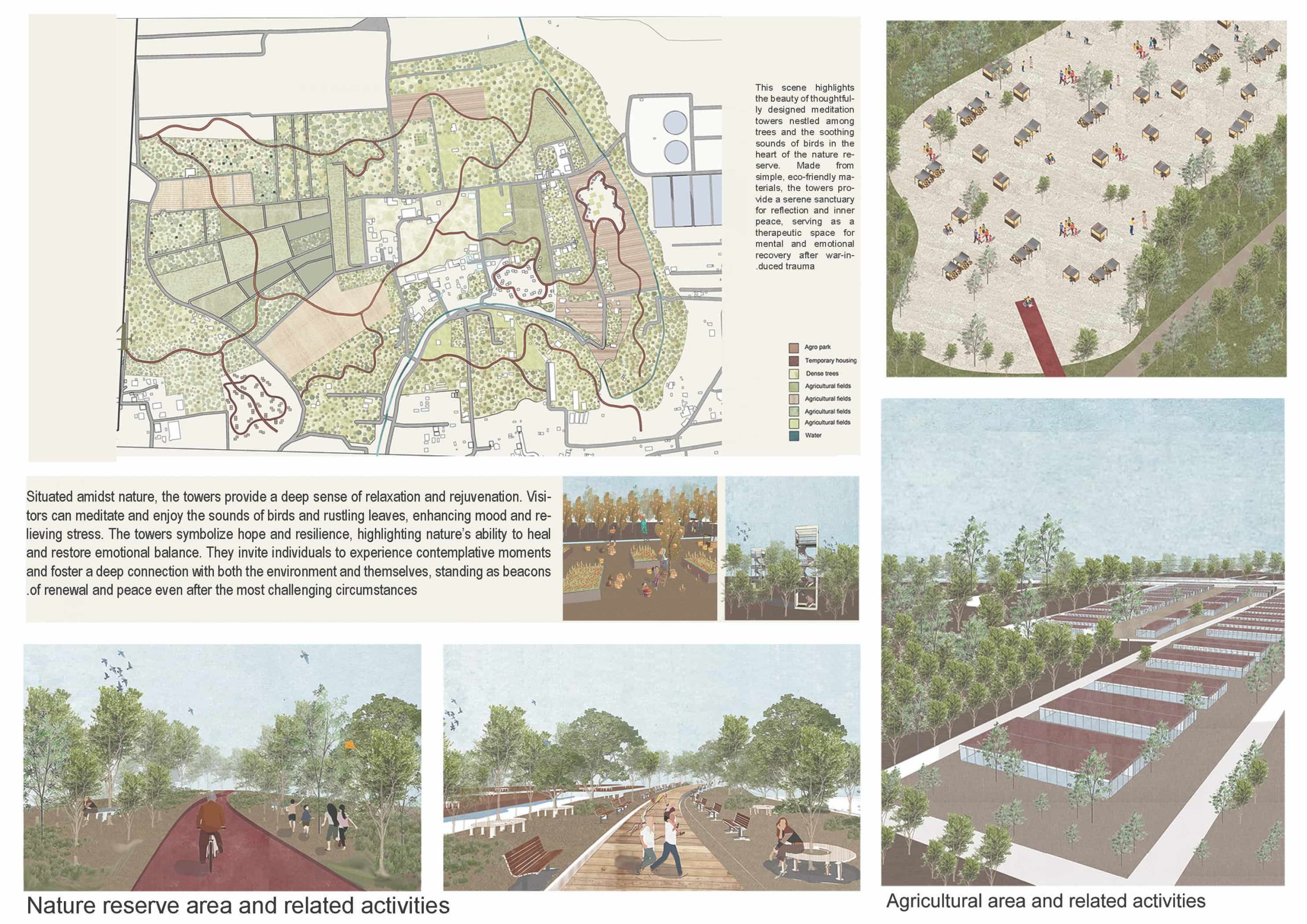
3. Cultural revitalization through traditional craft workshops, ecological trails, and bird-watching towers that reconnect communities with nature and foster psychological healing.
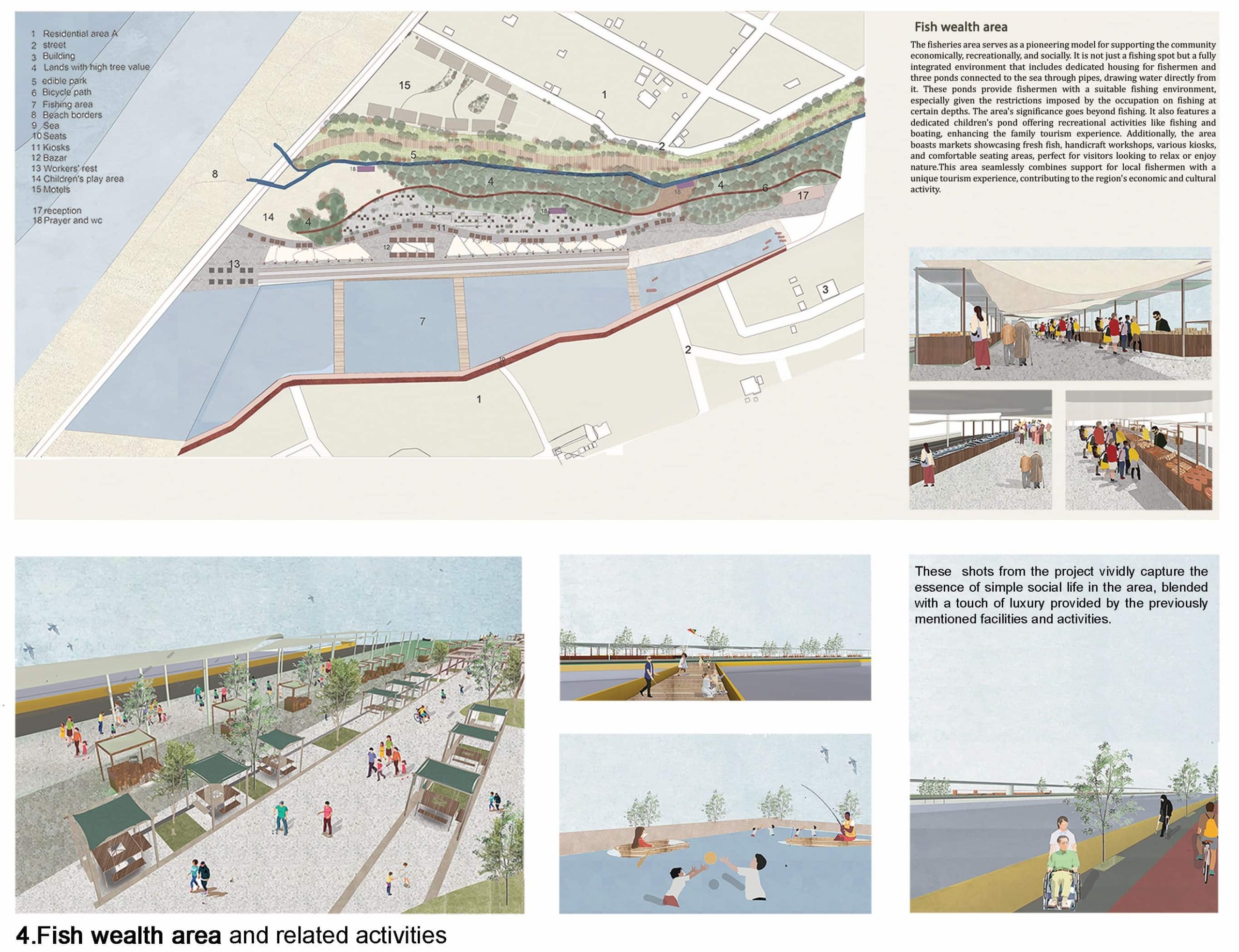
In parallel, the project introduces productive economic activities such as sustainable farming, aquaculture, and bamboo cultivation as an alternative construction and furniture material under blockade restrictions.
Ultimately, Wadi Gaza’s rehabilitation transcends architecture: it is a prototype for post-conflict regeneration, merging ecology, society, and culture into a model of resilience and sustainable recovery, demonstrating Gaza’s enduring capacity to reimagine its future.
Established in 2012, Tamayouz Excellence Award is an unaffiliated, independent initiative that aims to advance the profession of architecture academically and professionally. Tamayouz is dedicated to supporting aspirational and transformative projects that tackle local and global challenges and that are informed by a holistic understanding of context.