




University : An-Najah National University
Tutor(s) : D Hasan Alqadi, Dr Waseem Salameh and Dr Khaled Qamhieh
Project Description
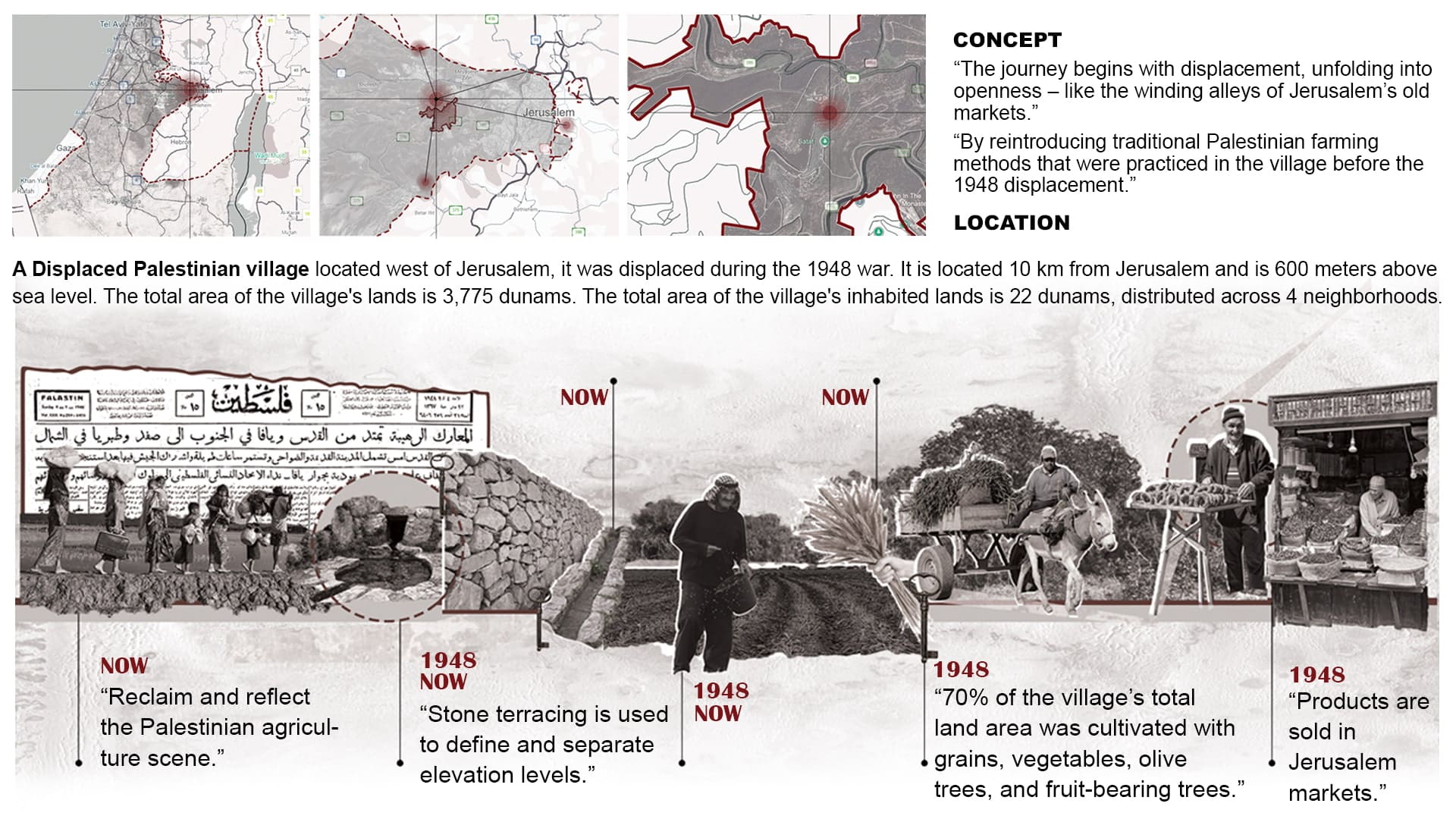
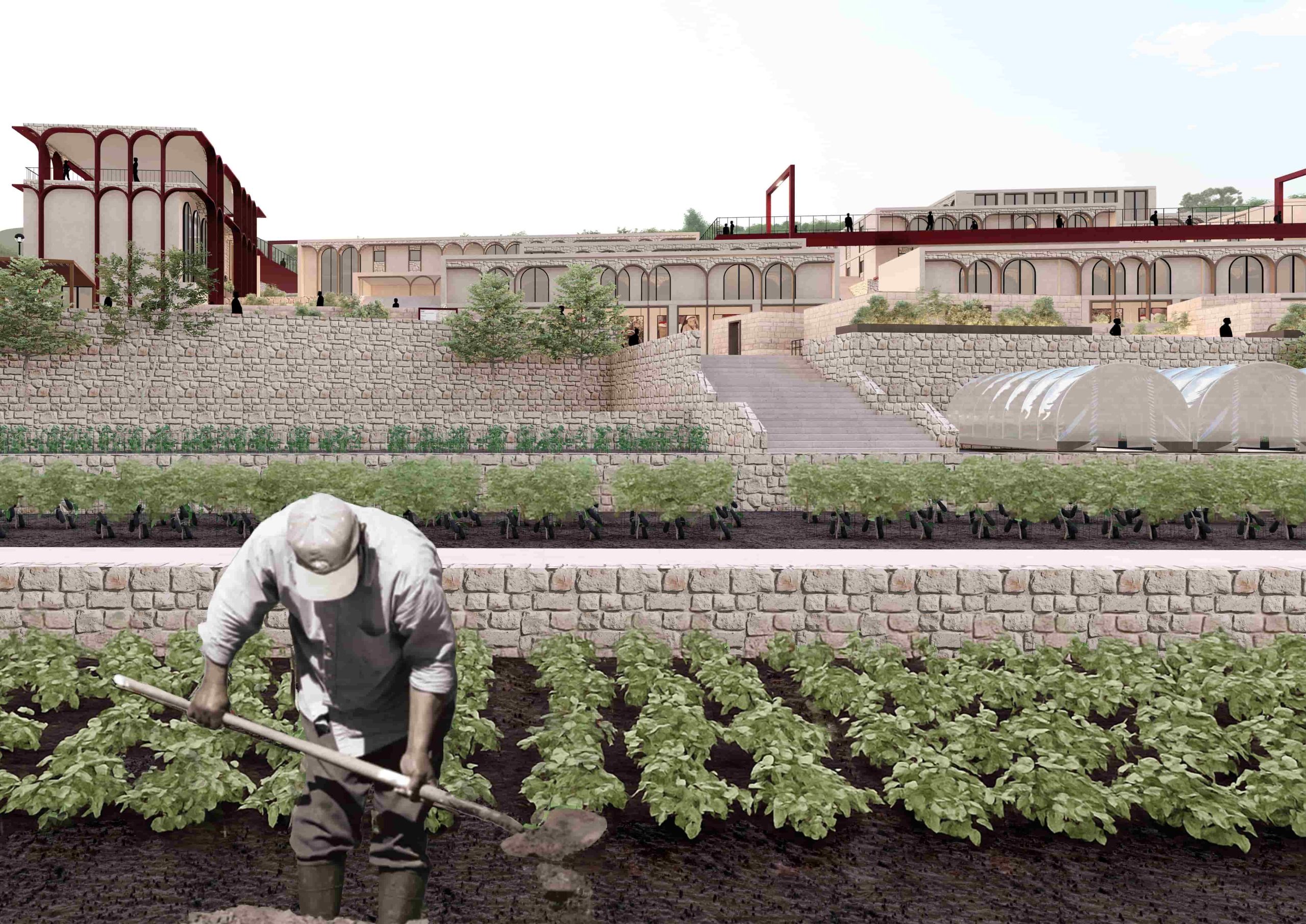
Focuses on shaping the Palestinian agricultural landscape, emphasizing the land’s importance through traditional farming methods such as stone walls and terraces, without neglecting its tourism value.
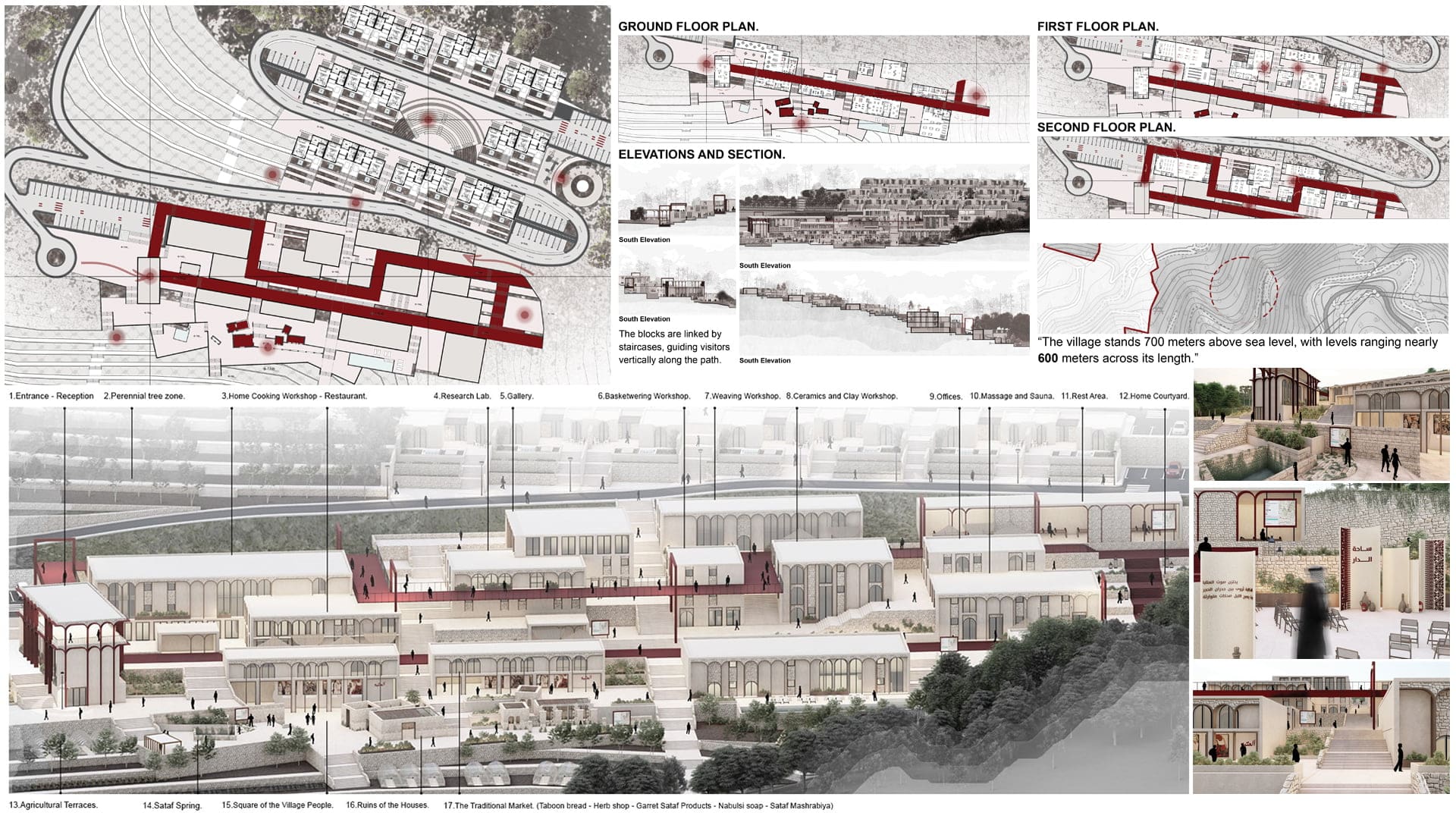
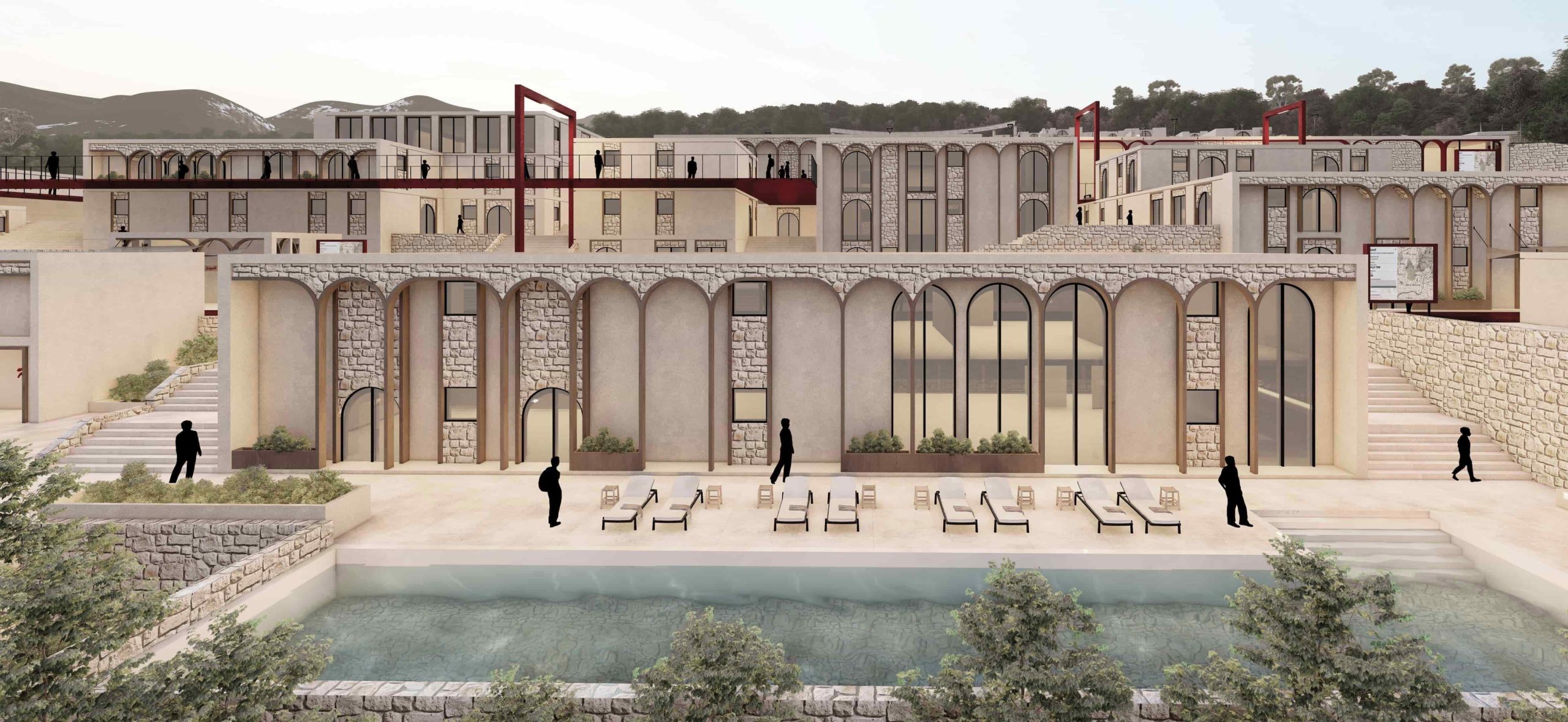
The project aims to revive the land and its story, offering visitors an immersive experience among farms and fields, including craft workshops, field tours, and hands-on farming—a symbolic return for displaced Sataf families. It also provides tourist services such as massage and sauna.
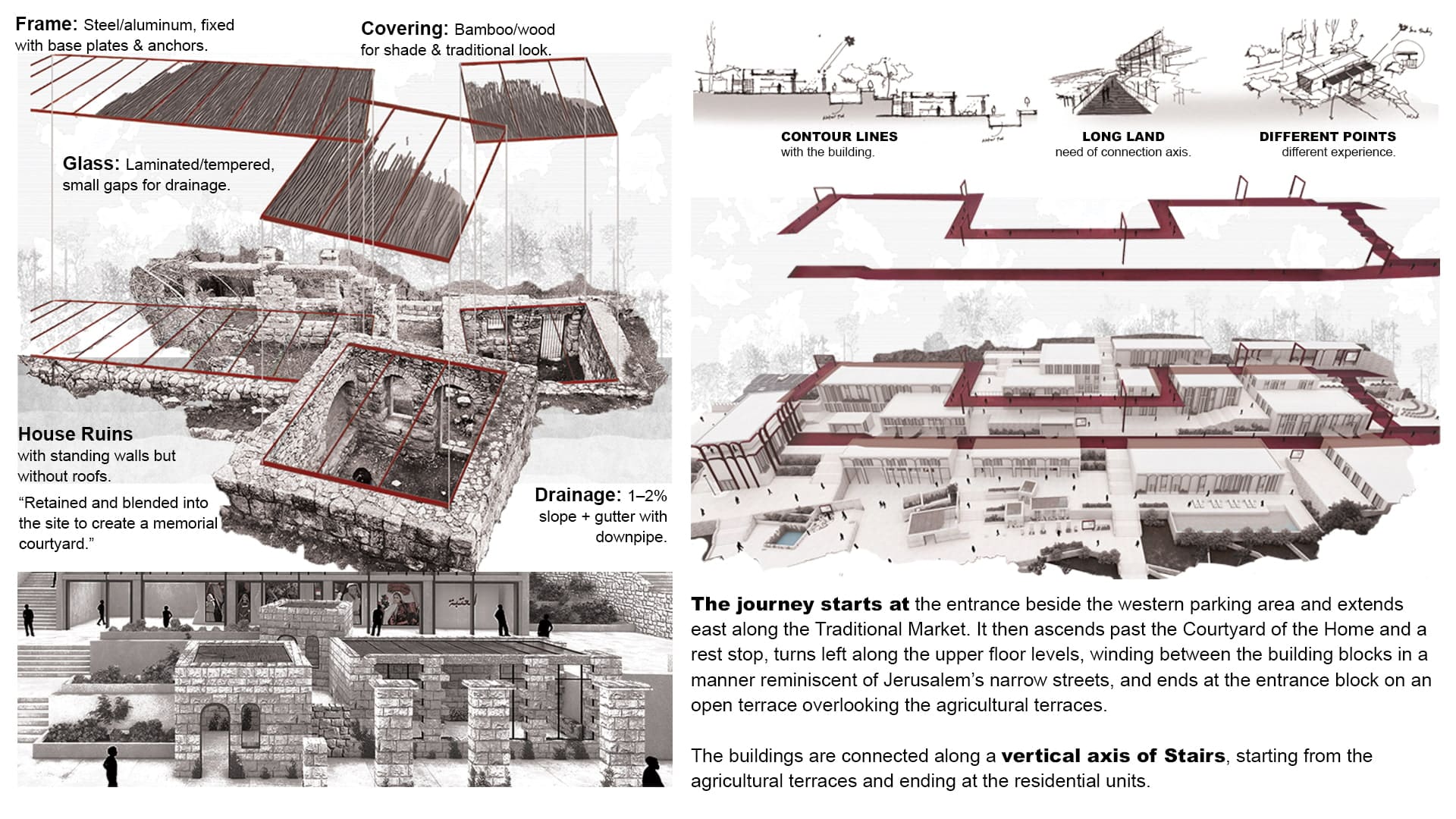
The Traditional Market: a horizontal area along the project, marked in red in honor of the village’s martyrs, with stalls and shops inspired by old markets.
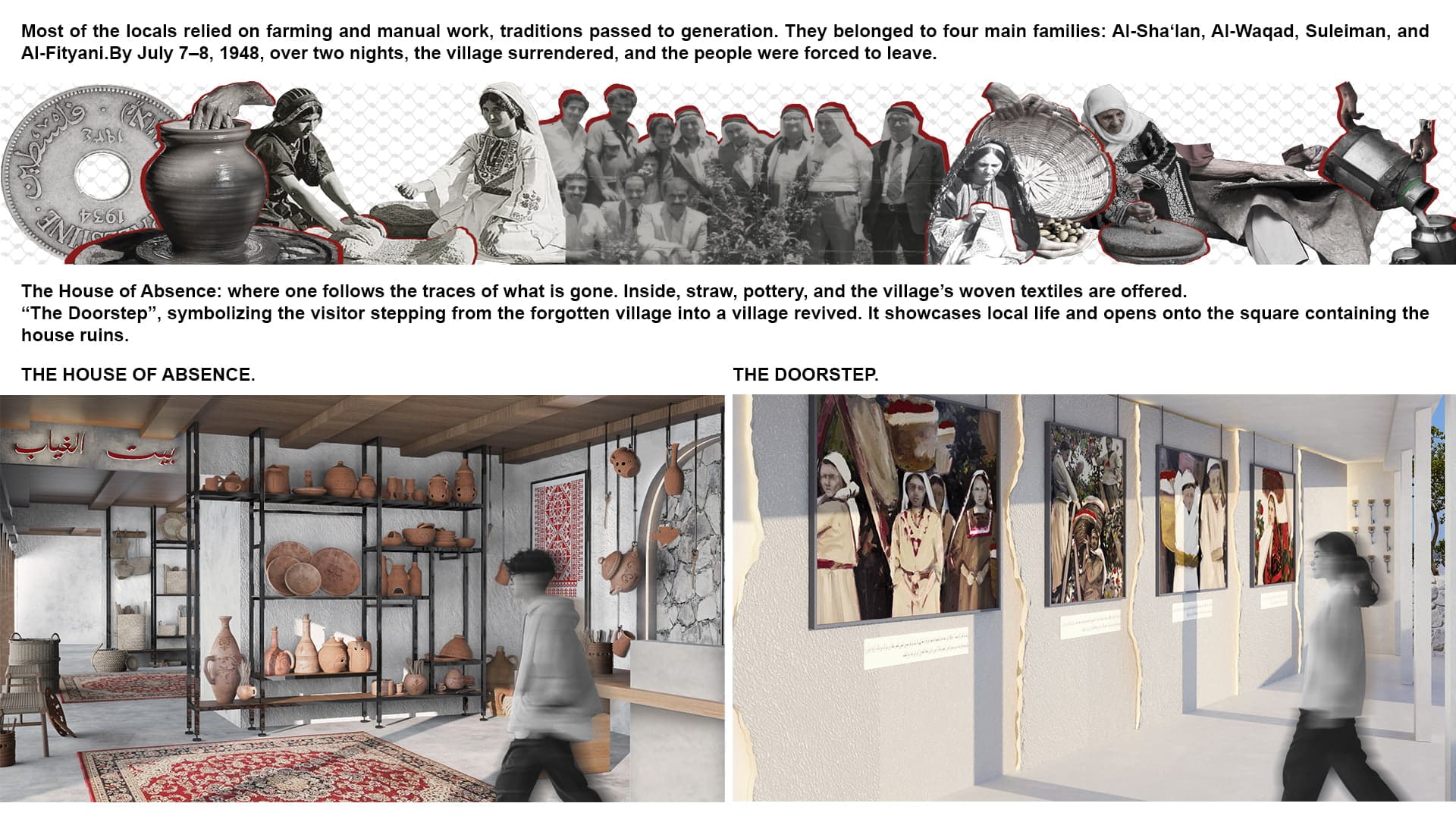
“The Doorstep”: symbolizes visitors stepping from the forgotten village into a revived one, leading to the square containing house ruins.
Sataf Mashrabiya: represents the village’s traditional water cistern.
Taboon Oven: made of clay and stone, produces traditional bread.
The House of Absence: allows visitors to trace what is gone, displaying straw, pottery, and woven textiles.
The village has two springs, “Ain Sataf and Ain Bakara”, channeled into terraces and connected to the memorial square, creating a continuous path.
The Courtyard of the Home: reflects the traditional village square, once used for family celebrations.
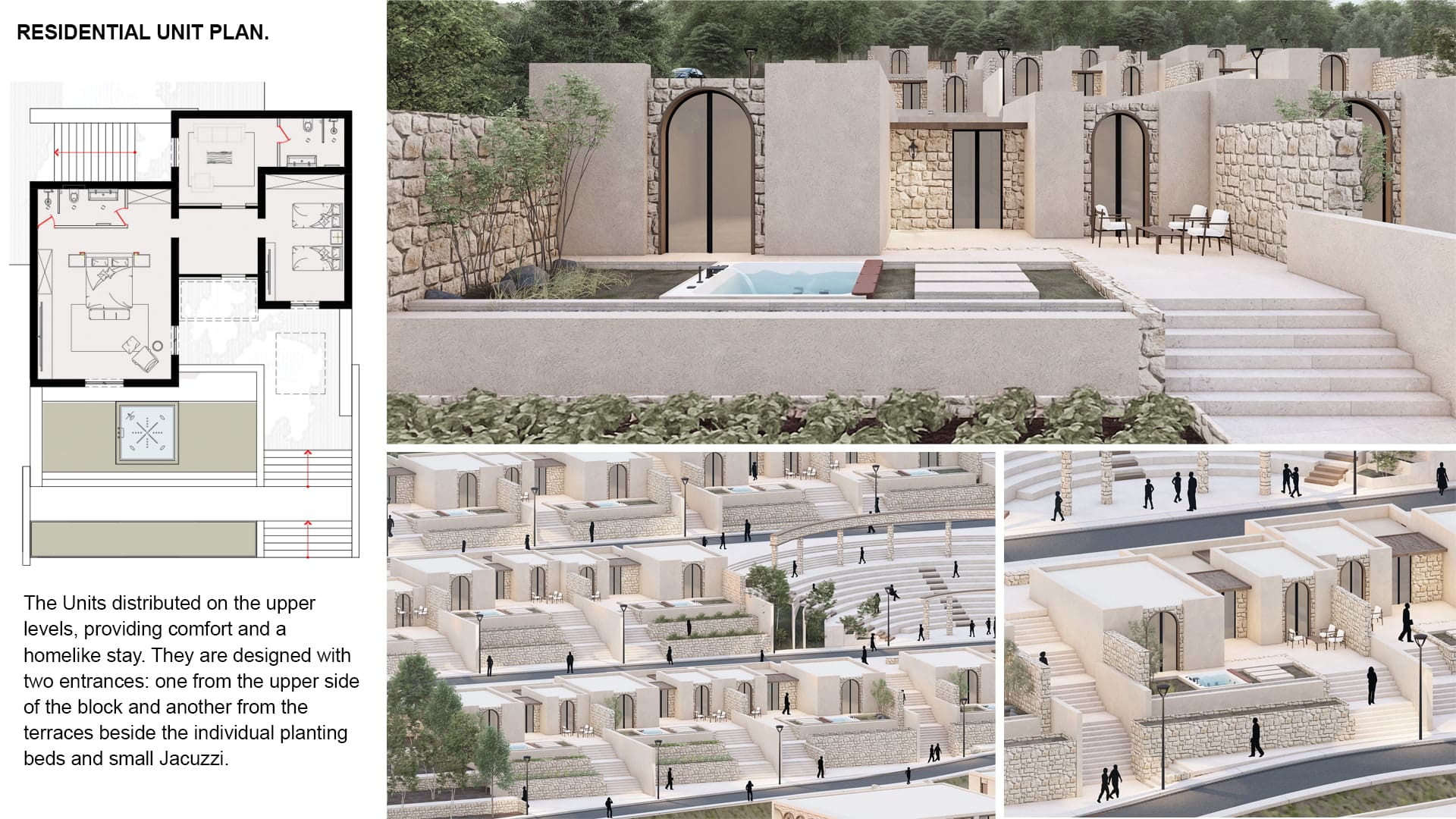
Agriculture in three ways: northwest perennial trees, south and southwest greenhouses and seasonal crops reflecting traditional produce, and individual planting beds beside residential units.
Established in 2012, Tamayouz Excellence Award is an unaffiliated, independent initiative that aims to advance the profession of architecture academically and professionally. Tamayouz is dedicated to supporting aspirational and transformative projects that tackle local and global challenges and that are informed by a holistic understanding of context.