
University : Cairo university
Tutor(s) : Professor Mohamed Noeman Coutry, and Ahmed Aly
Project Description
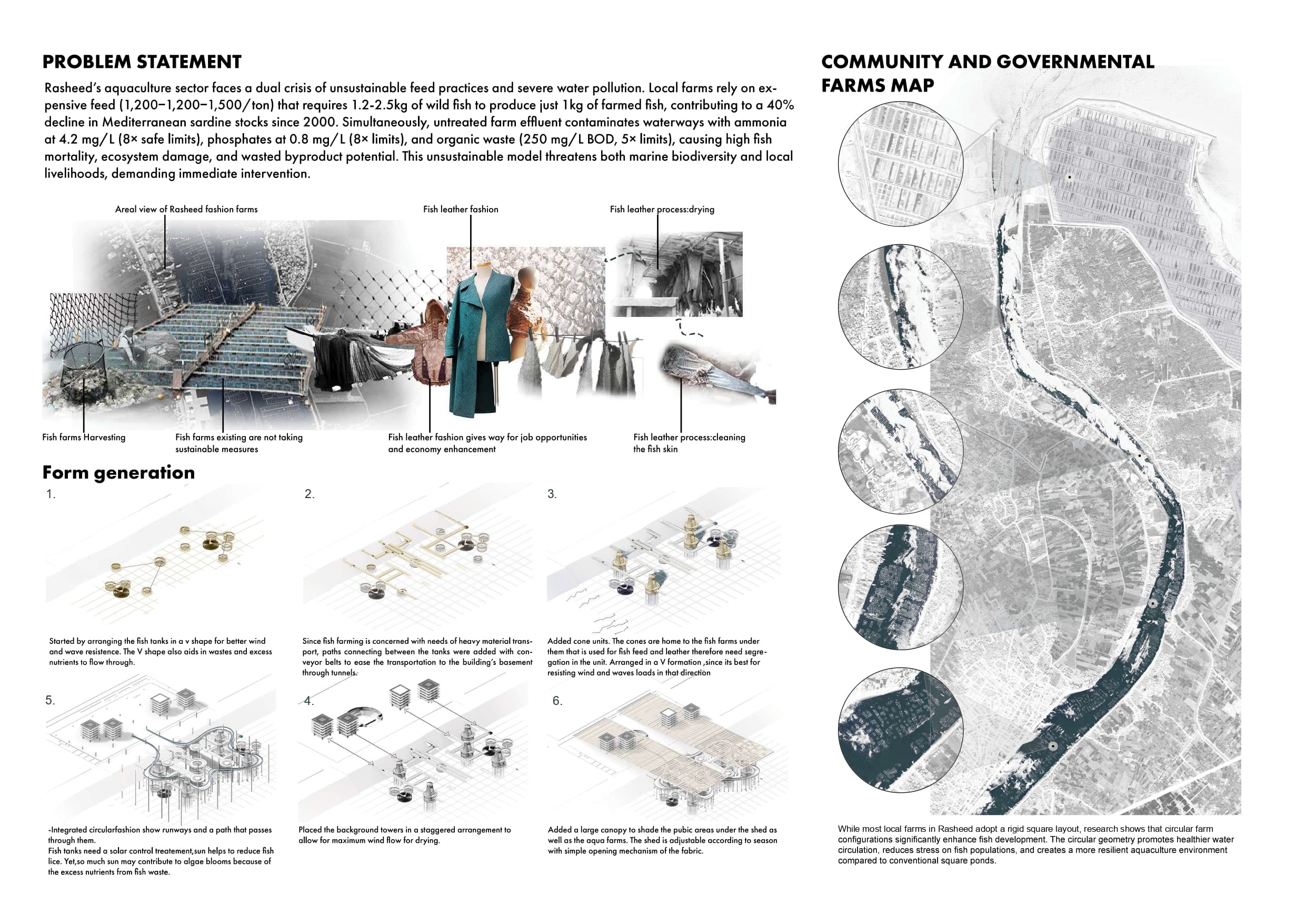
Rasheed, Egypt, is facing a dual crisis in its aquaculture sector: declining fish populations and severe environmental degradation. Over the past decade, Mediterranean fish catches have fallen by 50%, while species diversity in the Nile has dropped from 85 to 35 since the early 20th century. At the same time, fish processing generates 60–70% waste, including skin, bones, and viscera, much of which is discarded untreated. Farm effluents exceed safe limits eightfold, with ammonia reaching 4.2 mg/L and phosphates 0.8 mg/L, threatening ecosystems, food security, and community livelihoods.
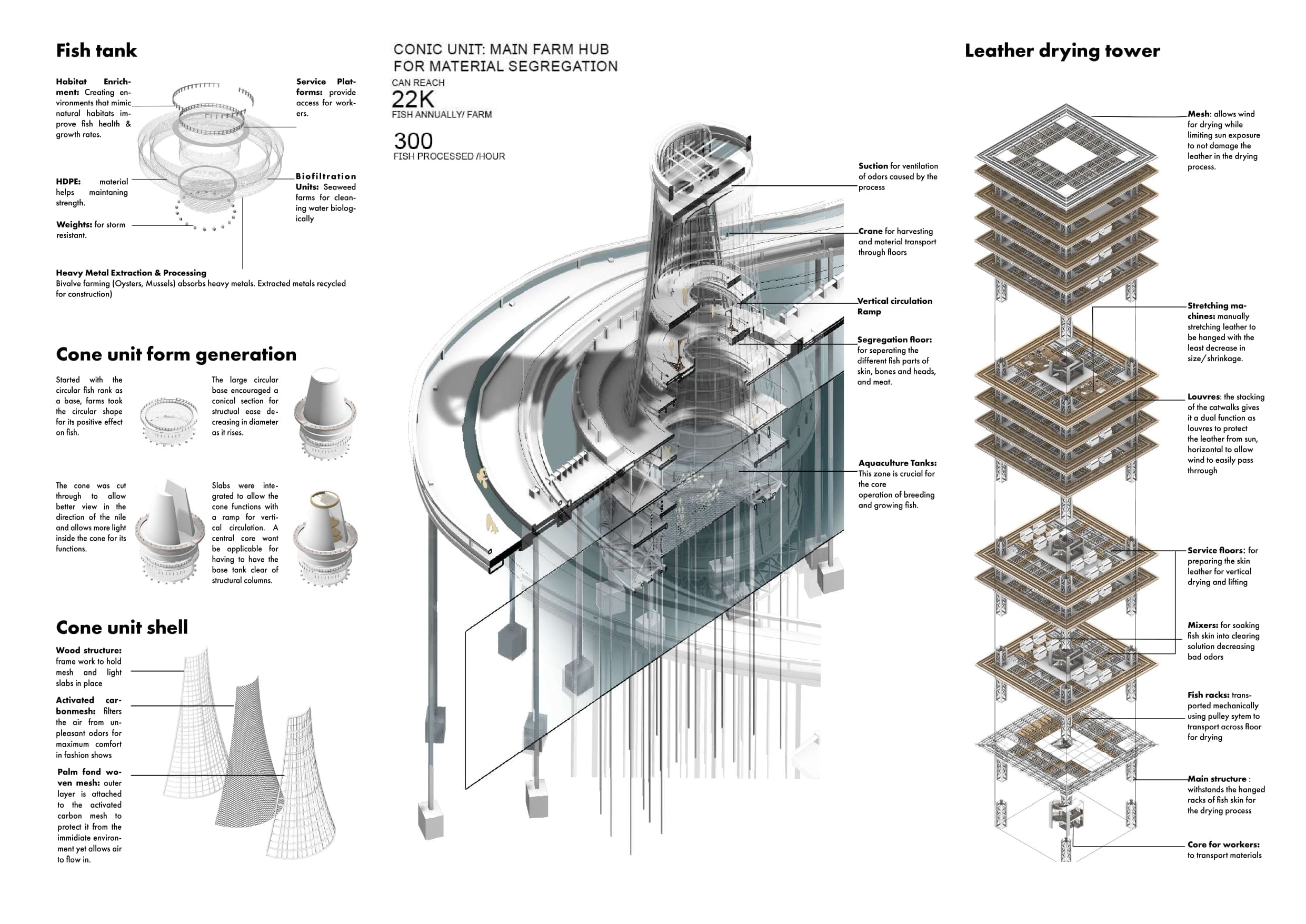
The Aquafashion Project offers a circular solution by transforming fish waste into valuable resources. Fish skin is processed into durable eco-leather, reducing waste and supplying the fashion industry, while bones are repurposed into protein-rich feed supplements, lessening the dependence on wild fish. Additionally, seaweed cultivation is introduced within aquaculture systems, capable of absorbing up to 9.5 metric tons of carbon per hectare annually while filtering heavy metals and improving water quality.
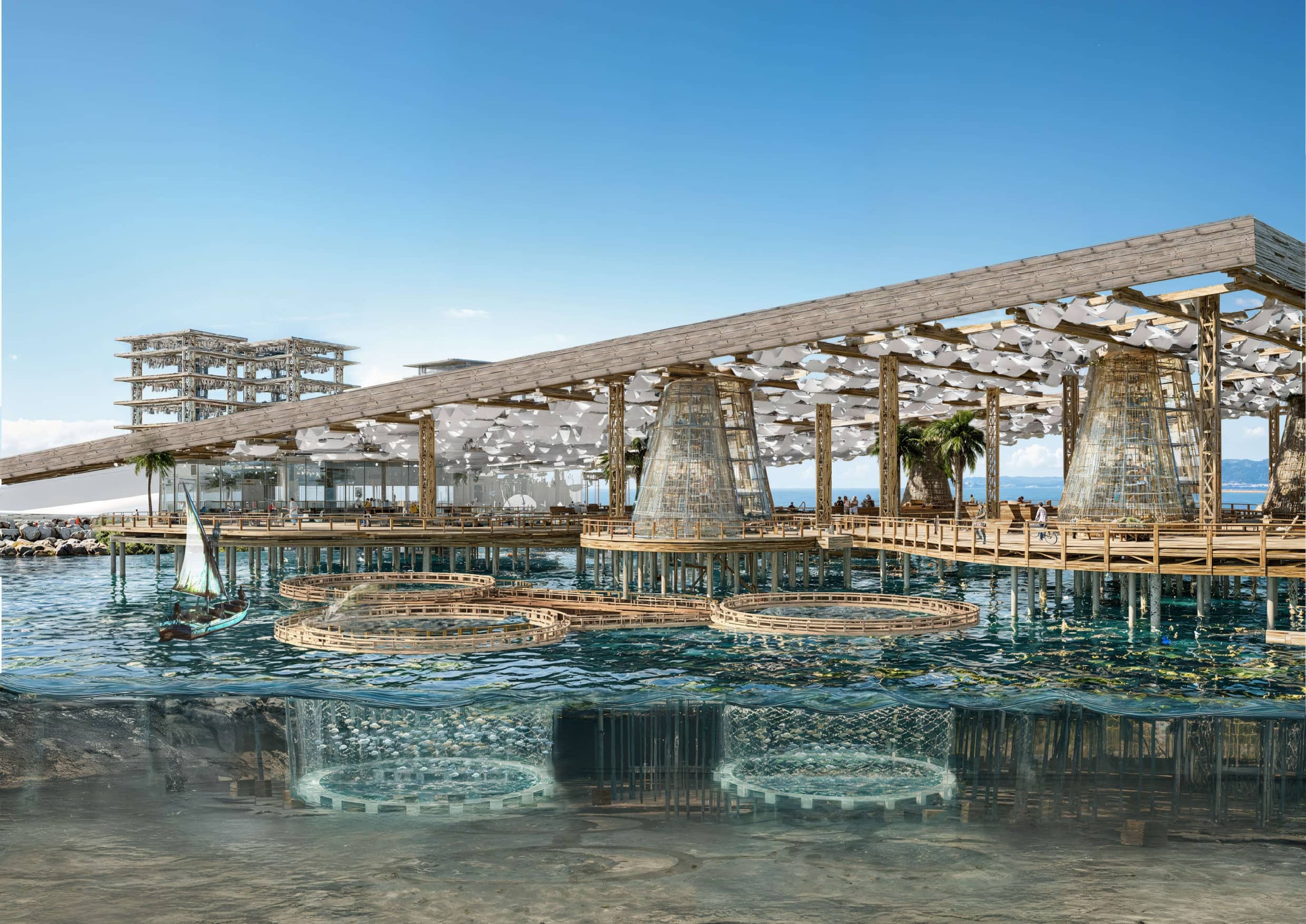
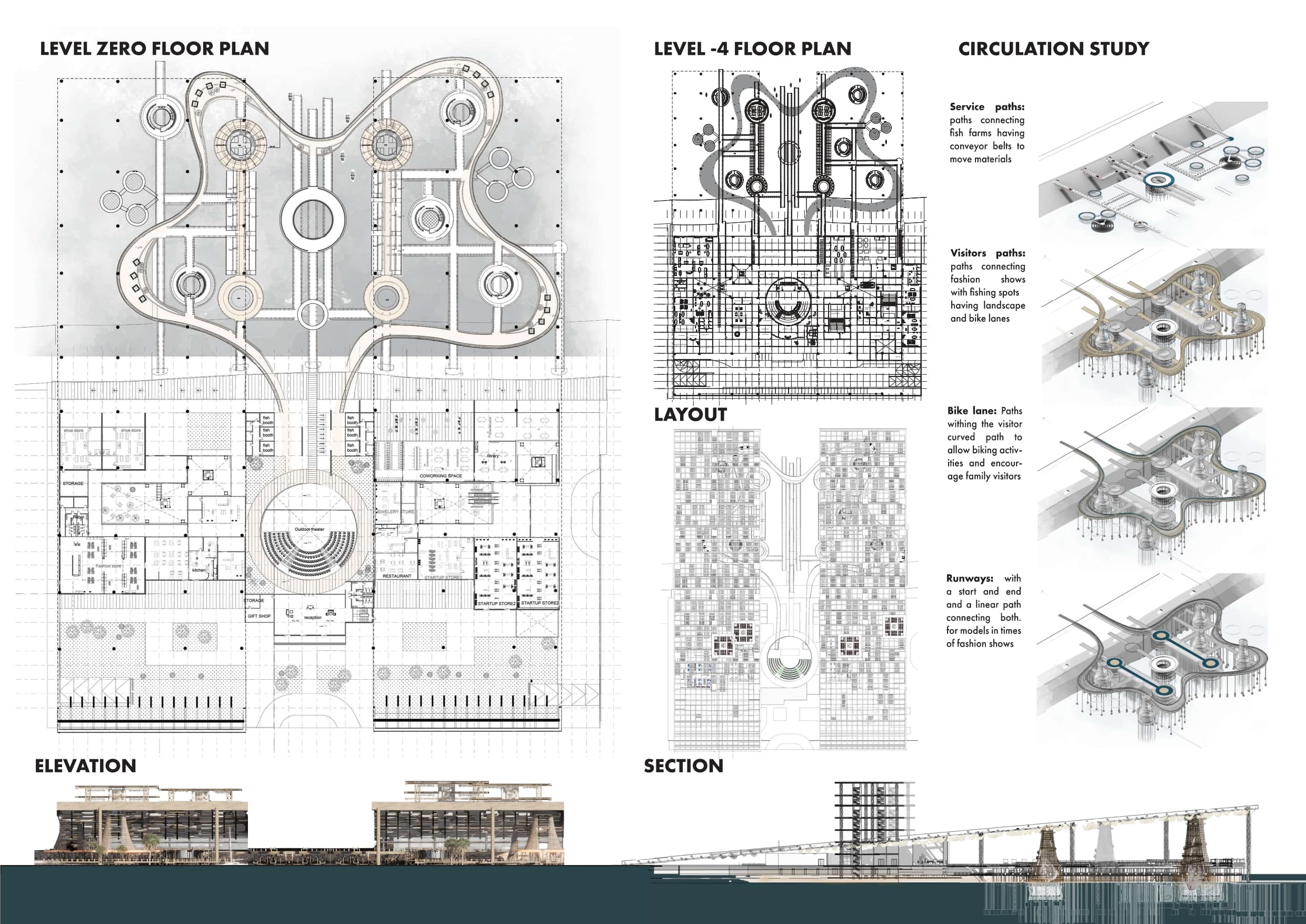
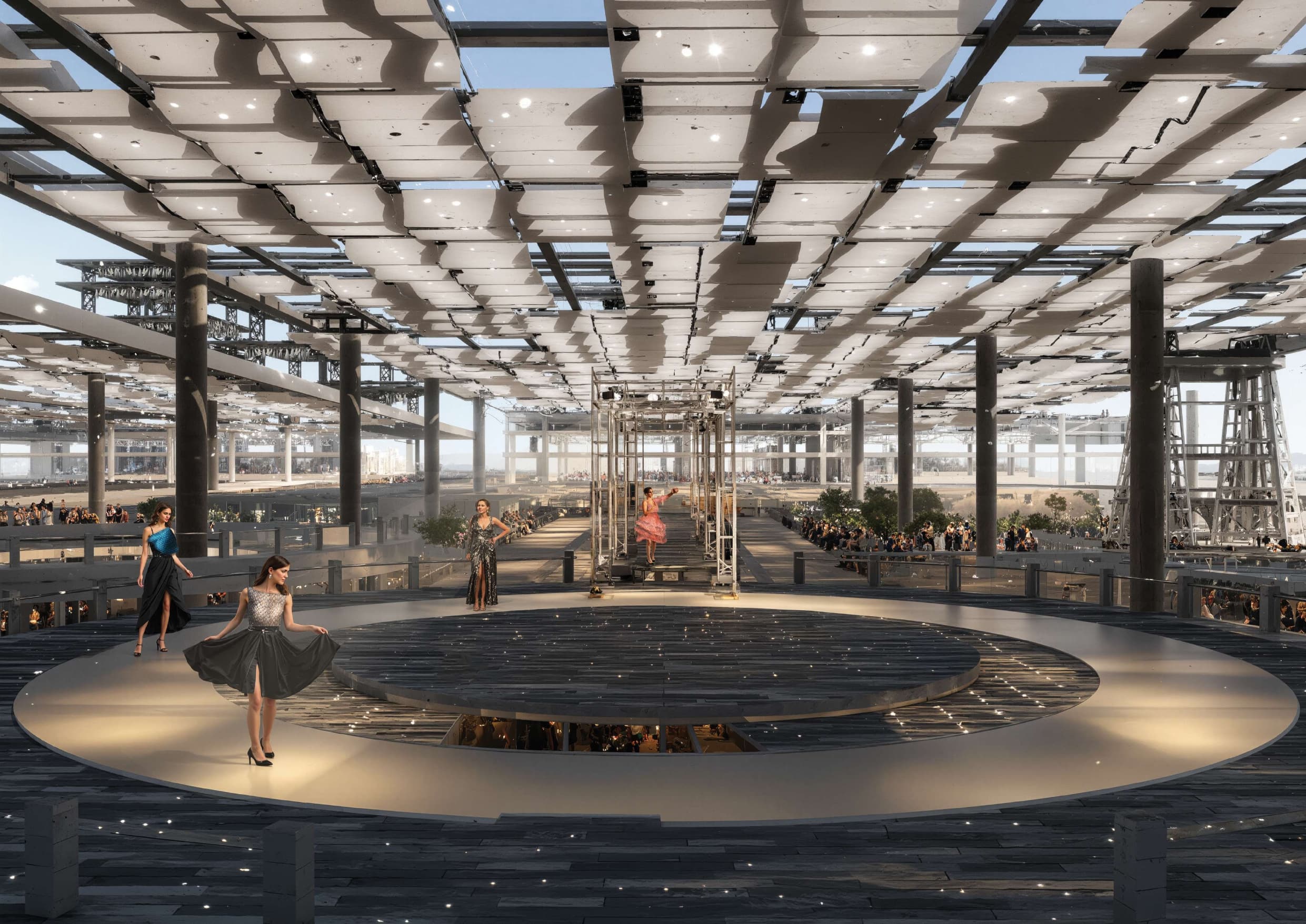
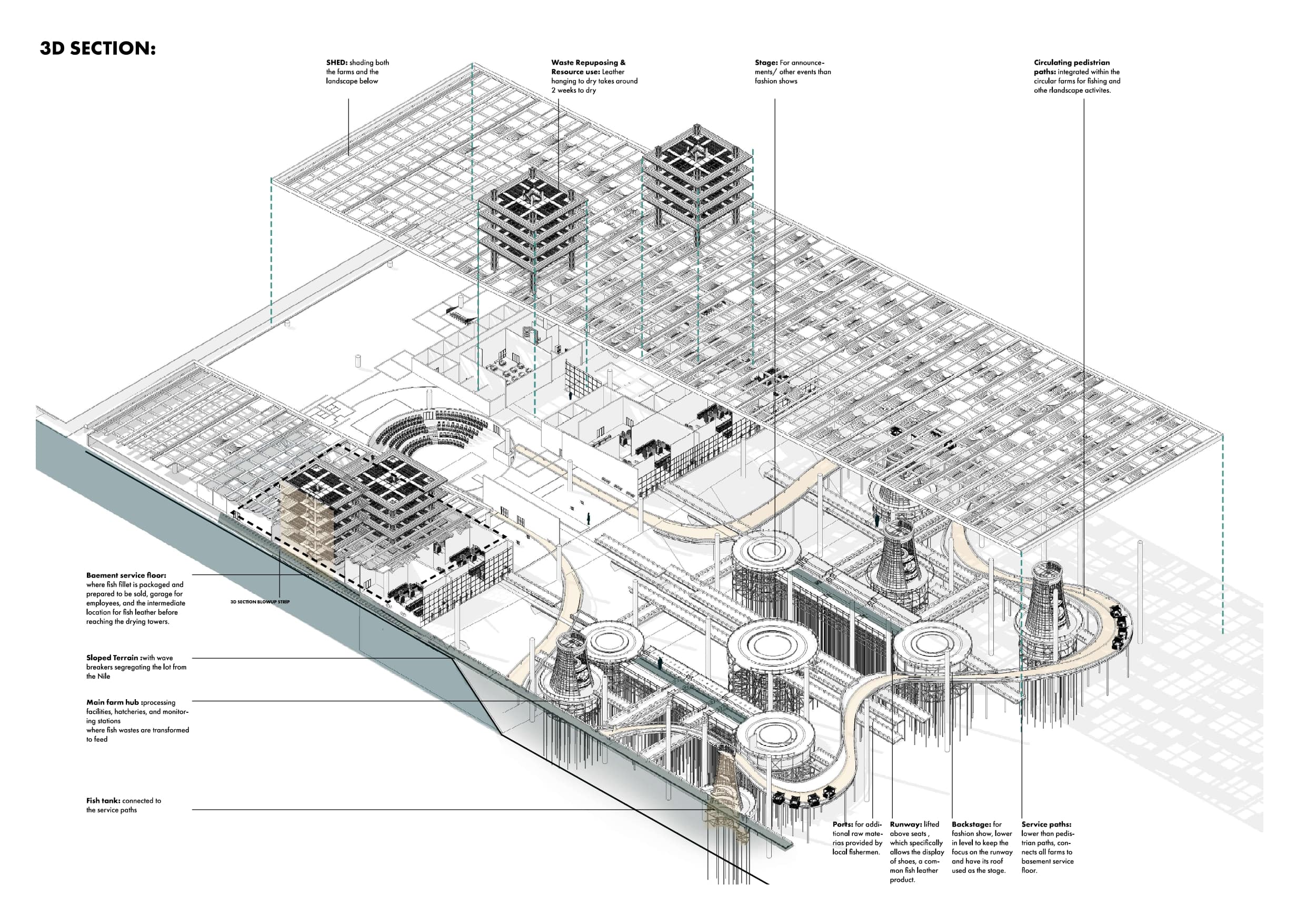
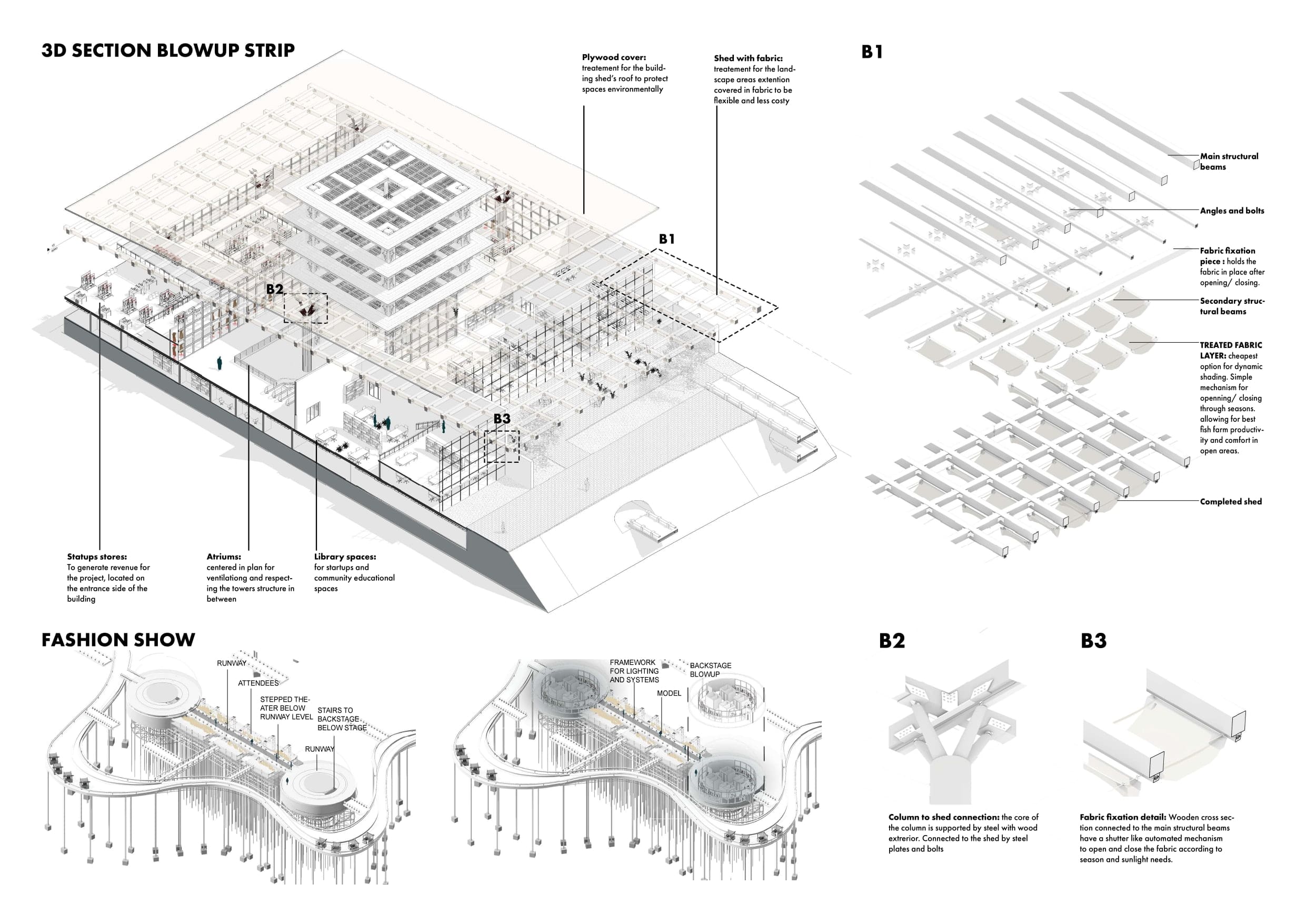
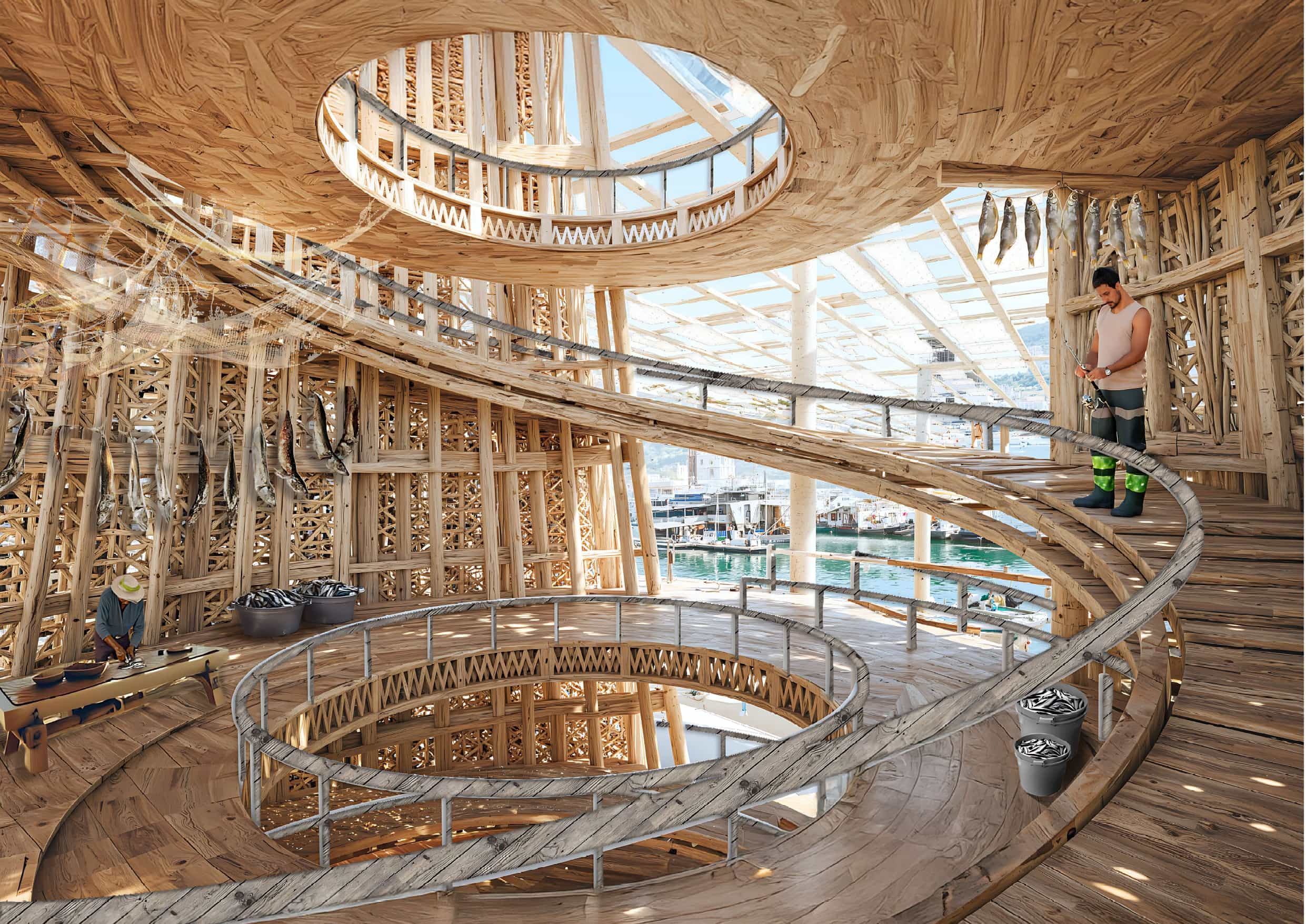
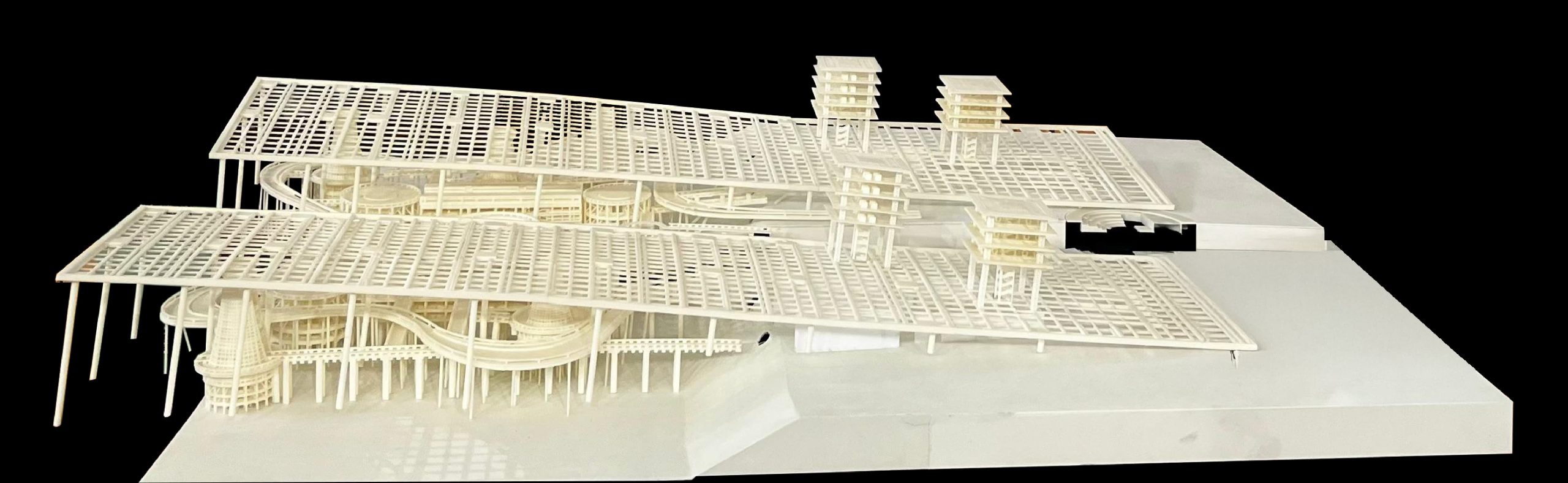
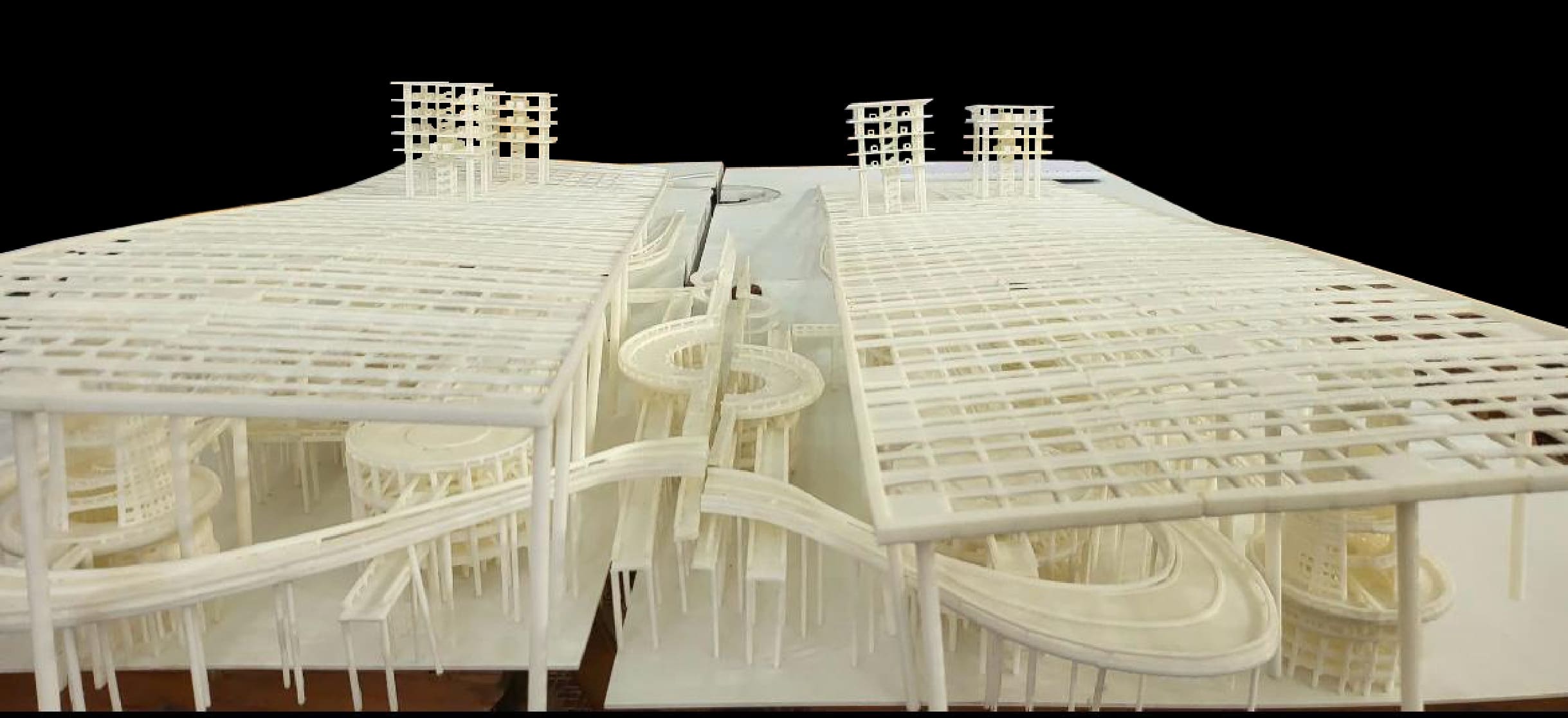
Architecturally, the project integrates aquaculture tanks, fish-skin drying towers, workshops, and cultural spaces within a cohesive landscape. A large shading canopy regulates sunlight to balance aquafarm productivity and enhance visitor comfort in public spaces. Fashion crafting zones, exhibition areas, and community paths connect industry with culture, making waste regeneration a visible and celebrated process. By linking aquaculture, fashion, and architecture, Aquafashion creates a model for ecological regeneration and sustainable economic growth. It positions Rasheed not only as a hub of production but also as a cultural landmark where innovation and resilience converge
Established in 2012, Tamayouz Excellence Award is an unaffiliated, independent initiative that aims to advance the profession of architecture academically and professionally. Tamayouz is dedicated to supporting aspirational and transformative projects that tackle local and global challenges and that are informed by a holistic understanding of context.