






University : Beirut Arab University
Tutor(s) : Dr Hesham El Arnaouty
Project Description
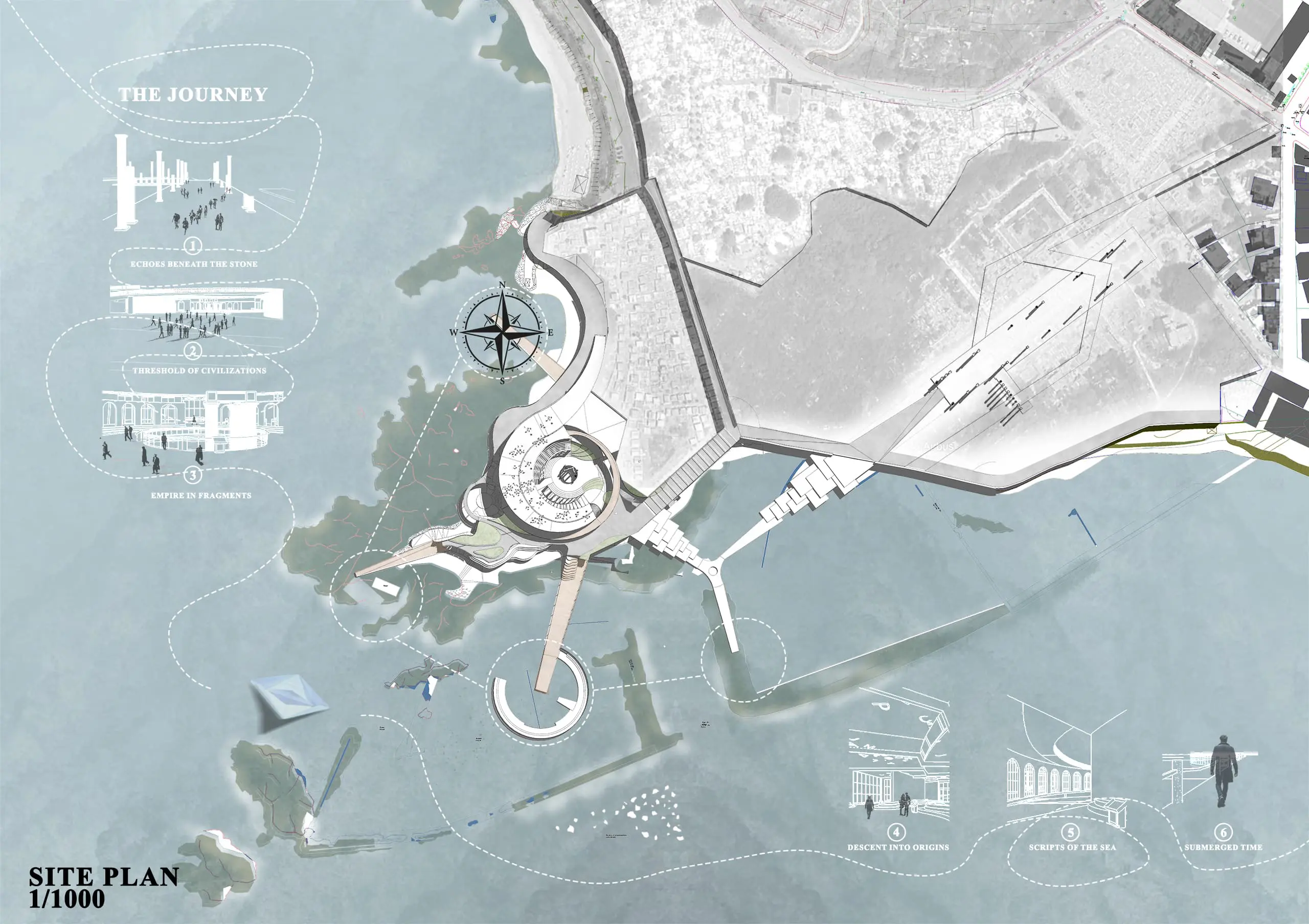
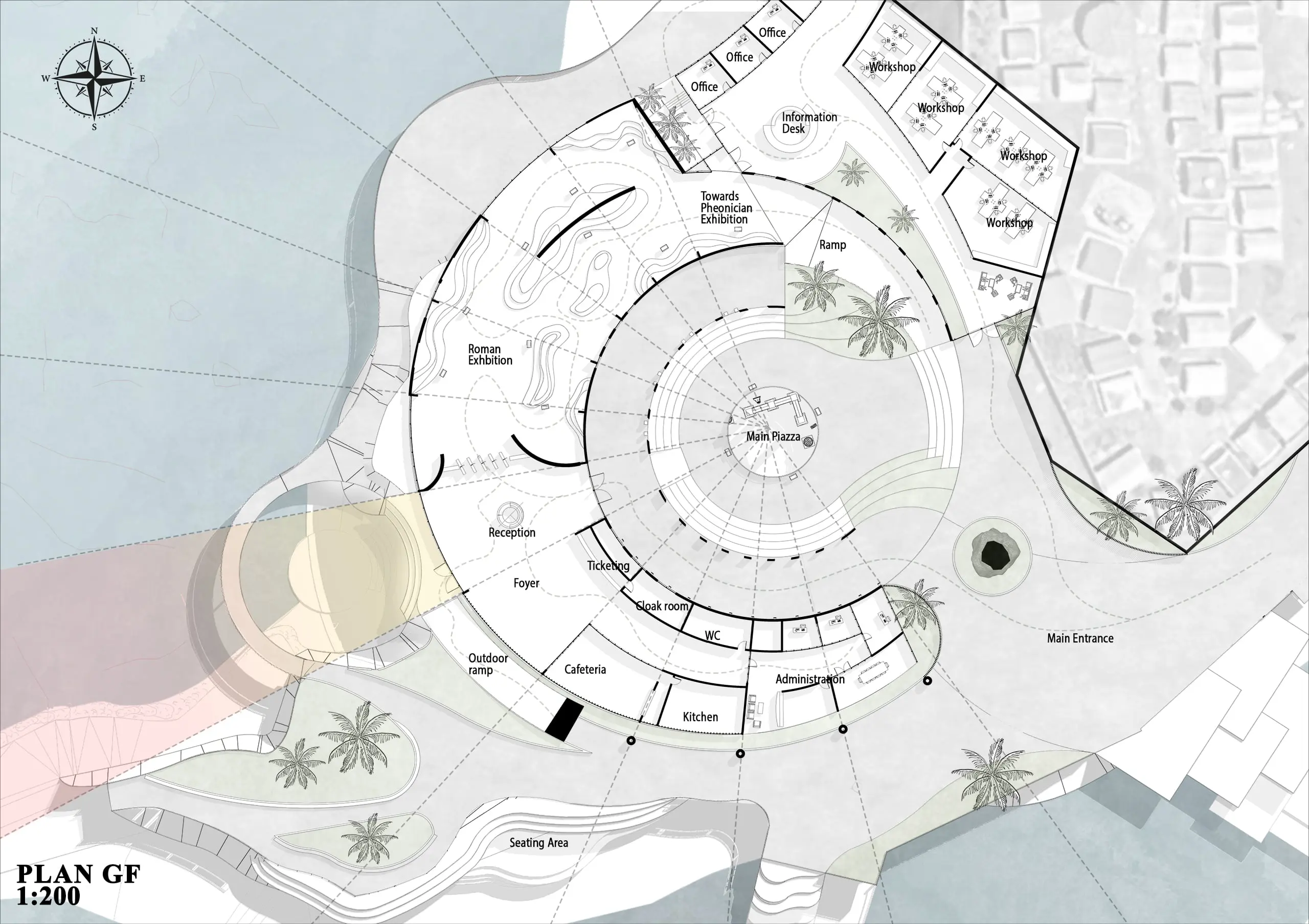
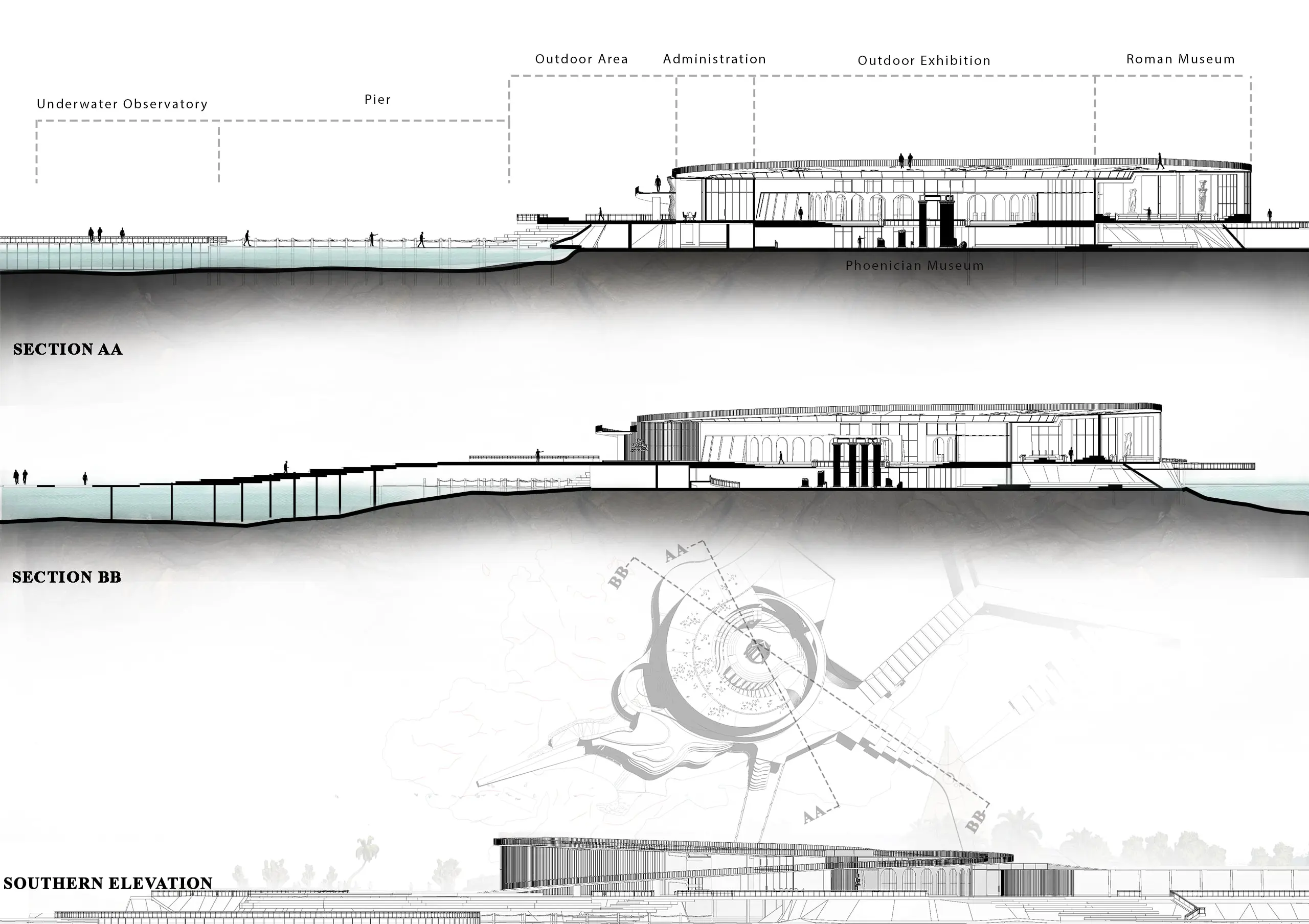
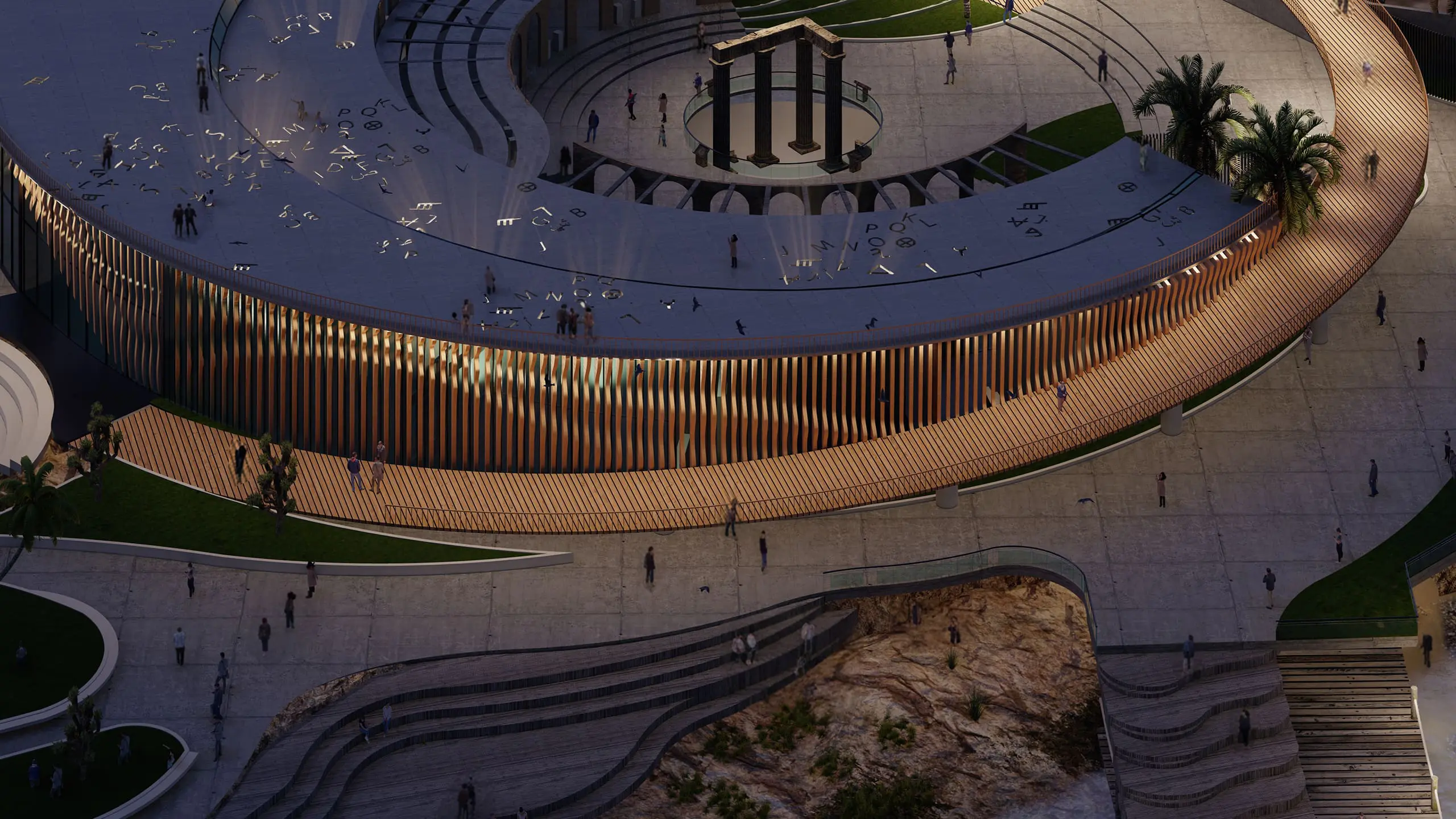
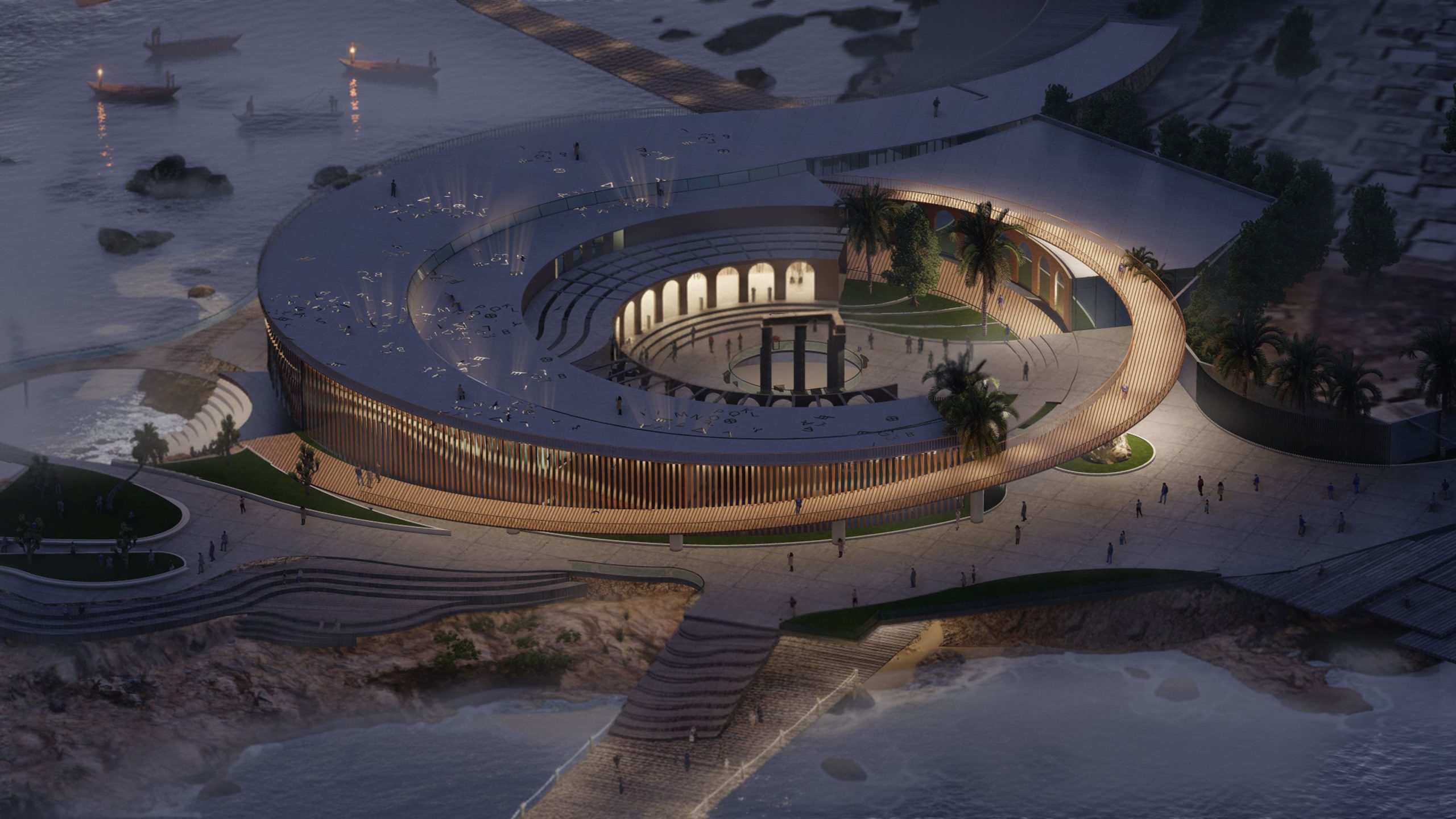
The Maritime Archaeology Museum in Tyre is a celebration of the city’s rich Phoenician and Roman maritime heritage. Once a thriving Mediterranean port, Tyre shaped trade, culture, and navigation, leaving a legacy that continues to inspire. This museum transforms history into an immersive experience, bridging ancient maritime achievements with contemporary architectural expression. The design draws from Tyre’s ancient urban fabric, particularly the Cardo and Decumanus, creating a circulation that guides visitors through a narrative journey from Phoenician seafaring and shipbuilding to Roman maritime engineering. Each space is crafted to educate, inspire, and immerse, turning exploration into discovery. The façade takes the form of a sculptural, wave-like wooden parametric system, symbolizing Tyre’s intimate bond with the sea. Its dynamic form casts ever-changing shadows and textures, evoking movement, fluidity, and rhythm. Above, the roof is engraved with lettering inspired by ancient scripts. Sunlight filters through these inscriptions, projecting stories across the interior and transforming light and shadow into a living narrative. Visitors walk beneath a roof that tells history, creating a poetic interplay between architecture, light, and story. Inside, flexible exhibition halls, research spaces, and interactive installations engage visitors with artifacts, digital reconstructions, and augmented reality. Open courtyards and terraces frame views of the coastline, connecting the museum to the sea it celebrates. Sustainability guides the design with natural ventilation, daylight optimization, and locally sourced materials. Ultimately, the museum is not just a building it is a living archive, a vessel of memory and discovery, where history, architecture, and the sea converge to create a uniquely immersive journey.
Established in 2012, Tamayouz Excellence Award is an unaffiliated, independent initiative that aims to advance the profession of architecture academically and professionally. Tamayouz is dedicated to supporting aspirational and transformative projects that tackle local and global challenges and that are informed by a holistic understanding of context.