






University : Aleppo University
Tutor(s) : Issam Tanous
Project Description
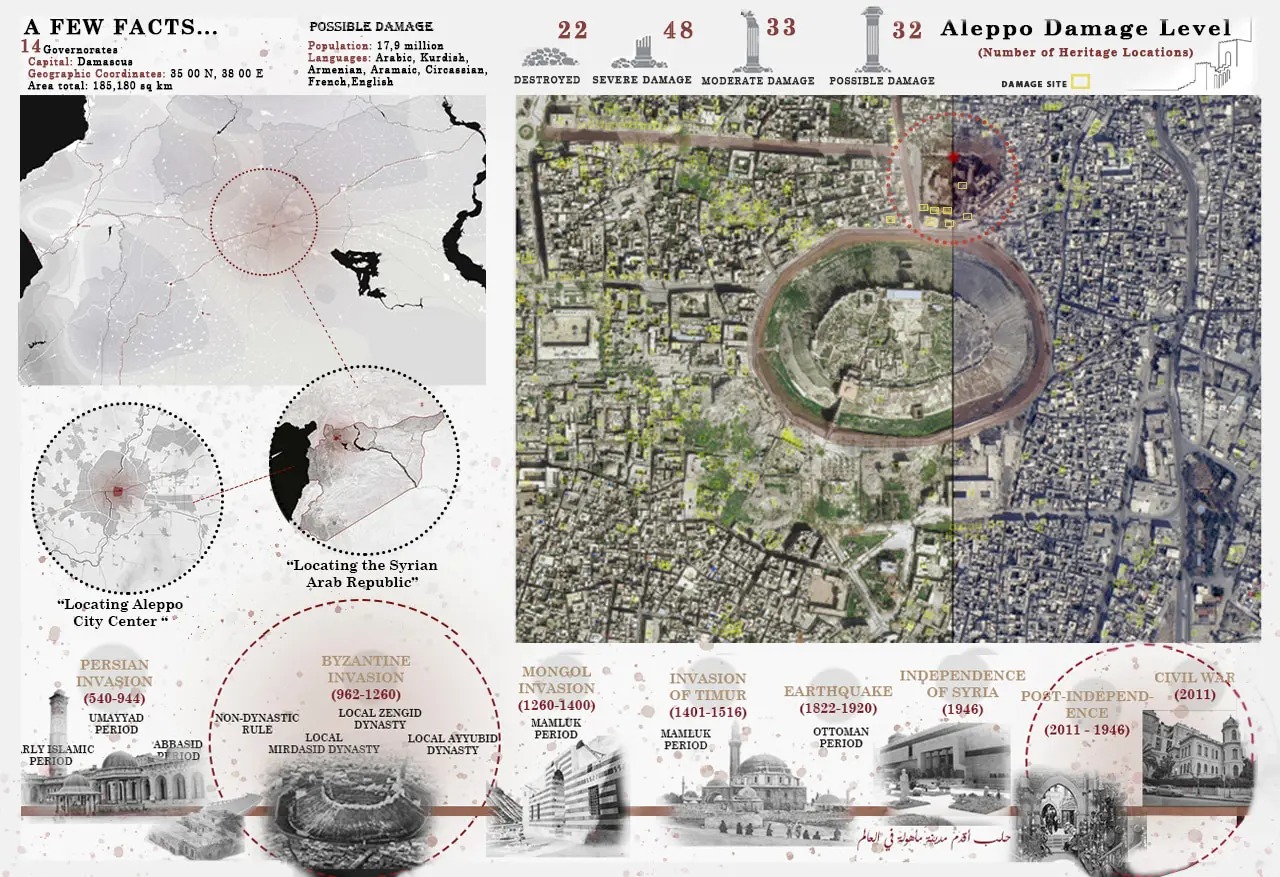
The project occupies the old Prison Land north of Aleppo’s Citadel—a deliberately chosen site that leverages the city’s historic presence as the starting point for a comprehensive civic revival. The site was analyzed through visual axes and the influence radius of nearby ancient gates and citadel alignments, treating the ground not as an empty lot but as an archive of collective memory and an opportunity to reconnect people with place.
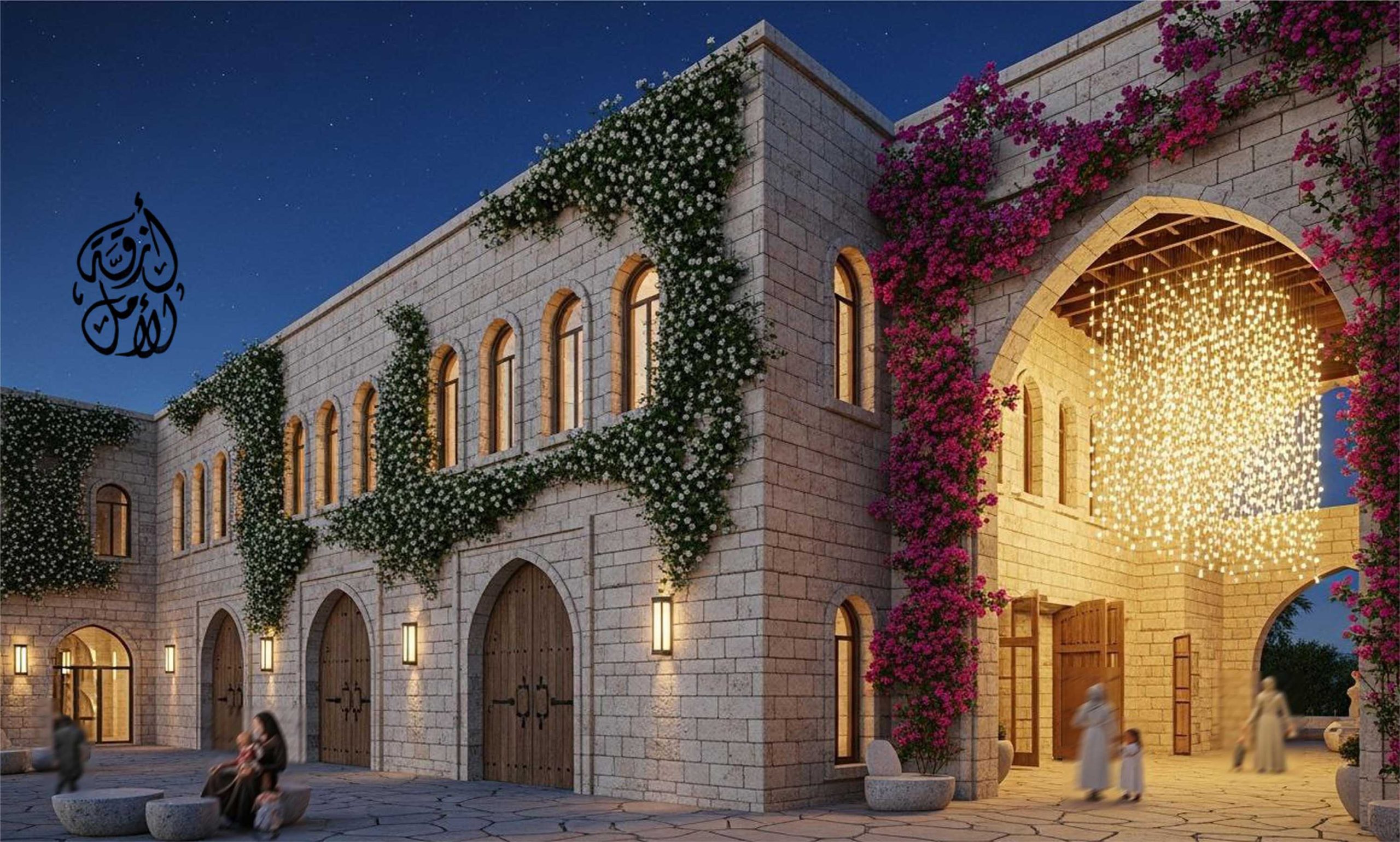
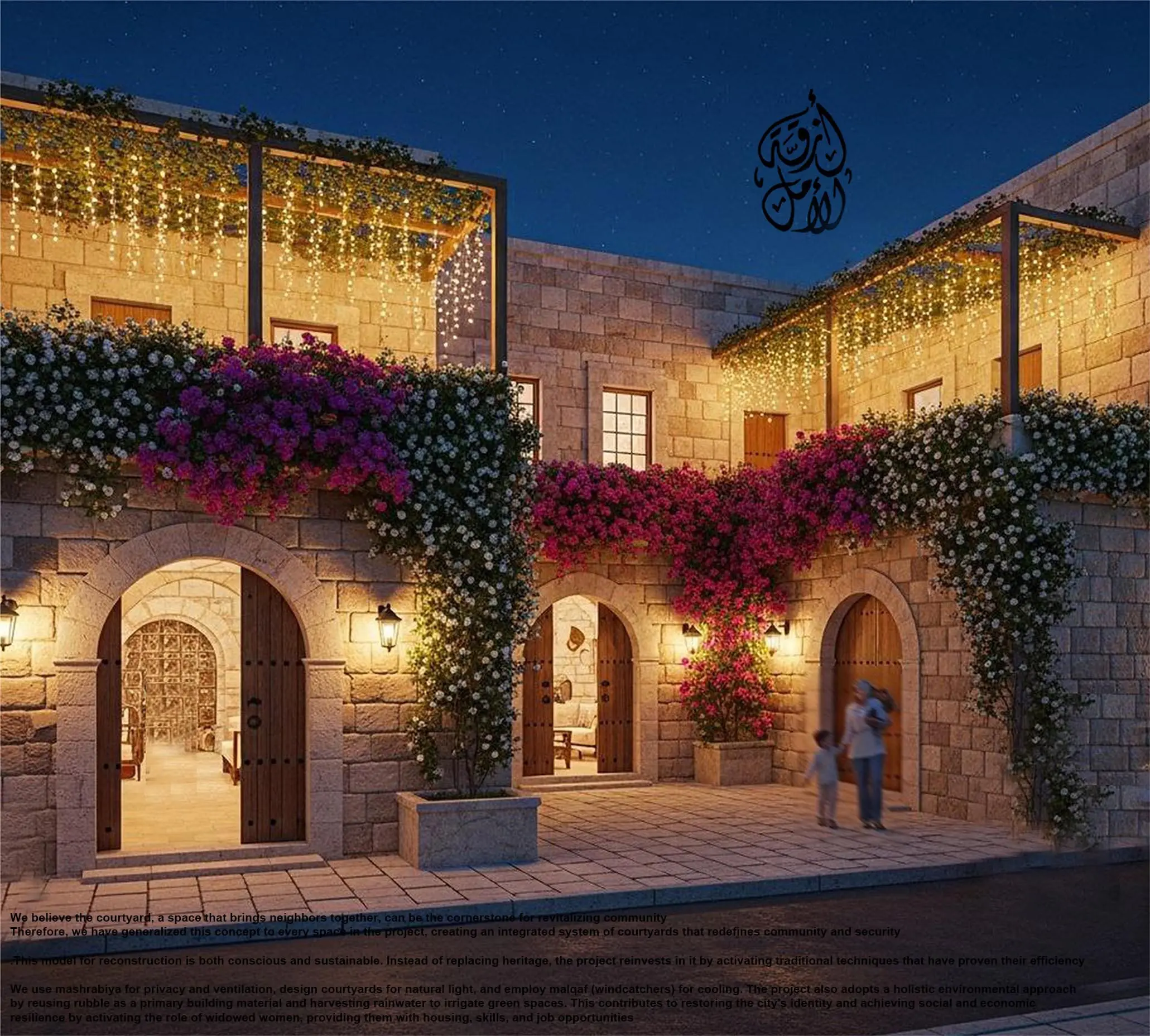
The design is organized into integrated sections responding to social and architectural context. Four distinctive architectural modes, all inspired by the prevailing Aleppine character, shape the housing and public spaces. The courtyard-based typology remains central, mediating between domestic life and public space, providing natural light, ventilation, and privacy while enabling widowed women to engage fully in daily urban life. Temporary and mobile retail stalls support micro-commerce and local economic activity.
Derelict buildings on site were rehabilitated into workshops and micro-production clusters, allowing women to train, produce, and sell directly. Key historic buildings were restored with conservation sensitivity, while legacy protective units—like the bimaristan—serve flexible, rapid-response uses. A multipurpose civic center consolidates rehabilitation services, cultural activities, a forum and exhibition space, recreation, training, health, administration, and parking.
In line with sustainability, rubble and demolition waste were reprocessed into new construction materials, complemented by photovoltaic systems, greywater reuse, and green roofs to enhance environmental performance. The project is a therapeutic urban strategy: restoring dignity, enabling economic agency, and embedding memory into rebuilt form. By centering widowed women and fusing heritage with contemporary design, it demonstrates how architecture can catalyze lasting civic healing.
Established in 2012, Tamayouz Excellence Award is an unaffiliated, independent initiative that aims to advance the profession of architecture academically and professionally. Tamayouz is dedicated to supporting aspirational and transformative projects that tackle local and global challenges and that are informed by a holistic understanding of context.