






University : Nile University, ARUD I Architecture and urban design Department, Egypt
Tutor(s) : Prof. Sameh El-Feki, Prof. Khaled Al-Hagla
Project Description
Project Site Location (City, Country): Awadh Island, Aswan, Egypt
Project Function: water culture center
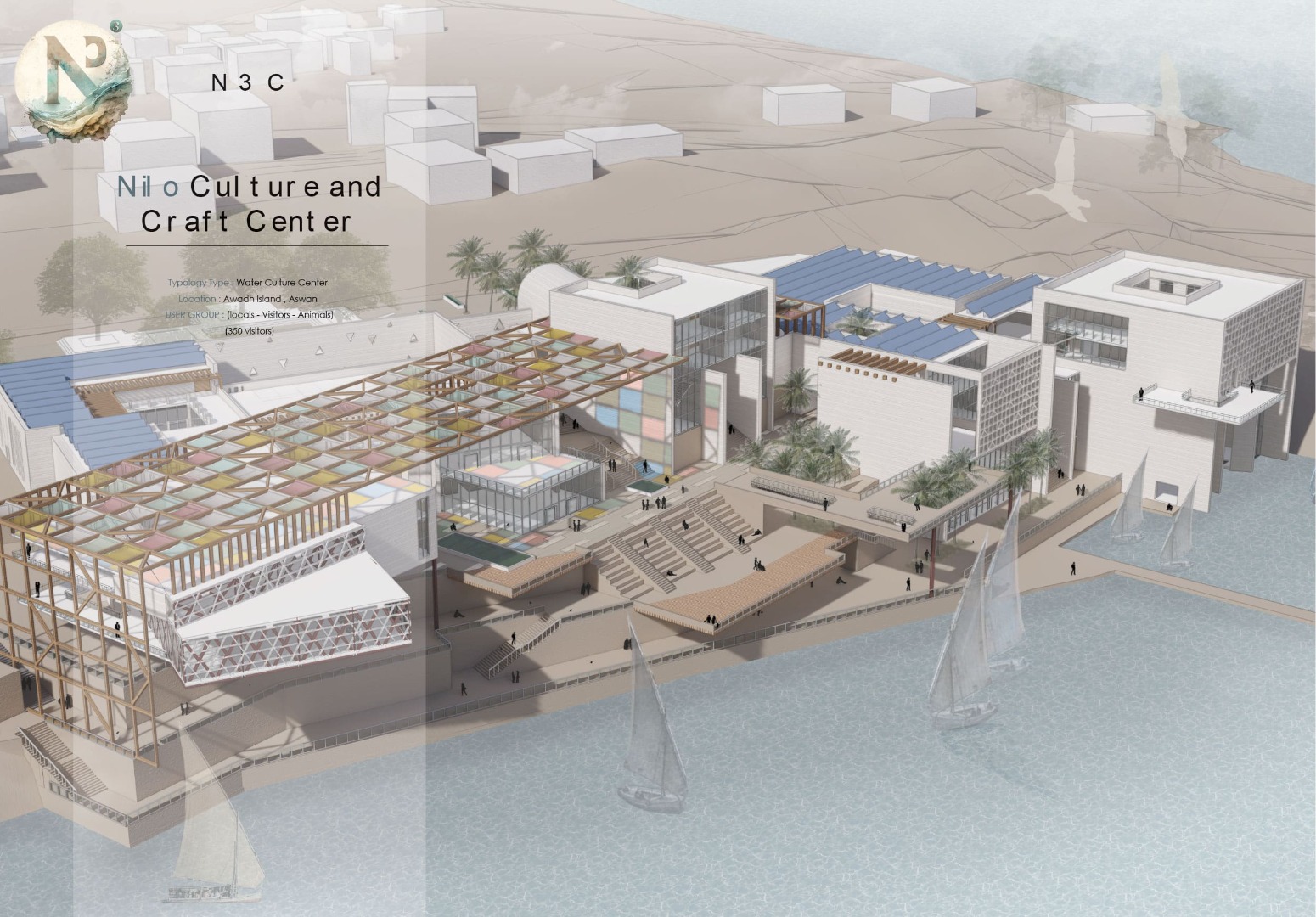
In the pursuit of architectural design, one is often confronted with the complex challenge of creating spaces that truly reflect and preserve the essence of identity. The Nubian Water Culture Center is a visionary endeavour that encapsulates the profound bond between the Nubian people and the Nile River, their lifeblood.
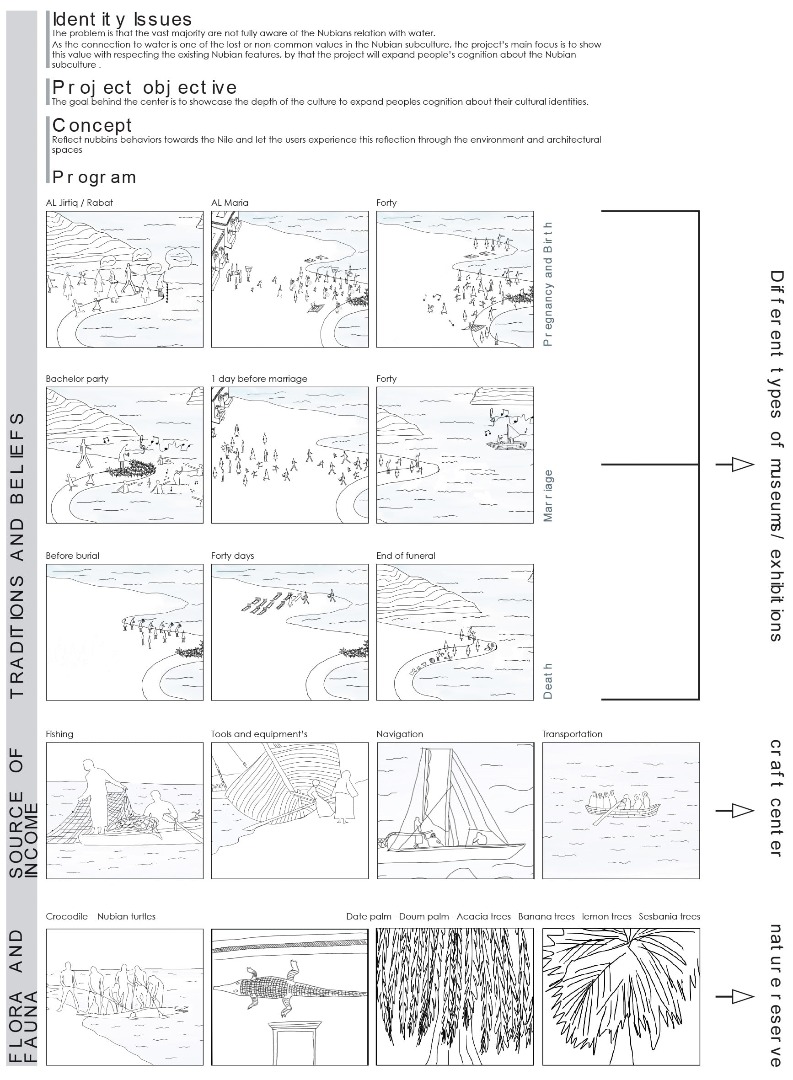
The main goal is to expand people’s cognitions and understanding of Nubian culture by translating all the values that express the Nubian culture and its depth, which have yet to receive enough attention, into projects. One of these values is the connection with the Nile River.
The Nubian connection to the Nile is more than geographical; it is spiritual. Early adopters even suggest that Nubia is a derivative of Nile, underscoring the inseparable relationship between the two. For generations, the Nile’s banks have cradled Nubian existence, evolving into the epicentre of their lives. This connection is not mere convenience but the rhythm of their life cycle, impacting births, lives, and even deaths. Economic activities have surged alongside its waters, while its environmental impact resonates profoundly.
However, this cultural tapestry risks being overshadowed. Nubian values and traditions, brimming with significance, have faced neglect. Preservation efforts, albeit well-intentioned, have sometimes veered towards commercial gain or tourism, sidelining the core essence of Nubian culture.
Amidst this, Awad Island is a microcosm of challenges Nubians face. Scarce services, transportation, and economic hurdles have forced island residents to leave their homes and heritage behind, seeking refuge elsewhere.
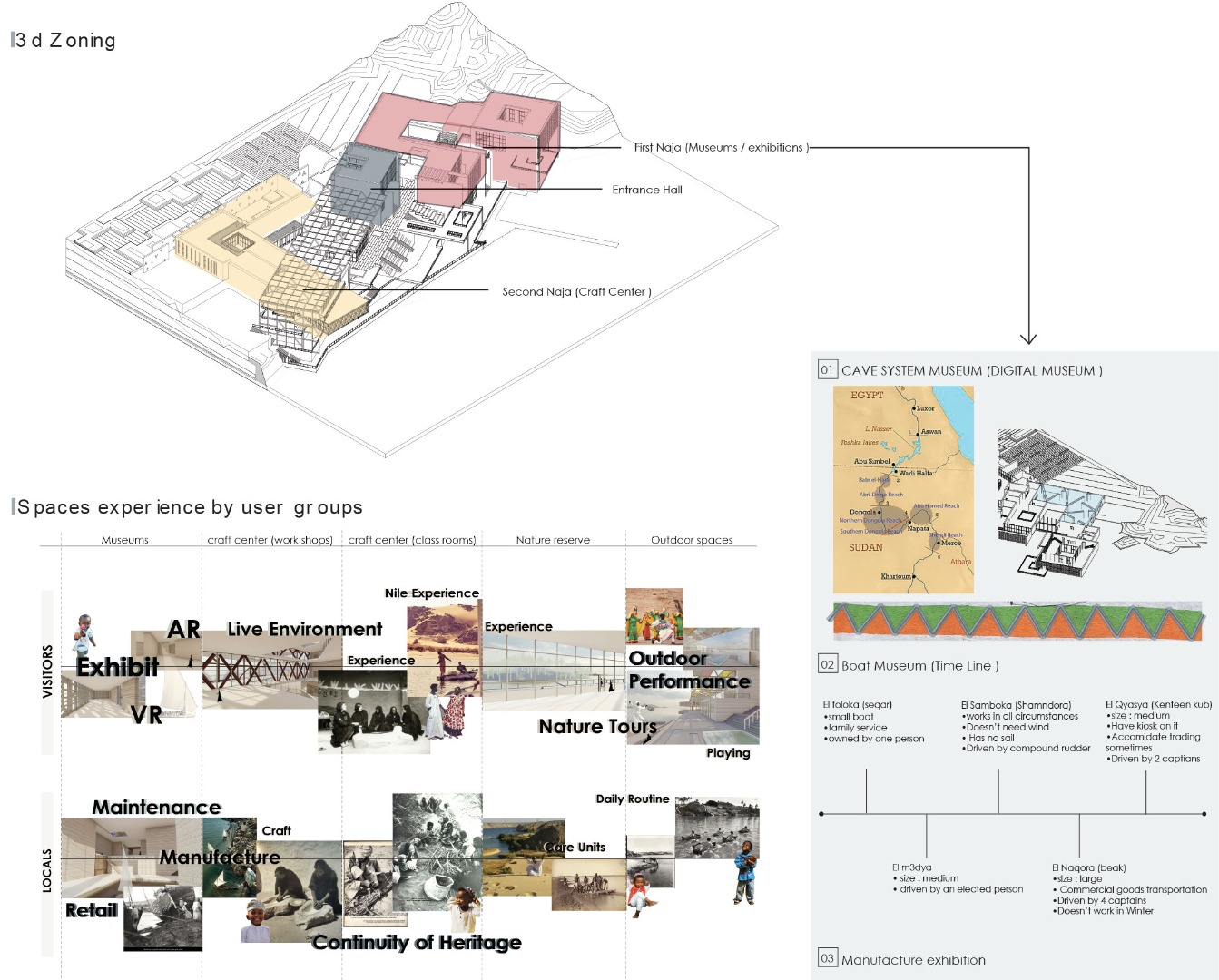
The Nubian Water Culture Center stands as a beacon of cultural reclamation and empowerment. Its primary aim is to illuminate the neglected values of Nubian culture, particularly those that need more attention. The centre transforms these values into tangible projects, fostering a deeper understanding and connection.
The compelling narrative of the Nubian relationship with the Nile River lies at its heart. While integral to their heritage, this connection has been overshadowed by more common subcultural elements. The project focuses on this unique bond, respectfully weaving it into the existing Nubian fabric.
The centre is not confined to architectural design; it is a journey that visitors embark on. It immerses users in reflecting on Nubians’ interactions with the Nile, creating an experiential understanding. Moreover, the project pays it forward by transmitting ancestral water-related crafts to the next generation, reinforcing the enduring rapport between the Nubians and the Nile River.
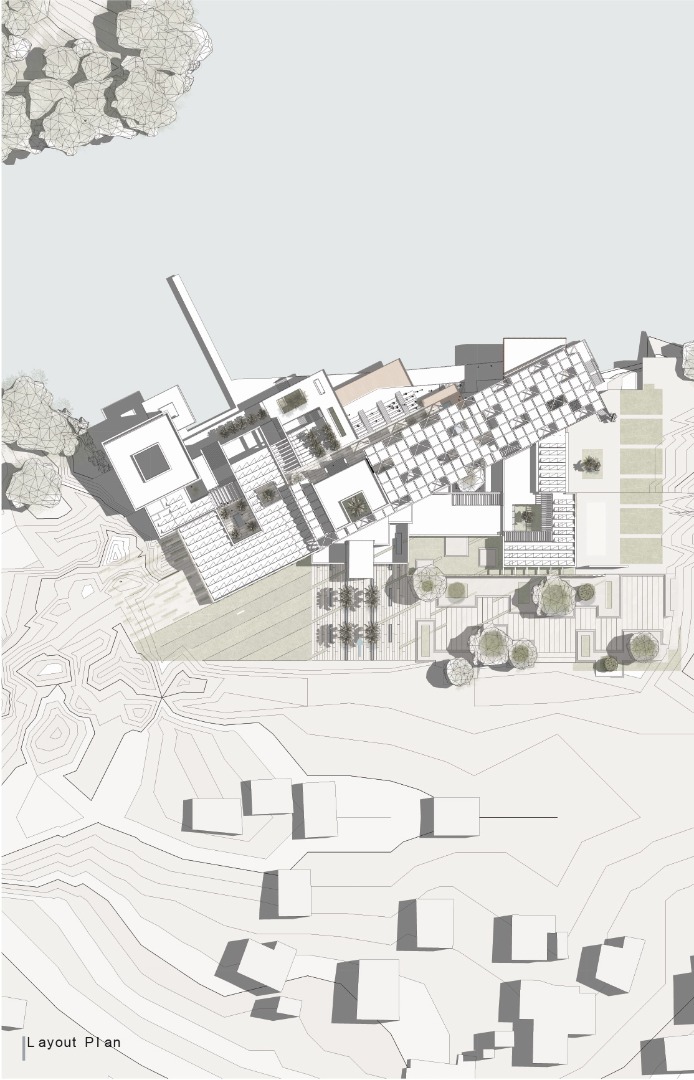
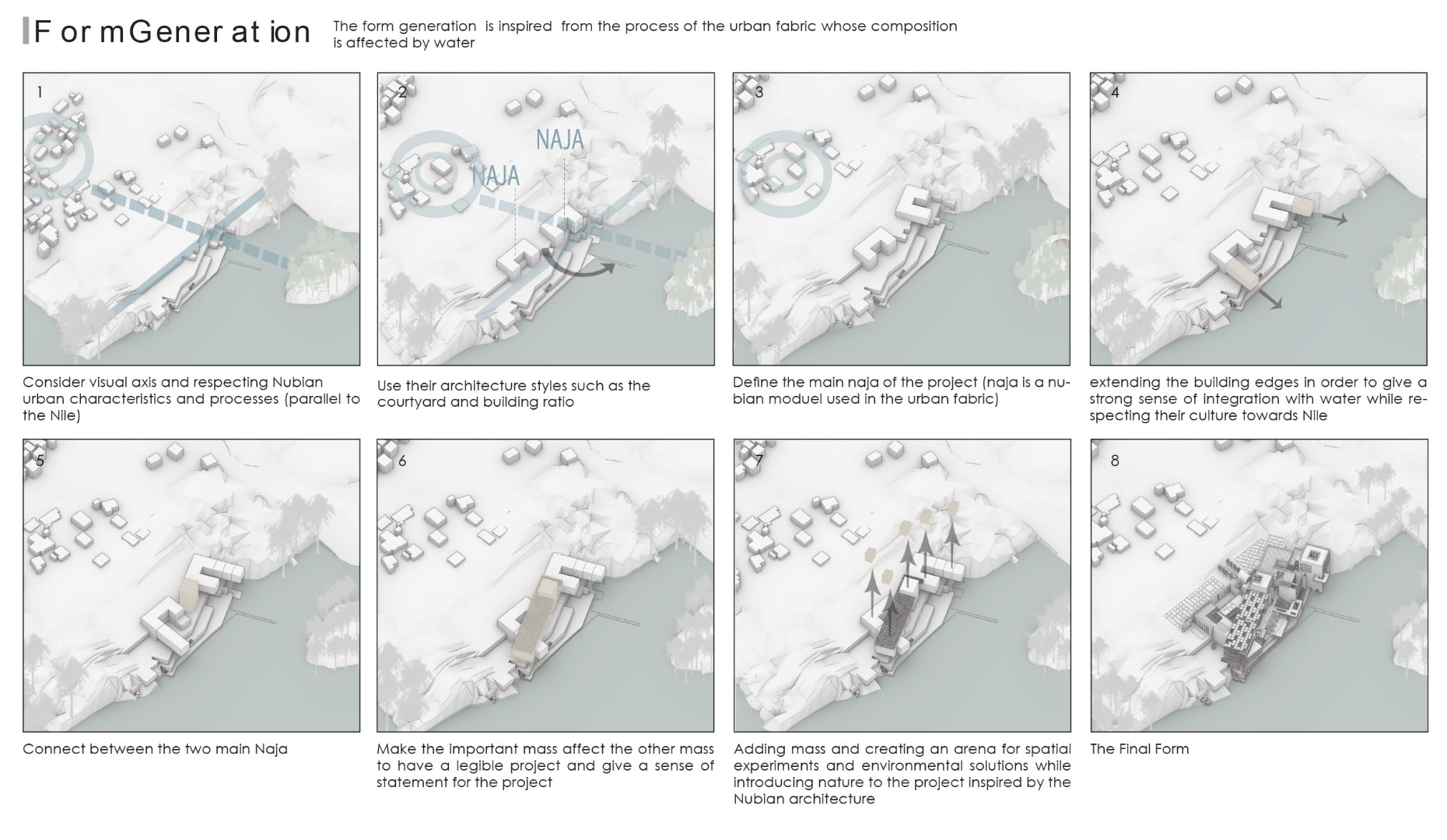
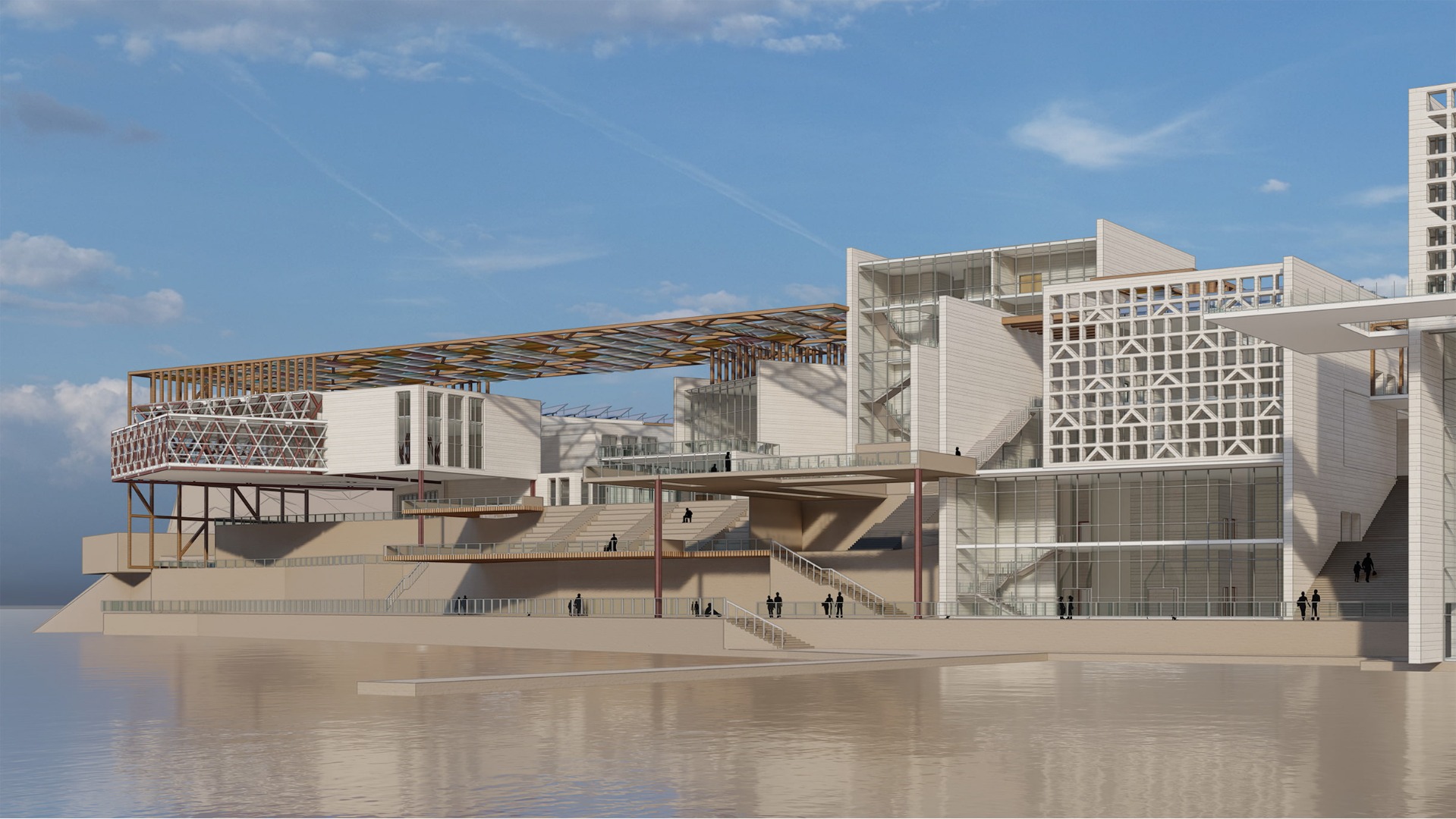
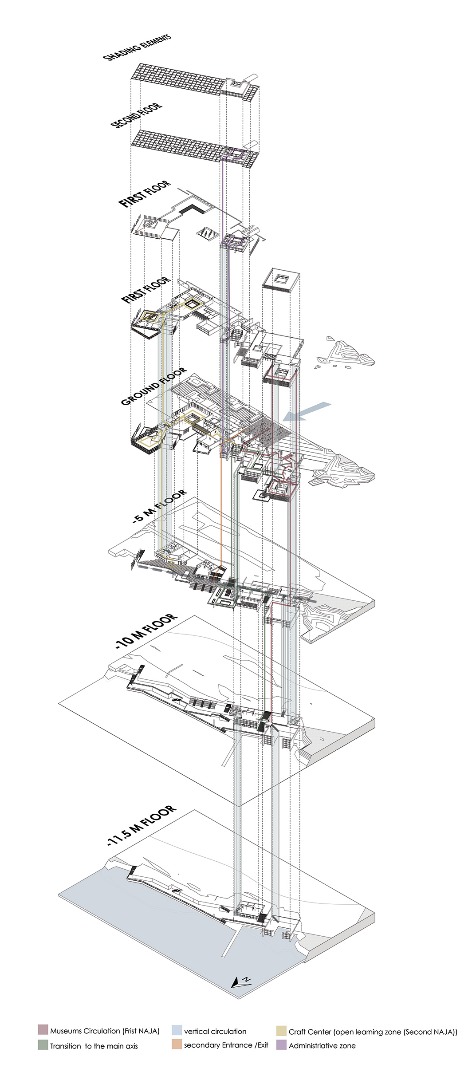
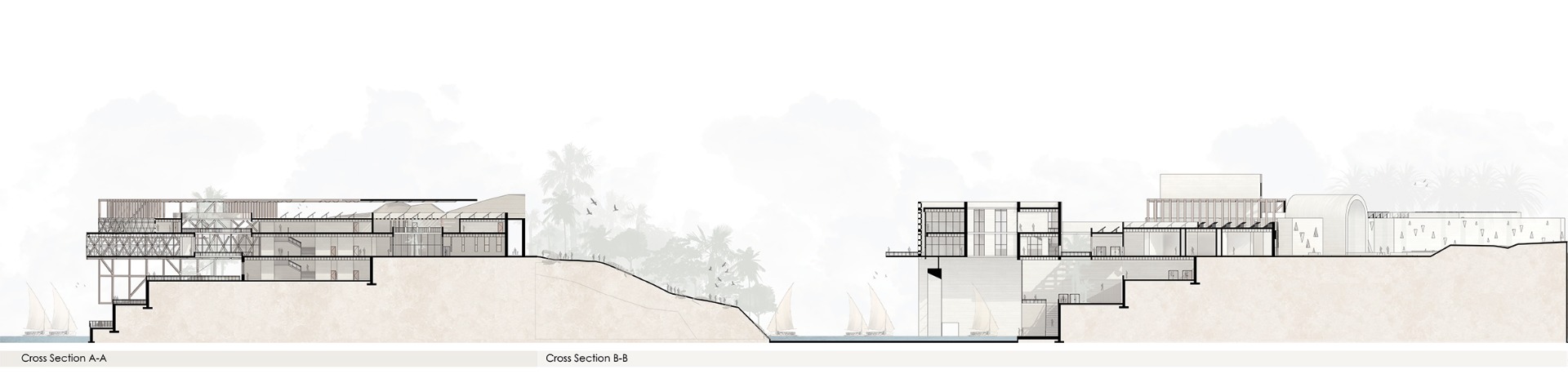
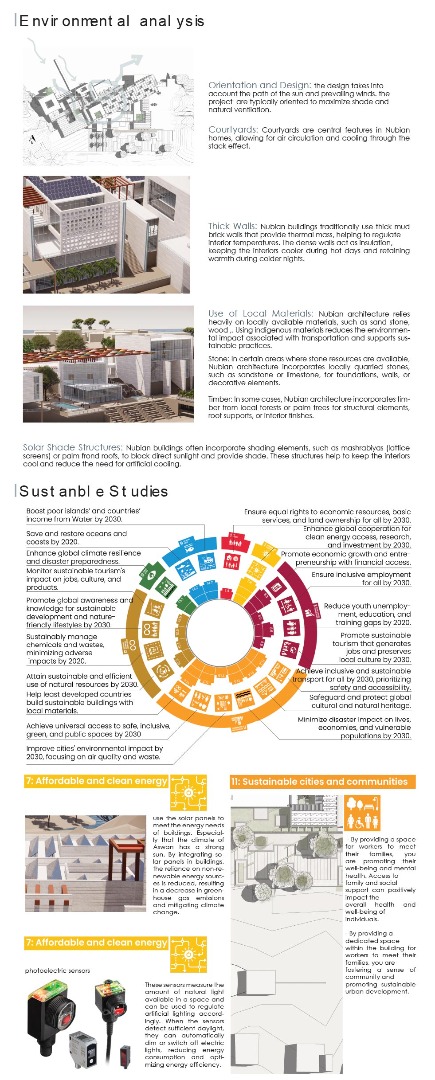
Envisioned as a water culture hub, this centre weaves Nubian identity and water’s essence into every design facet. Sustainability is a cornerstone, echoing Nubian culture’s harmonious coexistence with the environment. The merging of the project with topography and nature was influenced by Nubian culture. The form generation was inspired by the urban fabric shaped by water. The architecture translates the profound connection between Nubian life and the Nile River, culminating in an impactful portrayal of how this bond solidified the Nubian identity.
In essence, the Nubian Water Culture Center is more than an architectural endeavour; it is a testament to the unbreakable thread between the Nubians and the Nile. It encapsulates the depth of a culture often overshadowed, honouring values that have shaped Nubian identity over generations. This centre breathes life into its history, fostering understanding and empowering the next generation to carry forward this indomitable connection.
Established in 2012, Tamayouz Excellence Award is an unaffiliated, independent initiative that aims to advance the profession of architecture academically and professionally. Tamayouz is dedicated to supporting aspirational and transformative projects that tackle local and global challenges and that are informed by a holistic understanding of context.