

University : Cairo University
Tutor(s) : Dr Mohamed Noamen
Project Description
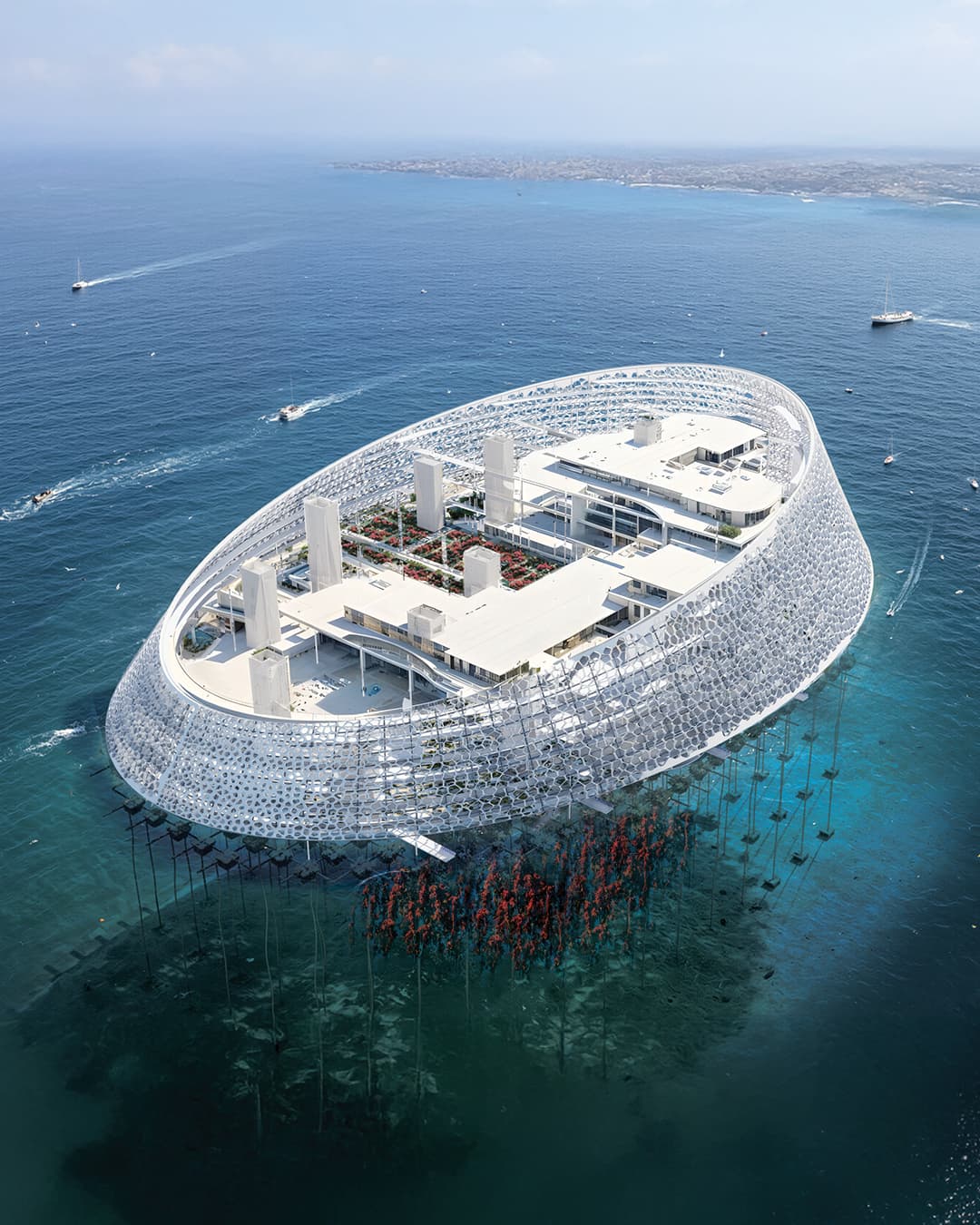
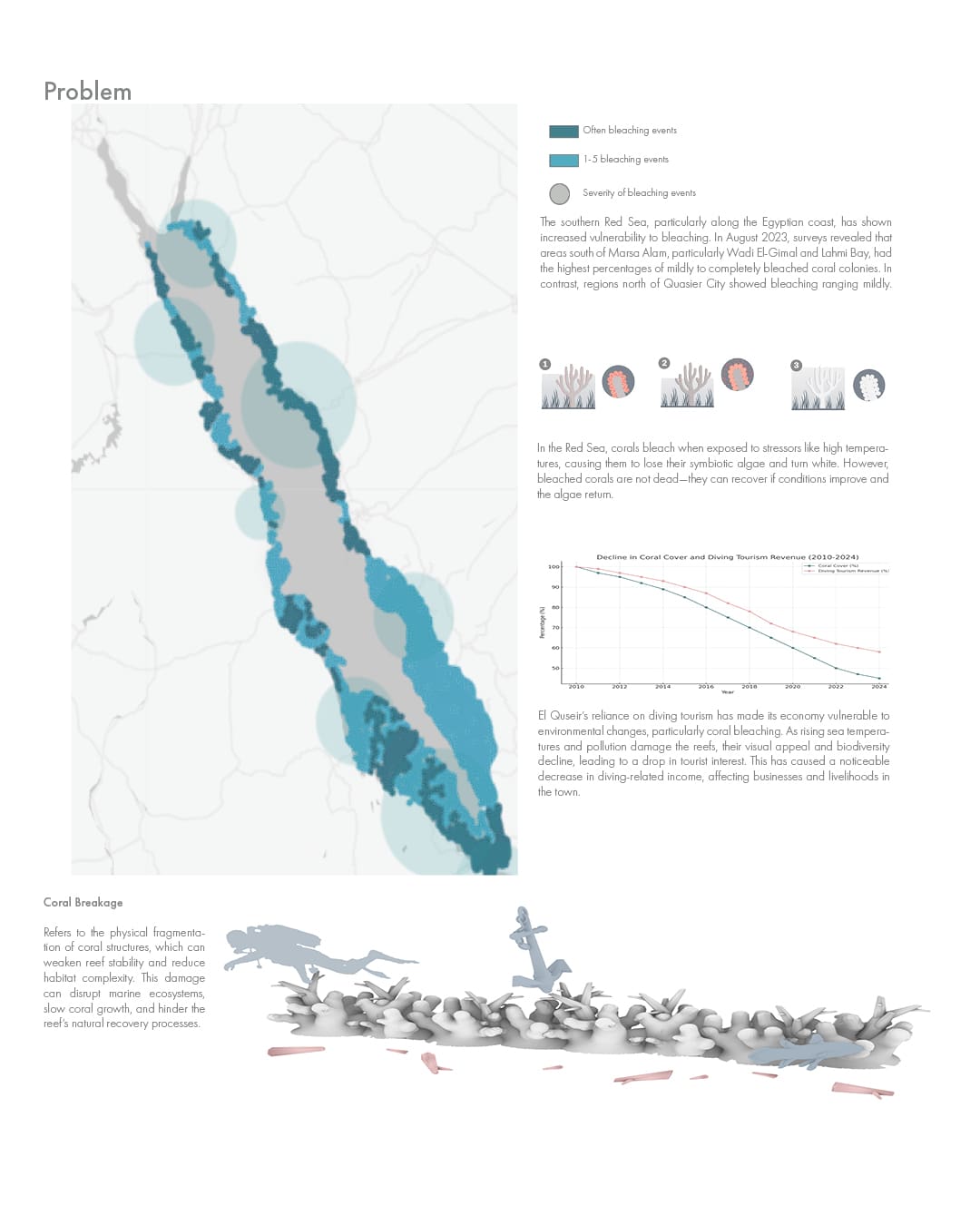
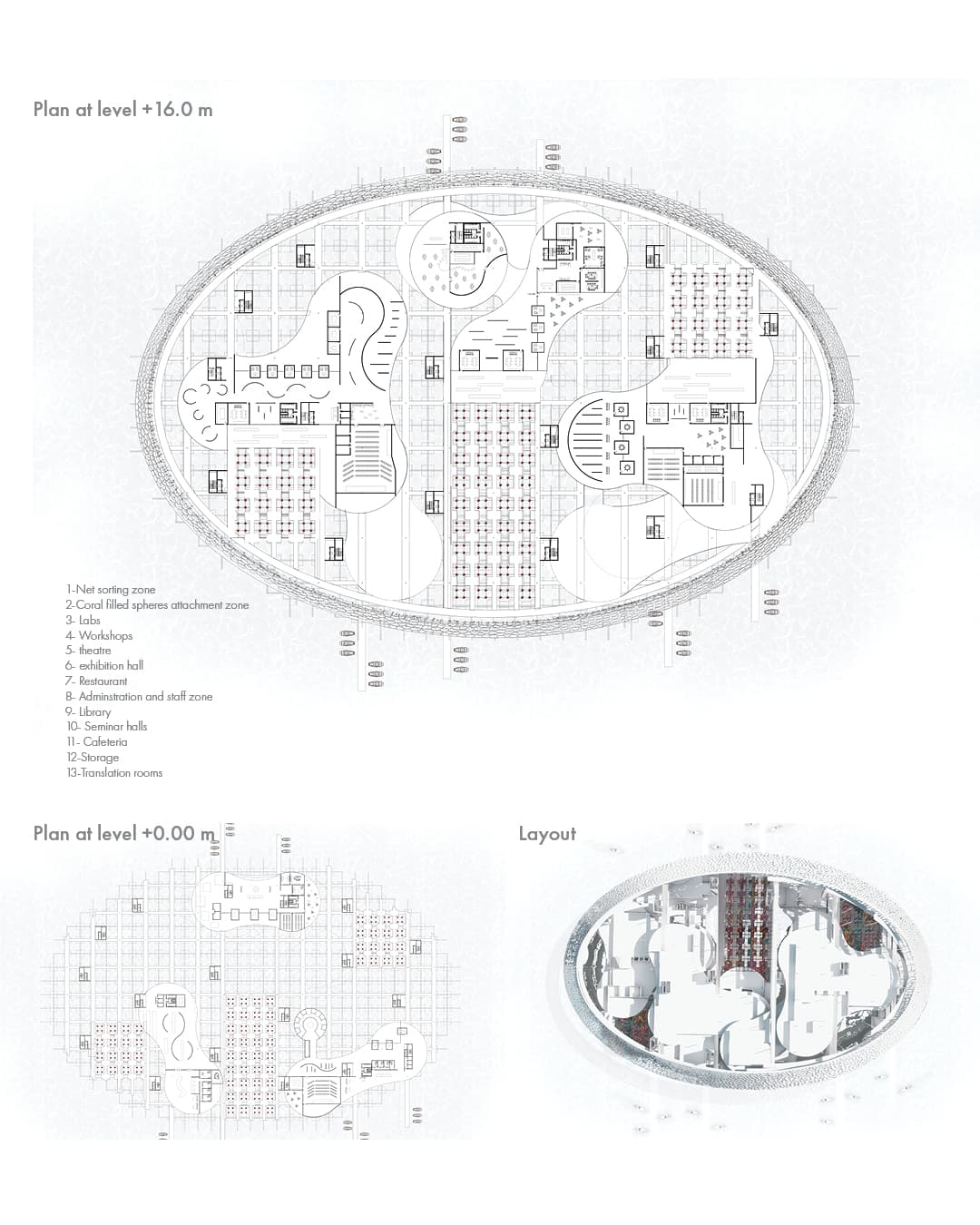
Reefscape is conceived as both a coral rehabilitation center and a recreational scuba diving hub located in El Quseir along Egypt’s Red Sea coast. Once a vital maritime city, El Quseir now depends largely on diving tourism, which has recently been threatened by widespread coral bleaching. The project responds by positioning architecture as an active tool for ecological restoration while sustaining cultural and economic activity.
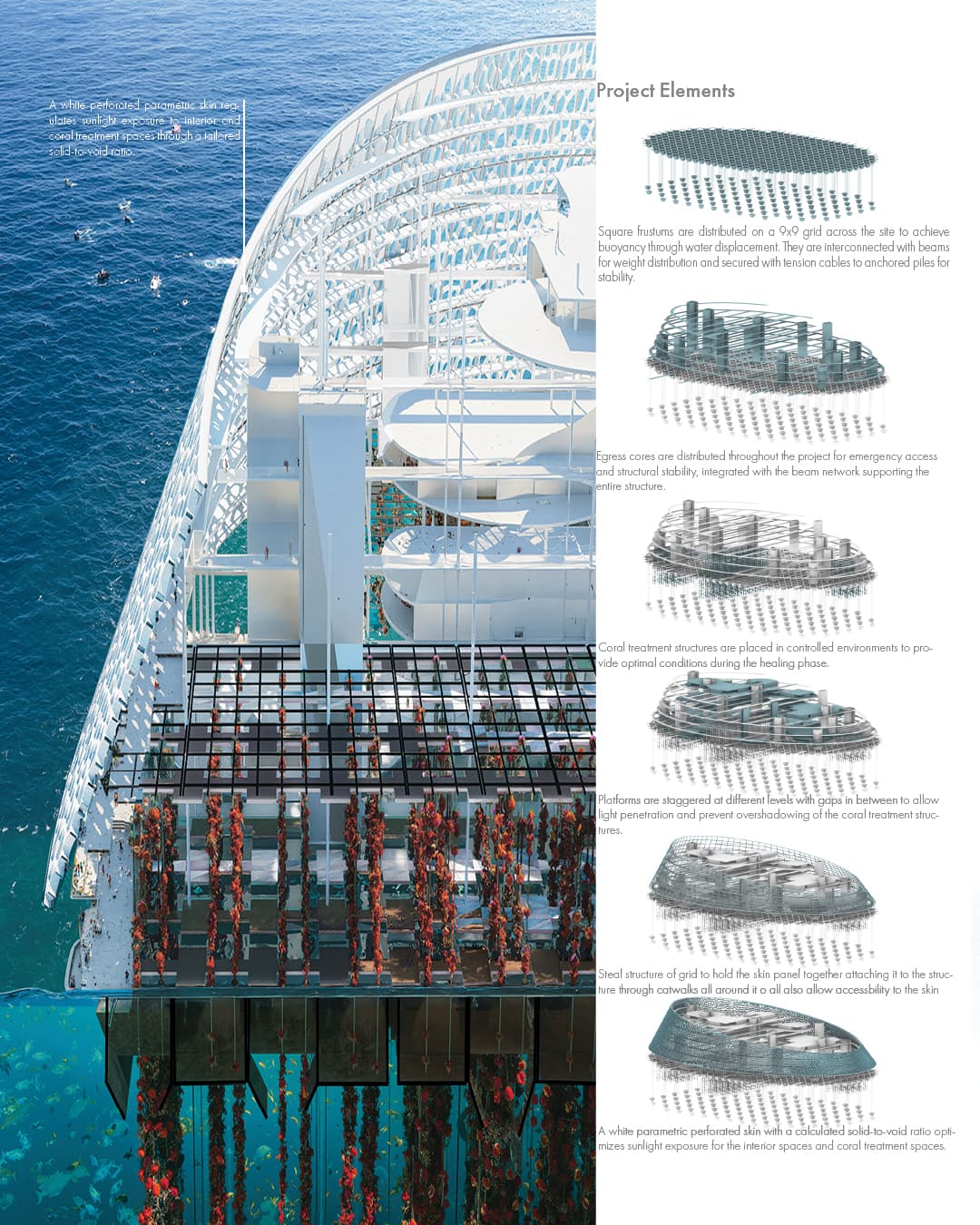
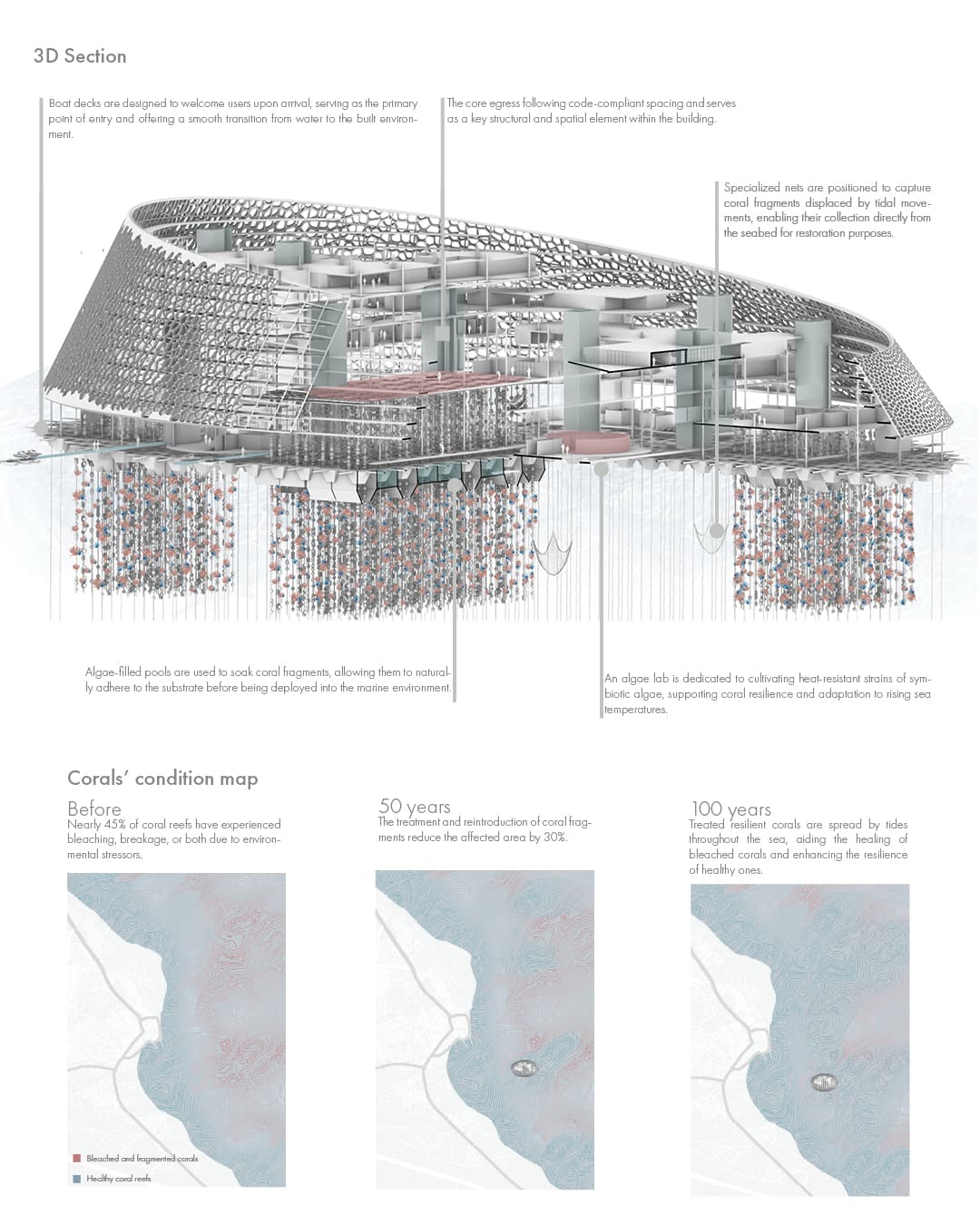
The design is organized into three interconnected components. The Diving Center provides equipment, training sessions, and environmental awareness programs that promote responsible diving practices and minimize harm to marine ecosystems. The Marine Gallery offers an immersive public experience, allowing visitors to observe marine life and understand coral restoration processes through live displays and educational spaces. The Research Facilities support scientists with laboratories, algae pools, and seminar rooms dedicated to monitoring coral health and developing rehabilitation strategies.
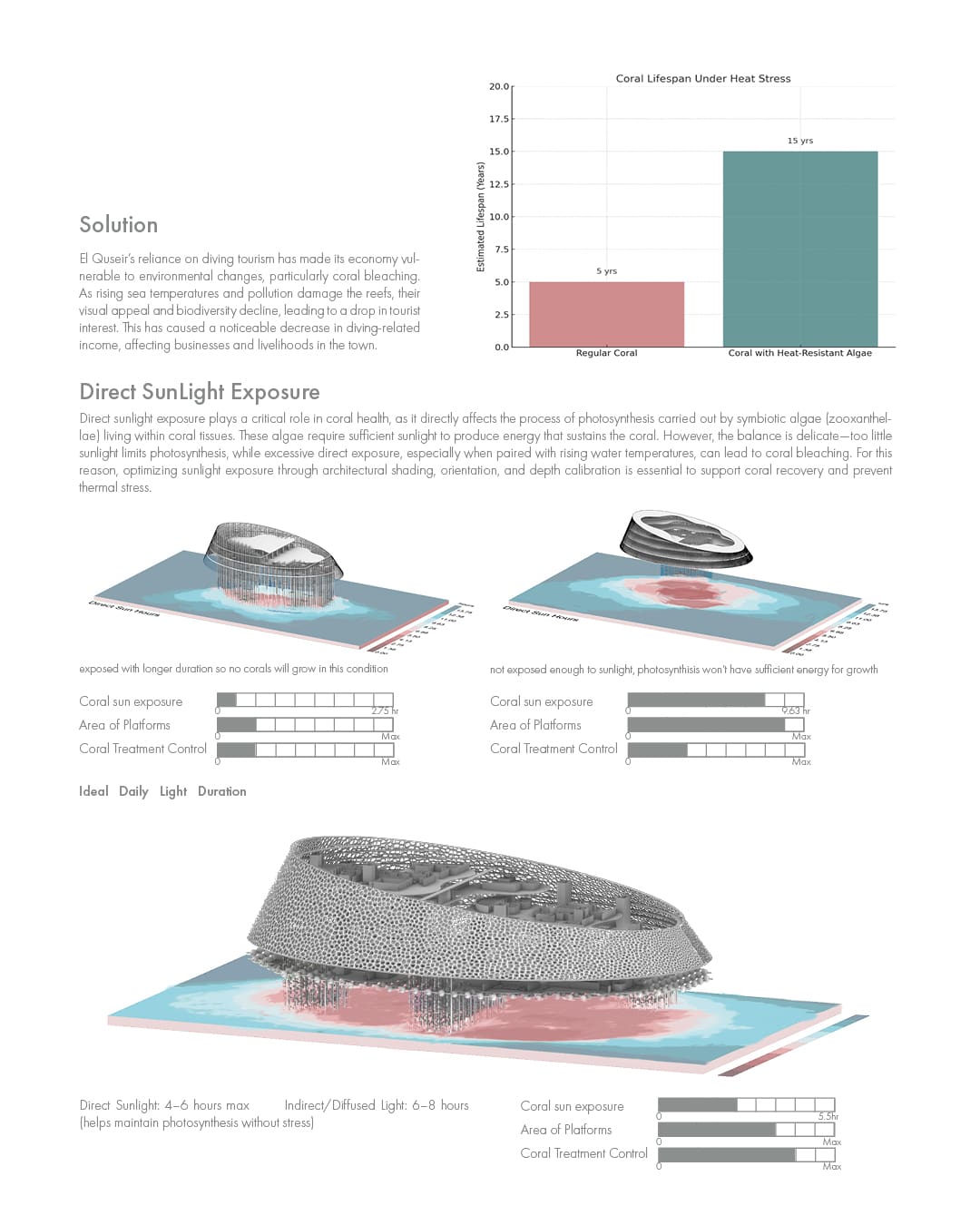
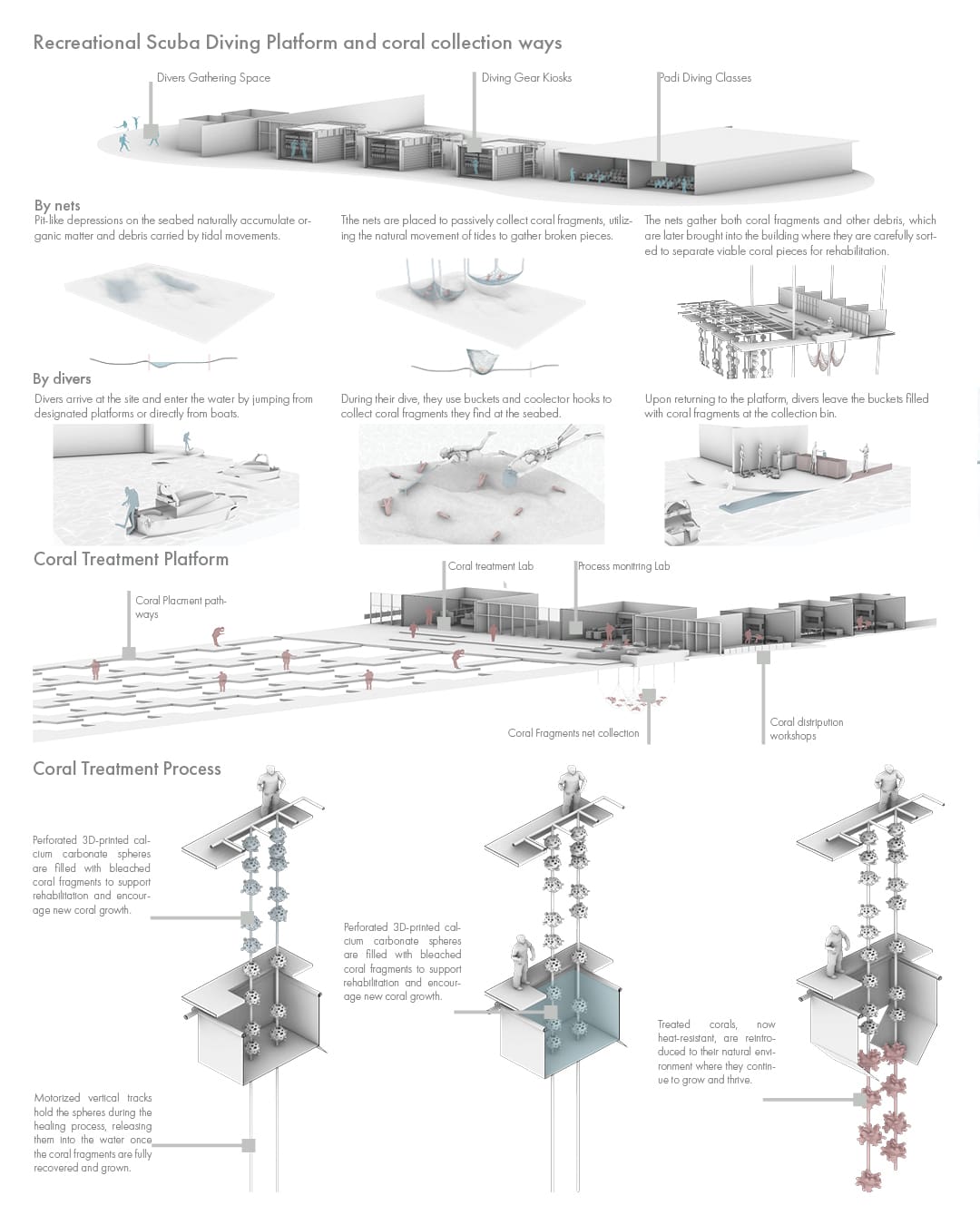
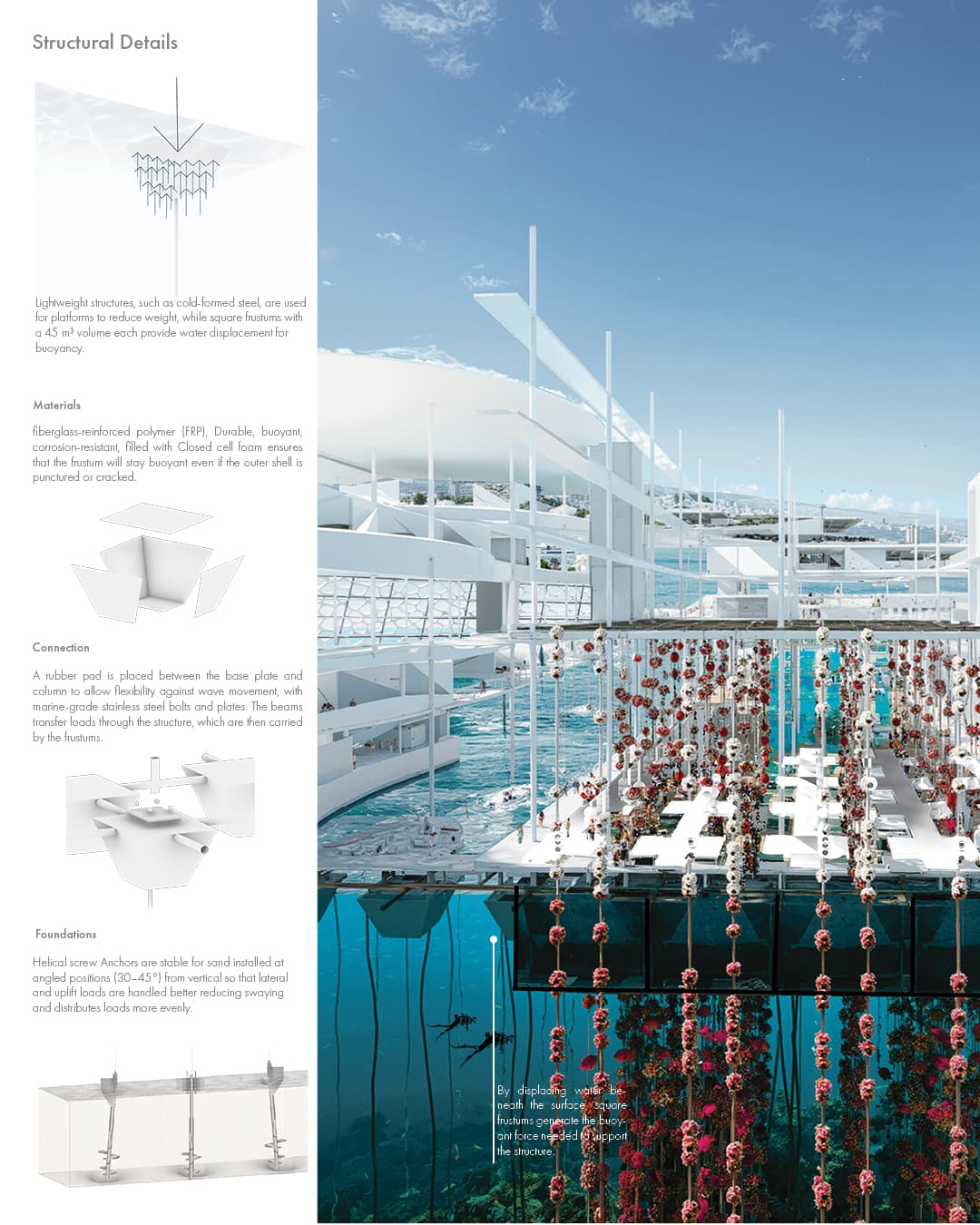
Coral fragments are collected, treated, and reintroduced to the sea using perforated 3D-printed calcium carbonate substrates combined with heat-resistant algae to enhance thermal resilience. Architecturally, the project is designed as a floating structure stabilized by buoyant square frustums and tripod-anchored tension cables. The platforms are strategically separated to allow sunlight to penetrate the water, ensuring optimal conditions for coral growth beneath.
By integrating science, education, and recreation, Reefscape transforms restoration into a participatory experience. The project demonstrates how architecture can transcend its conventional role to become a regenerative force—healing marine ecosystems while reinforcing the identity and future of coastal communities.
Established in 2012, Tamayouz Excellence Award is an unaffiliated, independent initiative that aims to advance the profession of architecture academically and professionally. Tamayouz is dedicated to supporting aspirational and transformative projects that tackle local and global challenges and that are informed by a holistic understanding of context.