


University : AlBalqa Applied University
Tutor(s) : Rawan Abu Alata
Project Description
In Gaza, where childhood is reduced to memories of war, the phenomenon of the “sole survivor” was born: a child emerging from under the rubble after losing their entire family, left without roots or support. No longer just an orphan, but a living witness to genocide, carrying deep trauma and an absolute loss of belonging. These children need more than shelter; they need a healing environment that can rebuild their spirit and grant them a chance at life again.
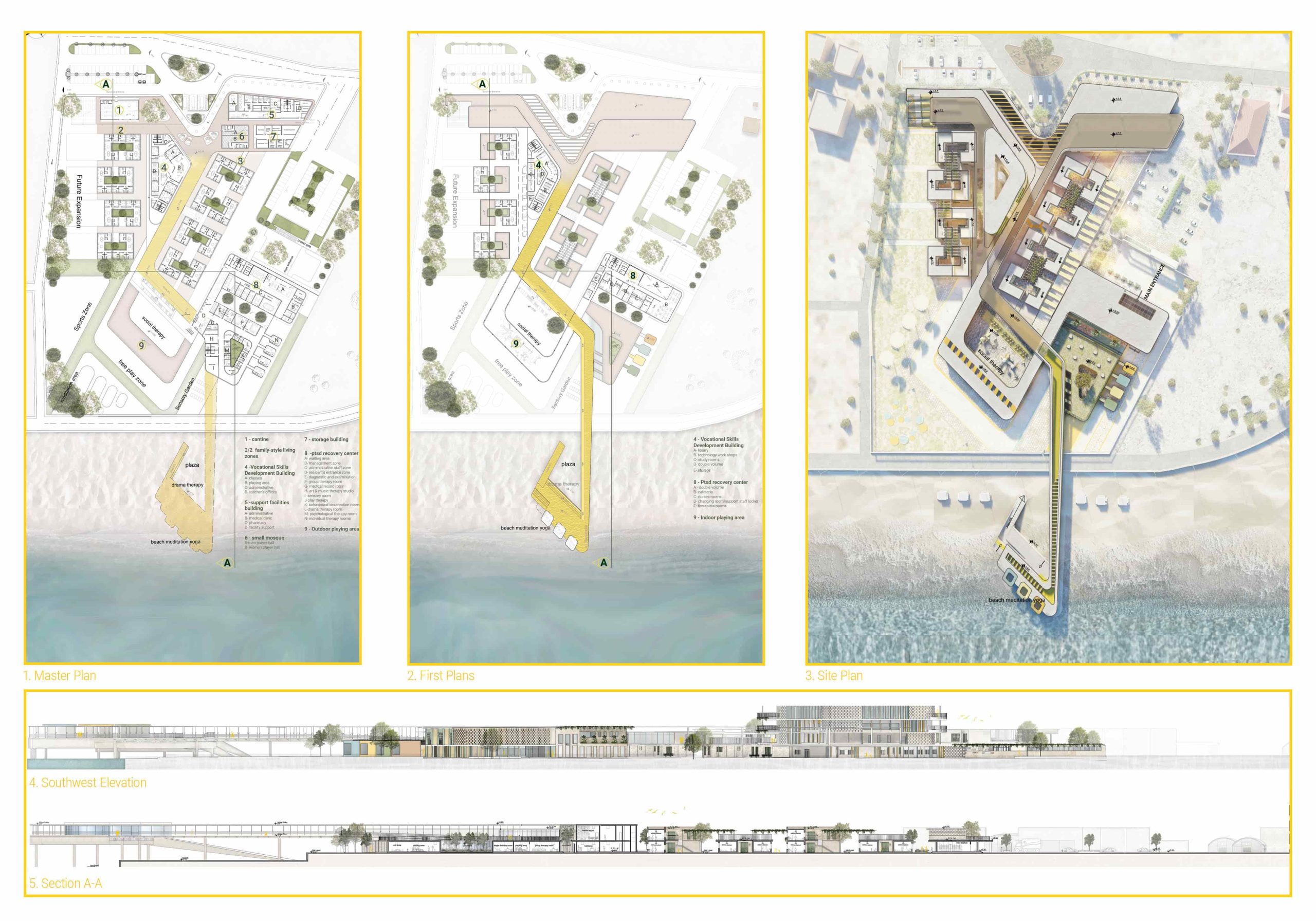
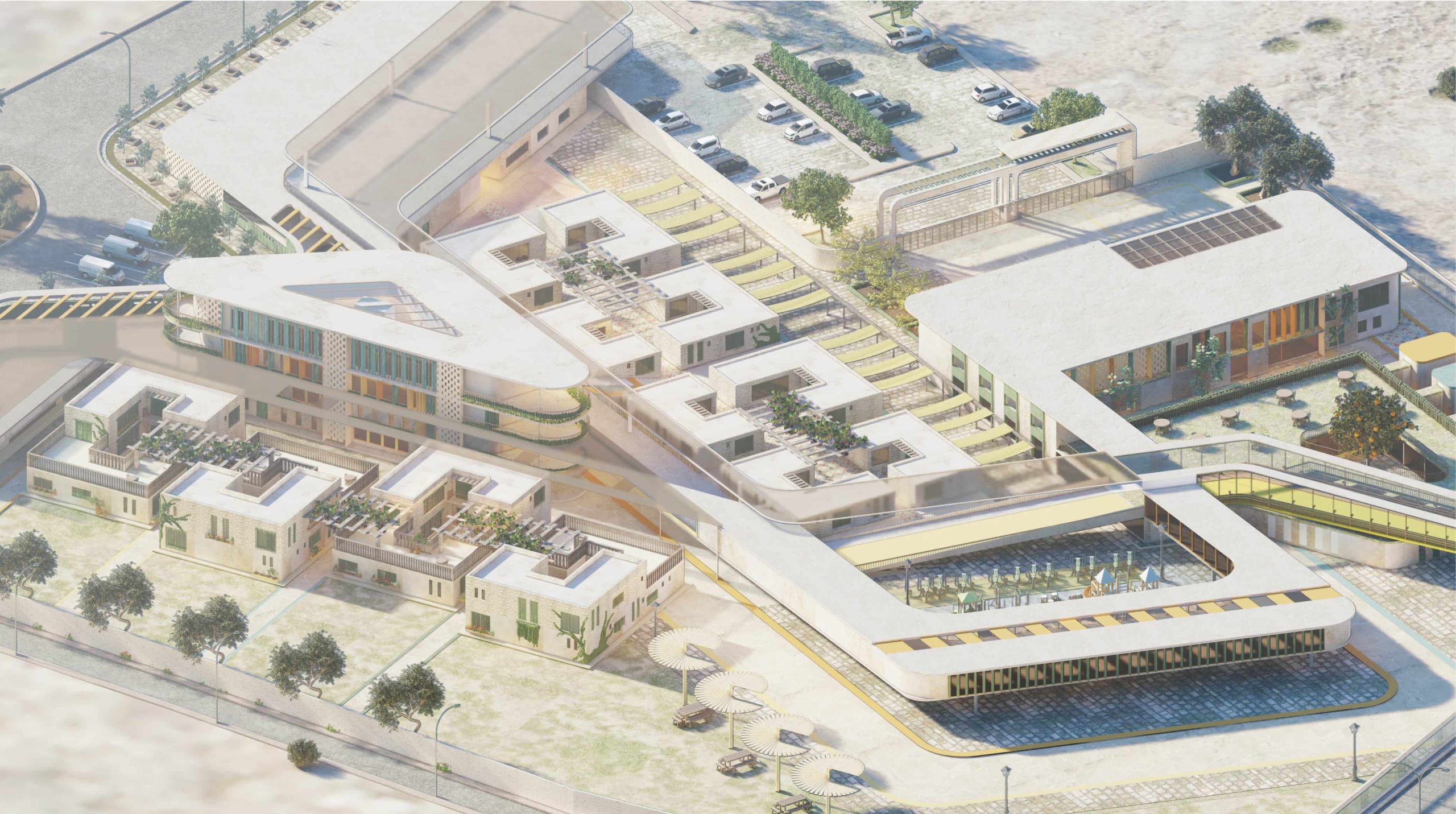
From this need, the Orphans Rehabilitation Center on the coast of Khan Younis was conceived—not as a mere building, but as a therapeutic–architectural journey. Inspired by SOS villages yet reimagined for Gaza’s reality, the project moves beyond providing alternative housing to creating a future-oriented model that restores a child’s sense of belonging and growth.
The design rests on three key pillars:
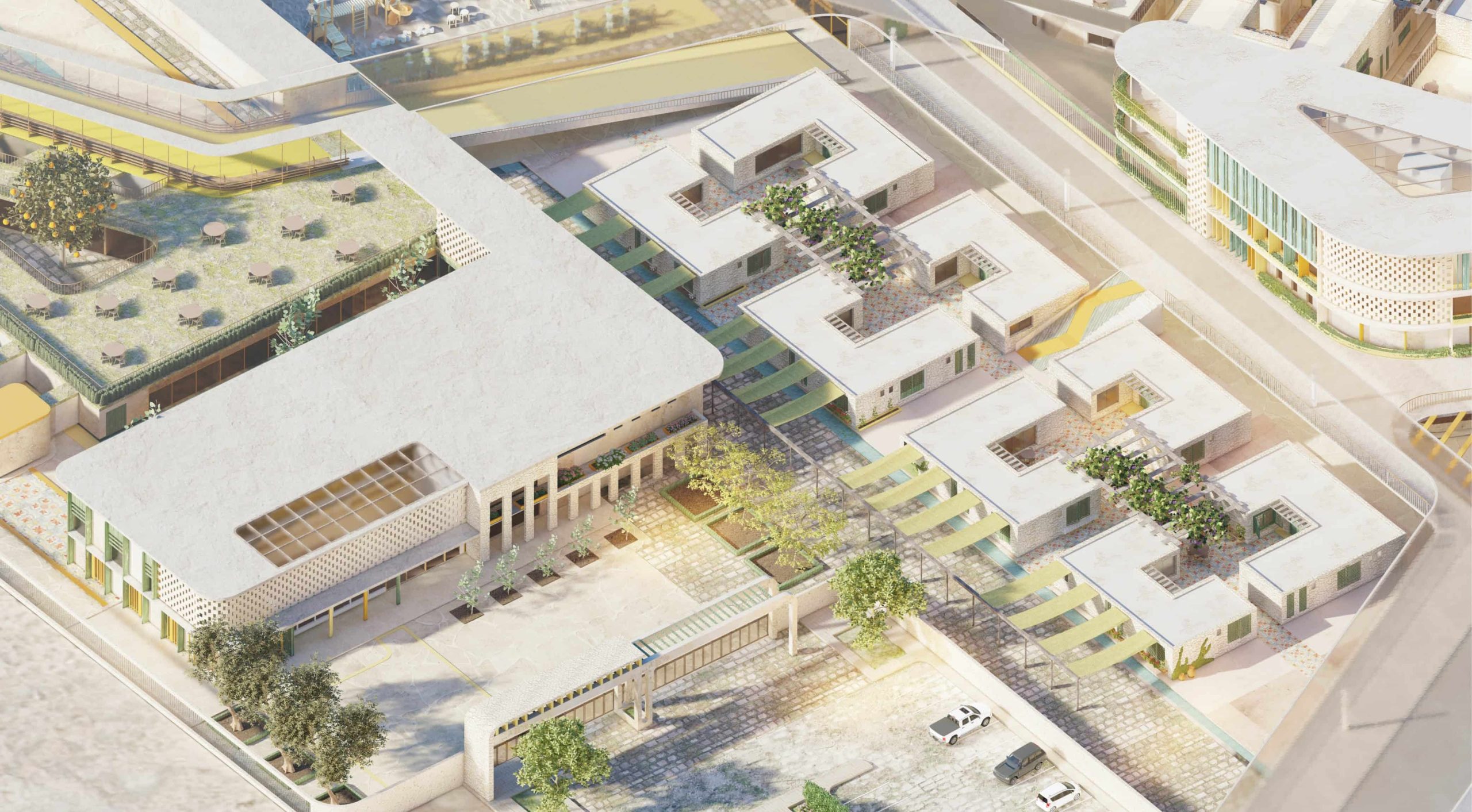
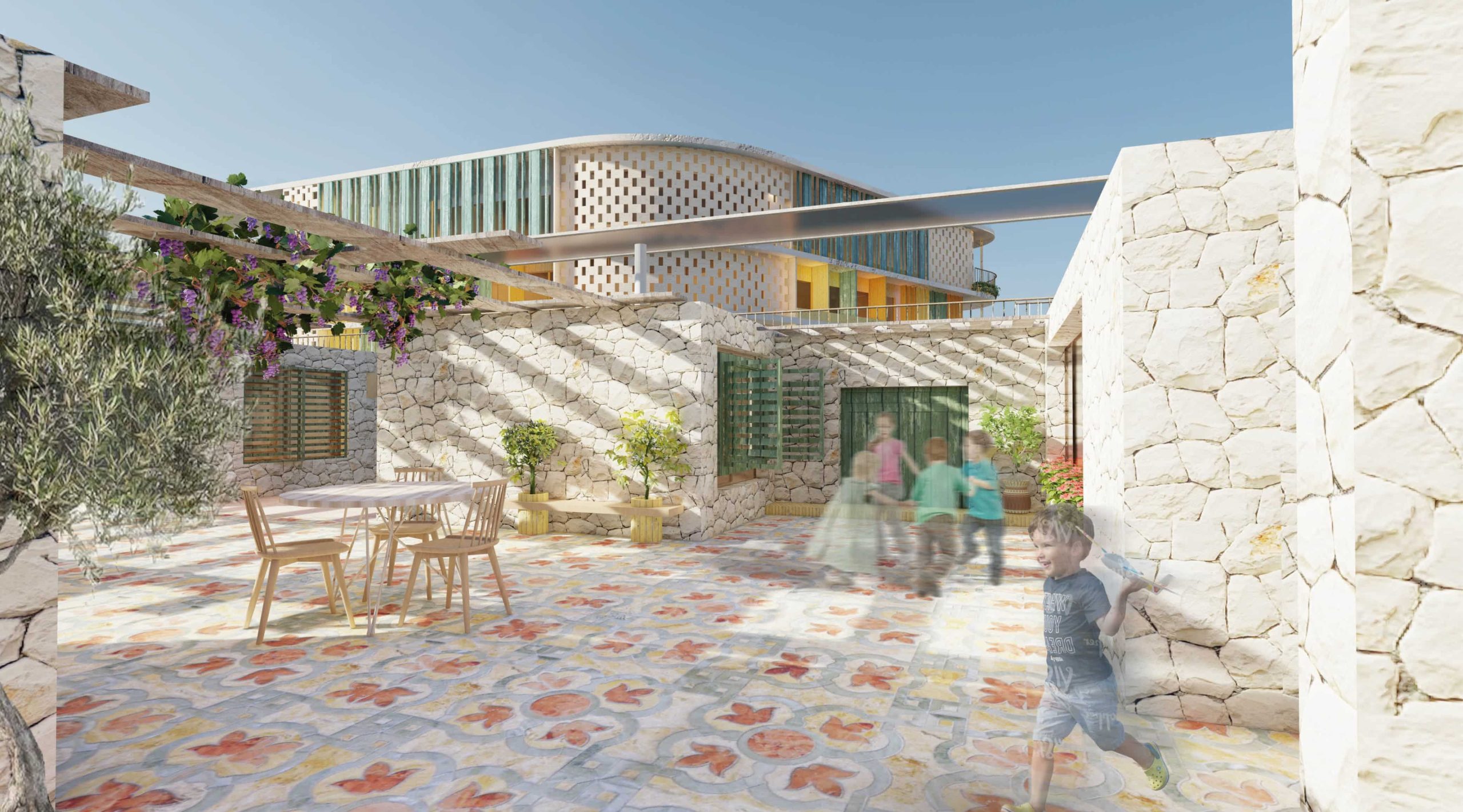
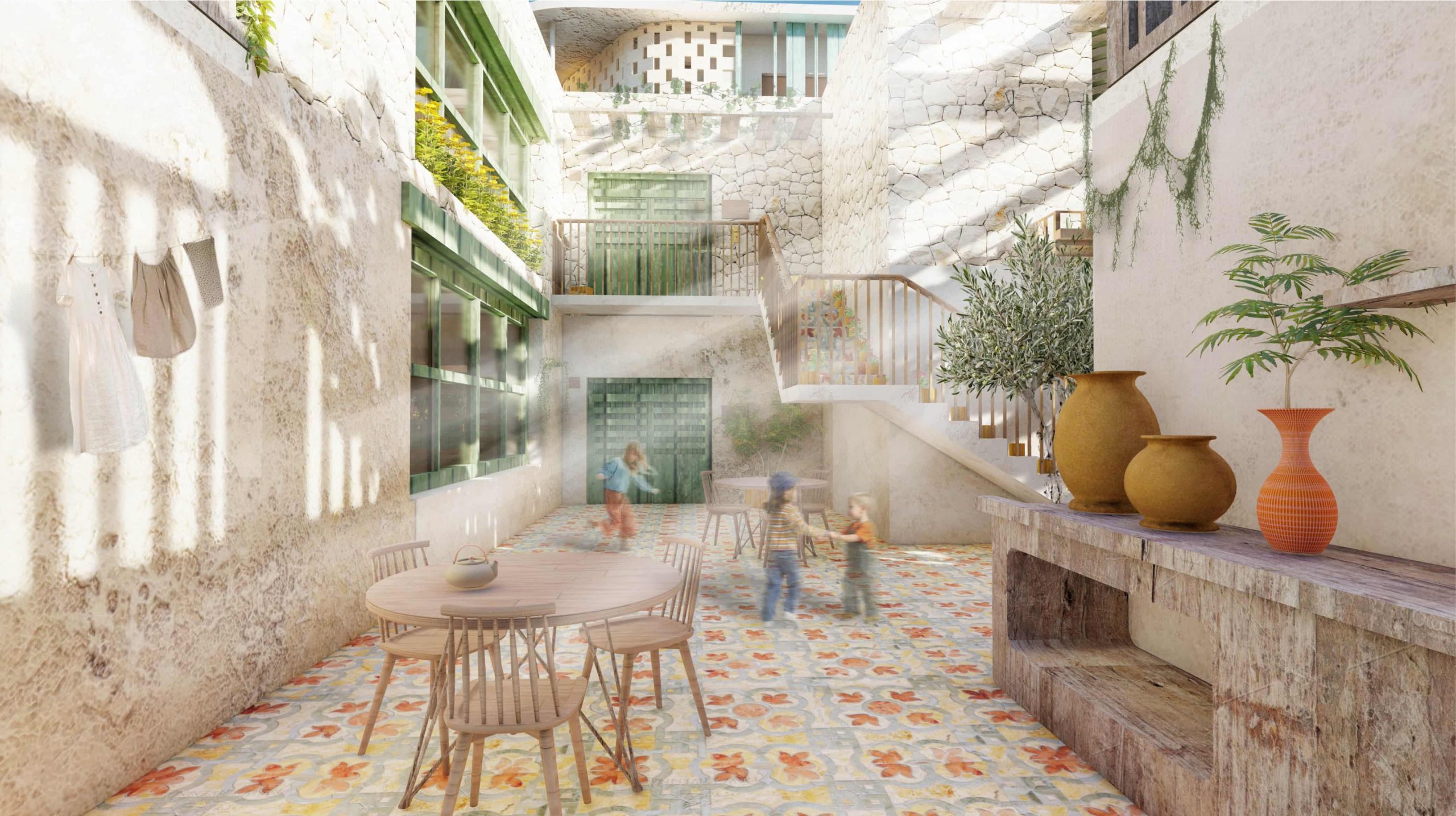
– Healing Architecture: spaces are organized as a path of recovery—beginning with isolation in private therapy rooms, moving into connection within small family-like units, and finally integration through workshops, playgrounds, and gardens.
– Blue Spaces Theory: the seafront site acts as a therapeutic element, planting serenity and openness, turning the sea into an alternative embrace.
– Trauma Therapies: the architecture incorporates CBT, art and play therapy, and exposure therapy, transforming educational, artistic, and residential spaces into tools for healing.
A unique layer of the project is the role of substitute mothers—women who themselves lost children and families in war. They become caregivers for orphans, creating mutual healing: the child gains warmth and safety, while the mother rediscovers motherhood and meaning after loss.
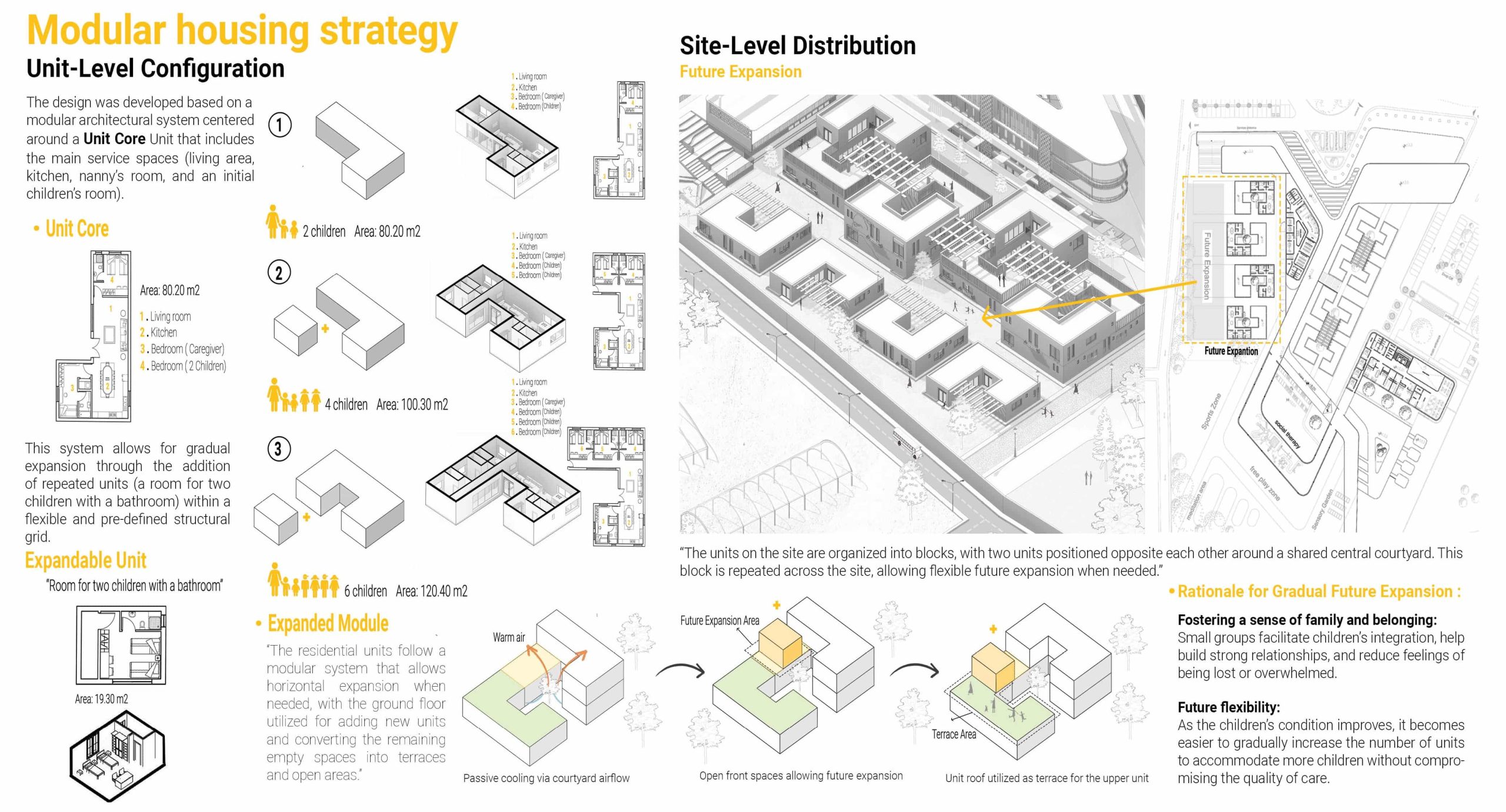
The center uses a modular design that allows for future expansion as needs grow, making it a flexible model for care and rebuilding childhood in post-war Gaza.
Here, survival is redefined—not as mere existence, but as an opportunity for healing, belonging, and planting new childhoods amid the ruins.
Established in 2012, Tamayouz Excellence Award is an unaffiliated, independent initiative that aims to advance the profession of architecture academically and professionally. Tamayouz is dedicated to supporting aspirational and transformative projects that tackle local and global challenges and that are informed by a holistic understanding of context.