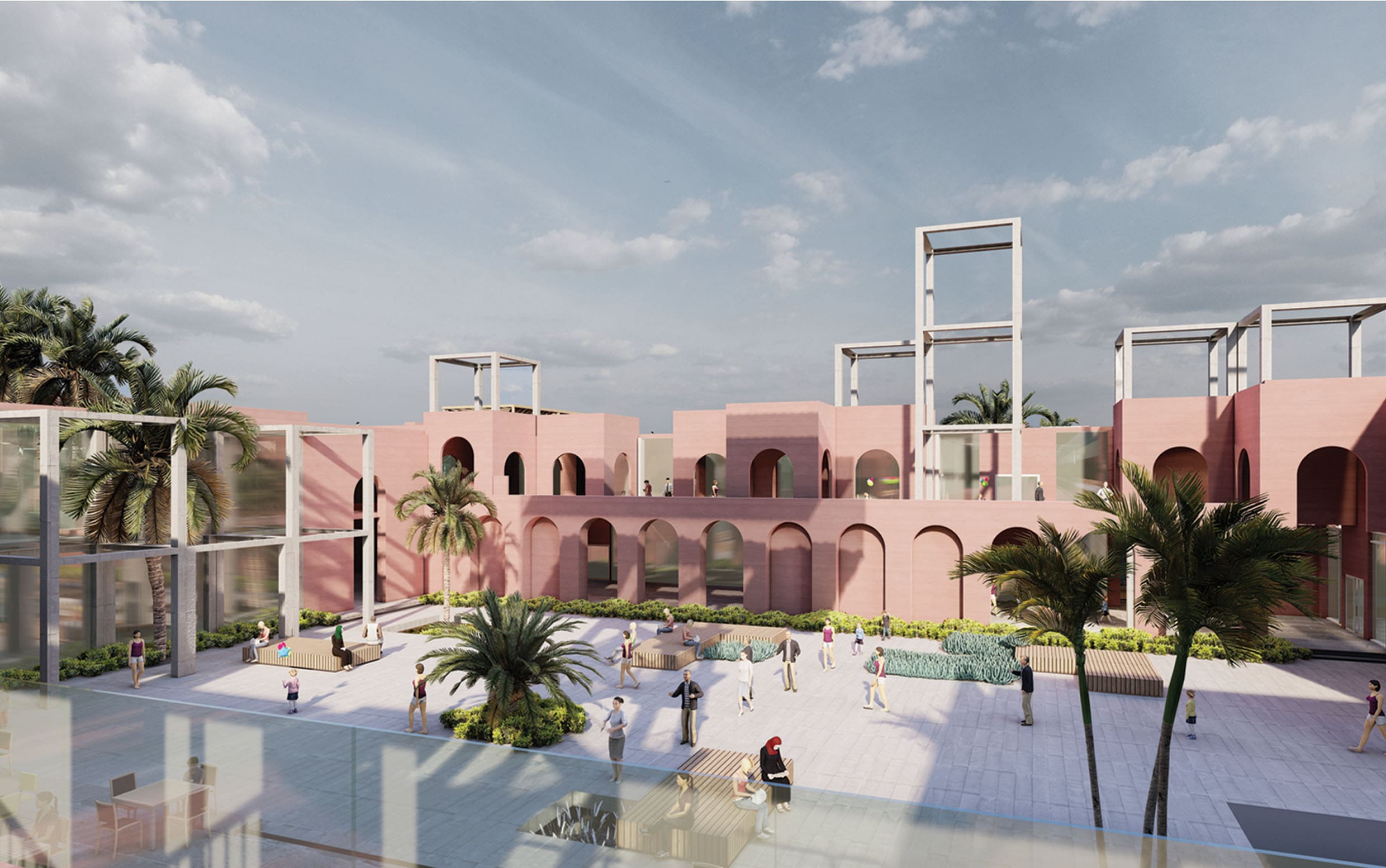
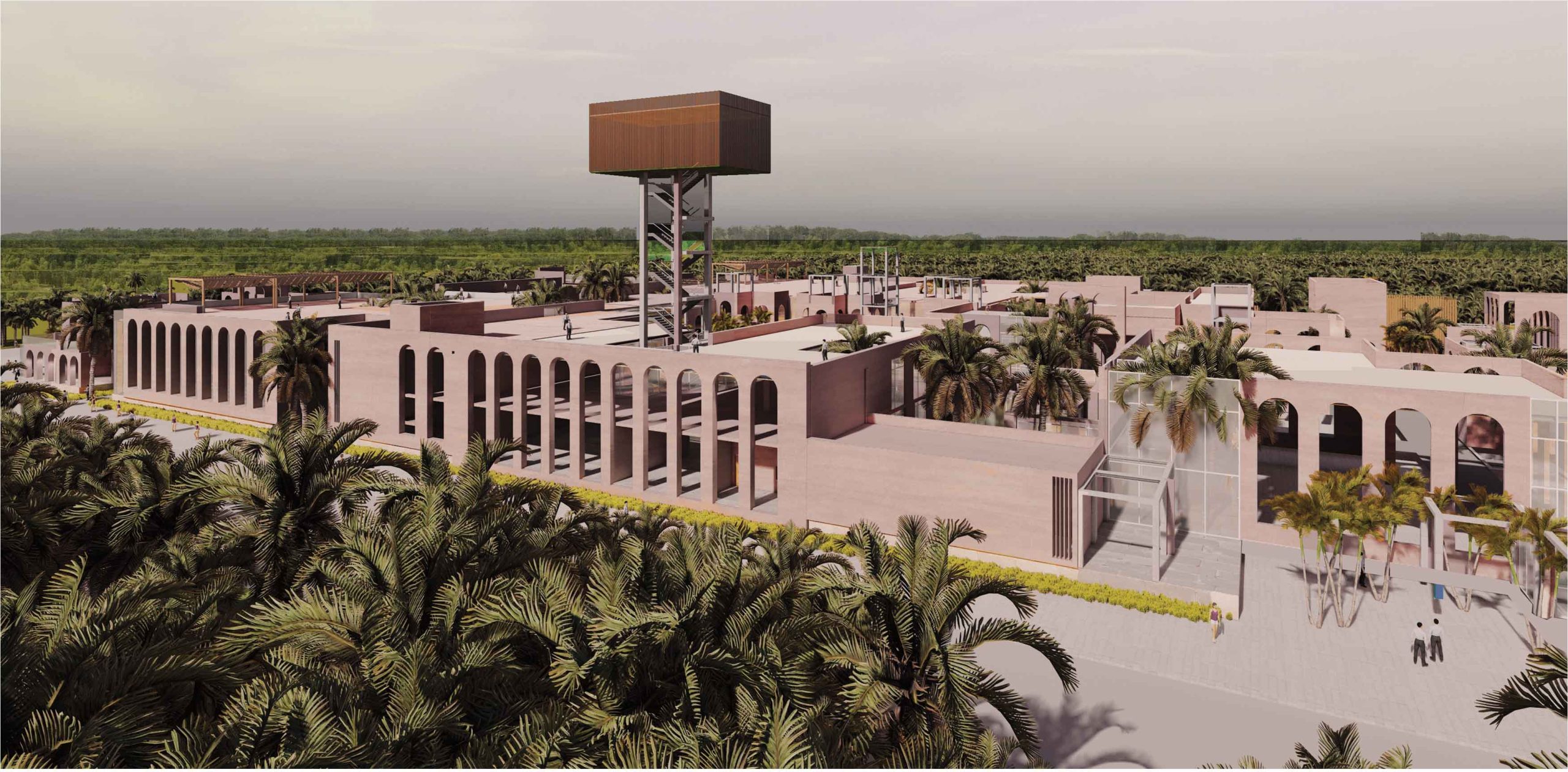
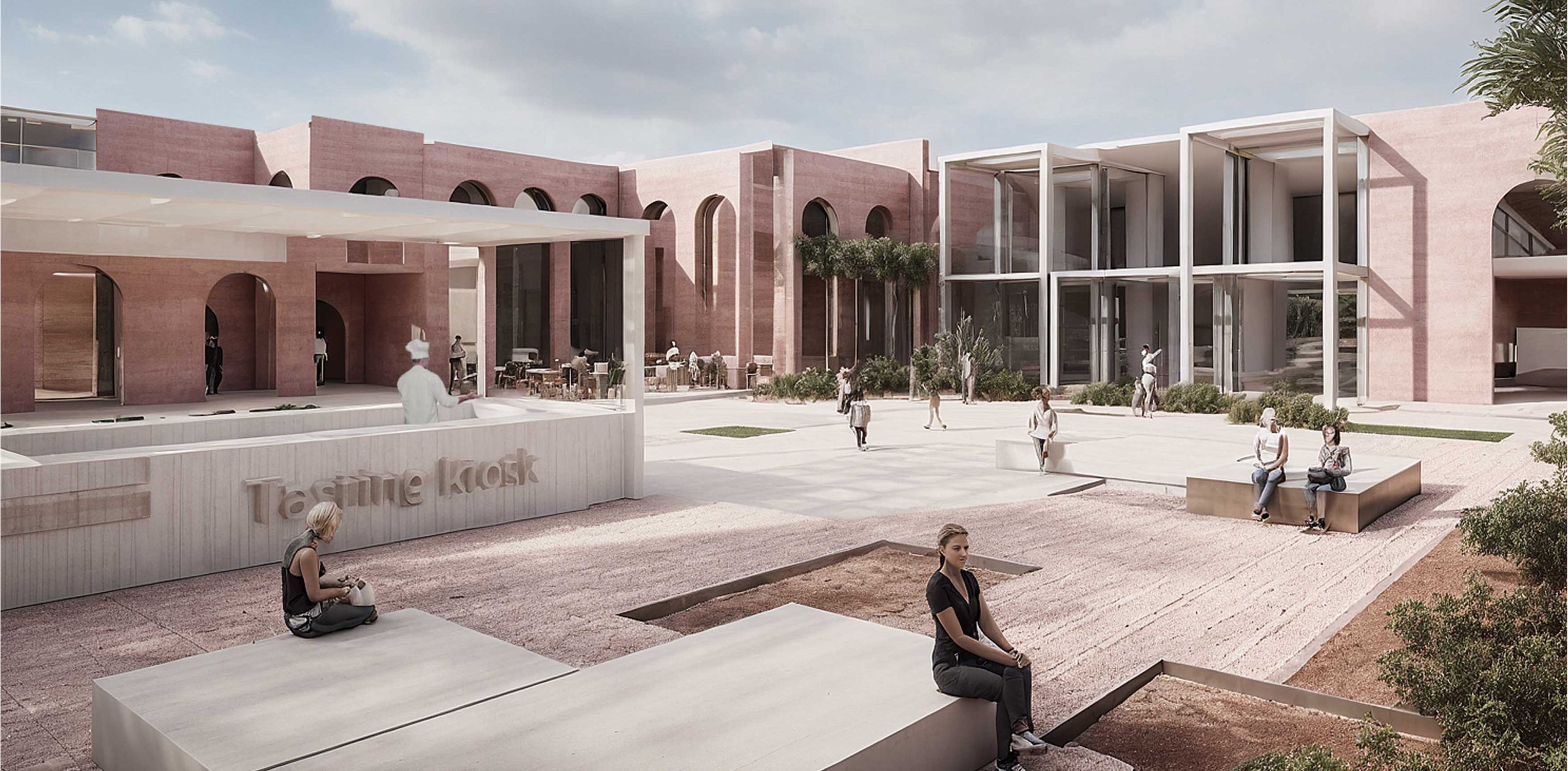
“The Culinary Flow: From Earth to Lake” is a culinary arts complex in Tunis, Fayoum, rooted in local land and traditions. It offers a sensory journey through time, connecting heritage cooking methods with contemporary gastronomy through immersive spaces that reinterpret the evolution of food and place
This graduation project, titled “The Culinary Flow,” explores time as a continuous process in which past, present, and future overlap rather than exist as fixed moments. Drawing inspiration from the nature of culinary arts—procurement, preparation, and presentation—the project proposes a culinary arts complex whose spatial sequence reflects this temporal progression in both function and form.
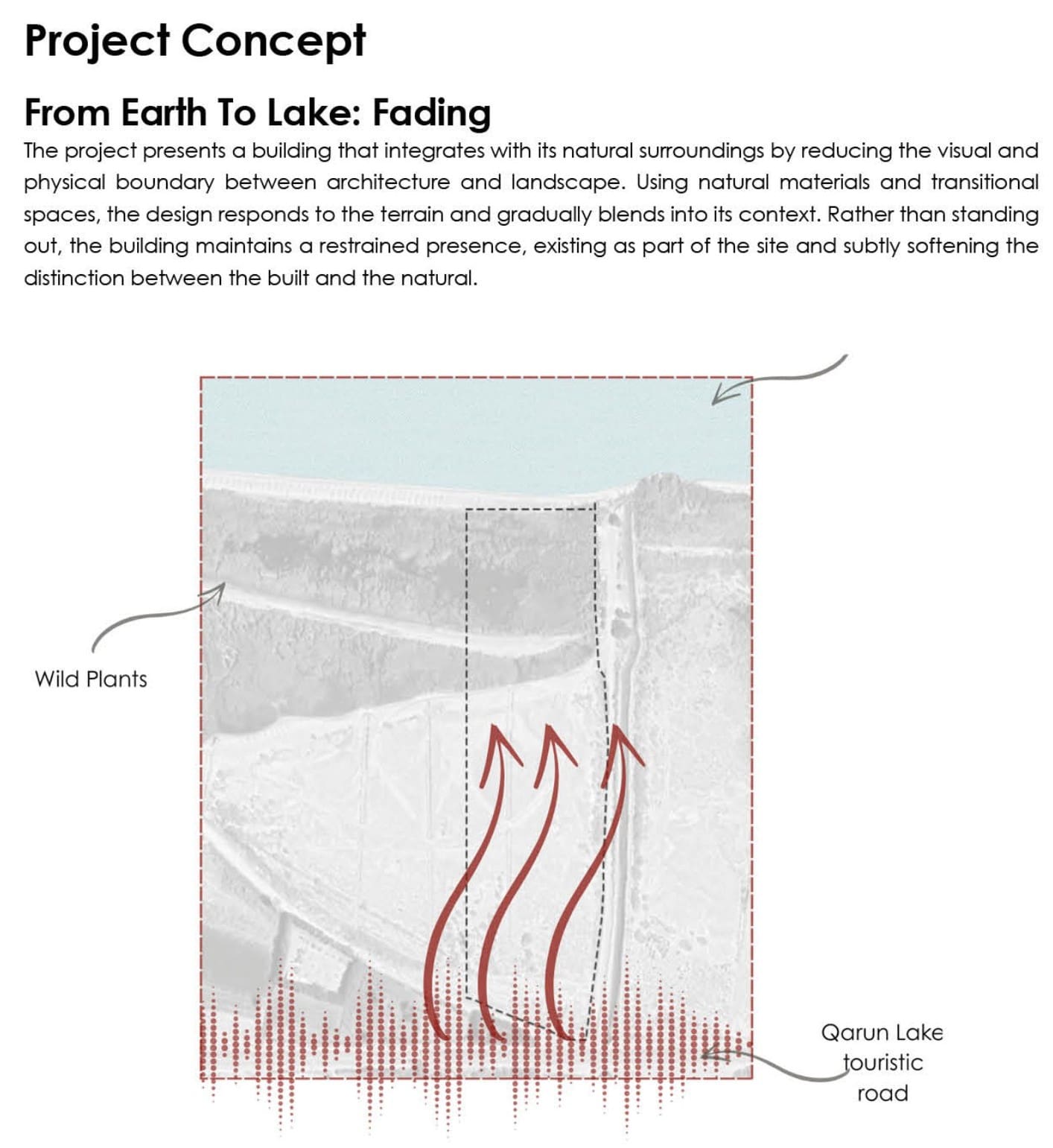
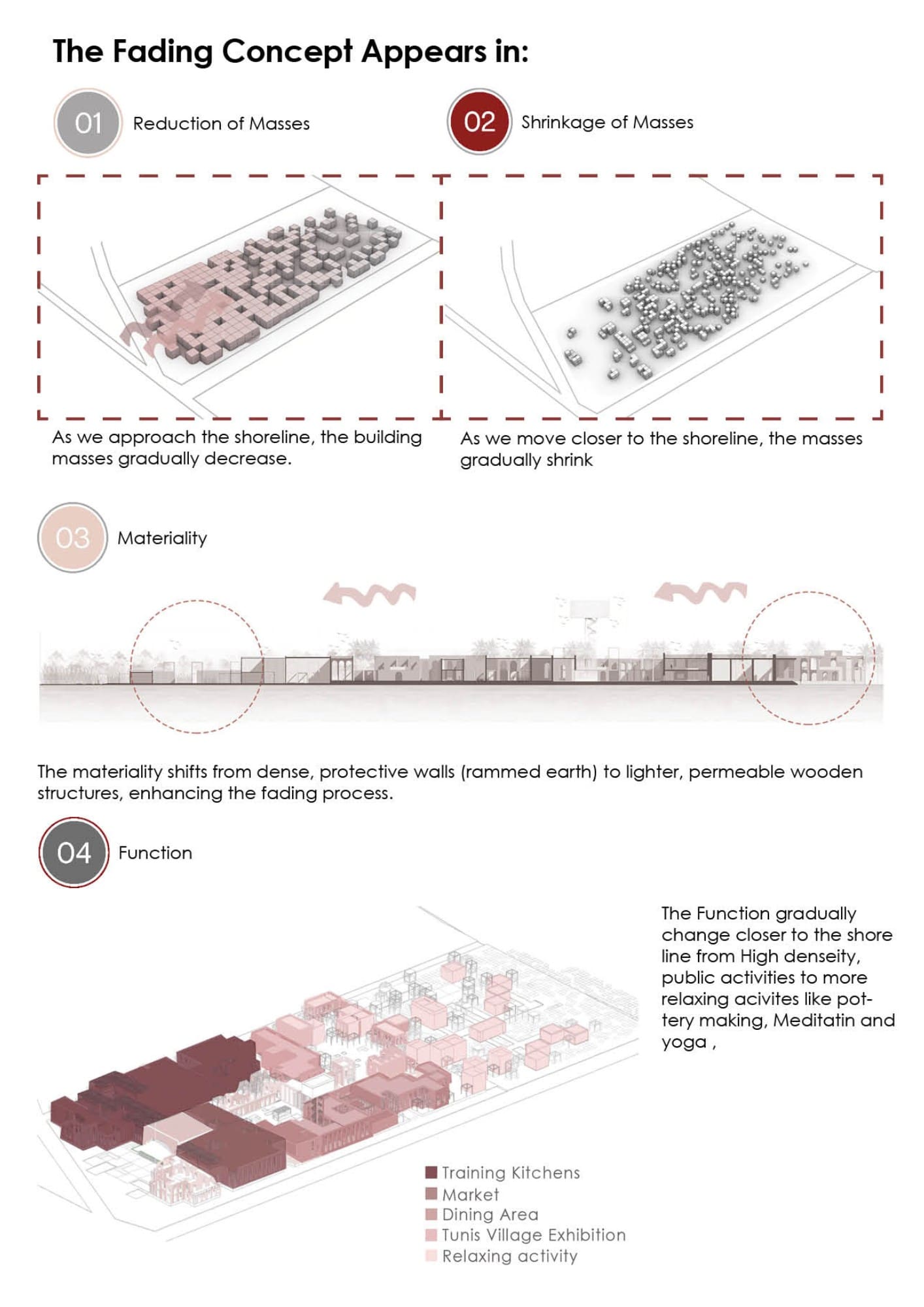
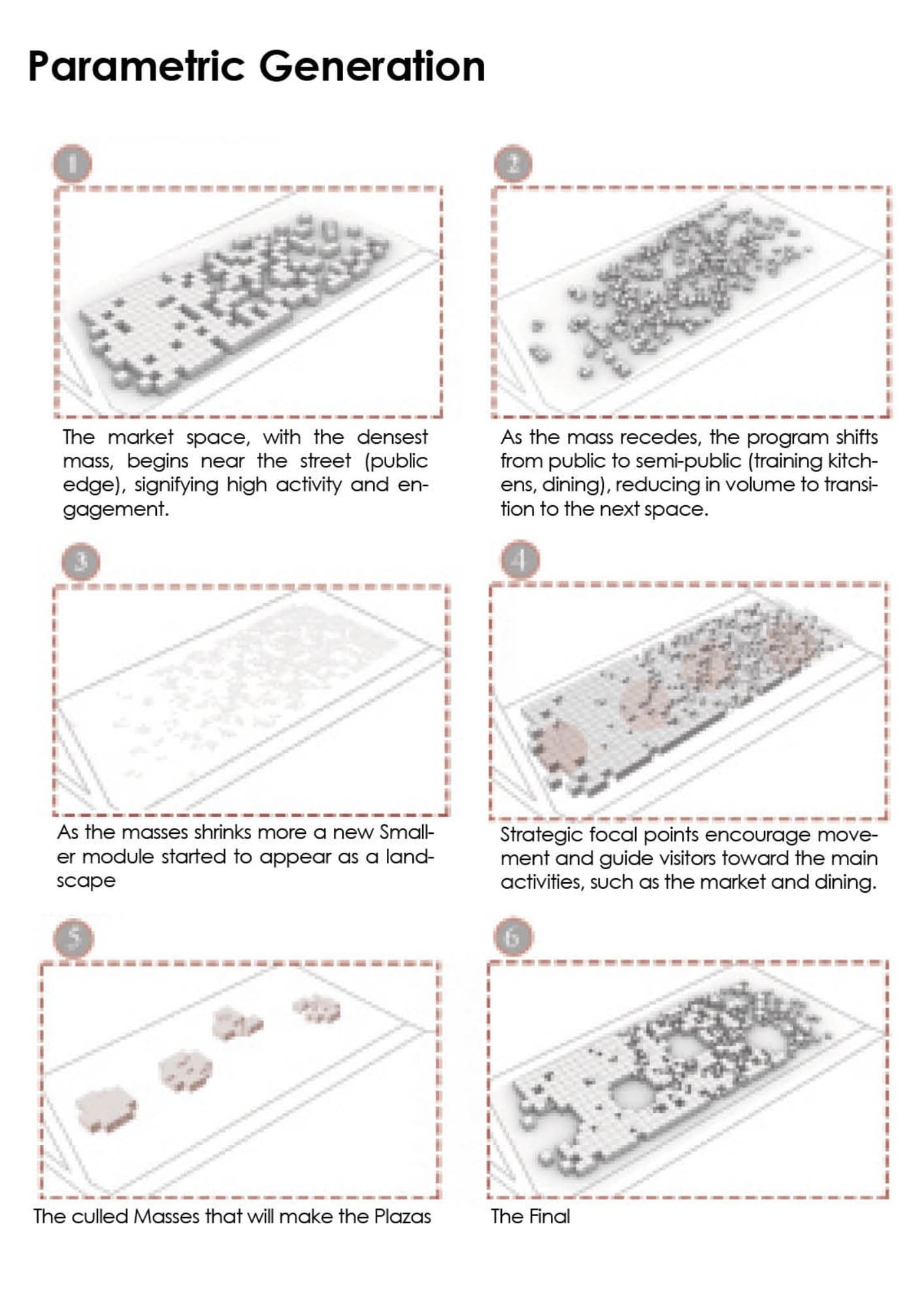
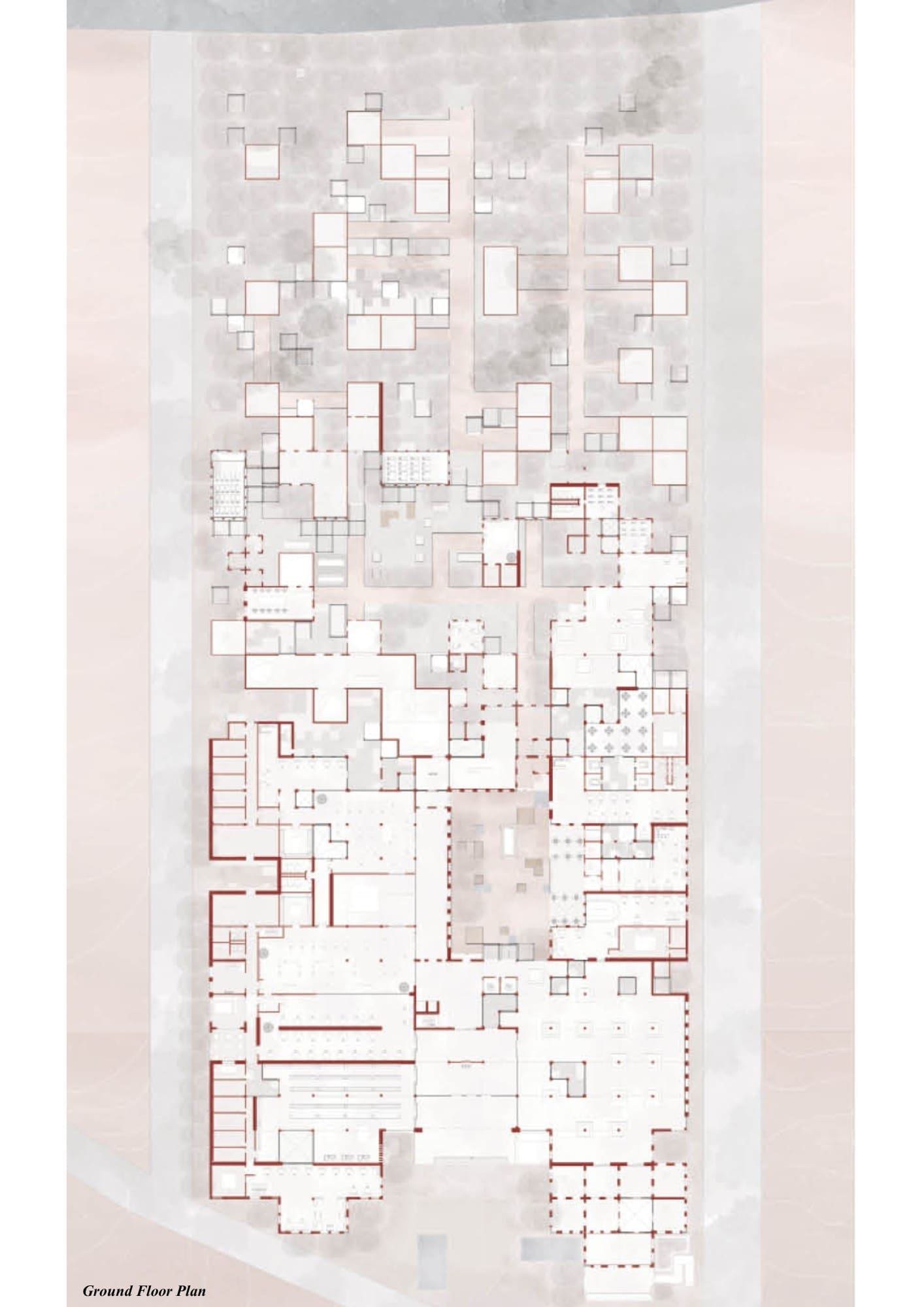
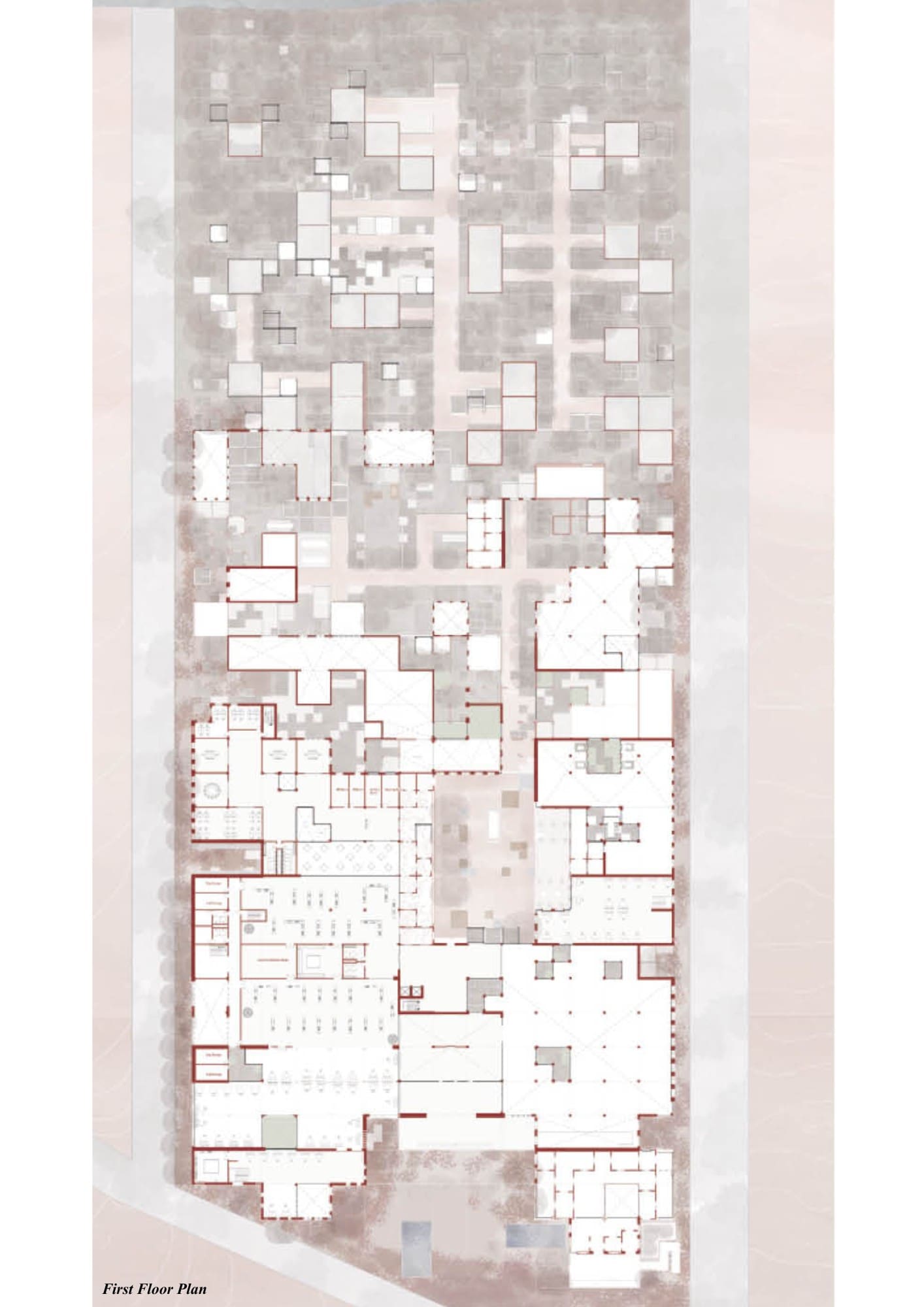
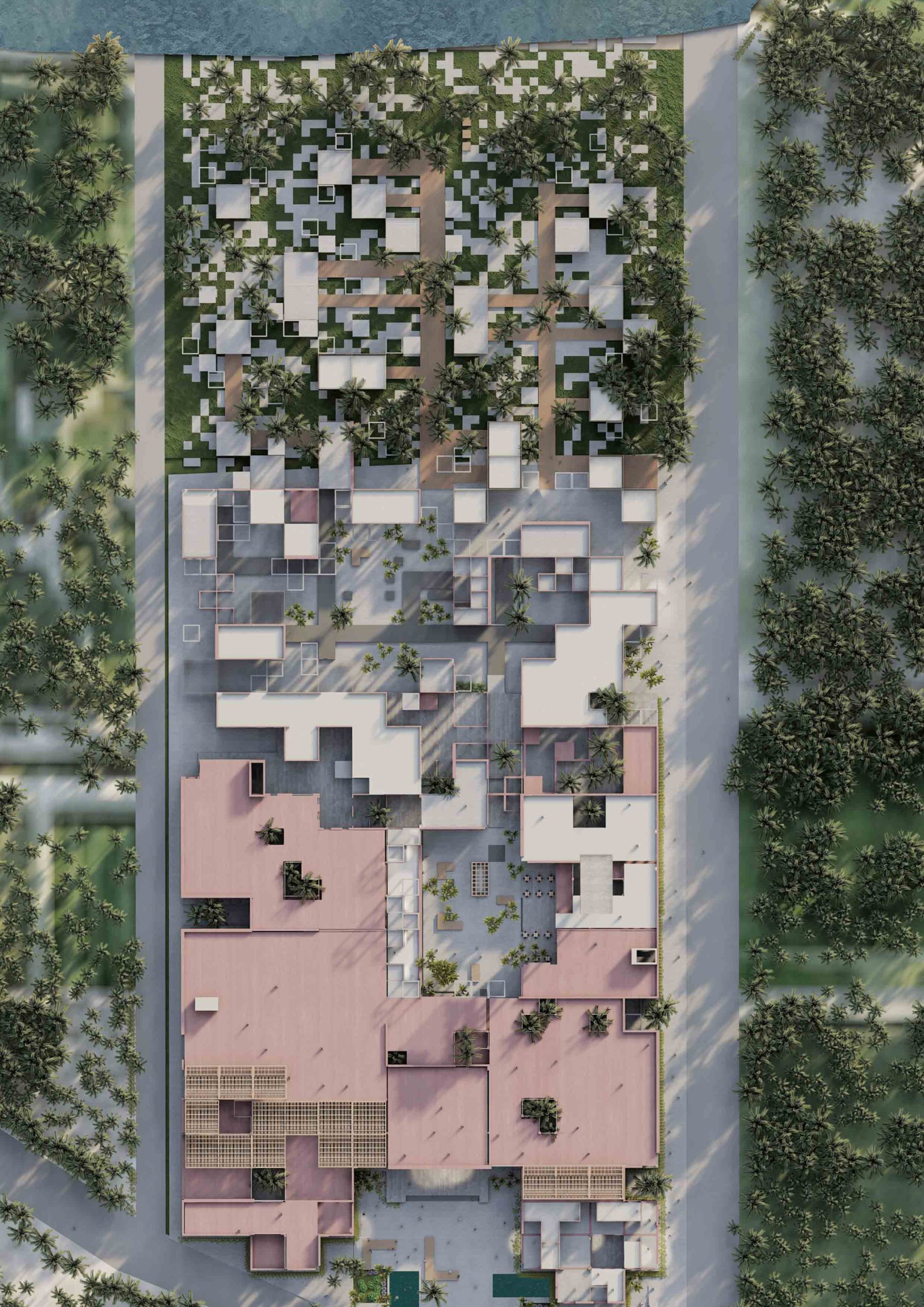
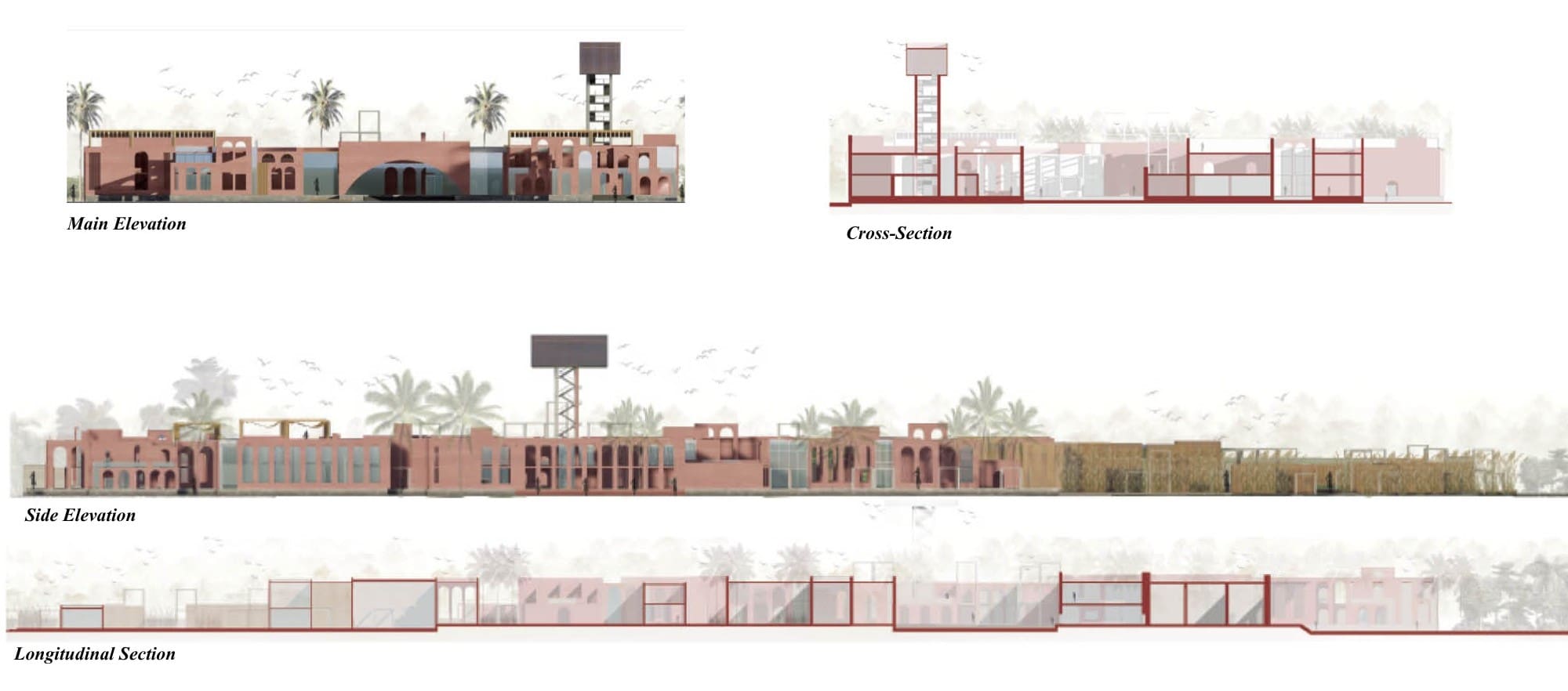
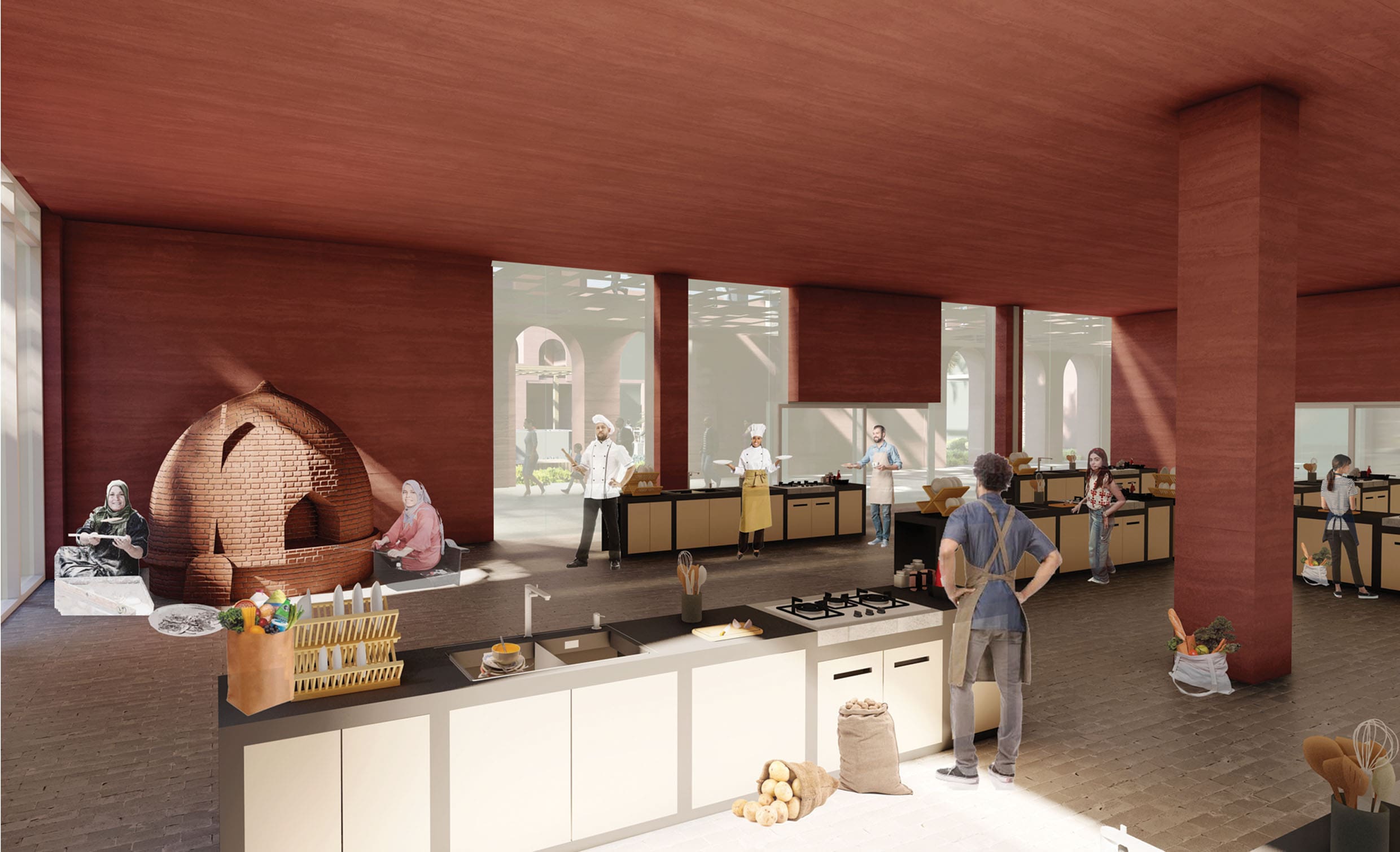
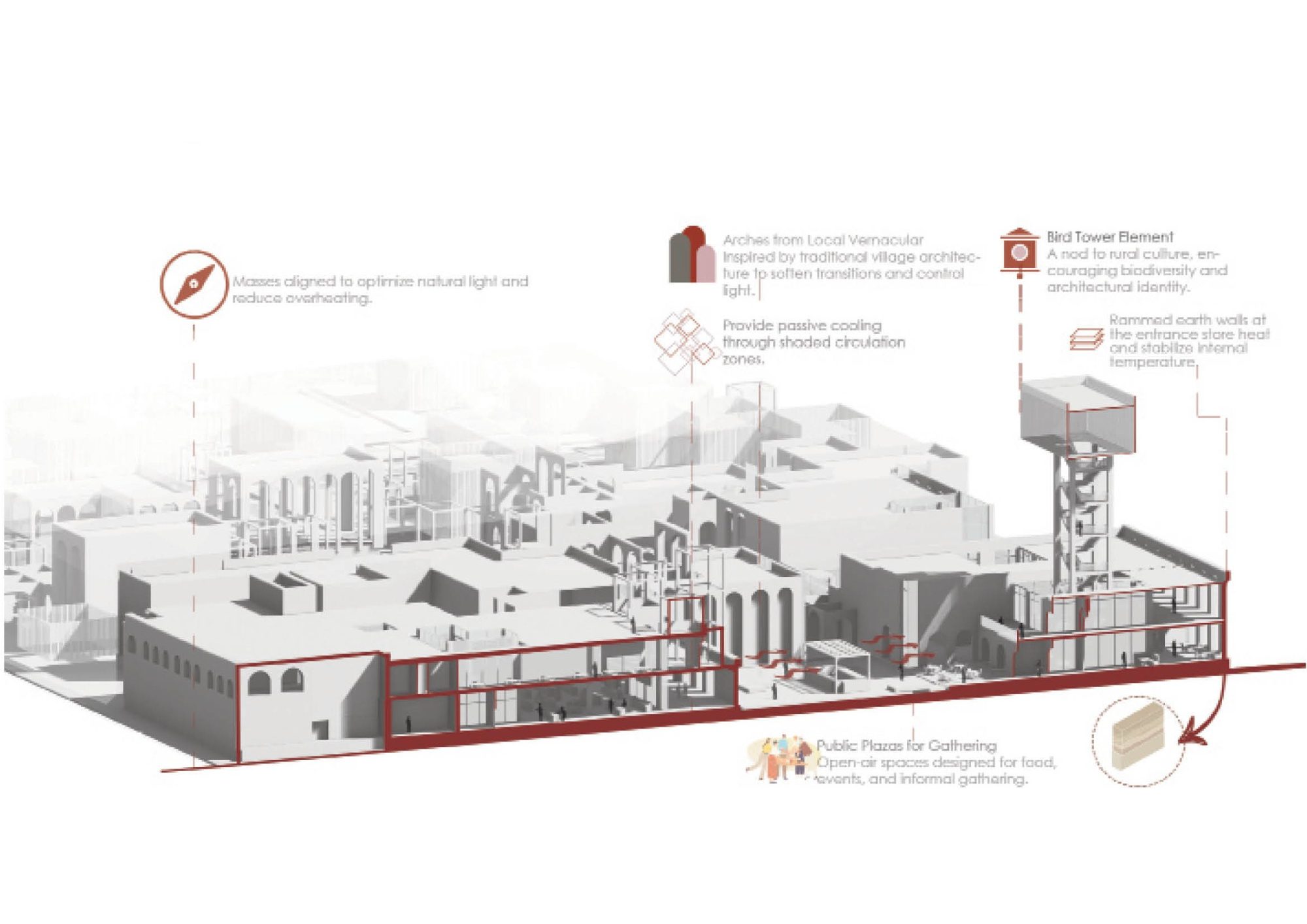
The concept is organized around four interconnected layers. The first is a fading massing strategy, where large, dense volumes are located near the main vehicular access and gradually reduce in scale and density toward the lakefront, creating a transition from urban activity to natural calm. The second layer is a modular system, using an 8×8 m primary module, 4×4 m transitional spaces, and 2×2 m landscape interventions, establishing rhythm, flexibility, and scalability. The third layer responds to contextual parameters, including the site’s longitudinal form, proximity to Lake Qarun and wild vegetation, and the compact fabric of Tunis Village, resulting in a linear, layered spatial flow. The fourth layer focuses on user experience, moving gradually from public market spaces to semi-public training kitchens and finally to quiet, private zones near the lake.
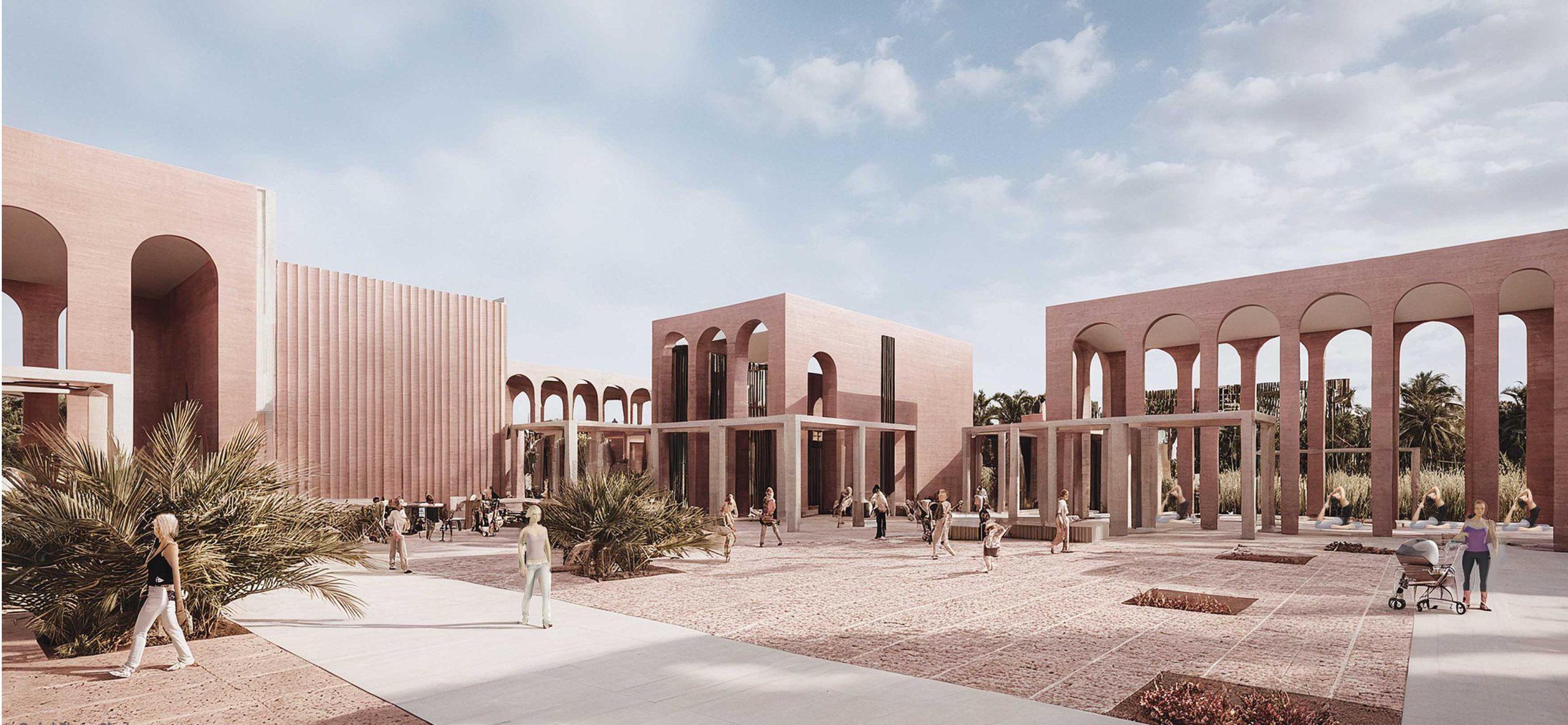
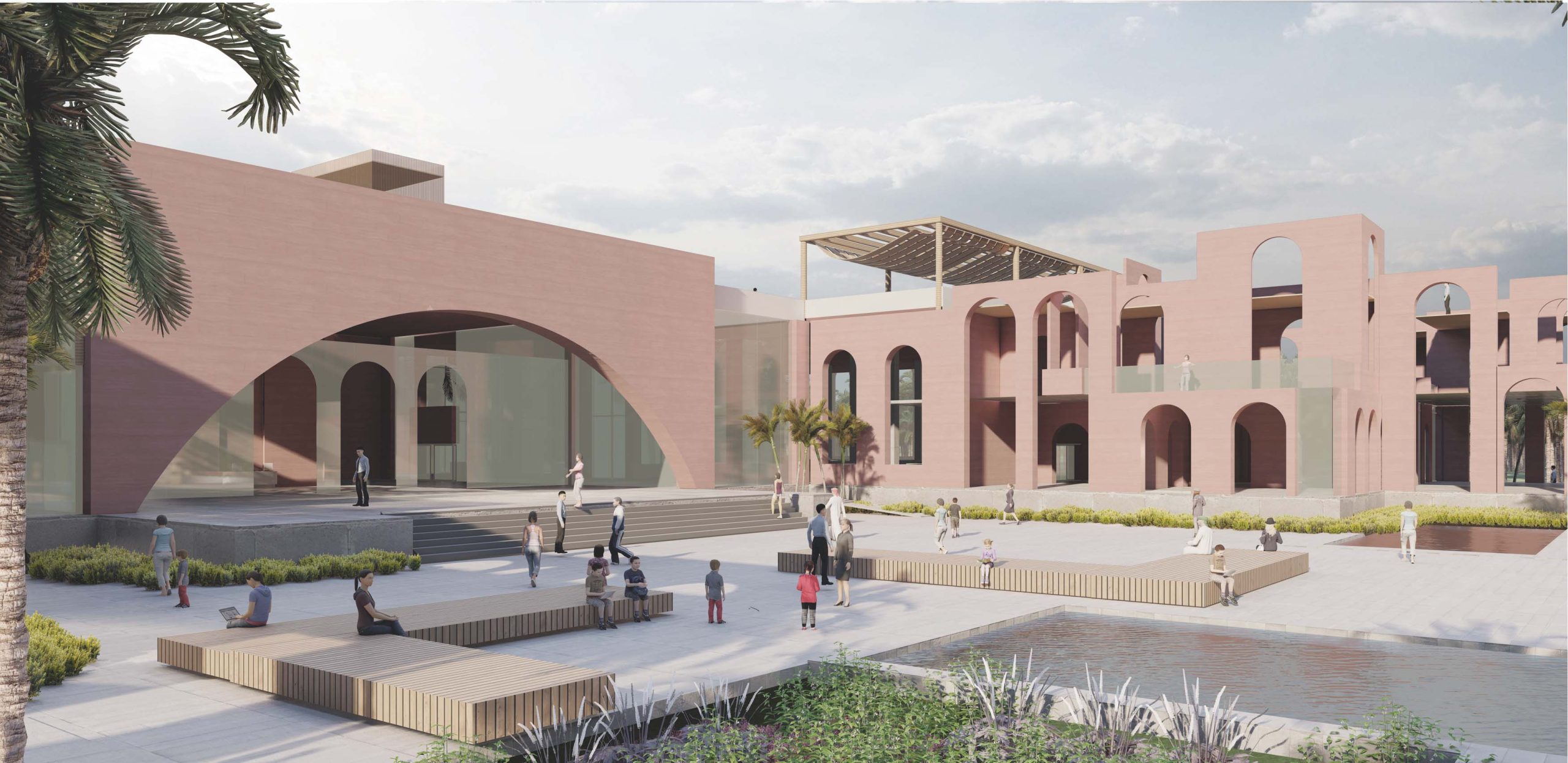
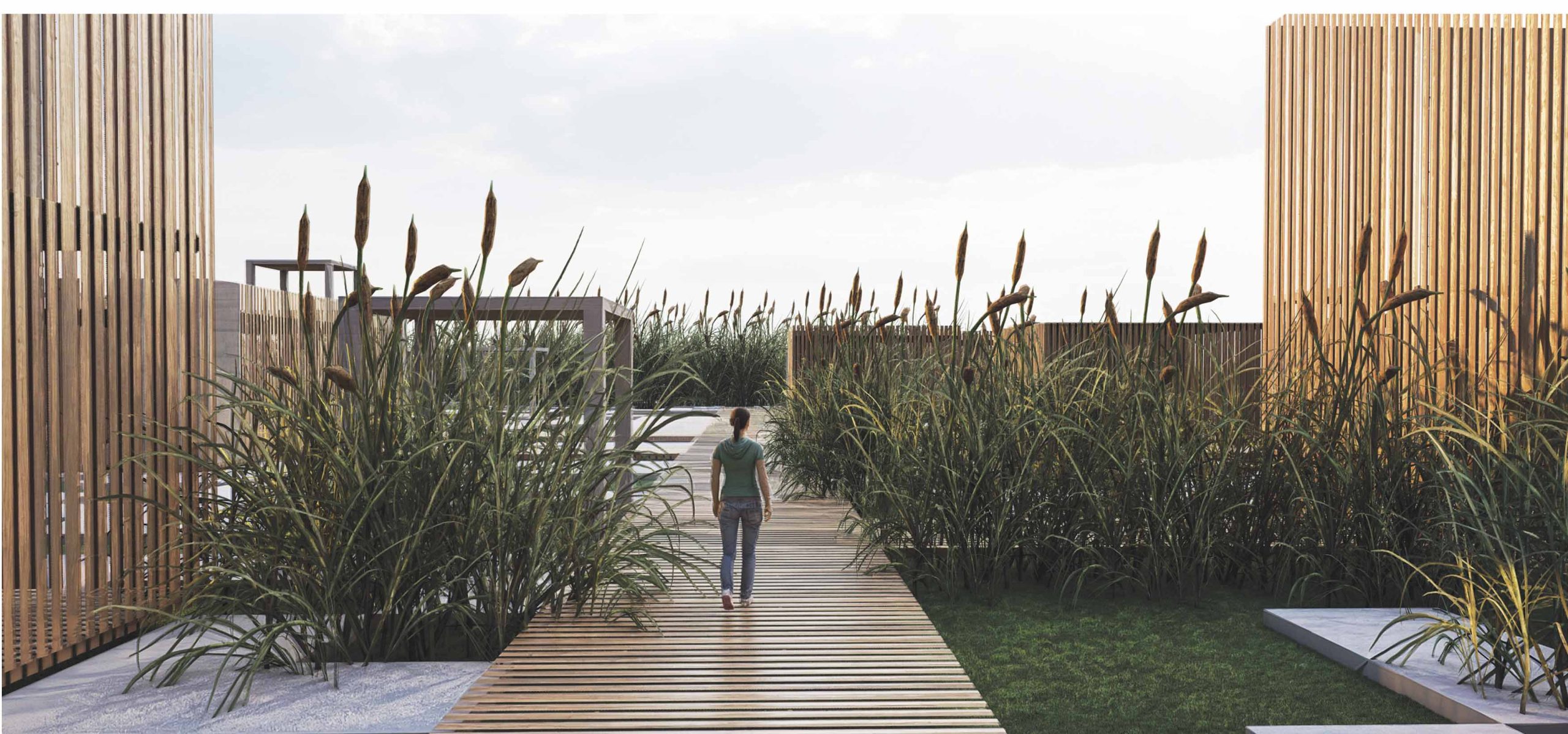
To manage these relationships, parametric design tools were employed to control massing, spacing, orientation, and voids based on user flow and focal points. This ensured that fading was not only visual but functional and responsive. Materiality reinforces this concept: robust rammed earth walls near the road express permanence and grounding, while lighter structures gradually replace them toward the lake. Near the shoreline, minimal open frameworks create meditative spaces that merge with nature, completing the transition from built intensity to environmental stillness.