


University : UNIVERSITY OF ARCHITECTURE HO CHI MINH CITY
Tutor(s) : Dr PHU CUONG PHAM
Project Description
The Central Highlands – vast, sunlit, and wind-swept – cradles diverse ethnic cultures whose rituals form Vietnam’s intangible heritage. Among them, Jrai festival traditions resonate like a sacred pulse, yet too often remain “seen” and “heard” rather than fully “lived.”
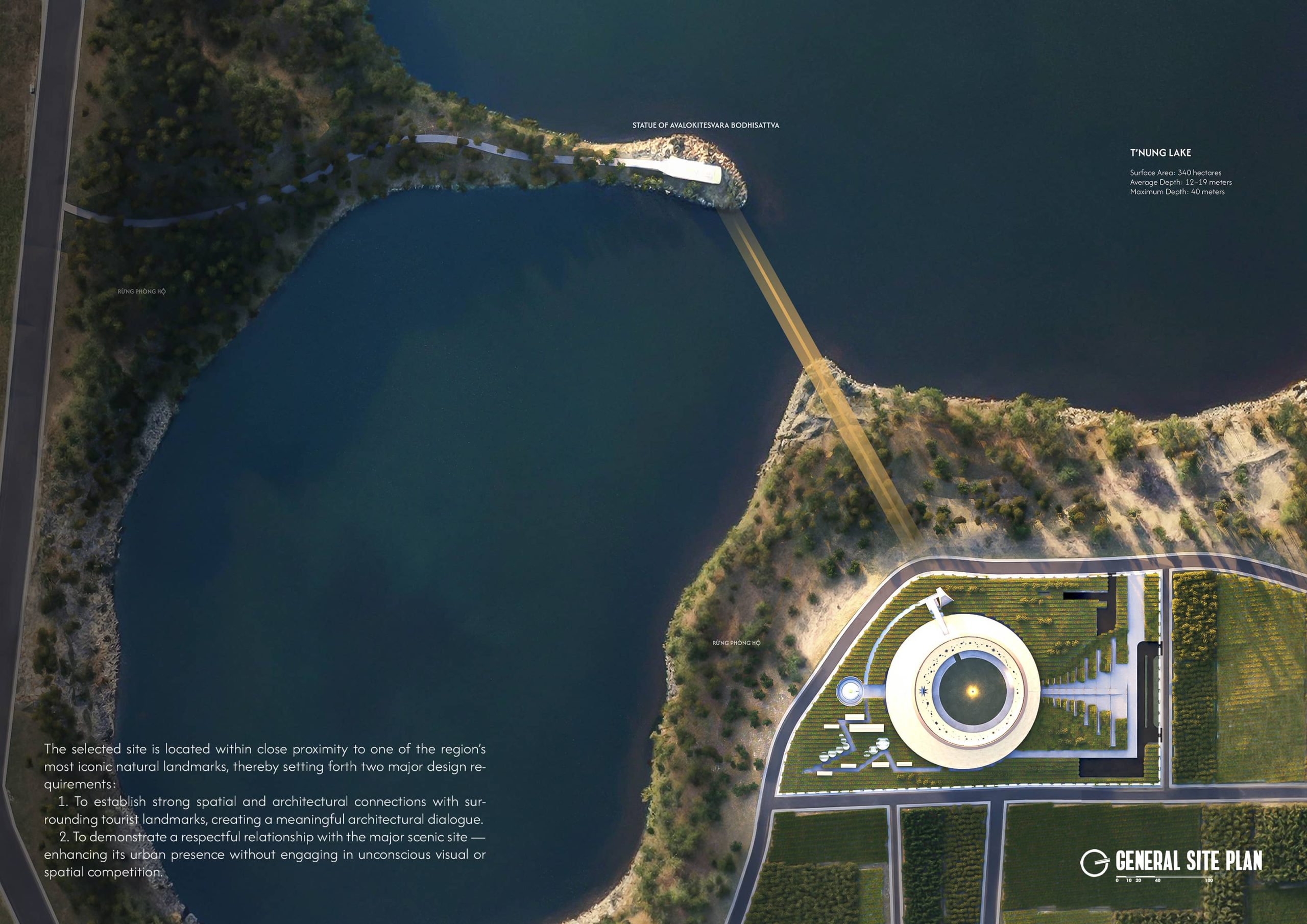
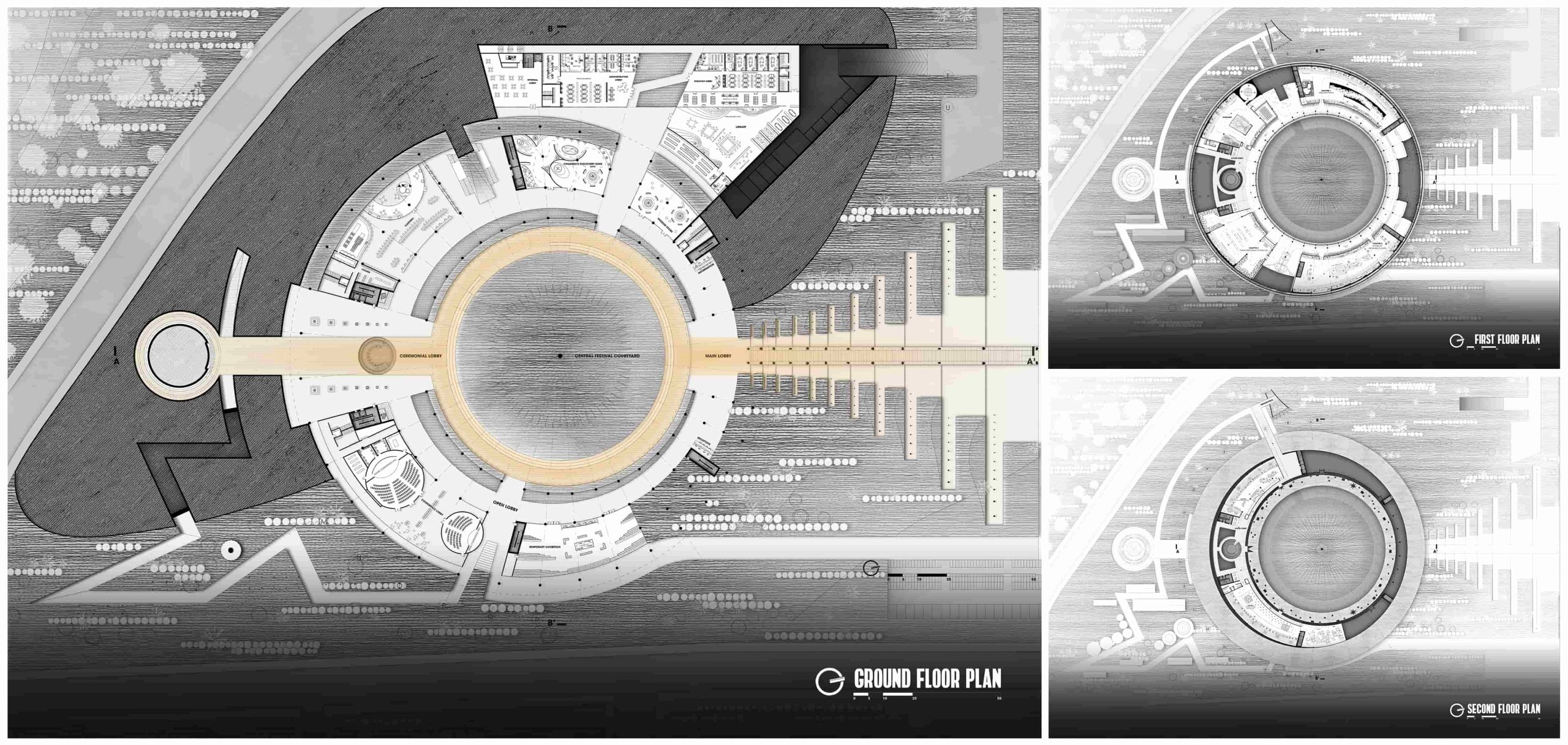
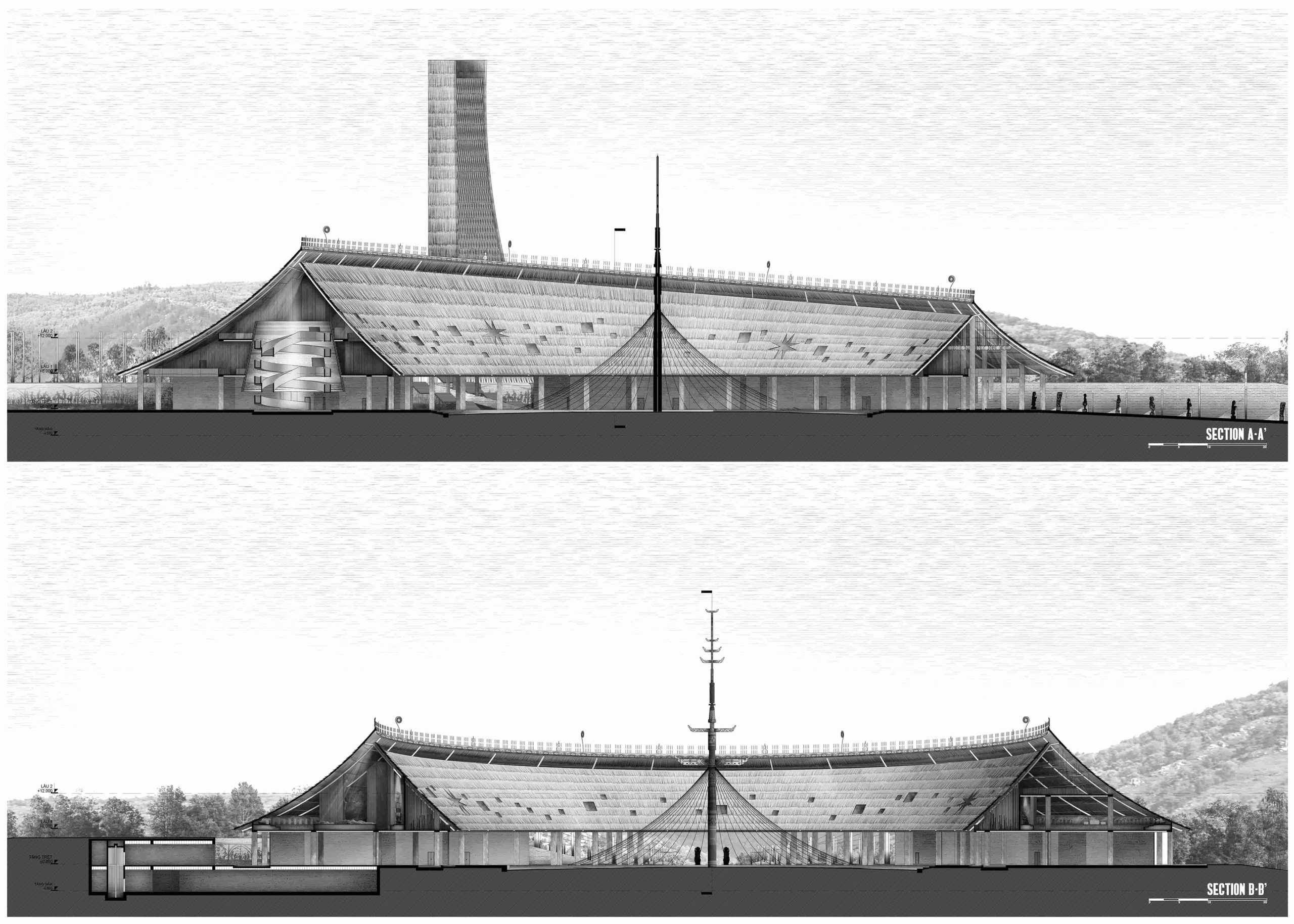
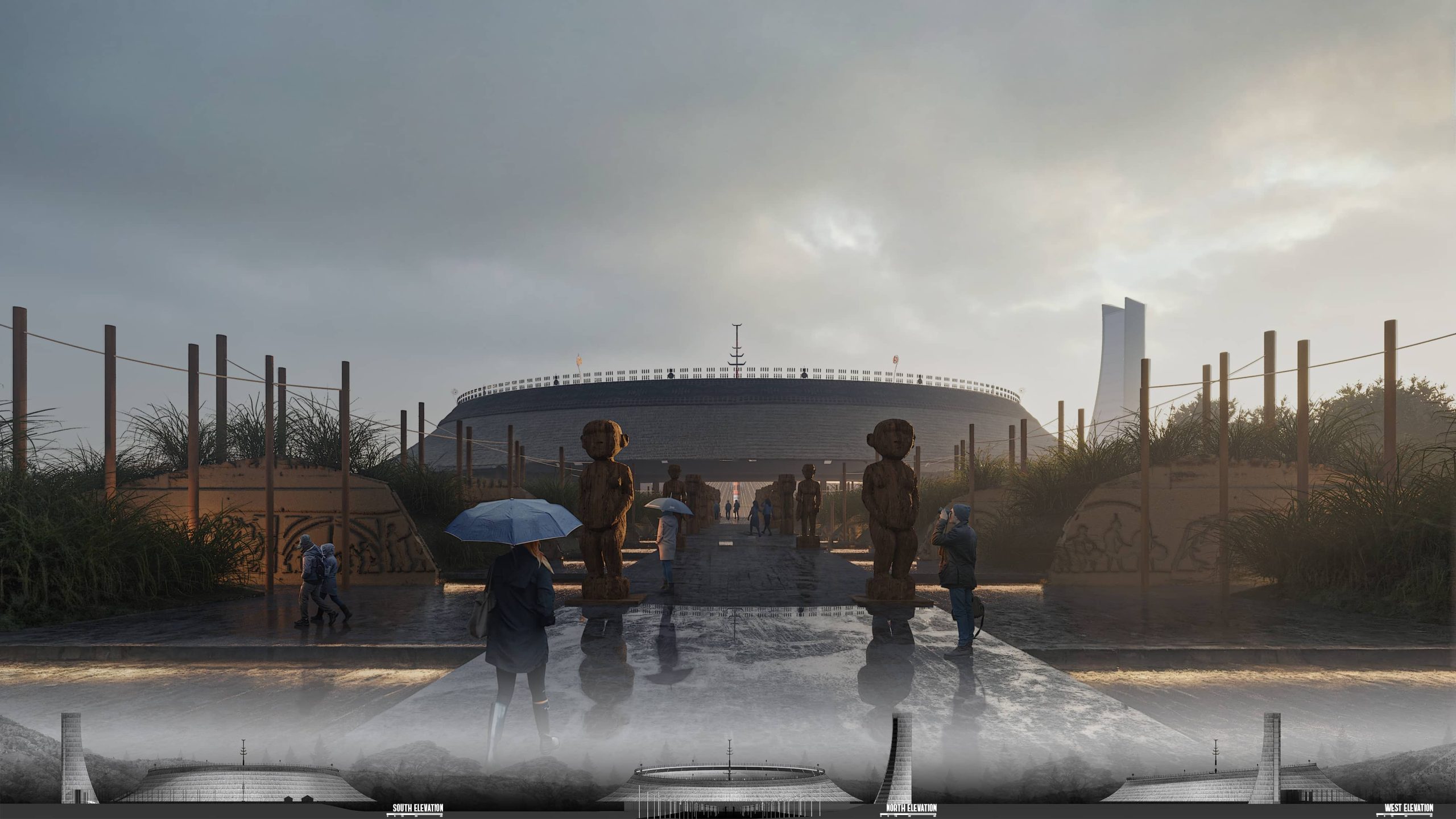
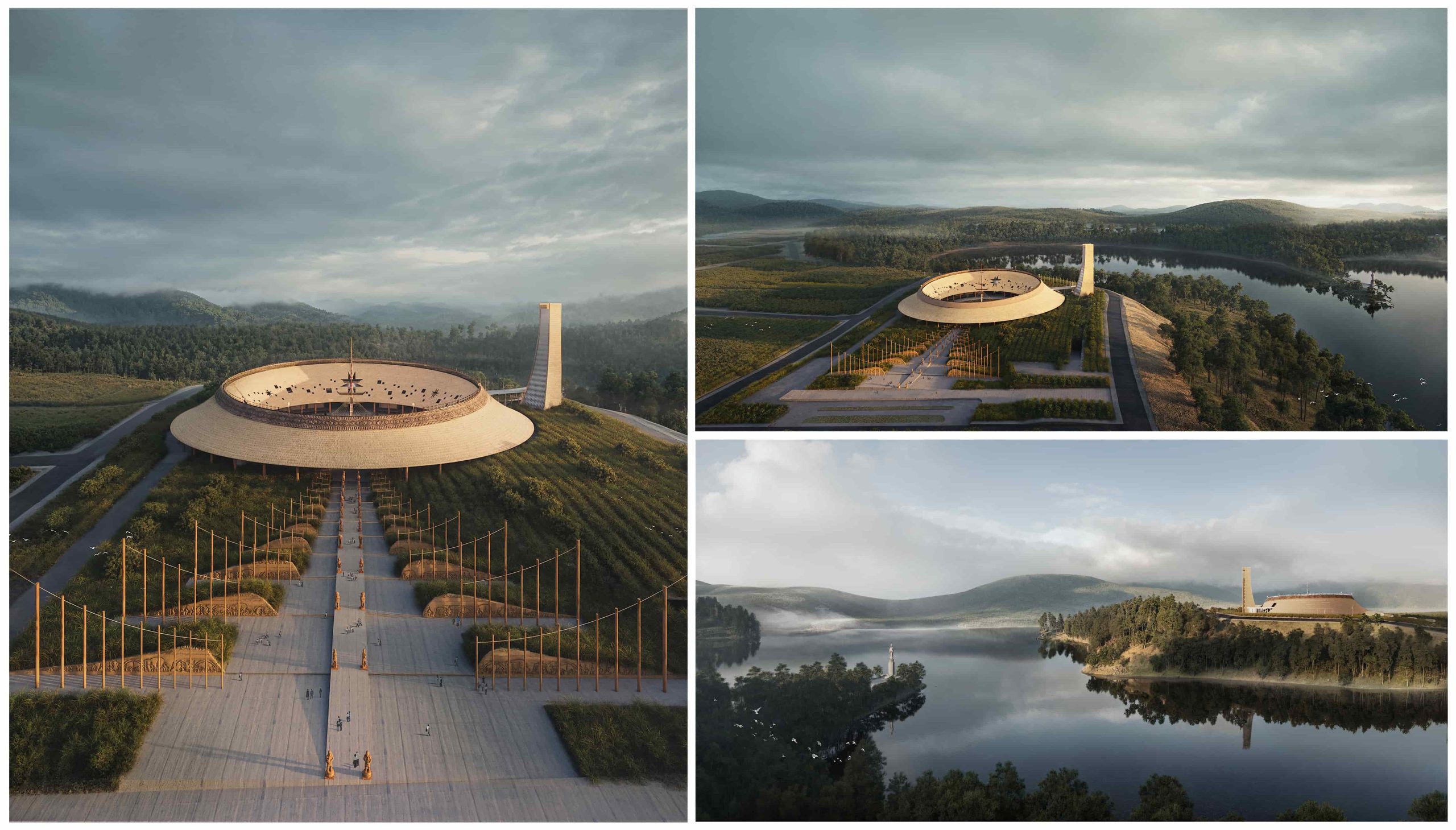
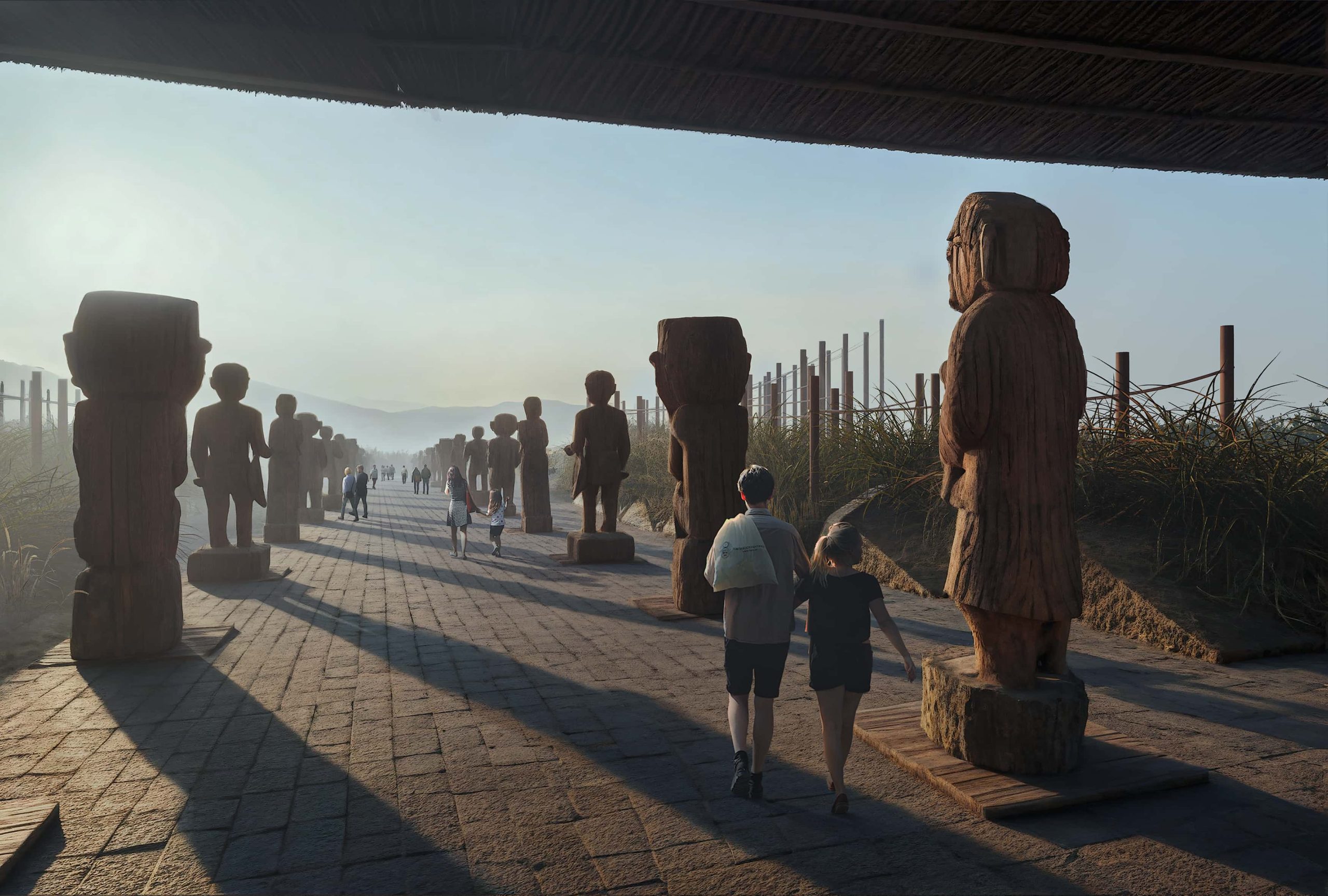
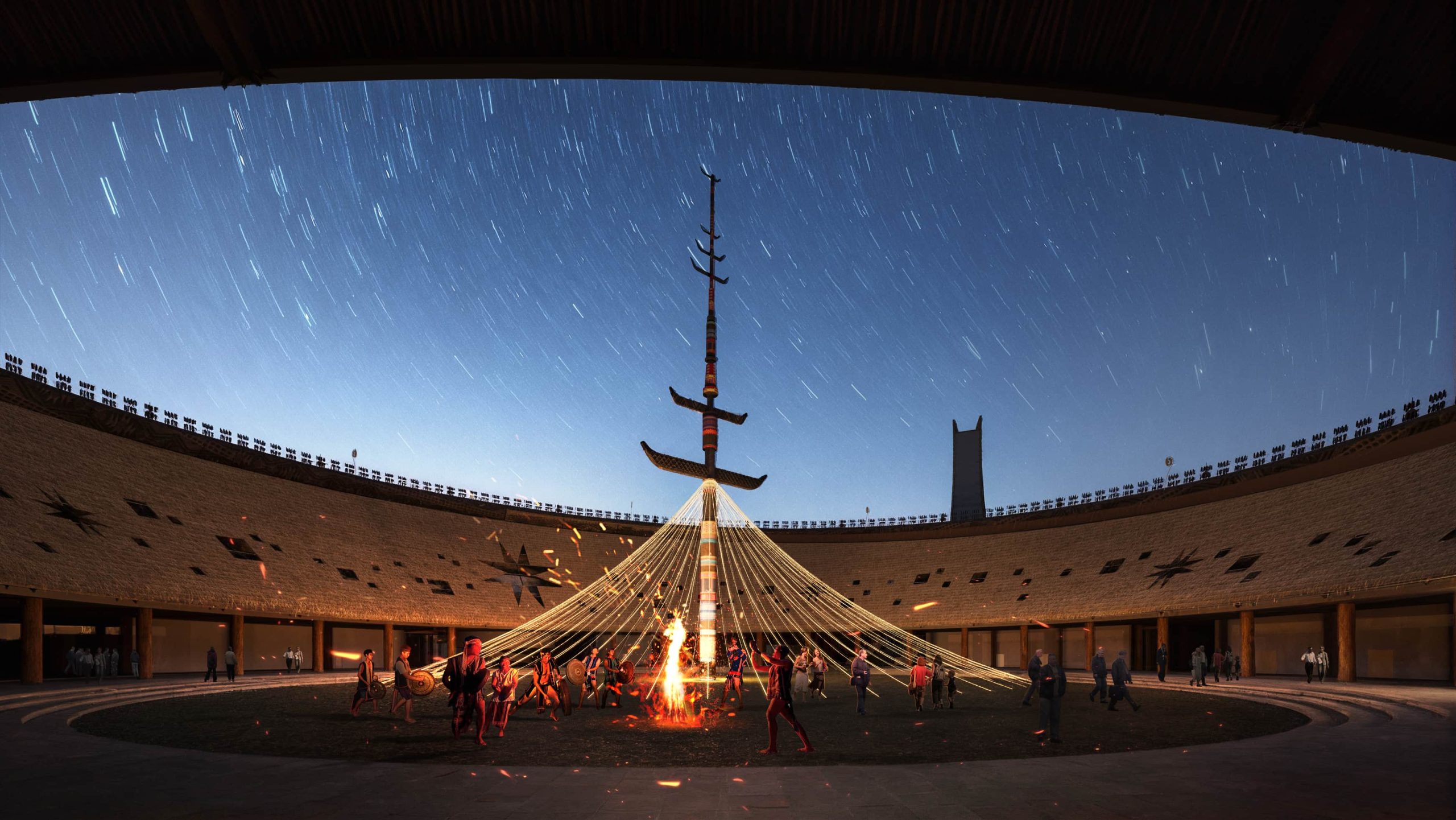
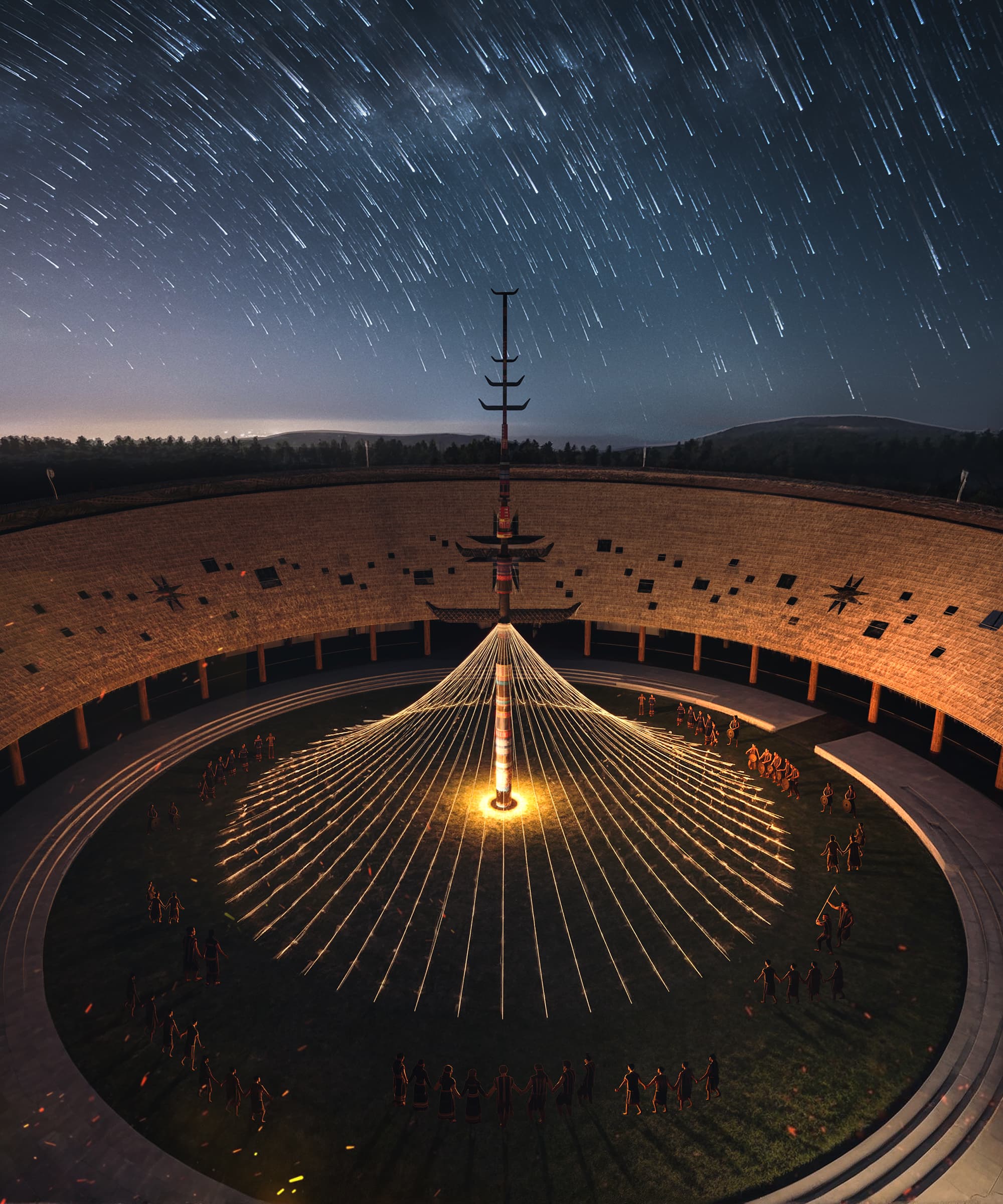
The museum arises as part of this landscape, its massing woven into pine forests and sculpted by the land’s contours. The form distills the archetype of the Jrai Rong house into a circular geometry encircling a courtyard – void as essence, embodying Convergence, the communal heart of ritual life. Here, architecture transcends shelter to become both stage and storyteller.
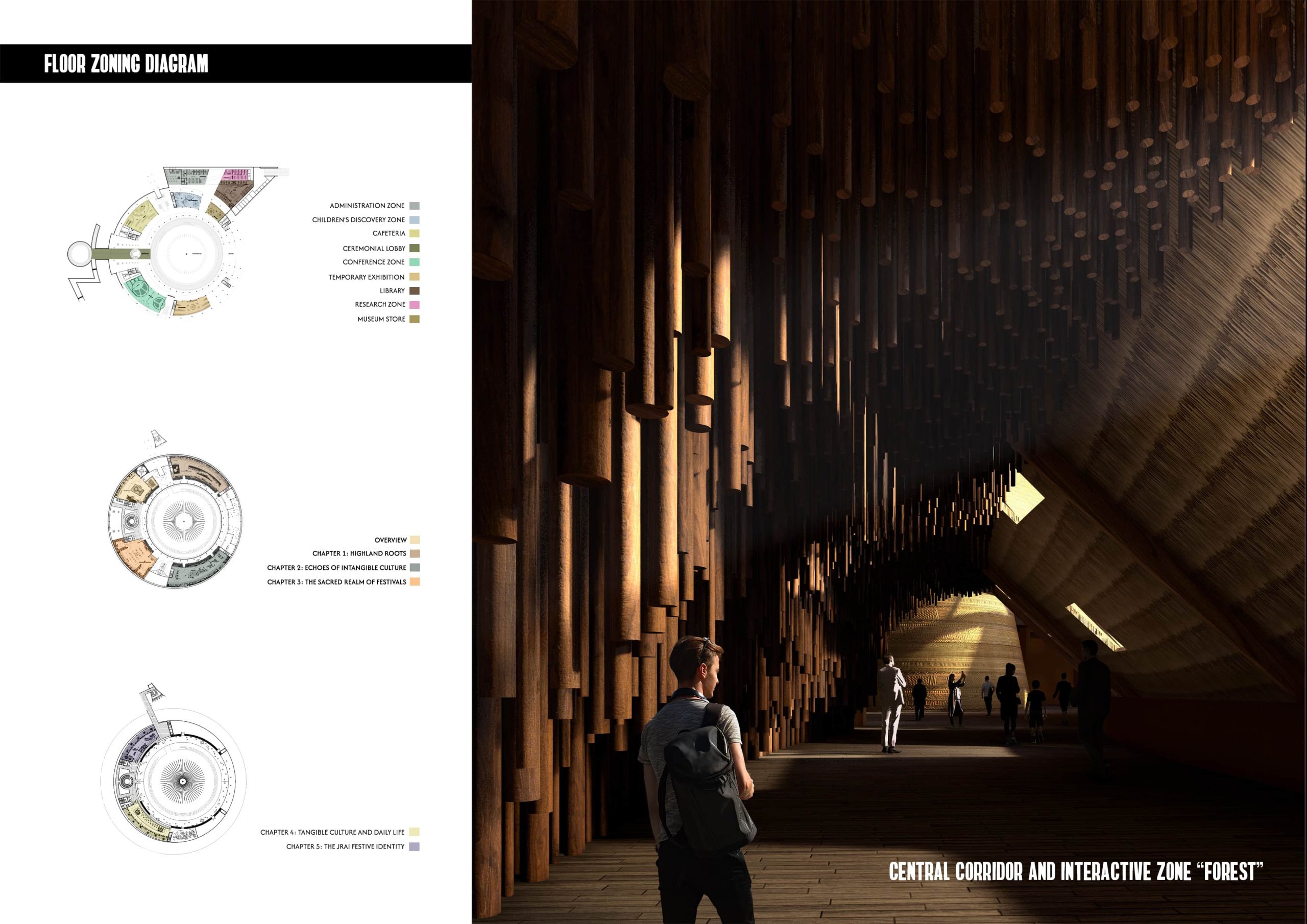
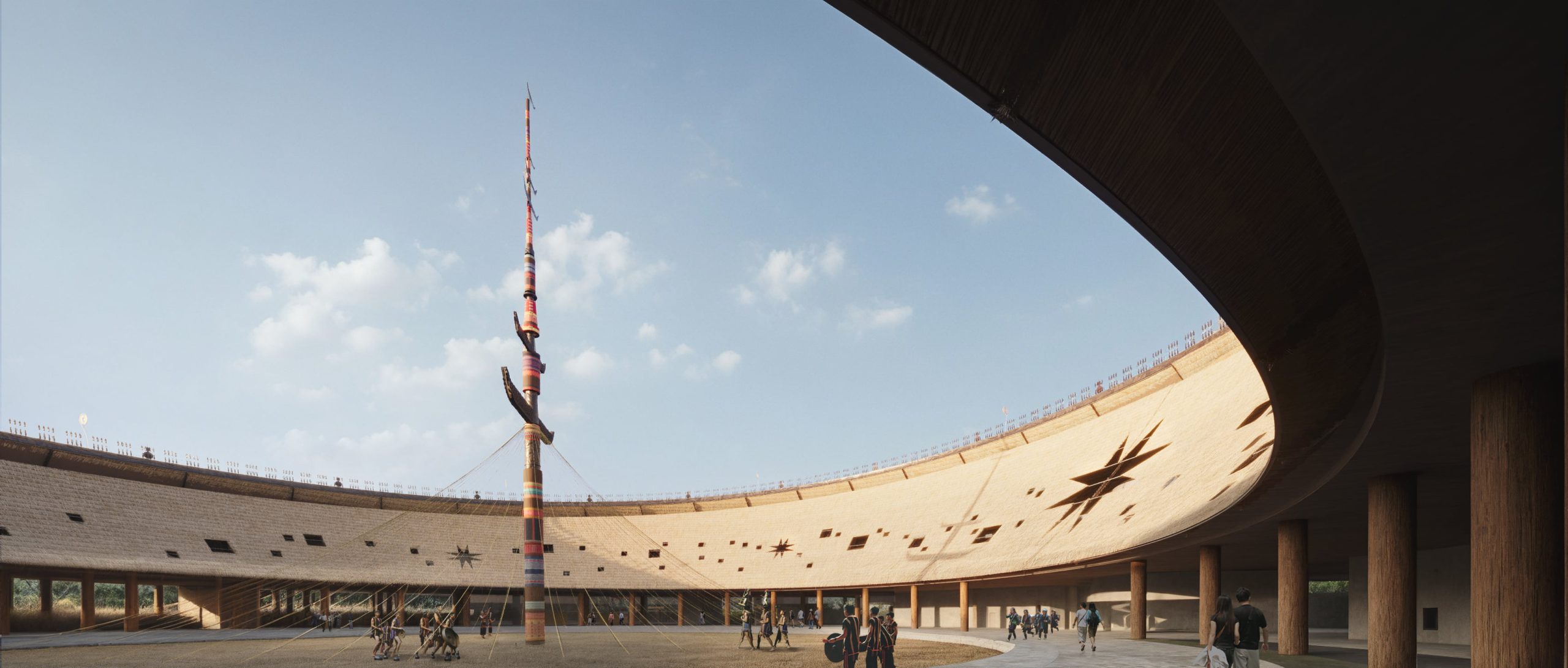
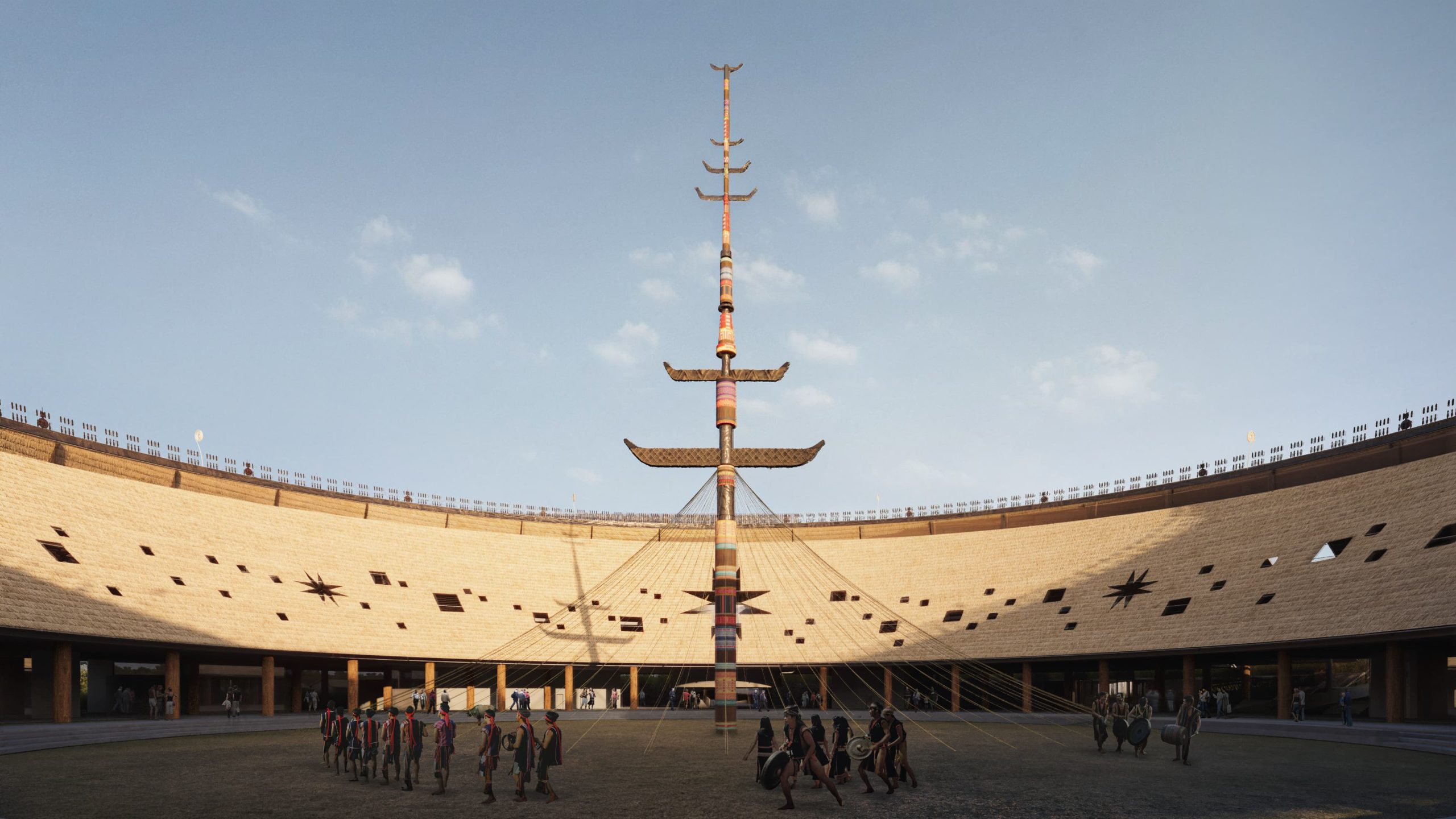
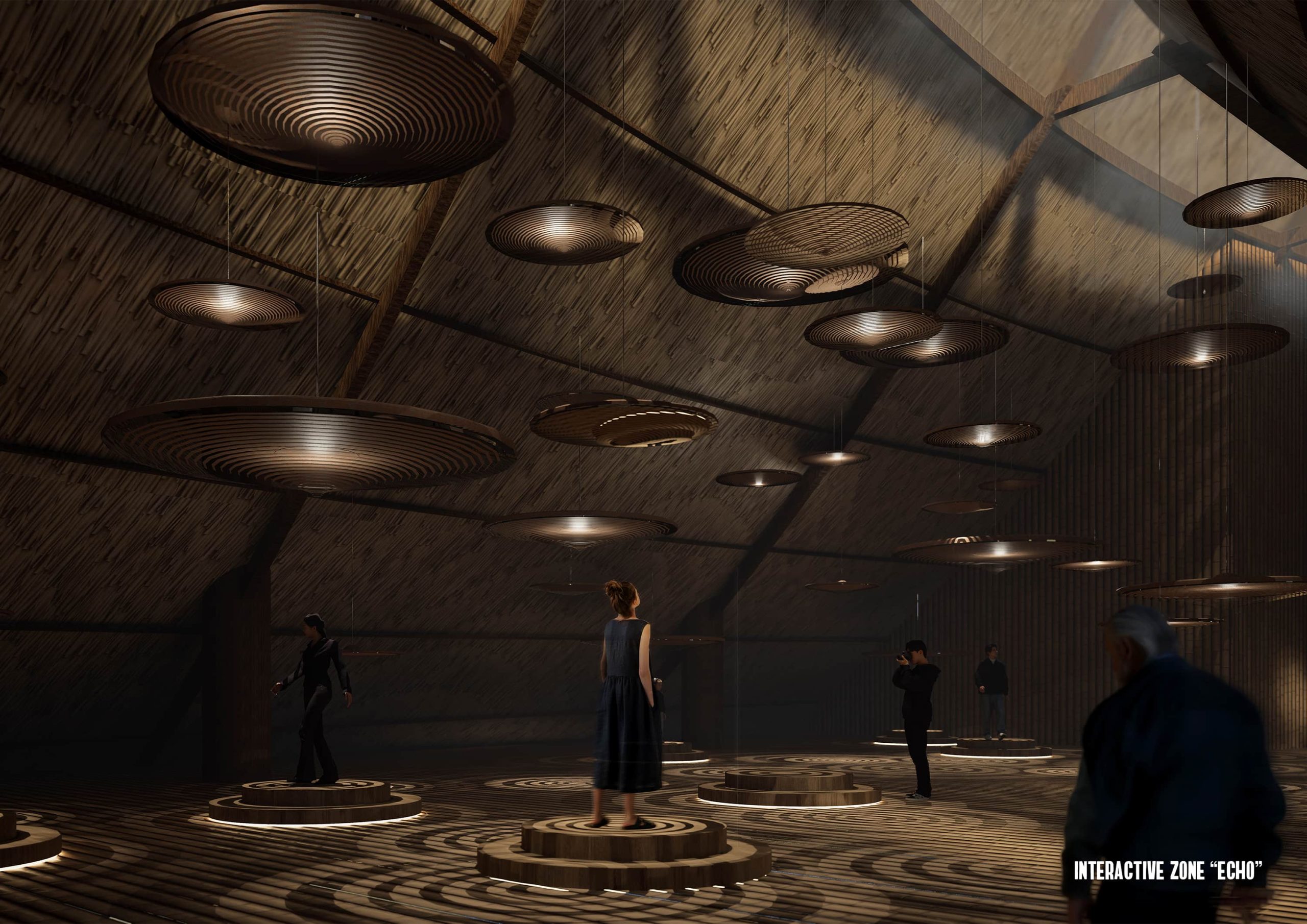
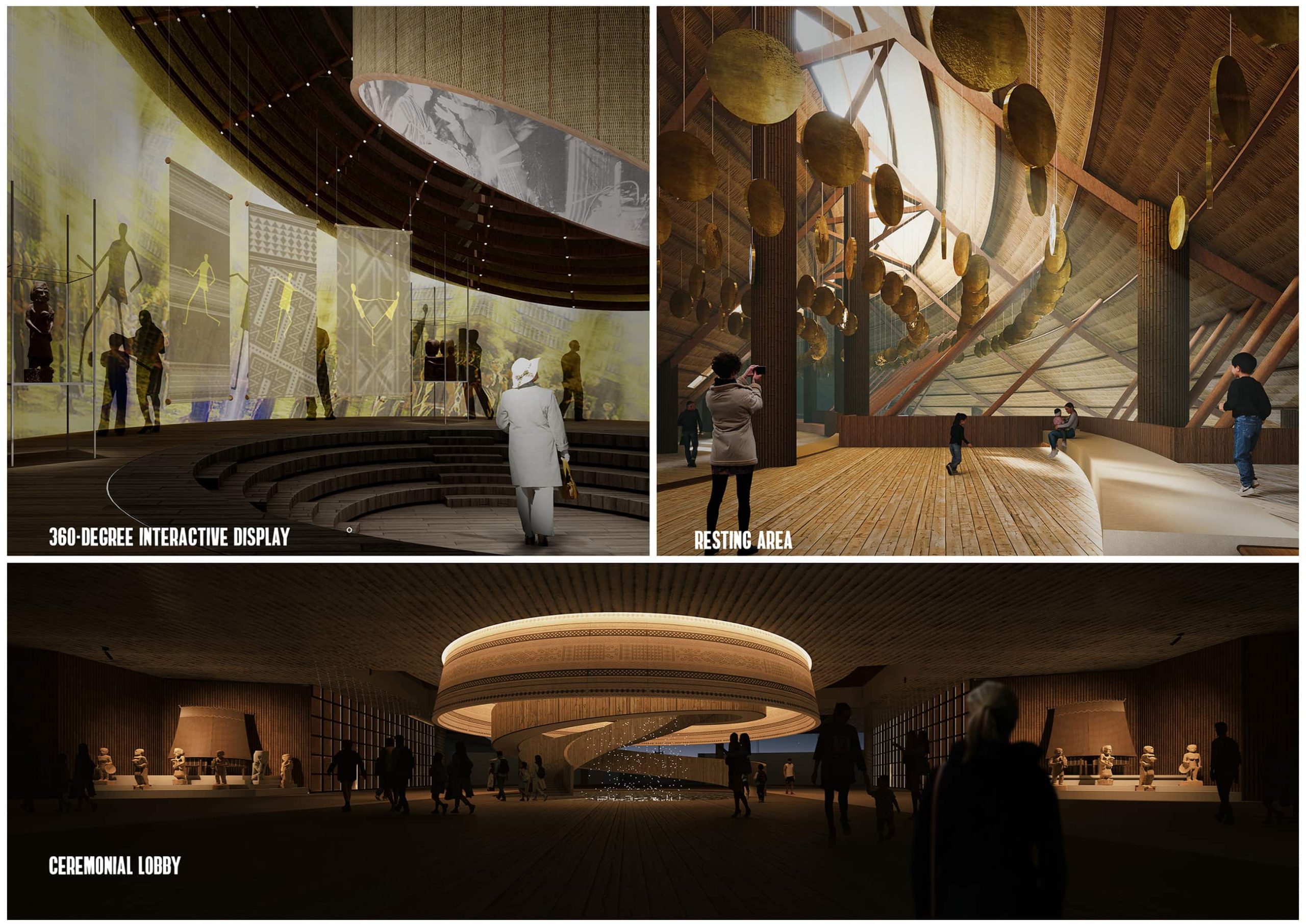
Guided by the ethos that “a festival must be a journey – preserving it must also be a journey,” the design unfolds as a sequential narrative. Visitors traverse emotional thresholds – Release, Awakening, Recognition, Resonance – immersed in choreographies of light and shadow, texture and sound. The path converges on the Ceremonial Neu Pole, once axis of festival life, now anchor of architectural form.
At its core, the museum embodies Centripetal Orientation – drawing energy inward, much like the Xoang dance circling the Neu Pole. In doing so, it translates cultural archetypes into contemporary architectural expression.
The Jrai Ethnic Festival Cultural Museum thus stands not merely as a vessel of artifacts, but as an immersive archive – an emblem of gratitude to the motherland, safeguarding intangible heritage while letting tradition breathe, so every visitor becomes part of its rhythm.
Established in 2012, Tamayouz Excellence Award is an unaffiliated, independent initiative that aims to advance the profession of architecture academically and professionally. Tamayouz is dedicated to supporting aspirational and transformative projects that tackle local and global challenges and that are informed by a holistic understanding of context.