


University : University of Architecture Ho Chi Minh City
Tutor(s) : Dam Huynh Quoc Vu
Project Description
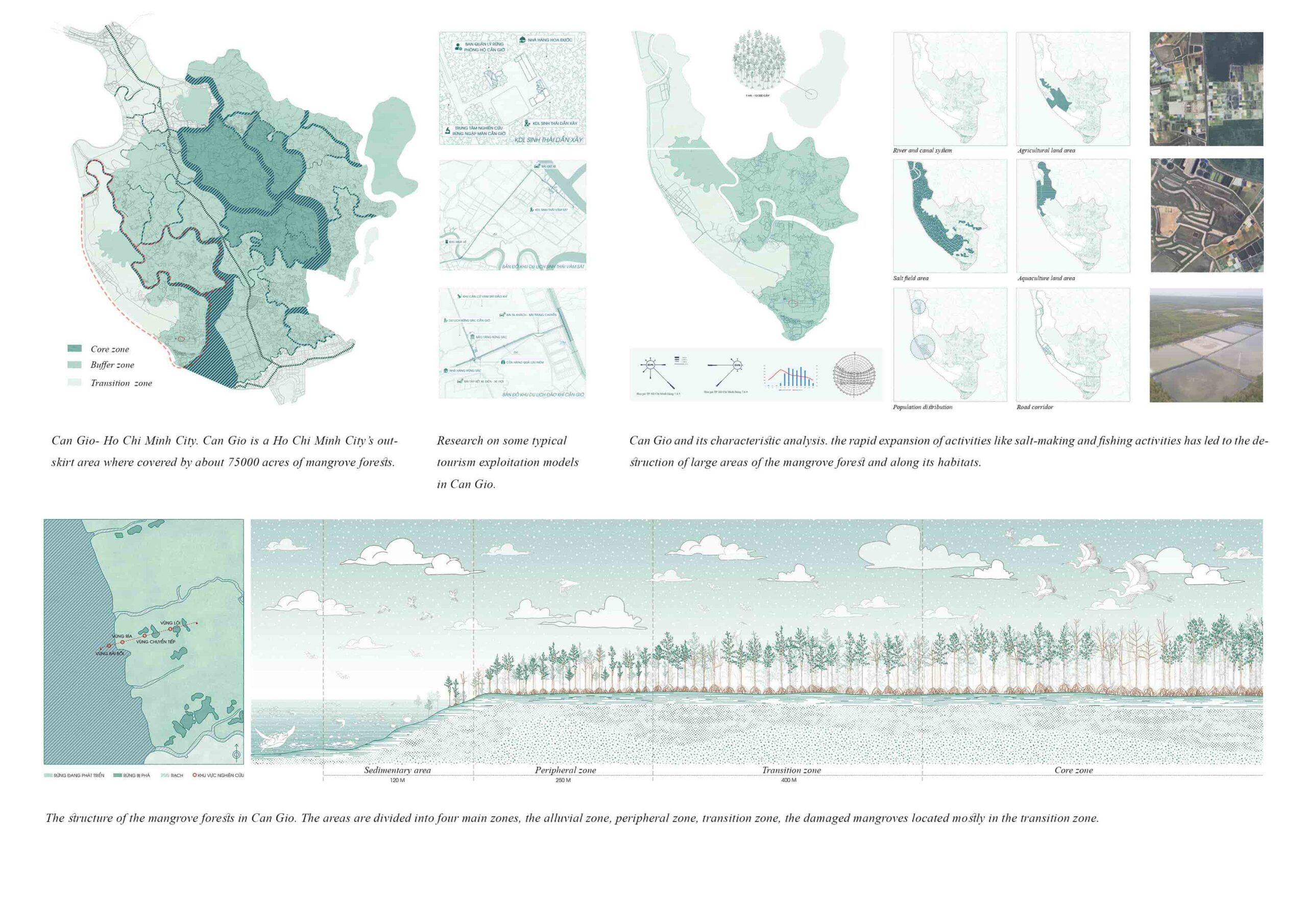
Can Gio is a Ho Chi Minh City’s outskirt area where covered by about 75000 acres of mangrove forests. The place used to be destroyed comletely by chemistry during the 1975 war, but have magically recovered since then. Nowadays, the place plays a vital role for not only being a home for plenty of fauna and flora but also a source of living for a large number of local residents.
However, the rapid expansion of activities like salt-making and aquaculture activities has led to the destruction of large areas of the mangrove forest and along its habitats. Mangroves are being cut down, the land is becoming salty, and natural habitats are being damaged, disrupting the entire ecosystem.
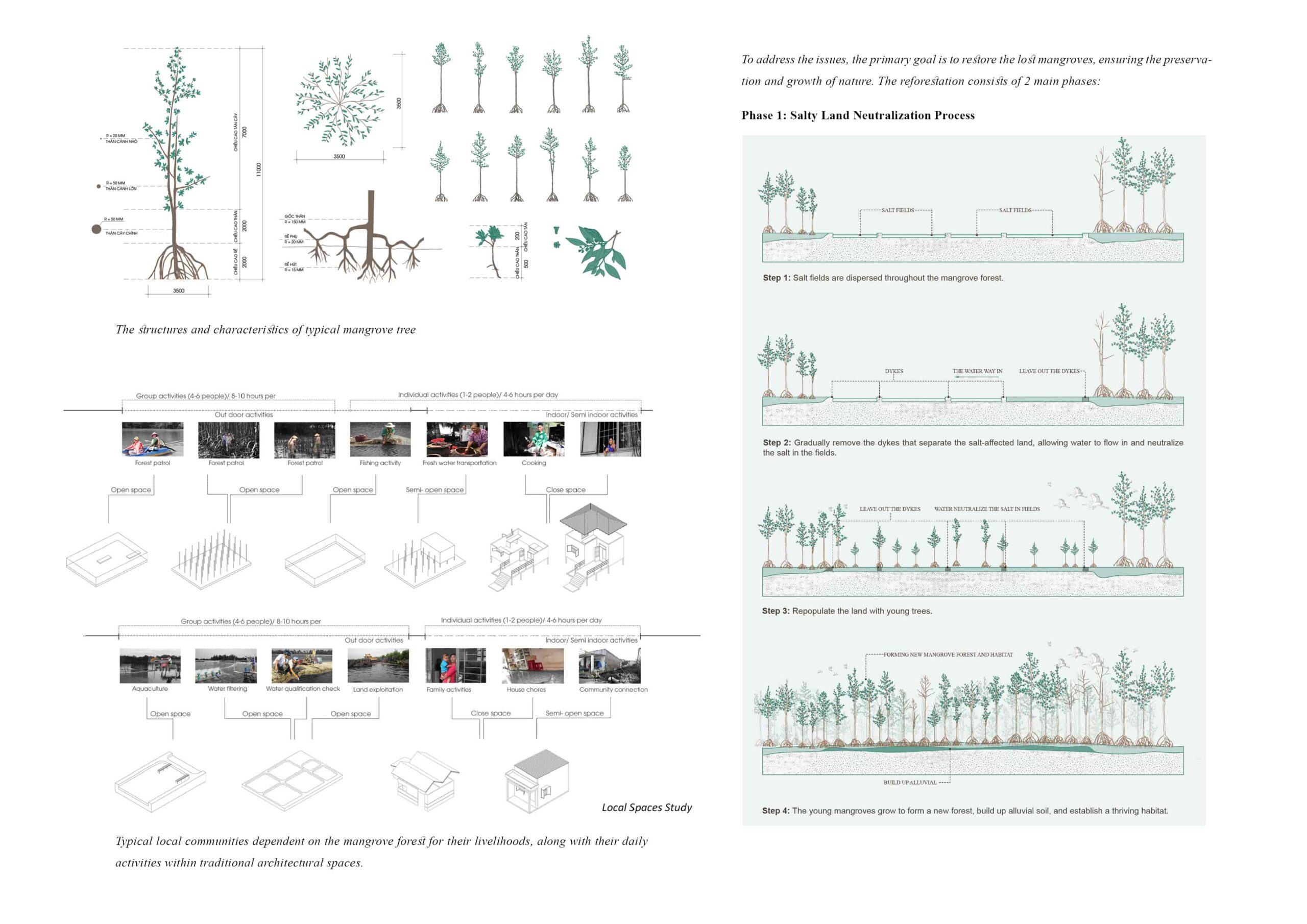
To address these issues, the primary goal is to restore the lost mangroves, ensuring the preservation and growth of nature. To achieve this, a architectural facility is envisioned—not only to support the reforestation process and resaerch activities but also to create a space where people can fully immerse themselves in the natural environment.
The proposed architecture is designed on land that was once a mangrove forest but has since become salty. By removing the dykes, water can flow freely, gradually washing away the salt and allowing mangroves to regrow. The building will serve as a facility to raise seeds, preparing them for cultivation. As the young trees grow, it will also provide space for scientific research.
The proposed architecture is designed on land that was once a mangrove forest but has since become salty. The reforestation consists of 2 main phases:
Phase 1: Salty Land Neutralization Process, by removing the dykes, the water can flow freely, gradually washing away the salt and allowing mangroves to regrow.
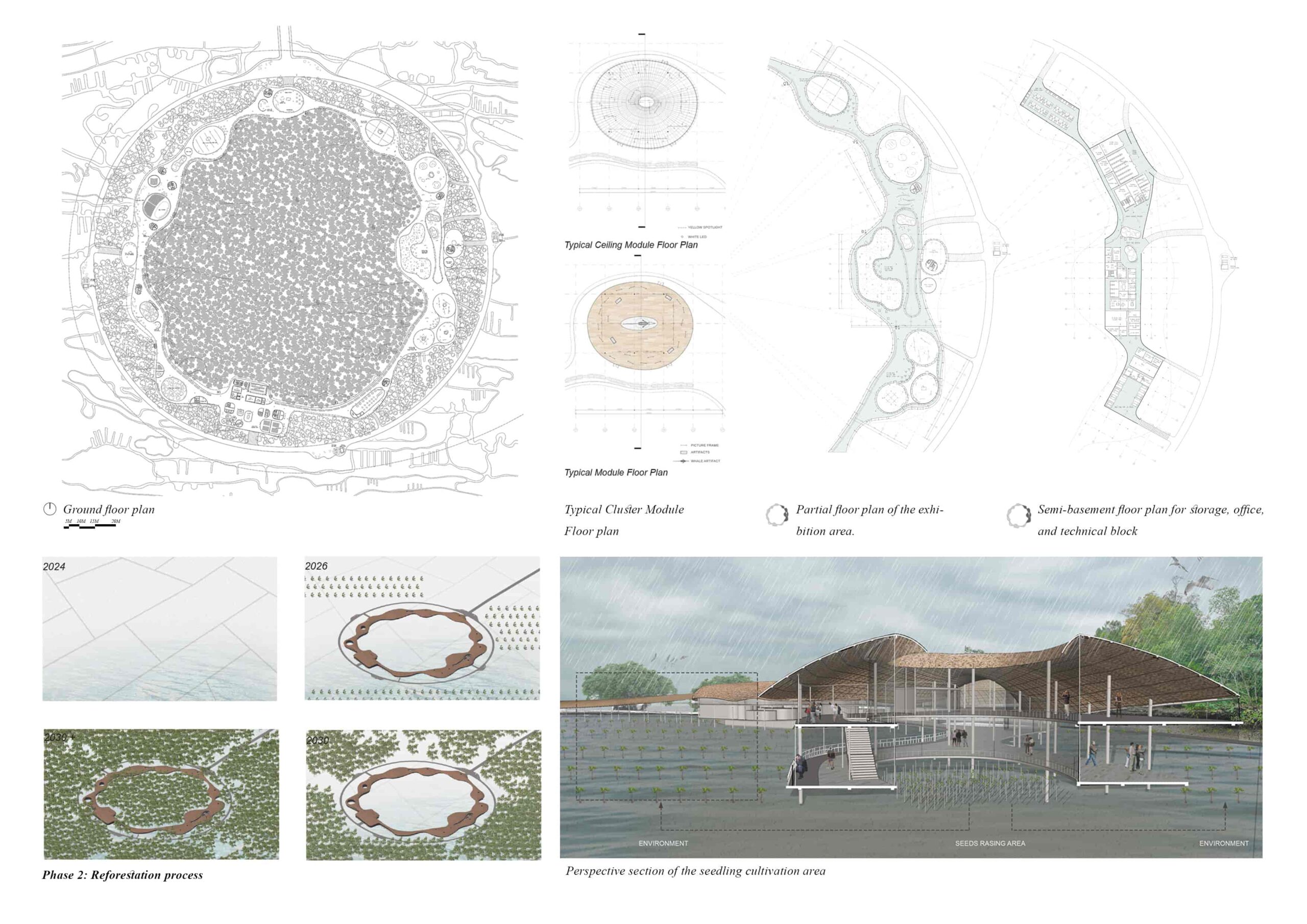
Phase 2: Reforestation Process, the building will serve as a facility to raise seeds, preparing them for cultivation. As the young trees grow, it will also provide space for scientific research.
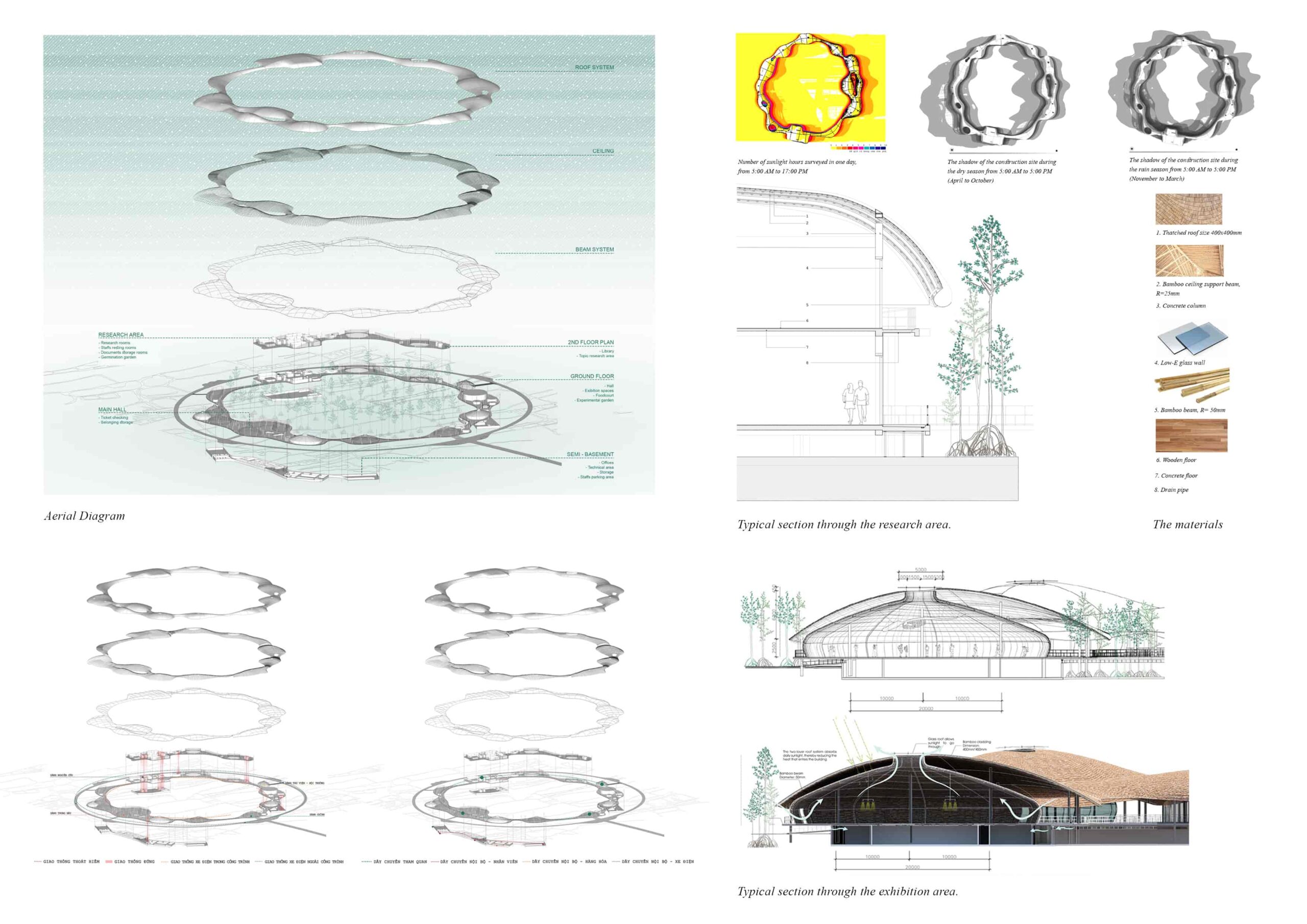
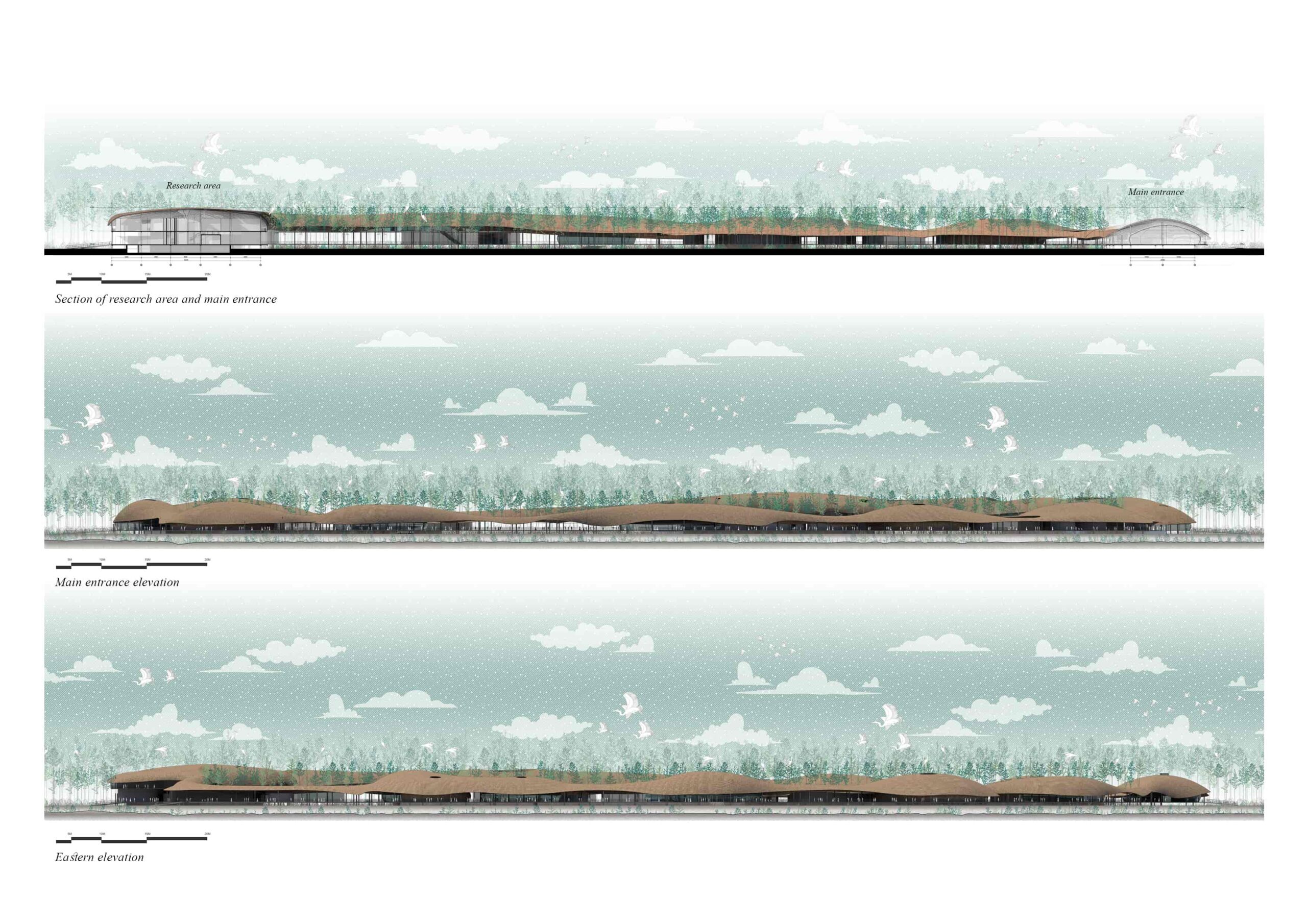
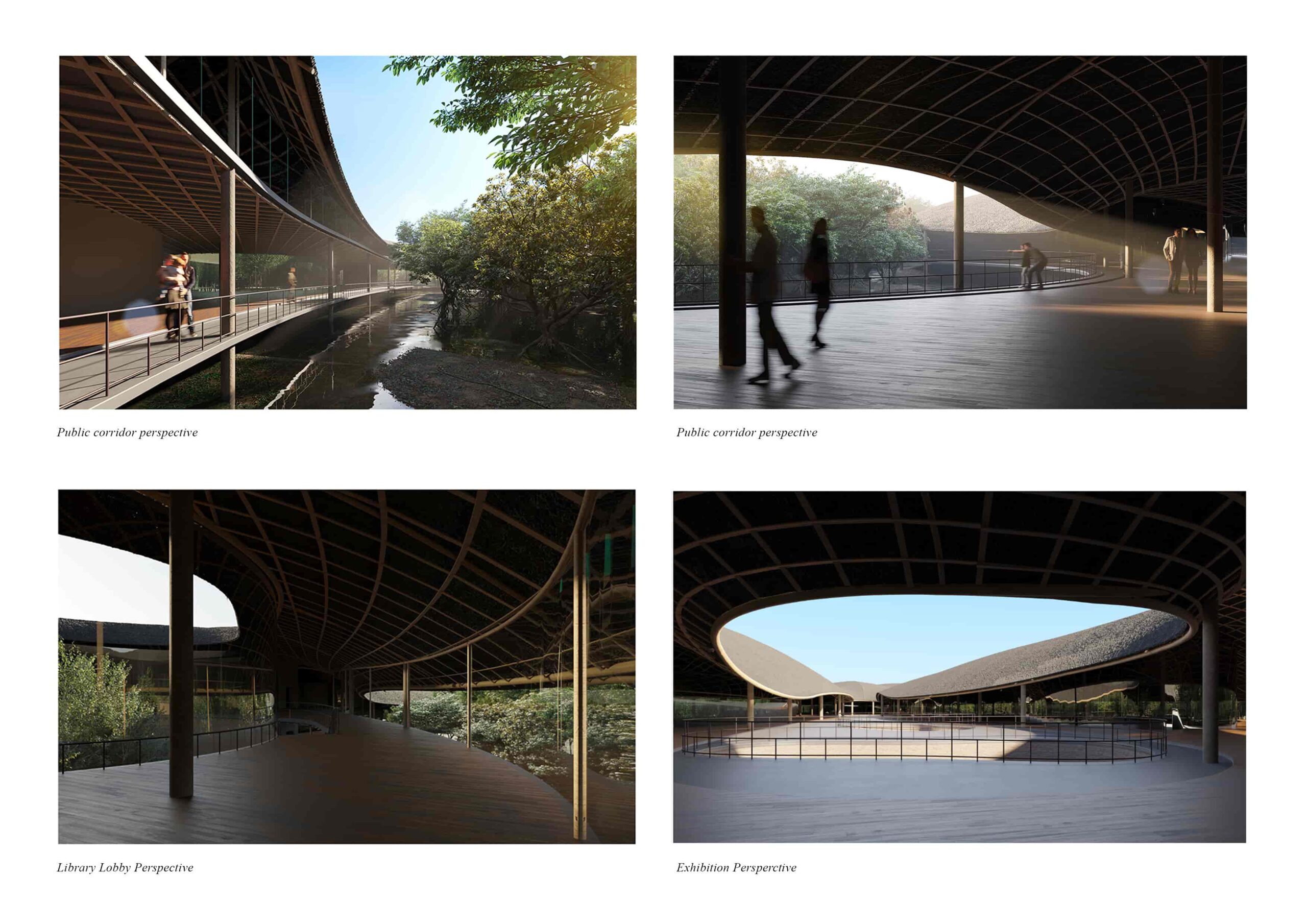
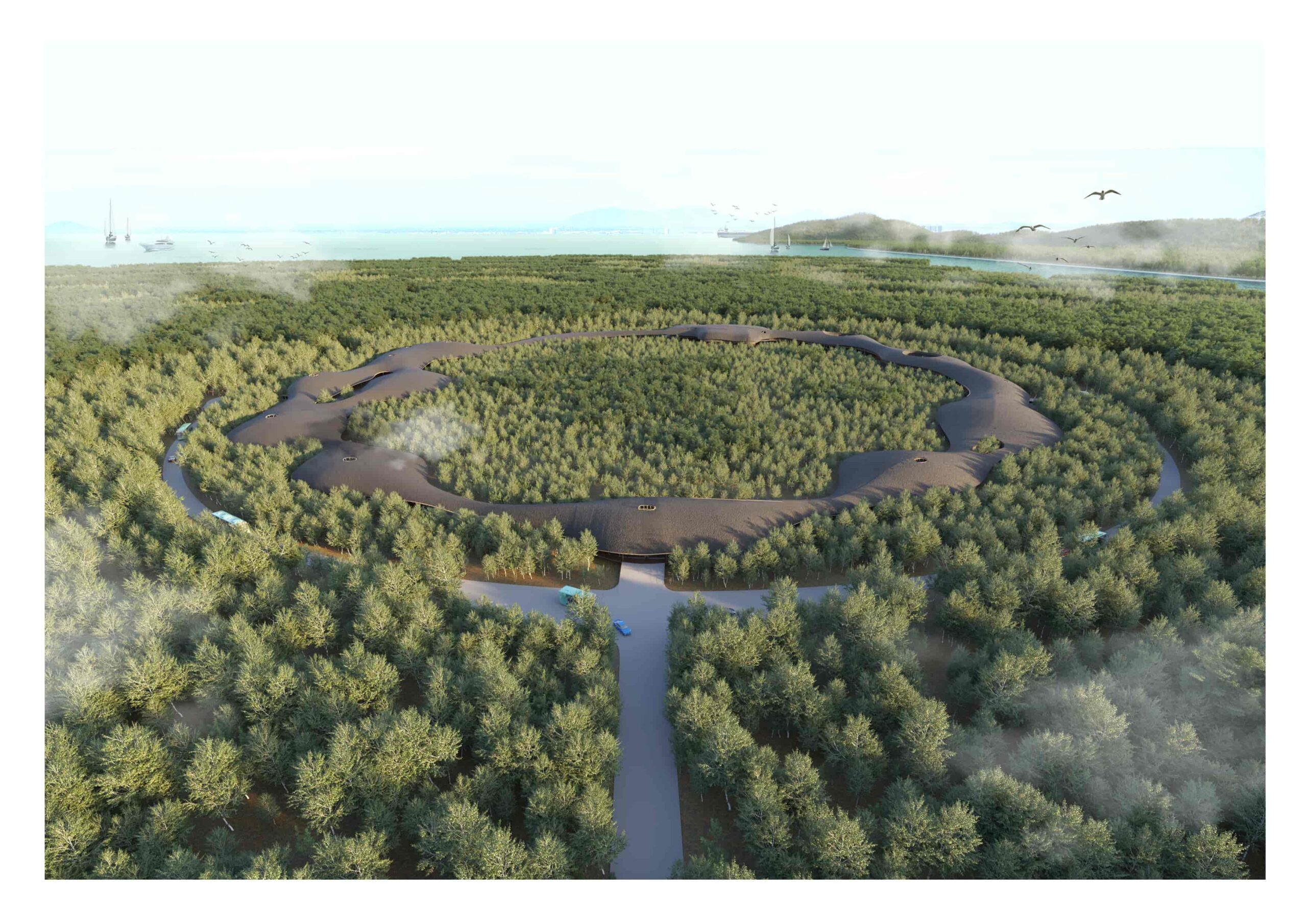
The entire structure is elevated on columns above the water level to minimize its impact on the natural environment. Additionally, the circular volume is also carefully considered to enhance people’s experience of the forest.
The architecture consists of two main parts:
Corridor space: This area is spread throughout the entire building, ensuring a continuous flow and full exposure to nature.
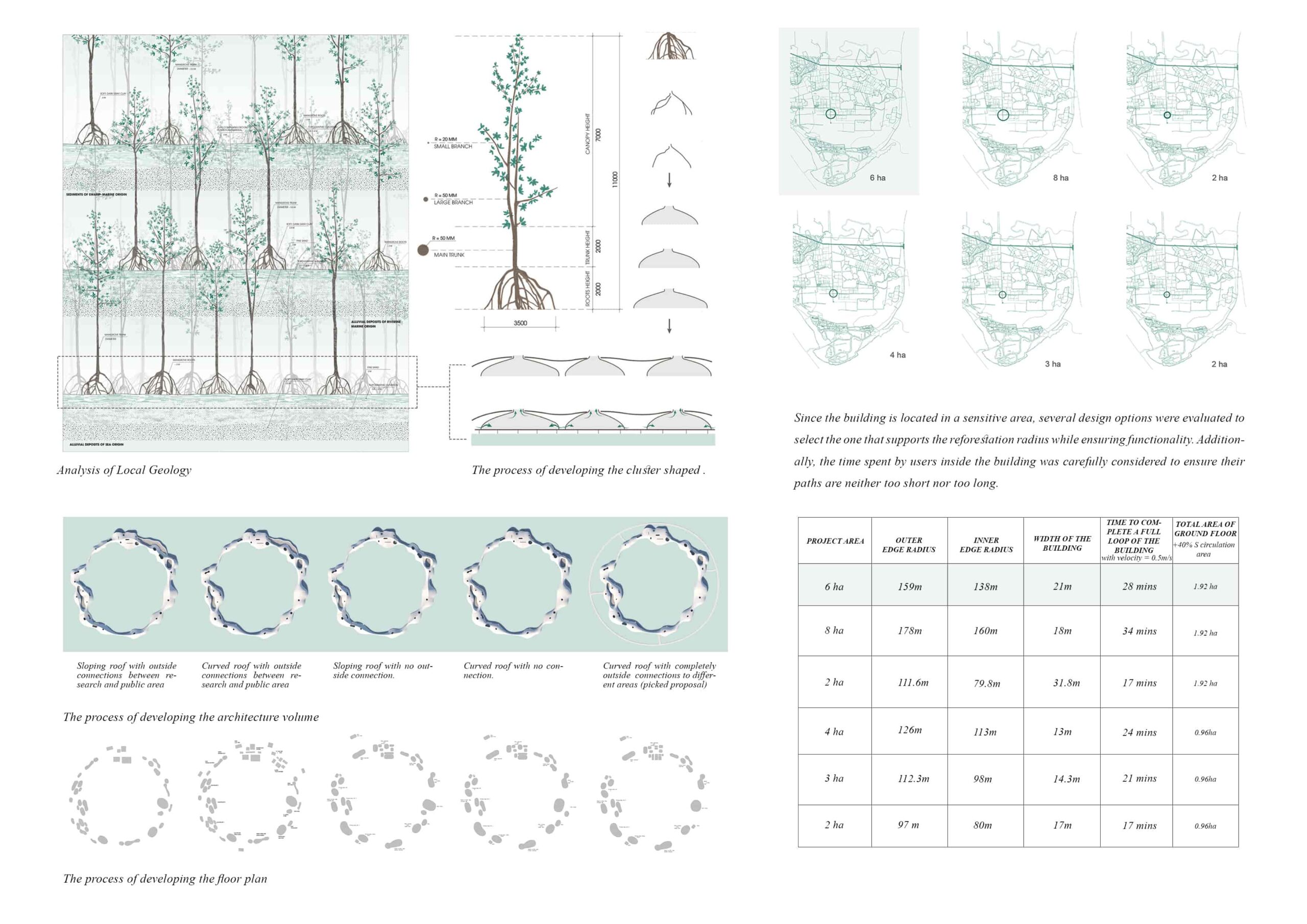
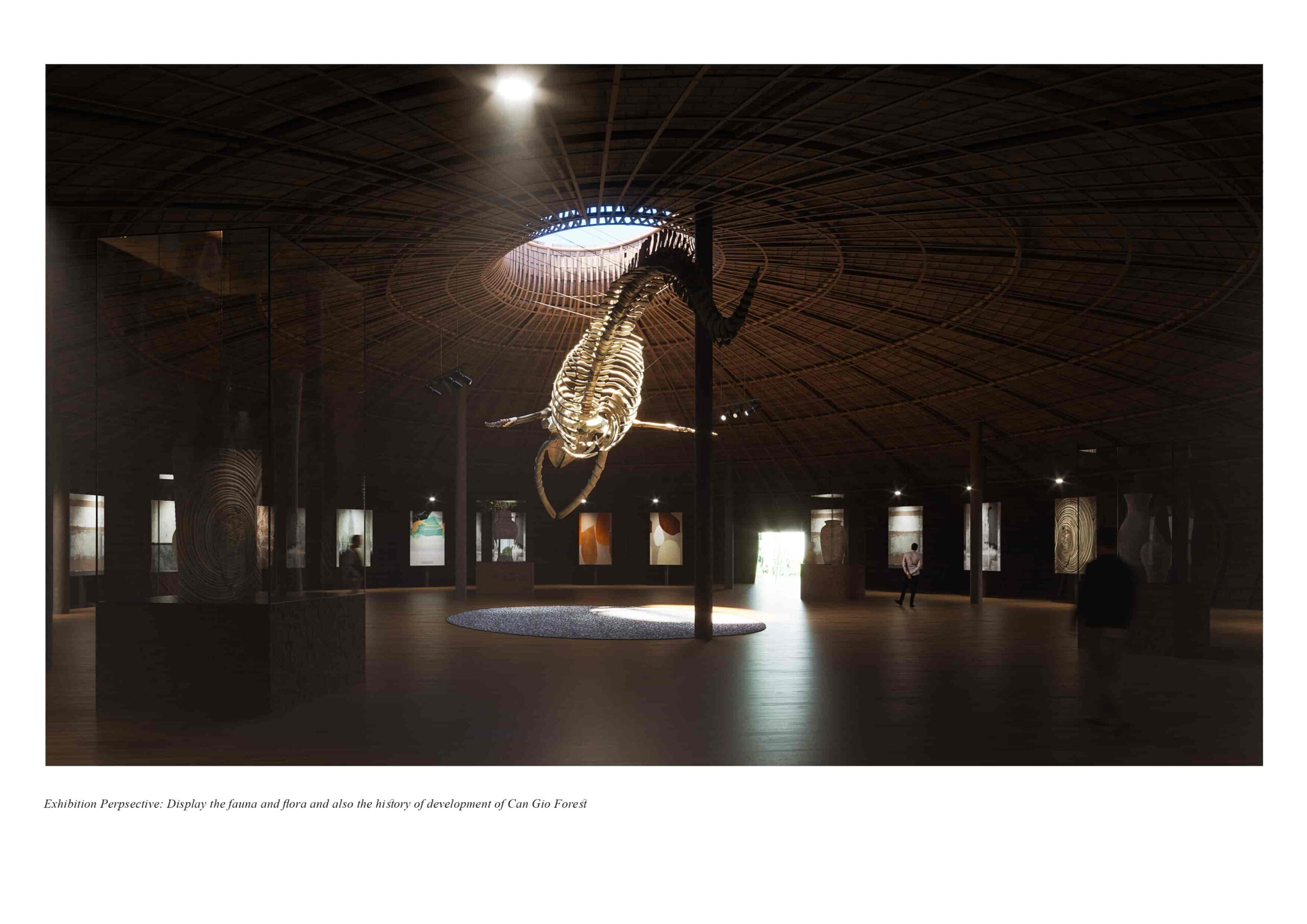
Functional space: Organized into clusters shaped like the mangroves retangled roots structures which distributed evenly across the floor plan. The structures feature openings that allow for natural light and ventilation, enhancing the building’s natural ventilation capabilities.
Beside that, the building materials consist primarily of locally sourced bamboo, ensuring environmental friendliness while keeping costs within an acceptable range.
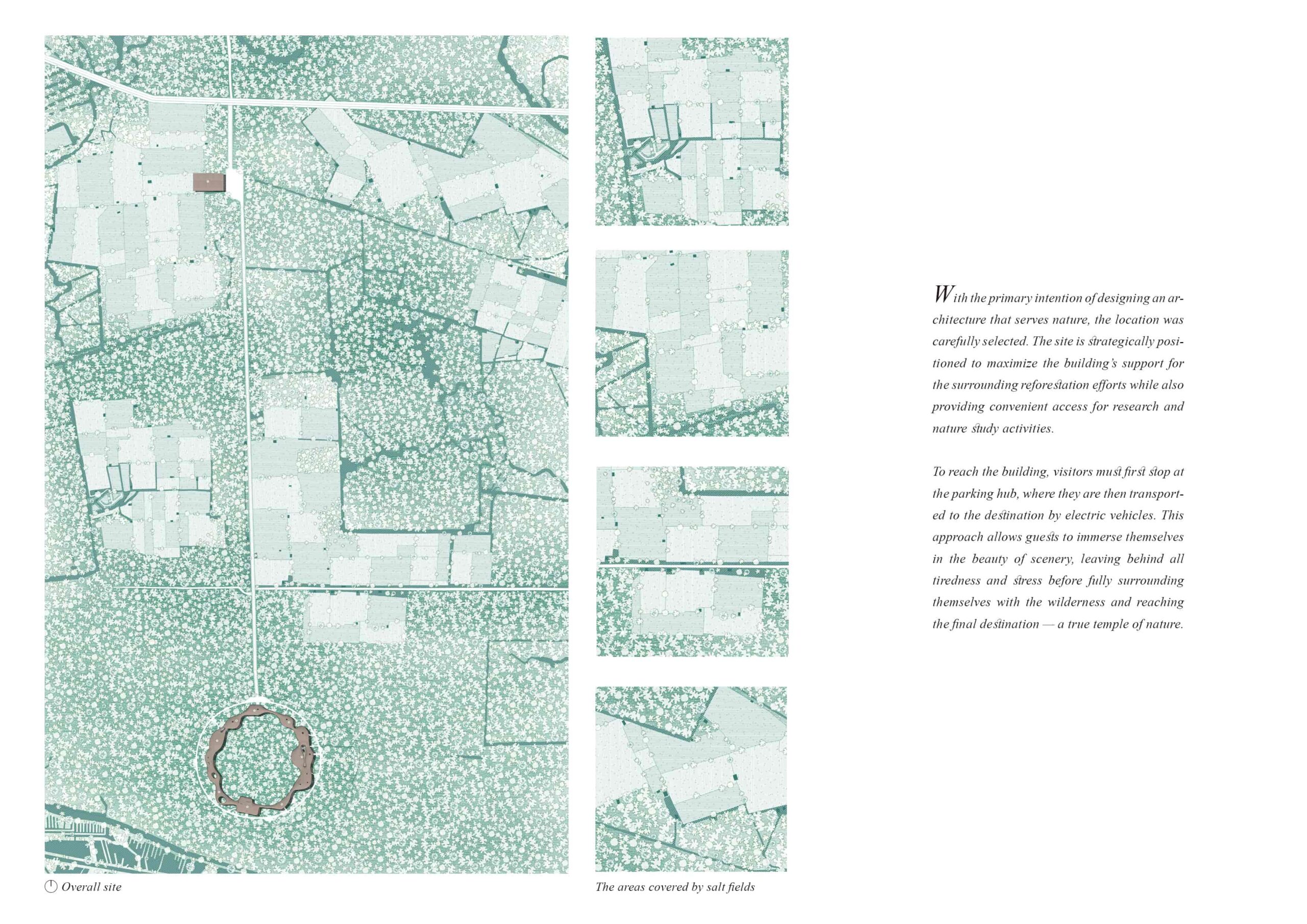
With the primary intention of designing an architecture that serves nature, the location was carefully selected. The site is strategically positioned to maximize the building’s support for the surrounding reforestation efforts while also providing convenient access for research and nature study activities.
To reach the building, visitors must first stop at the parking hub, where they are then transported to the destination by electric vehicles. This approach allows guests to immerse themselves in the beauty of scenery, leaving behind all tiredness and stress before fully surrounding themselves with the wilderness and reaching the final destination — a true temple of nature.
On the other hand, maintaining a distance between the parking hub and the building helps minimize the impact of human activities on the forest, such as emissions from visitor’s vehicles. It also serves as a gentle reminder of the sensitivity of nature, encouraging people to strengthen their commitment to preserving the environment.
Established in 2012, Tamayouz Excellence Award is an unaffiliated, independent initiative that aims to advance the profession of architecture academically and professionally. Tamayouz is dedicated to supporting aspirational and transformative projects that tackle local and global challenges and that are informed by a holistic understanding of context.